optics
21 articles tagged with #optics




Space
Why Do Stars Twinkle? The Science of Atmospheric Seeing
Stars twinkle because Earth's turbulent atmosphere bends starlight in constantly shifting ways. Because stars are infinitely distant, they act as point sources, so even tiny bends in light rays cause dramatic brightness and color flickers. Planets, being much closer, show a small disk that averages out the jitter. Twinkling is worst near the horizon and is why the best observatories sit on mountaintops or in orbit.

Inventions
Camera Invention: From Camera Obscura to Digital Sensors
The camera evolved from the camera obscura to chemical photography and digital sensors. This guide explains the chain of inventions.

Inventions
Laser Invention: From Masers to Coherent Light
The laser grew from quantum theory, masers, optical engineering, and patent battles. This article explains how coherent light became a world-changing tool.

Inventions
Microscope Invention: Leeuwenhoek, Hooke, and the Hidden World
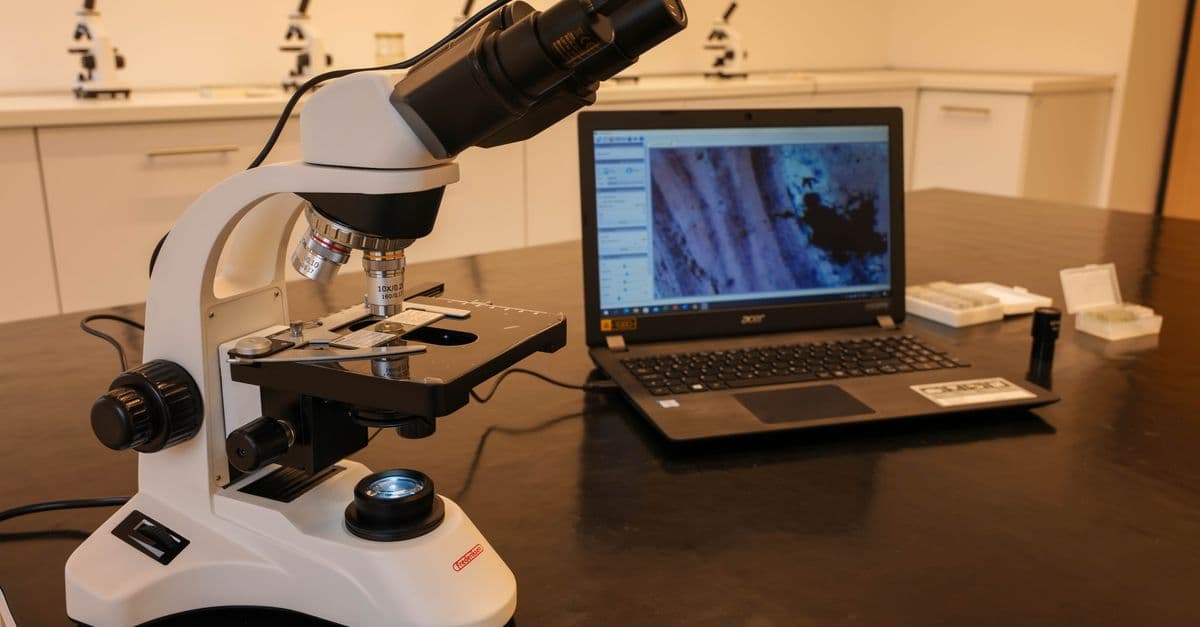
The microscope opened the hidden world of cells and microbes. This article explains lenses, early makers, Leeuwenhoek, Hooke, and modern microscopy.

Science
Why Is Glass Transparent? The Physics of Light Passing Through
Glass is transparent because visible photons lack the energy to excite its electrons and its uniform, grain-free structure scatters almost nothing sideways.
Human Body
How Does the Human Eye Work? The Physics and Neuroscience of Vision
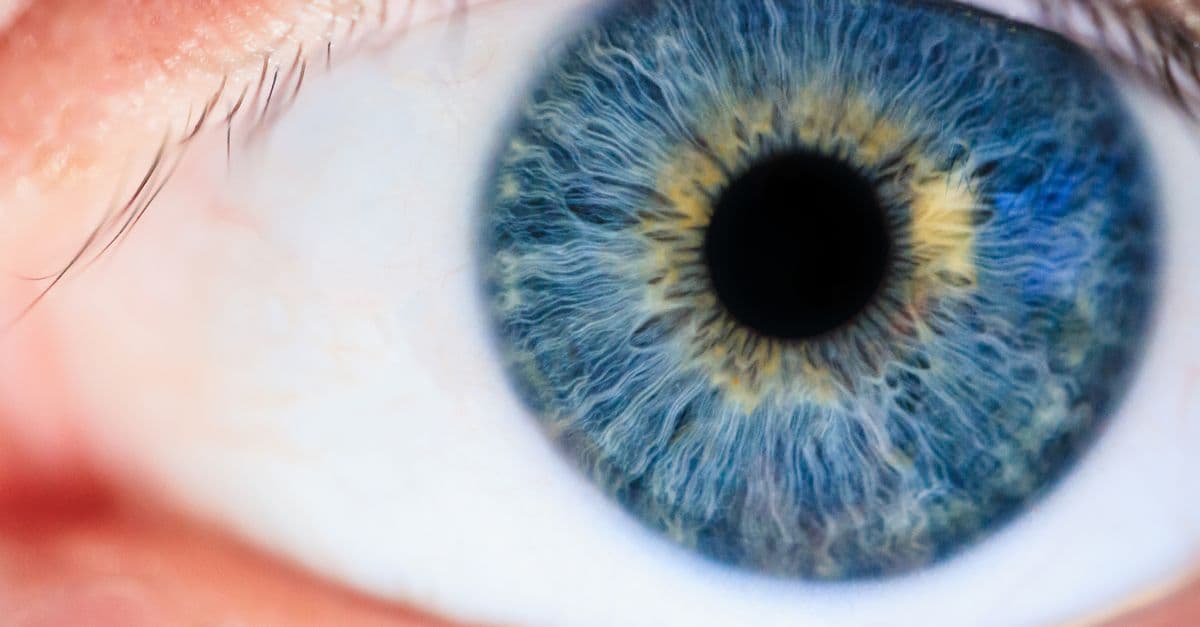
The human eye is a biological optical device, a precision camera that rivals instruments costing thousands of dollars, yet operates flawlessly for decades with zero conscious effort. Light enters through the cornea, passes through the aqueous humor, and is focused by the crystalline lens onto the retina — a thin sheet of neural tissue at the back of the eye containing two types of photoreceptors: 120 million rod cells (monochromatic, exquisitely sensitive in dim light) and 6 million cone cells (color-sensitive, active in daylight). Each photoreceptor contains millions of opsins, protein molecules that undergo a chemical transformation when struck by a photon, initiating a neural cascade that ultimately fires signals through the optic nerve to the visual cortex. The brain constructs vision from 30 discrete visual areas, each specialized for a different attribute: color, motion, depth, form. Yet we perceive a single, seamless, three-dimensional world, a construction so compelling that we believe we are seeing reality directly, unaware that the image in our visual cortex is inverted, compressed, and extensively processed.
Experiments
Young's Double-Slit Experiment: Light as a Wave
In 1801, Thomas Young passed light through two slits and saw stripes on a screen that only waves can produce. The same experiment later revealed the quantum nature of matter.
Page 1 of 2Next →