Skip to content
ISSUE 10.20.26/24 CATEGORIES

productivity

30 articles tagged with #productivity

Contemporary office desk featuring a laptop, smartphone calculator app, and business graphs.
Blog

Digital Minimalism: How to Reclaim Your Attention in 2026

In 2026, the average person spends 4 hours and 25 minutes daily on digital media — a 20 percent increase from 2020. Notifications interrupt focus 35–50 times per hour on devices with alert sounds enabled. Context-switching (shifting from email to a work task to social media and back) reduces cognitive performance by 40–60 percent on complex tasks compared to sustained focus. The attention economy — designed by engineers and algorithms to capture engagement at the expense of your time and mental clarity — has become the default. Digital minimalism, a framework developed by computer scientist Cal Newport, proposes a deliberate reset: remove low-value digital tools from your life, establish clear protocols for high-value tools (email, messaging, social media), and reclaim the attention previously allocated to distraction. The evidence supporting the benefits (improved focus, reduced anxiety, deeper work) is moderate but growing. This article explains the mechanisms of attention capture, reviews the science of context-switching and notification effects, and walks through a practical digital minimalism framework for 2026.


Editorial Team·June 4, 2026·18 min
A student intensely studying under a desk lamp, surrounded by books, in a black and white setting.
Blog

How to Read 50 Books a Year Without Speed-Reading: The Math of Consistent Reading

Reading 50 books a year sounds impossible until you do the math. At 300 pages per book and 40 pages per hour, that is 375 hours per year, or just over 7 hours per week. This is achievable not through speed-reading (which reduces comprehension) but through a combination of habit stacking, format mixing, and what researchers call the serial reading heuristic — reading multiple books in parallel across different genres and difficulty levels. This essay outlines a realistic, evidence-informed approach to reading more without sacrificing understanding.

Editorial Team·June 4, 2026·16 min
Interior of contemporary workspace with laptop near coffee and roll film on table
Blog

How to Do a Digital Detox Without Going Crazy: Evidence-Based Strategies

All-or-nothing digital detoxes often fail because they ignore how attention works. Dopamine is not a single 'reward chemical' that devices hijack; attention is regulated by competing goals and environmental design. Cold-turkey phone abandonment creates acute stress, backfiring when triggered by normal workplace communication needs. The evidence suggests incremental reduction, boundary-setting, and environmental redesign are more sustainable than elimination. This guide covers the research on attention and distraction, what the dopamine narrative misses, realistic detox strategies (app limits, notification management, device-free zones), and how to measure success without falling into the shame spiral that makes rebound compulsive use worse. Goal: restore agency over attention, not punish yourself for being human.

Editorial Team·June 4, 2026·16 min
A person writing in a notebook with pens and highlighters on a wooden desk, creating a study scene.
Blog

The Science of Habit Formation: How Long It Really Takes to Build a Habit

The popular claim that habits take 21 days to form is a myth. The actual scientific finding, from Lally et al.'s longitudinal study, is that the average habit takes 66 days to become automatic, with substantial variation depending on the complexity of the habit and the individual. Simple habits (drinking water at a specific time) establish in weeks; complex habits (exercising regularly) take months. This article explains the mechanism of habit formation (cue, routine, reward), the difference between conscious habit and automaticity, why motivation fails, and identity-based habits (changing who you are rather than what you do).

Editorial Team·June 4, 2026·17 min
A professional therapist takes notes during a therapy session, engaging with a client.
Blog

The Myth of Multitasking: Why Your Brain Can't Do Two Things at Once

You feel productive when you answer emails during a meeting. The research disagrees. Every time you switch between tasks, your brain pays a measurable tax — slower reaction times, more errors, and a depletion of the exact cognitive resources you need to work well. What feels like parallel processing is actually rapid toggling, and it costs more than most people realize.

Editorial Team·June 4, 2026·14 min
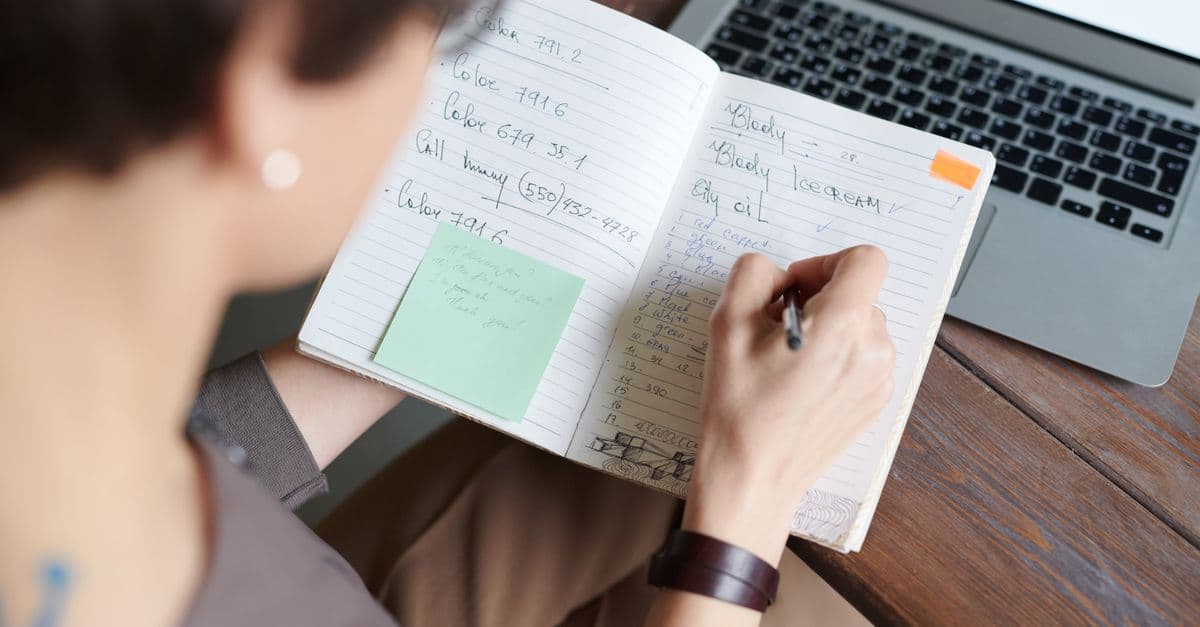
An adult writing in a notebook with a laptop on a wooden table for work or leisure.
Technology

How to Build a Second Brain with Digital Note-Taking

Your memory is a retrieval system, not a storage system. A brain neuron firing at the moment you need to recall information is vastly more important than the amount of information you have stored. Digital note-taking tools—Obsidian, Notion, Roam Research, LogSeq—enable you to externalize information into a structure that enhances retrieval. The framework is Tiago Forte's PARA system: Capture raw information, Organize into Projects and Areas, Distill into clear ideas, Express by synthesizing notes into written work. This is not about collecting notes passively; it is about building a networked knowledge system where ideas link, cross-pollinate, and compound over time. The science of external memory and spaced repetition shows that people who maintain a 'second brain' learn 20-40 percent faster than those who rely on biological memory alone.

Editorial Team·June 4, 2026·17 min