Cloud Computing Explained — AWS, Azure, GCP

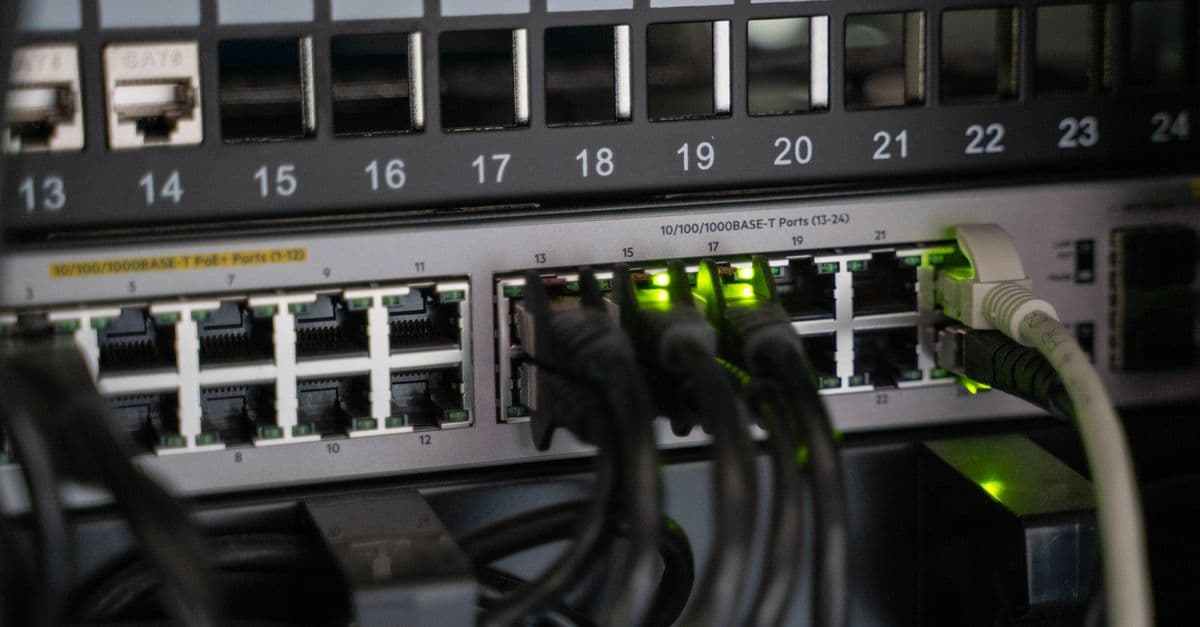
Photo: Max Andrey / Pexels
"The cloud" is just someone else's computers — racked in warehouse-sized buildings you'll never see — but the consequences of that simple idea have reshaped how software gets built, sold, and run. Global spending on cloud infrastructure services topped a $500 billion annualized run rate in early 2026, according to Synergy Research Group, and three providers — Amazon Web Services (AWS), Microsoft Azure, and Google Cloud Platform (GCP) — control roughly 63% of it. Understanding how cloud actually works, and where it can quietly bankrupt or break you, is now baseline literacy for almost any technical role.
What "Cloud" Actually Means
Cloud computing is the on-demand delivery of computing resources — servers, storage, databases, networking, pre-built software — over the internet, billed by actual usage rather than by a fixed purchase. Instead of buying a physical server, shipping it to a data center, and maintaining it for five years, a company rents capacity by the second and can scale that capacity up or down without touching a single wire.
The U.S. National Institute of Standards and Technology (NIST) formalized this idea in 2011 with five defining traits that still hold up as the industry's working definition (NIST SP 800-145):
- On-demand self-service — a developer provisions a server through an API or dashboard, with no phone call to IT and no human approval loop.
- Broad network access — every resource is reachable over the standard internet, from any device.
- Resource pooling — thousands of customers share the same physical hardware, invisibly, through virtualization.
- Rapid elasticity — capacity can expand or shrink within minutes, sometimes seconds, to match real demand.
- Measured service — every gigabyte, CPU-second, and API call is metered and billed, the same way a utility meters electricity.
That utility comparison is the clearest way to understand what changed. Before cloud computing, running a website meant owning a generator: you bought fixed capacity for your worst-case peak load (Black Friday, a product launch, a viral moment) and let it sit mostly idle the rest of the year. Cloud computing turned that generator into a power grid connection — you draw exactly what you need, when you need it, and you pay only for the electricity that actually flows.
The Three (or Four) Service Models
Cloud services stack in layers, and the layer you buy determines how much of the underlying system you're responsible for managing yourself.
Table 1. Cloud service model comparison — what you manage vs. what the provider manages
| Layer | What you manage | What the provider manages | Examples |
|---|---|---|---|
| IaaS (Infrastructure as a Service) | OS, runtime, middleware, apps, data | Physical hardware, virtualization, networking, power, cooling | AWS EC2, Azure Virtual Machines, GCP Compute Engine |
| PaaS (Platform as a Service) | Apps, data | Everything below, including OS and runtime | Heroku, Google App Engine, Azure App Service |
| SaaS (Software as a Service) | Usage and your own data | The entire application stack | Gmail, Salesforce, Notion, Slack |
| FaaS (Function/Serverless) | A single function's code | Servers, scaling, runtime, and OS entirely | AWS Lambda, Azure Functions, GCP Cloud Functions |
The renting-a-car analogy makes this concrete. IaaS is renting a car — you drive it, fuel it, and decide the route, but you never touch the engine. PaaS is hiring a car with a driver — you pick the destination, the driver handles navigation and mechanics. SaaS is calling a taxi app — you just specify where you want to go and pay per ride, with zero knowledge of what's under the hood.
FaaS, or serverless computing, deploys a single function with no server management at all. You write code that responds to an event (a file upload, an API call, a scheduled timer), and the provider runs it, scales it to zero when idle, and bills per invocation and per millisecond of execution — sometimes down to a hundredth of a cent.
Deployment Models: Public, Private, Hybrid, and Multi-Cloud
Beyond the service layer, organizations also choose a deployment model, and this choice is often more about regulation and risk tolerance than raw technology.
- Public cloud — shared infrastructure owned and operated by AWS, Azure, or GCP, where your workloads run on the same physical machines as thousands of other customers, kept isolated through virtualization.
- Private cloud — infrastructure dedicated entirely to one organization, either on-premises or hosted by a third party. Banks and defense contractors often keep the most sensitive workloads here.
- Hybrid cloud — a mix of public and private, typically connected by a dedicated network link or VPN, letting a company keep regulated data on-premises while bursting compute-heavy workloads into the public cloud.
- Multi-cloud — deliberately spreading workloads across more than one public provider, either for redundancy (so one provider's outage doesn't take everything down) or to pick the best tool for each job (GCP for analytics, AWS for compute, Azure for enterprise identity).
Who Actually Runs the Cloud: The Big Three, Ranked
Market share numbers vary by quarter and by which analyst firm is counting, but the broad shape has been stable for two years running.
Table 2. Global cloud infrastructure market share, Q1 2026 (Synergy Research Group)
| Provider | Approx. market share | Annual growth rate | Strengths | Weaknesses |
|---|---|---|---|---|
| AWS | ~28–30% | ~19% | Broadest service catalog (240+ services), most mature, largest partner ecosystem | Complex, fragmented pricing; steep learning curve |
| Microsoft Azure | ~21–24% | ~40% | Deep Microsoft 365/Active Directory integration, strong enterprise and hybrid-cloud footprint | Documentation inconsistency, regional service gaps |
| Google Cloud (GCP) | ~13–14% | ~63% | Best-in-class data analytics (BigQuery), Kubernetes origin (GKE), Vertex AI | Smaller enterprise sales organization historically |
| Alibaba Cloud, Oracle, IBM, others | ~33–37% combined | Varies | Regional dominance (Alibaba in Asia), niche enterprise workloads (Oracle databases) | Smaller global ecosystems |
Source: Synergy Research Group quarterly cloud market share tracker, Q1 2026; figures are directional estimates that shift by analyst methodology and quarter.
The growth-rate column tells the more interesting story. AWS still has the largest absolute share, but it is growing the slowest of the three, while Google Cloud is growing more than three times as fast off a smaller base — driven heavily by demand for its Vertex AI platform and custom Tensor Processing Unit (TPU) chips. Azure's growth is being pulled along by enterprises that are already contractually and technically locked into Microsoft 365 and Active Directory, and simply extend that relationship into cloud infrastructure.
This race is also now, unmistakably, an AI infrastructure race. Amazon, Microsoft, Google, and Meta together are projected to spend approximately $725 billion on capital expenditures in 2026, up roughly 77% from 2025's $410 billion, with the overwhelming majority going toward AI-dedicated data centers, GPUs, custom AI chips, and — increasingly — the electrical power needed to run them (Big Tech AI capex tracker, 2026). At AWS re:Invent in December 2025, Amazon unveiled its third-generation Trainium AI training chip, claiming up to four times faster training and roughly 50% lower operating cost than equivalent GPU-based instances for certain workloads (AWS re:Invent 2025 keynote coverage).
Equivalent Services Across the Big Three
One of the most disorienting parts of learning cloud computing is that the same underlying concept has a different brand name on every platform. Once you learn the pattern, translating between clouds becomes mechanical.
Table 3. Rosetta Stone: equivalent core services across AWS, Azure, and GCP
| Function | AWS | Azure | GCP |
|---|---|---|---|
| Virtual machines | EC2 | Virtual Machines | Compute Engine |
| Object storage | S3 | Blob Storage | Cloud Storage |
| Managed relational database | RDS | Azure SQL Database | Cloud SQL |
| NoSQL database | DynamoDB | Cosmos DB | Firestore / Bigtable |
| Serverless functions | Lambda | Azure Functions | Cloud Functions |
| Container orchestration | EKS | AKS | GKE |
| Data warehouse | Redshift | Synapse Analytics | BigQuery |
| AI/ML platform | Bedrock, SageMaker | Azure OpenAI Service, ML Studio | Vertex AI |
| Content delivery network (CDN) | CloudFront | Azure CDN / Front Door | Cloud CDN |
| DNS management | Route 53 | Azure DNS | Cloud DNS |
| Identity and access management | IAM | Microsoft Entra ID | Cloud IAM |
| Message queue | SQS | Service Bus | Pub/Sub |
Most modern cloud workloads run inside containers — lightweight, portable packages of an application and everything it needs to run — orchestrated by Kubernetes, the open-source system originally built at Google and now offered as a managed service by all three providers (EKS, AKS, GKE). Kubernetes itself has become the closest thing the industry has to a truly portable cloud standard: an application packaged for GKE can, with some rework, run on EKS or AKS without a full rewrite, which is more than can be said for most other cloud services.
How does virtualization actually let one physical server run hundreds of customers?
A hypervisor — thin software installed directly on physical hardware — carves one machine into many isolated virtual machines, each believing it has its own dedicated CPU, memory, and disk. Amazon's Nitro System, for instance, offloads virtualization tasks to dedicated hardware chips rather than software, which is why AWS can claim near bare-metal performance even on shared infrastructure.
The Real Cost of Renting Someone Else's Computer
Cloud bills have a reputation for spiraling out of control, and that reputation is earned. A handful of standard levers separate teams that control their spending from teams that get a surprise five-figure invoice.
- Reserved Instances and Savings Plans — committing to one or three years of usage in advance, in exchange for 30% to 72% off on-demand pricing. This works well for baseline, predictable load.
- Spot and preemptible instances — bidding for a provider's unused capacity at a 60% to 90% discount, with the tradeoff that the instance can be reclaimed with seconds of warning. Ideal for batch jobs, video rendering, and machine learning training runs that can checkpoint and resume.
- Auto-scaling — automatically matching server capacity to real-time traffic instead of provisioning for a worst-case peak that might happen twice a year.
- Right-sizing — most virtual machines are provisioned larger than they need to be "just in case." Tools like AWS Compute Optimizer analyze real usage and flag oversized, wasteful instances.
- Cold storage tiers — data that's rarely accessed (old backups, compliance archives) can move to tiers like Amazon S3 Glacier, Azure Archive Storage, or GCP Archive Storage, which cost a few cents per terabyte per month instead of dollars.
Is the cloud actually cheaper than running your own servers?
For variable, unpredictable, or fast-growing workloads, almost always, because you avoid buying capacity you don't yet need. For stable, high-utilization workloads at scale, owning hardware or renting colocation space can beat cloud costs by 30% to 50%, which is why Dropbox famously moved most of its storage off AWS between 2015 and 2016.
Dropbox's move is the canonical case study here. Over two years, the company cut roughly $74.6 million from its operating costs by building its own custom storage infrastructure and shifting the bulk of its exabyte-scale file storage away from Amazon S3, while continuing to use AWS for smaller, more elastic workloads like international expansion (GeekWire; Dropbox engineering disclosures, 2018). The lesson isn't "cloud is bad" — Dropbox's growth in its early years depended entirely on the elasticity AWS gave it. The lesson is that cloud economics only make sense for as long as your workload stays unpredictable or growing; once it becomes large, stable, and fully understood, the "rent vs. own" math can flip.
The Hidden Trap: Egress Fees
Putting data into a cloud provider is free, in almost every case. Getting it out is not, and that asymmetry is deliberate.
AWS charges roughly $0.09 per gigabyte to move data from S3 to the public internet for the first 10 terabytes a month, with the rate stepping down at higher volumes ($0.085/GB from 10–50 TB, dropping further above that) (AWS S3 pricing documentation, 2026). At the entry-level rate, moving 100 terabytes out of AWS costs roughly $9,000, just for the act of leaving — before you've paid a cent for compute or storage. Azure and GCP charge comparable rates for internet egress.
This is the single biggest force locking customers into one cloud provider. It's cheap and easy to move data in, but expensive to move it back out or to a competitor, which discourages exactly the kind of multi-cloud shopping that would otherwise drive prices down through competition. Regulators in the European Union and United Kingdom have taken notice: the EU's Data Act, which took effect in 2024, requires cloud providers to progressively reduce and eventually eliminate switching fees for customers moving between providers, with free switching mandated from January 2027. A handful of smaller providers have made "zero egress fees" their entire pitch — Cloudflare R2 and Backblaze B2 both advertise no charge for data leaving their storage, specifically to compete on this weak point of the hyperscalers.
Shared Responsibility: Whose Fault Is a Breach?
Cloud security operates on a split that trips up more companies than almost any other concept in this space.
The provider secures the cloud itself: physical data center access, the hypervisors that isolate customers from each other, and the underlying network. You secure what you put in the cloud: operating system patches, identity and access management (IAM) policies, encryption keys, application code, and storage bucket permissions. AWS, Azure, and GCP all publish this as the "shared responsibility model," and all three are explicit that the split doesn't move in the customer's favor no matter how much you're paying them.
The clearest large-scale example remains the Capital One breach disclosed in July 2019, which exposed personal data — including names, addresses, credit scores, and Social Security numbers — for approximately 106 million people in the US and Canada. The root cause was a misconfigured web application firewall running inside Capital One's own AWS environment, which allowed an attacker to perform a server-side request forgery (SSRF) attack, retrieve credentials from AWS's internal metadata service, and use an overly permissive IAM role to read data from S3 storage buckets (Krebs on Security, 2019; Cloud Security Alliance technical analysis). Amazon's infrastructure was never compromised. Capital One's own firewall configuration and IAM permissions were. The provider's monitoring tools — AWS Config, Azure Defender for Cloud, GCP Security Command Center — exist precisely to catch this class of mistake, but they only flag misconfiguration after the fact; they don't prevent someone from creating it in the first place.
Why do so many cloud breaches trace back to storage buckets specifically?
Object storage services (S3, Blob Storage, Cloud Storage) are designed to be easy to make publicly accessible, because that's exactly what's needed for hosting public assets like website images. That same ease of use means a single wrong permission setting can expose an entire private dataset to the open internet, and automated scanners run by attackers constantly probe for exactly this mistake.
Edge Computing and What Comes Next
The next frontier beyond the traditional cloud region is the edge: running compute in hundreds of small locations physically close to users, rather than in a handful of giant regional data centers. Cloudflare Workers, AWS Lambda@Edge, and Fastly Compute let code execute within roughly 50 milliseconds of almost any user on Earth, instead of the 100 to 300 milliseconds it might take to reach a centralized region on another continent.
For real-time AI inference, connected IoT devices, and multiplayer gaming, that latency difference matters more than raw compute power. A chatbot that takes an extra 200 milliseconds to respond feels sluggish; a self-driving car's obstacle-detection system that takes an extra 200 milliseconds can be the difference between a near-miss and a collision. Edge computing doesn't replace the centralized cloud — it complements it, handling the time-sensitive slice of work locally while sending everything else back to a full-scale data center for heavier processing.
What People Get Wrong About Cloud Computing
"Serverless" means there's no server. There's absolutely a server — you simply never see it, provision it, or patch its operating system. The provider abstracts the machine away, but physics hasn't changed; code still executes on physical silicon somewhere.
Multi-cloud is automatically safer. Running workloads across two or three providers does reduce the blast radius of a single provider's outage, but it multiplies operational complexity, since your team now needs deep expertise in multiple, meaningfully different platforms. Most companies that claim to be "multi-cloud" actually run 90%+ of production workloads on one provider and keep a token presence elsewhere.
Cloud is inherently less secure than on-premises. The data suggests the opposite in aggregate: hyperscalers spend far more on physical security, patching cadence, and dedicated security engineering than the average company could afford in-house. The Capital One breach above illustrates the real risk, which is customer-side misconfiguration, not provider-side vulnerability.
Moving to the cloud always saves money. It saves money for variable, growing, or spiky workloads. It can cost more for large, stable, fully-understood workloads, as the Dropbox case demonstrates — cloud is a tool with a specific shape of problem it solves best, not a universal discount.
FAQs
Q: Is the cloud actually cheaper than running my own servers? A: For variable or growing workloads, almost always, because you avoid buying capacity for demand that hasn't materialized yet. For stable, predictable, high-utilization workloads at scale, on-premises or colocated infrastructure can beat cloud costs by 30% to 50%, which is why Dropbox moved most of its storage off AWS in 2015–2016 and saved roughly $74.6 million over two years.
Q: AWS vs. Azure vs. GCP — which should I learn first? A: AWS has the most job postings and the broadest service catalog, Azure fits Microsoft-heavy enterprises using Active Directory and Office, and GCP leads on data analytics and AI/ML tooling. The core concepts — compute, storage, identity and access management, networking, and containers — transfer between all three, so the specific provider matters less than mastering the underlying model.
Q: What's the difference between cloud computing and SaaS? A: SaaS is a type of cloud service — specifically, the top layer of the stack. All SaaS is cloud, but not all cloud is SaaS: IaaS gives you raw virtual machines to configure yourself, PaaS gives you a managed runtime to deploy code into, and SaaS gives you a finished, ready-to-use application.
Q: Are serverless computing and containers competitors? A: They overlap in purpose but suit different workloads. Serverless functions are best for event-driven, sporadic work that can tolerate a brief cold-start delay. Containers are better for long-running services, custom runtimes, and workloads that need predictable, consistent performance without startup latency.
Q: What is a hyperscaler, and is it the same thing as a cloud provider? A: A hyperscaler is a company that operates cloud infrastructure at a scale of millions of servers across dozens of global regions — AWS, Azure, and GCP are the three dominant hyperscalers, alongside smaller regional players like Alibaba Cloud and Oracle Cloud. All hyperscalers are cloud providers, but the term specifically emphasizes their massive, globally distributed scale.
Q: How do egress fees actually work, and why do they exist? A: Providers charge to move data out of their storage to the public internet — roughly $0.09 per gigabyte on AWS S3 for the first 10 terabytes a month — while charging nothing to bring data in. This asymmetry discourages customers from shopping between providers, since migrating a large dataset elsewhere carries a real cash cost on top of the migration effort itself.
Q: What about data sovereignty and the EU? A: All three major providers offer deployments confined entirely to EU data center regions, and newer "sovereign cloud" partnerships — such as Microsoft's collaboration with Capgemini and Orange in France — let European entities retain control of encryption keys independent of the underlying US parent company. The EU Data Act, effective from 2024 with switching-fee elimination phasing in by January 2027, is specifically designed to make it easier and cheaper to move data between providers or back to European soil.
Q: How do I avoid getting locked into one cloud provider? A: Favor open standards over proprietary services where practical — PostgreSQL instead of a provider-exclusive database, Kubernetes instead of a proprietary container orchestrator — and abstract provider-specific API calls behind your own interface layer. Total lock-in avoidance isn't realistic if you want to use managed services productively; the goal is making a future migration painful rather than impossible.
Q: What caused the major AWS outage in October 2025, and what does it reveal about cloud risk? A: A latent race condition in the DNS management system behind Amazon's DynamoDB database, in AWS's US-EAST-1 region, produced an empty DNS record that made the database briefly unreachable. That single failure cascaded into a roughly 15-hour outage across dozens of dependent AWS services, disrupting Snapchat, Fortnite, Roblox, Venmo, and government websites — a reminder that even the most mature cloud region is still a single point of failure unless customers explicitly architect for multi-region resilience.
Q: Why is cloud spending accelerating so fast right now? A: The current spending surge is driven overwhelmingly by artificial intelligence infrastructure. Amazon, Microsoft, Google, and Meta are projected to spend approximately $725 billion combined on capital expenditures in 2026, up about 77% from 2025, with most of that money going toward AI-dedicated data centers, GPUs and custom AI chips, and the electrical power required to run them at scale.
The Takeaway
Cloud computing didn't invent a new kind of computer, it invented a new kind of ownership: renting elastic, metered access to infrastructure instead of buying and depreciating fixed hardware. That shift explains almost everything else in this article, from why serverless functions bill per millisecond to why egress fees exist to why a single AWS region outage can take down a third of the consumer internet for an afternoon. The three hyperscalers compete hard on price and features, but they compete far less hard on the structural mechanics that keep customers locked in, which is exactly the layer worth understanding before signing a contract. Pick the provider that fits your team's existing skills and workload shape, not the one with the loudest marketing, and architect for the outage you hope never happens rather than assuming someone else's data center is infallible.
Read next:
- What is Machine Learning? Simple Guide for Beginners
- htmx vs React 2026 — When to Skip the JavaScript Framework
- Countries with the Best Infrastructure (2025 Ranked)
Sources
- NIST Special Publication 800-145 — The NIST Definition of Cloud Computing
- Synergy Research Group — Quarterly Cloud Market Share Tracker, Q1 2026
- AWS — Official Post-Event Summary, October 20, 2025 US-EAST-1 Outage
- ThousandEyes — AWS Outage Analysis, October 20, 2025
- AWS S3 Pricing Documentation, 2026
- GeekWire — "Dropbox saved almost $75 million over two years by building its own tech infrastructure" (2018)
- Krebs on Security — "What We Can Learn from the Capital One Hack" (2019)
- Cloud Security Alliance — "A Technical Analysis of the Capital One Cloud Misconfiguration" (2019)
- AWS Builder Center — AWS re:Invent 2025 AI Chip Announcements (Trainium3)
- Big Tech AI Capex Tracker 2026 — Amazon, Microsoft, Google, Meta Capital Expenditure Estimates
Follow new articles
Add SciHub101 to your feed reader to see new science and technology stories.
About the Author
SciHub101 is an independent science and technology publication founded and edited by Buğra Sözeri, a software engineer and app developer based in Türkiye. AI tools assist with drafting and research. Source documentation in the existing archive is uneven, and articles are being reviewed and corrected. The Editorial Team byline identifies editorial responsibility; it does not certify specialist or independent human review. Where we compare products, anything built by our own team is labelled as such — see the editorial guidelines and About page for how corrections and disclosures work.
Related Articles
How WiFi Works — Radio Waves to Internet
WiFi explained from 802.11 standards to OFDMA, channels, WPA3 security, and WiFi 7 — how data rides radio waves. Discover how it works, why it matters,...

How 5G Networks Actually Get Built — and Secured
5G cellular networks explained through the deployment fight: fiber costs, small cell permitting, Open RAN, and the security risks of virtualized cores.

How Does Cloud Computing Actually Work?
"The cloud" is just someone else's computers — but at a scale and with management that change everything. Here's how AWS, Azure, and Google Cloud actually deliver computing as a utility.

Countries with the Most Data Centers (2025 Ranked)
The United States hosts more data centers than any other country by every count, but the totals vary from about 3,800 to 5,400 depending on the database. Here is the ranking, why facility counts and megawatts tell different stories, and what the IEA says about data centre electricity.

AI Software Testing: How Machine Learning Finds Bugs Early
Machine learning now helps pick which tests to run, steer fuzzers toward crashes, draft unit tests, and flag anomalies in production. Here is what published results show, and where the tools still fail.

Confidential Computing for AI Explained: Protecting Data While It Is Being Processed
Confidential computing protects AI data while it is processed, using hardware enclaves and attestation. Learn how it works and where its limits are.