Crimean-Congo Hemorrhagic Fever Explained
Photo: Monstera Production / Pexels
Crimean-Congo hemorrhagic fever (CCHF) is the most widespread tick-borne viral disease of humans. A 2013 review in Antiviral Research put its range at a band running from western China through the Middle East and southeastern Europe to most of Africa, and the World Health Organization (WHO) lists outbreak fatality at 10 to 40 percent. The virus lives quietly in ticks and in livestock that never look sick, then turns up in a farmhand, a slaughterhouse worker, or a nurse. This article explains how the virus is built, how it reaches people, what the illness looks like day by day, and why Europe is watching it more closely.
Educational content, not medical advice. Talk to your doctor before changing any medication, treatment, or routine. Information here reflects current research but every person's situation differs.
Where the name comes from: a Soviet outbreak and a Congolese laboratory
The disease carries two place names because two groups of scientists described it separately. In 1944, roughly 200 Soviet military agricultural workers fell ill in Crimea with a hemorrhagic illness, and later experiments traced it to a tick-borne virus. In 1956, a physician named Ghislaine Courtois isolated a virus from a patient in Stanleyville, then in the Belgian Congo (now Kisangani). In 1969 the Soviet and Congolese viruses were shown to be antigenically indistinguishable, and the two names were fused.
That history matters for a practical reason. The virus was never confined to one region, and it never needed to be introduced anywhere. It was already present across a huge area, and doctors in different countries simply saw the same pattern of fever and bleeding and gave it different labels. The Bente review calls CCHF virus the most genetically diverse of all arboviruses (viruses carried by arthropods such as ticks and mosquitoes), a diversity that reflects that long, wide, and mostly unobserved history.
What the virus is made of
CCHF is caused by an orthonairovirus, a member of the family Nairoviridae. The order has been renamed in recent years (it is now Hareavirales, formerly part of Bunyavirales), and WHO's fact sheet still uses the older family name Bunyaviridae, which is why you will see several names in the literature. Its genome is negative-sense RNA, meaning the strand cannot be read directly by a cell's protein-making machinery and must first be copied into a readable positive strand. The genome is split into three pieces, called segments, named Small, Medium, and Large by length.
- Small (S) segment: encodes the nucleoprotein, which wraps and protects the viral RNA.
- Medium (M) segment: encodes the surface glycoproteins Gn and Gc, which let the virus attach to and enter cells.
- Large (L) segment: encodes the polymerase, the enzyme that copies the genome.
Think of the three segments as three chapters of an instruction manual printed on separate sheets. If two different strains infect one cell, the sheets can be shuffled and reassembled in new combinations. Virologists call this reassortment, and it is the likely reason the species is so diverse. Recent sequencing work reports it in action. A 2025 study of two human infections in North Macedonia found genetic signs of possible reassortment between viruses from Turkey and Kosovo, and a study of 17 sequenced cases in Pakistan and Afghanistan during 2023 and 2024 reported that 35 percent showed reassortment.
The virus is enveloped, wrapped in a fatty membrane taken from the host cell. Envelopes are fragile outside the body, so standard hospital disinfectants work against the virus, but the same envelope carries the glycoproteins that the immune system and vaccine designers care most about. For the general mechanics of how enveloped viruses attach, enter, and replicate, see how viruses work from infection to replication. CCHF virus is a distant relative of the hantaviruses covered in our hantavirus explainer, which were once classified in the same order, Bunyavirales, before taxonomists split it.
The tick that carries it
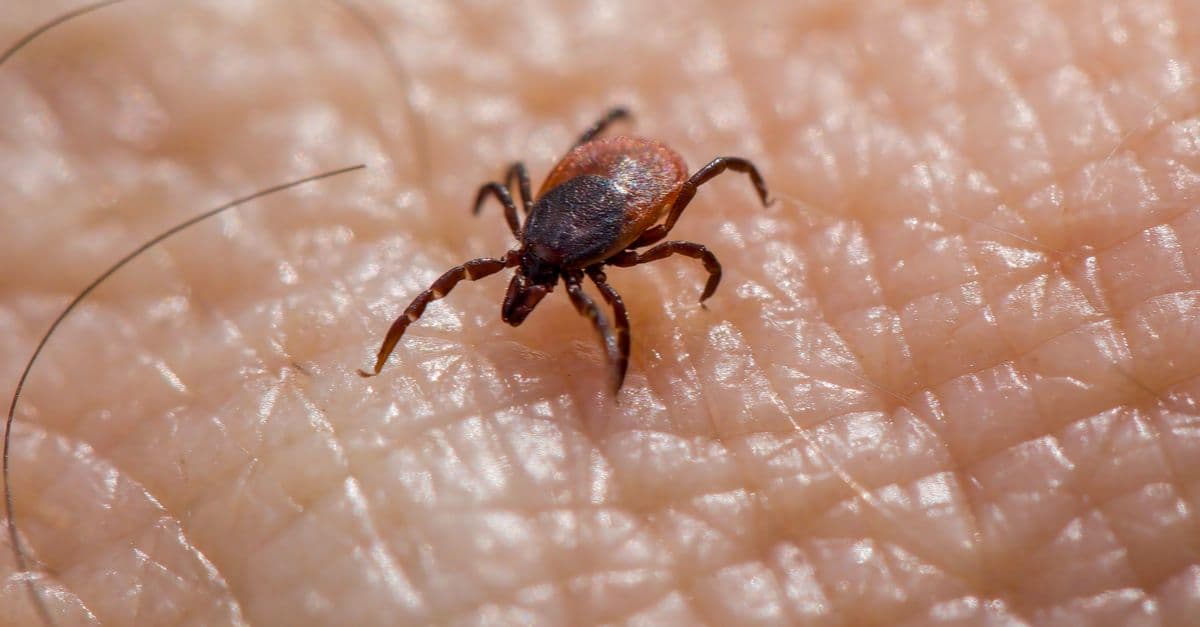
Hyalomma ticks are the principal vector. The virus cycles between these ticks and a wide range of wild and domestic animals, including cattle, sheep, and goats, which usually carry it without any sign of disease. WHO notes that ostriches are an exception: they are susceptible, and an ostrich abattoir in South Africa was the site of a past outbreak. Afterward, ostriches there were kept tick-free in quarantine for 14 days before slaughter.
Geography follows the tick. WHO describes the disease as endemic in Africa, the Balkans, the Middle East, and Asian countries south of the 50th parallel north. The virus tends to appear wherever livestock farming overlaps with the range of the tick.
Because the animals are healthy, the ticks are the only visible warning sign, and the only reliable way to know the virus is circulating in a district is to test. A 2026 serological survey of horses and donkeys illustrates the pattern. It found antibodies to the virus in 14.5 percent of animals tested in Bulgaria (579 animals), 1.5 percent in Romania (1,534 animals), and none in the Czech Republic (576 animals). The decline from southeast to northwest tracks the range of the tick.
Four ways people get infected
CCHF is a zoonosis, an infection that passes from animals to people. For a broader look at how that jump works in general, see our article on how viruses jump from animals to humans. For CCHF specifically, WHO describes three routes, and laboratory work adds a fourth risk.
- A tick bite. This is the classic route for farmers, shepherds, and rural residents. WHO gives a usual incubation of one to three days after a bite, with a maximum of nine days.
- Contact with infected animal blood or tissue. Livestock workers, slaughterhouse workers, and veterinarians are the most affected groups. After contact with infected blood or tissue, the usual incubation is five to six days, with a maximum of 13.
- Contact with a sick person's blood or body fluids. Close contact with an infected patient can spread the virus, and WHO notes that hospital infections can follow poor sterilization or the reuse of needles.
- Laboratory exposure. This one is an inference rather than a WHO category: the agency states that live patient samples need maximum containment, which reflects the risk to the people who handle them.
Notice what is missing from the list. CCHF is not a respiratory virus. It does not move through a crowded room the way influenza does, and it does not spread through casual contact. That is why the people at risk are defined by what they do (herd animals, slaughter them, treat the patients) rather than where they live.
The illness, day by day
The timeline below follows WHO's description. Real patients vary, and the numbers are approximate, but the sequence is consistent.
| Stage | Approximate timing | What happens |
|---|---|---|
| Incubation | 1 to 3 days after a tick bite (up to 9); 5 to 6 days after contact with blood or tissue (up to 13) | No symptoms |
| Early illness | Sudden onset | Fever, muscle aches, headache, neck pain, sensitivity to light; nausea, vomiting, diarrhea, sore throat; mood swings and confusion |
| Second phase | About 2 to 4 days after onset | Sleepiness, depression, liver enlargement; in severe cases a petechial rash (pinpoint bleeds under the skin), bruising, and signs of hepatitis |
| Severe disease | After about day 5 | Rapid kidney, liver, or lung failure can develop |
| Outcome | Deaths usually in the second week; recovery typically starts around day 9 or 10 | Survivors improve gradually |
A word on the "hemorrhagic" in the name. Not every patient bleeds, and bleeding is not what kills most people who die. Clinicians describe a problem of the whole body: damage to the liver, disruption of blood clotting, and failure of several organs together. The details of how the virus causes this are still incomplete. A 2024 clinical review in Emerging Infectious Diseases noted that the virus's life cycle and its interactions with host molecules are not fully described, and that the few available autopsy reports show multi-organ involvement with leakage of fluid from vessels and hemorrhage.
Two laboratory patterns help doctors judge how sick someone is. Low platelet counts are common, and a study of 955 hospitalized, laboratory-confirmed patients in Iraq in 2022 and 2023 found that low PCR cycle threshold values (a number that is lower when more viral RNA is present in the blood), hemorrhagic symptoms at admission, and age over 15 were each independent predictors of a fatal outcome.
Why the fatality figure ranges from 1 percent to 40 percent
The headline number, 10 to 40 percent, appears in nearly every summary, including WHO's. But local studies report very different figures, and the spread says something about how the disease is counted.
| Setting | Study period | Reported fatality | Source |
|---|---|---|---|
| Erzurum, Turkey (hospital samples) | 2015 to 2021 | 1.34 percent | Igan and Hanci, 2025 |
| Iraq (150 human cases in one study) | Not stated in abstract | 12 percent | Rasheid et al., 2026 |
| Afghanistan (PCR-confirmed cases with known outcomes) | 2022 to 2024 | 15.4 percent | Azami et al., 2026 |
| WHO summary of outbreaks worldwide | Various | 10 to 40 percent; overall about 30 percent | WHO fact sheet, 2025 |
Several things push these numbers apart. One plausible explanation is that where doctors know the disease well, as in eastern Turkey, patients may be tested and treated earlier and milder infections may be counted. In studies that only count PCR-confirmed hospital patients, mild cases that never reached a clinic are missing, which would push fatality up. Care quality, time to hospital, and local strains also differ. In Erzurum, 521 of 1,378 samples were PCR-positive over six years, so the denominator was large. In eastern Turkey more broadly, a study of 974 cases between 2012 and 2021 recorded incidence between 5.5 and 23.1 per 100,000 and a significant upward trend.
Children also fare differently in the studies that include them. A 2026 series of 21 children in eastern Anatolia reported hemorrhagic manifestations in 42.9 percent and thrombocytopenia (low platelets) in 81 percent, with no intensive care admissions and no deaths. That is a small sample and should not be generalized, but it fits the broader observation that the disease is not uniformly severe.
Diagnosis: why timing decides the test
Early in the illness, the immune system has not yet produced antibodies, so tests that look for them can miss the infection. WHO lists several diagnostic methods: ELISA (an antibody test), antigen detection, serum neutralization, reverse transcription PCR (RT-PCR, which detects viral RNA), and virus isolation in cell culture. Early and fatal cases often lack detectable antibodies, so detection of the virus or its RNA in blood or tissue is used instead.
A sensible mental model is a security camera and a fingerprint. In the first days, the virus itself is in the blood and RT-PCR can catch it directly, like footage of the intruder. Later, the intruder is gone and only the traces remain, which is what antibody tests find. Because live virus is present in samples from sick patients, WHO states that handling them requires maximum containment, which is why diagnosis is concentrated in reference laboratories.
Treatment: supportive care first, ribavirin with caveats
There is no approved specific treatment. WHO says early intensive supportive care, including careful fluid management, can improve survival. In practice that means monitoring and supporting failing organs. Ribavirin, an antiviral originally developed for other viruses, is used off-label, but WHO states that its efficacy and optimal dosing are uncertain and that, where possible, it should be given within a randomized clinical trial.
The research record reflects that uncertainty.
| Evidence | What it found | Quality |
|---|---|---|
| Cochrane review (Johnson et al., 2018) | One randomized trial (136 participants) gave a mortality risk ratio of 1.13 (95 percent CI 0.29 to 4.32); four non-randomized studies (612 participants) gave 0.72 (0.41 to 1.28). The authors could not tell whether ribavirin works. | Very low certainty |
| Meta-analysis (Arab-Bafrani et al., 2019) | In 24 studies, ribavirin was associated with a 1.7-fold reduction in mortality; delaying treatment was associated with a 1.6-fold increase; adding corticosteroids was associated with about 2.3-fold lower mortality than ribavirin alone. | Authors note the studies were not high quality |
| Sequencing study (D'Addiego et al., 2023) | Standard-dose ribavirin during acute infection did not cause lethal mutagenesis of the virus. | Observational |
The Cochrane confidence intervals are the key detail. An interval running from 0.29 to 4.32 is compatible with a large benefit and with a large harm, which is what "cannot tell" looks like in numbers. The observational findings lean toward benefit, particularly for early treatment, but patients who get treatment early are different from those who get it late. They may be healthier, or live closer to a hospital, so the comparison is confounded.
Other approaches have been tried in small studies. A 2021 systematic review in Cureus titled "Crimean-Congo Hemorrhagic Fever Beyond Ribavirin" reported that plasma exchange was linked to lower mortality and that immunoglobulins reduced severity and mortality risk. The authors also reported no statistically significant difference between oral and intravenous ribavirin when used after an exposure. These are hypotheses for proper trials, not established treatments.
Protecting healthcare workers
Hospital transmission is the part of the CCHF story that most worries clinicians, because a patient can arrive with a nonspecific fever long before anyone suspects a hemorrhagic fever. A study of Iran's national reference laboratory covering 2000 to 2023 tested 96 suspected healthcare worker cases and confirmed 12 (seven nurses and five physicians). Needlestick, mucosal, and skin-contact exposures accounted for three cases each, and the median incubation was 6.8 days. The authors reported no confirmed cases among Iranian healthcare workers since 2013, which suggests that targeted training and protective equipment can work.
Hospital outbreaks continue elsewhere. A 2024 report in the Journal of Hospital Infection described a nosocomial outbreak at a tertiary care center in Pakistan. WHO's guidance for health facilities is to apply standard infection control precautions, drawing on its Ebola and Marburg guidance, and to avoid reusing needles. The viruses are unrelated, but the route is the same: blood and body fluids. Our articles on Ebola and Marburg virus cover the filovirus side of that comparison.
The livestock link and how slaughter becomes a risk point
Since the animals do not get sick, farmers cannot spot an infected animal, and the moment of greatest risk is slaughter, when blood and tissue are handled directly. WHO recommends gloves and protective clothing during slaughter, and for commercial operations it recommends quarantining animals or treating them with pesticides about two weeks before they are slaughtered.
This control point is why a veterinary measure can protect human health, and it is the reason public health agencies describe CCHF as a One Health problem, meaning one where human, animal, and environmental health cannot be managed separately. Reducing infections in people can mean spraying cattle, training abattoir staff, and educating farmers, as well as stocking hospital wards.
Is CCHF coming to Europe, or is it already there?
The honest answer is that it is already in parts of Europe, with a pattern that depends heavily on the subregion.
Southeastern Europe has recorded CCHF for decades. A 2026 review in Virologica Sinica counted at least 1,623 cases in Bulgaria and at least 339 in Kosovo in the period from 1944 to February 2025, and it also lists Ukraine, Croatia, Albania, and Moldova among the affected countries. Western Europe is a more recent story. A 2024 review in Pathogens reported 17 autochthonous (locally acquired) cases in Spain since 2013, plus human cases in Greece and Bulgaria. North Macedonia reported no cases for more than 50 years until 2023, and then two infections were identified in 2024.
A 2025 systematic review in Parasites & Vectors synthesized 92 studies and concluded that Hyalomma ticks are present in 40 European countries, that the virus itself has been reported in 24, and that human disease has been reported in 22. The European Centre for Disease Prevention and Control (ECDC) describes the disease as rare in Europe but endemic in the Balkans, with a few sporadic cases reported regularly.
What is pushing the picture to change? Researchers cite warmer winters that let ticks survive and expand, and a 2025 preprint reviewing the role of migratory birds proposes that spring migration can carry immature ticks over long distances. Preprints have not been peer reviewed, so the migratory bird mechanism should be read as a hypothesis under study, not a settled finding. What is settled is that a vector in 40 countries and virus detections in 24 give the disease more places to appear than clinicians in many of those countries have ever had to plan for.
Vaccines: a long wait and a promising pipeline
WHO states that no safe and effective vaccine is widely available for people. An inactivated vaccine derived from mouse brain tissue has been used on a small scale in eastern Europe, and there is no vaccine for animals. The gap is notable because CCHF has long been recognized as a serious disease, and it reflects how few people in wealthy countries have historically faced it. To understand what a vaccine needs to do, see our explainer on how vaccines train the immune system.
The pipeline has become busier. Experiments published in 2025 include these.
- A single 2 microgram dose of an mRNA vaccine encoding the nucleoprotein fully protected mice against a lethal challenge with a different viral genotype (npj Vaccines).
- A replicon particle vaccine produced antibodies lasting up to 18 months in mice, with protection of at least 75 percent at six months after a single dose (npj Vaccines).
- A replicating RNA vaccine expressing the nucleoprotein gave significant protection in cynomolgus macaques after a prime-boost regimen, even though the antibodies it produced were non-neutralizing (EBioMedicine).
The macaque result is a good example of why vaccine science is not simple. Neutralizing antibodies, which block the virus directly, are the usual yardstick for a vaccine, yet protection here came from a response aimed at an internal protein. That makes it harder to predict human results from animal data. The same mRNA platform that produced COVID-19 shots, described in our mRNA vaccine article, is being tried, but no candidate in these studies has been reported as licensed.
What people get wrong about CCHF
It is not "the next Ebola." The two diseases share a headline: both cause hemorrhagic fever, both can spread in hospitals, both are dangerous. But CCHF's main route is a tick, and it does not move through casual contact. For a broader ranking of lethal viruses, see our piece on the deadliest viruses on the planet.
Fatality is not a fixed trait of the virus. As the table above shows, reported fatality ranges from a little over 1 percent in one Turkish hospital series to 15 percent among confirmed Afghan cases, and WHO's range goes to 40 percent. Access to care, time to diagnosis, and who gets counted all move the number.
A tick bite is not the only danger. Several of the best-documented infections come from handling blood, not from ticks. That is why occupational risk is as important as outdoor exposure.
Mild infection exists. Because most surveillance counts hospitalized, confirmed patients, milder illness is likely undercounted. We do not know by how much, and nothing here should be read as a claim about the share of infections that go unnoticed.
The takeaway
CCHF is a disease defined by overlap: ticks overlapping with livestock, livestock with the people who slaughter them, and patients with the nurses who treat them. Each overlap is a control point. Tick control on animals, protective gear at slaughter, and strict infection control in wards all work on the chain, even without a vaccine and without a proven antiviral. The unsettled parts are real, including ribavirin's benefit, the true fatality rate, and how far the ticks will spread, and the evidence for each is thinner than the headline numbers suggest.
Frequently Asked Questions
Q: How deadly is Crimean-Congo hemorrhagic fever? A: WHO reports 10 to 40 percent fatality in outbreaks and describes overall mortality as about 30 percent. Local studies range widely: a Turkish hospital series from 2015 to 2021 reported 1.34 percent, while a 2022 to 2024 Afghan series reported 15.4 percent among confirmed cases with known outcomes. Care quality and who is counted drive much of the difference.
Q: Can CCHF spread from person to person? A: Yes, but only through close contact with an infected person's blood or body fluids, not through casual contact. WHO notes that hospital infections can occur after poor sterilization or reuse of needles. Healthcare workers face the highest risk, and an Iranian reference laboratory study confirmed 12 infected workers between 2000 and 2023.
Q: How long after exposure do symptoms start? A: After a tick bite, WHO gives a usual incubation of one to three days, with a maximum of nine. After contact with infected blood or tissue, it is usually five to six days, with a maximum of 13. Onset is sudden, with fever, muscle aches, headache, and sensitivity to light.
Q: Is there a vaccine for CCHF? A: No safe and effective vaccine is widely available for people, according to WHO's 2025 fact sheet. An inactivated mouse-brain vaccine has been used on a small scale in eastern Europe. Several mRNA, replicon, and viral vector candidates have protected mice or macaques in 2025 studies, but those results come from animal experiments, not human trials.
Q: Does ribavirin work? A: Unknown. A 2018 Cochrane review could not determine whether ribavirin is effective and rated the evidence as very low certainty. A 2019 meta-analysis of 24 lower-quality studies associated ribavirin with a 1.7-fold reduction in mortality. WHO says the drug is used off-label and should be given within a randomized trial where possible.
Q: Is CCHF found in Europe? A: Yes, in parts of it. It is endemic in the Balkans, and a 2026 review counted at least 1,623 cases in Bulgaria and 339 in Kosovo between 1944 and February 2025. Spain has recorded 17 locally acquired cases since 2013. A 2025 review found Hyalomma ticks in 40 European countries and the virus in 24.
Q: How can people lower their risk? A: WHO recommends protective clothing, repellents, tick checks, and tick control on animals, gloves and protective gear during slaughter, avoiding close contact with infected people, and hand hygiene. These are general public health measures. Anyone who develops fever after a tick bite or livestock exposure in an endemic area should tell a clinician about that history.
Sources
- World Health Organization. Crimean-Congo haemorrhagic fever, fact sheet, published 20 February 2025.
- European Centre for Disease Prevention and Control. Crimean-Congo haemorrhagic fever.
- Bente DA, Forrester NL, Watts DM, et al. Crimean-Congo hemorrhagic fever: history, epidemiology, pathogenesis, clinical syndrome and genetic diversity. Antiviral Research. 2013;100(1):159-189. doi:10.1016/j.antiviral.2013.07.006
- Johnson S, Henschke N, Maayan N, et al. Ribavirin for treating Crimean Congo haemorrhagic fever. Cochrane Database of Systematic Reviews. 2018;CD012713. doi:10.1002/14651858.CD012713.pub2
- Arab-Bafrani Z, Jabbari A, Mostakhdem Hashemi M, et al. Identification of the crucial parameters regarding the efficacy of ribavirin therapy in CCHF patients: a systematic review and meta-analysis. J Antimicrob Chemother. 2019;74(12):3432-3439. doi:10.1093/jac/dkz328
- Fabara SP, Ortiz JF, Smith DW, et al. Crimean-Congo hemorrhagic fever beyond ribavirin: a systematic review. Cureus. 2021;13(9):e17842. doi:10.7759/cureus.17842
- Parvage MM, Baron JN, Semenza JC, Omazic A. Emergence and spread of Hyalomma ticks and Crimean-Congo haemorrhagic fever in Europe: a systematic review. Parasites & Vectors. 2025;18:436. doi:10.1186/s13071-025-07104-3
- Eslava M, Carlos S, Reina G. Crimean-Congo hemorrhagic fever virus: an emerging threat in Europe with a focus on epidemiology in Spain. Pathogens. 2024;13(9):770. doi:10.3390/pathogens13090770
- Fereidouni M, Kuhn JH, et al. Crimean-Congo hemorrhagic fever: an emerging threat in Europe. Virologica Sinica. 2026;41(3):493-512. doi:10.1016/j.virs.2025.12.006
- Jakimovski D, Poposki K, et al. Two human infections with diverse Europe-1 Crimean-Congo hemorrhagic fever virus strains, North Macedonia, 2024. Emerging Infectious Diseases. 2025;31(2):313-317. doi:10.3201/eid3102.241249
- Italiya J, Nekudova P, et al. Equine sentinels and one health: a serological survey of CCHF virus in southeastern and Central Europe. Frontiers in Veterinary Science. 2026;13:1810641. doi:10.3389/fvets.2026.1810641
- Frank MG, Weaver G, Raabe V, et al. Crimean Congo hemorrhagic fever virus for clinicians: virology, pathogenesis, and pathology. Emerging Infectious Diseases. 2024;30(5):847-853. doi:10.3201/eid3005.231646
- Khaleel RI, et al. Prognostic value of PCR cycle threshold value in Crimean-Congo hemorrhagic fever, Iraq, 2022-2023. Emerging Infectious Diseases. 2026;32(7). doi:10.3201/eid3207.251284
- Fazlalipour M, Jalali T, Hewson R, et al. Crimean-Congo haemorrhagic fever among healthcare workers in Iran 2000-2023. BMC Infectious Diseases. 2024. doi:10.1186/s12879-024-10199-1
- Igan H, Hanci H. The six-year prevalence of CCHF in Erzurum, Turkey. Journal of Vector Borne Diseases. 2025. doi:10.4103/jvbd.jvbd_143_21
- Azami H, Mosawi SH, et al. Seasonal patterns of CCHF in Afghanistan, 2022-2024. International Journal of Environmental Health Research. 2026;36. doi:10.1080/09603123.2026.2632937
- Rao J, Li J, Jiang T, et al. A single-dose mRNA vaccine protects mice from lethal Crimean-Congo hemorrhagic fever virus infection. npj Vaccines. 2025;10:269. doi:10.1038/s41541-025-01310-x
- Hawman DW, Leventhal S, Meade-White K, et al. A replicating RNA vaccine confers protection against Crimean-Congo hemorrhagic fever in cynomolgus macaques. EBioMedicine. 2025;115:105698. doi:10.1016/j.ebiom.2025.105698
Read next:
Follow new articles
Add SciHub101 to your feed reader to see new science and technology stories.
About the Author
SciHub101 is an independent science and technology publication founded and edited by Buğra Sözeri, a software engineer and app developer based in Türkiye. AI tools assist with drafting and research. Source documentation in the existing archive is uneven, and articles are being reviewed and corrected. The Editorial Team byline identifies editorial responsibility; it does not certify specialist or independent human review. Where we compare products, anything built by our own team is labelled as such — see the editorial guidelines and About page for how corrections and disclosures work.
Related Articles

Rubella Virus Explained: German Measles & CRS
Rubella causes a mild rash in children but can devastate a fetus. How the virus works, what CRS does, and how vaccination eliminated it in the Americas.
Epstein-Barr Virus (EBV): The Virus Inside Us All
Epstein-Barr virus (EBV) infects about 9 in 10 adults, causes mono, and is tied to several cancers and multiple sclerosis. How it hides and what research shows.
Tick-Borne Encephalitis: The Flavivirus in the Forest
Tick-borne encephalitis is a flavivirus infection mainly spread by Ixodes ticks. Three subtypes, a two-phase illness, effective vaccines, and why cases keep rising.
Ebola Virus Explained — How It Works and Why It's So Lethal
Ebola virus explained: how orthoebolaviruses infect cells, why fatality averages 50%, how outbreaks spread, and what vaccines and antibodies cover.
Rift Valley Fever: The Virus That Kills Livestock and Blinds Humans
Rift Valley fever spreads by mosquitoes and contact with infected livestock, causing abortion storms in animals and rare severe disease in humans.

Japanese Encephalitis Virus: How It Spreads and Who It Hits
Japanese encephalitis virus spreads from pigs and herons through Culex mosquitoes. Learn the burden, symptoms, vaccines, and real traveler risk.