Tick-Borne Encephalitis: The Flavivirus in the Forest
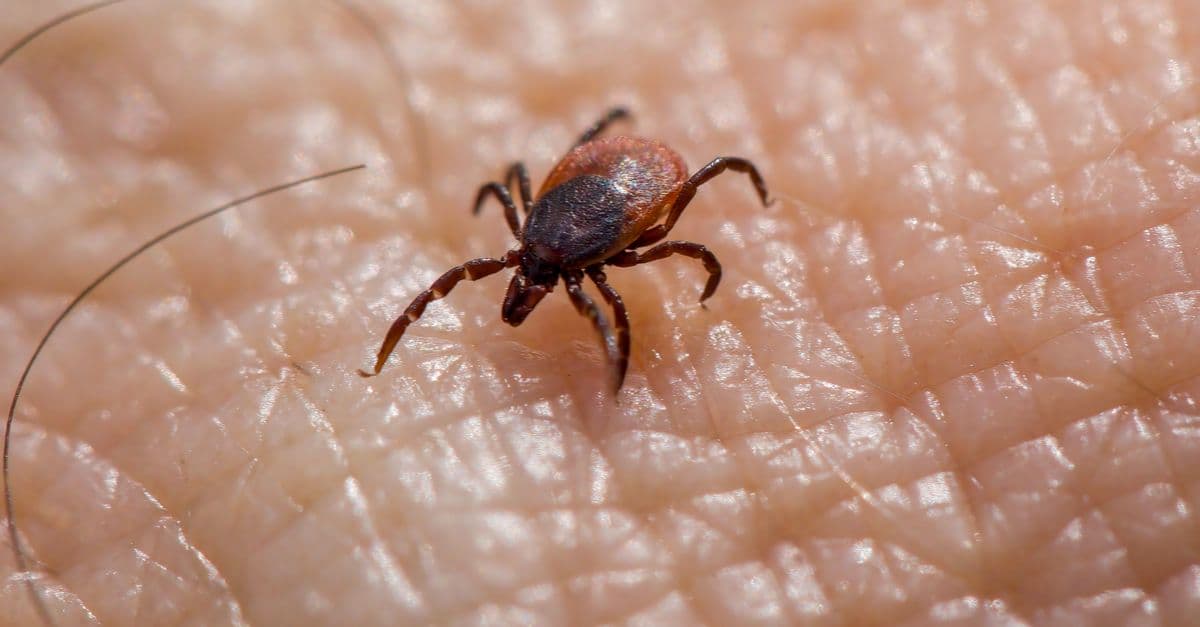
Photo: Erik Karits / Pexels
Tick-borne encephalitis (TBE) is one of the few serious brain infections that a hiker can avoid with a vaccine, and one of the few that a vaccine does not always reach in time. The virus lives in ticks and small mammals across a belt of forest from western Europe to Japan. Most people bitten never notice anything. A minority develop a two-stage illness that begins like flu and can end in meningitis, encephalitis, or paralysis. This article explains the virus, the three subtypes, the ecology that is pushing cases upward, and what the vaccine evidence shows.
Educational content, not medical advice. Talk to your doctor before changing any medication, treatment, or routine. Information here reflects current research but every person's situation differs.
The flavivirus behind the disease
TBE virus (TBEV) is a flavivirus, the genus that also contains dengue, West Nile, Zika, and yellow fever viruses. Like its relatives, it is a small enveloped virus whose genome is a single strand of RNA that host cells can read directly. For the general mechanics of how such a virus enters a cell and copies itself, see how viruses work from infection to replication.
TBEV is neurotropic, meaning it has an affinity for nervous tissue, which it shares with West Nile virus and with the virus behind Japanese encephalitis. What sets it apart from dengue virus, Zika, and yellow fever is its vector. Those viruses ride on mosquitoes. TBEV rides on ticks, which changes the geography, the seasons, and the prevention advice.
A family of tick-borne neighbors
TBEV belongs to a group of tick-borne flaviviruses. Related members include louping ill virus, Langat virus, and Powassan virus, which cause encephalitis but rarely in epidemics, according to a review by Gritsun and colleagues in Antiviral Research. A 2025 report in Viruses described a neurotropic tick-borne flavivirus in Alpine chamois in Austria (2017) and Italy (2023) that is more closely related to louping ill virus than to European TBEV and was proposed as a new subtype. No human cases have been linked to it. The point is that the tick-borne flavivirus family tree is still being mapped, and a "TBE" label can hide a lot of diversity.
Three subtypes, three risk profiles
TBEV is not one uniform pathogen. A 1999 genetic study by Ecker, Allison, Meixner, and Heinz in the Journal of General Virology sequenced 16 new strains, analyzed nine published ones, and found three lineages: European, Far Eastern, and Siberian. Amino acid differences within a subtype reached at most 2.2%, and between subtypes at most 5.6%, which the authors described as comparable to variation within other flaviviruses. That is a small genetic distance for a large clinical difference.
The European Centre for Disease Prevention and Control (ECDC) summarizes the clinical contrast in its TBE overview.
| Subtype | Mortality | Long-term effects | Clinical pattern |
|---|---|---|---|
| European | 0.5% to 2% | Severe neurological sequelae in up to 10% of patients | Often two phases; 20% to 30% reach the second phase |
| Siberian | 1% to 3% | Tendency toward chronic or long-lasting disease | Can persist over time |
| Far Eastern | Up to 35% | Higher rate of severe long-term problems | Monophasic (a single phase) |
Source: ECDC. The figures describe tendencies across patients, not what any one person will experience. The subtype names point to rough geography, with the Far Eastern form centered on far-eastern Russia, China, and Japan.
The ECDC fact sheet adds that the Far Eastern form is monophasic, so the quiet gap that characterizes the European form may be absent. A reader should not assume the word "TBE" implies one fixed severity. Which subtype circulates where a person was bitten matters.
Where the virus occurs
A 2009 review by Mansfield and colleagues in the Journal of General Virology describes TBEV as endemic from northern China and Japan, through far-eastern Russia, to Europe. The CDC places it in parts of western and northern Europe and northern and eastern Asia. The ECDC's 2025 notification maps, based on 2023 data, show hotspots concentrated mainly in central, eastern, and northern Europe, and note that several regions have recently reported their first human cases or an increase in infections.
The tick vector and the animals that keep the virus going
TBEV circulates in a cycle between ticks and small rodents, according to the CDC. In Europe the main vector is Ixodes ricinus and in Asia it is Ixodes persulcatus, as Mansfield and colleagues note. Humans and larger animals become infected through tick bites but are not part of the core cycle.
Think of it like a relay race run by ticks and rodents. The virus is the baton, passed whenever ticks and small mammals meet in the undergrowth. Humans are spectators who wander onto the track and get hit. The ECDC states that TBE is not directly transmitted between humans, except from an infected mother to a breastfed child.
Why the same tick matters for Lyme disease
Ixodes ticks also carry the bacterium that causes Lyme disease, so a single bite can in principle introduce more than one pathogen. A 2025 laboratory paper in the International Journal of Microbiology studied coinfection of Ixodes ricinus with Borrelia afzelii and TBEV. The two diseases require different responses: Lyme disease is bacterial and is treated with antibiotics, while TBE is viral, and as discussed below, has no specific antiviral.
Tick season and where to be careful
ECDC notes that tick activity typically runs from spring to autumn, especially in forested or grassy areas. In central Europe, TBE activity peaks in April and May and again in September and October, per the ECDC fact sheet, while colder northern and mountain regions show a single summer peak. In 2022, 90% of confirmed EU and EEA cases occurred from June to November, with July the busiest month, at 800 cases.
The overlooked route: raw milk
Ticks are not the only way in. TBEV can also be transmitted through unpasteurized dairy products from infected animals, the ECDC and a 2021 review in Viruses note. The review describes alimentary (through food) infections across Europe linked to raw milk from sheep, goats, and cows, and says the route was recognized in the early 1950s.
How common is the virus in milk? A 2025 systematic review in Zoonoses and Public Health pooled 16 articles and 35 data collections (31 raw milk, four raw-milk cheese) and estimated a prevalence of 6% in individual raw milk samples and 3% in cheese. Results from bulk milk tanks were highly variable, mostly 0% or 100%, which is what one would expect when a single infected animal can contaminate a whole tank.
Clusters tell the story
Alimentary infections tend to appear as clusters of people who ate the same food. A 2023 case report in Pathogens described two patients, aged 63 and 67, from a cluster of eight cases in Poland in 2022 linked to raw goat milk from one source. Both denied tick bites, both had a biphasic illness, and both were discharged after about three weeks. A 2026 report in Viruses described a household in Belgium in 2025 where two people developed meningoencephalitis nearly simultaneously after eating unpasteurized milk and goat cheese, although one also reported a tick bite.
The ECDC notes that after foodborne infection the incubation period is usually shorter, around four days. A 2026 laboratory study in the Journal of Medical Virology found that milk reduced TBEV viability in simulated stomach conditions, but protected the virus from bile salts in the intestine, mainly through casein. Pasteurization is the practical safeguard, and the authors of several of these reports stress it.
The two-phase illness
TBE is best known for its two-stage course, although many infections never reach the clinic at all. The ECDC states that about two-thirds of infections are asymptomatic. Of the rest, the typical European-subtype story unfolds as follows.
- Incubation. Symptoms appear after an average of 7 days, with reports of up to 28 days. After foodborne infection, the average is around 4 days.
- The first phase (viraemic). For about 5 days (range 2 to 10), the virus is in the bloodstream. The ECDC lists fever, tiredness, headache, muscle pain, and nausea.
- The quiet interval. The patient feels better for about 7 days (range 1 to 33).
- The second phase. The central nervous system is involved, as meningitis, encephalitis, or both, with a further form involving the spinal cord.
For the European subtype, 20% to 30% of patients go on to the second phase, according to the ECDC. The quiet interval is what makes the illness easy to misread. A person who had what looked like a summer flu can feel recovered, and then fall ill again.
What the second phase looks like
Meningitis means inflammation of the membranes around the brain and spinal cord. Encephalitis means inflammation of the brain tissue itself. The ECDC fact sheet lists meningitis, encephalitis, and meningomyelitis as the possible forms, with hospitalization and supportive care required, depending on severity.
Age changes the picture. In the European subtype, children's second phase is usually limited to meningitis, while adults over 40 face a higher risk of encephalitis, and mortality and long-lasting sequelae are higher in those over 60. A 2025 study of burden in Austria reached a similar picture from the hospital side, reporting 2,260 hospitalized cases between 2000 and 2024, of whom 274 were children, 1,066 adults aged 16 to 59, and 920 adults aged 60 and over.
Recovery can be slow
Survival is not the same as recovery. A 2026 Norwegian cohort study in the European Journal of Clinical Microbiology & Infectious Diseases followed 93 hospitalized adults with confirmed TBE. Symptoms or neurological findings affecting daily life were present in 98% at baseline, 52% at 3 months, and 41% at 12 months. Fatigue (28%), concentration problems (13%), and memory and sleep difficulties (12% each) were the most common problems at 12 months, and 14% needed inpatient rehabilitation. A review by Bogovic and Strle in the World Journal of Clinical Cases states that up to 50% of patients develop a post-encephalitic syndrome that can affect quality of life.
These figures come from different populations and definitions, so they should not be read as one rate. What they share is the message that "survived" and "back to normal" are not the same outcome.
How diagnosis works, and why there is no cure
Diagnosis relies on antibody testing. The ECDC reports IgM antibodies appear 0 to 6 days after symptom onset and can persist for up to 10 months, and the CDC says serologic testing is the primary diagnostic method. There is no specific antiviral treatment, as the ECDC and CDC both state, and care is supportive. People with meningitis or encephalitis are hospitalized, and treatment targets symptoms such as fever, seizures, and, in severe cases, breathing support. That leaves prevention as the main lever.
The vaccine evidence
A TBE vaccine is the only vaccine for a tick-borne disease currently on the market, according to a 2025 review in Vaccines. FSME-IMMUN and Encepur are licensed in Europe. In the United States, the FDA approved Ticovac in August 2021 for people aged one year and older, as described in the 2023 recommendations of the Advisory Committee on Immunization Practices (ACIP) published in MMWR Recommendations and Reports. The ECDC calls vaccination one of the most effective means of prevention.
How well does it work in the real world? Three studies give a sense.
| Setting | Period | Finding |
|---|---|---|
| Austria | 2000 to 2024 | Vaccine protection of 99% with regular schedules and above 90% with irregular schedules; more than 10,000 hospitalizations, 4,000 severe cases, and 80 deaths prevented |
| Slovenia | 2019 to 2024 | Effectiveness of 93.4% (95% CI 84.0% to 97.3%) for three or more doses; 426 cases prevented |
| Friuli Venezia Giulia, Italy | Case-control study, hospitalizations | Odds ratio 0.11 (95% CI 0.02 to 0.88) for three or more doses versus unvaccinated; coverage about 10% in 2025 |
Sources: Vaccine (2025) for Austria, Pathogens (2026) for Slovenia, Vaccines (2026) for Italy.
Why Austria is the cautionary success story
The Austrian numbers illustrate both the promise and the limit. Vaccination there is widespread: in a 2026 survey of 2,162 blood donors in Upper Austria, published in Epidemiologia, 87.0% had antibodies attributed to vaccination. Yet 2,260 people were still hospitalized with TBE across those 25 years, roughly 90 a year on average. A vaccine that prevents more than 10,000 hospital admissions is a public health success, and a disease that still sends dozens of people to hospital each year shows that coverage gaps and irregular schedules matter.
Who is recommended to get it
Policy varies by country, and this article does not give individual advice. A European Academy of Neurology consensus review by Taba and colleagues in the European Journal of Neurology recommends vaccination for everyone over age one in highly endemic areas, defined as 5 or more cases per 100,000 per year, and for at-risk people in lower-incidence areas. In the United States, ACIP recommends the vaccine for people moving to or traveling to endemic areas with extensive tick exposure, based on planned activities and itinerary, and says it may be considered for others with outdoor exposure. The ACIP report notes that risk is very low for most travelers and highest from April to November, and that adults aged 60 and older are at higher risk for severe disease.
A 2025 case report in Emerging Infectious Diseases described a fatal TBE case in an unvaccinated American traveler visiting Switzerland in 2022. A single case proves little statistically, but it shows how travel brings unvaccinated people into endemic areas.
What does not exist: post-bite prophylaxis
Unlike some other infections, TBE has no post-exposure treatment. The European Academy of Neurology consensus review states that post-exposure prophylaxis after a tick bite is not recommended. After a bite, the practical advice from the ECDC is to inspect the body for ticks after outdoor activity, remove ticks promptly, and to seek medical advice if symptoms such as fever and headache develop in the following weeks.
Why cases are rising
The numbers are not subtle. The ECDC reports that human cases in endemic regions of Europe have risen by almost 400% over the last 30 years. A study of EU and EEA surveillance data published in Eurosurveillance in 2023 covered 2012 to 2020 and counted 29,974 cases from 19 countries. Czechia, Germany, and Lithuania together reported 52.9% of all cases. The highest notification rates were in Lithuania (16.2 per 100,000), Latvia (9.5), and Estonia (7.5), and 50 regions in 10 countries had a rate of 5 per 100,000 or more. The authors saw a geographical spread of cases, particularly in regions north-west of known endemic areas.
| EU and EEA indicator | Value | Source |
|---|---|---|
| Cases reported, 2012 to 2020 | 29,974 in 19 countries | Eurosurveillance, 2023 |
| Cases reported, 2022 | 3,650 from 20 countries (3,516 confirmed) | ECDC annual report |
| Notification rate, 2022 | 0.81 per 100,000, about 14% higher than 2021 | ECDC annual report |
| Sex ratio, 2022 | 1.5 men for every woman | ECDC annual report |
| Most affected age group, 2022 | 45 to 64 | ECDC annual report |
Climate is one driver, but not the only one
The simple explanation is warming. The evidence is more textured. Several 2026 studies tie climate to TBE locally: a study of Veneto in Italy found that monthly minimum temperature and forest cover were key factors, with age-standardized incidence rising 10.2% per year from 2014 to 2024. A Norwegian study found virus prevalence in ticks rose with accumulated heat. A Swedish modeling study projected TBE cases rising 69% under a low-emissions scenario and 121% under a high-emissions scenario by the 2090s, compared with 2014 to 2023.
But the older literature cautions against a single story. In a 2001 review in Philosophical Transactions of the Royal Society B, Sarah Randolph argued that recent increases in central Europe and the Baltic states may largely reflect human behavior bringing people into contact with infected ticks, and that climate change might even end some transmission cycles at the southern edge of the range, as in Slovenia, Croatia, and Hungary, while new foci appear in Scandinavia. A 2012 review of Sweden's rise by Jaenson and colleagues pointed to ecological changes: fewer roe deer may have shifted tick feeding toward small rodents, which can transmit the virus, and a bank vole peak in 2010 may have amplified the effect. In 2011, Sweden had at least 284 overt human cases, its highest annual total on record at the time.
The most defensible reading is that several things push in the same direction at once: tick habitat and activity, the animals ticks feed on, how people use forests, and better diagnosis and reporting. For a broader look at how pathogens cross from wildlife to people, see how viruses jump from animals to humans.
TBE compared with Lyme disease
The two diseases are most often confused, because the same genus of tick is involved in both. The contrasts are worth lining up.
| Feature | Tick-borne encephalitis | Lyme disease |
|---|---|---|
| Cause | A flavivirus | The bacterium Borrelia |
| Main tick genus | Ixodes | Ixodes |
| Specific antiviral or cure | No antiviral exists; care is supportive | Treated with antibiotics |
| Vaccine on the market | Yes (a TBE vaccine is the only tick-borne disease vaccine currently marketed) | No (a vaccine is in advanced trials, per a 2025 review) |
| Raw milk route | Documented | Not applicable |
| Post-bite prophylaxis | Not recommended | Outside the scope of this article |
Other tick-borne viruses cause very different illnesses. Crimean-Congo hemorrhagic fever, for example, is a bleeding disease rather than a brain infection. And among mosquito-borne flaviviruses, West Nile virus and Japanese encephalitis virus are the closest neurological parallels to TBE.
How a vaccine for a tick-borne disease works
TBE vaccines are inactivated whole-virus vaccines, which means the virus is grown, killed, and purified so it can teach the immune system without causing disease. The exact schedules, booster intervals, and age rules differ between products and national guidelines, so check current national advice. For the immunology of how the shot trains memory, see how vaccines work and how vaccines train memory B cells.
Coverage matters as much as the shot. A 2024 meta-analysis in Vaccines of seroprevalence studies, covering 130 articles from 33 countries, found antibodies in about 2.75% of people in high-risk areas across periods. A 2026 Swedish national survey in Vaccine of 1,006 outdoor workers found that nearly 70% reported at least three doses, with uptake varying by sex, occupation, income, and region. TBE vaccination is not part of Sweden's national immunization program, and coverage was higher in southern and central Sweden than in the north.
What people get wrong about TBE
"A tick bite means TBE." Most ticks carry nothing. Even where the virus is endemic, only a small share of ticks are infected, and about two-thirds of human infections cause no symptoms, per the ECDC.
"If I feel better, I'm fine." In the European form, the quiet interval between phases can last days to a month. Fever that returns with headache or confusion needs medical attention.
"It's a Lyme disease problem." Both pathogens use Ixodes ticks, but a bacterium and a virus need different handling. Antibiotics do not treat TBE.
"Vaccination is only for people who live in endemic areas." ACIP recommends it for some travelers, based on itinerary and activities, and the Swiss fatal case in an unvaccinated visitor is a reminder that exposure follows the trip.
"Boiling down to climate change." Climate matters, but host animals, forest use, and surveillance also shape the numbers, as the Swedish and Central European literature shows.
"Raw milk from a small farm is safe." The 2025 systematic review found the virus in some raw milk and cheese samples, and pasteurization is the safeguard.
Frequently asked questions
Q: Can you get TBE in Western Europe, or only in Eastern Europe? A: TBE occurs across central, eastern, and northern Europe, and the CDC places it in western and northern Europe and parts of Asia. The ECDC's 2023 maps show hotspots mainly in central, eastern, and northern Europe, with several regions recently reporting their first human cases. In 2012 to 2020, Czechia, Germany, and Lithuania accounted for 52.9% of EU and EEA cases.
Q: Is TBE the same as Lyme disease? A: No. Both are linked to Ixodes ticks, but TBE is caused by a flavivirus and Lyme disease by a bacterium. Lyme disease is treated with antibiotics. TBE has no specific antiviral, and treatment is supportive. A tick can carry both agents.
Q: What is the treatment for TBE? A: There is no specific antiviral treatment, according to the ECDC and CDC. Meningitis, encephalitis, or meningomyelitis require hospitalization and supportive care, depending on severity. That is why vaccination and avoiding tick bites carry so much weight.
Q: How effective is the TBE vaccine? A: Studies report high effectiveness. Austria's 2000 to 2024 analysis estimated 99% protection with regular schedules and above 90% with irregular schedules, and Slovenia's 2019 to 2024 study found 93.4% effectiveness for three or more doses. Real-world figures depend on schedule adherence and the population studied.
Q: Should I be vaccinated before hiking in European forests? A: That is a decision for you and a health professional. ACIP recommends vaccination for U.S. travelers going to endemic areas with extensive tick exposure, based on planned activities and itinerary, and says it may be considered for others with outdoor exposure. Risk is very low for most travelers and highest from April to November.
Q: Can children get TBE, and is it milder? A: Children can get TBE. In the European subtype, ECDC says children's second phase is usually limited to meningitis, while adults over 40 face a higher risk of encephalitis and mortality is higher over 60. Ticovac is FDA-approved from age one in the United States.
Q: Can TBE spread from person to person? A: According to the ECDC, TBE is not directly transmitted between humans, except from an infected mother to a breastfed child. A 2024 ECDC assessment also looked at the risk of transmission through substances of human origin, such as transplanted organs and blood.
The takeaway
TBE is a disease of intersections: ticks and rodents, forests and people, a quiet gap between two phases, and a vaccine that works well wherever it is actually used. The facts that matter are not mysterious. Roughly two-thirds of infections cause no symptoms, the European form kills a small fraction of patients but leaves many with months of fatigue and concentration problems, and nothing in the medicine cabinet treats it once it starts. The Austrian record shows that high vaccination coverage prevents thousands of hospitalizations, and the European case counts show that the virus is not standing still. Where the ticks are, the choice is between prevention and recovery.
Sources
- European Centre for Disease Prevention and Control. Tick-borne encephalitis: key facts and facts and factsheet.
- European Centre for Disease Prevention and Control. Tick-borne encephalitis: annual epidemiological report for 2022, published June 20, 2024.
- European Centre for Disease Prevention and Control. TBE in Europe: new maps published, April 15, 2025.
- Centers for Disease Control and Prevention. Tick-borne encephalitis.
- Eurosurveillance. Spatiotemporal spread of tick-borne encephalitis in the EU/EEA, 2012 to 2020. 2023;28(11).
- Advisory Committee on Immunization Practices. Tick-borne encephalitis vaccine: recommendations of the ACIP, United States, 2023. MMWR Recomm Rep. 2023;72(5).
- Bogovic P, Strle F. Tick-borne encephalitis: a review of epidemiology, clinical characteristics, and management. World J Clin Cases. 2015.
- Mansfield KL, et al. Tick-borne encephalitis virus: a review of an emerging zoonosis. J Gen Virol. 2009.
- Taba P, et al. EAN consensus review on prevention, diagnosis and management of tick-borne encephalitis. Eur J Neurol. 2017.
- Ecker M, Allison SL, Meixner T, Heinz FX. Sequence analysis and genetic classification of tick-borne encephalitis viruses from Europe and Asia. J Gen Virol. 1999.
- Randolph SE. The shifting landscape of tick-borne zoonoses: tick-borne encephalitis and Lyme borreliosis in Europe. Philos Trans R Soc Lond B. 2001.
- Jaenson TG, et al. Why is tick-borne encephalitis increasing? A review of the key factors causing the increasing incidence of human TBE in Sweden. Parasit Vectors. 2012.
- Gritsun TS, Lashkevich VA, Gould EA. Tick-borne encephalitis. Antiviral Res. 2003.
- Vaccine effectiveness and burden studies: Austria 2000 to 2024 (Vaccine, 2025); Slovenia 2019 to 2024 (Pathogens, 2026); Friuli Venezia Giulia (Vaccines, 2026); Norway cohort (Eur J Clin Microbiol Infect Dis, 2026).
- Educational overview only: this article describes published research and does not recommend any treatment or vaccination decision for an individual.
Read next:
Follow new articles
Add SciHub101 to your feed reader to see new science and technology stories.
About the Author
SciHub101 is an independent science and technology publication founded and edited by Buğra Sözeri, a software engineer and app developer based in Türkiye. AI tools assist with drafting and research. Source documentation in the existing archive is uneven, and articles are being reviewed and corrected. The Editorial Team byline identifies editorial responsibility; it does not certify specialist or independent human review. Where we compare products, anything built by our own team is labelled as such — see the editorial guidelines and About page for how corrections and disclosures work.
Related Articles
Rift Valley Fever: The Virus That Kills Livestock and Blinds Humans
Rift Valley fever spreads by mosquitoes and contact with infected livestock, causing abortion storms in animals and rare severe disease in humans.

Parvovirus B19: The Virus Behind Fifth Disease
Parvovirus B19 causes fifth disease: slapped cheek rash in children, joint pain in adults, aplastic crisis in sickle cell disease, and fetal risk in pregnancy.

Japanese Encephalitis Virus: How It Spreads and Who It Hits
Japanese encephalitis virus spreads from pigs and herons through Culex mosquitoes. Learn the burden, symptoms, vaccines, and real traveler risk.

Crimean-Congo Hemorrhagic Fever Explained
Crimean-Congo hemorrhagic fever is a tick-borne virus with a 10 to 40 percent reported fatality. How it spreads, how it progresses, and what treats it.

Chikungunya Virus Explained
Chikungunya virus explained: how this mosquito-borne alphavirus spreads, why it causes lasting joint pain, how it differs from dengue, and what vaccines exist.

West Nile Virus Explained
West Nile virus: mosquito transmission, bird reservoirs, neuroinvasive disease, the 1999 NYC outbreak, and why no human vaccine exists yet.