Japanese Encephalitis Virus: How It Spreads and Who It Hits
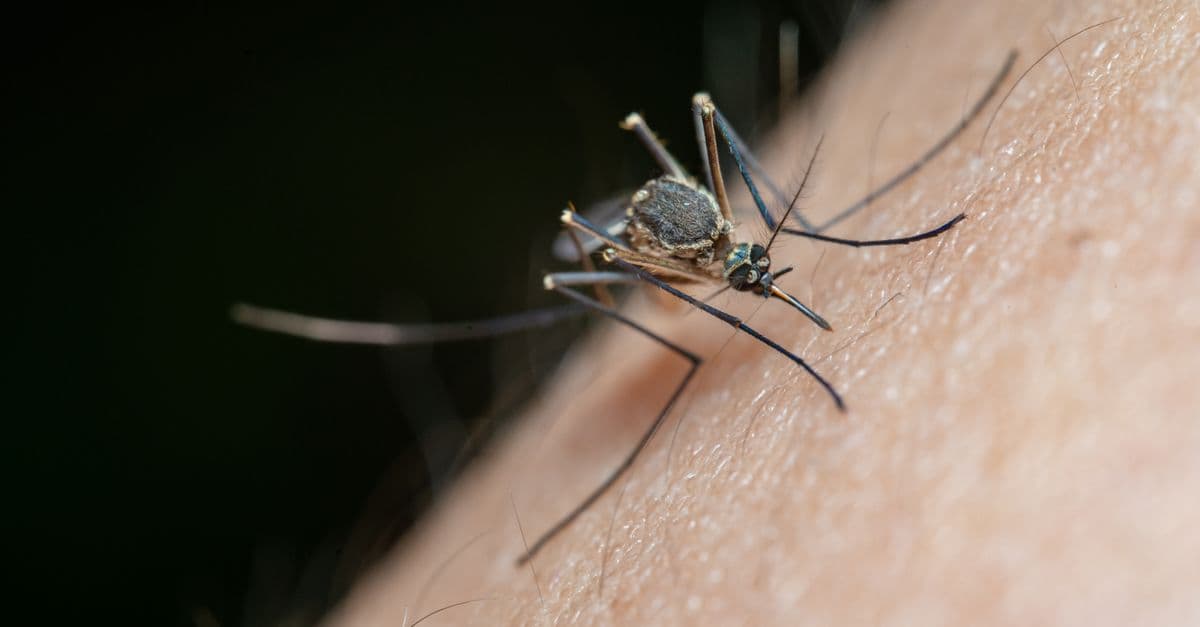
Photo: Monstera Production / Pexels
Japanese encephalitis virus (JEV) is the most common vaccine-preventable cause of viral brain infection in Asia, according to the CDC's Yellow Book. The World Health Organization (WHO) estimates that it causes about 100,000 clinical cases and 25,000 deaths a year, mostly in children. Despite the name, Japan is no longer where most cases occur. The virus lives in rice-growing country across South Asia, Southeast Asia, China, and the Western Pacific, where mosquitoes, pigs, and wading birds keep it in circulation. Here is how that cycle works, what the infection does, and what protects people.
Educational content, not medical advice. Talk to your doctor or a travel medicine clinic about vaccination and prevention. Information here reflects current research, but every person's situation differs.
What Japanese encephalitis virus is, and where it sits in the virus family tree
JEV belongs to the family Flaviviridae and the genus Flavivirus. That genus contains many of the viruses that make tropical medicine difficult: dengue, West Nile, yellow fever, Zika, and tick-borne encephalitis. WHO describes JEV as a flavivirus related to dengue, Zika, yellow fever, and West Nile viruses, and the CDC groups it with West Nile and St. Louis encephalitis viruses, which are its closest relatives in terms of disease.
Like its cousins, JEV is an enveloped virus with a single strand of RNA as its genome. The RNA is "positive-sense," which means the cell can read it directly as if it were messenger RNA, with no preparatory step. Think of it as a recipe card that a kitchen can cook from the moment it arrives, rather than a coded note that first has to be translated. The genome, roughly 11 kilobases long, is translated into one long polyprotein that cellular and viral enzymes then cut into three structural proteins (capsid, premembrane, and envelope) and seven nonstructural proteins that copy the genome and dampen the host's alarm signals. For a fuller walk through that sequence, see how viruses work from infection to replication.
The envelope protein, called E, studs the outside of the virus particle. It is what the virus uses to dock with cells, and it is also what the immune system's neutralizing antibodies mostly aim at. That is why vaccines against flaviviruses are designed around it.
How JEV compares with other flaviviruses
The table below places JEV beside three relatives. The comparison is qualitative on purpose: case counts for dengue and West Nile depend heavily on how each country counts and tests.
| Feature | Japanese encephalitis | Dengue | West Nile | Yellow fever |
|---|---|---|---|---|
| Main vector | Culex mosquitoes | Aedes mosquitoes | Culex mosquitoes | Aedes and other mosquitoes |
| Natural amplifying hosts | Pigs, wading birds | Humans | Birds | Primates, humans |
| Humans pass it on to mosquitoes? | No (dead-end host) | Yes | No (dead-end host) | Yes |
| Typical severe outcome | Encephalitis (brain inflammation) | Hemorrhagic and shock syndromes | Encephalitis in a minority, more often in older adults | Liver failure and bleeding |
| Vaccine for the general public | Yes, several types | Limited | None approved for humans in most countries | Yes |
The "dead-end host" row is the important one. When people are bitten by an infected mosquito, they do not develop enough virus in the blood to infect the next mosquito that feeds on them. The chain ends at the person. Dengue works the opposite way: humans are the amplifier, which is why dengue travels through cities and JEV mostly does not.
The transmission cycle: mosquitoes, pigs, and wading birds
JEV does not need people to survive. Its real home is a loop between mosquitoes and animals, and people are collateral damage when they live close enough to the loop.
The vector. WHO names Culex mosquitoes, mainly Culex tritaeniorhynchus, as the vector. In Australia, the main species is Culex annulirostris, which the Royal Australian College of General Practitioners (RACGP) says can travel several kilometers a day. These mosquitoes breed in standing, often nutrient-rich water such as flooded rice fields and irrigation channels.
The amplifying host. Pigs are the classic amplifier. An infected pig carries a high level of virus in its blood for roughly three to five days (the RACGP figure), long enough for a feeding mosquito to pick it up and carry it onward. The pig is rarely very sick, so nobody notices. Pregnant sows can suffer stillbirths and abortions.
The reservoir. Wild wading birds such as herons and egrets maintain the virus over seasons and across geography. The RACGP also reports that flying foxes have been shown to transmit JEV to mosquitoes in Australia, a reminder that the cast of animal hosts is wider than the textbook pig-and-heron picture.
The key idea: JEV is an animal virus that people occasionally walk into. WHO states plainly that humans are dead-end hosts and that risk is highest in rural and periurban areas, especially where people live near domestic pigs.
An analogy helps. Picture a relay race that runs in a closed circle between mosquito and animal. Each runner hands the baton to the next with high reliability. A human who gets bitten steps onto the track by accident, takes the baton, and drops it. The race goes on without them, but the person can be badly hurt in the collision.
Seasons and landscapes
Timing follows the mosquitoes. WHO says transmission is seasonal in temperate Asia, following the warm season, and can occur year-round in the tropics, often peaking in the rainy season and the pre-harvest period in rice-growing areas. That fits the ecology: rain and irrigation create breeding water, and the paddy fields supply both mosquitoes and the wading birds that feed in them.
Pig farming close to rice fields and homes joins the pieces together. Where pigs, paddies, and people overlap, the loop touches human households. A hotel in a large city, with sealed windows and little standing water, is a very different setting from a village guesthouse beside a pig pen. The CDC makes the same point when it says travelers on short trips restricted to major urban areas have minimal risk.
If you want to know why some people seem to attract more mosquito bites than others, that question is taken up in why mosquitoes bite some people more. For how animal viruses reach people in general, see how viruses jump from animals to humans.
The iceberg: why most infections never become disease
The strangest feature of JEV is how rarely infection causes illness. WHO says about 1 in 250 infections causes severe illness. The CDC phrases it slightly differently: most infections are asymptomatic, and fewer than 1 percent develop neurologic disease. Both statements point at the same shape, a large submerged mass of silent infection under a small visible tip.
Three consequences follow.
- Blood tests in endemic villages show widespread past exposure. WHO notes that most adults in endemic areas have natural immunity from childhood infection. That is why the disease concentrates in children under 15.
- Individual risk for a visitor is low in absolute terms. The CDC puts risk for travelers to Asia below 1 per 1 million. For susceptible children living in endemic areas, it gives a much higher figure of 6 to 11 per 100,000 per year.
- When the virus does reach the brain, the outcome can be severe. The same barriers that stop most infections from getting there are what make a breakthrough so damaging.
Notice the two numbers are consistent rather than contradictory. A child growing up among infected mosquitoes will probably be bitten many times and will usually clear the virus without symptoms, acquiring immunity. The small share who develop encephalitis are the cases that reach hospitals and statistics.
How the virus gets from a mosquito bite to the brain
The detailed steps of neuroinvasion are still being worked out, but the broad outline is well accepted.
A mosquito deposits virus into the skin along with saliva. The virus infects local cells, including immune cells, and travels to lymph nodes, where it replicates. From there it spills into the bloodstream (this is the stage called viremia). In most people, the immune system controls the infection at this point, which is the quiet majority outcome described above.
In the unlucky minority, the virus crosses from blood into the central nervous system. Researchers propose several routes: infecting or passing through the cells that line brain capillaries, riding inside infected immune cells, or loosening the barrier through inflammation. The blood-brain barrier is a tightly packed layer of cells that screens what can enter the brain, a little like a security gate with an ID check; some flaviviruses find ways to get waved through, and inflammation can make the gate leaky.
Once inside, JEV infects neurons. Brain imaging in patients often shows involvement of deep structures such as the thalamus and basal ganglia, which help explain the movement disorders seen in some patients, including tremor, rigidity, and a mask-like face. Much of the damage, however, comes from the immune response itself: swelling, inflammatory cell infiltration, and the death of infected neurons together raise pressure inside the skull and disrupt normal signaling.
The immune system's first response to a new virus is covered in how the immune system recognizes threats. In JEV, that response is a double-edged tool. It clears the virus in most people, but in the brain the same inflammatory machinery can do harm.
The clinical course, from fever to long-term disability
After a bite from an infected mosquito, the CDC gives an incubation period of 5 to 15 days. WHO gives 4 to 14 days. The difference is a matter of how the ranges were compiled, not a real disagreement.
Early phase. The illness usually begins with fever and headache. In children, abdominal pain and vomiting can be the first signs, according to WHO. At this stage it is indistinguishable from many other tropical fevers.
Encephalitic phase. In the minority who progress, WHO describes rapid onset of high fever, headache, neck stiffness, disorientation, coma, seizures, spastic paralysis, and death. The RACGP adds that seizures occur in up to 85 percent of children but only about 10 percent of adults. The CDC notes that lab results often show a moderate rise in white blood cells, mild anemia, and low blood sodium, and that spinal fluid typically shows mild to moderate lymphocytic pleocytosis (an increase in a type of white blood cell).
Outcomes. The case-fatality rate among people with encephalitis is not a single number, because it depends on care and on who gets counted:
| Source | Case fatality in encephalitis |
|---|---|
| WHO fact sheet (2024) | Can reach 30% |
| CDC Yellow Book | About 20 to 30% |
| RACGP review of the Australian outbreak | Average 18% (range 5 to 50%) |
The same sources also disagree a little on lasting damage. The CDC says 30 to 50 percent of survivors have serious neurologic, cognitive, or psychiatric sequelae. The RACGP says about half of survivors have permanent neurological deficits. WHO's fact sheet lists lasting effects that include seizures, hearing or vision loss, speech or memory problems, and limb weakness, though its own pages give two different percentages for how many survivors are affected, so the safest summary is "a substantial minority to about half."
Survivors often need long-term care and rehabilitation, WHO notes. That cost, borne by families, is not captured in death counts.
How doctors diagnose it, and why there is no cure
Symptoms alone cannot prove JEV, so confirmation depends on the lab. The standard test is an IgM-capture ELISA, which looks for virus-specific IgM antibodies (the first antibody class the body makes) in spinal fluid or blood. The CDC says IgM is detectable in spinal fluid in most patients at least four days after onset and in serum at least seven days after onset. WHO prefers testing spinal fluid, because it reduces false positives from past infection or vaccination.
A second approach is the plaque reduction neutralization test, in which a fourfold or greater rise in antibodies between early and recovery blood samples confirms recent infection. The CDC adds that virus isolation and nucleic acid tests are insensitive and not routine, since by the time symptoms appear the virus has usually dropped to low levels in accessible fluids.
Both WHO and the CDC are blunt on treatment: there is no specific antiviral drug. Care is supportive. That means managing fever and seizures, protecting the airway, and treating complications such as brain swelling. Encephalitis, WHO says, is a medical emergency. That gap is why prevention carries so much weight in this disease.
How big is the burden, and why do the numbers differ
Two estimates appear in the literature, and they are not the same.
| Estimate | Annual cases | Annual deaths | Notes |
|---|---|---|---|
| Campbell and colleagues, Bulletin of the World Health Organization, 2011 | About 68,000 | Not given in this comparison | Systematic review covering 24 Asian and Western Pacific countries; about half of cases estimated to be in China |
| WHO fact sheet, updated August 6, 2024 | About 100,000 (95% CI 61,720 to 157,522) | About 25,000 (95% CI 14,550 to 46,031) | Population at risk: more than 3 billion people in 24 countries |
The jump from 68,000 to about 100,000 does not necessarily mean the disease got worse. The two studies used different methods and data years, and both are model-based. Direct counts of cases are far lower, because many endemic countries lack the labs to test for JEV. A secondary review of the 2011 work noted that only about 10 percent of estimated cases had been reported to WHO. The wide confidence interval in WHO's newer estimate, from about 62,000 to about 158,000 cases, is an honest signal of how uncertain the real total remains.
Vaccination has changed the picture, too. Where national programs introduced routine vaccination, the disease has become much less common among children, which is part of why estimates keep shifting as immunization coverage grows.
Geography and a moving map
WHO describes 24 countries in the South-East Asia and Western Pacific Regions as being at risk, with more than 3 billion people exposed. The virus is endemic from Pakistan and India in the west through China, Southeast Asia, and the Korean Peninsula and Japan, and south into the islands north of Australia.
The map has not been completely fixed. The best documented recent shift was in Australia. According to the RACGP's clinical update, there have been 45 symptomatic human cases since the start of 2021 across New South Wales, the Northern Territory, Queensland, South Australia, and Victoria, including seven deaths. The outbreak traces to a sentinel case on the Tiwi Islands in February 2021. JEV was found in more than 70 piggeries, plus feral pigs in the Northern Territory and Queensland.
Before 2021, Australia had recorded only five locally acquired cases, including two deaths, all in northern Australia and none since 1998. The 2022 events were therefore the first time the virus spread through southeastern farming regions, an area with a large pig industry and abundant Culex annulirostris. The CDC Yellow Book notes that cases in Australia were reported again from December 2024. The Australian government declared a communicable disease incident of national significance in early March 2022. Case totals differ depending on the date of each report, so current counts should come from the Australian Department of Health or state agencies.
Why would a virus show up in a new region? Researchers point to several overlapping factors rather than a single cause: wetter conditions that expand mosquito breeding, movements of waterbirds, the presence of pigs as amplifiers, and improved detection. Scientists are still debating how much each contributes. It is reasonable to say that the Australian outbreak shows that the boundaries of JEV are not fixed.
Three kinds of vaccine, and what each one is for
WHO recommends integrating Japanese encephalitis vaccination into national immunization schedules wherever the disease is a public health priority, along with a one-time catch-up campaign when a vaccine is introduced. It also advises considering vaccination even where confirmed case numbers are low, if the environment supports transmission, and says that prioritizing human vaccination makes more sense than vaccinating pigs or controlling mosquitoes, since the evidence for those measures is limited.
Three vaccine types are in use, according to WHO: inactivated Vero cell-derived vaccines, live attenuated vaccines, and live recombinant (chimeric) vaccines. WHO says one inactivated and two live vaccines are prequalified.
Inactivated mouse-brain vaccine (first generation). The original JE-VAX was made from virus grown in mouse brain tissue and then inactivated. Production ceased in 2005, according to a reference summary of JE vaccines, and it is not available as a travel vaccine today.
Inactivated Vero cell vaccine (IXIARO, sold as JEspect in Australia). Grown in Vero cell culture (a standard monkey kidney cell line) and chemically inactivated. The CDC says IXIARO is the only JE vaccine licensed in the United States, with approval for adults 17 and older in March 2009 and for children from 2 months to 16 years in May 2013. Inactivated means the virus cannot replicate, so it is considered safe for people with weak immune systems, though pregnancy is listed as a precaution.
Live attenuated vaccine (SA14-14-2). Developed in China from a strain weakened through laboratory passage, it entered China's schedule in 1988. It is much cheaper than alternatives and is given to about 20 million Chinese children each year, according to a reference summary of JE vaccines. Effectiveness figures for it come mostly from observational studies rather than randomized trials, so they are evidence of real-world benefit rather than precise numbers. Because it contains live virus, it is not suitable for everyone, such as people with weakened immunity.
Chimeric vaccine (IMOJEV). Built by placing the JEV genes for the outer proteins into a yellow fever vaccine virus backbone. It was licensed in Australia in August 2010 and in Thailand in December 2012. The RACGP says it is given as a single subcutaneous dose from nine months of age, with a second dose advised at 12 to 24 months for people under 18 who remain at risk. It is not for immunocompromised people or pregnant or breastfeeding women.
An analogy: a vaccine is a wanted poster for the immune system. The inactivated vaccine hands over a photograph of the suspect (a dead copy of the virus), which requires repeat reminders. The live vaccines send a harmless look-alike that behaves enough like the real thing to build a durable memory, usually in fewer doses, but with extra safety limits.
The CDC schedule for the inactivated vaccine
| Age group | Dose | Schedule | Booster |
|---|---|---|---|
| 2 months to 2 years | 0.25 mL, intramuscular | Days 0 and 28 | At least 1 year after the primary series |
| 3 to 17 years | 0.5 mL, intramuscular | Days 0 and 28 | At least 1 year after the primary series |
| 18 to 65 years | 0.5 mL, intramuscular | Day 0, then day 7 to 28 | At least 1 year after the primary series |
| Over 65 years | 0.5 mL, intramuscular | Days 0 and 28 | At least 1 year after the primary series |
The CDC says the two-dose series should be finished at least one week before travel. It also reports that about 96 percent of people were still protected roughly six years after a booster. Common side effects in adults are pain and tenderness at the injection site in about a third, plus headache in about 28 percent and muscle aches in about 16 percent. Serious adverse events are rare, and the vaccine is contraindicated after a severe allergic reaction to a previous JE vaccine or any of its components, including protamine sulfate.
What the real risk looks like for travelers
The CDC Yellow Book gives a few anchoring numbers. Risk for travelers to Asia is below 1 per 1 million. Between 1973 and 2022, 90 cases were reported among travelers or expatriates from non-endemic countries. Since the US vaccine became available in 1993, 16 US traveler cases have been reported through 2024. Before 1973, there were more than 300 cases among soldiers, which tells you what extended time in endemic rural areas without protection can mean.
So the risk is small but the disease is severe, and the decision is about itinerary, not about a country name. The CDC's advisory committee guidance recommends vaccination for people moving to an endemic country, travelers staying a month or longer, and frequent travelers. It suggests considering it for shorter trips with increased risk, for example heavy time outdoors in rural areas, and for travelers with uncertain itineraries. It does not recommend it for very low-risk trips, such as short urban-only visits.
Because the main protection beyond vaccination is avoiding bites, WHO advises repellents, long sleeves, coils, and vaporizers. The CDC calls avoiding mosquito bites the core protective measure for all travelers. Both are common sense, and both complement rather than replace vaccination for higher-risk trips.
A clinic visit should ideally happen early. For a two-dose course, the CDC's rule of finishing at least a week before departure sets a practical floor, and booking earlier allows time for any needed follow-up. Nothing here replaces advice from a travel medicine specialist who knows your itinerary and health history.
Common misunderstandings
"It is a disease of Japan." The name reflects where it was first described. Today the burden is spread across many countries, and WHO lists 24 at risk.
"Mosquitoes spread it from person to person." They do not. Humans are dead-end hosts, so a patient in a hospital bed is not a source of infection for others, short of rare routes such as blood transfusion or organ transplant, which the CDC lists as uncommon.
"If most people are fine, it is not a big deal." The silent majority hides a heavy toll. WHO's estimate of about 25,000 deaths a year is for a disease that begins quietly in most hosts.
"A tropical vacation means high risk." Risk depends on setting and season. Resorts and cities carry far less risk than rural farmland in the rainy season.
"There is a treatment if you catch it." There is no specific antiviral. Intensive supportive care saves lives but cannot undo brain injury, which is why vaccination matters.
"The numbers are settled." They are not. WHO's own pages differ on survivors' sequelae, and burden estimates have shifted from about 68,000 cases in 2011 to about 100,000 in 2024. Treat any single figure as a model output with a range around it.
The takeaway
JEV is a disease of overlap: mosquitoes, pigs, wading birds, and rice paddies in the same landscape as people. The virus is mostly harmless to the people it infects, yet the minority who develop encephalitis face a high chance of death or lasting disability, with nothing to treat the virus itself. That asymmetry is why public health teams have concentrated on vaccines, and why places that deployed them at scale have seen the disease recede.
The Australian outbreak of 2021 and 2022 is a useful reminder that ecological maps are drawn in pencil. A virus that depends on animals and weather can turn up where it has not been recognized before. For readers, the practical lesson is proportion: for most travelers the chance is very small, for children in endemic villages it is not, and a plan built on itinerary and timing is better than either panic or indifference.
FAQ
Q: Can you catch Japanese encephalitis from another person? A: No. JEV spreads through the bite of an infected Culex mosquito. Humans do not develop enough virus in the blood to infect a mosquito, so they are dead-end hosts. The CDC lists rare exceptions, including blood transfusion, organ transplant, laboratory exposure, and transmission from mother to fetus.
Q: How many people get sick from Japanese encephalitis each year? A: WHO's fact sheet, updated in August 2024, estimates about 100,000 clinical cases and 25,000 deaths a year, with wide uncertainty ranges. A 2011 systematic review estimated about 68,000 cases. The estimates differ because they rely on models and incomplete surveillance, not because the sources contradict each other directly.
Q: What percentage of infections cause severe disease? A: WHO says about 1 in 250 infections causes severe illness, and the CDC says fewer than 1 percent of infections cause neurologic disease. Most infections are mild or have no symptoms, and they leave behind immunity, which is why most adults in endemic regions are immune.
Q: Is there a treatment for Japanese encephalitis? A: There is no specific antiviral drug. Treatment is supportive: managing fever, seizures, breathing, and brain swelling in a hospital. WHO calls encephalitis a medical emergency, and survivors may need long-term rehabilitation.
Q: Who should consider the vaccine? A: The CDC's advisory committee recommends it for people moving to an endemic country, travelers staying about a month or longer, and frequent travelers, and suggests considering it for shorter trips with higher risk. It is not recommended for short urban-only trips. A travel medicine clinic can match the decision to a specific itinerary.
Q: Why did Japanese encephalitis appear in southeastern Australia in 2022? A: The RACGP traces the outbreak to a sentinel case on the Tiwi Islands in February 2021 and reports the virus later turned up in more than 70 piggeries. Researchers point to a combination of conditions favoring mosquitoes, waterbirds as reservoirs, pigs as amplifiers, and better detection, but how much each factor contributed is still being studied.
Q: How is it different from dengue, which is also a flavivirus? A: Dengue is spread by Aedes mosquitoes and amplified by humans, so it thrives in cities. JEV is spread by Culex mosquitoes and amplified by pigs and birds, so risk is concentrated in rural farmland. Dengue typically causes bleeding and shock syndromes, while JEV causes brain inflammation.
Sources
- World Health Organization. Japanese encephalitis fact sheet, updated August 6, 2024. https://www.who.int/news-room/fact-sheets/detail/japanese-encephalitis
- Centers for Disease Control and Prevention. Japanese Encephalitis, CDC Yellow Book 2026. https://www.cdc.gov/yellow-book/hcp/travel-associated-infections-diseases/japanese-encephalitis.html
- Royal Australian College of General Practitioners. Japanese encephalitis: clinical update, Australian Journal of General Practice, May 2023. https://www1.racgp.org.au/ajgp/2023/may/japanese-encephalitis-clinical-update
- Campbell GL, Hills SL, Fischer M, et al. Estimated global incidence of Japanese encephalitis: a systematic review. Bulletin of the World Health Organization. 2011;89(10):766-774. doi:10.2471/BLT.10.085233
- Japanese encephalitis vaccine, background entry on vaccine types, licensure dates, and SA14-14-2 use. https://en.wikipedia.org/wiki/Japanese_encephalitis_vaccine
Read next:
Follow new articles
Add SciHub101 to your feed reader to see new science and technology stories.
About the Author
SciHub101 is an independent science and technology publication founded and edited by Buğra Sözeri, a software engineer and app developer based in Türkiye. AI tools assist with drafting and research. Source documentation in the existing archive is uneven, and articles are being reviewed and corrected. The Editorial Team byline identifies editorial responsibility; it does not certify specialist or independent human review. Where we compare products, anything built by our own team is labelled as such — see the editorial guidelines and About page for how corrections and disclosures work.
Related Articles
Epstein-Barr Virus (EBV): The Virus Inside Us All
Epstein-Barr virus (EBV) infects about 9 in 10 adults, causes mono, and is tied to several cancers and multiple sclerosis. How it hides and what research shows.
Rift Valley Fever: The Virus That Kills Livestock and Blinds Humans
Rift Valley fever spreads by mosquitoes and contact with infected livestock, causing abortion storms in animals and rare severe disease in humans.
Tick-Borne Encephalitis: The Flavivirus in the Forest
Tick-borne encephalitis is a flavivirus infection mainly spread by Ixodes ticks. Three subtypes, a two-phase illness, effective vaccines, and why cases keep rising.
Dengue Virus Explained — Why It's Spreading and How It Works
How the four dengue serotypes infect cells, why a second infection can be worse, what WHO data show about the 2024 record year, and where dengue vaccines stand.
Chikungunya Virus Explained
Chikungunya virus explained: how this mosquito-borne alphavirus spreads, why it causes lasting joint pain, how it differs from dengue, and what vaccines exist.
Yellow Fever Virus: Flavivirus Deep Dive
How yellow fever virus moves from monkeys to cities, why it attacks the liver, and how the 17D vaccine, a single dose, gives lifelong protection.