Why Saffron Is So Expensive — The World's Most Valuable Spice Explained
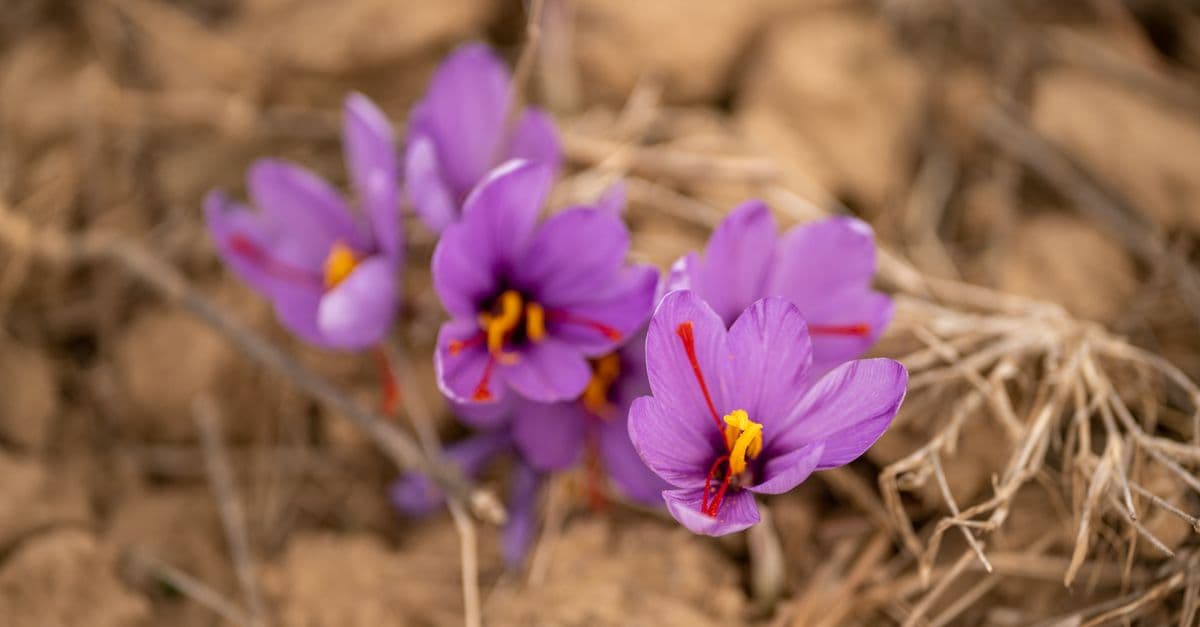
Photo: Imad Clicks / Pexels
Why saffron is so expensive comes down to a single flower. Each purple Crocus sativus bloom carries three red stigmas, the threads that become the spice, and a kilogram of dried saffron takes somewhere between 110,000 and 165,000 flowers, according to one review of the literature. Every one of those flowers is picked and stripped by hand in a harvest window of a few weeks. The price, which runs to thousands of euros per kilogram in bulk, is mostly arithmetic, plus a fraud problem that makes buying the real thing harder than it should be.
Educational content, not medical advice. Talk to your doctor before changing any medication, treatment, or routine. Information here reflects current research but every person's situation differs.
Key takeaways
- Crocus sativus is a sterile triploid (2n = 3x = 24 chromosomes) that spreads only through underground corms, so every plant is a clone planted by a person.
- Each flower yields three stigmas. One review puts the requirement at 110,000 to 165,000 flowers per kilogram of dried saffron; another source cites roughly 110 to 300 flowers per gram.
- Picking takes about 50 hours per kilogram and separating the stigmas from the petals about 200 hours, according to that review.
- Iran is generally credited with about 90 percent of world production.
- Color comes from crocins, flavor from picrocrocin, and aroma from safranal. The international grading standard, ISO 3632, measures all three.
- Saffron is among the most adulterated spices. In one 2022 survey of 80 market samples from Jammu and Kashmir, 60 percent were adulterated.
- Small clinical trials suggest saffron may help mild-to-moderate depression, but the evidence is limited and the trials are mostly from one country.
The plant that cannot reproduce without people
Crocus sativus is a botanical oddity. It is a sterile triploid, meaning it carries three sets of chromosomes (24 in total) instead of the usual two. Normal sexual reproduction depends on chromosomes pairing up evenly during meiosis, the specialized cell division that makes eggs and pollen, and three sets cannot be divided cleanly. (The mitosis and meiosis explainer shows why the pairing step matters.) The result is a plant that cannot make viable seed.
Instead, saffron is propagated through underground clonal corms, a bulb-like storage organ that produces new corms alongside the old one (Stelluti et al., 2021). Every saffron field on Earth is therefore a planting of clones that people dug up, divided, and replanted. You cannot scatter seed over a hillside and wait.
That fact matters for supply. A grower who wants more saffron cannot simply plant more seed in the spring; the corms multiply slowly, and expanding a field takes seasons. A sudden surge in demand cannot be met by a quick scale-up the way it can for a seed crop like wheat.
One flower, three threads
The part that becomes saffron is the stigma, the pollen-receiving tip of the flower's female structure. Each crocus flower carries exactly three. A flower is also not mostly spice: tepals, the petal-like outer parts, make up about 80 percent of total flower mass in one analysis of the flower's by-products, and they are largely discarded after the stigmas are separated (Stelluti et al., 2021).
Flowering is short. In Mediterranean climates it lasts a few weeks across the autumn, and individual flowers open and fade quickly, which is why growers pick at dawn (Stelluti et al., 2021; Wikipedia summary of the horticultural literature). A missed morning means wilted, lower-quality stigmas. Labor has to be available in the right place on the right days, and cannot be spread across the year.
The arithmetic of a kilogram
Published figures vary, so it helps to see the range rather than a single number. A 2022 review in Foods gives 110,000 to 165,000 flowers per kilogram of dry saffron, but also cites a second figure of 220,000 to 260,000 flowers per kilogram of stigma, and does not reconcile the two (Avila-Sosa et al., 2022). A 2021 paper in Plants says about 110 to 300 flowers are needed for one gram of spice (Stelluti et al., 2021).
| Quantity | Figure | Source |
|---|---|---|
| Flowers per kg of dry saffron | 110,000 to 165,000 | Avila-Sosa et al., 2022 (Foods) |
| Flowers per gram of spice | about 110 to 300 | Stelluti et al., 2021 (Plants) |
| Stigmas as share of flower | 7 to 7.4% | Avila-Sosa et al., 2022 |
| Picking labor | about 50 h per kg | Avila-Sosa et al., 2022 |
| Peeling labor | about 200 h per kg | Avila-Sosa et al., 2022 |
| Time to separate one flower | about 4 seconds | Avila-Sosa et al., 2022 |
| Bulk price reported | EUR 1,500 to 2,200 per kg | Avila-Sosa et al., 2022 |
Check the labor figure against the flower count. At four seconds per flower, separating 150,000 flowers takes 600,000 seconds, about 167 hours, which is in the same range as the 200 hours the review reports. The numbers are not precise, but they point the same way: roughly 250 hours of skilled hand work for each kilogram.
To make this concrete, a recipe that calls for 0.1 gram of saffron uses the stigmas of roughly 11 to 30 flowers, based on the 110 to 300 flowers per gram figure. The expense is that visible: a pinch is a small bouquet.
Why a machine cannot do the job
The harvest remains overwhelmingly manual, for a reason that has less to do with technology than with biology. The stigmas are tiny, delicate, and attached to a flower that has to be picked intact, then opened and stripped. A machine would need to find a short-lived flower close to the ground, pick it without bruising, and then separate three threads of a few millimeters from the rest of the bloom. Cheap labor, rather than an expensive robot, has been the economic answer for thousands of years.
Notice what this does to the price structure. With roughly 250 hours of hand work per kilogram, much of the cost is labor concentrated in a few weeks, rather than land or water. Wages in the growing region therefore feed straight into the price of the spice.
After picking, stigmas are dried, which shapes the chemistry of the final spice. One review notes that conventional drying uses 35 to 45 degrees Celsius for long periods, while faster methods use 60 to 70 degrees Celsius for short periods, and that finished saffron is typically stored between 5 and 25 degrees Celsius (Avila-Sosa et al., 2022). Drying is described as the most important post-harvest step, since it changes color, flavor, and the aromatic profile (Cid-Pérez et al., 2021).
The chemistry: color, taste, and aroma
Saffron's value rests on three groups of compounds, all derived from carotenoids, the pigment family that also colors carrots and tomatoes. They give the spice its signature properties, and they are what laboratories measure.
Crocins are responsible for the golden-yellow color. They are esters of crocetin, a carotenoid-derived molecule, and one review notes they may reach 25 to 35 percent of dried saffron by weight (Bagur et al., 2017). Unlike most carotenoids, crocins dissolve in water, which is why a few threads steeped in warm liquid will tint a whole pot of rice.
Picrocrocin supplies the bitter taste and can make up to 26 percent of the dry matter (Bagur et al., 2017). It is also the main precursor of the aroma compound.
Safranal is the main volatile, giving saffron its hay-like, slightly medicinal smell. It is generated during drying and storage largely from picrocrocin and is present in tiny amounts: one review quotes a range of just 0.04 to 0.48 percent of the spice, yet in Spain's protected "Azafrán de La Mancha" saffron it accounts for more than 65 percent of the aroma components (Avila-Sosa et al., 2022; Bagur et al., 2017). Like a perfumer's key note, a very small quantity does most of the work.
For a wider look at how those aroma molecules reach your brain, the neuroscience of flavor and why food tastes good explain the receptors involved.
How ISO 3632 grades saffron
The international standard for saffron quality, ISO 3632, uses a spectrophotometer to measure absorbance of a 1 percent water extract at three wavelengths: 257 nanometers for picrocrocin (flavor strength), 330 nanometers for safranal (aroma), and 440 nanometers for crocins (coloring strength). Saffron falls into Category I, II, or III. The minimum values below are reported in the 2022 Foods review (Avila-Sosa et al., 2022).
| Measure | Wavelength | Category I | Category II | Category III |
|---|---|---|---|---|
| Coloring strength (crocins) | 440 nm | at least 200 | not stated here | at least 120 |
| Flavor strength (picrocrocin) | 257 nm | at least 70 | at least 55 | at least 40 |
| Aroma strength (safranal) | 330 nm | within a 20 to 50 range | within a 20 to 50 range | within a 20 to 50 range |
The same review notes that coloring strength falls by roughly 30 to 40 units per year in storage, and that merchants usually assume a shelf life of three to four years. Fresh, properly stored saffron has measurably more color than old stock, and the standard captures that.
Iran, Spain, and the map of supply
Most saffron comes from a narrow part of the world. Iran is generally credited with about 90 percent of global production, with the northeast of the country the center of cultivation. Afghanistan has been a fast-growing smaller producer: the Wikipedia summary of the literature cites Afghan government figures rising from 20 metric tons in 2022 to 46 metric tons in 2024 (Wikipedia: Saffron). Authoritative global production tables are hard to find, and the Iranian share is an estimate rather than a measured audit.
The review by Avila-Sosa and colleagues describes Iran and Spain as the principal producers and the leading importers as Spain, Hong Kong, and the United States (Avila-Sosa et al., 2022). Greece and Spain protect regional names under European Union rules: a 2023 review in Foods lists Krokos Kozanis (Greece) and Azafrán de la Mancha (Spain) as protected designations of origin, and notes that most EU-protected spices are saffron or paprika (Velázquez et al., 2023).
Concentration creates fragility. A frost during the flowering window, a drought, or a political disruption in one region can ripple into the global price because there is no deep reserve of alternative supply. The coffee climate-risk article shows a similar dynamic in another crop with narrow growing conditions.
Why price is not one number
Quoted prices differ widely, and the differences are informative. The 2022 Foods review reports a bulk price of 1,500 to 2,200 euros per kilogram. A 2021 paper in Plants describes saffron as selling at $40 to $50 per gram, which equals tens of thousands of dollars per kilogram (Stelluti et al., 2021). Those two figures are not contradictory. They describe different points on a supply chain.
Three layers explain the gap:
- Grade. Category I saffron with long, intact red threads costs more than powder or broken pieces, and the standard defines grade by measurable chemistry.
- Channel. Bulk sales between dealers are priced per kilogram; small retail jars carry packaging, marketing, and retail margins.
- Origin and brand. Protected names such as La Mancha command a premium partly because the label is a guarantee against substitution.
Treat any single "saffron costs $X per kilogram" headline with caution. A useful reading is that real saffron costs thousands per kilogram at the wholesale level and often far more per gram at the shelf, and that a price far below that range is a red flag.
The adulteration problem
High price and small volume make saffron an obvious target for fraud. The 2023 Foods review of spice fraud places saffron among the most adulterated spices by origin, alongside paprika, black pepper, cinnamon, and turmeric, with fraud used to increase trade margins (Velázquez et al., 2023).
Adulterants named across the literature include safflower, marigold (calendula), turmeric, gardenia, beet, and pomegranate, along with dyed corn silk, dyed stamens, dyed paper strips, and synthetic colorants such as tartrazine, sunset yellow, and Sudan II (Avila-Sosa et al., 2022; Husaini et al., 2022).
| Adulteration type | Examples | Why it works |
|---|---|---|
| Other plant matter | Safflower petals, calendula, turmeric, corn silk | Similar color at a fraction of the cost |
| Dyed look-alikes | Dyed stamens, corn stigma, paper strips | Visually resemble red threads |
| Synthetic dyes | Tartrazine, sunset yellow, Sudan II | Cheap, intense color |
| Mixed powders | Saffron ground with fillers | Hard to spot without laboratory tests |
What surveys found
A 2022 study in Frontiers in Plant Science bought 80 market samples from eight places in Jammu and Kashmir, India, and found that 48 of 80 (60 percent) were adulterated, with adulteration levels from about 2 percent to 71 percent and a mean of 36 percent among the affected samples. Only about 40 percent met ISO Category I (Husaini et al., 2022). That is one region and one survey, not a global rate, but it indicates the scale of the issue.
Regulators see the same pattern. The 2023 Foods review reports that an EU coordinated control plan in 2021 found that 17 percent of 1,885 herb and spice samples were adulterated, and that synthetic colorants turned up in 2 percent of 1,340 samples of saffron, paprika, turmeric, and pepper, with saffron and paprika showing the highest rates (Velázquez et al., 2023).
Detection is itself difficult. In the literature summarized by Avila-Sosa and colleagues, one study found that the ISO method did not detect an adulterant added at 10 percent, while mass-spectrometry-based methods detected safflower or calendula at 5 percent and turmeric at 2 percent (Avila-Sosa et al., 2022). This is why researchers are testing spectroscopy and machine learning. The Husaini team reported a deep-learning approach that classified samples with 99.5 percent accuracy on their test set, using a smartphone and a low-cost microscope attachment.
Reading the signs as a buyer
Chemistry beats appearance. A few general observations hold up across the sources above:
- Whole threads from a producer or retailer that publishes an ISO 3632 category are easier to trust than unlabeled powder.
- A price far below the market range for the claimed grade is a warning sign.
- Color alone is unreliable, since cheap dyes imitate it; the standard measures flavor and aroma compounds for that reason.
What the medical research does and does not show
Beyond the kitchen, saffron has drawn clinical interest, mostly for mood. Treat this section as a summary of research, not a recommendation to use any product for any condition.
A 2013 meta-analysis in the Journal of Integrative Medicine by Hausenblas and colleagues pooled five randomized controlled trials, two placebo-controlled and three comparing saffron with antidepressants, in adults with major depressive symptoms. Saffron showed a large effect against placebo (a mean effect size of 1.62) and no meaningful difference from antidepressants (an effect size of -0.15), and the trials were rated as high quality by one scoring system. The authors themselves called for larger trials by research teams outside Iran, with long-term follow-up, before drawing firm conclusions (Hausenblas et al., 2013).
A 2014 systematic review by Lopresti and Drummond in Human Psychopharmacology identified six randomized double-blind studies and concluded that the research gives "initial support" for saffron in mild-to-moderate depression, with further work needed (Lopresti and Drummond, 2014). The proposed mechanisms span serotonergic, antioxidant, anti-inflammatory, and neuroprotective actions, and those remain hypotheses.
Safety data are also limited but reassuring at culinary and studied doses. A 2017 review of the toxicology literature concluded that therapeutic doses of saffron show no significant toxicity in clinical and experimental studies (Bostan et al., 2017). That is not a guarantee for every individual, particularly for people taking prescription medicines for mood disorders, so questions about use belong with a clinician. For the underlying biology of mood disorders, see the depression neuroscience explainer and the science of mental health.
A back-of-envelope cost model
The sources above allow a rough calculation, which is worth doing because it shows how little room there is in the price. The wage figures below are illustrative assumptions for the sake of arithmetic, not reported data.
| Hourly labor cost (assumed) | Hours per kg (about 250) | Labor cost per kg |
|---|---|---|
| $2 | 250 | $500 |
| $5 | 250 | $1,250 |
| $10 | 250 | $2,500 |
| $20 | 250 | $5,000 |
Set that against the bulk price of 1,500 to 2,200 euros per kilogram reported in the 2022 review. At the low end of the wage range, labor is a manageable share of the price. At the high end, labor alone would exceed the bulk price, which helps explain why saffron production has historically clustered where hand labor is cheap and why high-wage regions focus on small premium volumes or protected local brands.
The model leaves out corms, land, irrigation, drying energy, losses to disease, transport, and dealer margins, so real costs are higher. It also assumes the 250-hour estimate, which comes from one review and could be lower with experienced pickers working in dense fields. The point of the exercise is the order of magnitude: even modest wages, multiplied by hundreds of hours, produce a four-figure cost per kilogram before anything else is counted.
Common misconceptions about saffron
"Saffron is expensive because it is rare." The plant is not rare; fields of it exist across several countries. What is scarce is the harvested, processed stigma, and the scarcity is produced by labor and biology, not by a limited number of plants.
"A deeper red thread is always better." Color is one of three quality markers, and it is the easiest to fake. Standards also measure picrocrocin and safranal, and dyed fillers can look vividly red while failing the flavor and aroma tests.
"Real saffron never fades." Coloring strength declines in storage by roughly 30 to 40 units per year, according to the review cited above, which is why age and storage matter and why a jar that has sat for years is weaker even when authentic.
"More saffron in a dish means a better dish." Picrocrocin is bitter and safranal is medicinal at high levels, which is why recipes use tiny quantities. A small amount steeped in warm liquid first spreads color and aroma more evenly than adding dry threads directly, a common culinary practice rather than a finding from the studies cited here.
"Saffron is a proven treatment for depression." The trials are small, many come from a single country, and the authors of the main meta-analysis said larger independent trials were needed. It is an area of research, not an established therapy.
Saffron among other expensive foods
Saffron is not unique in having a price that reflects biology. Vanilla requires hand pollination of an orchid, truffles depend on a fungus that cannot be reliably farmed, and silk depends on the labor of silkworms. What sets saffron apart is that the product itself is a tiny anatomical part of a short-lived flower. If you remove the human hand from the process, there is no saffron.
Compare that with a commodity such as gold, where price depends on geology and mining costs rather than a perishable harvest. The explainer on why gold is valuable lays out that contrast. In both cases scarcity matters, but in saffron's case scarcity is renewable and labor-driven, so the price can move with wages, weather, and demand in ways that mineral prices do not.
Frequently asked questions
Q: How many flowers does it take to make one kilogram of saffron? A: A 2022 review in Foods gives 110,000 to 165,000 flowers per kilogram of dry saffron. Another paper says 110 to 300 flowers are needed per gram. Many popular sources round to about 150,000, which falls inside the review's range.
Q: Why can't saffron be grown from seed? A: Crocus sativus is a sterile triploid with 24 chromosomes in three sets, so it cannot form viable seed. It spreads only through corms, which growers dig up, divide, and replant. That makes every plant a clone and slows how quickly production can expand.
Q: Which country produces the most saffron? A: Iran, generally credited with about 90 percent of world production. Spain, Afghanistan, Greece, India (Kashmir), and Morocco also grow it, but in much smaller quantities. Production figures vary by source and year, so the Iranian share is best treated as an estimate.
Q: How can you tell if saffron is fake? A: The reliable method is laboratory testing against the ISO 3632 standard, which measures crocin, picrocrocin, and safranal. At home, a published grade, a plausible price, and a reputable seller are better guides than color alone, because dyes imitate color well. No home test is as dependable as laboratory analysis.
Q: Does saffron work as an antidepressant? A: Small randomized trials, summarized in a 2013 meta-analysis of five trials and a 2014 systematic review of six studies, suggest benefit for mild-to-moderate depression. The authors call for larger, independent trials. Nothing here is a recommendation to use saffron for any condition, and anyone with depression should speak with a clinician.
Q: Is more expensive saffron always better? A: Not always. Price reflects grade, channel, and brand as well as quality, and a high price does not prove a product is genuine. Look for a published ISO 3632 category and test results, which measure the compounds that define quality, rather than relying on price alone.
The bottom line
Saffron costs what it does because several constraints stack on top of each other. The plant is a sterile clone that people have to propagate, each flower yields three threads, the flowering window lasts only a few weeks, and roughly 250 hours of hand work goes into each kilogram. Concentrated production adds supply risk, and the high price creates a standing incentive to cheat, so a good share of what is sold needs chemical testing to verify.
The useful shift in thinking is to stop seeing the price as a luxury markup and to see it as the cost of a hand-harvested flower part, with fraud as a tax on top. When saffron is real, the number of flowers in a small jar is part of what you are paying for.
Sources
- Avila-Sosa R, et al. "Detection of Saffron's Main Bioactive Compounds and Their Relationship with Commercial Quality." Foods 2022: Europe PMC record
- Stelluti S, et al. "Sustainable Processing of Floral Bio-Residues of Saffron (Crocus sativus L.) for Valuable Biorefinery Products." Plants 2021: Europe PMC record
- Husaini AM, et al. "The menace of saffron adulteration." Frontiers in Plant Science 2022: DOI
- Velázquez R, et al. "Spice and Herb Frauds: Types, Incidence, and Detection." Foods 2023: Europe PMC record
- Hausenblas HA, et al. "Saffron and major depressive disorder: a meta-analysis of randomized clinical trials." Journal of Integrative Medicine 2013: Europe PMC record
- Bagur MJ, et al. "Saffron: An Old Medicinal Plant and a Potential Novel Functional Food." Molecules 2017: Europe PMC record
Related Reading
- Why Vanilla Is So Expensive — The Biology and Economics of the World's Second-Priciest Spice
- Why Wagyu Beef Is So Expensive — The Science of the World's Most Marbled Meat
- Why Champagne Is So Expensive — The Science and Economics of the World's Most Famous Sparkling Wine
- Why Silk Is So Expensive — The Ancient Biology Behind the World's Most Coveted Fabric
- Why Real Truffles Are So Expensive — The Fungus Worth More Than Gold by Weight
Follow new articles
Add SciHub101 to your feed reader to see new science and technology stories.
About the Author
SciHub101 is an independent science and technology publication founded and edited by Buğra Sözeri, a software engineer and app developer based in Türkiye. AI tools assist with drafting and research. Source documentation in the existing archive is uneven, and articles are being reviewed and corrected. The Editorial Team byline identifies editorial responsibility; it does not certify specialist or independent human review. Where we compare products, anything built by our own team is labelled as such — see the editorial guidelines and About page for how corrections and disclosures work.
Related Articles
Why Real Truffles Are So Expensive — The Fungus Worth More Than Gold by Weight
Real truffles can cost as much per kilogram as gold did a decade ago. The reasons are tree-root symbiosis, volatile aroma chemistry, dog-led harvests, and a short season.
Why Antibiotics Are Running Out — The Science Behind Antimicrobial Resistance
Bacteria are evolving faster than we can fight them. No major new antibiotic class has been discovered since 1987, 700,000 people die from drug-resistant infections every year, and the clock is ticking. Here is the science behind antimicrobial resistance — and what might save us.
Why Vanilla Is So Expensive — The Biology and Economics of the World's Second-Priciest Spice
A flower that stays open for about a day, a pollination step no machine has replaced, months of curing, and a supply base that cyclones can cut by a third: the biology and economics behind vanilla's price.
Sugar Science: How Glucose and Fructose Affect Your Body Differently
Not all sugars are equal. Glucose and fructose follow completely different metabolic pathways — and understanding the difference explains why the source of sugar in your diet matters as much as the amount.
How Digestion Works: From Mouth to Gut
Every bite you take embarks on a 30-foot journey through an assembly line of acids, enzymes, and bacteria that extracts energy and nutrients while discarding the rest — here's how it actually works.
How Preservatives Keep Food Safe: The Chemistry Explained
Before refrigerators, salt and vinegar kept people alive. Today, a few molecules in the parts-per-million range prevent millions of cases of food poisoning a year. Here's how.