Why Wagyu Beef Is So Expensive — The Science of the World's Most Marbled Meat
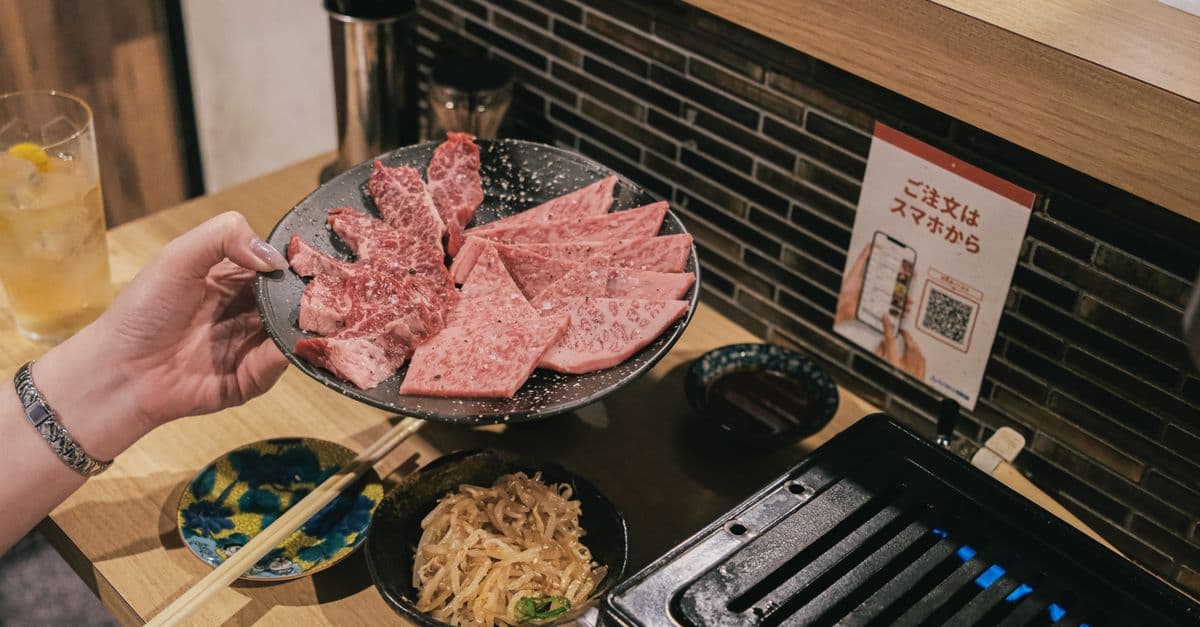
Photo: Huy Phan / Pexels
Why Wagyu beef is so expensive has a measurable answer: Japanese Black cattle are raised for roughly 28 to 30 months, eat thousands of kilograms of mostly imported feed, and are bred to lay down intramuscular fat at levels that average above 30% in the loin. Add a grading system that rewards that fat, a registry that tracks each animal, and a Kobe certification that covers only about 5,500 head a year, and the price makes more sense. This article takes each piece in turn.
Educational content, not medical advice. Talk to your doctor before changing any medication, treatment, or routine. Information here reflects current research but every person's situation differs.
Key takeaways
- "Wagyu" means "Japanese cattle" and covers four breeds; in 2017, about 1.6 million of Japan's 2.5 million beef cattle were Japanese Black.
- Intramuscular fat in the loin of Japanese Black cattle has averaged more than 30% in recent years, and in sirloin it can reach up to 60%.
- Japanese Black cattle are typically fattened from about 11 months old until slaughter at 28 to 30 months, using 4,000 to 5,000 kg of feed per animal.
- Carcasses are graded on a yield letter (A, B, or C) and a quality number (1 to 5), with marbling scored on a 12-point scale.
- Certified Kobe beef comes from Tajima-lineage cattle in Hyogo Prefecture; the certifying association reports about 5,500 certified head a year.
What "Wagyu" actually means
The word is Japanese for "Japanese cattle" (wa means Japan, gyu means cattle). It refers to four breeds: Japanese Black, Japanese Brown, Japanese Shorthorn, and Japanese Polled. A 2018 review in the Asian-Australasian Journal of Animal Sciences counts 2.5 million beef cattle raised in Japan in 2017, of which about 1.6 million were Japanese Black, 21,000 Japanese Brown, and 25,000 of the other Wagyu breeds. The rest were Holsteins and Wagyu crosses. The industry is built from small operations: about 50,100 farmers, averaging about 50 cattle each (Gotoh et al., 2018).
Japanese Black dominates the Wagyu category. The figures above put it at roughly 97% of the Wagyu-breed cattle counted that year, which is why "Wagyu" in practice usually means Japanese Black.
How the breed was shaped
Japan was isolated from 1635 to 1854, so no foreign cattle genes entered the population during that time. After the Meiji Restoration in 1868, meat eating became common, and between 1868 and 1887 about 2,600 foreign cattle were imported. A government crossbreeding program began in 1900, but the crossbred animals proved unpopular, and in 1912 the government formally ended its encouragement of crossbreeding. The Japanese Black, Brown, and Polled breeds were officially recognized in 1944, and the Shorthorn was added in 1957 (Wikipedia, "Wagyu").
Gotoh and colleagues describe the same turning point: in the early 1900s, Japan crossbred native cattle with imported breeds such as Simmental, Shorthorn, and Holstein to increase size and meat yield, but meat quality declined, and Japan switched to breeding within the established Japanese Black line. A later trade shift raised demand for the result. The 1991 Uruguay Round decision allowed beef imports and, according to the review, markedly boosted demand for highly marbled beef.
If a breed is like an instrument, Japanese Black is a specialist: not the loudest or the biggest, but one that has been tuned for a single quality over generations.
The science of marbling: fat inside the muscle
Most beef breeds store fat under the skin and around organs. In Japanese Black, a much larger share lands between and inside the muscle fibers, creating the white flecks called marbling. The review reports that intramuscular fat (IMF) in the longissimus muscle, the loin muscle that supplies ribeye and striploin, has averaged more than 30% in Japanese Black cattle in recent years. In sirloin, IMF has reached up to 60%. In one set of 65 conventionally fattened Wagyu samples, mean crude fat was 38.4% (plus or minus 7.7%), with 13.9% protein and 47.1% moisture (Gotoh et al., 2018).
Put differently, at the top end the cut is closer to half fat than the lean steak most people imagine. In steers slaughtered at 26 months, the carcass was 47.7% muscle, 41.7% fat, and 10.6% bone, according to the same review.
Why that fat tastes and feels different
Wagyu fat is not just more abundant. It has a different mix of fatty acids. Compared with Holstein, Japanese Brown, and Charolais cattle, Japanese Black has higher monounsaturated fatty acids (MUFAs), including oleic acid, and lower saturated fats. Oleic acid has been linked to Wagyu aroma (Gotoh et al., 2018).
Melting behavior follows from chemistry. Fatty acids with straight, saturated chains pack tightly and melt at high temperatures, while the kink created by the double bond in oleic acid keeps molecules apart so they melt at a low temperature.
| Fatty acid | Type | Melting point |
|---|---|---|
| Oleic acid | Monounsaturated | 13 to 14 °C (Wikipedia, "Oleic acid") |
| Palmitic acid | Saturated | 62.9 °C (Wikipedia, "Palmitic acid") |
| Stearic acid | Saturated | 69.3 °C (Wikipedia, "Stearic acid") |
Think of the fat as a mix of butter-like and oil-like parts. The more oil-like oleic content in the mix, the softer and more easily melted the whole becomes. The values above are for pure fatty acids; real beef fat is a blend of triglycerides, so it softens over a range of temperatures, not at one point. Still, the direction is clear, and the 2018 review confirms that melting point tracks fatty acid composition. For a wider look at why humans find fat so appealing in food, see why humans crave salt, fat, and sugar, and for the sensory side see why food tastes good.
Is there a "marbling gene"?
Not one. The first gene found to influence beef fatty acid composition was stearoyl-CoA desaturase (SCD), an enzyme that converts saturated fat into monounsaturated fat. The bovine SCD gene codes for 359 amino acids, and a single base change at position 878 swaps valine for alanine. The percentage of MUFA ranked AA above AV above VV across genotypes, while melting point ranked in the reverse order. Yet SCD genotypes explained only 4% of the variation in MUFA and 3% of the change in melting point. Other genes, including FASN, SREBP-1, ELOVL5, and FADS2, are also associated, and the review concludes that fatty acid composition is polygenic, meaning many genes each contribute a little (Gotoh et al., 2018).
That caution matters. A claim that "a gene variant directs fat into the muscle" oversimplifies. Breeders use SCD and FASN as DNA markers to help select sires, but they are tools within a larger selection program. If you want the underlying genetics, how DNA works is a good starting point.
Time and feed: the expensive part
Marbling is built slowly. Japanese Black cattle are typically fattened from about 11 months old until slaughter at 28 to 30 months. The mean slaughter age was 29.2 months, with a mean live weight of 756 kg and carcass weight of 476 kg. Total feed per head runs 4,000 to 5,000 kg, and more than 90% of the concentrate (the grain-based part of the ration) is imported (Gotoh et al., 2018).
A little arithmetic helps. Dividing 4,000 to 5,000 kg of feed by a 476 kg carcass gives roughly 8 to 11 kg of feed per kilogram of carcass. That is a rough ratio built from the review's figures, not a formal feed-conversion measurement, and it ignores how much of the carcass becomes saleable beef. But it shows the scale: each animal consumes several tonnes of mostly imported feed before slaughter, and every extra month adds to the bill.
The long finishing period appears to matter for fat quality as well. In a 2009 study in Animal Science Journal, 10 Japanese Black steers from the same sire were split into two groups: one fattened for 20 months and slaughtered at 30 months, and one fattened for 24 months and slaughtered at 34 months. Oleic acid and total MUFAs were higher in the intramuscular fat of the 24-month group (Iwamoto et al., 2009). With only five animals per group, that is a suggestive result rather than a settled rule. For why small samples limit what we can conclude, see why sample size changes confidence.
Public research institutes are working to shorten the cycle, with a target of finishing cattle before 27 months, possibly by starting fattening at 7 to 8 months instead of 10 (Gotoh et al., 2018). The goal is cost: a shorter program saves feed, labor, and land, but producers have to hold the quality that earns the premium.
| Cost driver | Figure | Source |
|---|---|---|
| Slaughter age | 28 to 30 months (mean 29.2) | Gotoh et al., 2018 |
| Feed per animal | 4,000 to 5,000 kg | Gotoh et al., 2018 |
| Share of concentrate imported | More than 90% | Gotoh et al., 2018 |
| Average herd size | About 50 cattle per farm | Gotoh et al., 2018 |
| Carcass weight (mean) | 476 kg | Gotoh et al., 2018 |
The grading system: what A5 means
Japan's carcass grading is run by the Japan Meat Grading Association (JMGA), using a system first set up in 1988. Each carcass receives two marks. The letter, A, B, or C, is the yield grade and reflects the percentage of edible meat in the carcass, with A the highest. The number, from 1 to 5, is the meat quality grade. Four factors are scored: marbling, meat color and brightness, firmness and texture, and fat color and quality. The lowest of the four scores sets the grade, so a carcass with spectacular marbling but poor color cannot get a 5. About 200 accredited graders work in Japan (Gotoh et al., 2018).
It works like a report card where the lowest mark in any subject becomes your overall grade. That makes A5, the top of the 15 possible combinations from A1 to C5, harder to reach than any single score suggests.
Marbling itself is scored on the Beef Marbling Standard (BMS), from 1 to 12, using photographic standards that were revised in 2008 and 2014. Published grading guides generally map BMS 8 through 12 to quality grade 5, meaning "A5" covers a range of marbling levels, not a single point. Grading bodies, not retailers, set the official definitions, so check JMGA materials when precision matters.
A5 is not the same as "best tasting." It is a score for marbling, color, texture, and fat quality, and some eaters find very high marbling too rich to enjoy in large portions. US grades, set by the Department of Agriculture, use a different scale and a different set of marks, so a one-to-one conversion between Japanese BMS and US categories is not reliable.
Certified Kobe: a narrower slice
Kobe beef is a subset of Wagyu, not a synonym. The Kobe Beef Marketing and Distribution Promotion Association states that the animal must be a bullock or virgin cow born in Hyogo Prefecture from a Tajima cow with a "pure lineage," bred and raised by a designated farmer in Hyogo, and slaughtered at a facility in the prefecture. It must also pass marbling (BMS), weight, and other criteria (Kobe Beef official FAQ). Gotoh and colleagues state that only Tajima-derived beef with BMS above 6 can be marketed as Kobe. A summary of the association's bylaws on Wikipedia lists a BMS of 6 or higher, a meat quality score of 4 or 5, and a carcass weight of 499.9 kg or less (Wikipedia, "Kobe beef").
How many animals qualify?
The association's FAQ says about 7,000 head of Tajima-gyu go to market each year and about 5,500 of them are certified as Kobe beef. Other sources give lower figures: the Wikipedia article cites about 3,000 head that may qualify annually. The difference may reflect different years or definitions, so the association's own figure, which it publishes without a stated year, is used here as a rough anchor.
Even the higher number is small. The USDA's National Agricultural Statistics Service reported 31,829,800 head of cattle commercially slaughtered in the United States in 2024 and 29,795,300 in 2025 (USDA NASS, Livestock Slaughter 2025 Summary). Dividing the 2024 total by 5,500 gives about one Kobe-certified animal for every 5,800 US cattle slaughtered. The comparison mixes two countries and two definitions, so it is a sense of scale, not a statistic.
Traceability
Under Japan's 2003 Beef Traceability Law, each animal receives a ten-digit identification number, and the system covers all cattle in Japan, not only Wagyu. The Kobe association says this number is shown at butchers and restaurants and reveals a cow's lineage, birthplace, rearing, and certification status (Wikipedia, "Wagyu"; Kobe Beef official FAQ).
Why "Kobe" on a menu is often something else
Kobe beef was first exported in 2012. The association's FAQ names Macao, where it went in February 2012, and Wikipedia reports that the US ban on Japanese beef was relaxed in August 2012, after which Kobe beef was imported into the United States. Wikipedia lists Macau, Hong Kong, the United States, Singapore, Switzerland, Thailand, the United Kingdom, and Canada among importing markets (Wikipedia, "Kobe beef").
Before and around that period, "Kobe" on American menus often did not mean Kobe. The journalist Larry Olmsted wrote a widely cited April 2012 series for Forbes, "Food's Biggest Scam: The Great Kobe Beef Lie," arguing that most restaurant "Kobe" was domestic. The legal issue is that the Kobe trademark lacks legal recognition in the United States, so meat there can be sold under that name, while Wagyu cattle raised in Australia, Canada, New Zealand, the United Kingdom, and the US may be sold as "Kobe-style" beef (Wikipedia, "Kobe beef," summarizing those reports). Such beef can be excellent, but it is a different product from the certified one. For a parallel on how animals become different foods through selection, see how animals were domesticated.
Wagyu outside Japan
Wagyu genetics have spread, and Wagyu cattle are raised in Australia, Canada, the United Kingdom, and the United States, among other countries. Wagyu-Angus crosses are sometimes marketed as "wangus" (Wikipedia, "Wagyu"). Crossbreeding changes the genetics, and Wagyu raised under other systems is a different production chain from the one described above, so the terms "Wagyu," "American Wagyu," and "Japanese A5" do not describe the same product. Labels differ by country, so the practical point is to read what is actually stated: breed percentage, country of origin, and, for Japanese beef, the grade.
What drives the price, in one view
| Factor | What it adds | Evidence |
|---|---|---|
| Long finishing period | Months of feed, labor, and land per animal | 28 to 30 month slaughter age |
| Heavy, imported feed | Exposure to feed and currency costs | 4,000 to 5,000 kg per animal; more than 90% of concentrate imported |
| Small farms | Little scale advantage | About 50 cattle per farm on average |
| Genetic selection | Years of breeding work, DNA markers | Japanese Black established as a breed in 1944; SCD and FASN markers |
| Strict grading | Only top carcasses command top prices | JMGA yield and quality grades; BMS 1 to 12 |
| Certification | Further limits supply | Kobe: about 5,500 head a year per the association |
| Demand for marbled beef | Higher willingness to pay | 1991 trade liberalization boosted demand for highly marbled beef |
None of this guarantees a particular price, and market prices vary by cut, seller, and year, so this article gives no dollar figure. What the table shows is why costs stay high even when demand is flat.
Myths worth correcting
"Wagyu cattle drink beer and get daily massages." Stories like this circulate widely, but they are anecdotal. The levers documented in the research review are genetics, a long grain-based finishing program, and slaughter age.
"Wagyu means Kobe." Kobe is a certified subset with its own lineage, region, and marbling rules. Most Wagyu is not Kobe.
"A5 is a brand." It is a grade: a yield letter and a quality number applied to individual carcasses by trained graders.
"Wagyu is a single gene." Marbling and fatty acid composition are polygenic, and SCD explained only about 4% of MUFA variation in the study the review describes.
"Japan banned cattle imports for centuries." What the record shows is broader isolation from 1635 to 1854, followed by imports after 1868 and a failed crossbreeding experiment. The breed's character was shaped both by isolation and by deliberate selection after crossbreeding was abandoned.
"More marbling is always better." It is a trade-off. Higher fat content raises richness and cost, and it is not a claim about health. This article makes none, and anyone with dietary concerns should consult a clinician or dietitian. For digestion of fats, see how digestion works.
The takeaway
The price of Wagyu is not a mystery, and it is not mostly branding. It reflects a breed shaped by history, an animal that eats for around 29 months, an input bill measured in tonnes of mostly imported feed, a grading system that pays for fat, and, at the top, a certification that limits Kobe to roughly 5,500 animals a year.
What the science adds is nuance. The fat is not just more; it is also different, with more monounsaturated fat and a softer melting profile. The genetics are not one switch but many small contributions. And the economics are not a conspiracy; they are a long production cycle with little room to cut corners. Whether that is worth paying for is a matter of taste and budget, but the claim that the product is different, and costly to make, holds up.
FAQ
Q: Why is Wagyu so expensive? A: Japanese Black cattle are fattened from about 11 months until slaughter at 28 to 30 months, using 4,000 to 5,000 kg of feed per animal, more than 90% of the concentrate imported. Farms are small, averaging about 50 cattle. Carcasses are graded strictly, and Kobe adds regional and lineage limits on top.
Q: What does A5 mean? A: The letter is the yield grade (A, B, or C) based on the percentage of edible meat, and the number is the quality grade from 1 to 5. Quality is judged on marbling, color and brightness, firmness and texture, and fat quality, with the lowest score deciding the grade. A5 is the top combination.
Q: Is all Wagyu Kobe beef? A: No. Kobe beef must come from Tajima-lineage cattle born, raised, and slaughtered in Hyogo Prefecture and must meet marbling and other criteria. The certifying association says about 5,500 head are certified a year, out of about 7,000 Tajima-gyu going to market.
Q: Why does Wagyu fat melt so easily? A: Japanese Black beef has more monounsaturated fat, notably oleic acid, and less saturated fat than breeds such as Holstein or Charolais. Oleic acid melts at 13 to 14 °C, while palmitic and stearic acids melt near 63 and 69 °C. Real beef fat is a mixture, so it softens gradually.
Q: Is American Wagyu the same as Japanese Wagyu? A: Not necessarily. Wagyu cattle are raised outside Japan, including in the United States, and are often crossed with other breeds. Japanese beef carries a grade and a ten-digit ID. US labels vary, and Kobe is not legally protected in the United States, so "Kobe" on a menu is not a guarantee of origin.
Q: Is Wagyu healthier because of its monounsaturated fat? A: The evidence reviewed here establishes that Wagyu fat has a higher share of monounsaturated fatty acids than some other breeds, not that eating it improves health. Wagyu is also very high in total fat, with mean crude fat of 38.4% in one sample set. Questions about diet belong with a clinician or dietitian.
Related reading
- Why Saffron Is So Expensive — The World's Most Valuable Spice Explained
- Why Vanilla Is So Expensive — The Biology and Economics of the World's Second-Priciest Spice
- Why Champagne Is So Expensive — The Science and Economics of the World's Most Famous Sparkling Wine
- Why Silk Is So Expensive — The Ancient Biology Behind the World's Most Coveted Fabric
- Why Real Truffles Are So Expensive — The Fungus Worth More Than Gold by Weight
Sources
- Gotoh, T., Nishimura, T., Kuchida, K., and Mannen, H. (2018). "The Japanese Wagyu beef industry: current situation and future prospects, a review." Asian-Australasian Journal of Animal Sciences 31(7):933-950.
- Iwamoto, E., Oka, A., and Iwaki, F. (2009). "Effects of the fattening period on the fatty acid composition of fat deposits ... of Japanese Black steers." Animal Science Journal 80(4):411-417.
- Kobe Beef Marketing and Distribution Promotion Association. Official FAQ.
- USDA National Agricultural Statistics Service. Livestock Slaughter 2025 Summary (April 2026).
- Wikipedia. "Wagyu" and "Kobe beef" (history, export dates, labeling; with primary references).
- Wikipedia. "Oleic acid", "Palmitic acid", and "Stearic acid" (melting points).
Follow new articles
Add SciHub101 to your feed reader to see new science and technology stories.
About the Author
SciHub101 is an independent science and technology publication founded and edited by Buğra Sözeri, a software engineer and app developer based in Türkiye. AI tools assist with drafting and research. Source documentation in the existing archive is uneven, and articles are being reviewed and corrected. The Editorial Team byline identifies editorial responsibility; it does not certify specialist or independent human review. Where we compare products, anything built by our own team is labelled as such — see the editorial guidelines and About page for how corrections and disclosures work.
Related Articles

What Extreme Military Training Does to the Human Body — The Science Explained
Elite selection courses push stress hormones, sleep, energy balance, and the gut to their limits. Here is what measured studies show about the costs, the adaptations, and the injuries.
Countries With the Most Endangered Species (2025)
Madagascar now tops recent IUCN-based tallies, with Ecuador, Indonesia, Mexico, and Brazil close behind. This article shows which counts can be trusted, why rankings keep changing, and what the numbers hide.
Complete Biology Guide 2026 — How Life Works
The complete guide to biology in 2026: cells and genetics, evolution, the human body, neuroscience, disease, immune systems, and the future of genetic engineering.

Why Do We Have Blood Types? The Science and Evolution
Blood types are inherited molecular markers on red blood cells. The ABO polymorphism has been kept alive in primates for at least 20 million years, and infections such as malaria, cholera, and norovirus are the leading explanation for why.
Proteins and Amino Acids — Life's Building Blocks
Proteins are chains of 20 amino acids that fold into 3D shapes powering every cell. Learn structure levels, the genetic code, folding, and AlphaFold.

DNA Replication and Genetics Explained
How DNA replicates, the central dogma, mutations, epigenetics, and how consumer genetics tests like 23andMe actually work.