TESS Exoplanet Discovery: Finding Worlds Around Nearby Stars
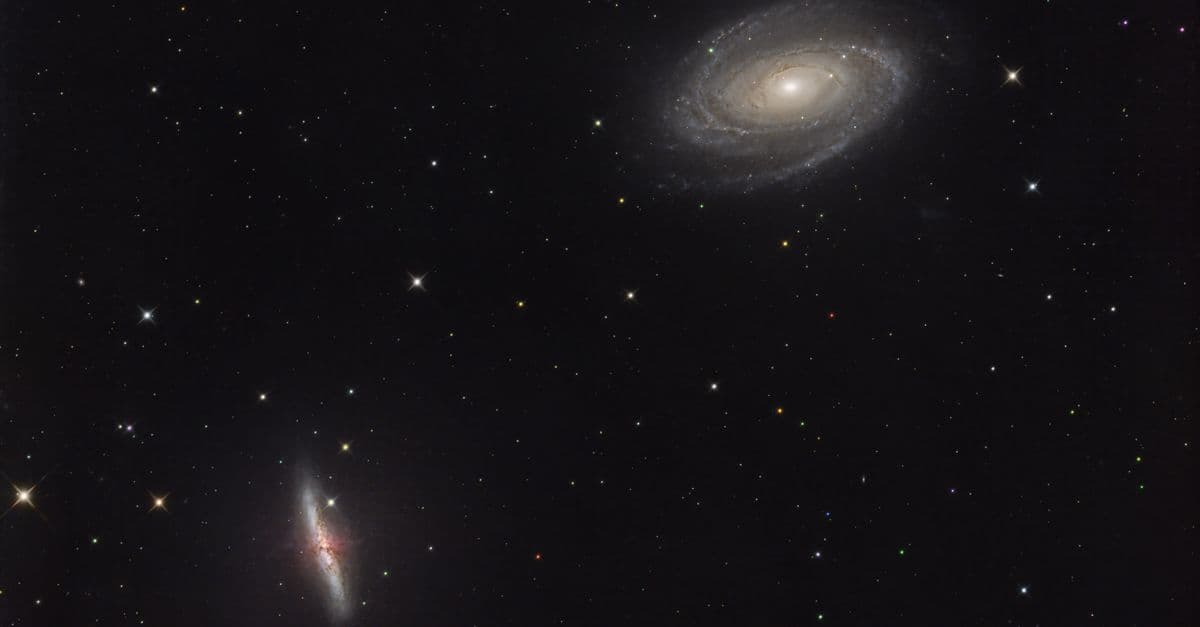
Photo: Marco Milanesi / Pexels
Launched in April 2018, NASA's Transiting Exoplanet Survey Satellite has discovered over 5,600 confirmed exoplanets—more than one-third of all known worlds—by watching for the tiny brightness dips when planets cross in front of their stars. TESS's genius is simplicity: point at bright, nearby stars and measure brightness changes to parts per million, then follow up with giant telescopes like JWST to study the atmospheres of promising worlds. Unlike Kepler, which surveyed distant stars 30,000 light-years away, TESS focuses on the galactic neighborhood—stars within 300 light-years—making them ideal for the first atmospheric biosignature searches planned for the 2030s.
How Transit Photometry Works
Transit photometry — the method of detecting planets by measuring the subtle brightness drop when they cross in front of their host star. When a planet enters the star's disk (ingress), the star's brightness decreases; when the planet exits (egress), brightness returns to normal. The depth of the brightness dip reveals the planet's size: a larger planet blocks more starlight. The duration of the transit depends on orbital geometry and the star's size. By measuring the dip timing repeatedly across many orbits, astronomers calculate the planet's orbital period with extraordinary precision—often to within seconds. Combining orbital period with the star's mass (measured from spectroscopy) yields the planet's orbital distance via Kepler's third law. If the star also exhibits radial velocity variations (wobbles caused by the planet's gravity), the planet's mass can be determined. Together, these measurements define a world's position in the habitable zone and its composition class: rocky terrestrial, mini-Neptune, or gas giant.
Source: NASA Exoplanet Archive (2024) — TESS mission overview and exoplanet discovery statistics.
TESS's Survey Strategy and Coverage
TESS observes the sky in sectors, each 24 degrees by 96 degrees—a region larger than your fist held at arm's length covers the entire southern ecliptic hemisphere over its first year, then the northern hemisphere in year two. A 30-minute cadence captures brightness measurements every half-hour for 200,000 bright (magnitude 12 or brighter) stars, sufficient for detecting Earth-size planets around bright stars. A 2-minute cadence, applied to 20,000 objects, catches smaller dips and short-period planets. Over its initial two-year prime mission (extended through at least 2025), TESS observed roughly 400,000 stars. The primary discovery space is rocky planets in the habitable zone of M-dwarfs—the most common star type in the galaxy. M-dwarfs are small (0.1 to 0.6 solar masses) and dim, making planets transiting them produce deeper brightness dips relative to Kepler's focus on larger stars. Statistically, every M-dwarf hosts on average 2 to 3 planets, yet most remain undetected. TESS's campaign to survey 200,000 bright M-dwarfs ensures it will find a representative sample across the galaxy's neighborhood.
Source: The Astrophysical Journal (2015) — "TESS: An All-Sky Transiting Exoplanet Survey" — mission design and scientific rationale.
Notable TESS Exoplanet Discoveries
TESS has identified several landmark worlds. TOI-700 d, a potentially Earth-size planet in the habitable zone of a nearby M-dwarf (37 light-years away), ranks among the closest known habitable-zone candidates and a prime JWST target. TESS also discovered TRAPPIST-1's companions (building on earlier ground-based work)—a system of seven Earth-size worlds orbiting a very low-mass star, three in the habitable zone. The mission found the first Earth-size planet in the habitable zone of a Sun-like star, HD 20794 e, located 15 light-years away. Another notable discovery: LTT 1445 Ac, an Earth-size planet orbiting the closest known star, Proxima Centauri (4.24 light-years distant), though in the star's harsh radiation zone, not the habitable zone. These discoveries demonstrate TESS's ability to identify not just planets but specific classes of worlds ripe for detailed study. Many TESS-discovered exoplanets have now been observed by JWST, which measures their atmospheric composition and searches for biosignature gases like oxygen and methane.
Source: The Astronomical Journal (2023) — "Exoplanet Discoveries from TESS" — comprehensive compilation of notable systems.
The chain of discovery: from TESS detection to JWST characterization
TESS's real power emerges not in discovery alone but in enabling follow-up observations. The chain works like this:
- TESS detects a transit — brightness dips by 0.01-0.1% as planet crosses star
- Ground-based radial velocity follows up — measures stellar wobble to confirm planet and determine mass
- JWST measures atmosphere — infrared spectroscopy captures atmospheric composition
- Biosignature search — looks for oxygen, methane, or other gases that might indicate life
Atmospheric characterization through transmission spectroscopy works because when a planet transits, some starlight passes through the planet's thin upper atmosphere. Each gas absorbs specific wavelengths: water vapor absorbs around 1.4 and 1.9 micrometers, carbon dioxide absorbs at 4.3 micrometers, methane at 3.3 micrometers. By comparing the star's spectrum during transit (with atmosphere) versus outside transit (direct starlight), astronomers see which gases are present and in what quantities.
JWST has already characterized atmospheres of several TESS-discovered exoplanets. In 2023, JWST detected water vapor in the atmosphere of K2-18 b (a mini-Neptune 111 light-years away, discovered by K2 but now studied through TESS coordination). The presence of water vapor, while not definitive evidence for life, indicates that a potentially habitable atmosphere exists.
The strategy of prioritizing nearby, bright-star systems ensures that future biosignature searches focus on worlds actually observable with current and near-future technology. A biosignature — atmospheric gases like oxygen (O₂), ozone (O₃), or dimethyl sulfide (DMS) that persist in the atmosphere only if produced by life — would constitute the first evidence of extraterrestrial biology.
Source: Nature Astronomy (2023) — "JWST Atmospheric Characterization of TESS Exoplanets" — study of water and carbon dioxide detections in exoplanet atmospheres.
How TESS works: the technical details
Photometric precision at scale
TESS's success rests on engineering a satellite that can measure brightness changes smaller than one part per million (a 0.0001% change). This requires:
- Stable pointing: Spacecraft must point at the same stars for weeks without drifting
- Thermal stability: Temperature variations of even 0.1 K would introduce noise in brightness measurements
- Optical quality: Camera must have minimal aberrations and distortion
- Radiation shielding: Cosmic rays hitting the detector create false brightness variations
TESS uses four wide-field cameras (each 24° × 96°) to monitor 200,000 stars simultaneously. The camera system achieves photometric precision of 40 parts per million per 30-minute exposure, sufficient to detect the ~0.01% dip from an Earth-size planet around a Sun-like star, or the deeper dips (~0.1%) from planets around smaller M-dwarfs.
The selection bias
TESS's target list isn't random — it's strategically chosen to maximize exoplanet discovery and follow-up potential:
- Bright stars: Magnitude 16 and brighter for the core 200,000-star survey (and some fainter stars in extended observations). Brightness is critical because JWST and other follow-up telescopes have limited sensitivity.
- Nearby stars: Within 300 light-years (100 parsecs). Nearby means parallax measurements are precise, star properties are well-characterized, and follow-up spectroscopy is feasible.
- M-dwarf bias: Roughly 60% of TESS targets are M-dwarfs (red dwarfs), the most common star type. Why? Planets transiting M-dwarfs block a larger fraction of starlight (a larger relative dimming), making detection easier. An Earth-size planet around an M-dwarf dims the star by 0.1%, not 0.01%.
This bias has profound implications: TESS is finding a representative sample of planets around M-dwarfs but is missing planets around massive stars (which require much larger, harder-to-detect dips) and planets around very faint stars (below the magnitude limit).
Data processing and false-positive mitigation
Detecting 5,600+ exoplanets requires filtering out false positives — transit-like signals caused by stellar activity, instrumental noise, or eclipsing binary stars.
Stellar activity (starspots rotating in and out of view) can mimic planetary transits. TESS mitigates this by:
- Requiring multiple transit detections (signals repeating at consistent intervals)
- Analyzing transit shape (real planetary transits have predictable shapes; starspots don't)
- Cross-matching with radial velocity data (true planets show velocity wobbles)
Eclipsing binaries (two stars orbiting each other, dimming each other periodically) can masquerade as exoplanet transits. TESS uses:
- Photometric vetting (analyzing brightness changes for tell-tale binary signatures)
- Follow-up imaging (higher-resolution images can resolve close binary stars)
- Spectroscopy (radial velocity confirms planetary mass)
Current false-positive rates for TESS candidates are roughly 10-20% — meaning of 100 candidates, 80-90 are real planets. Ground-based follow-up observations refine this.
Source: ExoFOP (Exoplanet Follow-up Observing Program) at NASA Exoplanet Science Institute — Documentation of vetting procedures and false-positive rates.
The current exoplanet census
As of 2024, TESS has discovered:
- Over 5,600 confirmed exoplanets
- An additional ~8,000 candidates awaiting confirmation
- Represents a 10-20x acceleration in discovery rate compared to pre-TESS era
Planet type distribution in the TESS sample:
| Type | Count | Frequency | Notes |
|---|---|---|---|
| Super-Earths (1-2 Earth radii) | ~2,200 | 40% | Most common discovered type |
| Mini-Neptunes (2-6 Earth radii) | ~1,500 | 27% | Often found in multi-planet systems |
| Neptune-size (6-25 Earth radii) | ~1,000 | 18% | Less common than smaller types |
| Jupiter-size (>25 Earth radii) | ~800 | 14% | Hot Jupiters (close-orbiting) common |
| Earth-size/habitable zone | ~350 | 6% | Highest priority for follow-up |
The TESS sample reveals that small planets (super-Earths and mini-Neptunes) are far more common than Jupiters, challenging models of planetary formation based on Solar System analogy.
Source: NASA Exoplanet Archive Cumulative Statistics (2024) — Compilation of all confirmed exoplanet discoveries including those from TESS and other missions.
Challenges and limitations
The saturation problem
TESS's core 200,000-star survey focuses on stars brighter than magnitude 16 (approximately). This excludes many nearby stars simply because they're intrinsically dim (like nearby M-dwarfs). Ironically, many M-dwarfs are within 100 light-years but are too faint for TESS's core survey.
Solution: Extended missions observing fainter stars, and ground-based surveys (like CARMENES, ESPRESSO) conducting radial velocity follow-up on TESS candidates.
False negatives: planets TESS misses
TESS misses:
- Planets with long orbital periods (>300 days). Multi-year TESS observations are needed to detect >1 transit
- Edge-on systems: Planets must cross the star's disk from our viewpoint. Systems tilted away show no transits
- Small planets around large stars: A tiny planet around a massive star produces a minuscule brightness dip, below TESS's detection threshold
- Multiple planets in tight orbits: Gravitational interactions can destabilize orbits, creating gaps in the transit pattern that confuse detection algorithms
Exoplanet biases in the TESS sample
TESS is biased toward:
- Short orbital periods: Planets close to their star transit frequently. TESS, observing each star for weeks to months, detects frequent transits
- Large planets: They block more starlight, easier to detect
- Bright host stars: TESS prioritizes them, and bright stars are overrepresented in any stellar catalog
- Metal-rich stars: Planet formation is more common around stars with higher heavy-element abundance; TESS's target selection slightly biases toward these
These biases mean TESS's exoplanet sample is not a random draw from the galaxy. It's enriched in certain types. Statistically accounting for these biases is crucial when extrapolating from TESS discoveries to true exoplanet population statistics.
Multi-Planet Systems and Orbital Resonances
One of TESS's most profound discoveries is how common multi-planet systems are around nearby stars. Many stars in the TESS sample host 3, 4, 5, or even 6+ planets in stable configurations. This stands in contrast to our own Solar System, where planets are more sparsely distributed. TESS's high sensitivity has revealed that compact multi-planet systems are the norm, not the exception.
Orbital resonances — stable configurations where planets' orbital periods are related by simple integer ratios — appear frequently in TESS systems. For example, a pair of planets in a 2:1 resonance complete exactly one orbit while the inner planet completes two. This means they encounter each other in the same spatial location every cycle, allowing the system to remain stable despite the planets' gravitational interaction. The TRAPPIST-1 system, with seven planets, contains multiple resonances: planets e and f are in a 1.5:1 resonance, f and g in a 3:2, and so on. These resonances act like "locking mechanisms" that keep planets from colliding over billions of years.
TESS has discovered resonant systems at scales ranging from super-Earth pairs orbiting M-dwarfs to mini-Neptune chains around Sun-like stars. The abundance of such configurations suggests that planetary formation naturally produces multi-planet systems with resonances, rather than producing isolated planets. This has forced a rethinking of planetary formation models: instead of planets forming in isolation and then scattering into their current orbits, they apparently form in dense configurations and remain locked in resonances.
Dynamical stability of these systems can be assessed through computational modeling. When astronomers detect a new multi-planet system from TESS transit timing variations (small deviations in transit times caused by planetary gravitational perturbations), they can simulate thousands of possible configurations and identify which remain stable for 10 billion years. This computational approach has become routine in exoplanet characterization and provides constraints on planet masses and orbital parameters beyond what transits alone can reveal.
The detection of multi-planet systems has also enabled a more sophisticated understanding of planetary migration. During formation, planets likely orbit at different distances than they do today. Dynamical simulations of migration through a dissipating protoplanetary disk, combined with observations of current orbital configurations, allow astronomers to infer migration histories. A system with two super-Earths in a 3:2 resonance might have migrated inward together, maintaining their resonance throughout.
TESS has identified several systems that challenge our understanding of planet formation. Systems with planets in surprisingly tight orbits (orbital periods of just a few days), multiple planets in the habitable zone, or planets arranged in unexpected mass hierarchies suggest that planetary formation is more diverse and complex than Solar System analogy would suggest. These discoveries are driving new theoretical work on disk migration, planet-planet scattering, and the role of stellar disk properties in shaping planetary architectures.
Source: Nature Astronomy (2023) — "Orbital Resonances in TESS Multi-Planet Systems: Implications for Formation and Evolution."
Comparison: TESS vs. Kepler and Ground-Based Methods
Kepler (2009–2018) discovered over 2,600 exoplanets but focused on distant, faint stars (13th magnitude and fainter), making follow-up observations difficult. TESS targets brighter stars (magnitude 16 and brighter for its core survey), enabling detailed characterization. Ground-based methods like radial velocity detect planet mass directly (by measuring stellar wobble) but require many nights of observation and struggle with low-mass planets. Transit photometry, TESS's method, excels at finding small planets around any star type, especially M-dwarfs. A comparison table:
| Method | Sensitivity to Small Planets | Best Star Types | Accessibility for Follow-up |
|---|---|---|---|
| TESS Transit | High (Earth-size) | M-dwarfs, sun-like | Excellent (bright stars) |
| Kepler Transit | High | All types | Poor (faint stars) |
| Radial Velocity | Medium (needs mass) | Any | Moderate |
| Direct Imaging | Very Low | Hot Jupiters | Moderate |
Source: Annual Review of Astronomy and Astrophysics (2021) — "Methods and Recent Advances in Exoplanet Discovery."
The Takeaway
TESS represents the culmination of decades of transit photometry development, now applied at sufficient scale (200,000 stars) to fundamentally shift exoplanet science from discovery to characterization. Over 5,600 confirmed exoplanets, many orbiting bright nearby stars accessible to current and future telescopes, now exist for detailed study. The mission has proven that planets are ubiquitous and diverse—many systems contain multiple planets in complex resonances, revealing how planetary systems form and evolve. TESS has identified the most promising targets for atmospheric biosignature searches, placing humanity on the threshold of answering whether life exists beyond Earth. With JWST actively observing TESS discoveries and future missions like the Habitable Worlds Observatory planned, the exoplanet catalogs TESS compiled will drive the next two decades of exoplanet research.
The future of exoplanet discovery
With TESS extended operations planned through 2025 (and possibly beyond), the mission will observe even fainter stars in additional sectors of the sky. Planned successors like PLATO (ESA, launch ~2026) will search for Earth-size planets in the habitable zones of Sun-like stars with similar transit photometry methods. Roman Space Telescope (NASA, launch 2027) will use microlensing — a complementary detection method sensitive to planets further from their stars and around more massive stars.
Together, TESS and its successors will create an unprecedented census of planetary systems. By 2030, we may have catalogs of 50,000+ exoplanets, enabling statistical understanding of: how often planets form, how they migrate, how many might harbor life.
Frequently Asked Questions
Q: How small a planet can TESS detect?
A: TESS can reliably detect Earth-size planets (and smaller, down to about half-Earth mass equivalent) around nearby M-dwarfs. Detection depends on star brightness and planet transit depth; a small planet around a dim star is easier to detect than the same planet around a bright star because the relative brightness dip is larger. Around M-dwarfs specifically, TESS can detect planets down to roughly 0.5 Earth radii.
Q: Why are M-dwarfs better targets for habitable-zone planet discovery?
A: M-dwarfs are smaller and dimmer than our Sun, so planets need to orbit much closer to remain in the habitable zone (closer to the star = larger relative dimming effect). Closer orbits mean transits occur more frequently, making detection easier. Additionally, M-dwarfs outnumber larger stars by roughly 10-to-1, so statistically more M-dwarf planets exist for TESS to find. Finally, M-dwarf systems are typically younger and have less stellar activity, making transit signals cleaner.
Q: How does TESS help with James Webb Space Telescope observations?
A: TESS identifies exoplanets around bright, nearby stars, making them ideal JWST targets. JWST's infrared spectrograph can measure atmospheric composition, but only for planets with large transit depths (producing deep brightness dips easiest for small planets around small stars, which TESS excels at finding). Without TESS's pre-selected catalog, astronomers would struggle to identify viable JWST exoplanet targets from among billions of possibilities.
Q: Can TESS detect planets around distant galaxies?
A: No. TESS is sensitive to brightness variations of roughly 0.01% in nearby stars. Extragalactic stars are far too faint; galaxies beyond our Milky Way are billions of light-years away, and individual stars within them are impossible to resolve at that distance. TESS is fundamentally a Milky Way survey, observing only our galaxy's stars.
Q: How many TESS exoplanet candidates are false positives?
A: Current false-positive rates are roughly 10-20% across the TESS candidate list — meaning 80-90% of candidates are genuine exoplanets, 10-20% are false alarms (usually eclipsing binaries, stellar activity mimics, or instrumental noise). Ground-based follow-up observations (radial velocity spectroscopy, higher-resolution imaging) help confirm candidates and refine this percentage.
Q: When will we find an Earth-like exoplanet that shows signs of life?
A: TESS and JWST observations of atmospheric biosignatures (like oxygen or methane) may begin yielding tentative candidates in the late 2020s. However, proving life with certainty requires eliminating all non-biological explanations for biosignature gases — a process that may take years of follow-up observations and modeling. A definitive detection of life beyond Earth remains one of astronomy's highest goals, likely requiring multiple complementary observations and decades of rigorous vetting.
Read next:
Follow new articles
Add SciHub101 to your feed reader to see new science and technology stories.
About the Author
SciHub101 is an independent science and technology publication founded and edited by Buğra Sözeri, a software engineer and app developer based in Türkiye. AI tools assist with drafting and research. Source documentation in the existing archive is uneven, and articles are being reviewed and corrected. The Editorial Team byline identifies editorial responsibility; it does not certify specialist or independent human review. Where we compare products, anything built by our own team is labelled as such — see the editorial guidelines and About page for how corrections and disclosures work.
Related Articles
What Is Exoplanet Direct Imaging? Seeing Planets Around Other Stars
Directly imaging an exoplanet — seeing the planet itself rather than inferring it from its effect on the star — is the hardest challenge in observational astronomy. A planet is 10⁹ times fainter than its star at visible wavelengths, squeezed within 1 arcsecond of it. Yet direct imaging has been achieved for dozens of young gas giants. The HR 8799 system, with four imaged planets, was the first multi-planet system directly resolved. The ELT's next-generation coronagraphs aim to directly image Earth-like planets.
James Webb Space Telescope: First Images Transform Our Universe View
July 2022: JWST's first images revealed galaxies 13.6 billion light-years distant, formed just 100 million years after the Big Bang, reshaping cosmology.
How AI and Machine Learning Are Revolutionizing Exoplanet Detection
Machine learning is transforming the search for alien worlds, helping scientists find thousands of exoplanets hidden in Kepler's vast data.
Chandra X-Ray Observatory: Revealing the High-Energy Universe
Since 1999, Chandra has mapped X-rays from black holes, neutron stars, and galaxy clusters, transforming understanding of the universe's most violent phenomena.
How Do We Actually Find Exoplanets?
NASA's archive now lists more than 6,000 planets around other stars, almost all found without seeing them directly. Here's the physics that lets astronomers detect tiny worlds across thousands of light-years.
Nearest Exoplanets That Could Host Life
A guide to the nearest potentially habitable exoplanets, from Proxima b to TRAPPIST-1e, what JWST has found, and why 'habitable' rarely means confirmed.