Lunar Geology and Moon Rocks — What Apollo Samples Reveal — SciHub101
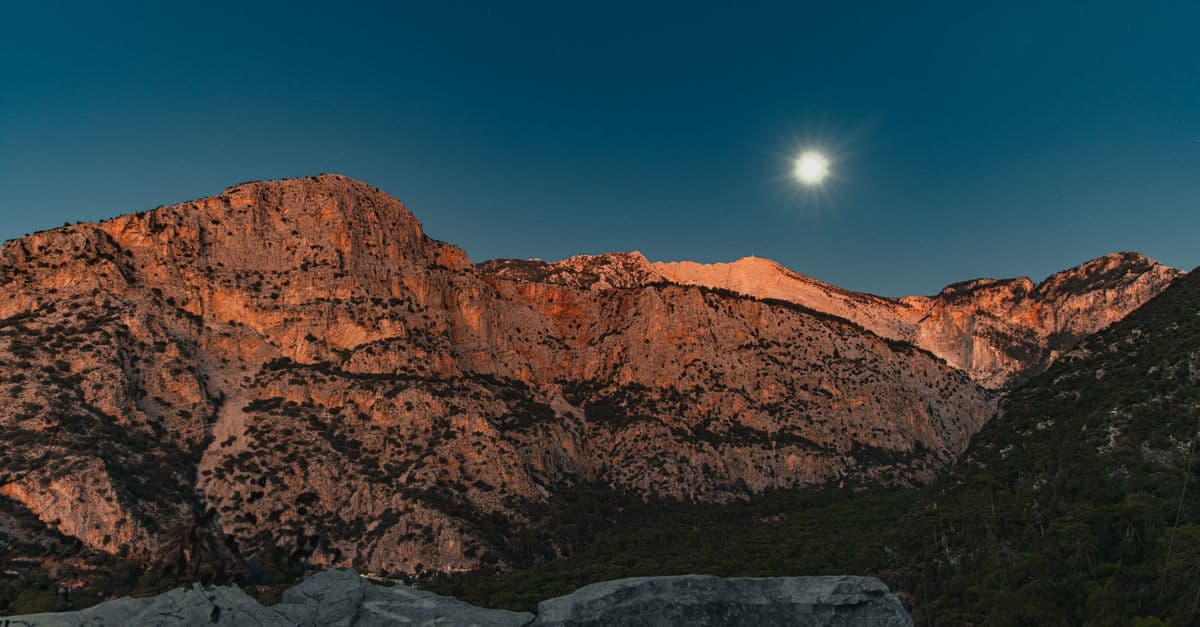
Photo: Hobi Photography / Pexels
The Moon's surface preserves a 4.5-billion-year geological record that Earth cannot. Tectonic activity and erosion have erased most of our planet's ancient crust, but the Moon — geologically quiet for over 3 billion years — holds rock samples that directly record the Solar System's violent early history. Between 1969 and 1972, Apollo astronauts returned 382 kilograms of lunar material across six landings, giving scientists an irreplaceable archive that still produces new discoveries in 2026.
The Moon's Two Faces — Mare vs. Highlands
The most obvious feature of the Moon is the stark contrast between dark plains and pale highlands visible to the naked eye. These two terrains record fundamentally different geological histories.
Mare — the dark basaltic plains that cover roughly 16% of the lunar surface, predominantly on the near side. The term is Latin for "sea," a name given by early astronomers like Galileo Galilei, who first described them through his telescope in 1609. Mare regions are younger (2.5–3.9 billion years old) and formed when volcanic lava flooded large impact basins after the period of heavy bombardment.
Lunar highlands — the pale, heavily cratered terrain covering the remaining 84% of the Moon. Highlands are older (4.0–4.5 billion years) and composed primarily of anorthosite, a calcium-feldspar-rich rock formed during the Lunar Magma Ocean phase when the entire Moon was molten.
The maria sit 2–5 kilometers below the mean lunar radius, carved by colossal impacts that cracked the crust and allowed magma to well up from the mantle. The Sea of Tranquility (Mare Tranquillitatis), where Apollo 11 landed in July 1969, sits in one such basin. Samples collected there were 3.6–3.8 billion years old — older than almost any intact crustal rock on Earth (Papike et al., 1991).
The highlands record the Late Heavy Bombardment — a spike in asteroid and comet impacts approximately 3.9 billion years ago — through their shattered, fragmented rock record. Understanding why this bombardment happened, and whether it affected early Earth's habitability, remains a core question in planetary science. The Apollo samples provided the first direct radiometric dates for this event.
The Lunar Magma Ocean Hypothesis
The highlands' anorthosite composition strongly supports the Lunar Magma Ocean (LMO) hypothesis, first proposed by scientists studying Apollo samples in 1970 (Wood et al., 1970, Science). According to this model, the Moon formed hot enough that its entire outer shell was molten — a global magma ocean roughly 500 kilometers deep. As the ocean cooled over ~100 million years, denser minerals like olivine and pyroxene sank, while lighter plagioclase feldspar floated to the top, forming the bright anorthosite crust. This process is called igneous differentiation — the gravitational separation of minerals by density during solidification.
The Three Major Lunar Rock Types
Apollo samples fall into three broad categories, each recording a different geological process and time period.
| Rock Type | Composition | Origin | Approximate Age | Apollo Source |
|---|---|---|---|---|
| Mare basalt | Olivine, pyroxene, ilmenite, plagioclase | Volcanic lava flows | 2.5–3.9 Ga | Apollo 11, 12, 15, 17 |
| Breccia | Mixed rock fragments in fine matrix | Impact melting and compaction | 3.8–4.5 Ga | Apollo 14, 16, 17 |
| KREEP basalt | K, REE, P enriched minerals | Residual magma crystallization | ~3.9 Ga | Apollo 12, 14 |
| Anorthosite | Plagioclase feldspar (>90%) | Magma ocean flotation crust | 4.3–4.5 Ga | Apollo 15, 16 |
| Regolith | Broken rock powder + glass beads | Micrometeorite gardening | Ongoing | All missions |
Ga = billions of years ago. Mare basalts and breccias dominate the returned sample collection by mass.
Mare Basalts — Frozen Volcanic History
Mare basalts are the most thoroughly studied lunar rocks. They are fine- to medium-grained volcanic rocks solidified from lava flows that averaged 10–30 meters thick. What makes lunar basalts scientifically remarkable is what they lack compared to Earth's basalts: they are essentially water-free, metal-rich in iron and titanium, and show no signs of oxidation or hydrothermal alteration.
Apollo 11 returned 21.6 kg of basalt from Mare Tranquillitatis, with titanium-rich ilmenite comprising up to 15% of some samples by volume. Apollo 12's Oceanus Procellarum basalts were lower in titanium but richer in magnesium, reflecting a different source region in the mantle. By analyzing the ratios of isotopes such as rubidium-87/strontium-87 and samarium-147/neodymium-143, geochemists can determine when the magma erupted and how long it took to crystallize.
These basalts are critical for understanding the solar system's formation timeline because they sample the Moon's deep mantle at specific time slices — frozen chemical snapshots of the lunar interior 3–4 billion years ago.
Breccias — Impact Records in Stone
Breccia — a rock composed of angular rock fragments cemented together in a fine-grained matrix, formed by the heat and pressure of impact events. Lunar breccias are the most abundant rock type in the Apollo highland collections and come in several sub-types:
- Monomict breccia: fragments of a single rock type, lightly shocked
- Polymict breccia: fragments of multiple rock types, recording multiple impact events
- Impact melt breccia: the matrix is solidified impact melt glass, preserving a chemical fingerprint of the impacting body
Apollo 14 returned highland breccias from the Fra Mauro Formation — ejecta blanket from the Imbrium Basin impact roughly 3.85 billion years ago (Stöffler et al., 2006, Reviews in Mineralogy and Geochemistry). These breccias contain fragments from rocks that predated the Imbrium impact by hundreds of millions of years, effectively giving scientists access to ancient crustal material that was excavated and preserved as clasts inside younger ejecta.
The Apollo 16 mission, which landed at the Descartes Highlands — the only Apollo landing in the feldspathic highlands — returned 94.7 kg of breccia-dominated samples, the largest haul of a single mission. Geologists had initially predicted volcanic material; the near-complete absence of volcanic basalt at the site was itself a major discovery that reshaped understanding of lunar volcanism's geographic extent.
KREEP — The Geochemical Anomaly
KREEP — an acronym for potassium (K), rare earth elements (REE), and phosphorus (P). It refers to a chemically unique component of the lunar crust characterized by anomalously high concentrations of these elements, plus thorium and uranium.
KREEP material is concentrated on the near side of the Moon in a region called the Procellarum KREEP Terrane (PKT), which underlies much of Oceanus Procellarum and Mare Imbrium. This concentration is one of the Moon's greatest geological mysteries: why are heat-producing elements (potassium, thorium, uranium) so strongly concentrated in one hemisphere?
One hypothesis proposes that the impactor that created the South Pole-Aitken Basin — the largest impact structure in the Solar System at 2,500 km across and 8 km deep — redistributed KREEP material asymmetrically (Jutzi and Asphaug, 2011, Nature). Another suggests the Moon's mantle was heterogeneous from the start of crystallization. China's Chang'e 5 mission (2020) returned 1.73 kg of basalt from Mons Rümker in the PKT, with an age of 1.96 billion years — making it the youngest volcanic rock yet sampled from the Moon (Li et al., 2021, Science).
Apollo Sample Yields — Mission by Mission
Each Apollo mission targeted a different geological setting, maximizing the diversity of samples returned.
| Mission | Landing Site | Sample Mass (kg) | Terrain Type | Key Sample |
|---|---|---|---|---|
| Apollo 11 | Mare Tranquillitatis | 21.6 | Mare basalt | High-Ti basalt 10047 |
| Apollo 12 | Oceanus Procellarum | 34.3 | Mare basalt | Low-Ti basalt + KREEP |
| Apollo 14 | Fra Mauro | 42.3 | Highland/ejecta | Breccia 14321 ("Big Bertha") |
| Apollo 15 | Hadley Rille | 76.8 | Mare/highland boundary | Genesis Rock (anorthosite 15415) |
| Apollo 16 | Descartes Highlands | 94.7 | Feldspathic highlands | Lunar dunite 72415 |
| Apollo 17 | Taurus-Littrow | 110.5 | Mare/highland valley | Orange volcanic glass 74220 |
| Total | 380.2 |
Apollo 17 astronaut Harrison Schmitt — the only professional geologist to walk on the Moon — collected orange soil (sample 74220) at Shorty Crater that turned out to be 3.64-billion-year-old volcanic glass beads, a discovery made by Schmitt in real time during EVA 2.
The Genesis Rock (sample 15415), collected at Hadley Rille by Apollo 15 astronauts David Scott and James Irwin, is a nearly pure anorthosite dating to 4.1 billion years ago. It is often cited as a piece of the original lunar crust, though subsequent analyses suggest it may be somewhat younger than the magma ocean itself (Carlson and Lugmair, 1988).
For deeper context on how these missions fit into the broader arc of human spaceflight, see the history of space exploration timeline and the Apollo 11 moon landing explained.
What Lunar Rocks Tell Us About Solar System History
The scientific value of Apollo samples extends well beyond lunar geology. They function as calibration anchors for the entire inner Solar System's timeline.
The Absolute Chronology Problem
Before Apollo, planetary scientists could establish relative ages (crater density tells us which surface is older) but not absolute ages. Apollo samples brought absolute radiometric dates to the Moon, which could then be used to calibrate crater-counting chronology — the primary tool for dating surfaces elsewhere in the Solar System where no samples exist. Every age estimate for surfaces on Mercury, Mars, and the moons of the outer planets ultimately traces back to the Apollo sample chronology (Neukum et al., 2001, Space Science Reviews).
Evidence for the Giant Impact Origin
The Moon's bulk composition is strikingly similar to Earth's mantle. Oxygen isotope ratios in Apollo samples are nearly identical to Earth's rocks — a match so precise that it is difficult to explain unless the Moon formed from material that was once part of Earth. This discovery, made in the 1970s by geochemists studying Apollo samples, became a key constraint for the Giant Impact Hypothesis: the Moon formed 4.5 billion years ago when a Mars-sized object (Theia) struck the proto-Earth, ejecting a debris disk that coalesced into the Moon (Hartmann and Davis, 1975).
Lunar water discoveries from orbital missions (LCROSS in 2009, Chandrayaan-1 in 2008) revealed ice in permanently shadowed craters, likely delivered by comets and asteroids. The source and abundance of this water — which could support future crewed missions as described in the Artemis Moon program explained — is still being investigated.
Cosmochemical Constraints on Planetary Differentiation
Trace element patterns in lunar basalts constrain how the Moon's mantle differentiated after the magma ocean crystallized. The depletion of volatile elements (sodium, potassium) and enrichment of refractory elements in lunar rocks compared to Earth provides evidence for the high-temperature environment of the Giant Impact and the Moon's subsequent thermal history (Taylor, 1982, Planetary Science: A Lunar Perspective).
The Regolith — A Radiation and Impact Archive
Regolith — the layer of fragmented, unconsolidated rock covering the Moon's surface, produced by billions of years of meteorite and micrometeorite impacts. Unlike soil on Earth, it contains no organic material, no water-deposited minerals, and no biological weathering products.
Lunar regolith is typically 2–8 meters deep in mare regions and 10–15 meters deep in heavily cratered highlands. Its unique value lies in what it has trapped: solar wind ions implanted directly into grain surfaces over billions of years. Apollo regolith samples contain records of solar wind composition going back to the early Solar System — hydrogen, helium-3, carbon, nitrogen, and noble gases that were energetically implanted before the Sun's output changed significantly (Kerridge, 1975, Earth and Planetary Science Letters).
Helium-3 in particular has attracted attention as a potential fuel for future nuclear fusion energy reactors, though extraction at scale remains technically and economically speculative.
Micrometeorite impacts also melt and quench regolith particles into glassy agglutinates that record impact rates — giving scientists a proxy for how the bombardment flux has changed over time. The space weathering process (solar wind + micrometeorites) darkens the regolith over time, explaining why older highland surfaces appear brighter when fresh material is excavated by recent craters. This same weathering process affects other airless bodies across the Solar System, from Mercury to asteroids like Bennu and Ryugu.
Lunar Geology and Future Exploration
The Artemis program aims to establish a sustained human presence at the lunar south pole, where permanently shadowed craters contain water ice and the local geology differs significantly from Apollo's equatorial landing sites. South Pole samples would include anorthosites, impact melts, and potentially material from the deep mantle excavated by the South Pole-Aitken Basin.
China's Chang'e 6 mission (2024) returned the first samples from the lunar far side — from Mare Moscoviense in the Apollo Basin, within the South Pole-Aitken Basin. These far-side basalts show a distinct composition from near-side samples, suggesting the far-side mantle has different mineralogy — a key constraint for models of how the Moon's interior is structured. Early analysis found that the far-side mare basalts are lower in thorium, consistent with the far side lying outside the Procellarum KREEP Terrane (Li et al., 2024, Nature).
The James Webb Space Telescope discoveries are also contributing to lunar science indirectly by providing comparative mineralogy data for other rocky bodies in the Solar System, helping contextualize the Moon within the broader spectrum of planetary differentiation.
Frequently Asked Questions
Q: How much moon rock has been brought back to Earth? A: Apollo missions returned 382 kilograms of lunar material across six landings between 1969 and 1972. The Soviet Luna program returned 326 grams via robotic sample-return missions. China's Chang'e 5 added 1.73 kg in 2020, and Chang'e 6 added approximately 1.9 kg in 2024.
Q: Why are lunar rocks different from Earth rocks? A: Lunar rocks formed in the absence of water, oxygen, and tectonic activity. They show no hydration, no oxidation, and no metamorphic textures from tectonic burial. Their trace element patterns reflect igneous differentiation in a dry, reduced environment fundamentally different from Earth's wet, oxidizing crust.
Q: What is KREEP and why is it scientifically important? A: KREEP stands for potassium (K), rare earth elements (REE), and phosphorus (P). It represents the last dregs of the lunar magma ocean — the residual liquid richest in incompatible elements that don't fit into common mineral crystal structures. Its concentration in the near-side Procellarum KREEP Terrane provides clues about the Moon's asymmetric thermal evolution and may explain why near-side volcanism persisted longer than far-side volcanism.
Q: How do scientists determine the age of a moon rock? A: Radiometric dating uses the known decay rates of radioactive isotopes. Common systems used for lunar rocks include rubidium-strontium (Rb-Sr), samarium-neodymium (Sm-Nd), and uranium-lead (U-Pb). By measuring parent and daughter isotope ratios in different minerals from the same rock, geochemists calculate when the minerals last crystallized — i.e., when the rock formed.
Q: What is the oldest rock brought back from the Moon? A: Sample 72415, a dunite collected by Apollo 17, has been dated to approximately 4.46 billion years old by some analyses, making it among the oldest solar system materials ever directly sampled. The Genesis Rock (15415, anorthosite) is dated at 4.1 billion years, somewhat younger than the Moon's formation at approximately 4.51 billion years ago.
Q: Did the Apollo samples prove the Giant Impact Hypothesis? A: They provided strong supporting evidence. The near-identical oxygen isotope ratios between lunar and Earth rocks suggest the Moon formed from Earth-derived material — consistent with a giant impact ejecting Earth's mantle into orbit. However, the hypothesis still has open questions, particularly about how the Moon acquired its current mass from what would have been a high-angular-momentum impact (Cuk and Stewart, 2012, Science).
Q: Are there lunar meteorites, and how do they compare to Apollo samples? A: Yes. Over 400 confirmed lunar meteorites have been found, mainly in Antarctica, hot deserts, and icy terrains where dark rocks stand out. They sample random locations across the Moon, unlike the geographically focused Apollo collection. Lunar meteorites have provided important data on far-side and polar geology not covered by Apollo, but they lack precise provenance — we cannot identify exactly where on the Moon they came from.
Q: Could we find life in lunar samples? A: No evidence of life, past or present, has been found in any lunar sample. The Moon has been geologically dead, airless, and without liquid water on its surface for at least 3 billion years. Permanently shadowed craters at the poles contain water ice, but this is delivered cometary and asteroidal water, not indicative of biological activity. For worlds more likely to host life, see astrobiology and the search for life beyond Earth.
Sources
- Papike, J. J., Ryder, G., and Shearer, C. K. (1998). Lunar samples. Reviews in Mineralogy and Geochemistry, 36, 5-1 to 5-234.
- Wood, J. A., Dickey, J. S., Marvin, U. B., and Powell, B. N. (1970). Lunar anorthosites. Science, 167(3918), 602–604.
- Stöffler, D., et al. (2006). Cratering history and lunar chronology. Reviews in Mineralogy and Geochemistry, 60(1), 519–596.
- Li, Q. L., et al. (2021). Two-billion-year-old volcanism on the Moon from Chang'e-5 basalts. Science, 374(6569), 1485–1488.
- Jutzi, M. and Asphaug, E. (2011). Forming the lunar farside highlands by accretion of a companion moon. Nature, 476, 69–72.
- Hartmann, W. K. and Davis, D. R. (1975). Satellite-sized planetesimals and lunar origin. Icarus, 24(4), 504–515.
- Neukum, G., Ivanov, B. A., and Hartmann, W. K. (2001). Cratering records in the inner Solar System in relation to the lunar reference system. Space Science Reviews, 96(1), 55–86.
- Li, C., et al. (2024). Chang'e-6 samples reveal far-side lunar volcanism. Nature, preliminary reports 2024.
- Carlson, R. W. and Lugmair, G. W. (1988). The age of ferroan anorthosite 60025. Earth and Planetary Science Letters, 90(2), 119–130.
Follow new articles
Add SciHub101 to your feed reader to see new science and technology stories.
About the Author
SciHub101 is an independent science and technology publication founded and edited by Buğra Sözeri, a software engineer and app developer based in Türkiye. AI tools assist with drafting and research. Source documentation in the existing archive is uneven, and articles are being reviewed and corrected. The Editorial Team byline identifies editorial responsibility; it does not certify specialist or independent human review. Where we compare products, anything built by our own team is labelled as such — see the editorial guidelines and About page for how corrections and disclosures work.
Related Articles
Mars Settlement Engineering — Life Support, Radiation, and ISRU Explained — SciHub101
The engineering challenges of permanent Mars settlement: life support systems, radiation shielding, food production, water extraction, and in-situ resource utilization.
Astrobiology — The Science of Life Beyond Earth Explained — SciHub101
Astrobiology covers extremophiles, habitability criteria, biosignatures, candidate worlds (Mars, Europa, Enceladus), the Drake equation, and the Fermi paradox.
Long-Period Comets: Messengers From the Edge of the Solar System
Comet Hale-Bopp, which dominated the 1997 night sky, had not been seen by any human being before. Its previous perihelion passage was in approximately 2215 BCE, before writing systems existed in most of the world. It had spent the intervening 4,200 years falling inward from the outer solar system at speeds so slow that a bicycle could have overtaken it. When it finally arrived, its pristine composition — unchanged since the solar system formed 4.5 billion years ago — gave scientists a direct sample of the raw material from which planets were built. Long-period comets are the oldest, least-altered objects available for study. They are time capsules from the beginning.
'Oumuamua: The First Interstellar Visitor and the Mystery of Its Acceleration
On October 19, 2017, astronomers detected the first object ever confirmed to have originated outside our solar system. It was moving too fast, tumbling in an unusual way, accelerating when it shouldn't have been, and appeared to emit no gas despite behaving like a comet. Scientists have proposed it was a hydrogen iceberg, a nitrogen shard, or an alien probe. Here is what the evidence actually shows.
Saturn's Rings Explained — Origin and Future
How Saturn got its rings, why they're disappearing, and why they're paper-thin — the full story from Galileo to Cassini's grand finale.