PFAS Explained: Why ‘Forever Chemicals’ Persist and How Cleanup Works
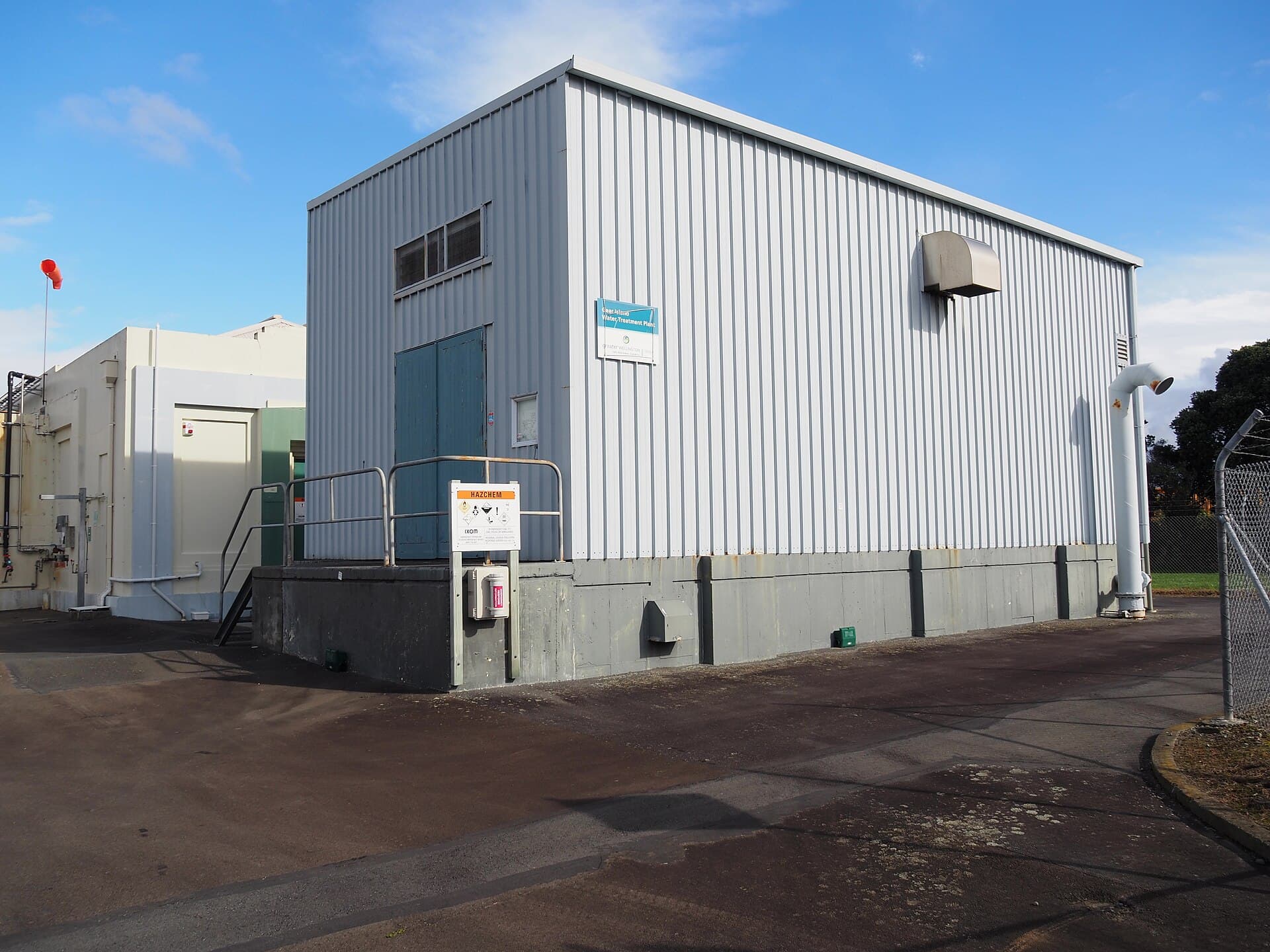
Photo: Marshelec (CC BY-SA 4.0) / Wikimedia Commons / CC BY-SA 4.0
Per- and polyfluoroalkyl substances, usually shortened to PFAS, are manufactured chemicals built around chains of carbon atoms wrapped in fluorine. That structure repels water, grease, and heat, which is why PFAS turn up in nonstick pans, stain-resistant fabrics, food packaging, and firefighting foam. It is also why many of them last: the same chemistry that makes them useful makes them slow to break down in soil, water, and living tissue. This explainer covers what PFAS are, why they persist, how scientists separate hazard from risk, and what treatment can and cannot do.
The nickname “forever chemicals” is a fair warning about persistence but a blunt description of a very diverse family. The US Environmental Protection Agency (EPA) says there are thousands of PFAS, that most research covers only a few of them, and that their effects can differ from one compound to the next. (EPA) Keeping that diversity in view is the difference between understanding PFAS and just being alarmed by them.
What PFAS actually are
A PFAS molecule has a backbone of carbon atoms, and on that backbone, hydrogen atoms have been swapped for fluorine. In the older, simpler definition, a perfluoroalkyl group is a carbon chain on which every hydrogen has been replaced by fluorine. A polyfluoroalkyl compound has fluorine on some of the carbons but not all. The 2021 definition from the OECD (the Organisation for Economic Co-operation and Development) is broader: it counts a substance as PFAS if it contains at least one fully fluorinated methyl or methylene carbon atom, that is, a CF3 or CF2 group. (Wikipedia: PFAS)
Think of the carbon chain as a rope and the fluorine atoms as a tight sleeve of Teflon tape wound around it. Water, oil, and most reactive chemicals slide off the sleeve. Chemists call the end of the molecule that is not fluorinated the head group, and it determines how the molecule behaves in water. A common head group, a carboxylic acid, gives the PFCA family (perfluoroalkyl carboxylic acids, including PFOA). Another, a sulfonic acid, gives the PFSA family (perfluoroalkane sulfonic acids, including PFOS).
How many PFAS exist depends on who is counting and how. The EPA's DSSTox database lists 14,735 unique PFAS compounds, and estimates for the broader group range from 8,000 to 7 million chemicals depending on the definition. (Wikipedia: PFAS) The USGS, in a 2023 tap-water study, put it as a ratio: it tested for 32 PFAS out of more than 12,000 types. (USGS)
| Term | Plain meaning | Example |
|---|---|---|
| Perfluoroalkyl | Carbon chain fully fluorinated | PFOA, PFOS |
| Polyfluoroalkyl | Carbon chain partly fluorinated | Fluorotelomer alcohols |
| Long-chain | Longer carbon backbone, tends to bind to proteins and soil | PFOA, PFOS |
| Short-chain | Shorter backbone, tends to move more easily with water | PFBS |
| Precursor | Can transform into a persistent PFAS | Fluorotelomer alcohols (FTOHs), which are precursors to PFCAs |
Sources: Wikipedia: PFAS for the precursor example and definitions. The long-chain versus short-chain tendencies are general patterns, not rules for every compound.
A short history of a useful chemistry
The first PFAS, polychlorotrifluoroethylene, was synthesized in 1934, and widespread use began in 1938 with Teflon, the polymer polytetrafluoroethylene. (Wikipedia: PFAS) The EPA describes the group as manufactured chemicals used since the 1940s. (EPA) From that start, the chemistry spread across industry: coatings, textiles, paper, electronics, and fire suppression.
One use deserves attention because of how much contamination it left behind. Class B firefighting foams, designed for fuel fires, have relied on PFAS-based formulations, and areas near airports and air force bases where PFAS-containing foam was used have become known sites of contamination. (Wikipedia: PFAS)
The regulatory response started with the best-known compounds. The Stockholm Convention on Persistent Organic Pollutants added PFOS to its restricted list in 2009, PFOA in 2019, and PFHxS in 2022. (Stockholm Convention) That sequence shows a pattern that repeats through the story: scientists identify a harmful or persistent compound, regulators restrict it, industry shifts to related chemistry, and the cycle starts again with the replacement.
Why many PFAS persist
Persistence begins with the carbon-fluorine bond. Fluorine pulls strongly on the electrons it shares with carbon, and the carbon-fluorine bond is one of the strongest bonds in organic chemistry, much stronger than a carbon-chlorine bond. (Wikipedia: Organofluorine chemistry) Most natural processes that break down organic pollutants, such as microbes digesting them or sunlight and oxygen attacking them, work by breaking bonds like carbon-hydrogen. A carbon chain fully sleeved in fluorine gives those processes little to grab.
Why “forever” is a shorthand and not a half-life. No one has measured a PFAS lasting forever, and some PFAS do change. Precursor compounds, such as fluorotelomer alcohols, can transform into persistent end products, so a precursor that disappears from a sample may simply have become something else. (Wikipedia: PFAS) What “forever” captures is that, for the best-known end products, natural breakdown on human timescales is negligible.
The persistence of a compound is separate from its toxicity. A substance can last a long time without being harmful at the concentrations people meet, and a substance can be harmful and short-lived. PFAS draw concern because several of the best-studied members combine persistence, mobility, and biological activity. That combination is the reason regulators treat them differently from an ordinary pollutant that degrades in months.
Mobility: how PFAS travel
Some PFAS move easily with water, while others stick to soil and sediment. Compounds with shorter chains tend to be more water-soluble and travel farther in groundwater. The water movement described in How the Water Cycle Works matters here, because contamination released in one place can enter a river, an aquifer, or the atmosphere and reappear elsewhere.
Evidence of that reach comes from rain. A 2022 study in Environmental Science & Technology, led by Ian Cousins of Stockholm University, found PFAS in rainwater worldwide, including in remote places such as Antarctica and the Tibetan Plateau, at levels above the stringent drinking-water guidelines then in force. Cousins said that by those measurements there is nowhere on Earth where rain would be safe to drink. (Northeastern University) That is a statement about how low the guideline values have become and how far PFAS have spread, not a claim that a glass of rainwater makes someone ill.
Accumulation in bodies
Many persistent organic pollutants, like the older pesticide DDT, dissolve in fat. Several PFAS behave differently: they tend to bind to proteins in blood and organs and are cleared slowly. The EPA notes that many PFAS can build up in people and animals over time. (EPA)
How slowly depends on the compound and the person. A study of people in Ronneby, Sweden, whose drinking water was contaminated by firefighting foam, estimated mean serum half-lives (the time for the blood level to fall by half after exposure stops) of 2.7 years for PFOA, 3.4 years for PFOS, and 5.3 years for PFHxS, with roughly threefold variation between individuals. (Li et al. 2018, Occupational and Environmental Medicine) A half-life of a few years is slow compared with most everyday chemicals, but it is not “forever,” and it means body levels can fall once exposure drops.
Where PFAS come from and how people are exposed
The EPA lists several routes. People can be exposed at work, in jobs such as firefighting or chemical manufacturing. They can drink contaminated water, eat food including fish, swallow contaminated soil or dust, breathe contaminated air, or use products made with PFAS or packaged in PFAS-containing materials. Sources include drinking water, waste sites, firefighting foam, manufacturing facilities, food packaging, household products, personal care products, and biosolids (treated sewage sludge). (EPA)
On the national picture, the EPA says CDC surveys indicate that most people in the United States have been exposed to some PFAS. (EPA) Detection in blood is evidence of exposure, not of disease, and the difference matters more than any other point in this article.
How common is PFAS in tap water?
In 2023, the USGS estimated that at least 45 percent of US tap water contains one or more PFAS. The estimate came from 716 locations sampled from 2016 to 2021, covering low, medium, and high human-impact areas. Exposure was highest near urban areas and potential PFAS sources. The chance of detecting no PFAS was about 75 percent in rural areas and about 25 percent in urban areas, and concentrations were similar in public supplies and private wells. The most frequently detected compounds were PFBS, PFHxS, and PFOA. (USGS)
Because the study tested only 32 compounds, the share of water with at least one PFAS could be higher than 45 percent. A detection also does not say whether the level is above any legal limit. For how drinking-water rankings handle these chemicals, Water Scarcity: The Growing Global Crisis Explained covers the wider supply picture that PFAS sit inside.
Beyond water
Water gets the attention, but PFAS also reach people through food, dust, and products. Biosolids spread on farmland can carry PFAS into soil, and soil chemistry then governs whether the compounds stay put or move into crops and groundwater, a topic touched on in How Soil Works. Plastics and packaging connect to a second persistent-pollution story, described in The Plastic Pollution Crisis Explained.
Hazard, exposure, and risk are three different things
A reader who learns only one framework from this article should learn this one.
Hazard is the inherent ability of a substance to cause harm under some conditions. Toxicology studies, usually in animals and cells, identify hazards. Exposure is how much of the substance reaches a person, by what route, and for how long. Risk is the combination: how likely harm is, given the hazard and the exposure.
A sealed can of a hazardous chemical in a warehouse has high hazard and near-zero exposure. A trace of a mildly hazardous chemical in a person's only water supply, drunk daily for decades, can carry real risk. The two common mistakes are treating every detection as an illness and treating uncertainty as proof of safety.
| Concept | Question it answers | Typical evidence |
|---|---|---|
| Hazard | What could this chemical do? | Animal studies, cell studies, mechanisms |
| Exposure | Who is encountering how much, and how? | Water tests, blood tests, food and dust sampling |
| Dose | How much gets into the body over time? | Intake estimates, serum levels |
| Risk | How likely is harm in this situation? | Combining the above, with uncertainty ranges |
What health research does and does not show
The EPA says current studies link certain PFAS exposure levels to several outcomes. These include reproductive effects such as reduced fertility and high blood pressure in pregnancy; developmental effects in children such as low birth weight and earlier puberty; increased risk of some cancers, including prostate, kidney, and testicular cancers; a weaker immune system, including a reduced vaccine response; interference with natural hormones; and higher cholesterol or obesity risk. (EPA) The immune findings connect to the mechanics described in How the Immune System Recognizes Threats.
The same EPA page adds a caution: effects are hard to pin down because there are thousands of PFAS, most studies focus on a few well-known ones, and exposure varies over time. (EPA) That limitation is built into the evidence. Studies of people can show an association but face confounding, meaning other factors that travel with exposure, and they usually measure exposure at one point in time.
What the cancer classification means
In November 2023, the International Agency for Research on Cancer (IARC), part of the World Health Organization, classified PFOA as Group 1, “carcinogenic to humans,” and PFOS as Group 2B, “possibly carcinogenic to humans.” For PFOA, the evidence in humans was limited, for renal cell carcinoma and testicular cancer, but the evidence in experimental animals was sufficient and the mechanistic evidence was strong. For PFOS, evidence in humans was inadequate and in animals limited, with strong mechanistic evidence. PFOA had previously been in Group 2B, in 2014. (IARC)
An IARC group describes the strength of the evidence that something can cause cancer, not how large the risk is at a given exposure. Group 1 means the evidence is strong enough to conclude a hazard exists. It does not mean a trace in drinking water carries the same risk as a workplace dose.
This article is general science, not medical guidance. Questions about a personal exposure, a blood test result, or symptoms belong with a qualified clinician and local public-health authority.
How scientists find PFAS in water and soil
PFAS analysis needs specialized laboratory methods because the concentrations that matter are tiny. Drinking-water limits are written in parts per trillion (ppt, or nanograms per liter), an almost vanishingly small share of the water. Measuring that low demands careful sample handling, clean containers, and checks that the lab itself is not adding PFAS to the sample.
Several practical points shape how to read a result.
- A test covers a list. A lab that tests for 30 or so compounds says nothing about the thousands it did not test for. The USGS study tested 32 out of more than 12,000 types. (USGS)
- Non-detect is not zero. It means the compound was below the method's reporting limit.
- A sample is a snapshot. Groundwater and river flows vary by season, so one sample cannot describe a year.
- Precursors hide. Because some compounds transform into others, a test of end products can miss material that will convert later. Specialized tests exist to estimate that hidden pool.
What the drinking-water rules say
In the United States, the EPA announced a final National Primary Drinking Water Regulation for six PFAS on April 10, 2024. It set enforceable limits, called maximum contaminant levels (MCLs), in parts per trillion. (EPA)
| Compound | Health goal (MCLG) | Enforceable limit (MCL) |
|---|---|---|
| PFOA | Zero | 4.0 ppt |
| PFOS | Zero | 4.0 ppt |
| PFHxS | 10 ppt | 10 ppt |
| PFNA | 10 ppt | 10 ppt |
| HFPO-DA (GenX) | 10 ppt | 10 ppt |
| Mixture of two or more of PFHxS, PFNA, HFPO-DA, and PFBS | Hazard Index of 1 | Hazard Index of 1 |
Source: EPA PFAS drinking-water page. The Hazard Index is a unitless sum that weighs each compound against its own health benchmark.
Under the 2024 schedule, systems had to complete initial monitoring by 2027 and, where they exceeded a limit, had five years to put in a fix. The page also reports that on May 18, 2026, the EPA proposed to uphold the PFOA and PFOS limits while letting systems request two more years, to 2031, to comply, and proposed to rescind the rules for PFHxS, PFNA, HFPO-DA, and the mixture index. (EPA) Those are proposals, and rules in this area have been moving, so the agency's current page is the place to check status.
Other US actions deal with cleanup rather than tap water. On April 19, 2024, the EPA finalized the designation of PFOA and PFOS as hazardous substances under the federal Superfund law (CERCLA), which brings release reporting and cleanup liability. (Jones Day summary) The agency's earlier PFAS roadmap also committed to limits on industrial discharges and new reporting rules under the Toxic Substances Control Act. (EPA)
Europe's broader approach
Europe is pursuing a different strategy: restricting the whole family, with exceptions, rather than regulating compound by compound. Denmark, Germany, the Netherlands, Norway, and Sweden submitted a proposal to the European Chemicals Agency (ECHA) in January 2023 that could restrict more than 10,000 PFAS. In March 2026, ECHA's risk committee adopted its opinion that PFAS pose serious and growing risks, and the socio-economic committee agreed a draft opinion, with a public consultation following. The final socio-economic opinion was expected by the end of 2026, after which the European Commission would prepare a legislative proposal. (European Environmental Bureau)
The two approaches reflect a real scientific problem. Testing and regulating thousands of compounds one at a time is slow, and each regulated compound has tended to be replaced by a cousin. Group restriction tries to end that cycle, at the cost of sweeping in uses that may be harmless or essential. How to weigh that cost is a policy judgment, not a laboratory result.
How PFAS are removed from water
Most treatment technologies for PFAS separate the compounds from the water. They do not break them down. That is the central fact of cleanup, and it explains most of the cost and controversy.
Activated carbon
Granular activated carbon (GAC) is charcoal processed to be full of microscopic pores. Think of a sponge for chemicals: PFAS molecules stick to the carbon surface as water passes through. The idea is the same one behind the soil carbon in How Biochar Stores Carbon in Soil, though water-treatment carbon is manufactured for a different job. Carbon tends to work well on longer-chain PFAS and less well on short-chain ones, which can break through the bed sooner. When the carbon is full, it has to be replaced, and the spent carbon now holds the PFAS.
Ion exchange resins
Ion exchange uses small beads that carry an electric charge. Many PFAS carry the opposite charge in water, so the beads trap them in exchange for harmless ions such as chloride. Resins can be effective at low concentrations, but they have limited capacity, depend on the water's chemistry, and also end up as a PFAS-laden waste.
High-pressure membranes
Reverse osmosis and nanofiltration push water through membranes with pores small enough to block most dissolved PFAS. The process produces clean water and a concentrated reject stream. The energy trade-offs resemble the ones in Why Desalination Uses So Much Energy, because it is the same kind of equipment doing a similar separation, only aimed at a different contaminant.
| Method | How it works | Main limitation | What is left over |
|---|---|---|---|
| Granular activated carbon | PFAS stick to pore surfaces | Short-chain PFAS break through sooner; bed must be replaced | Spent carbon holding PFAS |
| Ion exchange resin | Charged beads capture PFAS | Limited capacity; depends on water chemistry | Spent resin or regeneration brine |
| Reverse osmosis / nanofiltration | Membranes block dissolved PFAS | Energy use; fouling | Concentrated reject water |
Table summarizing general treatment behavior. Real performance depends on the water, the compounds, and the design. For site-specific advice, rely on a utility or engineer.
Real plants often combine steps: pretreatment to protect the main medium, then a primary stage, then monitoring to catch breakthrough before PFAS reach customers. A household filter can use the same media, but performance varies by product and by the water, so independent certification to a current standard is the useful signal, not a marketing claim.
Destroying PFAS is harder than removing them
If separation just moves PFAS into a smaller, more concentrated stream, something must eventually happen to that stream. The EPA's interim guidance on destroying and disposing of PFAS and PFAS-containing materials addresses the three large-scale options: thermal treatment, landfills, and underground injection. The guidance lays out the current science for each and the uncertainties that remain. The agency published a second edition in 2024, and its page notes a 2026 update. (EPA)
| Option | Idea | Open question |
|---|---|---|
| Thermal treatment (incineration, reactivation) | Heat high enough to break carbon-fluorine bonds | Whether destruction is complete, and what leaves the stack |
| Landfilling | Contain the waste in lined, monitored cells | PFAS can leach into the liquid that collects at the bottom, which must itself be treated |
| Underground injection | Place liquid waste deep in geologic formations | Long-term containment is hard to verify |
Framing based on the three options named in EPA's interim guidance. The open questions are the kind the guidance itself flags; check the current edition for specifics.
Researchers are also developing other destruction methods, including supercritical water oxidation, electrochemical treatment, and plasma. Most are best understood as promising for concentrated waste rather than proven for large volumes of dilute drinking water. The honest test of any destruction claim is a mass balance: measure the PFAS going in, measure what comes out in every stream, including the gas, and check that the fluorine is accounted for as fluoride and other end products. “Destroyed” is a strong claim, and it requires that evidence.
Waste handling carries its own footprint. A system that removes PFAS but burns a great deal of energy, or ships concentrated waste across a state, has traded one burden for another. That is why engineers talk about the whole life cycle of a treatment train, not just the clean water at the end.
What cleanup cannot do alone
Treatment is the end of the pipe. Source control is cheaper than removal when it is possible: keep PFAS-containing foam from reaching soil, capture industrial wastewater before discharge, and replace PFAS in products where a good alternative exists. The catch is that substitutes need their own evidence. Several compounds introduced as replacements for PFOA, such as GenX (HFPO-DA), later drew regulatory scrutiny of their own, and HFPO-DA received a federal drinking-water limit in the 2024 rule (since proposed for rescission). (EPA) A switch from one persistent compound to a close cousin may only change the name on the problem.
There is also the question of scale. The same persistence that makes PFAS hard to destroy makes the legacy contamination enormous. The EPA's drinking-water rule was estimated to prevent PFAS exposure for approximately 100 million people over many years, and the agency made $1 billion in federal infrastructure funding available for PFAS testing and treatment. (EPA) Those figures give a sense of the effort, and a sense of how much of it falls on water utilities rather than on manufacturers.
The air is the other half of the picture. The same logic that lets rain carry PFAS around the planet means that local cleanup does not stop a regional background level. How air quality is measured and ranked is covered in Countries With the Cleanest Air in the World, though PFAS are not part of the standard air-quality indexes.
Common misunderstandings
| Claim | What the evidence supports |
|---|---|
| All PFAS are equally toxic | They are not. Effects differ by compound, and most research covers only a few |
| “Forever” means unchanged forever | It is shorthand. Some precursors transform, and many end products simply resist breakdown on human timescales |
| Detection in blood means illness | Detection shows exposure. It is not a diagnosis, and it does not identify a cause |
| Boiling makes water safe from PFAS | Boiling removes water as steam and can concentrate nonvolatile chemicals, so it is not a removal method |
| Filters remove PFAS, so the problem is solved | Filters move PFAS into a waste stream that needs management |
| Banning PFOA and PFOS ended the problem | Legacy contamination persists, and replacement compounds have drawn their own scrutiny |
| PFAS are only in water | They also occur in soil, dust, food, products, and air |
Limits of what we know
PFAS research has several honest gaps. The family is large, and the best-studied members are a minority. Population studies show associations that are hard to separate from other exposures. Analytical methods cover a defined list, and precursors can hide in samples. Treatment performance in the lab does not always carry over to a real water supply, and the status of rules is changing, as the 2026 proposals show. A good reader holds two thoughts at once: the persistence is real and the regulatory concern is serious, and many specific questions about individual compounds are still open.
Frequently asked questions
Q: What does PFAS stand for? A: Per- and polyfluoroalkyl substances. It is a broad family of manufactured chemicals with carbon chains that are fully or partly fluorinated. The EPA says there are thousands of them, and its DSSTox database lists 14,735 unique compounds.
Q: Why are PFAS called forever chemicals? A: Many PFAS break down extremely slowly, largely because of the strength of the carbon-fluorine bond. The phrase is shorthand for persistence, not a claim that every molecule lasts unchanged. Some precursor compounds do transform into other PFAS.
Q: Does finding PFAS in my blood or water mean I will get sick? A: Not by itself. Detection shows exposure. Health risk depends on the compound, the amount, how long exposure lasted, and individual factors. The EPA links certain exposure levels to outcomes such as higher cholesterol, reduced vaccine response, and some cancers, but those are associations from studies. A clinician or local health agency can interpret a specific result.
Q: What are the current US drinking-water limits for PFAS? A: The 2024 rule set 4.0 parts per trillion for PFOA and PFOS, 10 parts per trillion for PFHxS, PFNA, and GenX, and a Hazard Index of 1 for mixtures. In May 2026 the EPA proposed keeping the PFOA and PFOS limits with a possible extension to 2031 and rescinding the others, so check the EPA page for the current status.
Q: Can boiling or a household filter remove PFAS? A: Boiling is not a removal method, since PFAS do not boil off and can become more concentrated as water evaporates. Some filters using activated carbon, ion exchange, or reverse osmosis can reduce certain PFAS, but results depend on the product, the water, and maintenance. Look for current independent certification.
Q: What is the difference between removing PFAS and destroying them? A: Removal separates PFAS from water and leaves them in spent carbon, resin, or a concentrated reject stream. Destruction breaks the molecules into other products, which requires very harsh conditions and proof that nothing harmful is released. Most water treatment today is removal.
The takeaway
PFAS are a case study in what happens when a chemistry is too good at its job. The carbon-fluorine bond that keeps a pan from sticking and a foam from burning is the same feature that lets rain in Antarctica carry traces of the compounds. The science does not support the simplest fear, that every PFAS is equally dangerous, or the simplest comfort, that persistence alone is harmless. What it supports is more demanding: treat the family as a family, judge each compound by its own evidence, and measure exposure rather than assume it. The cleanup question follows the same logic. Separation is available now and moves the problem into a smaller container, while true destruction remains the harder, costlier step that determines whether the problem is solved or only stored.
References
- EPA, Our current understanding of the human health and environmental risks of PFAS
- EPA, PFAS in drinking water (National Primary Drinking Water Regulation)
- EPA, Interim guidance on destroying and disposing of certain PFAS and PFAS-containing materials
- EPA, PFAS Strategic Roadmap: commitments to action 2021-2024
- USGS (July 5, 2023), Tap water study detects PFAS across the US
- IARC, Evaluation of the carcinogenicity of PFOA and PFOS
- Stockholm Convention, PFAS overview
- European Environmental Bureau, ECHA experts back EU-wide restriction of PFAS
- Northeastern University, Global rainwater is now contaminated with forever chemicals, on Cousins et al. (2022), Environmental Science & Technology
- Li, Y. et al. (2018), Half-lives of PFOS, PFHxS and PFOA after end of exposure to contaminated drinking water, Occupational and Environmental Medicine
- Wikipedia, Per- and polyfluoroalkyl substances and Organofluorine chemistry, used for history, definitions, and compound counts
This article is educational and is not medical, legal, or site-specific environmental advice.
Read next:
Follow new articles
Add SciHub101 to your feed reader to see new science and technology stories.
About the Author
SciHub101 is an independent science and technology publication founded and edited by Buğra Sözeri, a software engineer and app developer based in Türkiye. AI tools assist with drafting and research. Source documentation in the existing archive is uneven, and articles are being reviewed and corrected. The Editorial Team byline identifies editorial responsibility; it does not certify specialist or independent human review. Where we compare products, anything built by our own team is labelled as such — see the editorial guidelines and About page for how corrections and disclosures work.
Related Articles
Green Steel Explained: Hydrogen, Electrolysis and the Hardest Part of Decarbonizing Steel
Green steel is made with far less CO2 than blast-furnace steel. How hydrogen direct reduction, scrap and electric arc furnaces work, and what limits them.

Countries with the Best Tap Water Quality (2024 Data Ranked)
Iceland, New Zealand, Singapore, and Hungary report 100 percent of people using safely managed drinking water, and much of Europe is above 99 percent. Yet 2.1 billion people still lack it, and lead pipes and PFAS challenge even high scorers. Here is what the data show and what it cannot.
Best Free Hydroponic Calculators and References 2026
Best free hydroponic calculators and references in 2026: Rootless Farm for crop profiles and 18 tools, plus five university and open tools, with limits.
Complete Sustainability Guide 2026 — Climate, Energy, and Conservation
The complete guide to sustainability in 2026: renewable energy, climate science, circular economy, conservation strategies, and actionable steps to reduce your impact.
Carbon Mineralization Explained: Turning CO2 Into Stable Carbonate Minerals
Carbon mineralization turns CO2 into solid carbonate rock. How it works, what Iceland's CarbFix showed, and why energy, rate, and MRV decide net removal.