Carbon Mineralization Explained: Turning CO2 Into Stable Carbonate Minerals
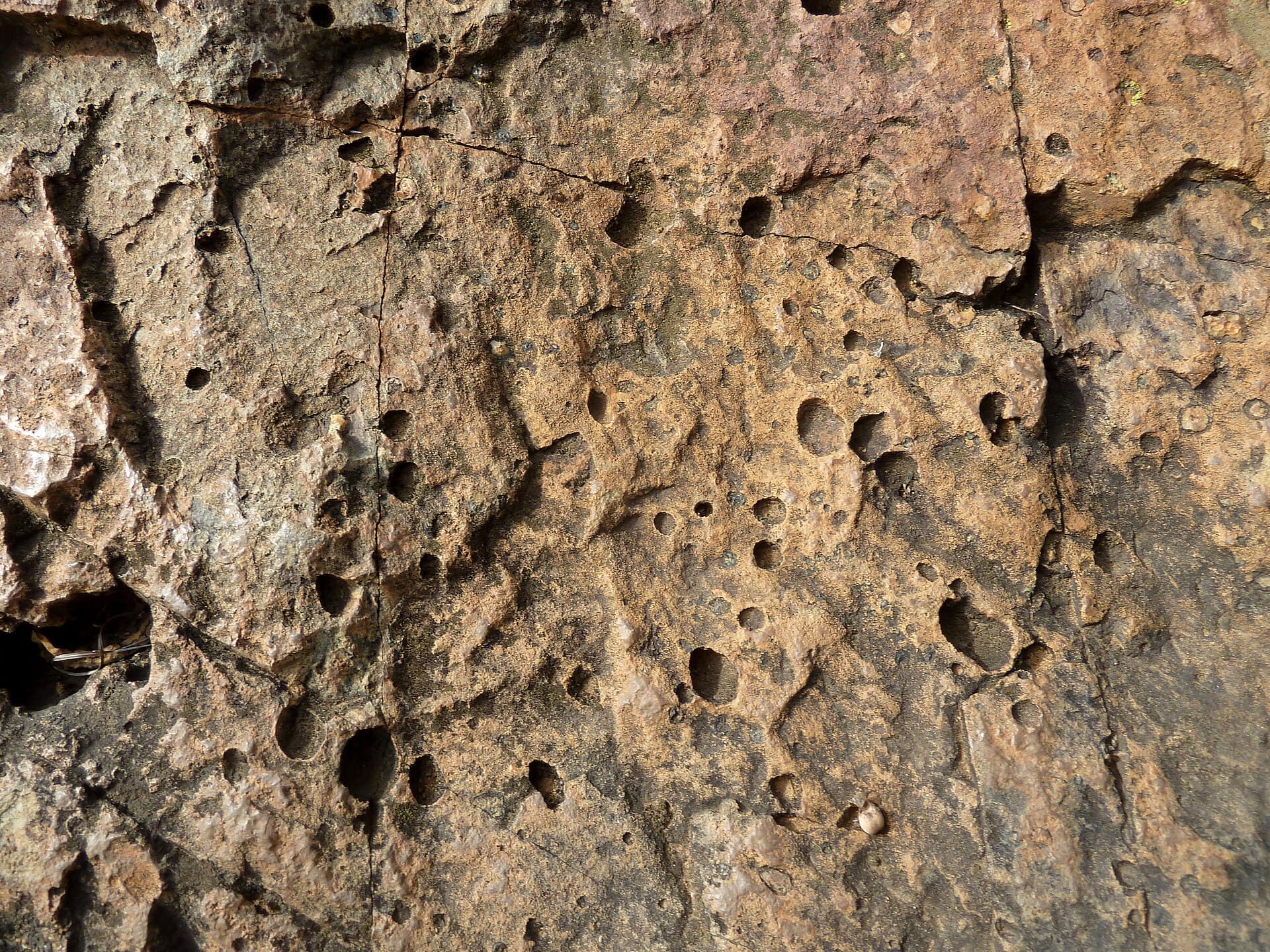
Photo: JMK (CC BY-SA 3.0) / Wikimedia Commons / CC BY-SA 3.0
Carbon dioxide can be stored in forests, soils, deep geological formations, products, or minerals. Carbon mineralization is the mineral route: it uses chemistry to convert CO2 into solid carbonates, usually by reacting it with rock or industrial residue rich in calcium or magnesium. The carbon ends up as the same kind of material as limestone, which is why the storage can be so durable.
Mineralization already happens in nature, but slowly. Engineers try to speed it up with crushed rock, water, heat, injection wells, or reactors. Each choice shifts the costs in energy, water, land, and monitoring, and those costs decide whether a project removes carbon from the atmosphere or only looks as if it does.
Direct answer: Carbon mineralization converts CO2 into solid carbonate minerals through reactions with calcium- or magnesium-bearing materials. It can offer durable storage, but the climate benefit depends on where the CO2 comes from, how much energy and material the process uses, whether mining or waste impacts are counted, and whether storage is measured and independently verified. A permanent product is not automatically a net-negative project.
The basic chemistry
CO2 dissolves in water to form carbonic acid and related dissolved species. When that acidic water meets minerals that contain calcium (Ca), magnesium (Mg), or iron, the metals are released as ions and can combine with dissolved carbonate to form solid precipitates such as calcite (calcium carbonate) or magnesite (magnesium carbonate). The reactions give off heat, so they are energetically favorable and happen on their own given enough time.
The catch is time. Calcium and magnesium usually occur in rocks as silicates, such as forsterite (an olivine) and serpentine, and not as simple oxides. Silicate reactions also produce silica, and serpentine's produces water as well. They run slowly at the Earth's surface, so engineered systems raise temperature or pressure, add catalysts, pretreat the mineral, or grind it finer to increase surface area. Each of those fixes adds an energy bill.
An analogy helps. Think of a sugar cube and a spoonful of powdered sugar in a glass of iced tea. Both dissolve in the end, but the powder vanishes in seconds because the water touches far more surface. Grinding rock plays the same role for CO2: more surface means a faster reaction, at the price of the electricity and diesel used to grind it.
How much CO2 a tonne of rock can hold
The ceiling is set by simple stoichiometry (the arithmetic of how many molecules of each substance a reaction consumes). The table below is calculated from standard molar masses and assumes every calcium or magnesium atom reacts, which real systems never achieve.
| Material | Formula | Theoretical maximum, t CO2 per t material |
|---|---|---|
| Forsterite (olivine) | Mg₂SiO₄ | about 0.63 |
| Serpentine | Mg₃Si₂O₅(OH)₄ | about 0.48 |
| Wollastonite | CaSiO₃ | about 0.38 |
| Lime | CaO | about 0.79 |
Take olivine. Storing a billion tonnes of CO2 at the theoretical limit would take about 1.6 billion tonnes of pure forsterite, and actual conversion would be lower, so the rock tonnage would be higher. Basalt, the most common volcanic rock, holds less per tonne because only part of it is calcium-, magnesium-, or iron-bearing. This is why the logistics of mining, grinding, and hauling are as important as the chemistry.
Natural weathering
Rain carries CO2 from the atmosphere into rock, and over geological time weathering moves carbon into bicarbonate in rivers and oceans and eventually into carbonate minerals. This is part of the long-term carbon cycle, and it is a reason Earth's climate has been stable enough for life. It is durable but far too slow to offset industrial emissions on a human timescale. Plate tectonics returns carbon to the surface through volcanoes and also exposes fresh reactive rock; our article on plate tectonics explains why that matters.
Mineralization versus the rest of carbon management
Mineralization is a storage step. It says nothing about where the CO2 came from, and that is where much of the confusion in public discussion starts.
- If the CO2 was pulled from ambient air (direct air capture), then storing it in rock can count as carbon dioxide removal.
- If the CO2 came from a power plant or cement kiln flue gas, then mineralizing it is carbon capture and storage, which prevents an emission but does not remove past ones.
- If rock is crushed and spread so that it takes up CO2 passively from air or water, then the removal happens through weathering, not through an injected stream.
Our direct air capture explainer covers the capture side and its energy costs, and how carbon capture works covers the chemistry of capture. For project-level realities such as compressors, pipelines, and monitoring, see how carbon capture works in practice. The key point is that capture and storage must be evaluated together when both are present.
In-situ mineralization: injecting CO2 into rock
In-situ means "in place." The CO2 goes into a reactive rock formation underground and reacts there. Basalt (a dark volcanic rock rich in calcium, magnesium, and iron) and ultramafic rocks (even richer in magnesium) are the usual targets.
The CarbFix result
The best-known example comes from Iceland. CarbFix, a company founded in 2007, dissolves CO2 in water before injection, so the fluid is a carbonated water and not a bubbly gas. That fluid is denser than the groundwater around it, so it sinks, and as it moves through the basalt it dissolves calcium, magnesium, and iron out of the rock. These then combine with the dissolved carbon to form carbonate minerals, mostly calcite.
A 2012 pilot injected a few hundred tonnes of CO2 into basalt in southwest Iceland. Research published in Science in 2016 by Matter and colleagues found that over 95% of it had turned into carbonate minerals, mostly calcite, in less than two years, much faster than the centuries to millennia that had been widely assumed. The work used about 25 tonnes of water per tonne of CO2, which is a significant requirement in its own right.
Since 2014, CarbFix has operated at the Hellisheiði geothermal power plant, where CO2 and hydrogen sulfide (H2S) are dissolved in turbine condensate and injected about 750 meters underground. The plant captures about 34% of its CO2 and 68% of its H2S, which comes to around 12,000 tonnes of CO2 and 5,000 tonnes of H2S per year. In a later analysis of the second injection phase, more than 60% of the injected carbon and more than 85% of the sulfur had mineralized within four to nine months (Clark et al., 2020). An estimate puts the storage cost of this approach at under US$25 per tonne of CO2, though that covers injection and storage only, not capture. On September 8, 2026, CarbFix reported 99.6% capture efficiency for CO2 at its Silverstone capture plant at Hellisheiði.
| Project | What it did | Reported outcome |
|---|---|---|
| CarbFix pilot (2012) | Injected a few hundred tonnes of dissolved CO2 into basalt | About 95% mineralized within two years (Matter et al., 2016) |
| Hellisheiði (since 2014) | Injects CO2 and H2S from a geothermal plant | More than 60% of injected carbon mineralized within four to nine months; about 12,000 t CO2 per year |
| Orca (2021) | Direct air capture plant, storage via CarbFix | Nameplate up to about 4,000 t CO2 per year |
| Mammoth (2024) | Direct air capture plant, storage via CarbFix | Nameplate up to 36,000 t CO2 per year |
Orca and Mammoth are Climeworks plants that capture CO2 from the air with geothermal energy and use CarbFix to mineralize it. They show that the chain from air to stone can work. They also show how far scale is from the problem. According to the Global Carbon Budget, fossil CO2 emissions reached roughly 37.4 billion tonnes in 2024. Mammoth's nameplate capacity of 36,000 tonnes is about one-millionth of that, so it would take on the order of a million plants of that size to match one year of emissions. In May 2025 the Icelandic newspaper Heimildin reported that, as of 2023, Climeworks' machines were capturing only a fraction of their nameplate levels and were not yet offsetting the emissions from the company's own operations. Nameplate numbers describe design capacity, not what is delivered.
Why the subsurface is tricky
The ground is not uniform. Flow paths, permeability, fractures, pressure, rock composition, and the condition of wells all determine where the fluid goes and how quickly it reacts. Operators therefore have to monitor containment and mineralization directly, with tracers, sampling wells, and pressure data, and not simply assume that injection means permanent storage. Seismicity, groundwater chemistry, and clogging of pores by new minerals are further things to track.
Basalt offers large potential volume. Researchers at Columbia's Lamont-Doherty Earth Observatory have estimated that seafloor basalt on the Juan de Fuca plate off the Pacific Northwest could hold more than a century of U.S. emissions, although a later study found that CO2 would not be gravitationally stable at the Juan de Fuca sites and pointed to other sediment-covered regions instead. Potential volume is not deliverable volume, though, because injection rates, well counts, and permitting limit what can be used.
Ex-situ mineralization: reactors and processing plants
Ex-situ systems bring CO2 and reactive material together above ground, in a reactor or processing plant. The operator can control particle size, pressure, temperature, water, and residence time, which makes measurement easier than it is with a diffuse natural process.
The cost is infrastructure and energy. Mining, crushing, and transporting rock produce emissions and local environmental impacts. Reactors may need heat, pumps, and corrosion-resistant materials. And capacity depends on how much of the mineral actually reacts, not simply on how many tonnes were processed. A process that reaches 30% of the theoretical limit in a batch lab test may do worse in continuous field operation.
Mine tailings and industrial residues
Tailings, the fine-ground waste left over after ore is extracted, are an attractive feedstock because they are already mined, already crushed, and often already sitting in large piles. Ultramafic mine tailings in particular are a readily available source of fine-grained magnesium-bearing minerals. Steel slag and cement residues can supply calcium. Using these materials avoids some new mining.
Waste is not a free feedstock, though. Characterizing it, hauling it, and processing it all cost money and energy. Some residues leach metals, such as nickel or chromium, or generate dust. A fair assessment compares the material's current environmental risk with the risk after processing. Steelmaking slag, cement waste, and nickel tailings differ a great deal, so a process proven on one cannot be assumed to work on another.
Enhanced weathering: spreading rock on land or sea
Enhanced weathering spreads finely ground silicate rock, such as basalt or olivine, on fields, coastlines, or in the ocean. Water and CO2 form carbonic acid, which dissolves the rock, and the released ions are eventually carried to the ocean, where carbon is stored as bicarbonate or carbonate. In the ocean the same alkalinity can also help counter acidification, a connection discussed in our article on ocean acidification.
One 2020 analysis estimated the cost of enhanced weathering on cropland at US$80 to 180 per tonne of CO2, compared with US$100 to 200 for bioenergy with carbon capture and US$100 to 300 for direct air capture, and below US$100 for reforestation. Those are model estimates, not market prices, and uncertainty is large. Soil organisms may speed dissolution, but rates in real fields vary with rainfall, temperature, grain size, and soil chemistry.
Measuring removal is the hard part. Natural carbon fluxes in soils and rivers vary from year to year, so a project has to separate newly stored carbon from background weathering. Soil and water chemistry can show that a reaction occurred, but a full accounting must track what leaves the field in drainage water and whether it reaches the ocean. That is why serious protocols require soil and water sampling along with models, and why this approach still has the widest error bars of the mineral routes. It also interacts with agriculture in ways worth studying, as described in our overview of how soil works.
Permanence and reversibility
Carbonate minerals are generally stable at ordinary surface conditions, and carbon locked in basalt carbonates is expected to stay for thousands to millions of years because the mineral form is non-volatile. That is a different class of permanence from a tree, which can burn, or from biochar, which is stable but still organic. For a comparison with a biological route, see how biochar stores carbon in soil.
Durability is not the same as zero risk. CO2 can leak before it reacts, during transport, or through a failed well. A mineralized product can be crushed, heated, or dissolved in acid and release carbon again, depending on how it is used. Carbonates in ocean sediments can dissolve if seawater chemistry changes. Storage claims should therefore state the form, the location, the monitoring plan, and the assumed permanence period.
Measurement, reporting, and verification
The phrase MRV (measurement, reporting, and verification) names the chain of evidence behind a storage claim. It is not one instrument. A credible chain tracks:
- The mass of CO2 entering the system, with flow meters.
- The carbon stored as solid carbonate, using mineral characterization, solid-phase carbon measurements, and isotopic analysis.
- Emissions from energy, transport, materials, and construction, subtracted from the gross total.
- Losses and by-products, including carbon already in the feedstock.
- Independent review of the above.
Models can estimate the reaction, but field data should test them. In the Iceland work, tracer tests with injected gases and sampling wells showed where the CO2 went and how quickly it reacted. A model without such measurements is a prediction, not a record.
Energy, water, and net removal
If the process runs on fossil electricity, relies on long-distance trucking, or needs energy-intensive grinding, then gross storage overstates net atmospheric removal. A lifecycle analysis subtracts all of that, plus upstream materials, construction, maintenance, and site closure.
Geothermal or renewable power cuts operating emissions, which is one reason Iceland is a favorable location. It does not erase embodied emissions in equipment. Use of residues can lower the material burden compared with newly quarried rock, but only if transport distances are short.
Water is the other input. Water dissolves CO2, carries ions, controls dust, and runs reactors. The CarbFix research used about 25 tonnes of water per tonne of CO2. Reports should separate withdrawals from consumption and recycling, and local water stress belongs in the assessment. Our article on water scarcity outlines the places where that constraint bites hardest. Ex-situ plants also need land for processing, storage, and transport, and enhanced weathering touches soil and aquatic chemistry, biodiversity, and food production, so community and ecosystem impacts belong in the accounting.
Scale and kinetics
Humans emitted roughly 37.4 billion tonnes of fossil CO2 in 2024 and about 41.6 billion tonnes once land-use change is added, based on the Global Carbon Budget's preliminary figures. Most mineralization projects operate at pilot or demonstration scale, in the thousands or tens of thousands of tonnes per year.
| Item | Scale (tonnes of CO2 per year) | Share of 2024 fossil CO2 |
|---|---|---|
| Hellisheiði injection | about 12,000 | about 0.00003% |
| Mammoth nameplate | up to 36,000 | about 0.0001% |
| Global fossil CO2, 2024 | about 37.4 billion | 100% |
Shares are calculated from the figures above. The gap is not a reason to dismiss the technology, since every industry starts small, but it shows why mineralization should be seen as one part of a portfolio and not a replacement for cutting emissions. Rankings of who emits the most appear in our piece on countries with the highest CO2 emissions.
Kinetics, the speed of the reaction, adds a second constraint. A material can have a large theoretical capacity but react too slowly under the chosen conditions. Grinding increases access but costs energy. High lab conversion does not automatically translate to continuous field operation. And the rock tonnage involved is large: at the theoretical maximum for olivine, each tonne of CO2 needs about 1.6 tonnes of rock, and at realistic conversion more.
An evaluation framework
When you read about a mineralization project, these questions separate solid claims from vague ones.
| Question | Why it matters | Evidence to request |
|---|---|---|
| Where does the CO2 come from? | Determines removal versus capture accounting | Source, concentration, and counterfactual |
| What mineral reacts? | Composition controls capacity and contaminants | Mineralogy and chemical characterization |
| What accelerates the reaction? | Energy and water affect the net benefit | Process conditions and measured inputs |
| Where is carbon stored? | Location and form affect permanence | Solid, subsurface, or product evidence |
| How fast is the reaction? | Capacity is not the same as rate | Time-series conversion data |
| What happens to impurities? | Waste can shift environmental risk | Leachability and disposal plan |
| How is storage verified? | Claims need more than a model | MRV protocol and independent review |
| What is the lifecycle boundary? | Net removal depends on emissions | Upstream, transport, and closure accounting |
This framework compares evidence. It does not rank projects.
Counterfactuals and carbon-credit claims
A removal claim needs a counterfactual: what would have happened without the project? If a waste material would have been processed anyway, only the extra carbon storage and extra emissions belong to the project. If the CO2 would have been captured and stored by another route, double counting becomes possible. If a tailings pile would have weathered naturally, the added rate has to be measured and not assumed.
Carbon credits add another layer. A credit may represent a defined quantity of net removal under a particular methodology, but its rules for permanence, leakage, additionality, monitoring, and reversal need to be read. A certificate is not physical proof. Readers should distinguish a project's engineering result from a crediting claim and from an offsetting claim. Our overview of AI and carbon markets describes how credits are traded and where verification gaps arise.
Long-term stewardship also matters. A storage site needs an owner, records, and a plan for managing unexpected release. If a project changes operators or closes early, the durability obligation should not disappear. Transparent reporting says who is responsible, what evidence is public, and what remains uncertain.
Policy and where mineralization fits
The National Academies of Sciences, Engineering, and Medicine's 2019 report Negative Emissions Technologies and Reliable Sequestration: A Research Agenda lists accelerated weathering among the carbon dioxide removal approaches it examined, and says that deploying such technologies may be less expensive and less disruptive than reducing some emissions. That is a cost argument for research, not for delay. Carbon removal can complement emissions cuts and may address residual emissions that are hard to eliminate, but it does not replace reductions at the source.
Policy may support research, demonstration, standards for measurement, infrastructure, or markets for verified removal. Rules and definitions differ by jurisdiction. A tax incentive or procurement program does not by itself prove that a project is net negative. Machine learning is also being applied to site selection and process control, as outlined in AI-powered carbon capture technology.
Limitations
Mineralization is chemically durable under promising conditions, but it is not automatically net negative, unlimited, or free of environmental impact. Reaction rates, reactive-material availability, mining, grinding, water, energy, transport, impurities, subsurface behavior, and MRV determine outcomes. The CO2 source and the counterfactual determine whether a project is atmospheric removal or point-source capture and storage. Many approaches remain at research, pilot, or demonstration stage, and published numbers often describe best-case sites such as Iceland's young basalts.
This article is educational climate information. It is not an investment recommendation, a guide to buying carbon credits, or a permit assessment. Project claims should be checked against current lifecycle analyses and independently verified data.
Frequently asked questions
Q: What is carbon mineralization? A: It is the conversion of carbon dioxide into solid carbonate minerals, such as calcite or magnesite, through reactions with calcium-, magnesium-, or iron-bearing materials. It can happen naturally over long periods or be accelerated in wells, reactors, or on fields.
Q: How fast can CO2 turn to stone? A: In Iceland's CarbFix pilot, about 95% of injected CO2 mineralized within two years, according to a 2016 Science study. At the Hellisheiði plant, more than 60% of the injected carbon mineralized within four to nine months in the second phase. Rates depend heavily on the rock, temperature, and fluid chemistry.
Q: Is carbon mineralization the same as carbon capture? A: No. Mineralization is a storage reaction. Capture supplies the CO2, and the source and accounting boundary decide whether the whole process is removal from the air or capture and storage of an emission.
Q: Is mineralized carbon permanent? A: Carbonate minerals can last for thousands to millions of years, but permanence depends on the mineral form, storage pathway, monitoring, and later disturbance, such as crushing or acid dissolution.
Q: Is carbon mineralization carbon negative? A: Not automatically. Emissions from mining, grinding, energy, transport, and construction must be subtracted from the carbon stored. Only a lifecycle analysis tied to a defined CO2 source can show whether a project is net negative.
Q: Can mineralization make a meaningful dent in global emissions yet? A: Not at present scale. Hellisheiði injects about 12,000 tonnes of CO2 a year and Mammoth's nameplate is 36,000 tonnes, against roughly 37.4 billion tonnes of fossil CO2 emitted in 2024. Basalt capacity is large, but deployment is the limit.
Q: Does mineralization replace emissions reductions? A: No. It may address residual emissions or provide storage for captured CO2, while reducing emissions at the source remains central to climate mitigation.
The takeaway
Carbon mineralization is one of the few storage routes where the end product is as stable as the rock it came from, and the Iceland results showed that the reaction can be far faster than once assumed. But a stable end product is only half the ledger. The other half is the energy to grind, heat, pump, and monitor, the water consumed, the source of the CO2, and the evidence that the carbon really stayed put. A project that reports all of that, with independent verification, deserves a hearing. One that reports only the mineral chemistry has not yet answered the question that matters.
Sources
- Global Carbon Budget 2024, Earth System Science Data
- National Academies, Negative Emissions Technologies and Reliable Sequestration: A Research Agenda (2019)
- Carbfix (company site)
- Carbfix, Wikipedia (summary of Matter et al., 2016 and Hellisheiði results)
- Carbon sequestration, Wikipedia (mineral sequestration section)
- Enhanced weathering, Wikipedia (2020 cost comparison)
- Climeworks, Wikipedia (Orca, Mammoth, and the 2025 Heimildin analysis)
Follow new articles
Add SciHub101 to your feed reader to see new science and technology stories.
About the Author
SciHub101 is an independent science and technology publication founded and edited by Buğra Sözeri, a software engineer and app developer based in Türkiye. AI tools assist with drafting and research. Source documentation in the existing archive is uneven, and articles are being reviewed and corrected. The Editorial Team byline identifies editorial responsibility; it does not certify specialist or independent human review. Where we compare products, anything built by our own team is labelled as such — see the editorial guidelines and About page for how corrections and disclosures work.
Related Articles
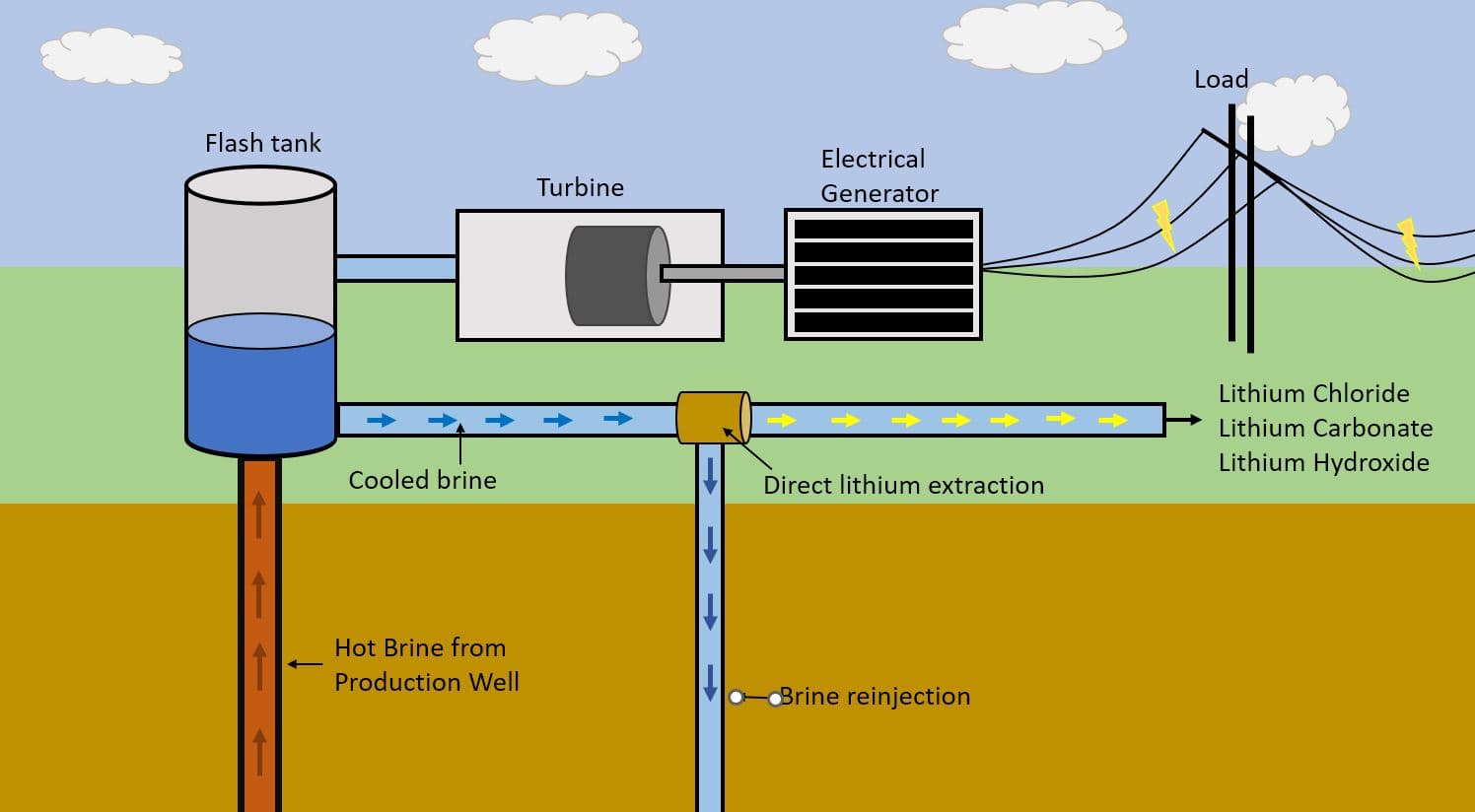
Direct Lithium Extraction Explained: How DLE Works and What It Cannot Solve
Direct lithium extraction pulls lithium from brine with sorbents, membranes or solvents. How DLE works, what the numbers show, and where limits remain.
Complete Sustainability Guide 2026 — Climate, Energy, and Conservation
The complete guide to sustainability in 2026: renewable energy, climate science, circular economy, conservation strategies, and actionable steps to reduce your impact.

Direct Air Capture: How It Works, What It Costs, and Where It Fits
Direct air capture (DAC) machines pull carbon dioxide out of ambient air with chemical sorbents or solvents, then release it as a pure stream for storage or use. The technology works. The constraint is energy and cost: reported prices run from about $600 to more than $1,000 per tonne, and operating capacity is a tiny fraction of annual emissions.
Green Steel Explained: Hydrogen, Electrolysis and the Hardest Part of Decarbonizing Steel
Green steel is made with far less CO2 than blast-furnace steel. How hydrogen direct reduction, scrap and electric arc furnaces work, and what limits them.
How Does Carbon Capture Work? The Chemistry of Removing CO₂
Carbon capture removes CO₂ by chemical absorption or adsorption. Here's the molecular machinery behind point-source and direct air capture, the energy cost that limits scale, and why the physics is harder than the marketing suggests.