AWS vs Azure vs Google Cloud Platform (GCP): 2026 Comparison

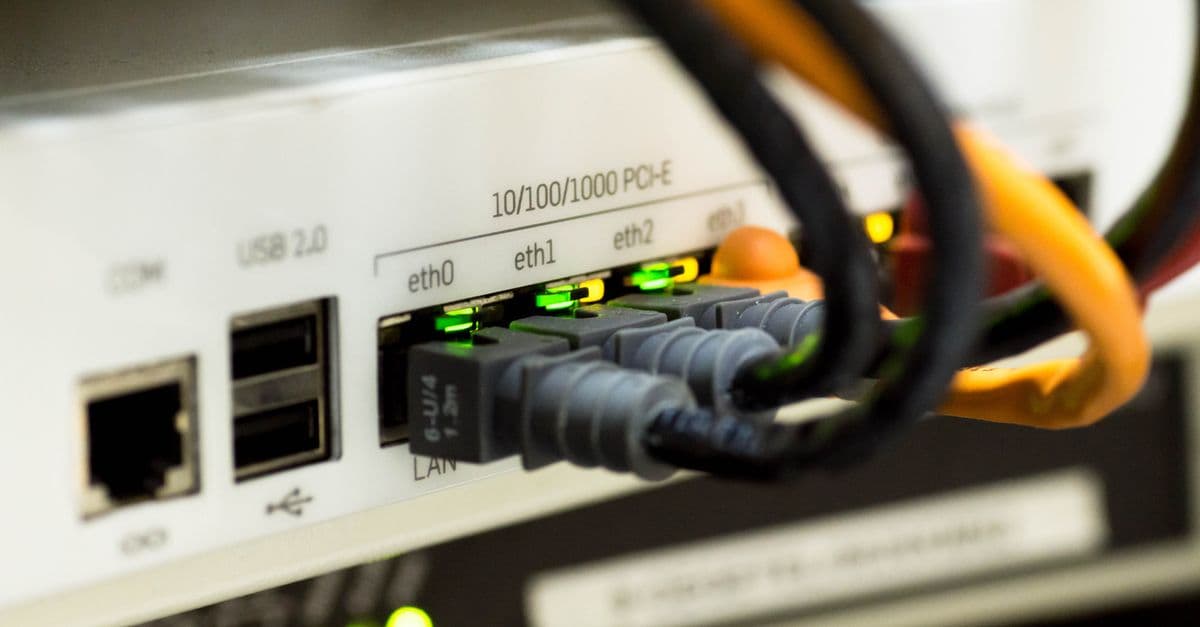
Photo: Brett Sayles / Pexels
Three companies control the vast majority of cloud infrastructure: Amazon Web Services (AWS), which pioneered cloud computing in 2006; Microsoft Azure, which capitalized on enterprise relationships; and Google Cloud Platform (GCP), which leveraged Google's data expertise. As of mid-2026, AWS holds approximately 32% of the cloud market, Azure 23%, and GCP 11%. The remaining 34% is split among smaller providers (Oracle Cloud, Alibaba, IBM, DigitalOcean) and private clouds.
Choosing a cloud provider is not a technical decision alone. Each platform has different pricing models, compliance certifications, service breadths, and integration patterns. A startup might prefer AWS for flexibility and documentation. A large enterprise running Windows/Active Directory might find Azure's integration invaluable. A machine learning team would naturally gravitate to GCP. This guide compares the three on dimensions that matter: compute, storage, databases, pricing, lock-in, and market position.
Market Position and Customer Base
AWS launched in 2006 with S3 (storage) and EC2 (compute). By 2026, it operates 33 regions worldwide and 105 availability zones. AWS serves startups (Netflix, Airbnb, Slack), financial institutions (JPMorgan, Goldman Sachs), and governments (CIA).
Azure was launched by Microsoft in 2010, positioned as an extension of enterprise infrastructure. Microsoft's existing relationships with large enterprises (Microsoft 365, Active Directory, Windows Server) made Azure the default cloud choice for organizations already spending heavily on Microsoft. Azure operates 60+ regions, more than any other provider.
GCP was launched in 2012 and has grown rapidly in machine learning and data analytics workloads. It is the smallest of the three but growing at a faster percentage rate. GCP operates 41 regions.
The practical consequence: AWS has the largest customer base and most mature ecosystem. Azure has the tightest enterprise integration. GCP has the strongest data and ML tools but the smallest ecosystem of third-party integrations.
Source: Gartner Magic Quadrant for Cloud Infrastructure & Platform Services (Q1 2026) — market share, positioning, and capability analysis of cloud providers.
Compute Services: Virtual Machines and Containers
All three providers offer similar compute primitives: virtual machines (VMs), managed Kubernetes, and serverless functions.
Virtual Machines (IaaS)
| Feature | AWS EC2 | Azure VMs | GCP Compute Engine |
|---|---|---|---|
| Instance Types | 500+ combinations | 200+ combinations | 150+ combinations |
| Pricing Model | Per-second billing; reserved instances (1–3 year discounts) | Per-minute billing; reserved instances; spot VMs (interruption-tolerant) | Per-second billing; committed discounts (1–3 year) |
| Spot/Preemptible | Spot Instances (can interrupt) | Spot VMs | Preemptible VMs (33% cheaper) |
| Auto-scaling | Auto Scaling Groups | Virtual Machine Scale Sets | Instance Groups |
| Strength | Largest selection, most documentation | Enterprise integration, Windows licensing discounts | Cost-effective preemptible VMs, simplicity |
AWS EC2 offers the broadest selection of instance types, optimized for different workloads: compute-optimized (C-series), memory-optimized (R-series), GPU-accelerated (P-series), Graviton ARM-based (T/M-series). For a startup evaluating options, EC2's vast selection and deep documentation are valuable.
Azure VMs integrate directly with Active Directory, allowing Windows domain management across hybrid on-premises/cloud environments. Licensing is simpler if you are already paying for Windows Server licenses; Microsoft allows license mobility, reducing costs. For enterprises moving workloads from on-premises Windows data centers to cloud, Azure VMs are the natural choice.
GCP Compute Engine emphasizes simplicity and cost. Preemptible VMs cost roughly one-third as much as regular VMs but can be interrupted. For batch processing, CI/CD pipelines, and other interruption-tolerant workloads, GCP's preemptible option is often the cheapest option across all three clouds.
Containers and Kubernetes
All three offer managed Kubernetes:
- AWS EKS (Elastic Kubernetes Service): Kubernetes with AWS integration. Requires EC2 instances or Fargate (serverless container compute).
- Azure AKS (Azure Kubernetes Service): Kubernetes with Azure integration. Tight integration with Azure DevOps and container registry.
- GCP GKE (Google Kubernetes Engine): Kubernetes powered by Google's expertise; simplest Kubernetes experience. Auto-scaling, multi-cluster networking, and integration with Google Cloud operations are mature.
GCP GKE is widely considered the easiest managed Kubernetes to operate. Google designed and built Kubernetes; GKE reflects that expertise. For teams prioritizing developer experience over ecosystem breadth, GKE is a strong choice.
Serverless Compute (Functions)
- AWS Lambda: Run code without provisioning servers. Charge per 100-millisecond execution. Integrates with 200+ AWS services.
- Azure Functions: Similar model. Integrates with Azure services. Supports more runtime languages than Lambda.
- GCP Cloud Functions: Simpler than Lambda or Functions; auto-scales to zero. Less rich integration with other GCP services than Lambda's AWS integration.
For simple, event-driven workloads (webhooks, scheduled tasks, API handlers), all three are equivalent. Lambda has the deepest integration with AWS services; this advantage decreases if you are using non-AWS services.
Source: Forrester (2025), "Container and Kubernetes Adoption Report" — comparison of managed Kubernetes offerings and adoption rates.
Storage: Objects, Databases, and Data Warehouses
Object Storage
| Provider | Service | Pricing | Notes |
|---|---|---|---|
| AWS | S3 | $0.023/GB/month (standard tier) | Industry standard; 99.999999999% durability |
| Azure | Blob Storage | $0.0208/GB/month (hot tier) | Similar durability; integrates with Data Lake Storage |
| GCP | Cloud Storage | $0.020/GB/month (standard tier) | Slightly cheaper; integration with BigQuery |
All three are equivalent for object storage. S3 set the standard; Azure and GCP offer lower prices. Switching costs are minimal: all three support standard object storage APIs.
Relational Databases
| Provider | Service | Strengths |
|---|---|---|
| AWS | RDS (Aurora, MySQL, PostgreSQL, SQL Server) | Broadest selection; Aurora scales automatically; MySQL/PostgreSQL support |
| Azure | SQL Database, Database for MySQL/PostgreSQL | Serverless options; SQL Server support; tight Azure integration |
| GCP | Cloud SQL (MySQL, PostgreSQL), Spanner | PostgreSQL is first-class; Spanner is globally distributed (high cost) |
RDS Aurora (AWS proprietary MySQL/PostgreSQL-compatible database) is the market leader for relational databases in the cloud. It auto-scales, manages backups, and provides read replicas globally. Most teams choose Aurora if they are on AWS.
Azure SQL Database is the choice for organizations with SQL Server investments. Azure offers serverless compute scaling (you pay only for the compute you use during active queries), which reduces costs for variable workloads.
Cloud SQL (GCP) is competitive for PostgreSQL workloads, especially if you are already using other GCP services.
Data Warehouses
| Provider | Service | Strengths |
|---|---|---|
| AWS | Redshift | Mature, integrates with AWS analytics stack; AQUA acceleration |
| Azure | Synapse Analytics | SQL Server-compatible; integration with Power BI; serverless options |
| GCP | BigQuery | Fastest query performance; standard SQL; superior analytics integrations |
BigQuery (GCP) dominates data warehouse speed. Queries on multi-terabyte datasets complete in seconds. Pricing is per-query rather than per-node, making it cost-effective for variable workloads. If your primary use case is analytics and data exploration, BigQuery is compelling.
Redshift (AWS) is mature and integrates deeply with the AWS ecosystem. It is suitable for organizations heavily invested in AWS.
Synapse (Azure) is the choice if you are already in the Microsoft ecosystem and need SQL Server compatibility.
Source: Gartner (2025), "Cloud Data Warehouse Comparison and Benchmarks" — performance, pricing, and feature comparison.
Machine Learning and AI Services
GCP has historically led in ML/AI, leveraging Google's research and internal AI infrastructure.
| Provider | Services | Strengths |
|---|---|---|
| AWS | SageMaker (training, inference), AutoML, Lookout | Integrates with existing AWS data pipelines; comprehensive feature store |
| Azure | Azure Machine Learning, Cognitive Services, OpenAI integration | Tight Azure integration; NVIDIA GPU availability; generative AI integration (ChatGPT) |
| GCP | Vertex AI, BigQuery ML, Gemini on Cloud | Superior integration with BigQuery; Gemini (Google's LLM); specialized models (Vision, NLP) |
Vertex AI (GCP) unifies training and inference under one platform. Integration with BigQuery means you can train models on data without moving it. For teams doing heavy data + ML work, GCP's integrated approach is efficient.
Azure Machine Learning offers strong integration with Visual Studio and GitHub. For enterprises using Microsoft tooling, it is natural.
SageMaker (AWS) is feature-rich and enterprise-grade. It is suitable for complex ML pipelines but has a steeper learning curve.
Application Services and Developer Tools
Beyond core infrastructure, cloud providers offer application-level services that abstract infrastructure away. These services differ significantly across providers and can lock you in if you adopt heavily.
Serverless Application Platforms
AWS Lambda + API Gateway is the most mature. You write code, upload it, and AWS runs it. You pay per 100-millisecond execution. Lambda integrates with 200+ AWS services (S3, DynamoDB, SNS, EventBridge). Frameworks like Serverless and SAM (Serverless Application Model) simplify deployment.
Azure Functions is similar to Lambda but integrates more tightly with Azure DevOps, Azure Storage, and other Azure services. If you are already in the Microsoft ecosystem, Functions is natural.
Google Cloud Functions is simpler than Lambda and Functions. Cold starts (latency when a function first runs) are lower. Integration with Google services (Pub/Sub, BigQuery, Cloud Storage) is excellent. For teams comfortable with Google's ecosystem, it is the easiest option.
AWS Step Functions (workflow orchestration) and Google Cloud Workflows (similar) let you chain Lambda/Functions together into complex multi-step processes without writing orchestration code. This is powerful for data pipelines and long-running processes.
Message Queues and Asynchronous Processing
All three provide message queuing for asynchronous work:
- AWS SQS (Simple Queue Service) and SNS (Simple Notification Service): mature, deeply integrated
- Azure Service Bus: more powerful than SQS; supports complex routing rules
- Google Cloud Pub/Sub: simple, scalable, good for real-time data
For simple queuing, all three are equivalent. For complex event-driven architecture, choose based on your ecosystem.
Development Tools and CI/CD
CI/CD (Continuous Integration/Continuous Deployment) is how teams automate building, testing, and deploying code.
AWS CodePipeline + CodeBuild + CodeDeploy: mature ecosystem; integrates with GitHub, GitLab, Bitbucket.
Azure DevOps (Pipelines, Repos, Boards): tightly integrated with Visual Studio and GitHub (Microsoft owns GitHub). If your team uses Visual Studio or Azure, this is natural.
Google Cloud Build: integrates tightly with Google Cloud operations; simple for Google-ecosystem users but less common.
For most teams, the CI/CD choice matters less than the infrastructure choice; teams adapt quickly to any CI/CD tool.
Source: Haslam, S. (2025), "Serverless Computing: Comparing AWS Lambda, Azure Functions, and Google Cloud Functions," InfoQ — comparison of serverless platforms and developer experience.
Pricing and Cost
Pricing is notoriously complex across all three. General rules:
AWS charges per service and per unit (e.g., EC2 per hour, S3 per GB). Reserved instances (commitment to 1–3 years) offer 30–70% discounts. Savings Plans provide flexible discounts across services.
Azure charges per service but offers discounts if you bring Microsoft licenses. Spot VMs (preemptible instances) offer 80–90% discounts. For organizations already paying for Windows/Office 365, Azure's license mobility can significantly reduce cost.
GCP has the simplest pricing model: per-second billing (not per-minute or per-hour), auto-scaling with no minimum, and lower per-unit prices. GCP's preemptible VMs are the cheapest compute option across any cloud. For variable-load workloads, GCP is often the lowest-cost option.
Total Cost of Ownership comparison (mid-2026):
For a startup running 10 small web servers (2 GB RAM each), standard storage, and a database: AWS $1,200–1,500/month. Azure $1,100–1,400/month. GCP $800–1,000/month if using preemptible VMs, $1,000–1,200/month if using standard VMs.
For an enterprise running 100 servers with Windows licensing, hybrid on-premises connectivity, and SQL Server databases: AWS $20,000–30,000/month. Azure $18,000–25,000/month (license mobility saves 10–20%). GCP $22,000–28,000/month (fewer Windows discounts apply).
Source: Cloud Pricing Models Report (2026) — detailed cost analysis and benchmarking across AWS, Azure, GCP for common workloads.
Networking and Hybrid Cloud
Organizations with on-premises data centers or hybrid setups have different needs. Not all cloud providers are equally suited to bridging on-premises and cloud workloads.
Azure Hybrid Capabilities
Azure dominates hybrid cloud. Azure Arc allows you to manage resources across on-premises, AWS, and GCP from a single Azure dashboard. Azure Stack extends Azure services into your data center, running the identical Azure environment locally.
For organizations with large existing Windows Server, SQL Server, and Active Directory deployments, Azure's hybrid approach is natural. You can gradually migrate workloads to cloud without rebuilding infrastructure. License mobility (using existing Windows/Office licenses) reduces costs significantly.
Hybrid Azure scenario: A bank has 500 Windows servers on-premises running SQL Server databases and Active Directory. Moving to pure cloud would require re-architecting everything. Azure allows the bank to:
- Keep existing on-premises infrastructure unchanged.
- Gradually migrate databases to Azure SQL Database.
- Use Azure Arc to manage both on-premises and cloud resources from one dashboard.
- Pay discounts for existing licenses.
This is Azure's strongest competitive advantage over AWS and GCP.
AWS and GCP Hybrid Offerings
AWS offers AWS Outposts (AWS infrastructure installed physically in your data center) and AWS Direct Connect (dedicated network connection). These allow hybrid workloads but do not provide the seamless integration Azure offers.
GCP's hybrid story is weaker still. It focuses on cloud-native workloads, not bridging on-premises infrastructure. Organizations running hybrid systems are less likely to choose GCP.
Source: Gartner (2026), "Hybrid Cloud Comparison: AWS, Azure, GCP" — analysis of hybrid deployment capabilities and ease of management.
Compliance and Certifications
| Certification | AWS | Azure | GCP |
|---|---|---|---|
| HIPAA (US healthcare) | Yes | Yes | Yes |
| PCI-DSS (payment cards) | Yes | Yes | Yes |
| GDPR (EU data protection) | Yes | Yes | Yes |
| FedRAMP (US government) | Approved (High, Moderate, Low) | Approved (High, Moderate, Low) | Approved (Moderate) |
| SOC 2 Type II | Yes | Yes | Yes |
| ISO 27001 | Yes | Yes | Yes |
All three are compliant with major regulations. However, FedRAMP (required for US government contracts) is strongest on AWS and Azure. If you are selling to US federal agencies, AWS and Azure are safer choices.
GDPR data residency (storing EU citizen data in the EU) is supported by all three. Azure has an additional advantage: Microsoft has committed to storing customer data in EU data centers, giving customers more control.
Lock-in and Portability
Vendor lock-in risk differs across platforms:
AWS: Lowest technical lock-in for infrastructure (EC2, S3, RDS) because they use standard protocols. High lock-in for proprietary services (Lambda, RDS Aurora, DynamoDB). Switching from AWS to Azure is relatively easy for basic VMs and storage; harder for Aurora or serverless workloads.
Azure: Moderate lock-in. Active Directory and Office 365 integration is hard to replicate elsewhere. If you use Azure SQL Server or Cognitive Services extensively, switching is costly.
GCP: Moderate lock-in. BigQuery and Vertex AI have no direct equivalents; replicating their capabilities requires significant engineering elsewhere.
Practical rule: Avoid lock-in by using open-source or multi-cloud tools (Kubernetes, PostgreSQL, open-source ML frameworks). Use managed services sparingly if portability matters.
**Source:**451 Research (2025), "The Costs and Risks of Cloud Vendor Lock-In" — analysis of switching costs and portability between cloud providers.
Frequently Asked Questions
Q: Which cloud provider is cheapest?
A: GCP is cheapest for variable workloads due to per-second billing and preemptible VMs. Azure is cheapest for Windows/SQL Server workloads if you bring licenses. AWS is most expensive per unit but has more service options, which can sometimes reduce total costs through better integration.
Q: Can I run the same workload on all three clouds?
A: Yes, for basic workloads (VMs, object storage, standard databases, Kubernetes). You will need to rewrite code if you depend on proprietary services (Lambda, Aurora, BigQuery). Using Kubernetes and standard open-source tools (PostgreSQL, etc.) maximizes portability.
Q: Should I use multiple cloud providers to avoid lock-in?
A: Multi-cloud increases operational complexity. Use multi-cloud only if you have specific requirements that force it (e.g., Azure for enterprise integration + GCP for ML). For most startups and teams, a single cloud provider is simpler and cheaper.
Q: What is the best cloud for machine learning?
A: GCP (Vertex AI + BigQuery integration). If you are on AWS, SageMaker is strong. If you need GPUs, all three provide them, but availability and pricing vary by region.
Q: How do I estimate my cloud costs?
A: Use the cloud provider's cost calculator (AWS Cost Explorer, Azure Cost Calculator, GCP Pricing Calculator). Budget 20–30% higher than the calculator estimate for growth and overhead. Review costs monthly.
Q: Can I migrate from AWS to Azure or GCP?
A: Yes, but it requires engineering effort. Migrating basic workloads (VMs, storage) is 2–4 weeks. Migrating proprietary workloads (Lambda, RDS Aurora) is 2–4 months. Plan for downtime and budget hiring a migration consultant.
Q: Do cloud providers offer discounts for startups?
A: Yes. AWS Activate provides $5,000–100,000 credits for startups (via venture capitalists or accelerators). Azure for Startups offers similar credits. GCP startup program is smaller. Credits are valuable but expire; do not let them expire unused.
Read next:
Follow new articles
Add SciHub101 to your feed reader to see new science and technology stories.
About the Author
SciHub101 is an independent science and technology publication founded and edited by Buğra Sözeri, a software engineer and app developer based in Türkiye. AI tools assist with drafting and research. Source documentation in the existing archive is uneven, and articles are being reviewed and corrected. The Editorial Team byline identifies editorial responsibility; it does not certify specialist or independent human review. Where we compare products, anything built by our own team is labelled as such — see the editorial guidelines and About page for how corrections and disclosures work.
Related Articles

Cybersecurity Threats in 2026: What the Data Actually Shows
Ransomware attacks tripled year-over-year between Q1 2024 and Q1 2025. The average time attackers spend exploiting a known vulnerability dropped from 700 days in 2020 to 44 days in 2025. AI is now on both sides of every attack. Here is what the current threat landscape looks like, what is driving it, and what organizations and individuals can do about it.

App Store Optimization (ASO): How to Get Your App Discovered in 2026
App Store Optimization is the discipline of maximizing your mobile app's visibility, downloads, and engagement across app stores. Unlike web SEO, ASO operates on a much shorter timescale and focuses on on-store signals: app name, keywords, screenshots, ratings, and conversion rate. The App Store and Google Play use different algorithms, pricing models, and user expectations. ASO has become non-negotiable because 70 percent of users discover apps through search, not browsing, and a single percentage point improvement in conversion rate translates directly to thousands of additional installs per month.

How Does Cloud Computing Actually Work?
"The cloud" is just someone else's computers — but at a scale and with management that change everything. Here's how AWS, Azure, and Google Cloud actually deliver computing as a utility.

Cloud Computing Explained — AWS, Azure, GCP
What cloud computing actually is, the IaaS/PaaS/SaaS service models, and how AWS, Azure, and GCP compare on services, pricing, and strengths.

Cloud Computing: On-Demand Infrastructure at Scale
Cloud computing abstracts infrastructure complexity. AWS, Azure, and Google Cloud enable businesses to scale without managing servers. Serverless computing further abstracts layers.
Countries with the Fastest Internet Speeds (Fixed Broadband Ranked)
The United Arab Emirates leads the world with a median fixed broadband download speed of 413.2 Mbps — more than four times the global average of roughly 90 Mbps. High urbanization rates, state-backed fiber rollout programs, and competitive telecoms markets are the common threads running through every country at the top of the Ookla Speedtest Global Index 2024.