What Is 5G — and How Is It Really Different from 4G?
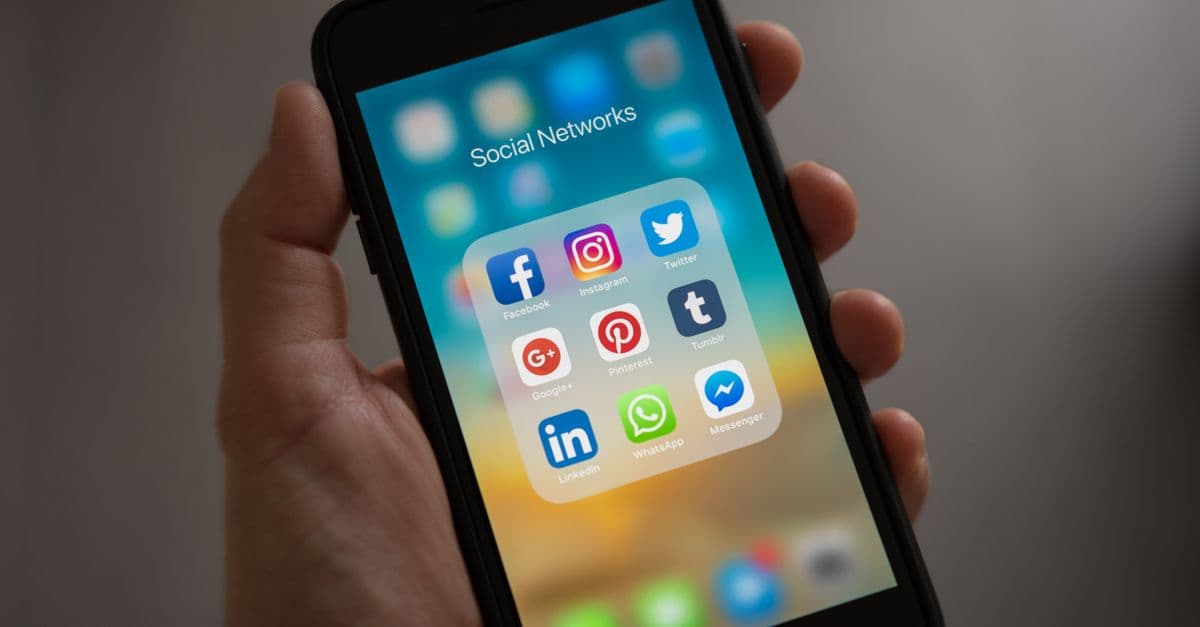
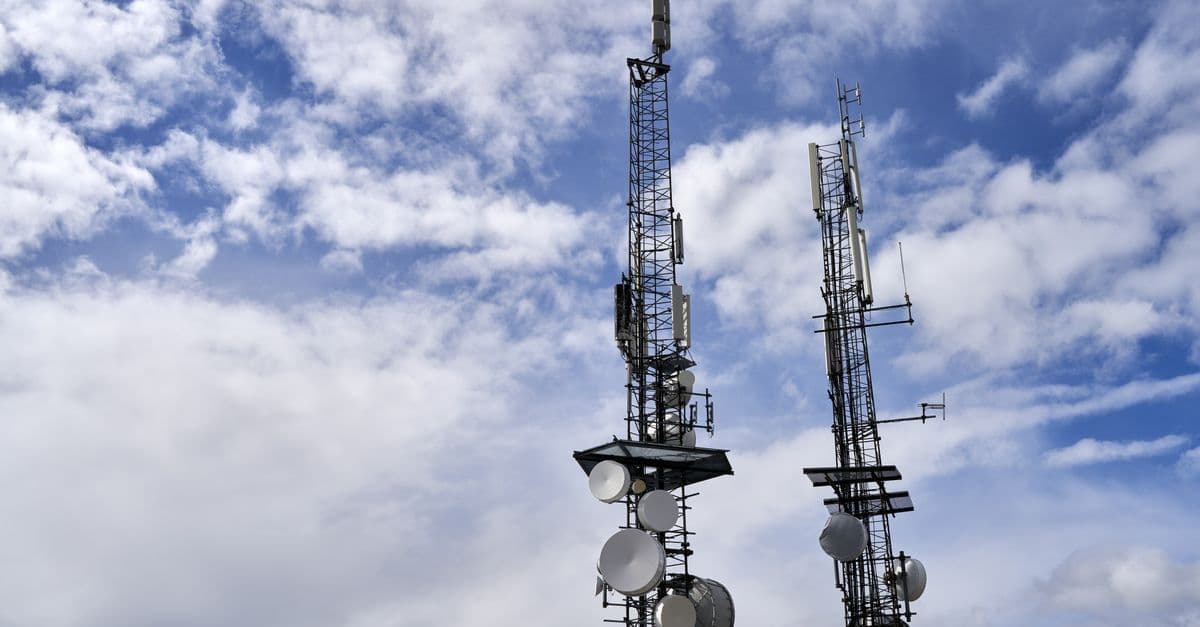
Photo: Tracy Le Blanc / Pexels
5G is the fifth generation of mobile network technology, standardized by the 3GPP (3rd Generation Partnership Project) starting with Release 15 in 2018. It's not a single upgrade but a bundle of new radio frequencies, antenna designs, and network architecture rules that together push peak speeds past 1 Gbps, cut latency to single-digit milliseconds, and let a single base station serve orders of magnitude more devices than 4G could. It's also one of the most misunderstood technologies in consumer tech, buried under marketing hype on one side and health conspiracy theories on the other. This guide explains what 5G actually does, how it's built, where the "5G" label lies to you, and why the physics rules out the scarier claims.
What 5G actually is
5G isn't one radio or one frequency. It's a standard, meaning a large written specification that telecom equipment makers and carriers agree to follow so that a phone built by Samsung can talk to a tower built by Ericsson. The specification is maintained by 3GPP, the same body that standardized 3G and 4G LTE, and it has been revised in stages: Release 15 (2018) defined the first commercial 5G New Radio (5G NR), Releases 16 and 17 added industrial and IoT features, and Release 18, finalized in December 2023, introduced what the industry calls "5G-Advanced" — a bridge toward 6G (IEEE Xplore, Massive MIMO Evolution Toward 3GPP Release 18).
Under that umbrella standard, 5G promises four measurable improvements over 4G LTE:
- Higher peak speed. Theoretical peak throughput reaches into multiple Gbps on the fastest bands, versus roughly 1 Gbps theoretical peak (rarely achieved) on 4G LTE-Advanced.
- Lower latency. Round-trip response time can drop to single-digit milliseconds on optimized 5G deployments, versus 30–50 ms typical on 4G.
- Higher device density. A single 5G cell can, under the design spec, support far more simultaneous connections per square kilometer than 4G, which matters for sensor-dense environments.
- Better energy efficiency per bit. Moving one megabyte of data over 5G infrastructure consumes less energy per bit than the equivalent 4G transfer, even though total network energy draw is rising as carriers build more, denser sites.
None of these show up automatically the moment your phone displays a "5G" icon. They show up depending on which physical frequency band you're connected to, which is the part marketing tends to skip.
Three flavors of 5G, and why your speed varies wildly
Here's the part carrier marketing glosses over: "5G" on your phone's status bar could mean three very different physical experiences, because 5G is deployed across three distinct frequency ranges, each with its own trade-off between range and speed.
Low-band 5G (under 1 GHz)
Low-band 5G reuses spectrum similar to what 4G already occupies, sub-1-GHz frequencies that travel long distances and pass through walls easily. The trade-off is speed: low-band 5G often performs only modestly better than a strong 4G LTE connection, sometimes barely noticeable to the end user. Carriers use it for broad, nationwide "5G coverage" claims, especially in rural areas where laying denser infrastructure isn't economical.
Mid-band 5G (1–6 GHz)
Mid-band, sometimes called "C-band" in the 3.7–4.2 GHz range, is the sweet spot most industry engineers consider the "real" 5G experience for everyday users. It offers speeds routinely in the 200–500+ Mbps range with decent building penetration and multi-kilometer cell radius. As of the mid-2020s, mid-band has become the primary 5G workhorse spectrum in most countries that have completed spectrum auctions, including the United States' C-band rollout and similar mid-band allocations across the EU and Asia.
High-band / mmWave 5G (24–100 GHz)
Millimeter wave, or mmWave, is the headline-grabbing tier. The ITU has allocated eleven bands between 24.25 GHz and 86 GHz for 5G and future wireless use, and the FCC specifically opened 27.5–28.35 GHz and 37–40 GHz for licensed U.S. mmWave service, with additional bands identified at 71–76 GHz and 81–86 GHz for future use (ITU/FCC spectrum allocation summary). At these frequencies, real-world throughput can exceed 1 Gbps, but the signal barely survives a few hundred meters of open air and is blocked by walls, glass, foliage, and even heavy rain. That's why mmWave deployments cluster around stadiums, airports, and dense downtown blocks rather than blanketing whole cities.
Table 1. 5G frequency bands compared
| Band | Frequency range | Typical range | Typical real-world speed | Wall/obstacle penetration | Primary use case |
|---|---|---|---|---|---|
| Low-band | Under 1 GHz | Tens of kilometers | Similar to strong 4G LTE | Good | Rural and nationwide coverage |
| Mid-band | 1–6 GHz | 1–3 km per site | 200–500+ Mbps | Moderate | Everyday urban/suburban 5G |
| High-band (mmWave) | 24–100 GHz | Hundreds of meters | 1+ Gbps | Poor | Stadiums, dense downtowns, fixed wireless |
Table 1: Ranges and speeds are typical field figures reported by carriers and industry spectrum analyses; actual performance varies by deployment density and interference.
When a carrier advertises "5G Ultra Wideband" or "5G+" alongside plain "5G," they're usually distinguishing mmWave/mid-band from low-band. Checking which one you're actually on, often visible in a phone's network detail settings, explains more about your real-world speed than the generation label does.
How 5G is technically different from 4G
Faster spectrum alone doesn't explain 5G's gains. Four architectural changes do the real work.
Massive MIMO
MIMO stands for "Multiple-Input Multiple-Output," antenna systems that send and receive more than one data stream simultaneously. 4G towers commonly used a handful of antenna elements. 5G Release 15 supports up to 256 antenna elements on a single array, compared with 64 in the preceding Release 13 spec used for LTE-Advanced (IEEE, Massive MIMO Evolution). Think of it like the difference between one person shouting into a crowded room and a hundred people each speaking quietly and directly into one listener's ear at the same time. More antenna elements mean more simultaneous, distinguishable "conversations" on the same tower.
Beamforming
Older cellular antennas broadcast in a wide arc, wasting most of their signal on empty air and interfering with neighboring cells. Beamforming uses the phase differences across a massive MIMO array to focus a signal into a narrow, steerable beam aimed directly at a specific device, then re-aims that beam as the device moves. It's the wireless equivalent of swapping a bare bulb for a spotlight: the same energy input, concentrated on the target, does more useful work and creates less interference for everyone else in the room.
Network slicing
5G's core network can be virtually partitioned into "slices," each configured with different priorities for latency, bandwidth, and reliability, all running on the same shared physical infrastructure. A hospital's remote-surgery link might get a low-latency, ultra-reliable slice; a smart water meter might get a low-bandwidth, low-power slice; a phone streaming video gets a high-bandwidth slice. 3GPP formalizes this around three defined service categories: eMBB (enhanced mobile broadband, for high-throughput human use like video), mMTC (massive machine-type communication, for huge numbers of low-power IoT sensors), and URLLC (ultra-reliable low-latency communication, for safety-critical uses like industrial control and vehicle coordination) (3GPP 5G use case framework, ScienceDirect).
H3: What is the difference between eMBB, mMTC, and URLLC?
eMBB targets high-speed human data use — 4K video, AR/VR streaming. mMTC targets massive numbers of small, low-power devices such as agricultural sensors that send tiny amounts of data rarely. URLLC targets mission-critical, delay-intolerant links such as factory robotics or vehicle safety systems, where a 50-millisecond delay could cause a collision or a defect.
Edge computing
5G's low latency only matters if the servers processing a request are physically close to the user. That's why 5G rollouts are frequently paired with edge computing: putting compute resources at or near cell towers rather than in a distant, centralized data center. A self-driving car's obstacle-avoidance decision can't wait for a round trip to a server three states away; edge computing keeps the physical distance, and therefore the delay, small enough for real-time control.
Where 5G actually matters — beyond faster phone downloads
Mobile broadband for everyday users
Most people upgrading from 4G to mid-band 5G will notice faster downloads, smoother 4K video, and less buffering in crowded areas like stadiums or subway platforms. It's a real improvement, but for most daily phone use, 4G LTE was already "good enough," which is part of why 5G hasn't felt as transformative to average consumers as its marketing suggested.
Internet of Things (IoT) at scale
5G's mMTC design target is built for exactly this: connecting huge numbers of low-power, low-data sensors, soil moisture monitors, utility meters, parking sensors, without draining their batteries or clogging the network. This is the quiet infrastructure layer underneath "smart city" projects; most residents never see it directly, but it's what makes citywide sensor networks economically viable.
Industrial automation and private 5G networks
Manufacturers are increasingly deploying private 5G networks inside factories, using URLLC-class low latency to coordinate robotic arms, automated guided vehicles, and quality-control cameras on a wireless network reliable enough to replace fixed Ethernet cabling on a production floor. Because the network is private, operators can also dedicate slices to specific safety-critical processes without competing for bandwidth with public traffic.
Autonomous vehicles and vehicle-to-everything (V2X)
Cars coordinating with other cars and with road infrastructure (traffic lights, crosswalk sensors) need latency low enough that a warning about a stopped vehicle ahead arrives before the following car reaches it. 5G's URLLC target latency of single-digit milliseconds is designed with exactly this kind of safety-critical timing in mind, though full V2X deployment still depends on infrastructure buildout that most regions haven't completed.
Remote surgery and telemedicine
Remote surgical systems require haptic feedback (the surgeon needs to feel resistance through the instrument) transmitted with almost no perceptible delay, alongside high-definition video. 5G's low-latency, high-reliability profile makes previously impractical remote procedures technically feasible, though widespread clinical adoption remains limited by regulatory approval processes and infrastructure availability rather than the network technology itself.
AR/VR and cloud rendering
Augmented and virtual reality headsets need to update what you see within roughly 20 milliseconds of a head movement or the experience causes motion sickness. Streaming that rendering workload from a cloud server instead of running it locally on the headset requires a network fast and low-latency enough to hit that window, which is one reason 5G and cloud-rendered VR are frequently discussed together. For more on where headset technology itself stands, see our explainer on what AR and VR actually are and where the metaverse is going.
Fixed Wireless Access (FWA)
5G FWA delivers home internet over the air instead of through a cable or fiber line, using a receiver box in the home instead of a phone. It's become a practical alternative in areas where trenching fiber is expensive, and several major carriers now market 5G home internet as a standalone product competing directly with cable and DSL.
The mechanics: how a phone actually connects to a 5G network
Understanding the handshake behind a 5G connection helps explain why speed varies so much between locations. When a 5G phone powers on, it scans for a base station broadcasting a synchronization signal, similar to a lighthouse sweeping a beam so ships know where the shore is. Once it locks on, the phone and tower negotiate which frequency band and which "numerology" (5G's term for how wide each subcarrier channel is) to use, based on signal strength and the tower's available spectrum.
If the phone is near a mmWave small cell, mounted on a lamppost or building facade rather than a tall tower, it may get handed a high-band beamformed connection for a burst of extreme speed, then get handed off to a mid-band or low-band macro tower the moment it moves out of that cell's short range. This constant hand-off between bands, invisible to the user, is why a phone's 5G icon doesn't tell you much about the actual band or speed at any given moment. It's comparable to a relay race where the baton (your data session) passes between runners (cell towers) of different speeds without you ever seeing the exchange.
What 5G is NOT
A revolution overnight
The applications that get cited as 5G's true purpose, smart factories, city-scale IoT, autonomous vehicle networks, are rolling out gradually and depend on infrastructure investment well beyond just spectrum. Comparing 5G to the leap from dial-up to broadband internet overstates the day-one experience for most consumers; it understates the eventual industrial impact once buildout matures.
A health threat
5G operates entirely within the non-ionizing portion of the electromagnetic spectrum, meaning its photons don't carry enough energy to strip electrons from atoms or break chemical bonds in DNA, the mechanism by which ionizing radiation (X-rays, gamma rays) causes cancer. ICNIRP, the International Commission on Non-Ionizing Radiation Protection, is formally recognized by the World Health Organization as the international authority setting exposure guidelines for radiofrequency fields, including the higher frequencies used in 5G (ICNIRP RF guidance, 2025). A comprehensive state-of-the-science review of research into low-level RF fields above 6 GHz found that RF energy at these frequencies penetrates only a very short depth into tissue, with surface heating as the predominant physical effect, and ICNIRP's guidelines are specifically designed to keep exposure well below levels that would cause even that heating effect (PMC, 5G mobile networks and health review). It's worth being precise here: some researchers have raised methodological questions about how surface-level exposure is measured for mmWave frequencies above 6 GHz, and there is limited published research specifically using 5G's beam-formed mmWave signals rather than older, simpler RF exposures (PMC, ICNIRP exposure assessment critique). That's a call for more targeted research, not evidence of harm; it does not support the broader claims linking 5G to COVID-19 or cancer clusters, which have no basis in either the biology of non-ionizing radiation or in epidemiological data.
A replacement for WiFi
WiFi 6 and WiFi 7 continue to advance in parallel with 5G rather than being displaced by it. Wi-Fi 7 supports channel bandwidths up to 320 MHz, compared with 160 MHz on Wi-Fi 6, and introduces Multi-Link Operation, letting a device connect across multiple bands (2.4 GHz, 5 GHz, and 6 GHz) simultaneously to reduce latency (Ezurio, WiFi 7 vs WiFi 6). Homes and offices will keep using WiFi for local high-bandwidth needs while 5G handles mobility and wide-area coverage; the two are complementary layers of the same wireless internet, not competitors racing toward extinction of one or the other.
A privacy disaster distinct from 4G
5G's architecture doesn't fundamentally change what carriers and governments can already do with 4G-era location tracking and metadata collection. The privacy concerns that matter, who can access your location history, how much metadata your carrier retains, whether law enforcement needs a warrant, exist independent of which generation of cellular technology carries the signal. 5G does add some encryption improvements to certain identifiers exchanged during connection setup, a narrow, technical improvement rather than the wholesale surveillance shift that some alarmist commentary implies.
What people get wrong about the "5G" label on their phone
The single biggest source of confusion is treating "5G" as one product with one guaranteed speed. In practice, the label covers a spectrum of experiences from "barely faster than 4G" (low-band) to "genuinely transformative" (mid-band and mmWave). Carriers have leaned into ambiguous branding, terms like "5G Evolution" or "5G E," that in some early rollouts referred to enhanced 4G LTE networks rather than true 5G NR, a labeling practice that regulators and consumer advocates criticized at the time for overstating what customers were actually getting.
A second common misconception is that 5G will make WiFi and fiber obsolete. In reality, fixed fiber connections remain more consistent and, in many markets, cheaper per gigabyte than mobile data plans, and WiFi remains the dominant way most home and office traffic actually moves once it reaches a building, even over a 5G-connected home internet router. The technologies serve overlapping but distinct roles.
A third misconception, often amplified on social media, is that 5G towers are secretly more dangerous because they're "more powerful." The opposite dynamic is closer to true at the local level: because mmWave signals are so short-range, mmWave small cells are typically lower power and more numerous, spread through a neighborhood, rather than fewer, higher-power towers as in earlier cellular generations. The relevant safety benchmark, set by ICNIRP and adopted into national regulations, accounts for this shift in how signal exposure is distributed.
Frequently asked questions
Q: Is 5G faster than fiber internet? Under ideal conditions, mmWave 5G can match or exceed gigabit fiber speeds. In typical day-to-day conditions, fiber remains more consistent because it isn't subject to the same signal degradation from distance, walls, or network congestion that affects any wireless connection.
Q: Does 5G use more energy than 4G? Per bit of data transferred, 5G infrastructure is more energy-efficient than 4G. But because carriers are building far more, denser cell sites (especially for mmWave, which has short range and needs many small cells to cover an area), total network-wide energy consumption is rising even as per-bit efficiency improves.
Q: Can an older phone connect to 5G networks? No. 5G requires a modem chipset built to the 5G NR standard. Phones released before roughly 2019–2020 generally lack this hardware and will continue connecting over 4G LTE, which most carriers still maintain and will for years to come.
Q: Does 5G interfere with GPS or aviation altimeters? 5G's C-band mid-spectrum sits close enough to the frequencies used by aircraft radio altimeters that U.S. aviation regulators required buffer zones and power restrictions near airports during the C-band rollout as a precaution. Standard GPS, which operates on a different frequency band entirely, is not affected by 5G signals.
Q: Why isn't my "5G" connection actually fast? You're most likely connected to low-band 5G, which prioritizes coverage over speed and can perform similarly to a strong 4G LTE connection. Checking your phone's network details (band information) will usually clarify which tier you're actually on.
Q: What is 5G-Advanced, and is it the same as 6G? 5G-Advanced, standardized in 3GPP Release 18 (finalized December 2023), is an incremental upgrade to the existing 5G framework, adding features like expanded massive MIMO support and early integrated sensing capabilities. It is not 6G; 6G is a separate, next-generation standard still in early research phases, with commercial deployment not expected before the early 2030s.
Q: How many devices can a 5G network actually support per cell? 5G's mMTC design target aims for far higher device density per square kilometer than 4G was built for, which is what makes citywide IoT sensor deployments technically and economically viable. Actual achieved density in any given deployment depends on the specific hardware and spectrum a carrier has installed at that site.
Q: Is 5G available everywhere yet? Low-band 5G, prioritized for broad coverage, is widely available across most developed markets as of the mid-2020s. Mid-band coverage is expanding rapidly but unevenly. mmWave remains concentrated in dense urban cores, stadiums, and transit hubs because its short range makes broad coverage prohibitively expensive to build.
Q: Do 5G phones need a special SIM card? Most 5G phones use the same nano-SIM or eSIM format as 4G phones; the difference is in the phone's modem hardware and the carrier's account provisioning, not the physical SIM card itself. Some carriers do require a SIM swap or eSIM reprovisioning when upgrading a line to a 5G-capable plan.
The takeaway
5G is a genuine architectural leap over 4G, more spectrum, smarter antennas, a network that can be sliced into differently-tuned lanes for different jobs, but it isn't one uniform experience, and it isn't the health hazard some corners of the internet claim. The honest way to think about it: your phone's "5G" icon tells you almost nothing about your actual speed, because that depends entirely on which of three very different frequency bands you happen to be using in that exact spot. The technology's biggest impact won't be a faster TikTok load time; it will be the quiet, unglamorous infrastructure work, sensor networks, factory automation, vehicle coordination, that most users will never directly see but will increasingly depend on.
Read next:
Follow new articles
Add SciHub101 to your feed reader to see new science and technology stories.
About the Author
SciHub101 is an independent science and technology publication founded and edited by Buğra Sözeri, a software engineer and app developer based in Türkiye. AI tools assist with drafting and research. Source documentation in the existing archive is uneven, and articles are being reviewed and corrected. The Editorial Team byline identifies editorial responsibility; it does not certify specialist or independent human review. Where we compare products, anything built by our own team is labelled as such — see the editorial guidelines and About page for how corrections and disclosures work.
Related Articles
How Do Self-Driving Cars Actually Work?
Self-driving cars combine cameras, radar, lidar, and AI into one of the most complex robots ever built. Here's how the sensors, software, and decisions actually work.
How Does Cloud Computing Actually Work?
"The cloud" is just someone else's computers — but at a scale and with management that change everything. Here's how AWS, Azure, and Google Cloud actually deliver computing as a utility.
Countries with the Fastest Internet Speeds (Fixed Broadband Ranked)
The United Arab Emirates leads the world with a median fixed broadband download speed of 413.2 Mbps — more than four times the global average of roughly 90 Mbps. High urbanization rates, state-backed fiber rollout programs, and competitive telecoms markets are the common threads running through every country at the top of the Ookla Speedtest Global Index 2024.

Neural Networks in Network Routing: How AI Optimizes 5G and Beyond
AI-driven network routing is replacing static algorithms in 5G—reducing latency, balancing load, and adapting to traffic in real time.

How Wi-Fi and 5G Actually Work
Wireless data is invisible, but the engineering behind it is surprisingly concrete — radio waves, spectral efficiency, and antenna tricks.
Countries With the Best 5G Coverage (2025)
5G reached about 55% of the world's population in 2025, per the ITU, but coverage, availability and speed are three different measurements. Germany reports 99.1% coverage while its 5G usage lags; South Korea's networks top speed tests. Here is what each ranking actually measures.