Countries With the Best 5G Coverage (2025)
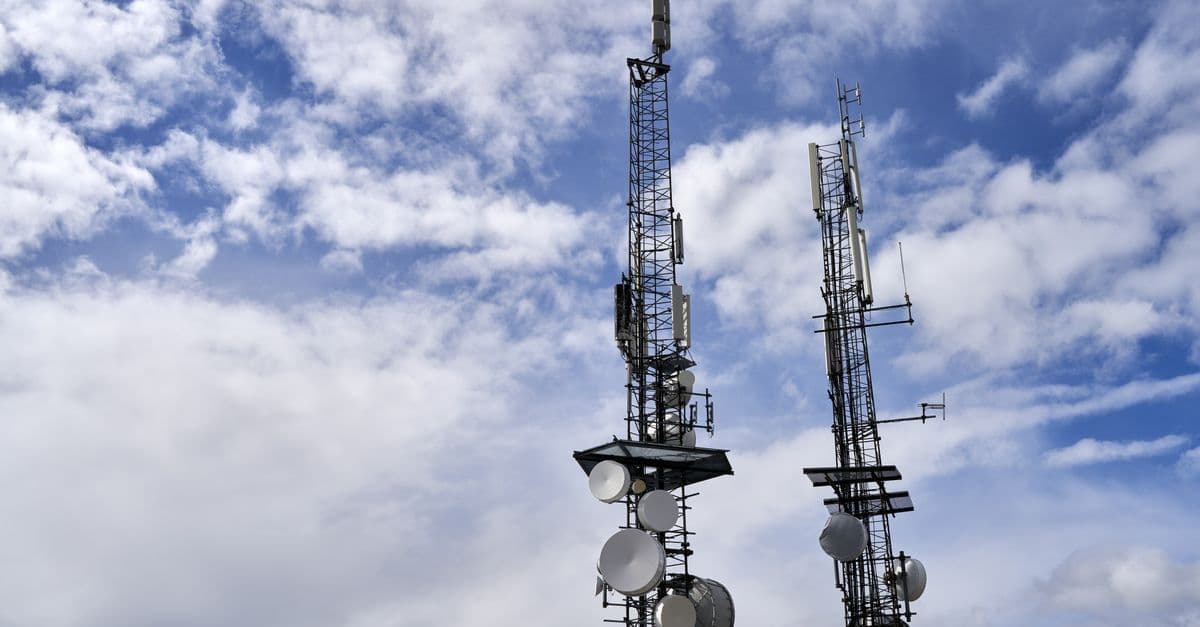
Photo: Barnabas Davoti / Pexels
Ask "which country has the best 5G?" and you will get a different answer depending on who you ask. A national regulator will tell you what share of homes sit inside a 5G signal footprint. A crowdsourced testing company will tell you how much of the time real phones are actually attached to a 5G cell. A speed-test firm will tell you how fast those connections were. An equipment vendor will tell you how many subscriptions exist. All four numbers get reported in the press as "5G coverage," and they can point in opposite directions for the same country.
This page sorts that out. It gives the global picture from the International Telecommunication Union (ITU), country figures from regulators and governments where they publish them, and crowdsourced experience data from Opensignal and Ookla, with the year and method stated for every figure. An earlier version of this article carried a ranking table of coverage percentages, base-station counts and median speeds for fifteen countries. We could not trace most of those figures to a primary source, so they have been removed rather than repeated. What remains is smaller, but every number has a name and a date attached.
If you are new to the technology itself, our explainer on what 5G is and how it differs from 4G covers the radio basics; this page is about measurement and geography.
Key Takeaways
- The ITU estimates 5G networks covered 55% of the world's population in 2025: 84% in high-income countries, 4% in low-income countries.
- Coverage, availability and speed are different metrics. A country can score near 100% on the first and poorly on the second.
- The EU's 2025 Digital Decade report puts Germany at 99.1% overall 5G coverage (2024 data) against an EU average of 94.3%, while noting that actual 5G usage in Germany "remains poor."
- China's industry ministry (MIIT) reported about 4.19 million 5G base stations in operation at the end of 2024, by far the largest network by that measure.
- South Korea's carriers switched on commercial 5G at 11 p.m. on 3 April 2019, and in Opensignal's October 2024 benchmark two Korean operators, LG U+ and SK Telecom, exceeded 440 Mbps average 5G download speed.
Three Questions, Three Metrics
Before any table, it helps to pin down what the common measurements actually ask.
1. Population (or household) coverage: "Could you get a 5G signal here?" This is usually a modelled figure. Operators submit predicted coverage maps to the regulator, based on where their sites are, what spectrum they use, and propagation models, and the regulator counts how many homes or people fall inside the predicted footprint. The EU's Digital Decade indicator "overall 5G coverage" and Ofcom's Connected Nations figures in the UK both work broadly this way. The ITU's global 55% figure is built from national data of this kind. Coverage is the metric governments set targets against: the EU's 2030 goal is 100% 5G coverage of populated areas.
2. Availability: "How much of the time are people actually on 5G?" This is measured from phones. Opensignal defines 5G Availability as the proportion of time that users with both a 5G handset and a 5G plan spend connected to an active 5G signal. Ookla's Speedtest uses a related but different definition: the proportion of Speedtest users with 5G-capable handsets who spend a majority of their time connected to 5G. Availability falls short of coverage for many reasons: indoor reception is weaker than the outdoor predictions, many 5G deployments use high-frequency bands that do not penetrate buildings well, and phones may fall back to 4G when the 5G signal is weak.
3. Speed and experience: "When you are on 5G, how good is it?" Opensignal reports average download and upload speeds, video and gaming experience scores, and "consistent quality." Ookla reports median download speeds from user-initiated tests. These depend heavily on how much mid-band spectrum (roughly 3.3–4.2 GHz in most countries) an operator has, how dense its sites are, and how loaded the network is.
There is a fourth number you will often see, subscriptions, which counts SIM cards on 5G plans. It says nothing about where the network reaches, but it is the headline figure in Ericsson's Mobility Report and is useful for tracking adoption.
| Metric | Typical source | How it is produced | What it misses |
|---|---|---|---|
| Population / household coverage | National regulators, EU Digital Decade, ITU | Operator-submitted predicted coverage maps overlaid on population or address data | Indoor reception, network load, whether people own 5G phones |
| 5G Availability (time on 5G) | Opensignal | Background measurements from users' phones with 5G device and plan | Areas without many users; depends on panel composition |
| 5G Availability (users mostly on 5G) | Ookla Speedtest | User-initiated tests from 5G-capable handsets | Selection bias toward people who run speed tests |
| Speed and experience | Opensignal, Ookla | Crowdsourced throughput, video, gaming tests | Coverage outside populated areas |
| Subscriptions | Ericsson Mobility Report, GSMA Intelligence | Operator reporting and forecasting models | Whether those subscribers can get a signal |
Keep this table in mind whenever you see a "top 10 countries for 5G" list. If it does not say which of these rows it is based on, it is not telling you much.
The Global Picture in 2025
The ITU's Facts and Figures 2025, published on 17 November 2025, estimates that 5G networks covered 55% of the world's population in 2025. The split by income is stark: 84% of people in high-income countries lived within 5G coverage, compared with 4% in low-income countries. The same release estimated that about 6 billion people, roughly three-quarters of humanity, used the internet in 2025, and that 4G and 3G networks now reach most of the global population.
That 80-point gap between rich and poor countries is the single most important fact about 5G geography. In low-income economies the priority is still getting people onto 4G at affordable prices, and the cost of 5G spectrum, sites and handsets puts it out of reach for now. The rankings below therefore mostly compare wealthy and upper-middle-income countries with each other, because that is where the measurable differences are.
Adoption is moving fast where networks exist. Ericsson's Mobility Report (June 2026 edition) says 5G accounted for about one-third of all mobile subscriptions at the end of 2025, with around 660 million added during that year, and that the total was close to 3.3 billion by the second quarter of 2026. Ericsson gives regional 5G subscription penetration at the end of 2025 as 79% in North America, 60% in North East Asia, 54% in Western Europe and 53% in the Gulf Cooperation Council countries, and forecasts about 6.4 billion 5G subscriptions, two-thirds of the total, by the end of 2031. These are subscription shares, not coverage, and forecasts are the vendor's own projections.
Country Coverage Figures From Official Sources
The table below lists coverage figures that national governments or regulators have published, with the year the data refers to. It is deliberately not a ranked list of every country: most governments outside Europe do not publish a comparable coverage percentage, and mixing household coverage, population coverage and premises coverage in one ranking would be misleading. Read each row on its own terms.
| Country / area | 5G coverage figure | Measure | Data year | Source |
|---|---|---|---|---|
| World | 55% | Share of population | 2025 | ITU Facts and Figures 2025 |
| High-income countries | 84% | Share of population | 2025 | ITU Facts and Figures 2025 |
| Low-income countries | 4% | Share of population | 2025 | ITU Facts and Figures 2025 |
| Germany | 99.1% | Overall 5G coverage (Digital Decade KPI) | 2024 | European Commission, State of the Digital Decade 2025, Germany annex |
| Belgium | 96.9% | Overall 5G coverage (Digital Decade KPI) | 2024 | European Commission, State of the Digital Decade 2025, Belgium annex |
| EU-27 average | 94.3% | Overall 5G coverage (Digital Decade KPI) | 2024 | European Commission, State of the Digital Decade 2025 |
| United Kingdom | 97% of premises | Outdoor coverage from at least one operator | 2025 (mainly July 2025 data) | Ofcom Connected Nations 2025, as reported |
| China | ~4.19 million base stations | Infrastructure count (not a coverage %) | End of 2024 | MIIT, via TelecomTV and China Daily |
A few notes on reading these rows:
- Germany's 99.1% is up from 98.1% a year earlier in the same series, so the old claim that Germany sits around 82% with large rural gaps is out of date. The Commission's own country text adds the important caveat: although Germany "has nearly achieved full 5G coverage, actual usage based on 5G SIM cards remains poor." That is the coverage-versus-availability problem in a single sentence.
- Belgium's 96.9% compares with 40.4% in the previous year's report. A jump that large usually reflects both rapid rollout and changes in how operators reported coverage, so the year-on-year change should not be read as pure construction progress.
- The UK's 97% is a premises figure for outdoor coverage from at least one of the four networks. Coverage from any single operator is lower, and Ofcom publishes separate, lower figures for standalone 5G (see below). We report this figure as summarised in coverage of the November 2025 report; check Ofcom's interactive report for the operator-by-operator breakdown.
- China is shown by base stations because that is the figure the government publishes most consistently. MIIT reported about 4.19 million 5G base stations "built and put into operation" at the end of 2024 and projected growth to about 4.5 million in 2025. China Daily's government edition reported the count had passed 4.1 million by December 2024. Because China's population and land area are both very large, base stations per person is a more useful comparison than the raw total, and no comparable official count exists for most other countries.
Availability: Who Is Actually on 5G?
Crowdsourced availability data tells a different story from coverage. Because it is measured from phones, it rewards networks that are dense, use low- and mid-band spectrum that travels well indoors, and push customers onto 5G plans.
According to GSA's summary of Opensignal's June 2024 global 5G benchmark, the markets with the highest average 5G Availability were Puerto Rico (51.7%), India (48.5%) and Kuwait (38.6%), followed by Singapore (33.5%) and South Korea (32.9%). In other words, even in the best-ranked market, a typical 5G user spent roughly half their time on 5G and the rest on 4G or older technology. In Opensignal's October 2024 benchmark, again summarised by GSA, the operators leading 5G Availability globally were T-Mobile Puerto Rico, T-Mobile US and Jio in India.
| Market | Opensignal 5G Availability | Data period | Source |
|---|---|---|---|
| Puerto Rico | 51.7% | Report published June 2024 | Opensignal via GSA |
| India | 48.5% | Report published June 2024 | Opensignal via GSA |
| Kuwait | 38.6% | Report published June 2024 | Opensignal via GSA |
| Singapore | 33.5% | Report published June 2024 | Opensignal via GSA |
| South Korea | 32.9% | Report published June 2024 | Opensignal via GSA |
Two things stand out. First, this list looks nothing like a coverage ranking. India is a lower-middle-income country, yet its 5G users spent more of their time on 5G than users in most of Europe, where regulators report near-universal coverage. Opensignal's figure measures time on 5G among 5G users, not how much of the country is covered, and operator strategy and spectrum choices probably explain much of the difference: Indian operators rolled out 5G quickly and pushed customers onto it, while many European operators run 5G as a thinner layer on top of 4G (our interpretation, not a finding of the report). Second, US operator T-Mobile features prominently in both the Puerto Rico and US results, which suggests that an operator's spectrum strategy can matter more than national policy.
Ookla's metric produces different-looking numbers because it counts users who are mostly on 5G rather than averaging time. In Ookla's Q3 2022 analysis, the US scored 54.3% on that measure, while Sweden and the UAE scored 8.6% and 8.3% respectively. Those figures are now several years old and are shown here only to illustrate how much the definition matters: a country that tops speed tests can still score low on availability.
Speed: Who Has the Fastest 5G?
On speed, the consistent leaders in independent tests have been South Korea and the Gulf states. GSA's summary of Opensignal's October 2024 benchmark reported that two South Korean operators, LG U+ and SK Telecom, both exceeded 440 Mbps average 5G download speed, and that SK Telecom led globally on 5G upload speed at 55.7 Mbps. The same benchmark highlighted Denmark and South Korea for consistent quality and Singtel in Singapore for gaming experience.
Ookla's Q3 2022 report found a global median 5G download speed of 168.27 Mbps and named South Korea and the UAE as the fastest countries. More recent Ookla country medians cover all mobile connections rather than 5G alone, so they are not directly comparable.
Why do these countries win on speed? The main factors are well understood:
- Spectrum depth. The amount of contiguous mid-band spectrum assigned to each operator sets the ceiling on capacity. Operators with 80–100 MHz channels can deliver several hundred megabits per second to a phone; those with 20–40 MHz cannot.
- Site density. Small, dense, high-rise cities let operators place many sites close together, so each one serves fewer users at higher signal quality.
- Fibre backhaul. A 5G site is only as fast as the link connecting it to the core network. Countries with deep fibre networks, which tend to score well on fixed broadband too (see our ranking of countries with the fastest internet speeds), can feed their radio sites properly.
- Load. A network with few 5G users on wide spectrum will test faster than a busy one. Early speed rankings partly reflected empty networks, which is why the leaders' numbers sometimes fell as adoption grew.
Standalone vs Non-Standalone: The Architecture Question
The earlier version of this page claimed that specific countries ran "true 5G" standalone networks with fixed speed and latency figures. That framing was too simple. The real distinction is this.
5G Non-Standalone (NSA) connects new 5G radios to an existing 4G core network. The phone uses a 4G connection as an anchor for signalling and adds 5G radio capacity on top. It was the fastest way to launch, and almost every country's first 5G services in 2019–2020 were NSA, including South Korea's.
5G Standalone (SA) uses a new, cloud-native 5G core. It enables features that NSA cannot fully support: network slicing (carving out guaranteed-performance virtual networks for specific customers), lower latency on the control path, better battery behaviour, and some industrial and Internet-of-Things capabilities. SA does not automatically mean higher download speed; speed still depends mainly on spectrum and site density.
The transition to SA is happening operator by operator rather than country by country. Ofcom's Connected Nations 2025 data, as summarised by industry press, estimated UK standalone 5G outdoor coverage at about 83% of premises from at least one network (mainly July 2025 data; Ofcom's later Spring 2026 update uses January 2026 data and should be checked for newer figures), with individual operators between roughly 47% and 65%. Ericsson forecasts that by 2031 about 3.9 billion subscriptions, around 60% of all 5G subscriptions, will be on standalone networks. Rankings that labelled whole countries "SA" or "NSA" missed that most large countries run both at once.
For more on how operators actually plan and secure these networks, see our explainer on how 5G networks get built and secured.
Country Profiles
South Korea: first to launch, still fast
South Korea's three carriers, SK Telecom, KT and LG Uplus, launched commercial 5G at 11 p.m. local time on 3 April 2019, two days earlier than their announced date, in a race with Verizon in the United States. Verizon began its own rollout in Chicago and Minneapolis the same week. Ordinary customers could sign up from 5 April, when Samsung's Galaxy S10 5G went on sale. The "world's first" label was partly symbolic, since both launches were small at the start, but Korea's network expanded fast.
Korea's advantages are the textbook ones: a dense, urban population, high-rise housing that lets operators serve many people per site, a strong domestic fibre network, and a government that treated 5G as an industrial priority. Its operators continue to lead global speed benchmarks, as the Opensignal data above shows. Korea is less dominant on availability, where it ranked fifth in Opensignal's June 2024 list.
China: the largest network by infrastructure
China's 5G network is the largest in the world by base-station count. MIIT's figure of about 4.19 million 5G base stations at the end of 2024 compares with a forecast of roughly 4.5 million for 2025. The three state-owned operators, China Mobile, China Unicom and China Telecom, built the network on a government plan, and China Unicom and China Telecom share much of their radio infrastructure, which reduces the number of sites each would otherwise need.
Because China does not publish a coverage percentage in the same form as EU regulators, it is hard to place China on a coverage ranking. What can be said is that urban coverage is extensive, the network is built at a scale no other country approaches, and domestic equipment suppliers such as Huawei and ZTE provide most of it.
Germany: near-full coverage, low usage
Germany is the clearest example of why coverage and availability differ. The European Commission's 2025 report gives it 99.1% overall 5G coverage in 2024, above the EU average of 94.3% and close to the 2030 target of 100%. Yet the same report says 5G usage based on SIM cards "remains poor." The Commission does not break down the reasons. Plausible factors are commercial (many customers may not have moved to 5G plans or handsets) and technical (some coverage can be delivered by sharing spectrum with 4G or using lower bands that add coverage but little capacity).
United Kingdom: high outdoor coverage, standalone catching up
Ofcom's 2025 figures, as reported, put outdoor 5G coverage from at least one operator at 97% of premises, up from 95% a year earlier, with rural areas weaker than towns. The UK's interesting story is standalone 5G, where coverage rose quickly in 2025 as operators switched on new cores. Ofcom also publishes coverage at "high confidence" and "very high confidence" levels, which reflect how likely a predicted signal is to work on the ground; headline figures usually refer to the first.
India: high availability
India's 5G users spent 48.5% of their time on 5G in Opensignal's June 2024 benchmark, second only to Puerto Rico. Jio, India's largest operator, ranked among the top three operators globally for availability in Opensignal's October 2024 benchmark. We have not found a comparable official national coverage percentage for India, so we do not rank it on coverage. The contrast with Germany, which has near-universal reported coverage but low 5G usage, is a reminder that coverage and use are separate achievements.
The Gulf states: fast and early
Kuwait ranked third for 5G Availability in Opensignal's June 2024 benchmark, and the UAE has repeatedly ranked among the fastest countries in Ookla's 5G speed data. The Gulf states combine early spectrum assignment, wealthy and highly urbanised populations and small geographic areas, which makes dense networks economically easier to build. Ericsson put 5G subscription penetration across the GCC at 53% at the end of 2025.
United States: availability leader, uneven quality
The US scores well on availability, with T-Mobile US among the three leading operators in Opensignal's October 2024 benchmark, and it has 79% 5G subscription penetration in North America according to Ericsson's end-2025 figures. Quality varies more by operator and location than in smaller countries. The Federal Communications Commission publishes a National Broadband Map that includes operator-reported mobile coverage, but it does not produce a single national 5G coverage percentage comparable to the EU indicator.
Why Big Countries Struggle With Coverage Percentages
Population coverage is cheap to achieve in dense cities and expensive in the countryside. A single urban site can serve thousands of people; a rural site may serve a few hundred. Coverage percentages are weighted by people, not land area, so a country can reach 95% population coverage while leaving most of its land without 5G. That is why small, urbanised states reach high figures quickly and large countries with dispersed rural populations take longer.
Regulators have tried several tools to push coverage outward:
- Coverage obligations in spectrum auctions. Licences can require operators to cover a share of population, roads or railways by a deadline, with penalties if they miss it.
- Shared rural networks. Operators jointly build or share masts in sparse areas so that one site serves all networks' customers.
- Low-band 5G. Using frequencies below 1 GHz extends coverage a long way from each site, at the cost of lower peak speeds.
- Satellite direct-to-device services. These are emerging as a complement in the hardest-to-reach areas. Our explainer on how satellite internet reduces latency covers the physics and trade-offs of low-orbit constellations.
Common Misconceptions
"5G coverage means I will get 5G speeds." Coverage is a modelled prediction of where a signal reaches outdoors. Whether you get high speeds depends on the band, your distance from the site, whether you are indoors, and how many others share the cell.
"The country with the most base stations has the best 5G." Base-station counts reflect population and land area as much as quality. China's count is huge partly because China is huge. Sites per person, spectrum per operator and measured experience are better guides.
"5G Standalone is 'real 5G' and is always faster." SA enables new network features, but download speeds depend mostly on spectrum and density. Some NSA networks in Korea have been among the world's fastest.
"Speed-test rankings are objective." Crowdsourced tests are valuable but reflect who is running them, on which devices and plans. Opensignal and Ookla use different methods and can rank the same countries differently in the same quarter.
How to Read the Next 5G Ranking You See
When a new list appears, run through four questions:
- Which metric? Coverage, availability, speed, or subscriptions. If the source does not say, treat the list with suspicion.
- Which year? 5G figures change by several percentage points a year. A 2022 figure tells you little about 2026.
- Who measured it? Regulator, crowdsourcing firm, vendor or marketing department. Each has strengths and blind spots.
- Population or area? Population-weighted coverage flatters dense countries; area coverage flatters none.
Then compare like with like. The most honest way to say "country X has the best 5G" is to name the metric and the date, for example: "Germany had 99.1% overall 5G coverage in 2024 by the EU's measure" or "Puerto Rico had the highest 5G Availability in Opensignal's June 2024 benchmark."
What Comes Next
The ITU's 55% figure will keep rising, but the next stage of competition is less about headline coverage and more about standalone cores, mid-band capacity and indoor reach. Operators are also starting to deploy "5G-Advanced" features, and Ericsson already forecasts about 180 million 6G subscriptions by the end of 2031. For context on how the radio interface works, our guide to how Wi-Fi and 5G actually work is a good next read, and for the bigger picture of connected devices, see the Internet of Things explained.
The low-income gap matters most. With 5G reaching 4% of people in low-income countries in 2025, the more relevant goal for most of the world remains affordable 4G and fixed broadband, and many low-income countries are expected to keep relying on 4G for years to come.
Frequently Asked Questions
Q: Which country has the best 5G coverage? A: It depends on the metric. On official coverage figures, several European countries report near-universal coverage, for example Germany at 99.1% in 2024 by the EU's Digital Decade measure. On time spent connected to 5G, Opensignal's June 2024 benchmark ranked Puerto Rico, India and Kuwait highest.
Q: What percentage of the world has 5G? A: The ITU estimates that 5G networks covered 55% of the world's population in 2025, rising to 84% in high-income countries but only 4% in low-income countries. Coverage means a signal is predicted to reach where people live, not that they use it.
Q: What is the difference between 5G coverage and 5G availability? A: Coverage is usually a regulator's modelled estimate of where a 5G signal reaches. Availability is measured from phones: Opensignal defines it as the share of time users with a 5G device and plan spend connected to 5G. Availability is almost always much lower than coverage.
Q: Which country has the fastest 5G? A: Independent tests have repeatedly put South Korea and Gulf states such as the UAE at the top. In Opensignal's October 2024 benchmark, LG U+ and SK Telecom both exceeded 440 Mbps average 5G download speed, and SK Telecom led on upload at 55.7 Mbps.
Q: How many 5G base stations does China have? A: China's Ministry of Industry and Information Technology reported about 4.19 million 5G base stations in operation at the end of 2024, and projected around 4.5 million in 2025. That is the largest 5G network in the world by infrastructure count.
Q: Which country launched 5G first? A: South Korea's three carriers switched on commercial 5G at 11 p.m. on 3 April 2019, about two hours before Verizon's US launch. Ordinary customers could sign up from 5 April 2019, when the first 5G smartphone went on sale there.
Q: What is 5G Standalone and does it matter? A: Standalone 5G uses a new 5G core network instead of a 4G one. It enables network slicing, lower control-plane latency and new industrial features, but download speed still depends mainly on spectrum and site density. Ericsson forecasts about 60% of 5G subscriptions will be on standalone networks by 2031.
Sources
- ITU, "Facts and Figures 2025" press release, 17 November 2025: https://www.itu.int/en/mediacentre/Pages/PR-2025-11-17-Facts-and-Figures.aspx
- European Commission, State of the Digital Decade 2025, Germany annex (Council doc. ST-10407-2025-ADD-12): https://data.consilium.europa.eu/doc/document/ST-10407-2025-ADD-12/en/pdf
- European Commission, State of the Digital Decade 2025, Belgium annex (Council doc. ST-10407-2025-ADD-34): https://data.consilium.europa.eu/doc/document/ST-10407-2025-ADD-34/en/pdf
- Ericsson Mobility Report, mobile subscriptions outlook: https://www.ericsson.com/en/reports-and-papers/mobility-report/dataforecasts/mobile-subscriptions-outlook
- GSA, "5G Experience October 2024" (Opensignal data): https://gsacom.com/paper/5g-experience-october-2024
- IEEE ComSoc Technology Blog, summary of Ookla's State of 5G Worldwide 2022: https://techblog.comsoc.org/2022/12/19/ookla-state-of-5g-worldwide-in-2022-countries-where-5g-is-not-available/
- China Daily (government edition, Xinhua), "China home to 4.1 million 5G base stations," December 2024: http://govt.chinadaily.com.cn/s/202412/10/WS6757a944498eec7e1f729c2c/china-home-to-4-1-million-5g-base-stations.html
- TelecomTV, "China targets further 5G expansion in 2025" (MIIT end-2024 figure): https://www.telecomtv.com/content/5g/china-targets-further-5g-expansion-in-2025-52045/
- The Daily Star (AFP/Yonhap), "S Korea launches 5G ahead of other countries," April 2019: https://www.thedailystar.net/world/news/s-korea-launches-5g-ahead-other-countries-1724848
Related Reading
Follow new articles
Add SciHub101 to your feed reader to see new science and technology stories.
About the Author
SciHub101 is an independent science and technology publication founded and edited by Buğra Sözeri, a software engineer and app developer based in Türkiye. AI tools assist with drafting and research. Source documentation in the existing archive is uneven, and articles are being reviewed and corrected. The Editorial Team byline identifies editorial responsibility; it does not certify specialist or independent human review. Where we compare products, anything built by our own team is labelled as such — see the editorial guidelines and About page for how corrections and disclosures work.
Related Articles
Countries That Produce the Most Semiconductors (2026)
Taiwan held 92% of the world's most advanced chip capacity in a 2021 study, South Korea dominates memory, and one Dutch company makes the only EUV lithography machines. Who controls which layer of the chip supply chain, with sourced figures.

Countries With the Most Industrial Robots Per Worker (IFR World Robotics 2025)
South Korea runs 1,220 industrial robots per 10,000 manufacturing employees — the highest robot density on earth. See the IFR ranking, how the metric works, and why China's figure fell from 470 to 166.

Neural Networks in Network Routing: How AI Optimizes 5G and Beyond
AI-driven network routing is replacing static algorithms in 5G—reducing latency, balancing load, and adapting to traffic in real time.
What Is 5G — and How Is It Really Different from 4G?
5G is faster, lower-latency, and more efficient than 4G. It also enables connected cars, remote surgery, and smart factories. Here's how it actually works and what's hype.
Countries with the Fastest Internet Speeds (Fixed Broadband Ranked)
The United Arab Emirates leads the world with a median fixed broadband download speed of 413.2 Mbps — more than four times the global average of roughly 90 Mbps. High urbanization rates, state-backed fiber rollout programs, and competitive telecoms markets are the common threads running through every country at the top of the Ookla Speedtest Global Index 2024.

How 5G Networks Actually Get Built — and Secured
5G cellular networks explained through the deployment fight: fiber costs, small cell permitting, Open RAN, and the security risks of virtualized cores.