Countries That Produce the Most Semiconductors (2026)
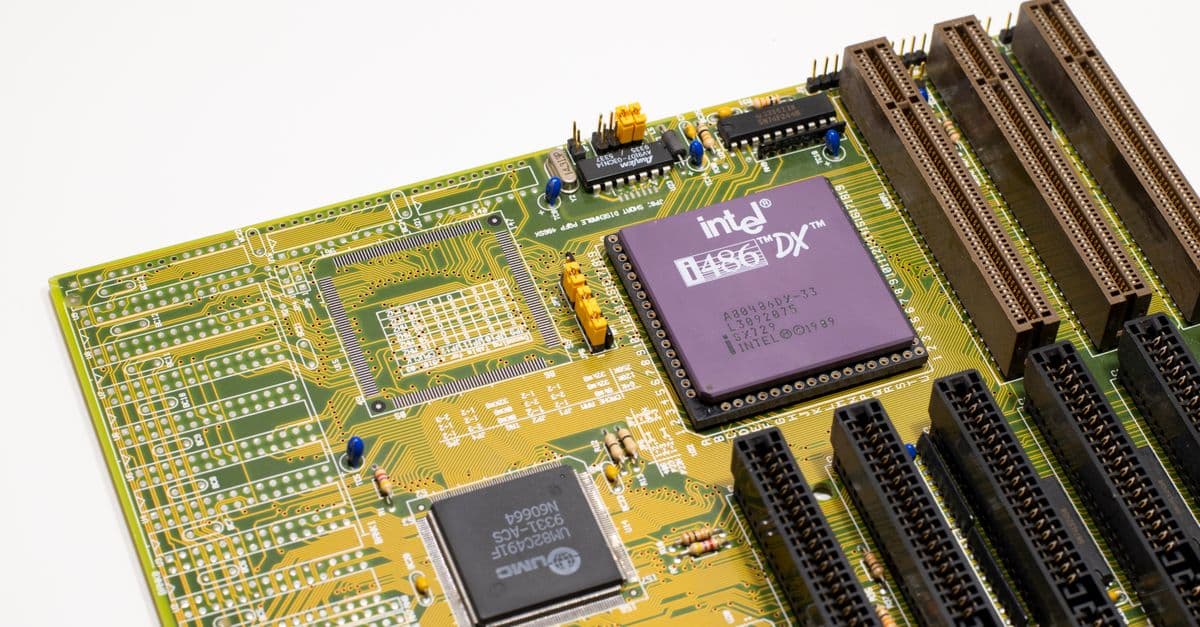
Photo: Nicolas Foster / Pexels
Asking which country produces the most semiconductors has no single answer, because chipmaking is a chain of stages and each stage has a different leader. Taiwan fabricates most of the world's most advanced logic chips. South Korea makes most of the memory. The United States designs the chips that earn the largest share of revenue. The Netherlands builds the only machines that can print the finest circuit patterns. This ranking separates those layers, uses dated and sourced figures, and flags where popular numbers do not hold up.
Which country "produces the most" chips depends on what you count
Think of a restaurant. Someone writes the recipe, someone runs the kitchen, and someone builds the oven that makes the kitchen possible. A country can be strong at one of those jobs and absent from the others. Semiconductors work the same way, and the three jobs map onto three business models.
- Design (the recipe). Companies such as Nvidia, Qualcomm, AMD, and Apple design chips but own no factories. They are called fabless companies.
- Fabrication (the kitchen). A fab is a factory that prints circuits onto silicon wafers. A foundry is a fab that makes chips for other companies. TSMC, founded on February 21, 1987, in Hsinchu, Taiwan, by Morris Chang, is described as the world's first dedicated semiconductor foundry, which is what made the fabless model possible (Wikipedia, TSMC).
- Equipment and materials (the oven). Lithography machines, chemicals, and wafers come from a small group of specialized suppliers, concentrated in the Netherlands, Japan, and the United States.
Two other things muddy rankings. A company's headquarters is not where it builds chips: an American firm can design in California and manufacture in Taiwan. And "most advanced" and "most chips" are different questions, since a mature fab producing millions of simple automotive chips can outweigh a leading-edge fab in unit terms while being years behind in technology.
The ranking by layer, with sources
The table below gives the leading country for each layer, a measured figure, and where the figure comes from. Years vary, because the underlying studies are published on different schedules.
| Layer | Leader | Figure | Source and year |
|---|---|---|---|
| Sales by company headquarters | United States | $425 billion, or 53.4% of worldwide sales | Semiconductor Industry Association (SIA), 2026 report on 2025 sales |
| Capacity below 10 nm | Taiwan | 92% of capacity, with South Korea holding the other 8% | SIA and Boston Consulting Group report, April 2021 |
| Contract manufacturing (foundry) | Taiwan | TSMC holds about 70% of the foundry market | Counterpoint Research, cited in Wikipedia, retrieved March 2026 |
| DRAM memory | South Korea | SK Hynix 36% and Samsung 34% in Q1 2025, about 70% combined | Wikipedia, South Korean semiconductor industry |
| EUV lithography machines | Netherlands | ASML is the world's only maker | Wikipedia, ASML |
| Fabrication equipment sales | Japan holds a large share | Japanese companies about 30% of fabrication equipment sales | TrendForce (2024), cited in Wikipedia |
| Overall manufacturing capacity | East Asia | About 75% of global capacity in China and East Asia | SIA and BCG report, 2021 |
| US capacity share | United States | 37% in 1990, 10% in 2022, projected 14% by 2032 | SIA and SIA/BCG 2024 projection |
Three points about this table. The "capacity below 10 nm" row comes from a 2021 report using pre-2021 data, so the geography may have shifted at the margin, although new leading-edge fabs take years to build. The foundry share is a market-share estimate from a research firm rather than a government statistic. And the US headquarters figure measures where companies are based, not where chips are made.
How big the industry is in 2026
The sector is in an unusual period. SIA reports record global sales of $795.6 billion in 2025 and says the figure was "far surpassing initial forecasts" (SIA, 2026 State of the Industry report). That report cites a forecast from WSTS, the industry's statistics body, of $1.5 trillion in worldwide sales for 2026.
The 2026 monthly data shows how steep the climb has been. SIA's October 5, 2026, release put August sales at $159.7 billion, up 8% from July and 144.3% above August 2025, all as three-month moving averages. Sales passed $1 trillion year to date for the first time, and SIA now projects more than $1.6 trillion for the full year (SIA press release, October 5, 2026).
Artificial intelligence is the main driver. SIA and Deloitte research cited in the 2026 report found that an AI server rack contains more than 4,500 packaged semiconductors, with chips representing more than 95% of the rack's value, and that global AI data center infrastructure investment through 2028 could exceed $4 trillion, with up to $2.8 trillion going to semiconductors. Memory has felt the squeeze in particular. TrendForce said on September 30, 2026, that DRAM suppliers were prioritizing advanced-process capacity for server products and keeping the market undersupplied, and projected conventional DRAM contract prices to rise 10% to 15% quarter on quarter in the fourth quarter of 2026 (TrendForce press center).
Why does this matter for a ranking? Because growth of this size makes every chokepoint more valuable. The data centers behind the boom are covered in our articles on why AI needs so much computing power and countries with the most data centers.
Taiwan: where the most advanced chips are made
Taiwan's position rests on TSMC. Counterpoint Research puts its share of the global foundry market at about 70%. TSMC was early to 7 nm and 5 nm production and to using ASML's EUV lithography in volume, and began 3 nm volume production in late 2022. By late 2025 it had moved to 2 nm (N2), its first node using gate-all-around nanosheet transistors, which the company says delivers a 10% to 15% performance gain or a 25% to 30% power reduction compared with enhanced 3 nm (Wikipedia, TSMC).
TSMC reported 2025 revenue of NT$3.81 trillion, about US$122 billion. To see why customers pile into one foundry, consider the economics of a fabless firm. Building a leading-edge fab costs billions of dollars: a survey of the industry cites a cost of $19.5 billion for a TSMC 3 nm fab, as of 2020 (Wikipedia, Semiconductor industry). A designer that rents capacity pays only for what it uses, and the foundry spreads its fixed costs across many customers. The result is a feedback loop: more customers fund more research, which attracts more customers.
The concentration risk
The cost of that loop is geographic. Taiwan's integrated-circuit exports were $184 billion in 2022, nearly 25% of its GDP, TSMC makes up about 30% of the Taiwan Stock Exchange's main index, and it accounts for roughly 5% of Taiwan's energy consumption. The same source notes that TSMC's role as a bottleneck raises concern that a disruption could cause another worldwide chip shortage, and that the company has expanded into Japan, the United States, and Germany to mitigate the risk of a possible conflict between Taiwan and China.
Those expansions are real but staged. In Arizona, the Commerce Department finalized a $6.6 billion CHIPS Act award in November 2024 for a plan of more than $65 billion across three fabs. As of the latest update, the first fab is operational, and TSMC announced in July 2026 another $100 billion, which would bring total planned US investment to $265 billion. In Japan, TSMC's JASM joint venture began commercial operation of Fab 23 in Kumamoto in December 2024, making 12, 22, and 28 nm chips. In Germany, the ESMC plant in Dresden is planned to reach full operation in 2029 on 28 nm and 12/16 nm processes (Wikipedia, TSMC). The Japanese and German plants target mature and mid-range nodes, and the Arizona fabs are still ramping.
For the manufacturing process itself, see our explainers on how semiconductor fabs work and how semiconductors are made.
South Korea: the memory powerhouse
Memory chips store data, and they come in two main kinds: DRAM, the fast working memory in computers and servers, and NAND flash, the storage in phones and solid-state drives. South Korea's two giants, Samsung Electronics and SK Hynix, dominate both. In the first quarter of 2025, SK Hynix held a 36% DRAM share against Samsung's 34%, according to figures cited in the Wikipedia article on the country's industry. Together that is about 70% of the market. A 2022 figure from Invest Korea, cited in the same article, put South Korea's NAND share at 52.6%.
SK Hynix has been the supplier at the center of the AI memory boom. It said on September 26, 2024, that it had begun mass production of 12-layer HBM chips, the first in the world. HBM (high-bandwidth memory) stacks DRAM dies vertically beside an AI processor, and the company supplies HBM3E to Nvidia, per a Korea Times report cited in the SK Hynix article. Claims that Samsung's HBM3E powers Nvidia's H100 accelerators should be treated with caution, since the published reporting points to SK Hynix as the headline HBM supplier.
Semiconductors are the country's largest export. In 2022 they were about $129 billion, nearly 19% of total exports, and in August 2025 chip exports reached a monthly record of $15 billion. The government has backed the sector too: in January 2024 officials announced a plan to invest about $470 billion over 23 years in a chip cluster in Gyeonggi Province, built with SK Hynix (Wikipedia, Semiconductor industry in South Korea).
Competition is rising from China as well, where CXMT is building domestic DRAM capacity (see the China section below).
United States: strong in design and sales, small in fabrication
The US paradox is that its companies capture more than half of global sales while its factories hold a small and shrinking share of capacity. SIA says US-headquartered companies had $425 billion in 2025 sales, 53.4% of the worldwide market and the highest US share since 1984, and invested a record $76.8 billion in R&D. Yet SIA's own page on chip incentives says the US share of global manufacturing capacity fell from 37% in 1990 to 10% in 2022, and a 2024 SIA and BCG report projects growth "from 10% today to 14% by 2032" (SIA, Chip Incentives and Investments; SIA, supply chain policy page).
Cost is part of the explanation. SIA says a new US fab costs about 30% more to build and operate over 10 years than one in Taiwan, South Korea, or Singapore, and 37% to 50% more than one in China (SIA, Chip Incentives and Investments).
What the CHIPS Act did
The CHIPS and Science Act, signed on August 9, 2022, appropriated $52.7 billion for domestic semiconductor research and manufacturing, including $39 billion in manufacturing subsidies and $11 billion for R&D, and added a 25% advanced manufacturing investment tax credit (Wikipedia, CHIPS and Science Act). Large awards announced in 2024 include:
| Company | Award | Purpose and date |
|---|---|---|
| Intel | $8.5 billion, reduced to $7.86 billion | Announced March 2024, reduced in November 2024 after a secure enclave funding agreement |
| TSMC | $6.6 billion | Third Arizona fab, announced April 2024, finalized November 15, 2024 |
| Samsung | $6.4 billion | Texas sites, announced April 2024 |
| Micron | $6.1 billion | New York campus plus a new Boise, Idaho fab, announced April 2024 |
| GlobalFoundries | $1.5 billion | Malta, New York fab and Vermont upgrade, announced February 2024 |
Source: Wikipedia, CHIPS and Science Act, as of the page's latest update. Announced amounts can differ from final disbursed awards.
The law attaches conditions. Subsidy recipients are barred for 10 years from producing chips more advanced than 28 nm in China and Russia. SIA's 2026 report counts more than $770 billion in private-sector investment announced since 2020 across 160 projects in 30 states. Announcements are not output, though. Fabs take years to build, and yield learning, the slow process of getting a new line to produce usable chips at volume, takes longer. It is like a bakery that needs hundreds of failed loaves before a new oven bakes reliably.
Where US strength is clearest is in the design layer and in the demand it creates. For the people side of the chain, see our ranking of countries with the most tech workers, and for innovation inputs, the pieces on countries that file the most patents and countries with the highest R&D spending.
Netherlands: the single point behind every advanced chip
ASML, headquartered in Veldhoven near Eindhoven, is described as the world's only manufacturer of extreme ultraviolet (EUV) lithography machines, with a near-monopoly in that market. Lithography is the step that projects circuit patterns onto a wafer using light, and EUV light has a much shorter wavelength than earlier systems, allowing finer features. Our explainer on EUV lithography covers the physics.
The machines are expensive. ASML's best-selling low-numerical-aperture system, the TWINSCAN NXE:3600D, costs up to $200 million, and a High-NA system costs approximately $370 million. High-NA raises the numerical aperture from 0.33 to 0.55, and the first research systems shipped to Intel in December 2023 and to TSMC in late 2024. ASML reported 2025 revenue of €32.7 billion and about 44,000 employees (Wikipedia, ASML).
Zeiss mirrors steer the EUV light onto the wafer, and ASML acquired Cymer, a maker of light sources, for $2.55 billion in a deal completed in May 2013. The pattern is common in this industry: a single company is the visible name, with a web of specialized suppliers behind it.
Export controls and the toll-bridge effect
Because every leading-edge fab needs EUV tools, ASML works like a toll bridge on the road to advanced chips, and governments have used that. The Dutch government announced restrictions on chip equipment exports in March 2023, with licence requirements taking effect in September 2023. Further restrictions followed in January 2024, controls were tightened in September 2024 to align with US rules, and in January 2025 they were expanded, with ASML applying to the Dutch government for export licences. In December 2025, Reuters reported that China had built a prototype EUV machine in Shenzhen with help from former ASML engineers, according to the same source. A prototype is not a production tool, and nothing in these sources shows one printing chips at volume.
Japan: from half of the market to the supplier of tools
Japan's story is a reminder that rankings change. Its share of global semiconductor sales rose from about 15% in the early 1970s to roughly 50% in the 1980s, then fell to about 10% by 2019. What remained was strength in equipment, materials, and specialty chips: Japanese companies account for about 30% of fabrication equipment sales, according to TrendForce (2024) as cited in Wikipedia's article on Japan's industry. Kioxia, formerly Toshiba Memory, is a leader in NAND flash, which Toshiba invented in 1987, and Renesas and Rohm compete in power semiconductors.
The country is now trying to rebuild leading-edge manufacturing in two ways. It subsidized TSMC's Kumamoto fabs: a subsidy of about ¥476 billion supported JASM's first fab, and total Kumamoto investment is put at more than $20 billion once a second fab is included, with TSMC as majority owner alongside Sony, Denso, and Toyota. It also backed Rapidus, a company founded in 2022 and supported by eight firms, including Denso, Kioxia, NTT, SoftBank, Sony, and Toyota, with a target of a 2 nm process by 2027. Whether Rapidus reaches volume production has yet to be shown. For the history behind Japan's early lead, our overview of the transistor is a good starting point.
China: the biggest buyer, building under controls
China is the world's largest consumer of chips and one of its largest importers. In 2020 it accounted for 53.7% of worldwide chip sales by destination, or $239.45 billion of $446.1 billion, and imported $199.7 billion of chips, over 83% of its own chip sales (Wikipedia, Semiconductor industry in China). Those are 2020 figures, and the market has grown since.
Its manufacturing is led by SMIC, described as the world's third-largest contract chipmaker as of 2024, with 2024 revenue of $8.0 billion. SMIC began shipping 7 nm chips in 2021, and in September 2023 Huawei launched the Mate 60 with a Kirin 9000S chip made by SMIC, described as the first on its 7 nm technology. TechInsights believed in 2022 that SMIC had produced 7 nm chips by adapting simpler ASML machines it could still buy, and reports describe the use of deep ultraviolet (DUV) lithography with multiple patterning passes to stand in for the missing EUV step. In December 2025, TechInsights said an analysis of the Kirin 9030 suggested SMIC was approaching a "true 5nm-equivalent node without EUV lithography" (Wikipedia, SMIC).
The US Commerce Department added SMIC to its Entity List in December 2020. A major package of export controls on AI and semiconductor technology followed in October 2022, and in January 2023 the controls were coordinated with Japan and the Netherlands. China's response has included large state investment and growing domestic memory makers, including CXMT in Hefei and YMTC in Wuhan. Morgan Stanley estimated that China's self-sufficiency in AI chips was 41% in 2025, up from 10% in 2020.
Multi-pass DUV generally needs more process steps per layer than EUV, which tends to raise cost and lower yield, though exact figures are not public. The practical limit is volume at an acceptable cost, not whether a single chip can be made. Our guide to why semiconductors are so hard to make explains why such yields are difficult.
Europe: specialty chips and a policy bet
Europe does not lead in leading-edge logic. Its strengths lie in specialty chips and in the equipment chain through ASML and its suppliers. The European Chips Act entered into force on September 21, 2023, and rests on three pillars: a Chips for Europe Initiative with pilot lines, measures for security of supply that support manufacturing, packaging, and testing, and monitoring and crisis response coordinated by a European Semiconductor Board. The European Commission reports it has approved 18 state aid decisions for facilities representing more than €32 billion in public and private investment (European Commission, European Chips Act).
The Commission page does not give the EU's current share of global production, so this article does not either. The Dresden ESMC fab, a TSMC-led project with reported TSMC funding of about €3.5 billion and a €5 billion German subsidy approved by the Commission in August 2024, is the headline example of the approach, and it targets mature nodes rather than the leading edge.
Why the map is so concentrated, and what moving it costs
SIA and BCG's 2021 analysis found more than 50 points in the semiconductor value chain at which one region holds more than 65% of global market share. It also estimated that a fully self-sufficient chain in every region would need at least $1 trillion in additional upfront investment and would raise chip prices by 35% to 65% (SIA, Strengthening the Global Semiconductor Supply Chain in an Uncertain Era). Concentration is the efficient outcome, and resilience is the thing governments are now paying for.
The investments under way show the scale of the price tag:
| Project | Reported cost or investment | Notes |
|---|---|---|
| TSMC leading-edge fab (3 nm class) | $19.5 billion (2020 figure) | Wikipedia, Semiconductor industry |
| TSMC Arizona | More than $65 billion planned for three fabs (April 2024), $265 billion total US plan (July 2026) | Wikipedia, TSMC |
| JASM, Kumamoto (both fabs) | More than $20 billion | First fab in commercial operation since December 2024 |
| ESMC, Dresden | More than €10 billion | Planned full operation 2029, per Wikipedia |
Why does a fab take so long to matter, even after construction? A new line has to learn. Engineers tune thousands of process steps, and early output has more defective chips than good ones. Customers wait for yields to climb before trusting a line with a flagship product. That learning curve is one reason the Japanese and German plants are starting on mature and mid-range processes, and why a subsidy does not instantly translate into leading-edge capacity.
The chain also continues beyond the fab. Chiplet designs, which split a processor into smaller dies connected in one package, are shifting some value toward advanced packaging, as described in our piece on why chiplets are changing processor design, and GPUs, covered in how GPUs work, are where much of the AI demand lands.
Common misreadings of chip rankings
"Taiwan makes 62% of advanced chips." This figure circulated for years and does not match the sources used here. The SIA and BCG study found Taiwan held 92% of capacity below 10 nm in 2021, and a research firm puts TSMC's share of the foundry market, which includes mature nodes, at about 70%. Those are different measures, and neither is 62%.
"The US makes most of the world's chips." The US leads in sales by company headquarters, at 53.4% in 2025. Its share of manufacturing capacity was 10% in 2022 per SIA. Both statements are true, and they describe design and fabrication respectively.
"The Netherlands makes chips." It makes the machines that make chips. ASML is the only EUV supplier, but none of the production measures above lists the Netherlands as a leader.
"A chip shortage means demand is simply too high." Shortages come from mismatches between capacity and demand in specific products. In 2026 the pinch is concentrated in memory, where TrendForce describes the DRAM market as undersupplied because makers are favoring advanced server products.
"Sanctions have stopped China's chip progress." Evidence points to slower, costlier progress rather than a halt: 7 nm-class output at SMIC and TechInsights' December 2025 assessment that SMIC is approaching a 5 nm-equivalent node without EUV. A gap in volume and cost remains.
Frequently asked questions
Q: Which country produces the most semiconductors? A: It depends on the measure. Taiwan leads advanced fabrication, with 92% of capacity below 10 nm in a 2021 industry study and about 70% of the foundry market through TSMC. South Korea leads DRAM memory. The United States leads in sales by company headquarters, at 53.4% in 2025. East Asia as a whole holds about 75% of global manufacturing capacity.
Q: How big is the global semiconductor market? A: SIA reported record global sales of $795.6 billion in 2025. In 2026 the market has accelerated sharply, with August sales at $159.7 billion and year-to-date sales passing $1 trillion through August. SIA projects more than $1.6 trillion for the year, while the WSTS forecast cited in SIA's annual report was $1.5 trillion.
Q: Why is ASML so important? A: It is the world's only maker of EUV lithography machines, which are needed to print the finest circuit patterns. A low-NA machine costs up to $200 million and a High-NA machine about $370 million. The Netherlands, in coordination with the US, has restricted exports to China since 2023.
Q: Can the United States or Europe build their own TSMC? A: Governments can subsidize buildings, but TSMC's advantage includes decades of process learning, supplier networks, and engineers. SIA says a new US fab costs about 30% more to build and operate over 10 years than one in Taiwan, South Korea, or Singapore. SIA and BCG estimated that a fully self-sufficient chain in every region would cost at least $1 trillion more and raise chip prices by 35% to 65%.
Q: What does the CHIPS Act do? A: Signed on August 9, 2022, it appropriated $52.7 billion for chip manufacturing and research, including $39 billion in manufacturing subsidies, $11 billion for R&D, and a 25% investment tax credit. Recipients are barred for 10 years from producing chips more advanced than 28 nm in China and Russia. Large awards include $7.86 billion for Intel and $6.6 billion for TSMC.
Q: Where does China stand in chipmaking? A: China is the largest buyer of chips and is building domestic capacity under US and allied export controls. SMIC, the world's third-largest foundry as of 2024, makes 7 nm-class chips without EUV tools. Gaps remain in volume, cost, and the most advanced tools, and a reported Chinese EUV prototype is not a production machine.
The takeaway
The chip industry is best understood as a relay race run across several countries. Taiwan carries the most advanced fabrication, South Korea carries memory, the Netherlands supplies the tool that makes the leading edge possible, Japan supplies equipment and materials, and the United States designs the chips that capture most of the revenue. The record sales of 2025 and 2026 raise the value of every handoff.
Moving the baton is slow and expensive. Billions of dollars of subsidies have funded new fabs in the US, Japan, and Germany, yet the available data show US capacity rising from 10% to a projected 14% by 2032, not to parity. Anyone reading a ranking should ask which stage it measures, whose headquarters or whose factories it counts, and what year the data comes from.
Sources
- SIA, 2026 State of the Industry report summary
- SIA press release, global sales through August 2026
- SIA and BCG, Strengthening the Global Semiconductor Supply Chain in an Uncertain Era (2021)
- SIA, Chip Incentives and Investments
- European Commission, European Chips Act
- TrendForce press center, September 30, 2026 DRAM outlook
- Wikipedia, TSMC, ASML, CHIPS and Science Act, SMIC
Related Reading
Follow new articles
Add SciHub101 to your feed reader to see new science and technology stories.
About the Author
SciHub101 is an independent science and technology publication founded and edited by Buğra Sözeri, a software engineer and app developer based in Türkiye. AI tools assist with drafting and research. Source documentation in the existing archive is uneven, and articles are being reviewed and corrected. The Editorial Team byline identifies editorial responsibility; it does not certify specialist or independent human review. Where we compare products, anything built by our own team is labelled as such — see the editorial guidelines and About page for how corrections and disclosures work.
Related Articles

Countries With the Best Space Programs (2026)
The United States still leads the world's space programs by budget, launch cadence, and crewed lunar flight, but China has built a station, returned samples from the Moon's far side, and set a 2030 crewed landing goal. Europe, India, Japan, and Russia each hold a narrower set of strengths.
Countries With the Best 5G Coverage (2025)
5G reached about 55% of the world's population in 2025, per the ITU, but coverage, availability and speed are three different measurements. Germany reports 99.1% coverage while its 5G usage lags; South Korea's networks top speed tests. Here is what each ranking actually measures.

Why Semiconductors Are So Hard to Make — Inside the World's Most Complex Manufacturing Process
A modern chip is built from up to 100 patterned layers aligned at nanometer precision, inside cleanrooms and with machines that few companies can build. Here is why that is so hard, and why it costs so much.
Semiconductor Chips: How They Work
A modern processor packs tens of billions of transistors onto a sliver of silicon. Here is how doped silicon becomes switches, switches become logic, and logic becomes a computer.

Countries With the Most Industrial Robots Per Worker (IFR World Robotics 2025)
South Korea runs 1,220 industrial robots per 10,000 manufacturing employees — the highest robot density on earth. See the IFR ranking, how the metric works, and why China's figure fell from 470 to 166.
Complete Technology Guide 2026 — How Modern Tech Works
The complete guide to technology in 2026: how the internet, semiconductors, and quantum computing work, AI hardware, cybersecurity, and what's coming next.