What If 5G Really Did Cause Health Problems? Here's What Science Found

Photo: Levent Simsek / Pexels
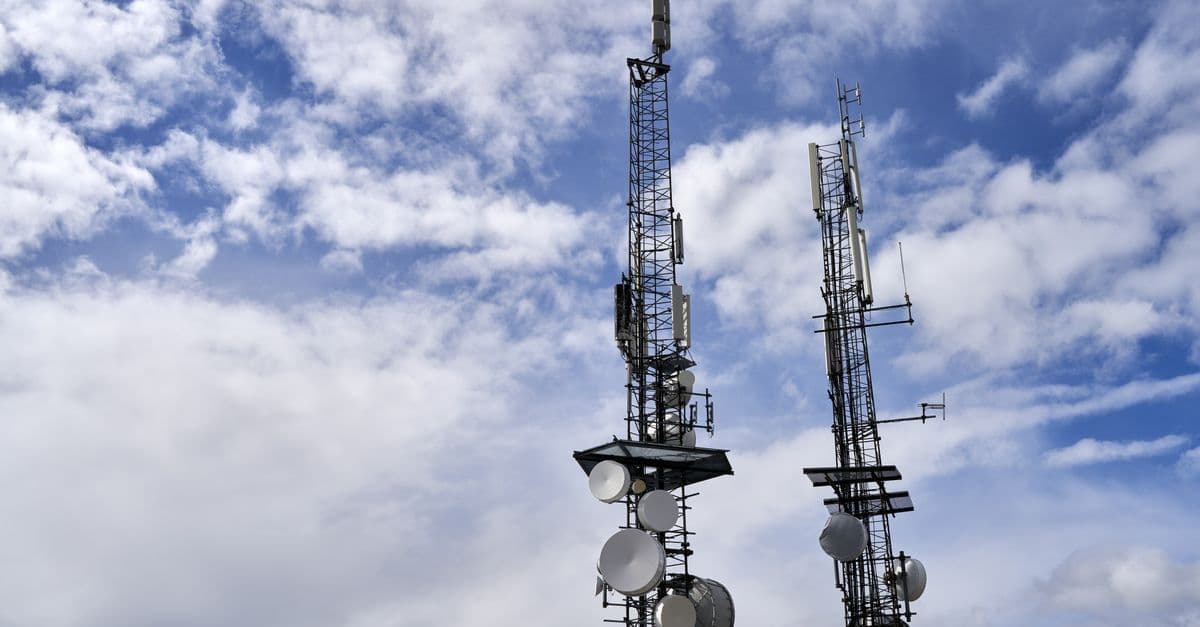
In April 2020, arsonists set fire to more than 140 mobile phone masts across ten European countries, convinced that fifth-generation (5G) cellular networks were somehow spreading COVID-19 (NBC News; NL Times). One targeted tower fed a field hospital treating coronavirus patients in Birmingham, England. The theory driving those fires was physically impossible from the outset — but the underlying question of whether 5G radiation harms human health deserves a real answer, not a dismissal. Here's what physics, biology, and the regulatory record actually say.
Thought experiment. This article explores a hypothetical scenario for educational and speculative purposes. The events described are not predictions and should not be interpreted as warnings, advocacy, or instructions.
Key takeaways
- 5G uses non-ionizing radiation — a category of electromagnetic energy that lacks the photon energy to break chemical bonds or damage DNA. This is a physics fact, not a regulatory opinion.
- The World Health Organization states that despite decades of research, "to date, and after much research performed, no adverse health effect has been causally linked with exposure to wireless technologies" at levels below international guideline limits (WHO, 5G mobile networks and health Q&A).
- Regulatory exposure limits set by the FCC and ICNIRP already build in large safety margins below any level where measurable tissue heating has occurred (FCC RF Safety FAQ; ICNIRP 2020 guidelines).
- The 2020 COVID-19/5G conspiracy theory triggered more than 140 arson attacks on cell towers across Europe and assaults on telecom engineers, based on a claim that mixes two unrelated phenomena — viruses and radio waves — with no shared physical mechanism (NBC News).
- The International Agency for Research on Cancer (IARC) classifies radio-frequency electromagnetic fields as "possibly carcinogenic" (Group 2B) — the same category as pickled vegetables and aloe vera extract, meaning evidence is limited, not confirmed (IARC press release, 2011).
What 5G actually is, and what it emits
5G is a wireless communication standard — the successor to 4G LTE — built to carry more data with lower latency by using a combination of radio-frequency (RF) bands. It isn't a single frequency or a single technology; carriers deploy it across three broad ranges, each with different physical behavior.
Low-band 5G operates below 1 GHz, in the same general range long used by 4G LTE, AM/FM radio, and broadcast television — frequencies humans have been immersed in for more than a century without a demonstrated population-level health effect. Mid-band 5G sits between 1 and 6 GHz, overlapping with WiFi and most existing 4G traffic; a household microwave oven, for comparison, operates at 2.45 GHz but at vastly higher power (600 to 1,200 watts versus a fraction of a watt for a phone). High-band millimeter wave (mmWave) 5G runs from roughly 24 to 100 GHz. It carries more data over shorter distances and is absorbed almost entirely at the skin's surface rather than penetrating into deeper tissue, which limits rather than expands certain exposure concerns.
Base station power output for 5G is generally comparable to or lower than 4G, because 5G networks typically rely on more, smaller antennas transmitting at lower power each rather than fewer high-power towers (ITU, 5G human exposure to EMF backgrounder). None of the three bands 5G uses reaches into ionizing territory — the physics of that boundary is the single most important fact in this entire topic, and it's worth walking through carefully.
Non-ionizing radiation, and why it can't damage DNA
Electromagnetic radiation spans a spectrum from low-frequency radio waves through microwaves, infrared, visible light, ultraviolet, X-rays, and gamma rays. What separates radiation that can damage cells at the molecular level from radiation that can't isn't how strong the signal is — it's the energy carried by each individual photon, which is set by frequency.
Think of it like the difference between being pelted with ping-pong balls and being hit once by a bowling ball, both thrown at the same speed. The bowling ball (a high-energy photon, like an X-ray) carries enough energy in a single hit to knock an electron loose from an atom — that's ionization, the mechanism that breaks chemical bonds and can fragment DNA. A 5G photon is a ping-pong ball: no matter how many of them arrive, a single one doesn't carry enough energy to do that job. You can't add up a million sub-threshold hits into one ionizing hit, because ionization is a per-photon threshold effect, not a cumulative one.
To break a typical chemical bond, including the bonds holding a DNA molecule together, a photon needs roughly 3 to 5 electron-volts (eV) of energy. A mid-band 5G photon carries approximately 0.00001 to 0.0001 eV — somewhere between 30,000 and 500,000 times below that threshold, depending on the specific frequency. Even at the top of the mmWave band (100 GHz), the photon energy is still only around 0.0004 eV, nowhere close to the ionization threshold (WHO, Radiation: Electromagnetic Fields Q&A).
5G photons, at every frequency the technology uses, are physically incapable of breaking DNA strands, ionizing atoms, or damaging cell structures through the mechanism that X-rays and gamma rays use. This isn't a conclusion drawn from a single study that could be overturned by a new one. It follows directly from quantum mechanics, the same physics that explains why a dental technician stands behind a lead shield for an X-ray but doesn't need one to operate a WiFi router.
Does non-ionizing mean 5G has zero effect on the body?
Not entirely. Non-ionizing means RF energy can't damage tissue through the ionization mechanism, but it can still transfer energy as heat if the power is high enough. The real question is whether 5G's deployed power levels ever get anywhere near the threshold where that heating becomes biologically meaningful — and the evidence says no, addressed below.
What RF radiation can actually do at real-world power levels
Two genuine, well-characterized effects of RF exposure exist, and both are dose-dependent thresholds that 5G, at its regulated power levels, sits well below.
Tissue heating
At sufficiently high power, RF energy causes dielectric heating — the same physical process a microwave oven uses on food, just at power levels many hundreds of times greater than anything a phone or base station produces. Regulators address this directly through Specific Absorption Rate (SAR) limits, which cap how much RF energy a device can deposit in tissue. The FCC sets the US consumer device limit at 1.6 watts per kilogram averaged over 1 gram of tissue; ICNIRP's 2020 guidelines, used across most of the world, set a comparable 2.0 W/kg limit averaged over 10 grams (FCC RF Safety FAQ; ICNIRP 2020 guidelines). Every commercially sold 5G phone must be tested and certified below that limit before it can be sold. 5G base stations, positioned at distance from the public and operating at split power across many antennas, produce ambient exposure that international measurement surveys have consistently found to be a small fraction of the regulatory limit (ICNIRP 2020 guidelines).
Non-thermal effects
Researchers have spent decades investigating whether RF exposure below the heating threshold could still produce some other biological effect through a non-thermal mechanism — something that isn't heat and isn't ionization. This has been studied extensively in cell cultures and animal models across multiple RF generations. No consistent, reproducible, or mechanistically explained non-thermal effect has been established at the power levels 5G devices and base stations actually use. The WHO's ongoing EMF research program continues to track this literature but has not identified such an effect as established (WHO, 5G mobile networks and health Q&A).
What the major studies actually found
The Interphone study
The Interphone study, coordinated by IARC across 13 countries and covering more than 5,000 brain tumor cases, remains the largest case-control study of mobile phone use and brain cancer risk ever conducted. It found no clear, consistent evidence that mobile phone use increases glioma or meningioma risk at typical usage levels, though some subgroup analyses at the highest reported use categories showed inconsistent signals that researchers attributed at least partly to recall bias in self-reported phone use (Interphone Study Group summary, via IARC). Because mobile phones transmit at meaningfully higher power against the head than a 5G base station ever delivers to a bystander, this study functions as a stronger test of RF safety than 5G exposure itself requires.
The National Toxicology Program (NTP) animal study
Published in 2018, the US National Toxicology Program's decade-long, $30 million study exposed rats and mice to RF radiation at 900 MHz and 1,900 MHz for nine hours a day, at Specific Absorption Rates of 1.5 to 6 W/kg — levels that meet and, at the high end, substantially exceed the FCC's 1.6 W/kg consumer device limit. The study found "clear evidence" of heart tumors (schwannomas) in male rats at the highest exposure levels, with some evidence of brain and adrenal gland tumors, but results in female rats and in both male and female mice were inconsistent (National Toxicology Program findings, via NIH). The exposures used were whole-body, continuous, and at multiples of any human 5G exposure; the inconsistency across sex and species is one of the main reasons the findings haven't translated into a confirmed human risk.
Population cancer trends
If RF exposure from mobile networks were driving cancer at a population level, brain and central nervous system cancer incidence should have risen sharply alongside the explosive growth of mobile phone use since the late 1990s and the subsequent rollout of 4G and 5G. Long-term national cancer registry data has not shown that pattern; age-adjusted incidence has remained largely flat over this period. This is one of the reasons the WHO characterizes current evidence as reassuring for RF exposure at regulated levels rather than a basis for concern.
5G-specific research above 6 GHz
Because mmWave 5G uses frequencies not extensively studied in earlier mobile-generation research, regulators and scientists have specifically reviewed the newer literature on frequencies above 6 GHz. A comprehensive state-of-the-science review published in Environment International examined the available research on low-level RF fields in this higher band and found the evidence base still developing but with no established adverse health effect at exposure levels compliant with international guidelines (Simko & Mattsson, 2021, state-of-the-science review).
The COVID-19 and 5G conspiracy: why it's physically impossible
The claim that emerged in early 2020 held, in various versions, that 5G either weakened the immune system and made people susceptible to coronavirus, or that the virus itself was somehow being transmitted via 5G radio waves. Both versions fail for the same basic reason: a virus and a radio wave are categorically different kinds of things, and nothing in physics or virology allows one to become or transmit as the other.
A virus is a biological particle — genetic material (DNA or RNA) wrapped in a protein shell, sometimes with a lipid envelope. It replicates by hijacking a host cell's machinery and it spreads through physical routes: respiratory droplets, surfaces, direct contact. A radio wave is a form of electromagnetic energy with no genetic material, no protein structure, and no capacity to replicate or infect anything. There is no known mechanism, and no proposed one that survives basic scrutiny, by which electromagnetic energy at 5G frequencies could carry, create, or activate a virus.
The geographic pattern of the pandemic further undermines the theory on its own terms: COVID-19 spread extensively through countries and regions with little to no 5G infrastructure, while some early 5G-deployed cities saw comparatively contained outbreaks relative to other factors like population density and public health response. If 5G caused or worsened the pandemic, the geography of infection should have tracked 5G rollout maps. It didn't.
Health authorities responded directly and explicitly. The WHO stated flatly that "viruses cannot travel on radio waves/mobile networks" and that "COVID-19 is spreading in many countries that do not have 5G mobile network coverage" (WHO myth-busters archive, referenced via WHO 5G Q&A). Fact-checking organizations, telecom regulators, and public health bodies across the UK, US, and EU issued parallel corrections through 2020.
The real-world cost of the theory was concrete rather than abstract. Telecom industry groups ETNO and GSMA documented more than 140 arson attacks on cell towers across ten European countries in the spring of 2020, alongside assaults on telecom engineers performing routine maintenance (NBC News). The United Kingdom saw roughly 50 tower fires in April 2020 alone, including an attack on a mast supplying voice and data service to a temporary field hospital treating coronavirus patients in Birmingham (Fox News, referencing UK telecom mast attacks). The Netherlands recorded at least 16 tower fires in the same period, including one where "5G" was spray-painted across a burned transmission box (NL Times). None of that damage prevented or slowed the actual pandemic; it disrupted emergency communications infrastructure during a public health crisis that depended on those same networks functioning.
Where the IARC "possibly carcinogenic" label actually fits
Headlines periodically cite the 2011 IARC classification of RF-EMF as Group 2B, "possibly carcinogenic to humans," as though it settles the question of danger. It doesn't, and the category itself explains why. IARC assigns Group 2B when evidence for carcinogenicity is limited in humans and less than sufficient in animal studies — it's the "we can't fully rule it out and want more research" tier, not a confirmed-hazard designation. Group 2B also includes coffee (later downgraded further after additional research), pickled vegetables, and aloe vera extract (IARC press release announcing the classification). It sits well below Group 1, reserved for confirmed carcinogens like tobacco smoke, asbestos, and ionizing radiation such as X-rays, and below Group 2A, the "probable carcinogen" tier. The classification reflects an abundance of caution given limited evidence, not an established causal pathway.
What about symptoms people actually experience?
Headaches
Some people report headaches near phones, routers, or 5G equipment. Blinded provocation studies — where participants don't know whether RF exposure is real or a sham — consistently fail to find a link between actual RF exposure and headache onset. The headaches are real; the far more likely triggers are screen-related eye strain, dehydration, poor posture, and stress, all of which are present in the exact environments where people also encounter wireless devices.
"Electromagnetic hypersensitivity"
A subset of people attribute a range of symptoms — headaches, fatigue, sleep disruption, difficulty concentrating — specifically to nearby RF sources, a condition sometimes labeled electromagnetic hypersensitivity (EHS). Systematic reviews of blinded provocation studies, including a widely cited 2010 review covering 46 studies and over 1,000 self-identified EHS cases, have found no reliable evidence that affected individuals can detect real RF exposure at rates better than chance (Rubin, Das Munshi & Wessely, systematic review). The WHO's position states plainly that "the symptoms are certainly real and can vary widely in their severity," while noting current scientific evidence does not support a causal link between those symptoms and EMF exposure (WHO EHS fact sheet). That distinction matters: it validates the experience without endorsing the attributed cause.
Sleep disturbance and fatigue
Reported near 5G infrastructure but, like headaches and EHS symptoms generally, not reproducible in blinded conditions. Late-night screen use, blue light exposure, caffeine timing, and stress remain the mechanistically well-supported explanations, and they occur in the same environments where 5G devices are used.
Where 5G health concerns actually came from
Several distinct factors converged to fuel the controversy, separate from any single scientific finding.
Confusion between frequency bands. MmWave 5G behaves differently from low-band and mid-band 5G — it's absorbed at the skin's surface rather than penetrating deeper tissue — but public discussion often treats "5G" as a single undifferentiated threat rather than three physically distinct deployments.
A genuinely new technology outpacing epidemiology. Large population studies take years to accumulate meaningful data, and 5G deployment expanded faster than dedicated 5G-specific epidemiology could be conducted, leaving a temporary evidence gap that speculation filled.
Industry mistrust carried over from other sectors. Decades of documented corporate misconduct in other industries, from tobacco to opioids, made some segments of the public reasonably skeptical of any industry-adjacent safety claim, even when the underlying physics is independently verifiable and not contingent on telecom industry assurances.
Visible infrastructure. 5G base stations and small cells are often installed at eye level on buildings and utility poles, more visible than the larger, more distant towers used for earlier mobile generations. Visible, novel infrastructure tends to register as more threatening than familiar, unseen technology, even when the underlying exposure is lower.
Pandemic timing. 5G rollout accelerated in many countries in 2019 and 2020, the same window as the COVID-19 pandemic's emergence, creating a coincidence in timing that online communities converted into a causal narrative despite the absence of any physical mechanism connecting the two.
Social media amplification. Platforms with algorithmic engagement incentives accelerated the spread of the 5G-COVID theory specifically, well past the point where fact-checks and WHO statements had already addressed it directly.
Genuine concerns about 5G that aren't about radiation
Setting the radiation-health question aside, some real, evidence-based concerns about 5G deployment exist and deserve their own attention rather than getting folded into radiation fears.
| Concern | What it actually involves | Radiation-related? |
|---|---|---|
| Data privacy | 5G's higher bandwidth and lower latency enable more granular data collection from connected devices | No |
| Location tracking | Denser small-cell networks can, in principle, support more precise location inference | No |
| Digital divide | Uneven 5G rollout widens gaps in access to services increasingly built around it | No |
| Device manufacturing footprint | Producing 5G-capable devices and infrastructure carries resource and environmental costs | No |
| Spectrum and infrastructure cost | Deployment costs shape which areas get coverage first, often favoring dense urban markets | No |
| Cybersecurity of connected devices | More connected devices (IoT growth) expands the attack surface for network intrusions | No |
Table: Legitimate 5G-related concerns that are not about radiation exposure, contrasted against whether radiation biology is actually involved.
These are policy and infrastructure questions, not radiation-safety questions, and treating them as interchangeable with the RF-health debate tends to weaken the credibility of both conversations.
Frequently asked questions
Q: Does 5G cause cancer? A: No credible evidence supports this at deployed power levels. The Interphone study, the largest case-control study of mobile RF and brain cancer, found no clear consistent risk increase, and population cancer registry data has stayed largely flat through decades of mobile network expansion, including 5G rollout.
Q: Can 5G radiation weaken the immune system or make people more susceptible to viruses? A: No. Radio waves and viruses are physically unrelated phenomena — a photon carries no genetic material and cannot infect a cell or suppress an immune response. The WHO and other health authorities directly rejected this claim in 2020.
Q: Is millimeter-wave 5G more dangerous than earlier mobile generations? A: MmWave frequencies are absorbed almost entirely at the skin's surface rather than penetrating deeper tissue, which limits certain exposure pathways rather than expanding them. Research reviews of frequencies above 6 GHz have found no established adverse health effect at guideline-compliant exposure levels.
Q: Why did people burn cell towers over 5G? A: A conspiracy theory claiming 5G caused or spread COVID-19 circulated widely on social media in early 2020. It led to more than 140 documented arson attacks on telecom infrastructure across ten European countries, despite the claim being physically impossible.
Q: Is 5G radiation different from WiFi radiation? A: Most deployed 5G uses low-band and mid-band frequencies that overlap substantially with WiFi and 4G, governed by the same FCC and ICNIRP exposure limits. See our companion breakdown of WiFi radiation and brain health for the frequency-by-frequency comparison.
Q: What does the IARC "possibly carcinogenic" classification for RF radiation actually mean? A: It reflects limited and inconsistent evidence, not confirmed danger. The Group 2B category also includes coffee and pickled vegetables, and it sits well below the "probable" and "confirmed" carcinogen tiers used for substances like tobacco smoke and asbestos.
The takeaway
The physics settles the DNA-damage question outright: 5G photons, at every frequency the technology uses, carry orders of magnitude too little energy to break a chemical bond, which rules out the ionization mechanism that makes X-rays and gamma rays genuinely dangerous. The biology backs that up — decades of mobile RF research, the largest case-control cancer study ever conducted on the topic, and flat population cancer trends through 5G's rollout all point the same direction: no established health harm at regulated exposure levels. The COVID-19 connection wasn't just unsupported, it was a category error, conflating a biological pathogen with an electromagnetic signal that share no physical mechanism, and it led to real arson attacks on infrastructure that pandemic-era hospitals depended on. Real concerns about 5G — privacy, surveillance, the digital divide — are worth taking seriously. Radiation health, on the current evidence, isn't one of them.
Related Reading
- What If WiFi Signals Were Secretly Damaging Your Brain? What Science Actually Shows
- What If HAARP Could Really Control the Weather? What Atmospheric Physics Says
- What If Climate Change Were Really a Scientific Hoax? Examining the Evidence
- How We Know Vaccines Are Safe — The Evidence
- What If Chemtrails Were Really a Government Conspiracy? What Atmospheric Science Says
Follow new articles
Add SciHub101 to your feed reader to see new science and technology stories.
About the Author
SciHub101 is an independent science and technology publication founded and edited by Buğra Sözeri, a software engineer and app developer based in Türkiye. AI tools assist with drafting and research. Source documentation in the existing archive is uneven, and articles are being reviewed and corrected. The Editorial Team byline identifies editorial responsibility; it does not certify specialist or independent human review. Where we compare products, anything built by our own team is labelled as such — see the editorial guidelines and About page for how corrections and disclosures work.
Related Articles
What If WiFi Signals Were Secretly Damaging Your Brain? What Science Actually Shows
WiFi has been blamed for headaches, sleep problems, even cancer. Here's the actual physics and biology — and why decades of evidence don't support the dramatic claims.

Neural Networks in Network Routing: How AI Optimizes 5G and Beyond
AI-driven network routing is replacing static algorithms in 5G—reducing latency, balancing load, and adapting to traffic in real time.

How Wi-Fi and 5G Actually Work
Wireless data is invisible, but the engineering behind it is surprisingly concrete — radio waves, spectral efficiency, and antenna tricks.
Countries With the Best 5G Coverage (2025)
5G reached about 55% of the world's population in 2025, per the ITU, but coverage, availability and speed are three different measurements. Germany reports 99.1% coverage while its 5G usage lags; South Korea's networks top speed tests. Here is what each ranking actually measures.
How Misinformation Spreads Online — And What Actually Stops It
False information can travel faster than truth on social media. This is a predictable result of how people and platforms behave. Here is what the research says about why it spreads and which fixes have evidence behind them.
What Is 5G — and How Is It Really Different from 4G?
5G is faster, lower-latency, and more efficient than 4G. It also enables connected cars, remote surgery, and smart factories. Here's how it actually works and what's hype.