How We Know Vaccines Are Safe — The Evidence
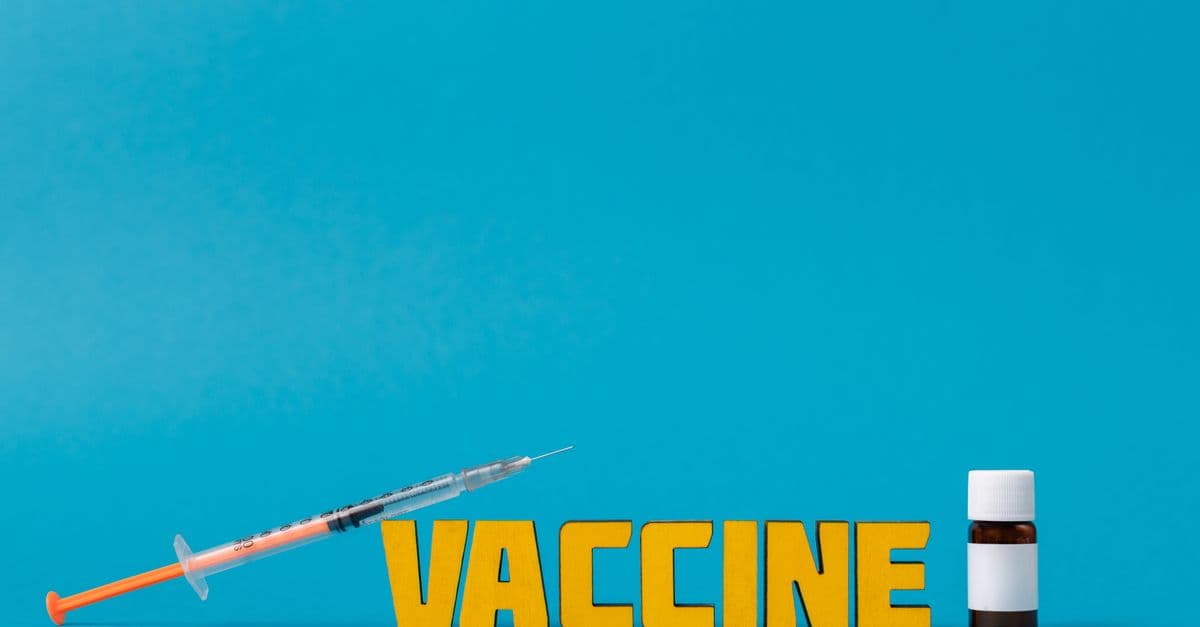
Photo: Thirdman / Pexels
Vaccine safety is among the most heavily studied questions in modern medicine. Regulators like the FDA and the World Health Organization track billions of doses across dozens of monitoring systems, and independent scientists have published hundreds of large cohort studies testing whether specific vaccines cause specific harms. The answer, replicated across countries, decades, and research teams, is that licensed vaccines carry real but rare and well-characterized risks that are dramatically smaller than the risks of the diseases they prevent.
Thought experiment framing. This article treats "what if vaccines were actually unsafe" as a starting question and then walks through the actual evidence, not a hypothetical answer. Nothing below should be read as individual medical advice; talk to a clinician about your own vaccination decisions.
That framing matters because the honest answer to "are vaccines safe" is not a slogan. It is a body of evidence built from clinical trials, post-market surveillance databases, and some genuinely embarrassing regulatory failures that the system caught and corrected. This piece walks through how that evidence is built, what it actually shows, where the real risks lie, and why some of the most viral vaccine-harm claims collapsed under scrutiny.
Key takeaways
- Vaccines go through preclinical testing, three phases of human trials, independent regulatory review, and years of post-market surveillance before and after approval.
- Serious adverse events are rare, typically in the range of one in tens of thousands to one in millions of doses, and are actively tracked.
- The MMR-autism claim originated from a fraudulent, later-retracted 1998 paper and has been contradicted by studies covering millions of children.
- The diseases vaccines prevent — measles, polio, diphtheria, pertussis — cause death and permanent disability at rates that dwarf vaccine risks.
- The surveillance system has caught real problems (1976 swine flu vaccine, RotaShield) and pulled products from the market, which is evidence the system works, not evidence vaccines are unmonitored.
How vaccines are actually tested
Vaccine development is not a single test — it's a multi-year sequence of increasingly large human trials, each designed to catch a different category of problem. The COVID-19 mRNA vaccines compressed the calendar by running phases in parallel and using emergency manufacturing capacity, but they did not skip any phase.
Preclinical research
Before any vaccine reaches a human volunteer, it is tested in cell cultures and animal models. This stage establishes the basic biology: does the vaccine trigger the intended immune response, and does it cause obvious toxicity at the doses being considered? Only candidates that clear this bar move forward.
Phase 1 trials
Phase 1 enrolls a small group, typically 20 to 100 healthy adult volunteers. The primary goal is safety, not efficacy: researchers are looking for immediate adverse reactions and trying to identify a dose that produces an immune response without unacceptable side effects.
Phase 2 trials
Phase 2 expands to hundreds of participants, often across multiple sites and age groups. Here, researchers refine dosing, watch for less common side effects that a 100-person trial would miss by chance, and start confirming that the vaccine reliably produces the intended immune response (measured through antibody levels or T-cell activity).
Phase 3 trials
Phase 3 is the large-scale test: tens of thousands of volunteers, usually randomized against a placebo or an existing vaccine. This is the stage large enough to detect side effects occurring in roughly 1 in 1,000 to 1 in 10,000 people, and it's where efficacy against real-world infection gets measured directly.
Independent regulatory review
After a manufacturer submits trial data, agencies such as the FDA, the European Medicines Agency, and the UK's MHRA conduct their own independent statistical review. These reviewers are government or agency scientists, not the vaccine's developers, and they can request additional data, apply extra safety monitoring conditions, or decline approval outright.
Post-market surveillance
Once a vaccine is authorized, monitoring continues indefinitely. In the United States this includes the Vaccine Adverse Event Reporting System (VAERS), co-managed by the CDC and FDA, plus the Vaccine Safety Datalink, a network of large healthcare systems that lets researchers run active, hypothesis-driven safety studies on millions of vaccinated patients. The UK runs an equivalent system called the Yellow Card scheme. Rare side effects — the kind that show up in only 1 in 100,000 or 1 in a million doses — often only become statistically visible at this population scale, well after a vaccine reaches the general public.
Put together, this pipeline is more rigorous, on average, than the testing most prescription drugs undergo, because vaccines are typically given to enormous, healthy populations rather than to patients who already have the condition a drug treats. A statistically rare side effect matters more when tens of millions of otherwise-healthy people are receiving the product.
What "side effects" actually means
Vaccine reactions fall into three broad tiers, and confusing them is where a lot of public fear comes from. A sore arm and a rare neurological event are not the same category of risk, even though both technically count as "adverse events."
Common side effects (roughly 1 in 1 to 1 in 100 doses)
Sore arm at the injection site, mild fever, fatigue, and muscle aches lasting one to three days are the most frequently reported reactions. These reflect the immune system actively responding to the vaccine antigen — in most cases they are a sign the immune response is being built, not a malfunction.
Uncommon side effects (roughly 1 in 100 to 1 in 1,000 doses)
More noticeable but still self-limited reactions: moderate fever, headache, more pronounced body aches, or swelling at the injection site that lasts a few days longer than usual.
Rare serious adverse events (roughly 1 in 100,000 to 1 in millions of doses)
This is the category where legitimate safety concerns live, and where regulators focus their surveillance resources.
| Adverse event | Approximate rate | Vaccine(s) associated | Typical course |
|---|---|---|---|
| Anaphylaxis | About 1 in 1 million doses | Various | Occurs within minutes; treatable with epinephrine, which vaccination sites stock |
| Myocarditis/pericarditis | About 40.6 per 1 million second doses in males 12–29; roughly 12.6 per million across ages 12–39 | mRNA COVID-19 vaccines | Mostly mild, typically resolves within days to weeks (CDC MMWR) |
| Guillain-Barré Syndrome (GBS) | About 1 additional case per 100,000 doses in the 1976 swine flu campaign; far lower for most modern vaccines | Historically linked to the 1976 swine flu vaccine; occasionally flagged for influenza vaccines | Usually reversible paralysis; rare fatalities |
| Intussusception (bowel obstruction in infants) | 20–30 times the baseline expected rate after RotaShield's first dose | RotaShield rotavirus vaccine (withdrawn 1999) | Serious; required surgical or manual correction in some cases |
Table: Rare serious adverse events tracked in vaccine safety systems. Rates are approximate and drawn from CDC and peer-reviewed surveillance data cited throughout this article.
For context, the diseases these vaccines prevent cause complications and death at rates that are often one, two, or three orders of magnitude higher than the vaccine risks. Measles alone kills an estimated one to three children per 1,000 infected in developed-country settings, and causes encephalitis (brain swelling) in roughly 1 in 1,000 cases, according to the CDC.
The MMR-autism claim, and why it collapsed
If there is one myth responsible for more vaccine hesitancy than any other, it's the claim that the combined measles-mumps-rubella (MMR) vaccine causes autism. Understanding exactly how this claim originated — and how thoroughly it has been re-tested and rejected — is a useful case study in how scientific fraud gets caught.
What Andrew Wakefield claimed
In 1998, gastroenterologist Andrew Wakefield and co-authors published a paper in The Lancet proposing a link between the MMR vaccine, intestinal inflammation, and autism, based on a case series of 12 children.
What was actually true
Subsequent investigative reporting and formal inquiries found the following:
- Twelve patients is far too small a sample to establish any causal relationship, and the study had no control group.
- Journalist Brian Deer's investigation found that Wakefield had altered patient case histories and misrepresented clinical findings to support his hypothesis.
- Wakefield had an undisclosed financial conflict of interest: he was being paid by a law firm preparing litigation against vaccine manufacturers, and he had also filed a patent for a competing single measles vaccine.
- The Lancet formally retracted the paper in 2010, and the UK General Medical Council found Wakefield guilty of serious professional misconduct, striking him from the medical register.
What large, independent studies actually show
The Wakefield claim has since been tested directly, at a scale the original paper never approached.
A 2019 nationwide Danish cohort study published in the Annals of Internal Medicine followed 657,461 children born in Denmark from 1999 through 2010, tracking them through 2013. The study found MMR vaccination did not increase the risk of autism, did not trigger autism in children considered at higher risk, and was not associated with any clustering of autism diagnoses after vaccination (Hviid et al., 2019).
Earlier meta-analyses pooling data across multiple countries — including cohort and case-control studies covering more than a million children combined — reached the same conclusion: no statistical association between MMR vaccination and autism spectrum diagnoses. The myth's persistence has more to do with the emotional power of a personal story and the retracted paper's decade of media circulation than with any surviving scientific support.
What about other common claims?
Aluminum adjuvants
Some vaccines contain small amounts of aluminum salts as an adjuvant — an ingredient that enhances and prolongs the immune response to the vaccine antigen so a stronger, longer-lasting immunity develops. Aluminum adjuvants have been used in vaccines for close to a century, and the quantities involved are small compared to routine dietary aluminum exposure from food and water.
Mercury (thimerosal)
Thimerosal is a mercury-containing preservative that was widely used in multi-dose vaccine vials starting in the 1930s. As part of a comprehensive 1999 review under the FDA Modernization Act, the FDA found no evidence of harm from thimerosal as used in vaccines, aside from occasional local hypersensitivity reactions, but recommended it be phased out as a precaution (FDA). Since 2001, thimerosal has been removed from, or reduced to trace amounts in, all vaccines routinely recommended for children under six in the US, with the exception of some multi-dose flu vaccines. The mercury compound it breaks down into, ethylmercury, clears from the body much faster than methylmercury, the form found in seafood that accumulates and drives most mercury-exposure concerns.
"Vaccines overwhelm the immune system"
An infant's immune system encounters and responds to thousands of distinct microbial antigens every day, from food, from the surfaces they touch, and from the bacteria that colonize their skin and gut. The additional antigenic load from a full childhood vaccination schedule is a small fraction of what the immune system already handles routinely. There is no evidence that spacing out or delaying vaccines reduces immune burden in any meaningful way — it simply extends the window in which a child is unprotected.
"Natural immunity is better"
Immunity gained from surviving an infection is real, and in some cases it is broader or longer-lasting than vaccine-induced immunity. But acquiring it means going through the disease itself, including its full range of complications. Measles, again, kills one to three children per 1,000 cases and can cause permanent brain damage; vaccination confers protection without that exposure.
COVID-19 vaccines and microchips
This claim has no basis in the physical construction of a vaccine dose or the needles used to administer it — vaccination needles are far too narrow to pass any device capable of transmitting data, and vaccine vials undergo sterility and composition testing that would detect foreign hardware. No credible investigation has found evidence supporting this claim.
How vaccines compare to the diseases they prevent
| Disease | Pre-vaccine impact (US, annual estimate) | Recent US impact | Source |
|---|---|---|---|
| Smallpox | Historically endemic; declared eradicated globally in 1980 | Zero cases worldwide | WHO |
| Polio | Over 15,000 paralytic cases per year at peak (1950s) | Zero wild-virus cases in the US since 1979 | CDC |
| Measles | About 500,000 reported cases and roughly 400–500 deaths annually pre-vaccine | Typically under a few hundred cases in non-outbreak years | CDC |
| Diphtheria | Tens of thousands of cases annually pre-vaccine | Fewer than 5 cases in most recent years | CDC |
| Pertussis (whooping cough) | Around 200,000 cases annually pre-vaccine | Tens of thousands of cases in recent resurgence years | CDC |
| Rubella | About 12.5 million cases in the 1964–65 US epidemic, with thousands of birth defects | Fewer than 10 cases annually | CDC |
Table: Disease burden before and after widespread vaccination in the United States. Figures are approximate historical estimates compiled from CDC surveillance summaries.
Globally, the WHO estimates that immunization currently prevents between 3.5 and 5 million deaths every year from diseases including diphtheria, tetanus, pertussis, influenza, and measles (WHO). That scale of prevented mortality is the baseline against which any vaccine risk has to be weighed.
Doing the actual risk-benefit math
Regulators do not approve or continue recommending a vaccine on faith. Every authorized vaccine has an explicit risk-benefit calculation behind it, revisited as new safety data accumulates.
Take the mRNA COVID-19 vaccines and myocarditis as a concrete example. Reporting rates for vaccine-associated myocarditis in young males peaked around 40 to 63 cases per million second doses in the most affected age groups, and the large majority of those cases were mild, resolving within days to weeks with supportive care (CDC MMWR, June 2021). Severe COVID-19 illness itself, and COVID-associated myocarditis from the infection rather than the vaccine, occurred at meaningfully higher rates during the periods studied, which is why the CDC's Advisory Committee on Immunization Practices concluded the benefits continued to outweigh the risks for the recommended age groups.
Or take MMR and measles encephalitis: the vaccine's rate of severe adverse events runs below 1 in a million, against a roughly 1-in-1,000 risk of encephalitis from natural measles infection. For nearly every vaccine on the routine schedule, this pattern holds — the disease risk is one to three orders of magnitude larger than the vaccine risk.
Situations where vaccination decisions get individualized
Population-level safety data doesn't erase the need for individual clinical judgment. A small number of situations call for a case-by-case conversation with a physician rather than a blanket recommendation:
- Severe allergy to a specific vaccine component, such as a documented anaphylactic reaction to a prior dose or a known ingredient allergy — genuinely rare, but real.
- Specific immune disorders, particularly conditions involving severe immunosuppression, where live-attenuated vaccines may need to be avoided or timed differently.
- Pregnancy and treatment timing, where certain vaccines are recommended and others are deferred based on gestational stage or concurrent treatments like chemotherapy.
These are individualized medical decisions, not evidence against population-level vaccine safety. The National Vaccine Injury Compensation Program (VICP), a federal no-fault system created in 1986, exists precisely to compensate the rare individuals who are harmed, without requiring them to prove fault in court — its existence is a sign the system accounts for genuine risk, not evidence that risk is being hidden.
The role — and limits — of VAERS
The Vaccine Adverse Event Reporting System is one of the most frequently misused pieces of evidence in vaccine-safety debates, usually by citing raw report counts as if they were confirmed harms. Understanding what VAERS actually is clarifies why that's a misuse.
VAERS is a passive reporting system: anyone — a patient, a family member, a nurse, a physician, or a vaccine manufacturer — can file a report describing any health event that occurred after a vaccination, whether or not there's reason to think the vaccine caused it (CDC). That openness is a deliberate design choice: it makes VAERS extremely sensitive to unusual patterns, which is exactly what you want in an early-warning system. But it also means a report by itself establishes nothing about causation. A broken leg reported the week after a flu shot is not evidence the flu shot caused it.
What VAERS is good at is generating signals for follow-up: an unexpected spike in a specific reported event after a specific vaccine triggers deeper investigation using the active surveillance systems described earlier — like the Vaccine Safety Datalink — which can compare vaccinated and unvaccinated populations directly. This two-step process (passive signal, active confirmation) is exactly how the intussusception risk from RotaShield and the myocarditis signal from mRNA COVID vaccines were both identified and then confirmed.
How vaccine safety has changed over time
Early vaccines carried risks that would not clear modern regulatory bars. The original smallpox vaccination technique, developed from Edward Jenner's cowpox observations in the 1790s, used live biological material with far less standardization than anything used today, and still it produced one of medicine's largest population-level wins by eliminating a disease that once killed an estimated 30% of those infected.
Since then, several structural changes have reduced vaccine risk substantially:
- Purified and synthetic antigens have replaced many older, less-refined biological preparations, reducing the load of extraneous material that could trigger unwanted reactions.
- Recombinant DNA technology allows manufacturers to produce a single, specific viral protein instead of using whole inactivated organisms, narrowing the immune target.
- mRNA platforms, used for the first time at scale during COVID-19, eliminate the need to grow or handle live virus in production entirely, instructing cells to produce a single viral protein instead.
- Manufacturing quality control and regulatory review standards have tightened substantially compared to even 30 years ago, with more consistent international standards and more extensive post-market monitoring infrastructure.
A vaccine approved today goes through more independent scrutiny, at a larger trial scale, with better post-market tracking, than the equivalent vaccine would have faced 50 years ago.
Frequently asked questions
Q: Are there vaccines that turned out to be unsafe and got pulled from the market? A: Yes, and these cases are often cited as evidence the surveillance system works rather than fails. The 1976 swine flu vaccine was linked to an estimated 1 additional case of Guillain-Barré Syndrome per 100,000 doses, and the vaccination program was halted after about 450 cases were identified. RotaShield, an early rotavirus vaccine, was voluntarily withdrawn from the US market in 1999 after surveillance found it increased the risk of intussusception (a bowel obstruction in infants) 20 to 30 times over baseline in the weeks after the first dose. Both cases show real problems being detected and acted on within months, not covered up.
Q: Why do some vaccines require booster doses? A: Immune memory for some pathogens wanes over months or years, particularly for vaccines that don't use live-attenuated virus, which tends to produce more durable immunity than inactivated or subunit vaccines. Boosters refresh antibody levels and immune memory cells. This is standard immunology, not a sign the original vaccine failed.
Q: Is it safer to space out or delay the standard vaccine schedule? A: The standard childhood schedule is timed around when a child's immune system can mount an effective response and when their risk of exposure to a given disease rises, based on decades of immunological and epidemiological data. Delaying vaccines extends the window during which a child is vulnerable to diseases like pertussis or measles, without any demonstrated safety benefit. Pediatricians can discuss legitimate medical reasons to adjust timing for a specific child.
Q: Do vaccines contain "toxins" at dangerous levels? A: Vaccine ingredients like formaldehyde (used briefly in production to inactivate viruses or toxins) and aluminum salts are present at concentrations far below what a person is routinely exposed to through food, water, and normal metabolism, and the body clears them through the same pathways it clears these substances from other sources. The word "toxin" in this context relies on ignoring dose, and toxicology's foundational principle is that the dose makes the poison.
Q: Could pharmaceutical companies or regulators be hiding widespread vaccine harm? A: Vaccines are developed and sold by competing companies, reviewed by independent regulatory agencies in dozens of countries with different governments and legal systems, and studied by academic researchers with no financial stake in any single manufacturer. A population-scale harm would need to be consistently missed or concealed across all of these independent, often competing groups simultaneously, which is not how any of the documented safety failures (like RotaShield or the 1976 GBS signal) actually played out — those were caught within a single monitoring cycle.
Q: How quickly can a new safety problem be detected once a vaccine is in wide use? A: It depends on how rare the event is and how distinctive it is from background rates. The RotaShield intussusception signal was detected within roughly a year of the vaccine's 1998 launch, after only a few dozen cases were reported through passive surveillance and then confirmed with active studies. Rarer or less distinctive events can take longer to separate from background noise, which is why long-term post-market surveillance never fully stops for any vaccine.
Q: Does natural infection ever provide better protection than vaccination? A: For some diseases, infection-acquired immunity can be broader or somewhat longer-lasting than vaccine-induced immunity; for others, vaccine-induced immunity is comparable or better and more consistent across individuals. The comparison matters less than the fact that acquiring natural immunity requires surviving the disease's actual complication risk, which for something like measles includes death in an estimated 1 to 3 per 1,000 cases and encephalitis in about 1 per 1,000 cases.
Q: Why did COVID-19 vaccines get developed so much faster than typical vaccines? A: Development timelines were compressed by running trial phases in parallel rather than sequentially, by pre-manufacturing doses at financial risk before approval was granted, and by unprecedented global funding and regulatory prioritization. None of the individual safety-testing phases — preclinical, Phase 1, Phase 2, Phase 3, or post-market surveillance — were skipped; the calendar time between them was compressed.
Q: What happens if someone believes they were harmed by a vaccine? A: In the United States, the National Vaccine Injury Compensation Program provides a no-fault legal pathway for people who believe they experienced a genuine vaccine injury to receive compensation, without needing to prove the manufacturer was negligent. It uses a defined injury table for certain well-established, time-limited reactions and a case-by-case causation review process for other claims.
The takeaway
Vaccine safety is not a matter of trusting an institution's word — it's a conclusion built from a specific, checkable evidence trail: multi-phase clinical trials, independent regulatory review, and post-market surveillance systems large enough to detect problems affecting one in a million people. That system has real teeth, having pulled products from the market within a year of detecting genuine harm. The MMR-autism claim, by contrast, traces back to a single fraudulent paper that could never be replicated at scale, and has since been directly contradicted by studies covering more than a million children. None of this means every vaccine is risk-free for every person in every circumstance — it means the risks are known, quantified, and consistently smaller than the diseases the vaccines prevent.
Read next:
Follow new articles
Add SciHub101 to your feed reader to see new science and technology stories.
About the Author
SciHub101 is an independent science and technology publication founded and edited by Buğra Sözeri, a software engineer and app developer based in Türkiye. AI tools assist with drafting and research. Source documentation in the existing archive is uneven, and articles are being reviewed and corrected. The Editorial Team byline identifies editorial responsibility; it does not certify specialist or independent human review. Where we compare products, anything built by our own team is labelled as such — see the editorial guidelines and About page for how corrections and disclosures work.
Related Articles
What If the Earth Were Actually Flat? The Science That Proves It Isn't
Flat Earth claims are easy to test — just look around. Here are nine independent lines of evidence anyone can verify, and why every flat-Earth model fails physics.
What If Earth Had Two Moons? The Science of a Twin-Moon World
A second moon would change tides, eclipses, calendars, and possibly life itself. Here's exactly what would happen — based on real orbital physics — if we suddenly had two moons.
History of Vaccines — From Jenner to mRNA
From variolation and Jenner's cowpox to Pasteur, polio, smallpox eradication, and mRNA — the full history of vaccines and modern frontiers.
H5N1 Bird Flu Pandemic Risk: 2026 Update
Where H5N1 stands in October 2026: 72 U.S. human cases, dairy cattle spread, what would signal pandemic risk, and what CDC says about milk and vaccines.

How Vaccines Were Invented: The History That Saved Hundreds of Millions of Lives
From smallpox to COVID-19, vaccines are humanity's most powerful medical technology. Here's how we discovered them.

How Vaccines Work — and Why Some People Refuse Them
Vaccines taught the immune system to beat smallpox, polio, and measles, and a 2024 Lancet study estimated they averted 154 million deaths in 50 years. Yet hesitancy persists. Here is the immunology, the safety evidence, and the psychology behind refusal.