AI & Antibiotic Discovery: Fighting Drug-Resistant Bacteria
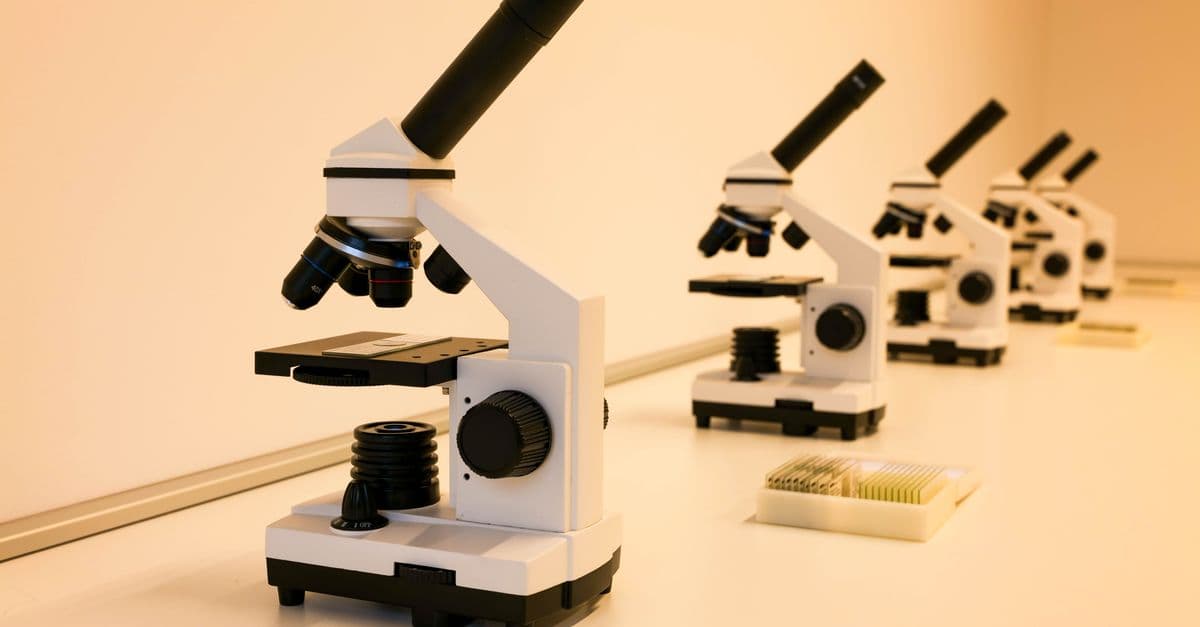
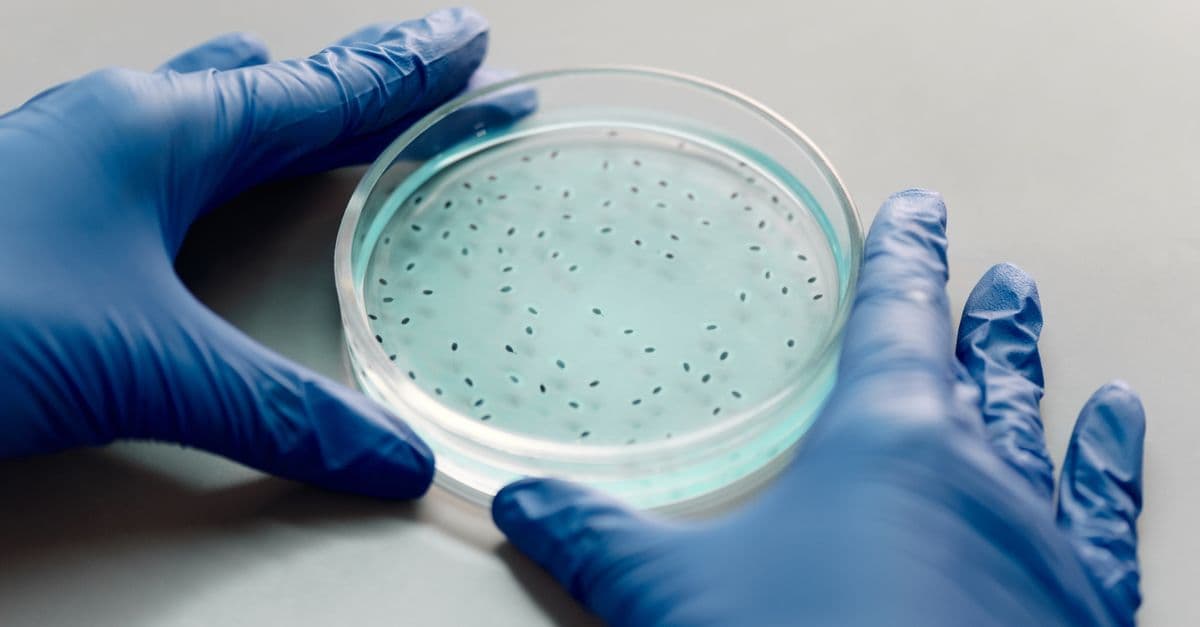
Photo: Vladimir Srajber / Pexels
Antimicrobial resistance was directly responsible for an estimated 1.27 million deaths worldwide in 2019, and it was a contributing factor in nearly 5 million more, according to the largest global analysis of the problem to date, published in The Lancet in 2022 (Murray et al., 2022). A 2024 follow-up from the same research group, the Global Research on Antimicrobial Resistance (GRAM) Project, forecasts that resistant bacterial infections will kill 39 million more people between 2025 and 2050, roughly three deaths every minute for the next quarter century (GBD 2021 Antimicrobial Resistance Collaborators, The Lancet, 2024). Meanwhile the traditional pipeline for finding new antibiotics has slowed to a crawl. This piece explains, mechanism by mechanism, how machine learning is being used to search chemical space faster than any lab bench ever could, and where that approach still runs into hard biological limits.
Educational content, not medical advice. Talk to your doctor before changing any medication, treatment, or routine. Information here reflects current published research but every person's situation differs.
Key Takeaways
- Antimicrobial resistance killed an estimated 1.27 million people in 2019 and is forecast to kill 39 million more by 2050 (Lancet GRAM Project, 2024).
- Graph neural networks can screen tens of millions of candidate molecules in silico, then rank them by predicted antibacterial activity, compressing years of bench screening into weeks.
- The best-documented public success is halicin, discovered by an MIT-led team in 2020 using a message-passing neural network trained on known antibiotics (Stokes et al., Cell, 2020).
- A related 2023 study used the same general approach to find abaucin, a narrow-spectrum compound active against Acinetobacter baumannii (Liu et al., Nature Chemical Biology, 2023).
- AI shortens the discovery phase of drug development. It does not shorten the multi-year safety and efficacy testing that regulators still require before a compound reaches a patient.
The problem: bacteria evolve faster than we discover new drugs
Bacteria acquire resistance to antibiotics through three main routes. Random mutations in their DNA can produce enzymes, like the beta-lactamases that break down penicillin-class drugs, that neutralize a compound before it can do damage. Bacteria also swap resistance genes directly with each other through horizontal gene transfer, a process that spreads a single resistance trait across unrelated species far faster than mutation alone could. And many infections hide inside biofilms, dense, self-secreted matrices that physically block antibiotics from reaching the bacteria at all.
The traditional discovery pipeline was not built for this pace. It typically starts with screening tens of thousands of natural compounds pulled from soil bacteria and fungi, the same basic method that found penicillin in 1928. A handful show promising activity. Those move into animal safety and efficacy testing for two to three years, then human clinical trials for another five to seven, then regulatory review. The whole process commonly runs ten to fifteen years and costs on the order of a billion dollars or more per approved drug, a figure widely cited across pharmaceutical economics literature, though exact figures vary by drug class and company.
The mismatch is brutal. By the time a promising candidate finishes years of testing, the bacteria it targets have often already been exposed to related compounds and begun adapting. Superbugs like MRSA (methicillin-resistant Staphylococcus aureus), VRE (vancomycin-resistant Enterococcus), and carbapenem-resistant Acinetobacter baumannii have become steadily harder to treat as a result. If you want the full biological picture of how resistance genes actually spread between bacteria in the first place, How Antibiotic Resistance Spreads covers the mechanism in depth.
How machine learning actually finds new antibiotics
Graph neural networks read molecules the way chemists do
Older computational chemistry tools represented molecules as strings of text (SMILES notation) or fixed-length numerical fingerprints. Both approaches throw away structural information: a fingerprint can't easily tell you that swapping one atom for its neighbor changes how a molecule folds. A graph neural network (GNN) fixes this by representing a molecule the way a chemist actually thinks about it, as a graph, with atoms as nodes and chemical bonds as edges connecting them.
Think of it like the difference between describing a building by its street address versus handing someone the actual blueprint. The address gets you to the right block. The blueprint tells you which rooms connect to which, which is the information you actually need to predict how the building behaves. A GNN passes "messages" between connected atoms across several rounds, so each atom's representation gradually incorporates information about its neighbors, then its neighbors' neighbors, building up a picture of larger substructures. By the final round, the whole molecule is compressed into one vector that the model can use to predict a property, in this case, "does this kill bacteria."
The halicin case study, in detail
In 2020, a team led by Jonathan Stokes at MIT trained a directed message-passing neural network on a training set of roughly 2,500 molecules with known antibacterial activity or inactivity data (Stokes et al., Cell, 2020). Rather than trying to hand-engineer which chemical features mattered, the researchers let the network learn the relationship between molecular structure and antibacterial activity directly from data.
They then pointed the trained model at the Broad Institute's Drug Repurposing Hub, a library of roughly 6,000 compounds already in various stages of human safety testing or approved for other conditions, and separately at a much larger set of over 100 million commercially available molecules from the ZINC15 database. The model ranked every one of them by predicted activity against Escherichia coli, while also screening out compounds that structurally resembled known antibiotics (the researchers specifically wanted something new). One candidate stood out: a molecule originally investigated as a possible diabetes drug that had never advanced past preclinical testing. The team named it halicin, after HAL 9000 from 2001: A Space Odyssey.
In lab and mouse testing, halicin killed a broad range of pathogens, including Clostridioides difficile, Mycobacterium tuberculosis, and pan-resistant strains of Acinetobacter baumannii, one of the World Health Organization's top-priority drug-resistant pathogens (Stokes et al., 2020). From a follow-up screen of over 10 million molecules, the same model flagged 23 candidates for lab testing, and eight of them turned out to have real antibacterial activity against structurally novel chemical scaffolds, a hit rate far above what random compound screening typically achieves. Halicin appears to work by disrupting a bacterium's ability to maintain the electrochemical gradient across its cell membrane, a mechanism distinct from most existing antibiotic classes, which is part of why resistant bacteria hadn't already evolved defenses against it.
Abaucin: a narrower, more targeted follow-up
Three years later, a team from McMaster University and MIT published a related but more targeted effort. Rather than searching for broad-spectrum activity, they trained a neural network specifically to predict compounds that would inhibit the growth of Acinetobacter baumannii, starting from an experimental screen of about 7,500 molecules (Liu et al., Nature Chemical Biology, 2023). The model's top prediction, which the researchers named abaucin, turned out to have narrow-spectrum activity: it kills A. baumannii specifically, while leaving other bacterial species largely untouched.
That narrowness is a feature, not a limitation. A broad-spectrum antibiotic wipes out beneficial bacteria along with the pathogen, and it also gives many more bacterial species the opportunity to evolve resistance to it simultaneously. A narrow-spectrum compound like abaucin exerts selection pressure on only one species, which should, in theory, slow the overall spread of resistance genes across a hospital's microbial population. Follow-up work found that abaucin disrupts a lipoprotein trafficking pathway in the bacterium's cell envelope involving a protein called LolE, and it suppressed A. baumannii infection in a mouse wound model (Liu et al., 2023).
Virtual screening at a scale no lab can match
The core economic argument for AI-assisted discovery is throughput. A well-resourced academic or industry lab can physically test on the order of tens of thousands of compounds a year using automated high-throughput screening robots. A trained model, by contrast, can score tens of millions of candidate molecules computationally in a matter of days, because scoring a molecule against a trained model is just a fast forward pass through a neural network, not a wet-lab assay.
The general workflow looks like this:
| Stage | What happens | Why it matters |
|---|---|---|
| Featurization | Each candidate molecule is converted into a graph or numerical descriptor (molecular weight, lipophilicity, hydrogen-bond donors, and so on) | Gives the model something structured to learn from |
| In silico ranking | The trained model scores every candidate for predicted antibacterial activity | Replaces manual bench testing for the vast majority of candidates |
| Filtering | Compounds structurally similar to existing antibiotics, or flagged as likely toxic or unstable, are discarded | Focuses lab resources on genuinely novel, safer leads |
| Wet-lab validation | Only the top-ranked handful, typically dozens, not millions, are physically synthesized and tested | This is still where every real discovery is confirmed |
That last row matters. No regulator, and no responsible scientist, treats a model's prediction as proof that a compound works. The Stokes team validated 23 model predictions in the lab before reporting eight genuine hits. The model's real contribution was narrowing 10 million candidates down to a short list a human research team could actually test, not replacing the testing itself.
Resistance prediction: forecasting the pathogen's next move
A second, less publicized application of machine learning in this space is predicting resistance before it spreads widely, rather than only discovering new drugs after resistance has already made old ones useless. Researchers have trained models on large collections of bacterial genome sequences paired with laboratory antibiotic susceptibility data, looking for genetic signatures that tend to precede the emergence of resistance to a specific drug class.
This is conceptually similar to how epidemiologists use genomic surveillance to track the spread of viral variants, applied instead to bacterial resistance genes circulating through hospital wards or community populations. If a model can flag that a resistance-associated genetic marker is rising in frequency in a given region's E. coli isolates, clinicians can shift prescribing patterns toward alternative drug classes before that resistance becomes clinically dominant, rather than reacting after treatment failures have already piled up. The strength of this approach depends heavily on how much high-quality, geographically representative genomic surveillance data feeds into the model, which varies a great deal between well-resourced health systems and lower-income regions where AMR mortality is often highest.
How does AI help against biofilms specifically?
Biofilms are far harder to penetrate than free-floating (planktonic) bacteria because the bacterial cells encase themselves in a self-produced matrix of sugars, proteins, and DNA. Researchers use physics-informed simulations, and increasingly machine learning models trained on diffusion data, to predict which candidate compounds are small or charged in the right way to actually penetrate that matrix, rather than being screened purely for activity against free-floating cells in a test tube, which often overstates real-world effectiveness.
Where AlphaFold fits into the picture
A separate but related thread of AI-driven biology is protein structure prediction. DeepMind's AlphaFold system, which effectively solved a decades-old challenge in predicting a protein's three-dimensional shape from its amino acid sequence, won the CASP14 structure-prediction competition in 2020 with near-experimental accuracy. AlphaFold3, released in 2024 through a partnership between DeepMind and Isomorphic Labs, extended this to predicting how proteins interact with other molecules, including drug-like compounds (Isomorphic Labs / DeepMind, AlphaFold3, 2024). Machine learning is also being applied to biology at the level of individual cells, as in single-cell AI and cell-state prediction.
For antibiotic research specifically, this matters because many resistance mechanisms are literally structural. A beta-lactamase enzyme breaks down penicillin because of its precise three-dimensional shape. Researchers at the University of Colorado Boulder and elsewhere have used AlphaFold-predicted structures of resistance-associated bacterial proteins, combined with molecular docking simulations, to identify compounds that might bind to and block those proteins, an approach validated across hundreds of E. coli proteins paired with known antibacterial compounds in benchmarking studies (PMC9446081, 2022). If a graph neural network like the one that found halicin tells you which molecule might work, a tool like AlphaFold increasingly helps explain why, by revealing the physical target the molecule is likely binding.
Real-world programs applying this today
MIT and the Antibiotics-AI Project. The Stokes and Liu studies described above were funded in part through Phare Bio and the Antibiotics-AI Project, a nonprofit effort explicitly built to move AI-discovered candidates like halicin and abaucin through preclinical development, since university labs typically lack the resources to carry a compound through to clinical trials on their own.
Atomwise. A commercial AI drug-discovery company that applies deep learning models to structure-based virtual screening, primarily for oncology and antiviral targets but with published antibacterial screening work as well, partnering with pharmaceutical companies to shortlist compounds for wet-lab testing.
Insilico Medicine and similar generative-chemistry companies. Rather than only ranking existing compound libraries, these firms use generative models to design novel molecular structures from scratch, then filter them for drug-like properties before synthesis, a complementary approach to the ranking-based methods used in the halicin and abaucin studies.
Academic genomic surveillance networks. Public health bodies including the CDC's Antibiotic Resistance Laboratory Network and equivalent programs in Europe increasingly feed whole-genome sequencing data from clinical isolates into resistance-prediction pipelines, though the maturity and machine-learning sophistication of these systems varies widely by country and funding level.
Common misconceptions about AI-discovered antibiotics
"AI designs antibiotics from nothing." In the halicin and abaucin studies, the model's job was to rank and screen existing or previously synthesized compound libraries, not to invent entirely new molecules from a blank page, though generative chemistry approaches that do design new structures are an active and growing area of research. Confusing screening with de novo design overstates how autonomous the process currently is.
"AI replaces lab testing." It doesn't. Every genuine AI-assisted discovery described in this article, halicin included, still went through wet-lab synthesis, in vitro bacterial killing assays, toxicity testing against human cell lines, and animal infection models before anyone called it a real discovery. The model's contribution was narrowing millions of candidates down to a short list humans could actually afford to test.
"AI antibiotics will reach patients faster than normal drugs." Discovery is only the front end of drug development. Halicin and abaucin, discovered in 2020 and 2023 respectively, were both still in preclinical development as of their original publications, meaning years of additional safety and efficacy testing, and eventual human clinical trials, stand between them and clinical availability. AI has compressed the discovery timeline dramatically. It has not compressed the regulatory timeline at all, because that timeline exists to protect patients, not to slow down chemistry.
"If AI can predict resistance, we can just design around it forever." Resistance prediction models are trained on the resistance patterns we've already observed. Bacteria under strong selective pressure can evolve resistance mechanisms that no training dataset has seen before, which is a known limitation of any model trained on historical data applied to a constantly evolving biological system.
What people get wrong about the scale of the resistance problem
It's worth being precise about the mortality numbers, because they get garbled in casual reporting. The 1.27 million figure from the 2022 Lancet study refers to deaths directly attributable to bacterial antimicrobial resistance in 2019, meaning cases where a resistant infection was the direct cause of death. A separate, larger figure, 4.95 million, refers to deaths in which a resistant infection was associated with the death but not necessarily the sole cause (Murray et al., 2022). Both numbers are real and both matter, but they answer different questions, and conflating them overstates or understates the crisis depending on which direction the error goes.
The 2024 follow-up study is a forecast, not a completed count: it models what will happen between 2025 and 2050 under current trends, and it also modeled what would happen under improved intervention scenarios, finding that better healthcare access and infection prevention could save an estimated 92 million lives over that same period (GBD 2021 AMR Collaborators, 2024). That detail tends to get dropped, which makes the problem sound purely inevitable when the same research explicitly frames it as substantially preventable.
What this means
Machine learning has genuinely compressed one specific, historically painful bottleneck in antibiotic development: sorting through millions of candidate molecules to find the handful worth testing in a lab. Halicin and abaucin are real, published, peer-reviewed proof that graph neural networks trained on existing antibiotic data can flag structurally novel compounds that a purely manual screening program would likely have missed. That is a genuine advance, not marketing.
What AI has not done, and cannot do on its own, is shorten the years of animal testing, toxicity screening, and human clinical trials that stand between a promising computational prediction and a drug in a pharmacy. It also has not solved the underlying evolutionary arms race: any new antibiotic, AI-discovered or not, will eventually face resistance if it's overused, which is why researchers pair discovery work with narrow-spectrum design and genomic surveillance rather than treating faster discovery as the whole solution. The realistic read on where this technology stands: it has made the search faster. It has not yet made the fight shorter.
Read next:
- How Antibiotic Resistance Spreads
- How the Immune System Recognizes Threats
- How Vaccines Train Memory B Cells
FAQ
Q: What was the first antibiotic discovered using AI?
A: Halicin, discovered by an MIT-led team in 2020 using a message-passing graph neural network trained on roughly 2,500 known antibacterial compounds. It showed activity against Clostridioides difficile, Mycobacterium tuberculosis, and pan-resistant Acinetobacter baumannii in lab and mouse testing (Stokes et al., Cell, 2020).
Q: How does a graph neural network "look" at a molecule?
A: It represents the molecule as a graph, atoms as nodes, bonds as edges, then passes information between connected atoms across several rounds so the model builds up a picture of larger chemical substructures, similar to how a chemist reads a structural diagram rather than a text formula.
Q: Does AI design new antibiotic molecules, or just rank existing ones?
A: In the best-documented cases (halicin, abaucin), the models ranked large libraries of existing or previously synthesized compounds by predicted antibacterial activity. Separate generative-chemistry approaches aim to design entirely new molecular structures, but that is a distinct and less mature application.
Q: How many people die from antibiotic-resistant infections each year?
A: An estimated 1.27 million deaths in 2019 were directly attributable to bacterial antimicrobial resistance, with resistant infections playing a contributing role in nearly 5 million deaths overall, according to the largest global analysis published in The Lancet (Murray et al., 2022).
Q: Is halicin available to patients yet?
A: No. As of its original publication, halicin was in preclinical development, meaning it still requires further safety testing and human clinical trials before regulatory approval. AI accelerated the discovery step, not the multi-year testing and approval process that follows.
Q: What makes abaucin different from a broad-spectrum antibiotic?
A: Abaucin has narrow-spectrum activity, meaning it targets Acinetobacter baumannii specifically rather than killing a wide range of bacterial species. Narrow-spectrum drugs are less likely to disrupt a patient's broader microbiome and, in principle, exert less selection pressure for resistance across unrelated bacterial species (Liu et al., Nature Chemical Biology, 2023).
Q: How does AlphaFold relate to antibiotic discovery?
A: AlphaFold predicts the three-dimensional structure of proteins from their amino acid sequence. Researchers use AlphaFold-predicted structures of bacterial resistance proteins, combined with molecular docking simulations, to identify compounds likely to bind and block those proteins, complementing activity-ranking models like the one that found halicin.
Q: Can AI predict which bacteria will become resistant next?
A: Models trained on bacterial genome sequences and susceptibility data can flag genetic markers associated with emerging resistance in surveilled populations, which can help guide prescribing decisions. Accuracy depends heavily on the quality and geographic coverage of the underlying surveillance data, and bacteria can still evolve resistance mechanisms no training dataset has previously observed.
Q: Will AI-discovered antibiotics eventually become useless too, like older drugs?
A: Very likely, over time, since resistance is a fundamental feature of bacterial evolution under selective pressure, not a flaw specific to any one drug class. The goal of pairing AI discovery with narrow-spectrum design and stewardship practices is to slow that process, not eliminate it entirely.
Sources
- Stokes, J. M., et al. (2020). "A Deep Learning Approach to Antibiotic Discovery." Cell, 180(4). https://www.cell.com/cell/fulltext/S0092-8674(20)30102-1
- Liu, G., et al. (2023). "Deep learning-guided discovery of an antibiotic targeting Acinetobacter baumannii." Nature Chemical Biology. https://www.nature.com/articles/s41589-023-01349-8
- Murray, C. J. L., et al. (2022). "Global burden of bacterial antimicrobial resistance in 2019: a systematic analysis." The Lancet, 399(10325). https://www.thelancet.com/journals/lancet/article/PIIS0140-6736(21)02724-0/fulltext
- GBD 2021 Antimicrobial Resistance Collaborators (2024). "Global burden of bacterial antimicrobial resistance 1990–2021: a systematic analysis with forecasts to 2050." The Lancet. https://www.thelancet.com/journals/lancet/article/PIIS0140-6736(24)01867-1/fulltext
- MIT News (2023). "Using AI, scientists find a drug that could combat drug-resistant infections." https://news.mit.edu/2023/using-ai-scientists-combat-drug-resistant-infections-0525
- Benchmarking AlphaFold-enabled molecular docking predictions for antibiotic discovery. PMC. https://www.ncbi.nlm.nih.gov/pmc/articles/PMC9446081/
- Exxact Corp (2024). "Protein Structure Prediction & Drug Discovery with AI." https://www.exxactcorp.com/blog/molecular-dynamics/protein-structure-prediction-drug-discovery-with-ai
Follow new articles
Add SciHub101 to your feed reader to see new science and technology stories.
About the Author
SciHub101 is an independent science and technology publication founded and edited by Buğra Sözeri, a software engineer and app developer based in Türkiye. AI tools assist with drafting and research. Source documentation in the existing archive is uneven, and articles are being reviewed and corrected. The Editorial Team byline identifies editorial responsibility; it does not certify specialist or independent human review. Where we compare products, anything built by our own team is labelled as such — see the editorial guidelines and About page for how corrections and disclosures work.
Related Articles
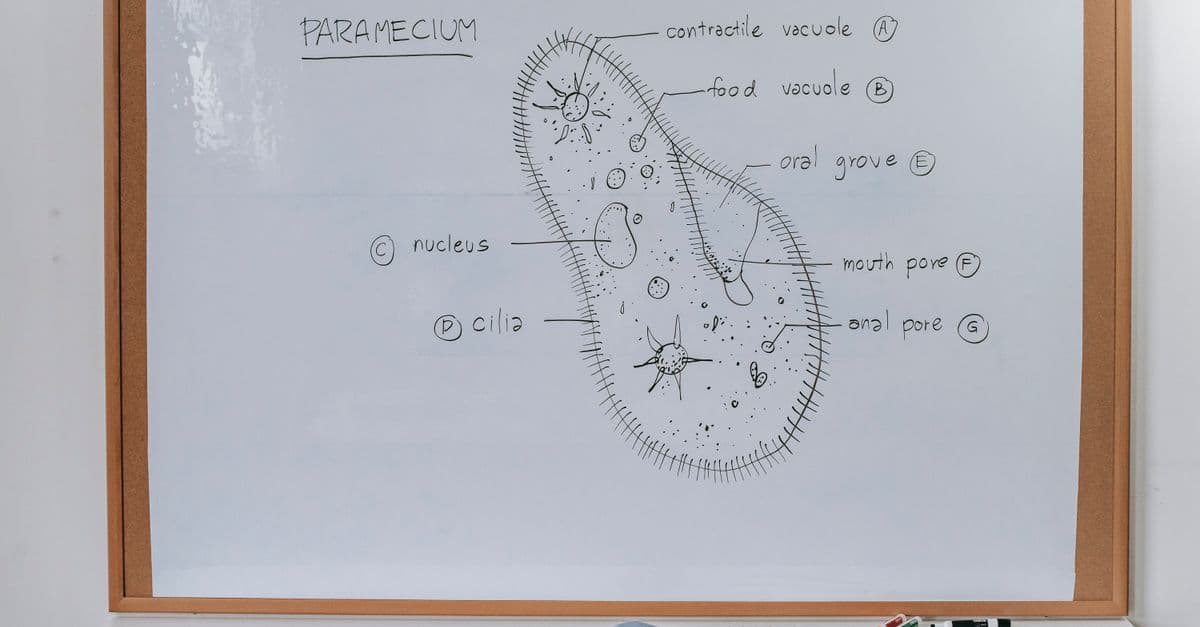
How Proteins Are Made: mRNA, Ribosomes, and the Translation Process
DNA is the blueprint, but proteins do the actual work of life. Here's how your cells read a genetic message and build the molecular machines that make you function.
AI-Designed DNA: How Neural Networks Build New Proteins
AI models like AlphaFold, RFdiffusion, and Evo now design proteins and DNA sequences that never existed in nature. Here's how they work and where they fall short.
Personalized Medicine & AI-Driven Genomics
How genetic data and machine learning guide drug choice, and what trials of cancer, warfarin, and antidepressant testing actually show.
Machine Learning in Drug Discovery: AI Finds Medicines
How neural networks accelerate drug discovery from years to months.
AlphaFold: How AI Solved Protein Folding
DeepMind's AlphaFold solved a 50-year biological mystery: predicting how proteins fold.
Single-Cell AI: Understanding Cellular Diversity at Scale
How machine learning decodes individual cell states from single-cell RNA sequencing data.