AI & Viral Evolution: Predicting Pandemics Before They Spread
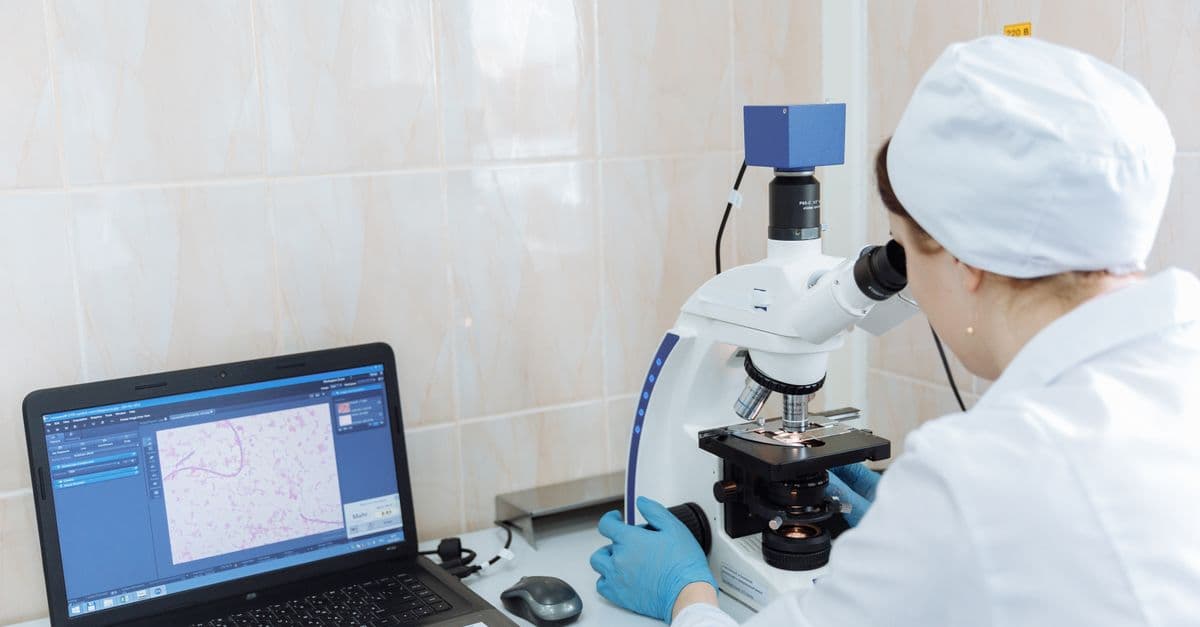
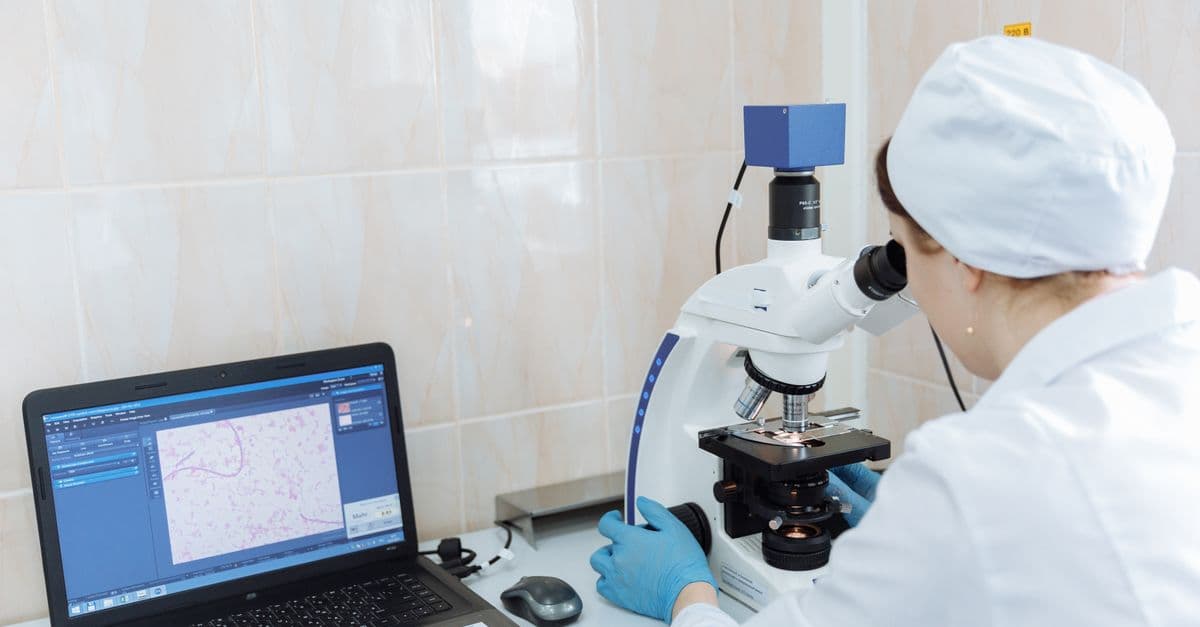
Photo: Thirdman / Pexels
A virus does not plan its next move, but it does not need to. Random mutation and natural selection generate new variants constantly, and most fail. The rare ones that survive tend to share patterns with mutations that succeeded before. In 2023, a team led by researchers at Harvard Medical School published a model called EVEscape that used exactly this idea, trained only on data that existed before the COVID-19 pandemic began, to retroactively predict which SARS-CoV-2 mutations would go on to dodge immune protection. This article explains how that kind of prediction works, where it already changes public health decisions, and where it still falls short.
Why viral evolution is so hard to stay ahead of
RNA viruses such as SARS-CoV-2, influenza, and HIV mutate far faster than the cells they infect. Their genetic copying machinery lacks the proofreading enzymes that correct errors in human DNA replication, so mistakes accumulate with almost every new infected cell. Influenza's mutation rate has been estimated at roughly 10⁻⁵ substitutions per nucleotide per replication cycle, orders of magnitude higher than the human germline mutation rate (Sanjuán and Domingo-Calap, Cellular and Molecular Life Sciences, 2016).
Most of those mutations are neutral or harmful to the virus itself, and natural selection quietly removes them. But a small fraction change the shape of a protein the immune system recognizes, letting the virus partially evade antibodies built from a previous infection or vaccine. Public health officials call this antigenic drift when it happens gradually, and antigenic shift when a virus swaps whole gene segments with another strain, as influenza sometimes does when it jumps between pigs, birds, and humans.
Traditional surveillance is built around a lag. A new variant spreads in a community, someone gets sick enough to seek care, a lab sequences the sample, that sequence gets uploaded to a public database, and epidemiologists compare it against known variants. Each step adds days or weeks. By the time a dangerous variant is confirmed as dominant, it has often already infected hundreds of thousands of people. Vaccine updates then take another six to twelve months to formulate, test, and manufacture at scale, which is roughly why the WHO reconvenes its influenza vaccine composition meetings twice a year rather than reacting variant by variant.
How machine learning models forecast the next mutation
Think of a viral genome the way you'd think of a sentence in a language the virus is constantly rewriting. Most random edits produce gibberish the virus can't survive with. A smaller set of edits produce a sentence that still makes grammatical sense, meaning the protein still folds correctly and still lets the virus infect a cell. Language models learn grammar by reading millions of real sentences and noticing which word patterns are common and which never occur. Viral evolution models do something structurally similar: they read hundreds of thousands of real viral genomes and learn which amino acid substitutions are "grammatical" for that virus.
Learning the space of viable mutations
The foundational layer of a tool like EVEscape is a generative model called EVE (evolutionary model of variant effect), originally built to predict which mutations in human disease genes are harmful. Applied to a virus, EVE is trained on a multiple sequence alignment, essentially a giant spreadsheet lining up the same viral gene from thousands of related sequences collected over decades. From those columns, the model learns which amino acid positions tolerate change and which are locked in place because they are essential to the protein folding or function (Frazer et al., Nature, 2021, the original EVE paper).
For SARS-CoV-2's spike protein specifically, that alignment draws on decades of sequences from related coronaviruses, not just SARS-CoV-2 itself, which is why the model could make useful predictions before SARS-CoV-2 had accumulated much diversity of its own.
Adding immune escape information
A mutation being biologically tolerable is not the same as a mutation being dangerous to us. EVEscape layers three more kinds of evidence on top of the base evolutionary model: which parts of the protein sit on its surface where antibodies can physically reach them, which parts are structurally accessible based on the protein's 3D shape, and prior knowledge from related viruses about which regions the immune system typically targets. Combining fitness (can the virus survive this mutation) with accessibility (can an antibody even see this spot) and prior antigenic knowledge produces a single escape score per mutation (Nature, 2023).
That combination matters because a virus could tolerate a mutation on a protein region antibodies never touch, in which case the mutation is irrelevant to immune escape even though it is evolutionarily "legal." The model has to reason about biology, not just about which mutations occur.
Ranking mutations, not just detecting them
The output isn't a yes-or-no prediction. It's a ranked list: of every plausible mutation at every position in the spike protein, which ones are most likely to help the virus escape existing immunity. Public health teams can watch that ranked list against real-world sequencing data and flag when a mutation that scored high on the model's escape list actually starts appearing and spreading in sequenced samples, which is a much earlier signal than waiting for a variant to dominate case counts.
Why flu strain selection is a parallel, older problem
Influenza vaccine composition has used a version of this problem for decades. Twice a year, the WHO's Global Influenza Surveillance and Response System recommends which strains manufacturers should target for the next flu season, based on antigenic and genetic analysis of circulating viruses. A 2025 MIT tool called VaxSeer applied machine learning to this exact decision, modeling both how a candidate strain is likely to evolve and how well a vaccine strain would match circulating viruses. In a ten-year retrospective evaluation, VaxSeer's recommendations matched circulating viruses better than the WHO's actual historical annual picks in a majority of the seasons tested (MIT News, 2025; Nature Medicine, 2025). That doesn't mean the WHO process is being replaced. It means the same evolutionary-forecasting logic that predicts coronavirus escape is now being tested on a decision public health agencies have made by expert committee for 70 years.
How predictions actually reach public health decisions
A ranked list of risky mutations is only useful if it gets combined with real-world data showing which mutations are actually circulating and how fast. This is where genomic and wastewater surveillance come in, not as a replacement for AI prediction but as the ground-truth feed that tells you which predicted-risky mutations are worth acting on right now.
Wastewater as an early warning system
Since 2020, the CDC's National Wastewater Surveillance System has tracked SARS-CoV-2 RNA shed in sewage from thousands of U.S. communities, using an open-source pipeline called Aquascope to identify which variants are present in a wastewater sample. Because wastewater surveillance captures everyone in a sewershed, including people who never get tested, it can surface a new variant before it shows up in clinical sequencing. A study of Utah wastewater data found Omicron detectable in sewage up to 10 days before it was confirmed in patient samples from the same region (PMC, 2023). More recent CDC surveillance reporting has continued to track emerging variants such as BA.3.2 through combined wastewater and clinical genomic monitoring across dozens of countries (CDC MMWR, 2026).
Feed that wastewater sequence data into a model like EVEscape, and public health teams get two independent signals: which mutations the model flags as dangerous based on biology, and which of those flagged mutations are already spreading in the community. Agreement between the two is the strongest signal available, and it arrives weeks before hospitalization data would confirm the same trend.
Real-time phylogenetics with Nextstrain
Nextstrain, built by researchers at the University of Washington and the Fred Hutchinson Cancer Center, maintains open, continuously updated evolutionary trees for SARS-CoV-2, seasonal influenza, mpox, and other pathogens, built directly from public sequence databases. It doesn't replace mutation-escape prediction models, but it is the shared visual and data infrastructure that surveillance teams, vaccine composition committees, and modeling groups all reference when deciding whether a newly flagged mutation is worth escalating. Because it's open and rebuilds automatically as new sequences are deposited, it shortens the lag between "a lab somewhere sequenced this sample" and "the global research community can see the pattern."
Structural biology fills in the mechanism
Protein structure prediction tools built on the AlphaFold architecture let researchers generate a 3D model of a new variant's spike protein or hemagglutinin within hours of a sequence being published, instead of waiting months for a crystal structure from a lab. That structure shows exactly where a candidate vaccine antigen would need to bind, and where escape mutations physically sit relative to known antibody binding sites, which is part of what feeds the "structural accessibility" layer inside escape-prediction models like EVEscape (PMC review, "Using AlphaFold Predictions in Viral Research"). AlphaFold-derived structures have also been used directly in early-stage nanoparticle vaccine scaffold design, letting researchers computationally test candidate antigen arrangements before synthesizing anything in a lab (PMC, 2025).
Where this actually changed a real outbreak response
The clearest test case remains Omicron. When the B.1.1.529 sequence was first uploaded in late November 2021, it carried more than 30 mutations in the spike protein alone, an unusually high number that immediately raised concern. Structural and evolutionary analysis of those mutations, cross-referenced against known immune-escape "hot spots" from earlier variants, allowed researchers to flag likely partial vaccine escape within days of the sequence being published, well before laboratory neutralization assays using patient antibody samples could confirm the same conclusion roughly two weeks later (EVEscape retrospective validation, Nature, 2023).
That two-week head start does not sound dramatic on its own, but it is the difference between manufacturers starting to plan an updated booster formulation immediately versus waiting for confirmatory lab data before committing production capacity. Regulatory agencies including the FDA have separately built streamlined authorization pathways specifically so that strain updates to an already-authorized vaccine platform, like the mRNA COVID vaccines, don't require a full new clinical trial cycle every time the spike sequence is updated, which is part of what let updated boosters ship in months rather than the nine to twelve months a fully new vaccine review would take.
Table: How three surveillance and prediction tools work together
| Tool or system | What it actually does | Primary data source | Typical lead time gained |
|---|---|---|---|
| EVEscape (Marks Lab, Harvard Medical School) | Ranks candidate mutations by predicted immune-escape risk using evolutionary fitness plus protein structure | Historical multi-species viral sequence alignments and antibody structural data | Days to weeks ahead of lab neutralization assays |
| CDC National Wastewater Surveillance System (Aquascope) | Detects which variants are circulating in a community from sewage RNA, independent of clinical testing rates | Wastewater RNA sequencing across thousands of U.S. sites | Up to 10 days ahead of clinical case sequencing |
| VaxSeer (MIT) | Forecasts which influenza strain will best match next season's circulating viruses | Historical hemagglutinin sequence and antigenic assay data | Improved match rate across a 10-year retrospective, versus reacting each season |
Table: Comparison of AI and surveillance systems used in real pandemic-preparedness pipelines. Sources: Nature, 2023; CDC; Nature Medicine, 2025.
Where the predictions break down
None of this makes viral forecasting reliable in the way weather forecasting is reliable a day or two out. The failure modes are specific and worth naming honestly.
Some viruses are far more predictable than others
Influenza's evolution is comparatively channeled: a handful of well-mapped epitope regions on hemagglutinin account for most antigenic drift, which is part of why strain-selection models like VaxSeer can show measurable, testable improvement over historical committee picks. HIV is a different story. Its mutation rate is even higher than influenza's, it evolves differently inside every individual patient rather than following one dominant global lineage, and it faces selection pressure from each host's unique immune system rather than a shared global population immunity landscape. That combination has made HIV evolution far more resistant to the kind of population-level forecasting that works reasonably well for flu and coronaviruses.
Recombination is a blind spot
Point mutations, single letter changes in the genetic code, are what most of these models are built to predict. Recombination events, where two different viral lineages infect the same cell and swap entire chunks of genome, are structurally harder to forecast because they aren't a gradual walk through neighboring sequences. They're a jump. Both of the influenza pandemics of the 20th century involving genetic reassortment between human and animal flu strains originated this way, and reassortment events remain much harder to see coming than drift within a single lineage.
Human behavior is not in the training data
A model can rank which mutations are biologically dangerous. It generally cannot predict whether a superspreader event at a specific gathering seeds that mutation into a dense urban population versus a remote area, or whether a policy change suddenly increases international travel volume from a region where a flagged variant is circulating. Viral spread is a product of biology and human behavior together, and the behavioral half remains far less predictable than the molecular half.
A predicted escape mutation still has to be confirmed
Escape-risk scores are probabilities, not certainties. EVEscape's validation studies show accuracy comparable to laboratory experiments, not perfect agreement with them. Public health agencies still treat AI-flagged mutations as a prioritization signal for which variants deserve urgent laboratory confirmation, not as a replacement for that confirmation. Skipping the lab step in the name of speed would trade a manageable amount of false-positive noise for the much bigger risk of shipping a vaccine update based on an incorrect prediction.
The same tools raise legitimate biosecurity questions
Any model capable of predicting which mutations make a virus more dangerous to the immune system is, in principle, also a tool that could be misused to design a more dangerous virus rather than just anticipate one. This is not a hypothetical concern in the research community. Groups publishing this kind of work, including the Marks Lab team behind EVEscape, have discussed the dual-use risk explicitly, and journals reviewing viral-evolution AI research increasingly weigh biosecurity implications as part of peer review, alongside calls for restricted access to the most sensitive prediction capabilities and closer coordination between AI researchers and biosecurity oversight bodies.
What people get wrong about AI pandemic prediction
The most common misconception is that these systems predict pandemics the way a hurricane forecast predicts a storm's path. They don't. They predict which specific molecular changes would make an already-circulating virus more dangerous, given that virus's existing evolutionary trajectory. They are not general-purpose systems scanning for the next unknown pathogen from scratch; they are narrow tools trained on a specific virus family's history.
A second misconception is that faster prediction means faster vaccines are automatic. The scientific prediction step, going from sequence to escape-risk ranking, can now happen in hours. Manufacturing an updated vaccine at population scale, getting it through whatever regulatory pathway applies, and distributing it still takes months, constrained by production capacity and clinical safety review, not by how fast the computational model runs. AI compresses one stage of a multi-stage pipeline; it does not compress the whole pipeline.
A third misconception worth correcting: these are not black boxes making unexplainable predictions. EVEscape's ranking is built from three interpretable components, evolutionary fitness, structural accessibility, and known antigenic regions, specifically so researchers can check whether a high-risk score makes biological sense rather than trusting an opaque score. That interpretability is part of why public health agencies have been willing to fold these predictions into existing surveillance workflows instead of treating them as an unverifiable oracle.
Common questions about AI and viral evolution prediction
Q: Can AI actually predict a pandemic before it starts?
A: Not in the sense of naming the next pandemic pathogen from nothing. Current models predict which mutations in an already-known, already-circulating virus are likely to help it evade immunity, which shortens the warning window for variants of an existing threat by days to weeks. They are not early-warning systems for entirely novel pathogens with no prior sequence data.
Q: How accurate is EVEscape compared to lab testing?
A: In retrospective validation using only pre-pandemic training data, EVEscape's escape-risk rankings performed comparably to laboratory antibody-binding experiments conducted 10 to 17 months into the pandemic, according to the model's 2023 Nature publication. That is a strong result for a computational shortcut, but the researchers still frame it as complementary to lab confirmation, not a replacement for it.
Q: Is this kind of research a biosecurity risk?
A: It carries genuine dual-use risk, since a model that flags dangerous mutations could theoretically inform efforts to engineer a more dangerous virus. Researchers publishing in this space have acknowledged the concern directly, and journals and funding bodies increasingly require biosecurity review for viral-evolution AI research, alongside calls for restricted model access to the most sensitive prediction outputs.
Q: Why does flu need a new vaccine every year but COVID boosters aren't annual for everyone?
A: Influenza's global surveillance and strain-selection process has run on a fixed twice-yearly WHO schedule for decades because seasonal flu evolution is comparatively well characterized. COVID-19 booster recommendations have varied more by country and risk group as regulatory agencies and public health bodies weigh evolving evidence on variant circulation, waning immunity, and who benefits most from an updated dose each cycle.
Q: Does wastewater surveillance replace clinical testing?
A: No, the two are complementary. Wastewater captures a community-wide signal including asymptomatic and untested infections, which is why it can detect a new variant before clinical sequencing does, but it can't tell you who is infected, how severe their illness is, or provide the individual patient data that clinical care and case investigation depend on.
Q: Can this approach be used for viruses we haven't seen yet, like a new bird flu strain jumping to humans?
A: Partially. Models like EVEscape are trained on broad viral protein families, not just one strain, which is part of why they could say something useful about SARS-CoV-2 before it had accumulated much of its own diversity. But prediction quality depends heavily on how much related sequence and structural data already exists for that viral family, so a genuinely novel virus with no close relatives in the training data would be harder to forecast confidently.
Q: How much does genomic and wastewater surveillance cost compared to a pandemic response?
A: Wastewater and genomic sequencing infrastructure operates on the order of a few dollars per sample, and national-scale surveillance systems like the CDC's Aquascope network run continuously for a fraction of what a single pandemic wave costs in healthcare spending and economic disruption. That cost asymmetry is part of the argument public health agencies use to justify sustained, year-round surveillance funding rather than only scaling it up during an active outbreak.
Q: Do these tools tell vaccine manufacturers exactly what to make?
A: They inform the decision rather than dictate it. Regulatory bodies like the WHO's strain-selection committees and national agencies such as the FDA still combine model output with laboratory confirmation, epidemiological trend data, and manufacturing feasibility before finalizing a vaccine composition recommendation.
The takeaway
AI does not predict pandemics the way meteorologists predict hurricanes, but it does something narrower and increasingly proven: it ranks which mutations in a virus we already know about are most likely to make that virus better at evading our immune defenses, days to weeks before laboratory experiments would confirm the same answer. Models like EVEscape and VaxSeer have already been validated retrospectively against real outbreaks including Omicron, and wastewater surveillance systems have independently caught variants over a week before clinical testing would have. The bottleneck left is not computational speed. It's manufacturing capacity, regulatory pathways, and the parts of pandemic spread that are governed by human behavior rather than molecular biology, none of which a ranked mutation list can shortcut on its own.
Read next:
Follow new articles
Add SciHub101 to your feed reader to see new science and technology stories.
About the Author
SciHub101 is an independent science and technology publication founded and edited by Buğra Sözeri, a software engineer and app developer based in Türkiye. AI tools assist with drafting and research. Source documentation in the existing archive is uneven, and articles are being reviewed and corrected. The Editorial Team byline identifies editorial responsibility; it does not certify specialist or independent human review. Where we compare products, anything built by our own team is labelled as such — see the editorial guidelines and About page for how corrections and disclosures work.
Related Articles

AI & Metagenomics: Reading Ecosystems from DNA
How machine learning decodes environmental DNA to monitor biodiversity, predict ecosystem collapse.
Single-Cell AI: Understanding Cellular Diversity at Scale
How machine learning decodes individual cell states from single-cell RNA sequencing data.
Personalized Medicine & AI-Driven Genomics
How genetic data and machine learning guide drug choice, and what trials of cancer, warfarin, and antidepressant testing actually show.
Machine Learning in Drug Discovery: AI Finds Medicines
How neural networks accelerate drug discovery from years to months.
AlphaFold: How AI Solved Protein Folding
DeepMind's AlphaFold solved a 50-year biological mystery: predicting how proteins fold.

AI & Antibiotic Discovery: Fighting Drug-Resistant Bacteria
How machine learning discovers new antibiotics faster than traditional lab screening.