H5N1 Bird Flu Explained — How the Virus Works in 2026
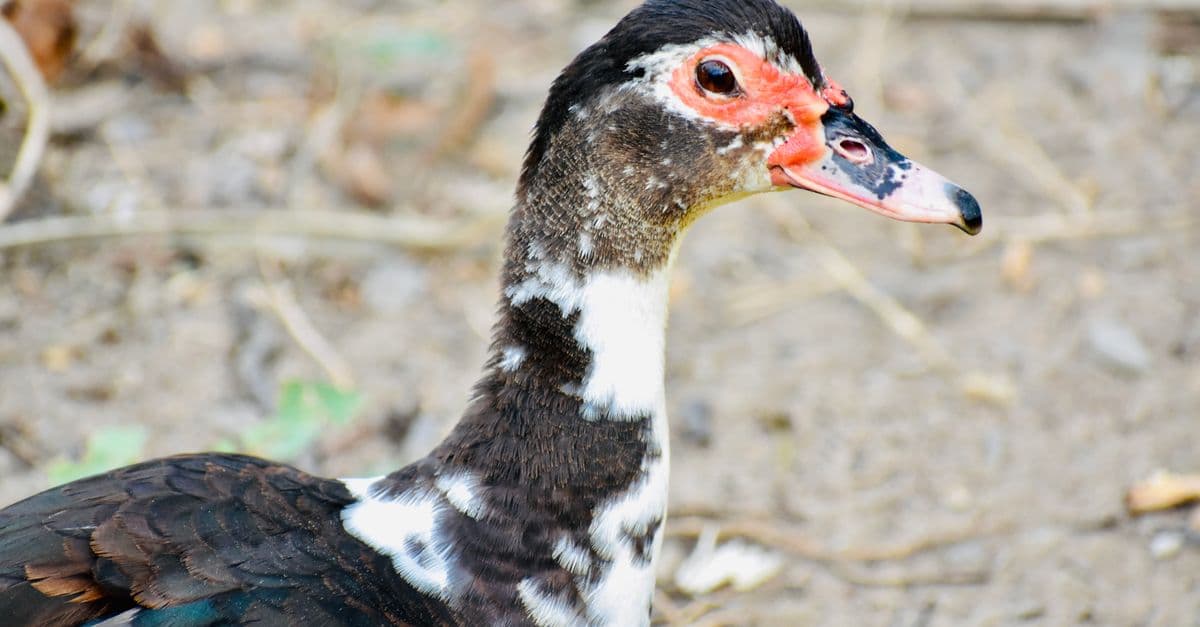
Photo: BLAXTAR ESSENTIALS / Pexels
H5N1 is an influenza A virus that normally lives in wild waterfowl, kills nearly half of the people it is confirmed to infect, and still has not learned to spread well between humans. Since March 2024 it has also taken hold in U.S. dairy cattle, a host nobody expected, and has caused dozens of human infections among farm workers. This article explains what H5N1 is, how it enters a cell, why severity varies so widely between cases, what changed in the cattle outbreak, and how scientists weigh the pandemic risk.
Educational content, not medical advice. Talk to your doctor or local health department about any personal health decision. This article summarizes published research and public-health agency statements, and situations change quickly.
What H5N1 actually is
H5N1 is a subtype of influenza A virus. Influenza A viruses are sorted by two proteins that stud their surface:
- H (hemagglutinin): the grappling hook that latches onto a host cell. Eighteen subtypes are known, H1 through H18.
- N (neuraminidase): the enzyme that cuts newly made virus particles loose from the cell that produced them. Eleven subtypes are known, N1 through N11.
H5N1 is hemagglutinin type 5 paired with neuraminidase type 1. The seasonal flu that circulates in people each winter is mostly H1N1 and H3N2, which carry different surface proteins and behave differently in the human body. If you want the baseline biology first, our explainer on how seasonal influenza works covers the human-adapted versions.
The natural home of H5N1 is wild waterfowl: ducks, geese, gulls, and shorebirds. In these birds the virus often causes mild illness or none, because the virus and its hosts have had a long time to settle into a truce. Trouble starts when the virus lands in animals with no such history, including chickens, turkeys, mammals, and people. For a wider look at how that jump happens, see how viruses cross from animals to humans.
What "highly pathogenic" means
You will often see the phrase highly pathogenic avian influenza, or HPAI. The label was created for poultry. It describes strains that kill a high share of infected chickens in laboratory tests and farm outbreaks, and it says nothing about how dangerous a strain is to people or cattle. A virus can be "highly pathogenic" in chickens while causing only red eyes in a dairy worker, and that is roughly what has been observed in the U.S. outbreak.
H5N1 is also not a single thing. Viruses with the H5 gene have split into many genetic lineages called clades. The clade that matters in 2026 is 2.3.4.4b, which spread across continents beginning around 2020, and the genetic variants circulating in U.S. cattle descend from it.
A short history of H5N1
H5N1 did not appear in 2024. The lineage has been evolving, and occasionally surprising people, for about three decades.
| Year | Event | Source |
|---|---|---|
| 1996 | Highly pathogenic H5N1 first identified in geese in Guangdong, China | WHO/CDC histories |
| 1997 | First recognized human outbreak, in Hong Kong: 18 confirmed cases, 6 deaths | WHO Disease Outbreak News, 1998 |
| 2003 onward | Sporadic human cases begin accumulating in Asia, Africa, and elsewhere | WHO cumulative tables |
| 2020 onward | Clade 2.3.4.4b spreads widely in wild birds and poultry | FAO/WHO/WOAH assessments |
| October 2022 | Large outbreak on a mink farm in Galicia, Spain, with spread between mink | Eurosurveillance, January 2023 |
| March 2024 | H5N1 first confirmed in U.S. dairy cattle | USDA APHIS |
| January 2025 | First U.S. human death, in Louisiana, linked to a backyard flock | State and CDC reports |
| 2026 | Sporadic dairy herd detections continue; CDC rates public risk low | CDC, October 2026 |
The Hong Kong episode in 1997 ended with authorities culling the territory's poultry, about 1.5 million birds according to Hong Kong government accounts, within a few days. It is a useful reminder that the first human cases were found because people who had handled live poultry got seriously sick, not because anyone was looking for the virus in the general population.
The Spanish mink outbreak, described in Eurosurveillance, involved a farm of nearly 52,000 animals. Investigators could not confirm how the virus got in, and wild birds were the leading suspect because the barns were partly open. What made it notable is that the virus moved from animal to animal inside the farm, and that raised the first serious questions about whether mammal-to-mammal spread would let the virus adapt. Our deeper look at the 2026 pandemic-risk picture picks up that thread.
How H5N1 infects a cell
Influenza viruses follow a recognizable script, and H5N1 follows it with a few twists. It helps to think of a cell as a building with a locked door, and of the virus as a burglar who has the right key shape for some doors but not others.
- Attachment. Hemagglutinin binds to sugar molecules called sialic acids that decorate the surface of many cells. Avian-adapted viruses prefer sialic acid joined to the next sugar in one geometry (called α2,3). Human-adapted flu viruses prefer a different geometry (α2,6). The upper human airway is rich in the α2,6 form, which is a large part of why bird flu viruses struggle to take hold there.
- Entry. The cell swallows the virus into a bubble called an endosome. As the bubble becomes more acidic, hemagglutinin changes shape and fuses the virus envelope with the bubble's wall, releasing the genome into the cell.
- Copying. Unusually for an RNA virus, influenza copies its genome in the cell nucleus. The genome comes in eight separate RNA segments, each a different gene or two.
- Assembly. New proteins and RNA segments gather at the cell membrane and bud off as fresh virus particles.
- Release. Neuraminidase snips the sugar tethers that still hold the new particles to the cell, and they float away to infect neighbors. Antivirals such as oseltamivir block this step.
Why the receptor story matters
The key receptor fact, and the one most often repeated in risk assessments, is the mismatch between what bird viruses prefer and what the human upper airway offers. Receptors of the avian type do exist deeper in the human lung, which is one explanation for why the most severe human cases involve pneumonia rather than a sore throat. A person can be infected after heavy exposure, yet the virus is not shed from the nose and throat in the way that lets a cold or seasonal flu pass from person to person.
A December 2024 study in Science from a Scripps Research team asked how easily the cattle virus could change that preference. They found that in laboratory binding assays, a single amino-acid change in the cattle virus's hemagglutinin was enough to shift binding toward human-type receptors. Later work added caution: a 2026 bioRxiv preprint from Utrecht University, not yet peer reviewed, reported that binding to human respiratory tract tissue needed more than that one change. Both findings are laboratory results, and neither shows that the virus can spread between people.
The polymerase and body temperature
Receptor binding is only one of the hurdles. The viral copying machinery, called the polymerase, also has to work well in the host. Bird gut cells run warm, around the body temperature of a bird, while the human upper airway is cooler. Changes in the polymerase gene PB2 have repeatedly been linked to better performance in mammal cells. The mink outbreak virus carried an unusual PB2 change, and the same change appears in the bird-derived PB2 gene of the 2009 pandemic H1N1 virus, as the Eurosurveillance authors noted.
Why severity varies so much
The most quoted H5N1 number is the case fatality rate. WHO's cumulative tables count 1,003 confirmed human H5N1 cases from 25 countries between January 1, 2003 and September 6, 2026, of which 479 were fatal, or 47.8%.
That figure needs context, because it does not describe what happens to a typical infected person. It describes what happened to people who got sick enough to be tested, usually in hospitals, in countries where H5N1 testing was not routine. Mild infections are less likely to be counted. Epidemiologists call this ascertainment bias, and it pushes a fatality rate upward.
To see why, picture a fishing boat that reports only the fish too large to slip through the net. The catch looks impressive, but it tells you little about the average fish in the sea. The case counts for H5N1 behave similarly: they catch the severe cases and miss many mild ones.
What the U.S. cases looked like
The U.S. outbreak gave researchers a rare chance to look at infections that were found by active monitoring of exposed workers rather than only in hospitals. A New England Journal of Medicine analysis of the first 46 U.S. cases, identified between March and October 2024, found that 25 were linked to infected dairy cows, 20 to infected poultry, and one had no identified exposure. Among the 45 people with animal exposure, all had mild illness, and none were hospitalized. Among those 45, conjunctivitis, an eye infection, appeared in 42 (93%), fever in 22 (49%), and respiratory symptoms in 16 (36%). No additional cases were found among 97 household contacts of the animal-exposed patients.
CDC's situation summary, last updated October 15, 2026, counts 72 U.S. human H5 cases since February 2024: seven found through routine flu surveillance and 65 through monitoring of exposed people. CDC describes cases as sporadic among dairy and poultry workers and rates the current public health risk as low.
The picture is not uniformly mild, though. In January 2025, Louisiana reported the first U.S. death from H5N1, an older adult with underlying conditions who had been exposed to a backyard flock and wild birds. The virus in that case belonged to a different genotype, D1.1, than the B3.13 genotype circulating in dairy cows. Sequencing showed rare mutations that likely arose during the course of the illness, and investigators found no additional cases linked to it.
Possible reasons for the gap
Researchers have proposed several explanations for the contrast between a 48% figure and a run of mostly mild eye infections, and they are not mutually exclusive:
- Route of exposure. Milk splashing into an eye is a different dose and a different tissue than breathing in virus-laden dust in a poultry barn.
- Genotype. Different lineages circulating in poultry, wild birds, and cattle can differ in how much damage they do.
- Host factors. Age, immune history, and underlying conditions affect how an infection unfolds.
- Counting. Active monitoring finds mild cases that passive systems never would.
No one has proven which factors dominate, so any single severity estimate for a future H5N1 outbreak should be treated as uncertain.
The cattle outbreak and why it surprised everyone
Before 2024, cattle were not considered an important influenza host. The Nature paper by Caserta and colleagues, published in July 2024, examined nine affected farms across Texas, New Mexico, Kansas, and Ohio. It found infectious virus and viral RNA in milk at high levels, and the virus targeted the epithelial cells lining the milk-producing alveoli of the mammary gland. Whole-genome sequences from cows, birds, cats, and a raccoon on affected farms pointed to repeated crossings between species. The authors suggested a single spillover from wild birds, probably in late 2023, followed by spread between cattle.
Milk turns out to be the main vehicle. Infected cows can shed virus into milk in very large quantities, so milking equipment, shared surfaces, and splashes become routes of transmission to other cows and to workers. Moving animals between farms spread the virus across state lines.
Since APHIS first confirmed the virus in a dairy herd in March 2024, trade press tallies of USDA data reported 917 affected herds in 2024 and 171 in 2025, with 88 detections so far in 2026 as of mid-September. New detections slowed considerably after the 2024 peak, though sporadic herds have continued to test positive in 2026.
Is the milk supply safe?
The U.S. Food and Drug Administration tested commercially pasteurized dairy products from stores. In an initial survey of 297 retail samples from 132 processing sites in 38 states, about 20% contained fragments of viral genetic material, but none contained live, infectious virus. A second round of 167 products found no viable virus. FDA researchers also ran milk spiked with live virus through a pilot-scale system mimicking commercial flash pasteurization, and found the process inactivated the virus. (The standard dairy flash-pasteurization setting is 72°C, or 161°F, for 15 seconds.)
Fragments of RNA are like the shredded pieces of a letter: they show that the letter once existed, and they cannot be read or acted upon. Raw milk is another matter, and both CDC and FDA advise against drinking it. Our broader discussion of how vaccines and immune memory work covers why even rare exposures matter for people with weak immune defenses.
Two routes to a pandemic
A pandemic needs a virus that infects people, spreads efficiently from person to person, and meets a population with little immunity. H5N1 meets the first and third conditions already. Biologists think about the second condition as having two possible routes.
Route 1: reassortment
Because influenza has eight genome segments, two different flu viruses that infect the same cell can swap segments, the way two decks of cards can be shuffled together. A virus that picks up human-adapted segments from a seasonal flu while keeping H5N1's surface protein could, in principle, emerge in a single replication cycle. This is called reassortment, and it is not hypothetical. Influenza pandemics in 1957, 1968, and 2009 involved reassortant viruses.
Reassortment needs a co-infected host. Pigs have long been called "mixing vessels" because they can be infected with both bird and human flu viruses. A person infected with seasonal flu and H5N1 at the same time could also serve. This is the reason public health agencies encourage seasonal flu vaccination in people exposed to infected animals: it lowers the chance of a double infection, even though the shot does not protect against H5N1.
Route 2: gradual adaptation
The second route needs no shuffling. Every time the virus replicates in a mammal, random copying errors occur, and some help it fit its new host. Sustained circulation in cattle, mink, or other mammals gives natural selection more chances to find the right combination. The U.S. cattle outbreak is the largest sustained mammalian circulation H5N1 has ever had, which is why scientists track it so closely.
The mink farm in Spain and the cattle herds in the United States both show that H5N1 can move among mammals. What they have not shown is that it can move among humans. The WHO fact sheet on zoonotic influenza states that currently circulating zoonotic influenza viruses have not demonstrated sustained human-to-human transmission.
What is being done about it
Surveillance
Public health agencies monitor animals, people, and the environment. In the United States, that includes testing of milk, monitoring of exposed workers, and sequencing of viruses from detected cases. In July 2025, CDC folded its bird flu reporting into its routine flu updates and changed reporting cadences, which is one reason some case counts are updated less often than they were in 2024.
Vaccines
Vaccine stockpiling for H5 viruses is built on older strains, and a vaccine for a future pandemic strain would need to be matched to it. In May 2025, the U.S. Department of Health and Human Services canceled a contract worth $766 million with Moderna for development of an mRNA-based H5 vaccine, with an HHS spokesperson saying continued investment was not scientifically or ethically justifiable. Moderna said at the time that it had positive interim data from an early-stage trial of its candidate, called mRNA-1018, in about 300 adults and would explore other paths. Our explainer on mRNA vaccines describes the technology behind that debate.
Antivirals
Studies of recent human isolates, reported by CDC scientists in Emerging Infectious Diseases, found all tested viruses susceptible to the polymerase inhibitor baloxavir, and oseltamivir was about four times less potent against clade 2.3.4.4b than against an older clade. A later CDC analysis of U.S. human isolates from October 2024 to February 2025 found most viruses susceptible, but one carried a change (PA-I38M) that cut baloxavir susceptibility about 17-fold in cell culture, and another carried a change conferring resistance to older M2-blocker drugs. Resistance markers have also turned up in a small number of animal sequences, so monitoring continues.
Animal control
For poultry, the standard response is culling infected flocks, which is blunt but effective. For dairy herds the options are harder, because cows usually survive infection and the economic and welfare stakes of culling are very different. Quarantine, milk testing, and movement controls have been the main tools.
The risk assessment in 2026
Two assessments are worth knowing. The joint FAO, WHO, and WOAH assessment based on data as of March 1, 2026, and published in May 2026, judges the global public health risk from H5 viruses to be low, with low-to-moderate risk for people who are occupationally or frequently exposed to infected animals. CDC likewise says the current public health risk is low.
These ratings describe today, and they can change quickly. A rating of low does not mean zero, and it does not rule out a change in the virus. It reflects that, as of the latest data, no sustained human-to-human transmission has been seen and that detected human cases have been linked to animal exposure.
What would change the rating? Evidence of clusters of cases with no animal exposure, a virus carrying a combination of receptor and polymerase changes that fits human airways, or a reassortant between H5N1 and a human seasonal strain. Public health agencies watch for all three. Our longer piece on how pandemics spread and what stops them explains how those signals translate into action.
How H5N1 compares with other infections
Comparing fatality rates across diseases is tricky because every number depends on who gets counted. With that caveat, here are published figures.
| Infection | Fatality figure | What the number means | Source |
|---|---|---|---|
| H5N1, confirmed human cases | 47.8% (479 of 1,003) | Deaths among confirmed cases, 2003 to September 2026; biased toward severe cases | WHO |
| Seasonal influenza, U.S. 2024–25 | About 0.09% (45,000 deaths per 51 million estimated illnesses) | Deaths per estimated illness; the ratio is our own arithmetic from CDC's estimates | CDC |
| Ebola disease | About 50% on average, with a range of 25% to 90% in past outbreaks | Average across outbreaks | WHO fact sheet |
| U.S. farm workers with H5N1, March–October 2024 | 0 deaths among 45 animal-exposed cases | Cases found through active monitoring | NEJM, 2025 |
The last row and the first row describe the same virus and look nothing alike. That is not a contradiction. It is what happens when one statistic comes from severe hospitalized patients across many countries and the other from active monitoring of exposed workers in one country. Our overview of the deadliest viruses and the article on Ebola explain why fatality figures differ so much between pathogens.
Common misunderstandings about bird flu
"It is already a pandemic." It is not. A pandemic is sustained spread among people across regions. H5N1 is currently a panzootic, meaning a pandemic in animals, with sporadic human cases.
"A 48% fatality rate means half of infected people die." Not in current U.S. experience. The figure reflects reported severe cases, and the U.S. cases found through active monitoring have been predominantly mild. It also does not mean a future human-adapted strain would be as lethal; viruses that adapt to spread well in a new host often change in severity, though not predictably in either direction.
"The flu shot protects against it." Seasonal vaccines target H1N1, H3N2, and influenza B and are not designed to protect against H5N1. They are still worth discussing with a clinician for their own benefit.
"Mutations mean a pandemic is coming." Every virus mutates constantly. Researchers track specific changes with known effects, and even those are rarely sufficient alone. The laboratory finding that one amino-acid change can switch receptor preference in a binding assay is a reason for surveillance, not proof of imminent spread.
"Cooked eggs and poultry are a danger." Influenza viruses are inactivated by cooking. The U.S. Department of Agriculture's safe minimum internal temperature for poultry is 74°C (165°F), the same guidance that protects against Salmonella.
What individuals should know
This section describes general public-health guidance, not personal medical advice.
- Raw milk from infected herds can carry high levels of the virus, and CDC and FDA advise against drinking it. Pasteurized milk has tested negative for live virus in FDA sampling.
- Sick or dead wild birds should not be handled with bare hands. Local wildlife or health agencies usually have reporting instructions.
- People who work with cattle, poultry, or wildlife are the group at highest risk. Agencies recommend protective equipment, including eye protection, because conjunctivitis was the most common symptom in the U.S. cases.
- Seasonal flu vaccination does not protect against H5N1, but it reduces the chance of being infected with two flu viruses at once.
For people who are not around infected animals, agencies describe the risk as low.
What remains unknown
Several open questions matter more than any single headline. First, how much mild infection is going undetected in exposed workers? Antibody surveys of dairy and veterinary workers can answer that, and the answer shapes every severity estimate. Second, will the cattle virus keep circulating, or will herd immunity and control measures extinguish it? The trend in 2026 detections suggests a slowdown but not an end.
Third, how many mutations stand between the current virus and one that transmits among people, and in what order would they have to arrive? Laboratory studies suggest more than one change is needed, though they cannot show how likely those changes are in nature. Fourth, how much does a lifetime of earlier flu infections shape the way a person responds to an H5 virus? That question is still under study, and no one should assume prior flu exposure offers reliable protection.
There is also a policy question: how much surveillance is enough? Testing programs cost money, and the countries with the most H5N1 activity often have the least capacity to run them. WHO's Pandemic Influenza Preparedness Framework and its global influenza surveillance network exist to coordinate that work, though coverage remains uneven.
Frequently Asked Questions
Q: Can I get H5N1 from pasteurized milk? A: FDA testing found no live virus in retail pasteurized dairy products, and laboratory work showed that commercial-style flash pasteurization inactivates the virus. Some retail samples contained non-infectious genetic fragments.
Q: Can I get H5N1 from eating chicken or eggs? A: Properly cooked poultry and eggs are not considered a route of infection, because influenza viruses are inactivated by heat. USDA recommends cooking poultry to 74°C (165°F). Almost all human infections have involved direct contact with infected animals or contaminated environments.
Q: Does the seasonal flu shot protect against H5N1? A: No. Seasonal flu vaccines target H1N1, H3N2, and influenza B. They are not designed for H5N1, though they reduce the odds of co-infection with a seasonal virus, which matters for reassortment.
Q: Is there an H5N1 vaccine for the public? A: Not for general use. Stockpiled H5 vaccines exist in several countries, and any pandemic strain would require matching them to the circulating virus. In May 2025, the U.S. government canceled a $766 million contract for an mRNA-based H5 vaccine candidate, so the pathway to a rapidly manufactured vaccine in the United States is currently less certain than it was.
Q: Why has H5N1 not caused a pandemic in nearly 30 years? A: The virus has not yet assembled the combination of traits needed for efficient spread between people, including receptor preference and efficient replication in the human upper airway. WHO states that currently circulating zoonotic influenza viruses have not demonstrated sustained human-to-human transmission. The concern is that widespread circulation in mammals gives it more chances to acquire those traits.
Q: How is H5N1 different from the 2009 H1N1 "swine flu"? A: The 2009 virus was a reassortant that already transmitted well between people when it emerged and caused a pandemic of modest severity compared with historical ones. H5N1 is the reverse: severe in many confirmed cases but not transmissible among humans. The worrying scenario combines high severity with efficient spread, which has not been observed.
Q: Where can I follow reliable updates? A: CDC's bird flu pages, USDA APHIS livestock and poultry detection pages, the WHO avian influenza pages, and CIDRAP at the University of Minnesota publish regularly updated information. Counts change, so check the update date on any figure.
The takeaway
H5N1 is two stories at once. In wild birds and poultry it is an old, entrenched virus. In mammals, it is an experiment in progress: every infected cow, mink, or person is one more roll of the dice for the virus, and every roll is something scientists can watch. The strongest evidence we have today says the virus remains an animal pathogen that occasionally infects people who work closely with animals, and that most of those infections have been mild.
That does not make it safe to ignore, and it does not justify alarm. The useful way to read the headlines is to ask three questions: is there spread between people with no animal contact, has the virus acquired changes that fit human airways, and are surveillance programs still working? As of the latest assessments, the answers are no, not demonstrated, and mostly yes.
Sources
- CDC. H5 Bird Flu: Current Situation. Last updated October 15, 2026.
- WHO. Influenza (avian and other zoonotic) fact sheet. Updated January 21, 2026.
- WHO. Disease Outbreak News: Influenza A(H5N1) in Hong Kong. March 12, 1998.
- USDA APHIS. HPAI detections in livestock.
- FAO, WHO, and WOAH. Updated joint public health assessment of recent HPAI A(H5) virus events. Data as of March 1, 2026.
- CDC. 2024–2025 influenza season summary: severity and disease burden.
- CIDRAP. Researchers detail H5N1 outbreak on mink farm in Spain.
- Garg S, et al. Highly Pathogenic Avian Influenza A(H5N1) Virus Infections in Humans. New England Journal of Medicine, 2025;392:843-854.
- Caserta LC, et al. Spillover of highly pathogenic avian influenza H5N1 virus to dairy cattle. Nature, 2024;634:669-676. doi:10.1038/s41586-024-07849-4.
- Lin TH, et al. A single mutation in bovine influenza H5N1 hemagglutinin switches specificity to human receptors. Science, 2024;386:1128-1134. PubMed.
For related background, our explainer on how viruses work from infection to replication covers the general mechanics, and our guide on how the immune system fights viruses explains what happens after exposure.
Follow new articles
Add SciHub101 to your feed reader to see new science and technology stories.
About the Author
SciHub101 is an independent science and technology publication founded and edited by Buğra Sözeri, a software engineer and app developer based in Türkiye. AI tools assist with drafting and research. Source documentation in the existing archive is uneven, and articles are being reviewed and corrected. The Editorial Team byline identifies editorial responsibility; it does not certify specialist or independent human review. Where we compare products, anything built by our own team is labelled as such — see the editorial guidelines and About page for how corrections and disclosures work.
Related Articles

Single-Cell AI: Understanding Cellular Diversity at Scale
How machine learning decodes individual cell states from single-cell RNA sequencing data.

Influenza Virus Explained — How Seasonal Flu Actually Works
Influenza virus explained: how flu infects cells, why it drifts and shifts, how vaccines are chosen, and why effectiveness swings from season to season.
H5N1 Bird Flu Pandemic Risk: 2026 Update
Where H5N1 stands in October 2026: 72 U.S. human cases, dairy cattle spread, what would signal pandemic risk, and what CDC says about milk and vaccines.

SARS and MERS: Coronaviruses Explained
SARS-CoV-1 and MERS-CoV came from animals, spread in hospitals, and differ sharply in lethality. How each emerged, why SARS ended, and why MERS persists.
Herpes Viruses Explained — The 9 Viruses That Stay With You for Life
Herpes viruses explained: how the nine human herpesviruses hide in nerve and immune cells for life, what each one causes, and why vaccines and cures are hard.
Norovirus Explained — Why the Stomach Bug Is Almost Impossible to Stop
Norovirus explained: why this stomach bug spreads so easily, how it infects the gut, what works against it, and why there is still no vaccine in 2026.