Synthetic Biology: Designing Life from Scratch Explained
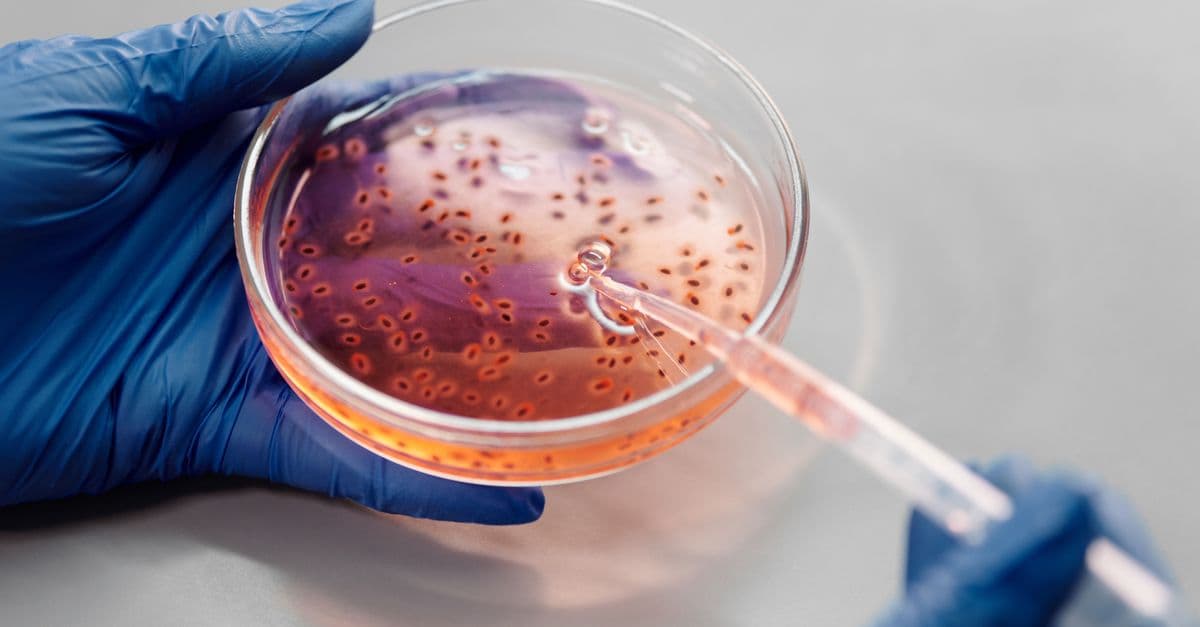
Photo: Edward Jenner / Pexels
In May 2010, a team at the J. Craig Venter Institute announced a bacterial cell whose entire chromosome had been designed on a computer, built from chemically made DNA fragments, and transplanted into a cell of a different species. Synthetic biology, the field that treats DNA as an engineering material, has since moved from that proof of principle to rewritten genomes, gene circuits that count and remember, and yeast that brew the precursor of an antimalarial drug. This explainer covers what has actually been built, what failed, and why designing life remains harder than the slogans suggest.
Key Takeaways
- Synthetic biology aims to design genetic systems the way engineers design machines: with standard parts, models, and repeated test cycles.
- In 2010 a bacterium was run entirely by a chemically synthesized genome of about 1.08 million base pairs. The cell itself was not built from scratch; the new genome was installed in an existing cell.
- A 2016 minimal cell needs 473 genes, and 149 of them have no known function, which shows how much cell biology is still unexplained.
- Rewritten genomes (a 61-codon E. coli in 2019, a 57-codon strain in 2025) and extra DNA letters show that the genetic code is more flexible than evolution used.
- Real products exist, such as yeast-made artemisinic acid and the soy heme in a plant-based burger. Engineered living medicines have had a harder time reaching patients.
What synthetic biology is, and how it differs from genetic engineering
Classic genetic engineering moves one or a few genes between organisms. Insert a human insulin gene into a bacterium and the bacterium makes insulin. The result is useful, but the engineer is working within the design the organism already has. The genetic engineering explainer linked at the end of this article covers that toolkit in detail.
Synthetic biology asks a bigger question: could cells be designed rather than edited? The goal is to write genetic programs from standardized parts, predict how they will behave before building them, and swap parts in and out without starting over. It borrows vocabulary from electronics (circuits, switches, sensors, chassis) because the ambition is similar, even though living cells are far messier than silicon.
An analogy helps here. Editing a gene is like changing a few lines in a program someone else wrote. Synthetic biology is closer to writing the program from a specification, compiling it, and installing it on hardware you did not build. The hardware, in this case, is a living cell that already has its own operating system, its own housekeeping, and its own opinions about what to do with new instructions.
The field grew out of three technologies maturing together. DNA sequencing made it cheap to read genomes. Chemical DNA synthesis made it possible to order custom sequences instead of cloning them from nature. Computational modeling gave designers a way to guess what a sequence would do. Each of those was necessary, and none was sufficient alone.
The engineering cycle: design, build, test, learn
Most synthetic biology projects follow a loop. Researchers design a genetic construct on a computer, build the DNA, put it in cells, measure what happened, and feed the results into the next design. A typical project goes around the loop many times, because the first design rarely works.
The early community tried to make the loop more routine by standardizing parts. The iGEM student competition began in January 2003 as an independent study course at MIT and became a summer competition with five teams in 2004; international teams joined in 2005. Its Registry of Standard Biological Parts, founded at MIT in 2003, collects "BioBricks," genetic parts meant to be interchangeable like electronic components. The registry now lists tens of thousands of parts, according to its public description.
The reality has been less tidy than the metaphor. A part that works in one strain, at one temperature, on one plasmid (a small circular piece of DNA that cells can carry), often behaves differently when moved. Biologists call this context dependence, and it is the main reason that biological design cycles remain slower than their electronic counterparts.
| Step | What happens | Typical bottleneck |
|---|---|---|
| Design | Software proposes a sequence from a target function | Models are incomplete; many gene functions are unknown |
| Build | DNA is synthesized, assembled, and delivered into cells | Long or repetitive sequences are hard to assemble |
| Test | Cells are grown and the output is measured | Experiments take hours to weeks |
| Learn | Data update the model and the design | Results are noisy and context specific |
Writing DNA: how a genome gets built
Writing a genome is not the same as typing one. Chemical synthesis machines assemble short strands of DNA, called oligonucleotides, that are typically far shorter than a gene. Longer constructs are made by stitching these pieces together, and the stitching is where the craft lies.
The 2010 project illustrates the method. According to the J. Craig Venter Institute's announcement, the team ordered 1,078 DNA cassettes of 1,080 base pairs each from a commercial supplier, with neighboring cassettes overlapping by 80 base pairs. They then assembled the genome in three stages inside yeast, moving from segments of 10 kilobases to 100 kilobases to the complete chromosome. Baker's yeast was used because it naturally stitches overlapping DNA pieces together, a talent the researchers borrowed rather than built.
Yeast also served as a safe place to keep the finished chromosome while the team prepared the next step. Think of it as using a well-equipped workshop to assemble a large piece of furniture, then carrying the finished piece into the room where it will be used.
This approach has a ceiling. Every added base pair is another chance for a typo, and a single wrong letter in an essential gene can make an entire genome useless. That is not a hypothetical concern, as the next section shows.
From 382 essential genes to the first synthetic-genome cell
The path to the 2010 cell is often garbled in popular accounts, so it is worth laying out in order. Three papers matter.
In 2006, J. Craig Venter's group and collaborators published a survey of Mycoplasma genitalium, a bacterium with one of the smallest genomes of any organism that grows in pure culture. In PNAS they reported disrupting 100 nonessential protein-coding genes by transposon mutagenesis (random insertion of a DNA element that breaks the gene it lands in) and none of the 43 RNA-coding genes. They classified 382 of the 482 protein-coding genes as essential, and about 28% of those essential genes encoded proteins of unknown function. This was a measurement of which genes a cell needs under lab conditions. It did not create a 382-gene organism.
In 2008, a Science paper reported the chemical synthesis and assembly of the 582,970-base-pair M. genitalium genome, which the authors called JCVI-1.0. It carried "watermarks," designed sequences at intergenic sites that identify the DNA as synthetic. The genome was assembled in yeast by transformation-associated recombination. This was a milestone in writing DNA, not in making a living cell.
In 2010, Gibson and colleagues, writing in Science (volume 329, pages 52 to 56), built the 1.08-million-base-pair genome of a different species, Mycoplasma mycoides, and transplanted it into recipient cells of Mycoplasma capricolum. The recipients had their restriction enzyme genes removed, a defense system that would otherwise chop up foreign DNA. The resulting cells, called JCVI-syn1.0 and sometimes nicknamed Synthia in press coverage, were controlled only by the synthetic chromosome. Viable cells appeared on growth medium after two days.
The first attempt produced nothing. The team traced the failure to a single base-pair deletion in an essential gene, corrected it, and tried again. That detail is worth remembering. A whole genome of more than a million letters failed because of one missing one.
Worth knowing: The 2010 genome contained watermarks that encode the names of 46 authors and contributors, a web address, and three quotations, according to the institute that built it. The watermark let anyone sequence the cell and confirm that its DNA was synthetic and where it came from.
What the 2010 cell did and did not prove
The press framing, "life created from scratch," overstated the result. The cytoplasm, membrane, ribosomes, and proteins of the recipient cell all came from nature. What was new was the genome: every base in the new chromosome had been specified by people and made by machines, and it was enough to take over the cell.
The institute's own framing was narrower. The project's leaders described it as a proof of principle that genomes can be designed in a computer, chemically made in the laboratory, and transplanted into a recipient cell, and the work took nearly 15 years. In the words of one co-author, the result gave researchers the means to dissect the genetic instruction set of a bacterial cell.
The computing analogy is useful again. The experiment showed that a cell can be rebooted from a genome file written elsewhere. It did not show that anyone knew how to write a genome file from first principles. The 2010 genome was a copy, with deliberate edits and watermarks, of a natural sequence. Understanding which genes matter, and why, was still ahead.
The minimal cell: shrinking life to its essentials
That understanding came from the next project. In 2016, Hutchison and colleagues reported in Science (volume 351, issue 6280) that they had used whole-genome design to shrink the M. mycoides genome. Their first design did not produce a viable cell. The team identified a group of "quasi-essential" genes, needed for robust growth even if not strictly for survival, and kept them in later designs.
After three design-build-test cycles they produced JCVI-syn3.0, with 473 genes and a genome of 531 kilobase pairs. That is smaller than any naturally occurring self-replicating cell known at the time. The authors called it a platform for investigating the core functions of life.
The most striking number in the paper is not 473 but 149. That is how many genes in the minimal cell had no known function. Roughly a third of the genome of the simplest cell anyone had managed to design was doing something that biologists could not name. This is the clearest evidence that "designing life" is currently limited by knowledge, not by chemistry.
| Milestone | Year | Result | Organism |
|---|---|---|---|
| Essential-gene survey | 2006 | 382 of 482 protein-coding genes classed as essential | M. genitalium |
| Synthetic genome assembled | 2008 | 582,970 base pairs built and cloned in yeast | M. genitalium genome |
| Synthetic-genome cell | 2010 | 1.08 million base pairs; cell controlled by the synthetic chromosome | M. mycoides in M. capricolum |
| Minimal cell | 2016 | 473 genes, 531 kilobase pairs, 149 genes of unknown function | JCVI-syn3.0 |
Rewriting the code: recoded genomes
A second line of work asks a different question. The genetic code maps 64 three-letter DNA "words" (codons) onto 20 amino acids and a stop signal, with heavy redundancy: several codons often mean the same thing. If a codon is redundant, could it be removed from the entire genome and freed for another job?
In 2019, Fredens and colleagues at the MRC Laboratory of Molecular Biology reported in Nature (volume 569, pages 514 to 518) a roughly four-megabase E. coli genome built by total synthesis in which two sense codons and one stop codon were replaced throughout. The organism uses 61 codons instead of 64, with 18,214 codons recoded. The recoding needed simple corrections at just seven positions, and a transfer RNA that was previously essential could be deleted.
An analogy: this is a global find-and-replace across a novel, swapping every instance of a synonym for another word, then removing the unused word from the dictionary. The text still reads the same, but the dictionary now has spare entries.
In 2025, the same laboratory reported Syn57 in Science (volume 390, issue 6771). The strain uses 57 codons: four serine codons, two alanine codons, and one stop codon were removed, requiring more than 101,000 changes across a four-megabase genome. According to the laboratory, the freed codons could host non-canonical amino acids (building blocks not found in natural proteins), which may support new polymers and macrocycles. The team also plans to test whether Syn57 resists viral infection, since a virus that depends on the host's standard code would find the translation machinery changed. The laboratory notes that problem regions in the design stunted growth and had to be fixed.
Yeast is following a parallel path. The Synthetic Yeast Project, known as Sc2.0, is a consortium of more than 250 researchers. In November 2023, ten papers in Cell, Molecular Cell, and Cell Genomics reported that all 16 chromosomes of baker's yeast had been built. A strain that already carried 7.5 synthetic chromosomes received the largest, synIV, making it more than half synthetic. The project also built a nonnatural chromosome carrying the genes for all 275 tRNAs. The stated next goal is to combine all 16 synthetic chromosomes into one living strain, and this explainer does not assume that step is finished.
Sc2.0 also built in a tool called SCRaMbLE, which deliberately shuffles the synthetic chromosomes to generate thousands of variant strains for testing. Instead of designing one genome, researchers can design a genome that mutates in controlled ways, then select the winners.
Expanding the alphabet: more than four letters
Recoding changes how existing letters are read. Another approach adds letters. DNA has four bases (A, T, C, and G) that form two pairs. Chemists have built additional base pairs that fit inside the double helix.
In 2014, Malyshev and colleagues reported in Nature (volume 509, pages 385 to 388) that an E. coli cell stably propagated a plasmid containing an unnatural base pair, d5SICS and dNaM. The cell imported the two unnatural building blocks through a nucleotide transporter borrowed from algae, and its own replication machinery copied the pair accurately without a noticeable growth penalty. In 2017, a follow-up in PNAS (volume 114, pages 1317 to 1322) described an improved strain that used Cas9 to destroy DNA that had lost the unnatural pair, keeping multiple unnatural base pairs stable across sequence contexts.
A different group built "hachimoji" DNA and RNA, with eight building blocks that pair in four complementary sets, in a 2019 Science paper (volume 363, pages 884 to 887). Crystal structures showed the new building blocks fit inside the standard double helix without distorting it, and the eight-letter DNA could be transcribed into RNA that functioned as a fluorescent aptamer. The authors framed it as expanding the range of molecular systems that could, in principle, support life.
None of these expanded alphabets is yet an everyday tool. They matter because they demonstrate that life's four-letter alphabet is a historical accident rather than a requirement, and because extra letters could one day code for materials and drugs that cells cannot currently make. A deeper look at how the standard code is read is in the explainer on how proteins are made.
Gene circuits: computing with cells
The other major thread is circuit design. In January 2000, two papers in Nature launched the modern field. Gardner, Cantor, and Collins built a genetic toggle switch in E. coli from two genes that repress each other, giving a memory element that flips between two stable states when briefly nudged by a chemical or heat signal. Elowitz and Leibler built the repressilator, three repressor genes wired in a ring, which made a fluorescent reporter pulse on and off with a period longer than the cell-division cycle.
The repressilator was noisy. Individual cells drifted out of step, because gene expression involves small numbers of molecules and random fluctuations. This is the biological counterpart of building a computer in a bowl of soup: the parts diffuse, degrade, compete for shared resources, and are copied inside a cell that is also trying to grow.
Since then, researchers have built sensors that detect a molecule and produce color, logic gates that respond to combinations of inputs, and counters that track events. These circuits are useful for diagnostics and for controlling when a cell switches on a pathway, but they are slower and less reliable than electronic ones, and they get harder to combine as they grow. The broader biology guide linked at the end of this article explains the gene-regulation basics those circuits build on.
What synthetic biology has actually made
Products show what works. Three cases are well documented, and one shows how hard the commercial path is.
Artemisinic acid. Artemisinin is the backbone of modern malaria treatment and was traditionally extracted from the sweet wormwood plant. In 2006, Ro and colleagues reported in Nature (volume 440, pages 940 to 943) that engineered yeast could make artemisinic acid, a precursor, at up to 100 milligrams per liter. In 2013, Paddon and colleagues reported in Nature (volume 496, pages 528 to 532) a complete pathway reaching 25 grams per liter, with a scalable chemical step to convert it to artemisinin.
The project was led by the nonprofit PATH, which began in 2004, with Sanofi as the development and manufacturing partner, Amyris and UC Berkeley as technology partners, and Gates Foundation funding. The World Health Organization prequalified the semisynthetic artemisinin in May 2013, and by December 2015 about 51 million treatment courses made with it had been delivered to African malaria-endemic countries.
The commercial outcome is the cautionary part. According to PATH, uptake has been limited because manufacturers say current incentives do not offset the price gap with plant-derived artemisinin. A technical success was not enough to win a market. A 2016 Nature news report, as summarized by others, found that Sanofi made no semisynthetic artemisinin in 2015 and was selling its Italian plant.
Opioid precursors. In 2015, Galanie and colleagues engineered yeast to make the opioids thebaine and hydrocodone from sugar, in a paper in Science. The pathways needed 21 and 23 enzyme activities respectively, drawn from plants, mammals, bacteria, and yeast. The authors described the work as a proof of principle with major hurdles before scale-up, and explicitly called for open discussion about governing the technology. It is a good example of a result that is scientifically impressive and policy-relevant at the same time.
Soy heme. Impossible Foods uses a protein called soy leghemoglobin, a heme-containing protein made by engineered yeast (Komagataella phaffii, formerly called Pichia pastoris), to give plant-based burgers a meat-like color and flavor. The US Food and Drug Administration sent a no-questions letter on its safety in July 2018 and approved it as a color additive in a final rule dated August 1, 2019, for uncooked ground-beef analog products at up to 0.8 percent by weight.
Living medicines: promise and a hard lesson
The most-quoted medical idea is engineered bacteria that detect disease and treat it on the spot. A frequently cited demonstration came in 2016, when Din, Danino, and colleagues reported in Nature (volume 536, pages 81 to 85) a bacterium engineered to lyse (burst) in synchronized pulses when its population reached a threshold density, releasing a genetically encoded cargo. In mice with colorectal tumors, the strain combined with a chemotherapy drug reduced liver metastasis activity and improved survival compared with either treatment alone.
That is a mouse result, and mouse results often fail in people. A sobering human-scale example is Synlogic, a company that engineered bacteria to treat metabolic disease. On February 8, 2024, it announced it would discontinue Synpheny-3, a 150-person pivotal trial of its phenylketonuria candidate, after an internal review suggested the trial was unlikely to meet its primary endpoint. The decision was not based on safety concerns, and the company said it would wind down operations and cut its workforce by more than 90 percent.
Two lessons follow. Making a cell do something in a dish is far easier than making it do something reliably, safely, and measurably in a human body. And a clinical failure of one product does not disprove a field, but it does limit how much promotional language the field can fairly claim.
Other medical technologies sometimes get lumped in under the label. Engineered immune cells such as CAR-T therapies (T cells given a synthetic receptor that targets cancer) apply the same design philosophy, as covered in the immunotherapy explainer. Whether a given therapy counts as synthetic biology or as gene therapy is often a matter of the author's taste rather than a sharp scientific line.
Why designing life is harder than designing circuits
Four problems recur in nearly every project.
First, knowledge gaps. The 149 unknown genes in the minimal cell are a reminder that predictive design requires understanding, and understanding is incomplete even in the simplest cells.
Second, context dependence. A genetic part interacts with its host. It uses the cell's ribosomes, energy, and building blocks, and it can slow growth, which then changes everything else.
Third, evolution. Cells reproduce, and any copy that drops a costly engineered function grows faster than its siblings. Without selection pressure to keep the function, designed traits tend to erode over many generations. Engineers handle this by tying the engineered function to survival, or by running cultures only for short fermentation cycles.
Fourth, scale. A pathway that works in a flask can behave very differently in a 100,000-liter fermenter, where oxygen, heat, and mixing all change. The artemisinin story shows that scaling is only part of the commercial challenge.
AI is now being applied to the design problem, especially for proteins, and the AlphaFold explainer and the article on AI-designed DNA cover where that does and does not help.
Safety, containment, and governance
Any technology that can design organisms raises safety questions, and the field has dealt with them in public since its early years. The opioid paper's call for discussion of governance is one example. Another came in December 2024, when a group of scientists writing in Science argued that broad discussion is needed before the field pursues "mirror life," organisms built from mirror-image versions of biological molecules.
Recoded organisms are sometimes proposed as a containment strategy. If an organism uses a nonstandard genetic code, then genes it exchanges with natural organisms should not be readable, and natural viruses should not be able to use it. This is an active research hypothesis, tested in the Syn57 plans described above, not a proven safeguard. A separate idea is to make an engineered organism dependent on a synthetic nutrient that does not exist in nature, so that it cannot grow outside the laboratory. Horizontal gene transfer is the reason these safeguards are needed, because microbes in nature routinely swap DNA.
Biosecurity concerns, such as misuse of DNA synthesis, are real and are handled through screening practices and policy rather than through the design details of any one project, which this article does not cover.
What people get wrong about synthetic biology
"Scientists created life from scratch." The 2010 genome was synthesized, but the cell receiving it was a natural one, and the genome copied a natural sequence with edits. A truly from-scratch cell, assembled from non-living chemicals, has not been made.
"Synthetic organisms behave like machines." They do not. They mutate, compete, and adapt, and their behavior in a fermenter often differs from the lab.
"The 2016 minimal cell is the minimum for life." It is the minimum that this team could build under laboratory conditions, in a rich growth medium. A different environment or design strategy could give a different answer, and 149 genes of unknown function mean the list is not understood.
"A working circuit means a working product." Between a circuit and a product are scale, cost, regulation, and markets. The artemisinin case shows that technical success can still lose on price.
"Synthetic biology is the same as CRISPR." CRISPR is a tool for editing existing DNA, covered in the CRISPR explainer. Synthetic biology uses CRISPR and many other tools, but its defining feature is design and construction of new genetic systems.
FAQ
Q: What is synthetic biology? A: Synthetic biology is the engineering of biological systems using designed DNA. It includes building genetic circuits, rewriting genomes, and constructing new metabolic pathways in microbes. It is distinguished from classic genetic engineering by its emphasis on standard parts, modeling, and design from a specification rather than editing one gene at a time.
Q: Was Synthia really created from scratch? A: No. The 2010 cell, JCVI-syn1.0, was a natural Mycoplasma capricolum cell that received a chemically synthesized Mycoplasma mycoides genome. The genome was designed in a computer and assembled from synthesized DNA, but the surrounding cell machinery came from nature.
Q: How many genes does a cell need? A: The smallest designed cell, JCVI-syn3.0, has 473 genes, and 149 of them have no known function. The number is a minimum under one set of laboratory conditions and one design strategy, not a universal constant. Different organisms and environments would give different answers.
Q: What does it mean to recode a genome? A: Recoding replaces redundant codons (three-letter DNA words that mean the same thing) with synonyms everywhere in a genome. The 2019 E. coli strain uses 61 of 64 codons, and a 2025 strain uses 57. Freed codons can be reassigned to new building blocks.
Q: Has synthetic biology produced any medicines? A: Yes, in manufacturing. Engineered yeast makes artemisinic acid, a precursor of the antimalarial artemisinin, and the World Health Organization prequalified the semisynthetic product in May 2013. Living therapeutics, where an engineered organism is the medicine, have been harder, and a leading phenylketonuria candidate was stopped in 2024.
Q: Is synthetic biology dangerous? A: It carries real risks, which researchers discuss openly. Concerns include environmental release, misuse, and speculative technologies such as mirror life. Safeguards include containment, genetic dependencies that stop growth outside the lab, and screening of DNA orders. Most current applications use contained fermentation.
Q: Can engineered organisms survive in nature? A: Usually poorly. Engineered strains are optimized for lab or fermenter conditions and often grow more slowly than wild relatives. That is not a guarantee, which is why containment and genetic safeguards are an active research area rather than an assumption.
The takeaway
The honest summary of synthetic biology is that writing DNA became easy before reading biology became easy. Researchers can now order a million-letter genome and boot it in a cell, but they could not predict which of its genes the cell needed, and a third of the simplest designed cell's genes still have no known role. That gap explains both the field's achievements and its disappointments: the stable, well-understood tasks, like making a precursor molecule in a fermenter, work, while the open-ended ones, like running a medicine inside a human body, keep proving harder. The next decade will probably be decided less by faster DNA printers and more by how fast researchers fill in the missing biology.
Sources
- Gibson, D.G., et al. (2010). "Creation of a Bacterial Cell Controlled by a Chemically Synthesized Genome." Science, 329(5987), 52-56. Europe PMC record. The institute's announcement is at jcvi.org.
- Hutchison, C.A., et al. (2016). "Design and synthesis of a minimal bacterial genome." Science, 351(6280), aad6253. Europe PMC record.
- Glass, J.I., et al. (2006). "Essential genes of a minimal bacterium." PNAS, 103(2), 425-430.
- Gibson, D.G., et al. (2008). "Complete chemical synthesis, assembly, and cloning of a Mycoplasma genitalium genome." Science, 319(5867), 1215-1220.
- Fredens, J., et al. (2019). "Total synthesis of Escherichia coli with a recoded genome." Nature, 569, 514-518.
- Robertson, W.E., et al. (2025). Science, 390(6771), eady4368; summary at the MRC Laboratory of Molecular Biology.
- Sc2.0 papers, November 8, 2023: NYU Langone Health news release.
- Paddon, C.J., et al. (2013). Nature, 496, 528-532; PATH's account of the semisynthetic artemisinin project is at path.org.
- Galanie, S., et al. (2015). "Complete biosynthesis of opioids in yeast." Science, 349(6252), 1095-1100.
- Din, M.O., et al. (2016). Nature, 536, 81-85.
Read next:
Follow new articles
Add SciHub101 to your feed reader to see new science and technology stories.
About the Author
SciHub101 is an independent science and technology publication founded and edited by Buğra Sözeri, a software engineer and app developer based in Türkiye. AI tools assist with drafting and research. Source documentation in the existing archive is uneven, and articles are being reviewed and corrected. The Editorial Team byline identifies editorial responsibility; it does not certify specialist or independent human review. Where we compare products, anything built by our own team is labelled as such — see the editorial guidelines and About page for how corrections and disclosures work.
Related Articles
T-Cell Receptor Structure: How TCRs Read MHC and Peptide
Inside the T-cell receptor: the alpha/beta protein pincer that scans MHC-bound peptides, the thymic gauntlet that filters out self-reactive clones, and why this molecular handshake underlies CAR-T therapy.
Santiago Ramón y Cajal: Discovering Neurons Explained
How Ramón y Cajal's microscopy revealed neurons as individual cells composing the nervous system
Genetic Engineering: Creating Modified Organisms Explained
How scientists insert foreign genes into organisms creating transgenic plants, animals and microbes with novel traits
AI-Designed DNA: How Neural Networks Build New Proteins
AI models like AlphaFold, RFdiffusion, and Evo now design proteins and DNA sequences that never existed in nature. Here's how they work and where they fall short.
What If Humans Could Photosynthesize Like Plants?
A photosynthesising human sounds like a way to escape grocery bills — but the math says even a perfectly solar-powered human couldn't survive on sunlight alone. Here's why.
Complete Biology Guide 2026 — How Life Works
The complete guide to biology in 2026: cells and genetics, evolution, the human body, neuroscience, disease, immune systems, and the future of genetic engineering.