The Saxophone: How a Belgian Misfit Instrument Changed Music
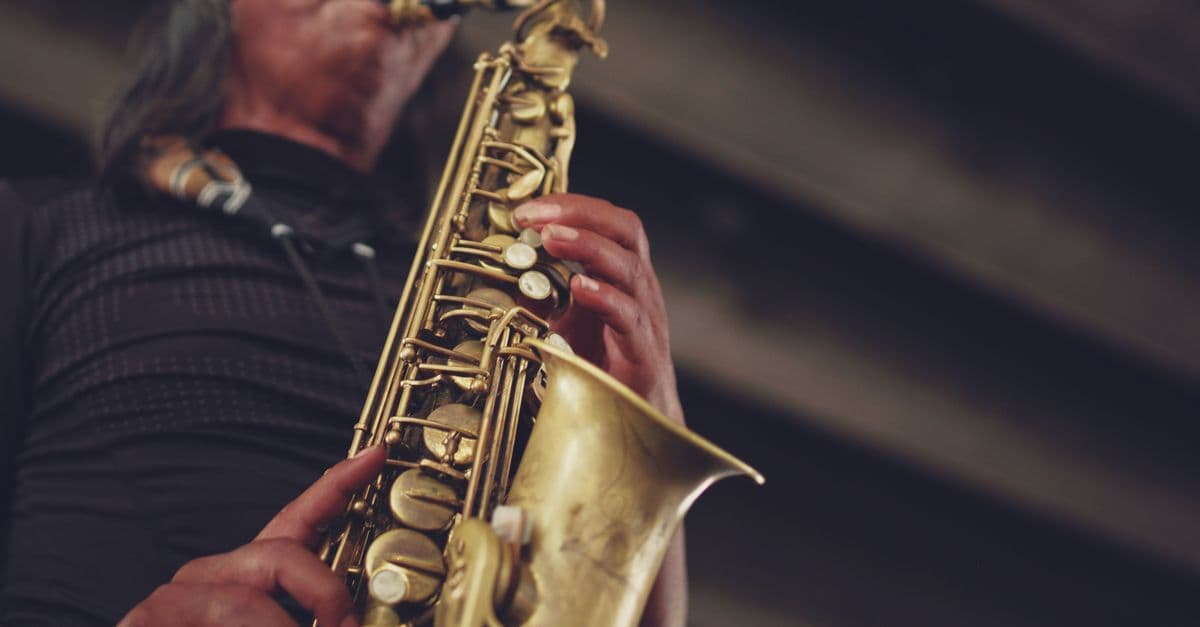
Photo: Chevanon Photography / Pexels
The saxophone exists because one Belgian instrument maker refused to accept that woodwinds and brass instruments belonged to separate worlds. Adolphe Sax patented his new instrument on June 28, 1846, after surviving what historians estimate were at least a dozen near-fatal accidents before he turned 20. Paris's established instrument-making guild tried to destroy him legally, socially, and financially. They failed. What they could not have anticipated was that the instrument they despised would, eight decades later, become the defining voice of the most influential American art form of the 20th century.
Who Was Adolphe Sax, and Why Did He Almost Not Live to Invent Anything
Antoine-Joseph Sax was born on November 6, 1814, in Dinant, Belgium, a town on the Meuse River known for its copper smelting. He went by Adolphe. His father, Charles-Joseph Sax, built musical instruments for the Belgian military and ran a workshop in Brussels where young Adolphe grew up surrounded by wood, metal, and the logic of acoustic mechanics.
Source: Adolphe Sax — Britannica
The childhood of Adolphe Sax reads less like a biography than an insurance actuary's nightmare. At age three, he tumbled down a three-story staircase and cracked his skull on a stone floor, lapsing into a coma for days. Neighbors reportedly told his mother he would not survive the week. He did. Around the same age, he drank a bowl of acidic water he mistook for milk, and on a separate occasion swallowed a pin. He was burned in a gunpowder explosion. He fell asleep in a room where varnished furniture was drying and nearly asphyxiated from the fumes. He fell into a river face-down and was pulled out unconscious by a passing villager. A large slate tile fell from a roof and struck him on the head, rendering him temporarily comatose.
Source: The Nine Lives of Adolphe Sax — EverythingSummerCamp
His mother, by some accounts, described him to neighbors as "a little boy whom death seems to pursue." He was one of 11 children. He was the only one who seemed to court catastrophe at every turn, and the only one who survived all of it.
What Sax did not lose in any of these accidents was his obsessive interest in acoustics. By his teens he was studying at the Brussels Conservatory, mastering the clarinet and flute while also spending time in his father's workshop learning the metallurgy and mechanics of instrument construction. He was not merely a musician who understood instruments; he was an engineer who could play them.
Source: Adolphe Sax — Wikipedia
How the Saxophone Actually Works
The saxophone is a hybrid in the most literal acoustic sense. Its body is made of brass — typically yellow brass or bronze — but it is classified as a woodwind because sound is generated by a vibrating reed attached to its mouthpiece, not by the player's lips buzzing against a cup mouthpiece as in a trumpet or trombone. Think of it as a clarinet's voice box transplanted into a brass body: the reed does what it does in any woodwind, but the conical metal tube amplifies and projects the sound with the power usually reserved for brass instruments.
The reed — a thin strip of cane from Arundo donax plants, most famously grown in the Var region of southern France — sits in a ligature against the flat face of the mouthpiece. When the player blows across it, the reed vibrates at frequencies determined by which keys are pressed along the instrument's body. Each key opens or closes a pad that covers a tone hole, changing the effective length of the vibrating air column inside the tube. Longer column, lower pitch. Shorter column, higher pitch. This is identical in principle to what a flute or oboe does, but the saxophone's conical bore (a tube that widens continuously from mouthpiece to bell) means it overblows at the octave rather than the twelfth as a clarinet does. That difference shapes the entire character of the instrument's upper register and is part of why the saxophone's tone is richer and more easily blended with brass in open-air settings.
Source: Saxophone Acoustics — University of New South Wales Physics
Sax patented not one instrument but a family of 14, organized in two parallel series: one for orchestral use (in C and F) and one for military band use (in B-flat and E-flat). The military band series survived. The orchestral series did not achieve adoption. Today's standard saxophones — soprano, alto, tenor, baritone — are all transposing instruments from the military band series.
| Instrument | Pitch | Common key |
|---|---|---|
| Soprano | Highest | B-flat |
| Alto | Mid-high | E-flat |
| Tenor | Mid-low | B-flat |
| Baritone | Low | E-flat |
| Bass | Very low | B-flat |
The Patent Battle That Nearly Ended the Saxophone Before Anyone Had Heard It
Sax moved from Brussels to Paris in 1842, at age 27, carrying prototypes of several new instrument designs and letters of introduction to Hector Berlioz, one of France's most celebrated composers. Berlioz heard the new instrument, wrote approvingly of it in the Journal des Débats in June 1842, and helped Sax establish a workshop on the Rue Saint-Georges.
Source: Adolphe Sax vs. the Paris Instrument Makers — SaxBandits
Paris's established instrument makers saw Sax not as a colleague but as a foreign interloper threatening their guild's economic monopoly. They formed a trade association — referred to in historical accounts as "The United Association of Instrument Makers" — with the explicit purpose of destroying his business. Their tactics included placing slanderous articles in the press, filing cascading lawsuits against him, and attempting to have instrument suppliers boycott his workshop.
The legal assault over the saxophone patent was particularly ingenious in its cynicism. When Sax filed his initial patent application, his rivals challenged it on the grounds that the instrument described in the application did not technically exist as a working prototype. When that argument failed, they argued the design was merely a modification of pre-existing instruments — the ophicleide, the bass clarinet — and therefore not novel. When that failed too, they attempted a procedural gambit: because Sax had publicly demonstrated the instrument at several concerts before the patent was granted, they argued that public disclosure had voided the novelty requirement.
Sax's response was theatrical and confident. He withdrew his patent application entirely, then publicly challenged his rivals to build a working saxophone — if the instrument was not novel, surely any competent maker could replicate it. He gave them one year. No one produced a playable instrument of comparable quality. Shortly before the deadline elapsed, Sax re-filed his application, and this time it was granted on June 28, 1846.
The battles did not end there. Legal disputes over the validity of Sax's patents and accusations of patent infringement continued for more than 20 years. He was declared bankrupt in 1852, rebuilt, went bankrupt again in 1873, and a third time later in life. He died in 1894 at age 79, largely impoverished, the instrument bearing his name still not accepted into the European classical orchestra.
Source: Adolphe Sax — Encyclopedia.com
The fact worth sitting with: Adolphe Sax was declared bankrupt three separate times during his lifetime, and died without significant financial reward from his most famous invention. The global saxophone market is now valued at hundreds of millions of dollars annually.
Why Classical Music Rejected It and Jazz Claimed It
The rejection of the saxophone by European classical orchestras was not purely snobbery, though snobbery was present. Composers who wrote for orchestras expected instruments with well-established timbral relationships — the way an oboe's nasal brightness balances against a string section's warmth is something composers had spent centuries learning to manipulate. The saxophone occupied an acoustic middle ground that didn't fit the existing color palette. It was louder and more penetrating than the woodwinds it sat near, not as naturally blending as the clarinets and flutes, and its tone in the classical context could sound coarse rather than rich.
Military bands were a different story. In outdoor performance, projection matters more than blend, and the saxophone's hybrid character — woodwind agility with brass power — made it ideal for march music and ceremonial fanfares. France adopted it into military bands, as did Belgium and eventually many other countries. But orchestral concert halls remained mostly closed.
Source: Why the Saxophone Never Joined the Orchestra — Harvard Crimson
The transformation arrived from an unexpected direction. In the United States, by the 1910s and 1920s, jazz was forming in the mixing of African American musical traditions with European harmonic structures in cities like New Orleans, Chicago, and New York. Early jazz was dominated by brass — cornets, trombones — and rhythm. The saxophone entered jazz bands initially as a novelty and found, in the improvisation-centered structure of jazz, something that classical composition had never offered it: a context where its expressive flexibility was a feature, not a defect.
Coleman Hawkins, a Missouri-born tenor saxophonist who joined Fletcher Henderson's orchestra in 1923, is widely credited as the first major jazz voice on the instrument. Hawkins developed a dense, full-bodied tone and an approach to improvisation that treated harmony with a sophistication previously associated more with European concert music. His 1939 recording of "Body and Soul" — in which he essentially ignores the melody and improvises over the chord changes for the entire track — is often cited as a foundational document in the history of modern jazz.
Source: Coleman Hawkins — Britannica
Lester Young, a contemporary of Hawkins, took a diametrically opposite approach. Where Hawkins played with weight and vertical density, Young played with airiness and horizontal flow, his lines floating across the beat rather than landing on it. The contrast between the two men essentially defined the poles of jazz saxophone expression for the next generation. Bebop saxophonist Dexter Gordon said: "For musicians of the generation before mine, Coleman Hawkins was the one and only model. Lester changed all that."
Source: Before Charlie Parker, There Was Lester Young — Scalawag
Charlie Parker, who emerged in the 1940s, synthesized both traditions at a speed and harmonic complexity that had no precedent. Parker's bebop — performed primarily on alto saxophone — treated the instrument as capable of expressing anything the human musical imagination could conceive. From Parker forward, the saxophone ceased to be an instrument that needed defending and became one that needed no introduction.
A Timeline of the Saxophone's First Century
| Year | Event |
|---|---|
| 1814 | Adolphe Sax born in Dinant, Belgium |
| 1842 | Sax moves to Paris; Berlioz writes approvingly of the new instrument |
| 1846 | Patent granted in Paris (June 28) for the saxophone family |
| 1852 | Sax declares bankruptcy for the first time |
| 1867 | Saxophone wins gold medal at the Paris World Exposition |
| 1894 | Adolphe Sax dies in Paris at age 79 |
| 1923 | Coleman Hawkins joins Fletcher Henderson's jazz orchestra |
| 1939 | Coleman Hawkins records "Body and Soul," a jazz milestone |
| 1945 | Charlie Parker's bebop recordings redefine the saxophone's possibilities |
Patent Disputes: The Rivals Who Tried to Unmake the Saxophone
The post-1846 patent disputes deserve their own chapter because they shaped the instrument's commercial development as much as Sax's own engineering did. When the original 15-year patent expired in 1866, instrument makers across France and Belgium began producing saxophones — and quickly began competing on price in ways that degraded quality. Sax filed infringement suits, lost several on technicalities, and found himself in court almost continuously through the 1860s and 1870s.
Source: Adolphe Sax vs. the Paris Instrument Makers — SaxBandits
The competitors were not merely opportunists; some were serious instrument makers who improved on Sax's original designs. The key mechanisms — the arrangement of key clusters to allow the right-hand fingers to cover multiple tone holes — were gradually refined by makers in Paris and later in Germany. By 1900, two German firms (Conn in the United States, Buffet-Crampon and Selmer in France) were producing instruments that surpassed Sax's originals in key action reliability and tonal consistency.
Henri Selmer purchased the Sax workshop and its remaining patent archives in 1929, a transaction that gives the modern Selmer Paris company its historical claim to direct lineage from the original inventor. Yamaha entered saxophone production in 1967, bringing Japanese manufacturing precision to the market and eventually driving down the price of professional-quality instruments significantly.
Source: History of Selmer Paris — Selmer
Today the dominant professional saxophone brands — Selmer Paris, Yamaha, Yanagisawa — each occupy distinct market positions. A Selmer Series III alto sells for approximately $4,000 to $5,000 USD. A Yamaha YAS-62 professional model retails for around $2,500. Beginner instruments from Eastman or Jupiter can be purchased for under $500, a price point that would have astonished both Sax and his rivals.
Unintended Consequences: What the Saxophone Changed Beyond Music
The saxophone's military band origins had a direct consequence that Sax could not have foreseen: it helped standardize the instrumentation of American concert bands in the late 19th and early 20th centuries. John Philip Sousa, the "March King," incorporated saxophones into his touring band's lineup, exposing millions of Americans to the instrument in the decades before jazz made it ubiquitous.
Source: Saxophone in the Concert Band — Music Educators Journal (JSTOR)
The saxophone also changed the economics of popular music in the recording era. In the 1920s and 1930s, before electric amplification made it possible for softer instruments to project into large dance halls, the saxophone's natural volume and tonal penetration made it essential for the dance bands that provided the soundtrack for commercial radio and ballroom entertainment. The instrument that orchestral composers had rejected was, in a different commercial context, exactly what the market needed.
There is also an educational consequence. The saxophone is one of the most commonly taught instruments in American school band programs, partly because its fingering system is more intuitive than the clarinet's for beginning students, and partly because jazz-focused curricula have created a demand for it. This means that hundreds of thousands of students each year encounter the physics of reed acoustics, transposition, and ensemble playing through an instrument whose inventor died broke.
Source: Music Education and the Saxophone — National Association for Music Education
Where the Saxophone Stands Today
Global saxophone production is concentrated in a handful of centers: Pairs and its surrounding region for high-end French instruments, Japan (Yamaha, Yanagisawa) for precision manufacturing across all price points, Taiwan for mid-range instruments, and China for entry-level production. The instrument Sax patented in 14 variants in 1846 is now produced in millions of units annually across more than a dozen countries.
Source: Global Musical Instrument Market — Verified Market Research
Jazz remains the saxophone's primary cultural home, but its reach is broader. Rock and roll (the saxophone solo in "Baker Street" by Gerry Rafferty, the tenor lines in Bruce Springsteen's E Street Band), pop music (the baritone riff in many funk and R&B recordings), film scores, and contemporary classical compositions all use the instrument that classical composers of the 1840s refused to accept.
The International Saxophone Symposium, held annually, attracts performers and composers from more than 40 countries. The World Saxophone Congress, held every four years, draws thousands of participants. What began as one Belgian engineer's attempt to solve a timbral gap in the military band has become a genuinely global instrument with no single musical tradition it calls home.
FAQs
Q: Why did Adolphe Sax patent the saxophone in France rather than Belgium? A: Paris was the center of European musical instrument manufacturing and the home of the most influential military band commissioning bodies. France also had a more developed industrial patent system in the 1840s. Sax had moved to Paris in 1842 specifically because success there meant access to the French military contracts that would secure the instrument's commercial future.
Q: Is the saxophone a woodwind or a brass instrument? A: It is classified as a woodwind. Despite its brass body, sound is produced by a vibrating cane reed at the mouthpiece, which is the defining characteristic of the woodwind family. The brass body functions as a resonator, not as the sound-generating element. Orchestras seat the saxophone, when it appears, in the woodwind section.
Q: Why did it take so long for the saxophone to enter orchestral music? A: The classical orchestral repertoire is built around instruments established before 1800. Composers learn to write for those instruments. The saxophone's hybrid character did not fit the existing acoustic logic of the orchestra's wind section, and there was no strong financial incentive for composers to learn a new sonic color when the orchestra already functioned as a complete system. A handful of composers — Ravel, Glazunov, Debussy — did write for it, but the saxophone never became a standard orchestral voice.
Q: Who was the first great jazz saxophonist? A: Coleman Hawkins is generally credited as the first major jazz voice on the tenor saxophone, establishing it as a solo instrument in the 1920s and 1930s. Sidney Bechet was an earlier figure on soprano saxophone, but Hawkins's influence on the instrument's harmonic and tonal vocabulary was broader and more lasting.
Q: How many types of saxophone are there? A: Sax's original 1846 patent covered 14 variants, but most are now obsolete. The four instruments in regular production and widespread use are the soprano, alto, tenor, and baritone. Bass and contrabass saxophones exist in small numbers, primarily for specialized ensemble use.
Q: Why did Adolphe Sax go bankrupt three times if his instrument became so popular? A: The patent system of the 19th century provided protection for a fixed term (15 years in France), after which competitors could legally manufacture the instrument. Sax also faced continuous legal costs from defending against infringement suits and pursuing his own infringement claims. He was not primarily a businessman; he was an inventor, and his workshop's economics never kept pace with his legal expenditures.
The Takeaway
The saxophone's history is a study in institutions resisting what they cannot categorize. Classical music rejected it because it didn't fit the existing color palette. Paris's instrument guild tried to erase it because it threatened their market position. The courts tied its creator in litigation for decades. None of it worked. What ultimately determined the saxophone's survival was not institutional acceptance but acoustic utility: in the right context — specifically, the improvisation-driven, outdoor-capable, expressively demanding context of American jazz — the instrument was exactly what was needed. Adolphe Sax did not live to see any of that. He died in 1894, nearly broke, the instrument named for him not yet recognized as the voice of a new century's music.
Read next:
Weekly digest
Stay ahead of the curve
Get the best science, AI, and tech stories delivered to your inbox every week. No spam — unsubscribe any time.
About the Author
SciHub101 is an independent science and technology publication founded and edited by Buğra Sözeri, a software engineer and app developer based in Türkiye. Articles are drafted against peer-reviewed literature and primary sources, fact-checked, and edited by a human before publication. Where we compare products, anything built by our own team is labelled as such — see the editorial guidelines and About page for how corrections and disclosures work.
Related Articles
The Search Engine: From Archie to AI-Augmented Search
How the search engine evolved from a 1990 McGill University FTP indexer to Google's PageRank and today's AI-augmented search. The full history explained.
The Roller Coaster: From Russian Ice Slides to 240 km/h Steel
Roller coasters evolved from 17th-century Russian ice slides to 240 km/h steel machines. Here's the full engineering and cultural history of the world's most engineered thrill.

The Paperclip: Supply Chains, Myths, and 11 Billion Units a Year
The paperclip's true origin is more complicated than Johan Vaaler. Here's the real history of the Gem design, the WWII resistance myth, and 11 billion units per year.
Airplane Invention: The Wright Brothers and Controlled Flight
The Wright brothers solved controlled powered flight, but gliders, engines, wind tunnels, and earlier aviation pioneers all mattered.

Antibiotics Invention: Penicillin, Fleming, Florey, and Chain
Antibiotics began with penicillin's discovery, but turning mold into medicine required chemistry, fermentation, wartime scale-up, and clinical testing.
Battery Invention: From Volta Pile to Lithium-Ion
The battery begins with Volta's pile, but modern batteries evolved through chemistry, materials, portability, and rechargeable systems.