How Birds Navigate: The Science of Migration
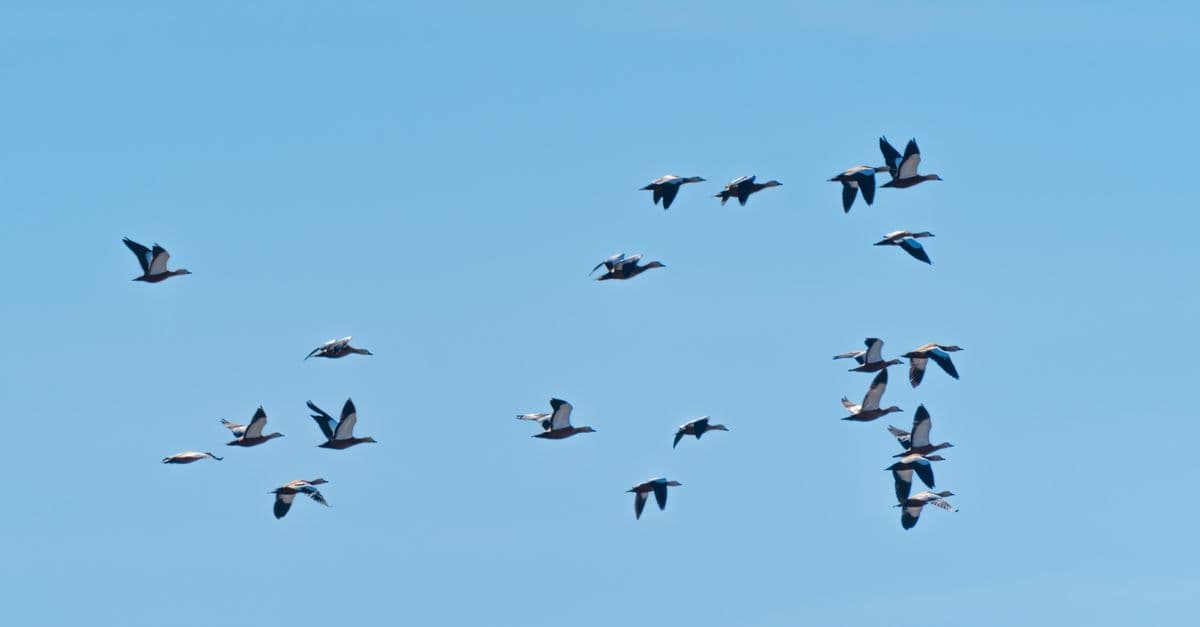
Photo: Saleh Bakhshiyev / Pexels
Every autumn, roughly 50 billion birds lift off from their breeding grounds and disappear into the sky. They cross mountain ranges, open oceans, and scorching deserts, guided by navigational systems that took millions of years to evolve — and that scientists are still working to fully decode. Bird migration is not merely an impressive natural spectacle. It is a window into quantum biology, sensory perception beyond human experience, and the profound consequences of a changing planet.
Why Birds Migrate at All
A common misconception is that birds migrate because of cold temperatures. The real driver is food. Insects, berries, and fish all follow seasonal availability, and a bird that stays put in a northern winter will starve, regardless of how warmly it can insulate itself. Migration is a gamble — the journey is dangerous — but the caloric payoff of summer's insect explosion at high latitudes makes the risk worthwhile.
Not all birds migrate. Some species are resident year-round, exploiting seeds, bark insects, or carcasses that persist through winter. Others are partial migrants, with some populations moving and others staying. But the long-distance migrants — the Arctic terns, the bar-tailed godwits, the warblers — have committed so fully to migration that their entire physiology reorganizes around it.
The Scale of the Phenomenon
The Arctic tern (Sterna paradisaea) holds the distance record. Following a figure-eight route through the Atlantic, it travels roughly 70,000 km per year — from breeding grounds in the Arctic to wintering areas near Antarctica and back. Over a 30-year lifespan, a single bird covers the equivalent of three trips to the Moon and back.
But distance alone does not capture the full picture. The bar-tailed godwit (Limosa lapponica baueri) achieves something arguably more astonishing: a non-stop flight of approximately 11,000 km from Alaska to New Zealand, across open Pacific Ocean with no opportunity to land, feed, or drink. Satellite tracking confirmed this journey in 2007. To fuel it, godwits double their body weight in fat over several weeks — and they literally shrink their digestive organs before departure, breaking down the gut and liver for additional protein and freeing up space and weight for flight muscle. When they arrive in New Zealand, they spend weeks rebuilding those organs before feeding seriously.
Three Navigation Systems in One Brain
How do birds know where to go? Research over the past six decades has revealed that they do not rely on a single system. They carry at least three independent compasses, plus additional map-sense mechanisms, integrated in ways that neuroscience is still mapping.
1. The Magnetic Compass
The most revolutionary discovery in migration biology is that birds can sense Earth's magnetic field directly. The primary mechanism involves cryptochrome proteins in the retina of the eye. When blue light strikes these proteins, it triggers a quantum chemical reaction: a pair of electrons become quantum mechanically entangled — their spin states linked — in what is called a radical pair mechanism. Because Earth's magnetic field is just strong enough to influence the relative spin orientation of these radical pairs, the outcome of the chemical reaction depends on the bird's orientation relative to the field.
This is not metaphor. It is quantum mechanics operating inside a biological molecule, at room temperature, in a living eye. The theoretical framework was proposed by Klaus Schulten in 1978 and extended into a testable biological prediction by Thorsten Ritz and colleagues in a landmark 2000 paper in Biophysical Journal. Ritz predicted that radio-frequency oscillating magnetic fields tuned to the Larmor frequency of the radical pairs would disrupt the compass — and subsequent experiments confirmed exactly this.
Wolfgang and Roswitha Wiltschko conducted foundational behavioral experiments over decades showing that European robins (Erithacus rubecula) use an inclination compass — responding to the angle of magnetic field lines relative to the surface, not to magnetic polarity. This distinction matters: unlike a compass needle that points north or south, the bird's compass effectively distinguishes "toward the pole" from "away from the pole" based on the inclination angle. Crucially, covering the eye or disrupting the right eye specifically — not the left — impairs magnetic orientation, pointing to a lateralized neural pathway from the right eye to the brain.
A second proposed magnetic sense involves magnetite crystals — tiny particles of iron oxide — detected in the beaks of several species. These might contribute to a magnetic map sense rather than compass direction, though the relative roles of magnetite versus cryptochrome remain an active research debate.
2. The Star Compass
Nocturnal migrants cannot see the sun. Many of them, however, can see stars — and they use the night sky as a map. Stephen Emlen demonstrated this elegantly in 1967 using the Emlen funnel: a cone-shaped cage lined with ink-treated paper, in which an Indigo bunting (Passerina cyanea) stands. When the bird makes orientation jumps, its feet leave ink scratches on the paper, recording which direction it preferred.
Emlen placed buntings in a planetarium and rotated the artificial star field. The birds reoriented to match the rotated sky, proving they were using stars, not some other cue. More remarkably, he found that the birds do not memorize specific star positions. Instead, during a critical developmental window as juveniles, they learn which point in the sky the stars rotate around — the celestial pole. It is the axis of rotation, not the stars themselves, that provides the reference direction. This means the star compass is partly learned from experience during development, not purely innate.
3. The Sun Compass
During daytime migration, birds use the sun — but the sun's position shifts continuously across the sky. To extract a stable directional reference, birds must combine solar azimuth (the compass bearing of the sun) with the time of day. This requires an internal circadian clock accurate enough to track time across time zones.
Experiments in which birds' internal clocks were shifted by exposing them to artificial light cycles at unusual times predictably rotated their preferred direction by an amount matching the clock shift. The sun compass is time-compensated: the bird essentially calculates "the sun is at this position, my clock says it is this time, therefore north is in this direction."
Experienced adult migrants also rely heavily on visual landmark memory. Older birds navigating familiar routes use coastlines, river valleys, mountain ridges, and urban features as waypoints. This is why juvenile birds on their first migration make more errors than adults — they lack the accumulated map.
The Magnetic Map: Knowing Where, Not Just Which Way
A compass tells you direction. A map tells you position. Evidence now suggests that birds have both. By detecting the intensity and inclination angle of the local magnetic field — two parameters that vary predictably with geographic location — birds may be able to estimate their latitude and longitude, at least roughly. Henrik Mouritsen and collaborators have contributed substantially to understanding how this information is processed in the brain, identifying regions of the forebrain (including the hippocampus and the cluster N region of the visual cortex) that activate during magnetic processing.
The magnetic map appears to allow birds displaced from their route — for instance by a storm — to reorient toward their destination rather than simply continuing in their original compass direction. This "true navigation" capacity sets experienced migrants apart from simpler compass followers.
Notable Migrants at a Glance
| Species | Route | Distance (one way) | Notable Feature |
|---|---|---|---|
| Arctic tern | Arctic → Antarctica | ~35,000 km | Longest annual migration of any animal |
| Bar-tailed godwit | Alaska → New Zealand | ~11,000 km | Longest non-stop flight; shrinks gut before departure |
| Ruby-throated hummingbird | Eastern US → Central America | ~800 km | Crosses Gulf of Mexico non-stop (~20 hours) |
| European swift | Europe → Sub-Saharan Africa | ~5,000 km | Spends ~10 months airborne; sleeps while flying |
| Blackpoll warbler | Eastern US → South America | ~4,000 km non-stop | Weighs ~12 g; crosses Atlantic Ocean |
| Great snipe | Scandinavia → sub-Saharan Africa | ~6,800 km | Flies at up to 97 km/h, among fastest migrants |
Climate Change and the Phenological Trap
One of the clearest ecological consequences of climate change is phenological mismatch — a disruption in the timing synchrony between species. In temperate Europe and North America, earlier springs mean that caterpillars and other insects peak earlier than they did decades ago. Many long-distance migrants, however, time their departure from wintering grounds in Africa or South America based on day length — a reliable proxy for season that has not changed. They arrive to find that the peak food supply has already passed.
This is not hypothetical. Studies of Pied flycatchers (Ficedula hypoleuca) in the Netherlands have shown population declines directly linked to mismatch between arrival date and caterpillar peak. Species that winter closer to their breeding grounds and can track local conditions more flexibly are declining less than long-distance migrants.
Climate change also shifts flyway patterns. Some species are shortening migrations or wintering farther north as conditions permit, while others find stopover habitats altered or degraded. The Arctic tundra breeding grounds of shorebirds are warming at twice the global average rate, compressing the habitat that some species depend on entirely.
The relationship between migration and broader ecological disruption is explored further in how extreme weather events connect to climate change.
Light Pollution and Window Collisions
Artificial light at night disorients nocturnally migrating birds. Many species are attracted to lit buildings, towers, and urban glow, causing them to circle lit areas, exhaust themselves, and collide with structures. An estimated 1 billion birds die annually from window collisions in the United States alone — the single largest human-caused source of bird mortality after habitat loss.
The problem is not uniform. Migration happens primarily in pulses driven by weather fronts, concentrated on a handful of nights per season. Tools like BirdCast (birdcast.info), developed by the Cornell Lab of Ornithology, now use weather radar data to forecast migration intensity in real time, identifying nights when billions of birds are aloft. Cities including Chicago, Houston, and New York have launched Lights Out programs, asking buildings to turn off or dim non-essential lights on peak migration nights.
Individual actions matter at scale. Turning off interior lights visible through windows from 11pm to 6am during spring (March–June) and fall (August–November) migration seasons substantially reduces collision risk. Applying window film, external screens, or collision-deterrent tape to glass also helps.
The Neural Architecture of Navigation
How does the brain integrate three independent compass systems plus a map? The answer involves regions familiar from general vertebrate neuroanatomy but repurposed in striking ways.
The hippocampus is enlarged in species that must remember spatial information — food-caching birds have larger hippocampi than non-cachers. Migrants that navigate over familiar routes also show hippocampal hypertrophy. The cluster N region of the visual forebrain, identified by Mouritsen as highly active during magnetic orientation, appears to be a specialized visual-magnetic integration area without a clear mammalian homolog. The habenula and pineal gland contribute circadian inputs that synchronize the time-compensated sun compass.
This integration is not merely serial (compass → brain → behavior). Experiments show that birds can switch between navigation systems depending on conditions — using magnetic orientation in heavy cloud cover, switching to star or sun compass when skies clear, and layering landmark memory over the top when in familiar terrain.
The cognitive complexity implied here connects to broader questions about animal intelligence and what perception means across species, explored in depth in animal intelligence and cognition.
Evolutionary Origins
Migration did not appear suddenly. Phylogenetic analyses suggest it evolved independently many times in birds — an example of convergent evolution driven by similar selective pressures. Some researchers argue that many migratory lineages evolved from sedentary tropical ancestors that began making seasonal forays toward the poles to exploit summer productivity, gradually extending those journeys as the rewards increased.
The genetic basis of migratory behavior is partially understood. In Blackcap warblers (Sylvia atricapilla), a population that has shifted from southwestern to northwestern migration — now wintering in Britain rather than Africa — shows heritable differences in orientation and timing, with an identifiable genomic region linked to migratory direction. This demonstrates that migration routes can evolve on human-observable timescales, which is both remarkable and relevant to conservation: it suggests some species may be able to adapt to changing conditions if gene flow and population sizes allow. The evolutionary mechanisms underlying such adaptation are covered in detail in evolution and natural selection.
Conservation Imperatives
Migration is a phenomenon that connects ecosystems across hemispheres. A shorebird breeding in Siberia and wintering in Australia depends on refueling habitat in the Yellow Sea — habitat that has been reduced by 65% through land reclamation. Losing a single critical stopover can collapse an entire flyway population.
Conservation of migratory species requires international coordination at a scale that few other wildlife issues demand. The Convention on Migratory Species (CMS) and the East Asian–Australasian Flyway Partnership represent frameworks for this cooperation, but enforcement and funding remain inadequate relative to the threat.
Citizen science contributes meaningfully. Programs like eBird aggregate millions of bird sightings annually, generating the distributional data needed to track population trends and identify critical habitats. Participating in local bird counts, supporting dark-sky ordinances, and advocating for wetland protection all contribute to the infrastructure that keeps flyways functional.
Frequently Asked Questions
Q: Do birds use GPS to navigate during migration? A: No — birds predate GPS by millions of years. They use an integrated system of magnetic field sensing (via cryptochrome proteins), celestial cues (stars and sun), circadian timing, and visual landmark memory. The result is functionally analogous to GPS but operates through completely different physical mechanisms.
Q: How does the magnetic compass work at the molecular level? A: When blue light hits cryptochrome proteins in the bird's retina, it creates a radical pair — two electrons whose quantum spin states are entangled. Earth's magnetic field is just strong enough to influence how quickly these spin states interconvert, changing the ratio of chemical products. The bird's visual system appears to perceive magnetic direction as a modulation of the visual field, essentially "seeing" the magnetic field overlaid on normal vision.
Q: Why does the bar-tailed godwit shrink its digestive organs before migrating? A: Organs that are not needed during an 11,000 km non-stop flight are metabolic dead weight. Before departure, godwits catabolize their gut, liver, and kidneys, using the protein for energy and freeing up mass. This allows more body volume to be occupied by fat — the fuel for flight — and reduces total weight, improving fuel efficiency. Upon arrival, they rebuild these organs over several weeks before resuming normal feeding.
Q: How does climate change affect bird migration? A: The primary mechanism is phenological mismatch: warming springs cause insect food peaks to occur earlier, but many migrants time departure from wintering grounds by day length, which hasn't changed. They arrive to find peak food already past. Some species are adjusting departure dates, but long-distance migrants have less flexibility because they need to leave distant wintering areas before local conditions signal the shift. Population declines in several long-distance migrant species are directly linked to this mismatch.
Q: How many birds die from window collisions each year? A: Estimates for the United States alone range from 600 million to 1 billion birds annually. Glass is effectively invisible to birds — they see the reflection of sky or vegetation, not a barrier. Most collisions happen at residential windows, not skyscrapers. Simple interventions like external screens, ultraviolet-reflective films (visible to birds but not humans), or closely spaced tape strips reduce collisions by over 90%.
Q: Can birds navigate without any of their three compass systems? A: They can compensate to a degree. If the magnetic compass is disrupted by radio-frequency fields, experienced birds can switch to celestial cues. If stars and sun are obscured, the magnetic compass takes over. Naive birds on their first migration, who lack map experience, are more dependent on any single system being available. This redundancy suggests that each system evolved under different conditions and that no single cue is reliably available in all environments.
Q: What is BirdCast and how can people use it? A: BirdCast (birdcast.info) is a Cornell Lab of Ornithology project that uses NEXRAD weather radar data to detect migrating birds in real time. Birds show up as radar returns, allowing researchers to count and track migration pulses. The site provides nightly migration forecasts by region, alerts for peak migration nights, and cumulative migration maps. Anyone can use it to know when to turn off building lights, when to watch for migrants in their local park, or simply to visualize the extraordinary scale of the phenomenon overhead.
Sources and Further Reading
- Wiltschko, W., & Wiltschko, R. (1972). Magnetic compass of European robins. Science, 176(4030), 62–64.
- Ritz, T., Adem, S., & Schulten, K. (2000). A model for photoreceptor-based magnetoreception in birds. Biophysical Journal, 78(2), 707–718.
- Emlen, S. T. (1967). Migratory orientation in the Indigo bunting, Passerina cyanea. The Auk, 84(3), 309–342.
- Mouritsen, H. (2018). Long-distance navigation and magnetoreception in migratory animals. Nature, 558, 50–59.
- Gill, R. E., et al. (2009). Extreme endurance flights by landbirds crossing the Pacific Ocean: ecological corridor rather than barrier? Proceedings of the Royal Society B, 276(1656), 447–457.
- Both, C., et al. (2006). Climate change and population declines in a long-distance migratory bird. Nature, 441, 81–83.
- Loss, S. R., Will, T., & Marra, P. P. (2014). Estimates of bird collision mortality at windows. The Condor, 116(1), 8–23.
- Helbig, A. J., et al. (1994). Gene flow and the evolution of migratory direction in blackcap warblers. Evolution, 48(6), 1997–2006.
Read next:
Follow new articles
Add SciHub101 to your feed reader to see new science and technology stories.
About the Author
SciHub101 is an independent science and technology publication founded and edited by Buğra Sözeri, a software engineer and app developer based in Türkiye. AI tools assist with drafting and research. Source documentation in the existing archive is uneven, and articles are being reviewed and corrected. The Editorial Team byline identifies editorial responsibility; it does not certify specialist or independent human review. Where we compare products, anything built by our own team is labelled as such — see the editorial guidelines and About page for how corrections and disclosures work.
Related Articles

The Periodic Table Explained: How Chemistry Is Organized
How the periodic table organizes the elements: Mendeleev's predictions, atomic number, electron shells, trends, gold's color, and superheavy oganesson.

Ocean Science: How Oceans Work Explained
How oceans work: depth zones, the conveyor-belt circulation, acidification, hydrothermal vents, tides, and plastics, with figures from NOAA and the IPCC.

How Animals Navigate With a Magnetic Sense: Earth's Invisible Compass
A hatchling loggerhead sea turtle that has never left its home beach swims in the right direction inside a tank where the only clue is an artificial magnetic field. Here is how animals read Earth's magnetic field, which explanations have the best evidence, and which parts of the story are still contested.
How Wildfires Spread — The Physics Behind the Flames
Wildfires spread through three heat-transfer mechanisms — radiation, convection, and conduction — turbocharged by wind, dry fuel, and a fire's own self-generated weather. Understanding the physics explains why modern wildfires outrun every suppression strategy thrown at them.

The Chemistry of Photosynthesis — From Photons to Sugar
How photosynthesis works at the molecular level — the light reactions, Z-scheme, electron transport chain, Calvin cycle, and why quantum coherence may be involved.