AI & Water Conservation: How Machine Learning Cuts Waste
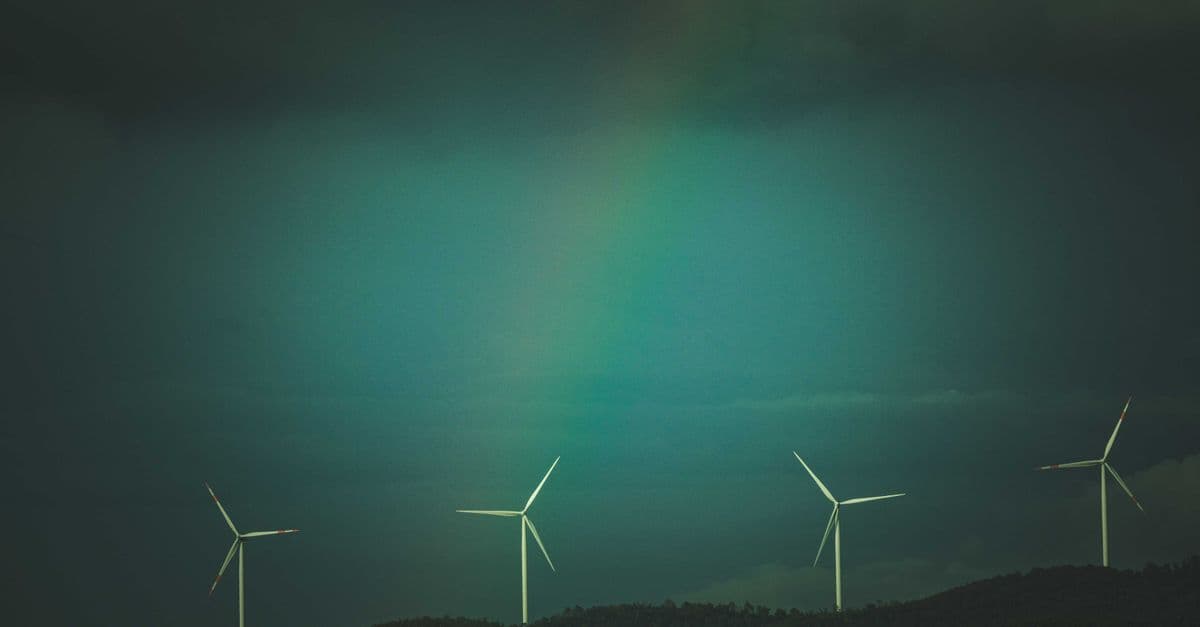
Photo: Francesco Ungaro / Pexels
Roughly 4 billion people already live under severe water scarcity for at least one month every year, and the United Nations projects that number could reach 5 billion by 2050 as populations grow and the climate shifts (UN-Water). Agriculture consumes about 72% of the freshwater humans withdraw globally, much of it lost to evaporation, runoff, and guesswork (FAO AQUASTAT 2025). Machine learning is now being used to close that gap — predicting exactly how much water a field needs, listening for leaks inside pipes, and forecasting demand before shortages hit. This piece walks through the mechanics behind each approach and what the evidence actually shows about how well they work.
The problem: water systems built for a world with more water
Most water infrastructure in use today, whether it is a farm's irrigation schedule or a city's century-old pipe network, was designed around a simple assumption: water would keep arriving on the same terms it always had. That assumption is breaking down.
Traditional irrigation runs on fixed schedules. A farmer waters a field every three days regardless of whether it rained the night before or whether the soil ten centimeters down is already saturated. It is the agricultural equivalent of setting your thermostat to a schedule instead of letting it sense the room temperature. Municipal water systems have a parallel problem: pipes leak continuously, and without sensors, utilities only find out about a break when it surfaces as a sinkhole or a spike on a monthly bill.
Neither system is "wasteful" by design. They are just blind. A three-day watering schedule was a reasonable compromise before cheap sensors and predictive models existed. Now that they do, that blindness has a quantifiable cost.
How much water does inefficient irrigation actually waste?
Irrigation efficiency varies enormously by method and region — drip systems recover 95–100% of applied water at the root zone, while flood irrigation, still common in much of the world, can lose well over half its water to evaporation and runoff before crops absorb it (Netafim / Israel Trade). The gap between the two methods is where most of the ML-driven savings come from.
How machine learning actually predicts water needs
The core trick behind almost every AI water system is the same: turn a stream of sensor data into a short-term forecast, then use that forecast to make one decision — irrigate or don't, allocate more supply or don't, dispatch a repair crew or don't. It sounds simple, but the model underneath is doing something a human scheduler cannot: tracking dozens of interacting variables in real time and updating its prediction every few minutes.
Think of it like the difference between a weather forecast from 1990, which told you tomorrow's high and low, and a modern hourly forecast that adjusts as fronts move. The old system used a fixed rule. The new one recalculates constantly as new data arrives. Precision irrigation works the same way: instead of "water every three days," the model asks "what will soil moisture look like in 48 hours, and does the plant actually need water before then?"
How does a model predict soil moisture?
Long short-term memory networks (LSTM), a type of recurrent neural network built to recognize patterns across time, are trained on historical soil moisture readings paired with temperature, humidity, and rainfall data. The model learns how moisture typically rises and falls given a certain weather pattern, then forecasts the next 24 to 48 hours so irrigation can be timed precisely instead of guessed.
Field trials back this up with real numbers rather than marketing claims. A peer-reviewed comparison of LSTM-based irrigation scheduling against a standard rule-based system found water savings of more than 20% across three test sites while maintaining the same crop water-use efficiency (ScienceDirect, 2024). A separate deep-learning irrigation scheduling model (DLiSA) cut water volume by 43% compared to a simple threshold-based system, and by 23% compared to a standard feed-forward neural network (ScienceDirect, soil moisture forecast review). The range — roughly 20% to 43% — reflects how much a baseline system already wastes; fields on rigid fixed schedules see the biggest gains.
Why does an LSTM outperform a simpler model here?
Soil moisture depends on what happened days earlier, not just the current reading. An LSTM carries forward a "memory" of recent conditions, similar to how you'd judge whether to water a garden based on the whole week's weather, not just this morning's dew. Simpler models that only look at the current instant miss that context and tend to over- or under-water.
Leak detection: teaching software to listen for water escaping metal
Water pipes under pressure make a distinct, high-frequency sound when they leak, well above what a human ear can distinguish from ordinary flow noise. That sound signature is the raw material for one of the most mature applications of AI in water infrastructure: acoustic leak detection.
The traditional method is a technician walking the pipe route with a listening stick or ground microphone, a process so slow that a single 10-kilometer stretch of pipe can take months to fully inspect. It is a bit like trying to find a specific typo in a novel by reading it out loud one page at a time. Acoustic sensors networked along a pipe, recording continuously and feeding that data into a classifier, turn the same search into something closer to a spell-checker running in the background: constant, automatic, and flagging problems the moment they appear.
The published accuracy numbers are striking. A systematic review of 87 machine-learning-based acoustic leak detection studies published between 2000 and 2024 found individual models reporting classification accuracy as high as 99% under laboratory conditions, and field deployments using support vector machines and gradient-boosted models achieving 97.9% to 99.3% accuracy on real pipe networks (ScienceDirect systematic review; PMC field study). A multi-channel convolutional neural network tested in real-field conditions — not a lab — reported 95.4% accuracy, and a transformer-based model reached 96.0% accuracy with a 96.2% F1-score, a combined measure of precision and recall (ScienceDirect, transformer VAE study).
One caveat worth flagging: these methods work far better on metal pipes than on plastic ones. Leak noise attenuates — loses energy — much faster in plastic, so acoustic sensors have to be spaced closer together to catch the same signal, which raises deployment cost for utilities that have switched to PVC piping in recent decades.
Demand forecasting and the allocation problem
Water utilities do not just supply water, they allocate it: deciding how much goes to agricultural districts, urban customers, and industrial users, often weeks or months in advance. Get the forecast wrong in one direction and a district floods with more water than it can use, wasting supply; get it wrong the other way and a region runs dry mid-season.
This is a forecasting problem with the same shape as electricity demand forecasting or retail inventory planning: predict a number ahead of time, using historical patterns plus current conditions, then commit resources against that prediction. LSTM and related time-series models are trained on historical demand, weather, population trends, and calendar effects (weekends, holidays, growing seasons) to project demand seven to thirty days out.
California offers a real-world test case for why this matters, though not in the form of a finished AI success story yet. The state's Department of Water Resources still relies heavily on its Bulletin 120 forecasting program, built on regression equations tying snowpack measurements to expected runoff, a method that has struggled during years when historical weather patterns stopped predicting current ones (California DWR blog). Researchers have since shown that combining limited airborne snow surveys with a machine-learning extrapolation model can recover roughly 98% of the accuracy of a full survey at a fraction of the flight cost (California water news, snowpack ML research). The honest takeaway: ML is improving snowpack-based forecasting incrementally, not replacing it wholesale, and the field is actively debating how to track snowpack changes as historical climate correlations weaken.
Can AI predict droughts before they happen?
Machine learning models trained on decades of precipitation, snowpack, and soil-moisture data can flag drought risk months in advance by spotting early deviations from seasonal norms. They cannot manufacture water that isn't there — their value is giving utilities and farmers lead time to cut consumption or shift crops before a shortage becomes a crisis, not preventing the shortage itself.
Real-world deployments and what the evidence actually shows
Israel: the drip irrigation baseline that AI builds on
Israel's water efficiency reputation starts with hardware, not software. Drip irrigation, invented in Israel by engineer Simcha Blass and commercialized by Netafim starting in 1965, delivers water directly to a plant's root zone through a network of emitters, reaching 95–100% water-use efficiency compared to 80–85% for sprinkler systems (Israel Trade, Netafim). Applied to rice cultivation, drip irrigation uses 50–70% less water than traditional flood paddies while roughly doubling yields in some trials. Netafim's technology is now used across more than 15 million hectares worldwide, from India to the American Southwest.
The AI layer sits on top of that physical infrastructure: soil-moisture and weather-driven scheduling decides when and how much to release through the drip network, squeezing further savings out of a system that was already water-efficient by design. This is worth noting because it illustrates something the sustainability sector tends to gloss over: software optimizes hardware, it does not substitute for it. A smart scheduling model on a flood-irrigated field will always underperform a dumb schedule on a drip-irrigated one.
Singapore: smart meters and modest, honest gains
Singapore's national water agency, PUB, has been rolling out roughly 300,000 smart water meters to residential and commercial customers, transmitting consumption data automatically instead of relying on manual reads (PUB Smart Water Meter). Two pilot trials in 2016 and 2018, covering 800 households, found participants saved an average of 5% on water use through earlier leak detection and behavior changes prompted by seeing near-real-time consumption data (GovInsider Singapore). Roughly 30% of the leaks identified through the program were happening inside or around homes — plumbing most utilities never see until a bill spikes.
That 5% figure is a useful corrective against inflated marketing claims about "AI water systems." Smart metering plus behavioral nudges is a real, measurable intervention, but it is a single-digit-percentage win at the household level, not a wholesale transformation of a city's water balance. The bigger structural gains in Singapore's water strategy — desalination, reclaimed water (branded NEWater), and imported supply — are engineering and policy decisions, not machine-learning outputs.
India: satellite gravity data exposes a groundwater crisis software alone can't fix
NASA's twin GRACE satellites measure tiny shifts in Earth's gravitational field to track how much water mass — including groundwater — sits beneath a given region. Data from GRACE showed groundwater beneath the Indian states of Punjab, Haryana, and Rajasthan declined by more than 88 million acre-feet over roughly a decade, at a rate approaching one foot (about 30 centimeters) of water-table drop per year in the worst-affected areas (NASA GRACE-FO; NASA/GSFC groundwater visualization). The Northwest India Aquifer now has one of the highest groundwater depletion rates measured anywhere on Earth.
Machine learning's role here is diagnostic, not curative: models combine GRACE satellite readings with local well data and land-use patterns to map which regions are depleting fastest, helping guide where irrigation subsidies or groundwater restrictions should be tightened first. But detecting a crisis and reversing one are different problems — reversing India's groundwater trend requires policy changes (crop selection, pricing, pumping limits) that no forecasting model can substitute for.
Table: where each AI water technique delivers, and what it costs
AI water conservation methods compared by mechanism, evidence, and deployment cost
| Technique | What it predicts | Documented savings | Typical deployment cost | Best-fit setting |
|---|---|---|---|---|
| LSTM soil-moisture irrigation scheduling | Soil moisture 24–48 hours ahead | 20–43% water reduction vs. rule-based baselines (ScienceDirect) | $1,000–$5,000 per field for sensors | Row-crop and orchard farms already on drip or sprinkler systems |
| Acoustic ML leak detection | Location of pipe leaks from sound signatures | 95–99% classification accuracy in field trials (ScienceDirect) | Sensor networks spaced every few hundred meters; cost scales with pipe length | Metal municipal pipe networks with chronic non-revenue water loss |
| Smart meter demand + leak alerts | Household-level consumption anomalies | ~5% average household savings in pilot trials (PUB) | City-scale rollout, hundreds of thousands of meters | Dense urban utilities with existing digital billing infrastructure |
| Satellite-based groundwater monitoring (GRACE-class) | Regional groundwater mass change over months to years | Detects depletion trends of ~1 ft/year in worst-hit aquifers (NASA) | Free/public satellite data; cost is in local ground-truthing | National or river-basin-scale water policy planning |
| Snowpack/runoff ML forecasting | Seasonal water supply from mountain snowpack | ~98% of full-survey accuracy from partial flights + ML extrapolation (CA water research) | Airborne survey costs, reduced by partial-flight approach | Snowmelt-dependent water systems (e.g., California, Sierra Nevada) |
Where the AI-water narrative gets oversold
The sustainability-tech press has a habit of treating every water sensor deployment as a breakthrough, and it is worth separating what is genuinely working from what is aspirational.
First, savings percentages get quoted without their baseline. A 20–43% irrigation savings figure sounds impressive, but it is measured against a fixed-schedule baseline that was already known to be wasteful. A farm that had already switched to drip irrigation with basic soil sensors would see a smaller marginal gain from adding ML on top. Context matters more than the headline number.
Second, leak detection accuracy figures from lab studies (often 99%+) do not automatically translate to field performance, where pipe material, background noise, and sensor spacing all degrade signal quality. The more honest field-deployment numbers cluster closer to 93–97%, still strong, but a meaningfully different claim than a lab result.
Third, and most important: machine learning optimizes allocation of existing supply. It does not create new freshwater. In a region experiencing structural, climate-driven drought — falling reservoir levels, vanishing snowpack, depleting aquifers — the best forecasting model in the world can only delay a shortage or distribute its pain more fairly. It cannot eliminate a physical supply deficit. Confusing "software helped us use water more efficiently" with "software solved our water crisis" is the single most common overstatement in this space.
Finally, hacking risk is real, if narrow. Irrigation controllers and smart meters often run on lightly secured industrial networks. A compromised controller that opens every valve on a farm or district simultaneously is a plausible, if uncommon, failure mode, and it is a reason utilities are increasingly air-gapping critical control systems from the public internet.
What this means
Machine learning has proven, field-tested value in three narrow but important places: predicting how much water a crop actually needs, finding leaks in pipes faster than manual inspection ever could, and giving utilities and farmers earlier warning of shortages. The savings are real and documented — 20 to 43% on irrigation, 5% on household consumption through behavior change, accuracy above 95% for leak location in metal pipe networks. What AI cannot do is manufacture water that a drought, an over-drawn aquifer, or a shrinking snowpack has already taken away. The technology is best understood as a way to make existing supply stretch further and fail more gracefully, not as a substitute for the harder policy and infrastructure decisions — pricing, crop choice, pipe replacement, groundwater limits — that actually determine whether a water system survives a hotter, drier future.
FAQ
Q: How much water can machine learning actually save in agriculture?
A: Field-tested LSTM irrigation scheduling systems have documented water savings of 20% to 43% compared to fixed-schedule baselines, according to peer-reviewed comparisons published in Computers and Electronics in Agriculture and related journals (ScienceDirect, 2024). The exact figure depends heavily on how wasteful the existing schedule was to begin with.
Q: Does AI leak detection actually work outside a laboratory?
A: Yes, though accuracy drops modestly from lab conditions. Field deployments using support vector machines and gradient-boosted classifiers have reported 97.9–99.3% accuracy on real pipe networks, while other field-tested convolutional and transformer-based models report 95–96% accuracy (PMC field study; ScienceDirect transformer study). Performance is notably weaker on plastic pipes than metal ones, because leak sound attenuates faster in plastic.
Q: Can AI predict droughts before they happen?
A: It can flag elevated drought risk months ahead by detecting early deviations in precipitation, snowpack, and soil-moisture trends, but it cannot create water. Its practical value is giving utilities and farmers lead time to cut consumption before a shortage becomes acute, which is different from preventing the shortage.
Q: Why does Israel produce more food per unit of water than most countries?
A: The foundation is hardware, not AI: drip irrigation, invented and commercialized in Israel starting in the 1960s, reaches 95–100% water-use efficiency versus 80–85% for sprinkler systems (Israel Trade / Netafim). Machine-learning scheduling adds incremental savings on top of that already-efficient physical system.
Q: How much does an AI-driven water management system cost?
A: Farm-level soil-moisture sensor networks typically run $1,000 to $5,000 per field. City-scale leak-detection sensor networks and smart-meter rollouts cost far more, scaling with the length of pipe covered and the number of connections, since Singapore's rollout alone covers around 300,000 meters (PUB). Utilities generally frame these as multi-year investments recovered through reduced non-revenue water loss.
Q: Is Singapore's AI water system actually saving significant amounts of water?
A: The documented number is modest: pilot households saved an average of 5% through earlier leak detection and consumption feedback (GovInsider). Singapore's larger water-security gains come from desalination and water reclamation infrastructure, which are engineering investments separate from the smart-metering AI layer.
Q: Can AI water systems be hacked?
A: The risk is plausible but narrow. Irrigation controllers and smart meters sometimes run on lightly secured networks, and a compromised controller could in theory open valves across a district simultaneously, wasting large volumes of water. Utilities mitigate this by air-gapping critical control systems from the public internet and encrypting sensor traffic.
Q: What is GRACE, and how does it track groundwater from space?
A: GRACE (Gravity Recovery and Climate Experiment) is a NASA satellite mission that measures tiny shifts in Earth's gravitational field caused by changes in water mass, including groundwater. It revealed that aquifers beneath Punjab, Haryana, and Rajasthan in India lost more than 88 million acre-feet of water over roughly a decade (NASA GRACE-FO).
Q: Does machine learning replace the need for better water infrastructure?
A: No. Machine learning optimizes how existing supply and infrastructure are used, it does not generate new freshwater or repair aging pipe networks by itself. The clearest evidence of this is Israel's case: the underlying water savings come from drip-irrigation hardware, with AI scheduling layered on top as an incremental improvement, not a replacement.
Read next:
Follow new articles
Add SciHub101 to your feed reader to see new science and technology stories.
About the Author
SciHub101 is an independent science and technology publication founded and edited by Buğra Sözeri, a software engineer and app developer based in Türkiye. AI tools assist with drafting and research. Source documentation in the existing archive is uneven, and articles are being reviewed and corrected. The Editorial Team byline identifies editorial responsibility; it does not certify specialist or independent human review. Where we compare products, anything built by our own team is labelled as such — see the editorial guidelines and About page for how corrections and disclosures work.
Related Articles
AI & Supply Chains: Decarbonizing Global Logistics
How machine learning route optimization, demand forecasting, and supplier scoring are cutting carbon out of global logistics, and where those gains still fall short.
AI & Disaster Prediction: Early Warning Systems Save Lives
How machine learning models forecast floods, hurricanes, and earthquake aftershocks days to weeks ahead, and why some disasters remain fundamentally unpredictable.
Smart Cities and AI — How Machine Learning Reduces Urban Energy Waste
Cities use roughly two-thirds of the world's energy, and much of it runs on fixed schedules. Machine learning can forecast demand and adjust traffic signals, lighting, and building controls ahead of time. Here is what has been measured, what is vendor claim, and where the method breaks.
AI & Environmental Impact Assessments: Automating Sustainability Reviews
How machine learning speeds up environmental impact assessments for infrastructure projects, from satellite-based biodiversity scans to supply-chain carbon models.
AI & Carbon Markets: Monetizing Climate Action Through Smart Trading
How machine learning prices carbon credits, flags fraudulent offsets, and reshapes climate finance — and where its limits are.
AI & Ocean Cleanup: Autonomous Robots Battle Plastic Pollution
How machine learning powers ocean cleanup robots to detect, route toward, and remove plastic from rivers and open water, and where the technology still falls short.