The Largest Freshwater Lakes on Earth

Photo: Luxinate Fynt / Pexels
Lake Superior is the largest freshwater lake on Earth by surface area, at about 82,100 square kilometers (31,700 square miles). Lake Baikal in Siberia is the largest by volume, holding roughly 20% of the planet's unfrozen surface fresh water despite covering a fraction of Superior's footprint. The gap between those two answers is not a rounding error — it is the whole story of how lakes form, age, and get measured, and it explains why "the largest freshwater lake" doesn't have one clean answer.
What "largest freshwater lake" actually means
Ranking lakes sounds simple until you pick a metric. Surface area rewards a lake that spreads wide but stays shallow, like the glacially carved basins of North America's Great Lakes. Volume rewards a lake that is narrow but extraordinarily deep, like the rift-valley lakes of East Africa and Siberia. A lake can dominate one ranking and barely register on the other.
That distinction matters here because the two titleholders are different lakes for different reasons. Lake Superior wins on area because North America's last ice age carved an enormous, relatively shallow basin across five interconnected lakes. Lake Baikal wins on volume because it sits in a tectonic rift that has been deepening for tens of millions of years, giving it a depth no glacially formed lake can match.
There is also a common point of confusion worth clearing up early: the Caspian Sea, at roughly 371,000 square kilometers (143,000 square miles), is larger than every freshwater lake combined and is technically a lake by the geographic definition — a body of water entirely enclosed by land. But its water is saline, not fresh, so it is excluded from freshwater rankings even though it would otherwise top every list by a wide margin. We cover that distinction, and the legal dispute it caused between five nations over oil rights, in the largest lakes in the world.
A third qualifier matters too: "freshwater lake" typically excludes reservoirs created by dams, since those are engineered rather than natural basins, and it excludes seasonal or ephemeral lakes that dry out for part of the year. The rankings below cover permanent, naturally formed freshwater bodies only.
The largest freshwater lakes ranked by surface area
Surface area is the metric most people mean when they ask "which lake is biggest," and it is also the easiest to verify from satellite imagery. Here is how the major freshwater lakes stack up by that measure.
| Rank | Lake | Surface area | Location | Formation type |
|---|---|---|---|---|
| 1 | Lake Superior | 82,100 km² (31,700 mi²) | Canada / United States | Glacial |
| 2 | Lake Victoria | 68,900 km² (26,600 mi²) | Kenya / Uganda / Tanzania | Tectonic basin |
| 3 | Lake Huron | 59,600 km² (23,000 mi²) | Canada / United States | Glacial |
| 4 | Lake Michigan | 58,000 km² (22,400 mi²) | United States | Glacial |
| 5 | Lake Tanganyika | 32,900 km² (12,700 mi²) | DR Congo / Tanzania / Burundi / Zambia | Rift valley |
| 6 | Lake Baikal | 31,700 km² (12,200 mi²) | Russia | Rift valley |
| 7 | Great Bear Lake | 31,150 km² (12,000 mi²) | Canada | Glacial |
By area alone, Lake Superior is unrivaled among freshwater lakes; note how far down the list the volume champion, Baikal, actually sits.
Notice the pattern in the "formation type" column: three of the top four are glacial lakes carved during the last ice age, while the deep rift lakes (Tanganyika, Baikal) rank lower by area because their basins are narrow, not wide. That pattern reverses almost completely once volume enters the picture.
Why Lake Baikal wins on volume: a rift, not a bowl
Surface area treats a lake like a puddle on a map. Volume treats it like a container, and Lake Baikal's container is unusually deep: about 1,642 meters (5,387 feet) at its deepest point, making it the deepest lake on Earth by a wide margin (USGS, n.d.). That single dimension is why a lake with less than half of Lake Superior's surface area holds roughly 23,600 cubic kilometers (5,700 cubic miles) of water — more than all five Great Lakes combined.
The reason Baikal is so deep comes down to geology, not erosion. A rift lake — a lake that forms where two tectonic plates are slowly pulling apart, opening a long, narrow trench in the Earth's crust — behaves like a bathtub that keeps getting deeper instead of filling in. Baikal sits in the Baikal Rift Zone, part of the Eurasian continental crust that has been stretching apart for an estimated 25 to 30 million years (Live Science, n.d.; ZME Science, n.d.). As the rift widens, the lakebed sinks further, and unlike a glacial basin, there is no upper limit set by how deep an ice sheet happened to scrape.
That slow, continuous rifting also makes Baikal the oldest lake on Earth. Most lakes are geologically short-lived — glacial lakes typically silt up or drain within tens of thousands of years — but a rift lake's basin keeps regenerating as the crust keeps pulling apart. Baikal has persisted for tens of millions of years, making it roughly a thousand times older than most of the world's lakes, which formed only since the last ice age retreated around 11,700 years ago.
How does a rift lake differ from a glacial lake?
A rift lake forms in a trench created by tectonic plates pulling apart, producing a narrow, extremely deep basin that can persist for tens of millions of years. A glacial lake forms when moving ice sheets scour out a broad, shallower depression, then melt and fill it; these lakes are geologically much younger, typically under 15,000 years old.
The Great Lakes: how ice, not tectonics, built North America's freshwater giant
If Baikal's story is about slow-motion tectonics, the Great Lakes' story is about ice moving fast on a geological timescale. During the most recent glaciation, which peaked around 20,000 years ago, kilometers-thick ice sheets advanced and retreated across the region now occupied by Superior, Huron, Michigan, Erie, and Ontario. As the ice scraped across softer bedrock and sediment, it gouged out broad basins; as the ice later melted, meltwater filled those basins to create the lakes as we know them today.
That process is why the Great Lakes look so different from Baikal or Tanganyika on a map: wide and relatively shallow instead of narrow and plunging. Lake Superior's average depth is about 147 meters (483 feet), roughly a tenth of Baikal's maximum. But the Great Lakes make up for depth with sheer breadth. Together, the five lakes hold about 21% of the world's surface fresh water and cover a combined area larger than the United Kingdom.
Think of the difference like a swimming pool versus a well. A glacial lake is the pool: wide, shallow, and easy to see across. A rift lake is the well: narrow at the surface but reaching far deeper than its footprint would suggest. Both hold water, but they got there by completely different physical processes, and that difference explains almost every ranking discrepancy in this article.
Are the Great Lakes still connected to the glaciers that formed them?
No. The ice sheets that carved the Great Lakes basins retreated roughly 10,000 to 14,000 years ago as the last ice age ended (National Park Service, n.d.). The lakes are fed today by precipitation, groundwater, and a network of rivers and tributaries, not by any remaining glacial ice.
How scientists actually measure a lake's volume
Surface area is straightforward to measure from satellite imagery: trace the shoreline, calculate the enclosed area, done. Volume is a harder problem, because it requires knowing the depth at every point across the entire lakebed, not just the deepest single spot.
Modern bathymetric surveys — the underwater equivalent of topographic mapping — use sonar mounted on research vessels to ping the lakebed thousands of times along transect lines, building a three-dimensional depth model of the basin. Researchers then integrate that depth model across the full surface area to calculate total volume, the same basic principle as calculating the volume of an irregular solid in geometry, just applied at a scale of thousands of square kilometers. For a lake as large and remote as Baikal, this work has taken decades, with major Russian and international survey expeditions refining volume estimates since the mid-20th century.
This measurement difficulty is part of why volume figures for large lakes carry more uncertainty than area figures. A shoreline is a fixed, visible boundary; a lakebed's exact contours in a body of water over a kilometer deep are estimated from sparse sonar data and interpolated between survey lines. Cited volume figures for Baikal typically fall in a range around 23,000 to 23,600 cubic kilometers depending on the source and survey vintage, which is why serious geographic references present volume as an estimate rather than a fixed constant the way they do for surface area.
Depth measurement matters beyond bragging rights. Lake volume determines how much thermal mass a lake holds, which shapes regional climate — Baikal's enormous water mass moderates nearby air temperatures and delays its own freeze-over each winter until roughly January, months after smaller Siberian lakes have iced over. Volume also determines water residence time: the average length of time a molecule of water stays in the lake before flowing out. Baikal's residence time is estimated at several centuries, versus a matter of years for shallower lakes, because its enormous volume dilutes and slows the turnover driven by its inflow rivers and single outflow, the Angara River.
Human dependence on the world's largest freshwater basins
These lakes are not just geographic curiosities; they are drinking water, transportation corridors, and economic engines for tens of millions of people. The Great Lakes basin alone supplies drinking water to more than 40 million people across the United States and Canada and underpins a shipping network that moves iron ore, grain, and manufactured goods between the industrial Midwest and international ports via the St. Lawrence Seaway.
Lake Victoria plays a comparable role for East Africa, supporting fisheries that are a primary protein source and economic livelihood for communities across Kenya, Uganda, and Tanzania, while also feeding the White Nile downstream toward Egypt and Sudan. Because Victoria is shallow relative to its size, it is also unusually sensitive to both overfishing and climate variability — the lake's water level has fluctuated significantly within recorded history, a vulnerability that deep rift lakes like Baikal and Tanganyika do not share to the same degree.
Lake Baikal, by contrast, is comparatively lightly populated along its shores and functions less as an economic resource and more as a protected ecological reserve; its UNESCO World Heritage status specifically cites the need to protect its unique endemic species from industrial pollution and overfishing. That contrast, one of the world's largest freshwater basins optimized for shipping and drinking water, the other largely preserved for its irreplaceable biodiversity, is itself a case study in how the same natural resource gets managed differently depending on a region's history and priorities.
The other kind of record: biodiversity found nowhere else
Size is the headline metric, but Lake Baikal holds a second, arguably more consequential record: it is one of the most biologically distinctive freshwater habitats on the planet. UNESCO's World Heritage Centre, which inscribed Baikal as a World Heritage Site in 1996, describes the lake as home to more than 2,500 documented animal species, of which approximately 80% are endemic — meaning they exist naturally nowhere else on Earth (UNESCO World Heritage Centre, n.d.).
That level of endemism is comparable to isolated island ecosystems like the Galápagos, which is why researchers sometimes call Baikal the "Galápagos of Russia." The reason is the same underlying mechanism in both places: prolonged isolation. Baikal's tens of millions of years of continuous, unbroken existence gave species time to evolve in place without competition from outside populations, producing unique lineages such as the Baikal seal (Pusa sibirica), the only exclusively freshwater seal species in the world, and hundreds of endemic amphipod crustaceans found in the lake's deep, oxygen-rich water.
Glacially formed lakes like the Great Lakes cannot produce this kind of endemism because they are simply too young. A lake that has existed for 10,000 years has not had enough time for isolated speciation to accumulate the way it has in a basin that predates most mammal species alive today.
What people get wrong about "the biggest lake"
The most common mistake, by far, is confusing the Caspian Sea with a freshwater record. Headlines often list it as the "world's largest lake" without the qualifier that its water is saline, roughly a third as salty as ocean water in places, which is why it does not appear in freshwater rankings despite dwarfing Superior in surface area. We unpack the legal and geological reasons the Caspian gets classified as a lake at all in the largest lakes in the world.
The second mistake is treating "largest" as a single, stable fact rather than a metric-dependent answer. A trivia question that asks "what is the largest freshwater lake" has two defensible answers — Superior by area, Baikal by volume — and both are correct depending on what "largest" is measured against. Serious geographic sources handle this by stating the metric explicitly rather than declaring one absolute winner.
A third, subtler error is assuming depth and age always travel together. They usually do, because rift lakes are both the deepest and the oldest lakes on Earth, but the correlation is a consequence of geology rather than a rule. A lake can theoretically be deep without being especially ancient if the rifting that created it is comparatively recent; Baikal is simply the case where both records line up in the same basin. For context on how lake basins compare with other deep-water records, see the deepest lakes in the world.
Finally, people sometimes assume the largest lakes must also be the source of the largest rivers, but that link is inconsistent. Lake Victoria feeds the White Nile, one of the two source streams of the longest rivers in the world, while Superior and Baikal are not headwaters for any river of comparable scale. Lake size and river size are governed by different hydrological processes and should not be assumed to correlate.
Frequently asked questions
Q: What is the largest freshwater lake in the world by surface area? Lake Superior, spanning about 82,100 square kilometers (31,700 square miles) across the United States and Canada, is the largest freshwater lake by surface area. It formed when glacial ice sheets carved a broad basin during the last ice age, which later filled with meltwater.
Q: What is the largest freshwater lake in the world by volume? Lake Baikal in Russia holds the most fresh water by volume, at roughly 23,600 cubic kilometers (5,700 cubic miles), or about 20% of Earth's unfrozen surface fresh water. It achieves this despite a smaller surface area than Lake Superior because it reaches depths of about 1,642 meters (5,387 feet).
Q: Is the Caspian Sea the largest freshwater lake? No. The Caspian Sea is the largest lake of any kind on Earth by surface area, but its water is saline, not fresh, so it is excluded from freshwater rankings. The largest freshwater lake by area is Lake Superior.
Q: Why is Lake Baikal so much older than the Great Lakes? Lake Baikal sits in a tectonic rift zone that has been slowly pulling apart for an estimated 25 to 30 million years, continuously deepening its basin. The Great Lakes formed only after the last ice age's glaciers retreated roughly 10,000 to 14,000 years ago, making Baikal roughly a thousand times older.
Q: How much of the world's fresh water do the Great Lakes hold? The five Great Lakes of North America together hold about 21% of the world's surface fresh water, making them the largest group of freshwater lakes on Earth by combined area, even though no single Great Lake matches Baikal's volume.
Q: Why does Lake Baikal have so many species found nowhere else? Its tens of millions of years of continuous existence gave isolated populations time to evolve independently without competition from outside species, a process called endemic speciation. UNESCO estimates roughly 80% of Baikal's documented animal species are endemic to the lake.
The takeaway
There is no single "largest freshwater lake" because area and volume measure fundamentally different things: how wide a lake spreads versus how much water it holds. Lake Superior wins the first contest because ice sheets carved it broad and shallow; Lake Baikal wins the second because tectonic rifting has been carving it narrow and deep for tens of millions of years. The more useful question isn't which lake is biggest, but which physical process built it, since that single fact predicts its shape, its age, and even the strange, isolated life it supports.
Read next:
Follow new articles
Add SciHub101 to your feed reader to see new science and technology stories.
About the Author
SciHub101 is an independent science and technology publication founded and edited by Buğra Sözeri, a software engineer and app developer based in Türkiye. AI tools assist with drafting and research. Source documentation in the existing archive is uneven, and articles are being reviewed and corrected. The Editorial Team byline identifies editorial responsibility; it does not certify specialist or independent human review. Where we compare products, anything built by our own team is labelled as such — see the editorial guidelines and About page for how corrections and disclosures work.
Related Articles

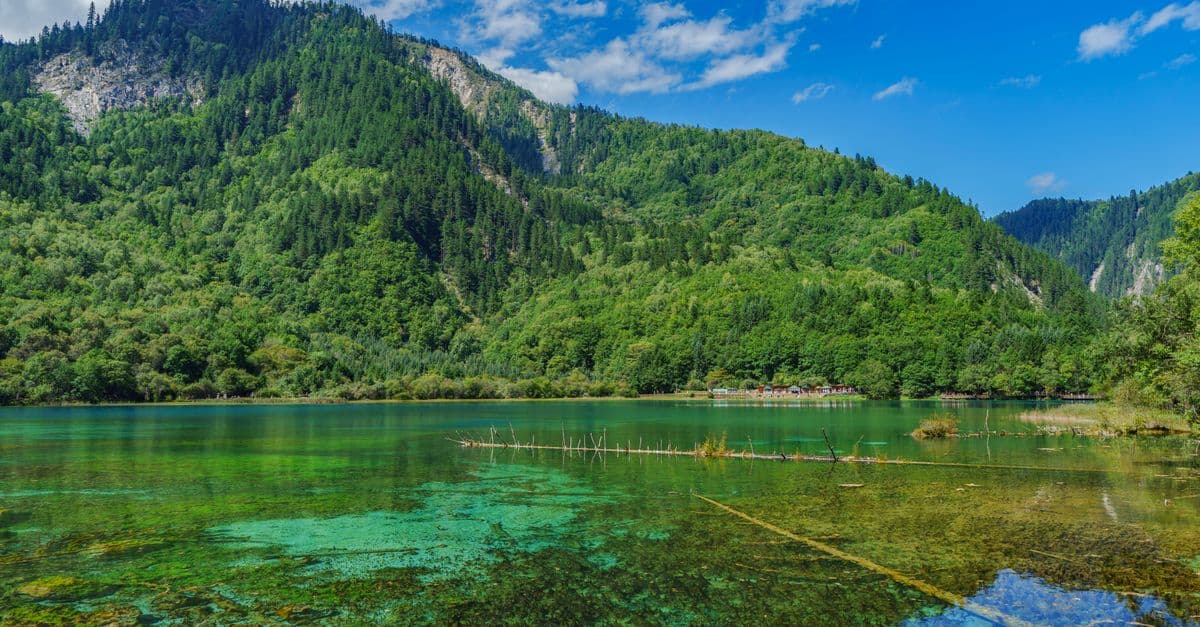
The Largest Lakes in the World: The Caspian Paradox and the Inland Seas
The largest lake on Earth is called a sea. The Caspian Sea covers about 371,000 to 374,000 square kilometres — larger than Germany — and is bordered by five countries that argued for over two decades about whether it's legally a lake or a sea, because the answer decides who owns its oil. Behind it stretch the true freshwater giants, including a single North American lake big enough to cover the entire United Kingdom.
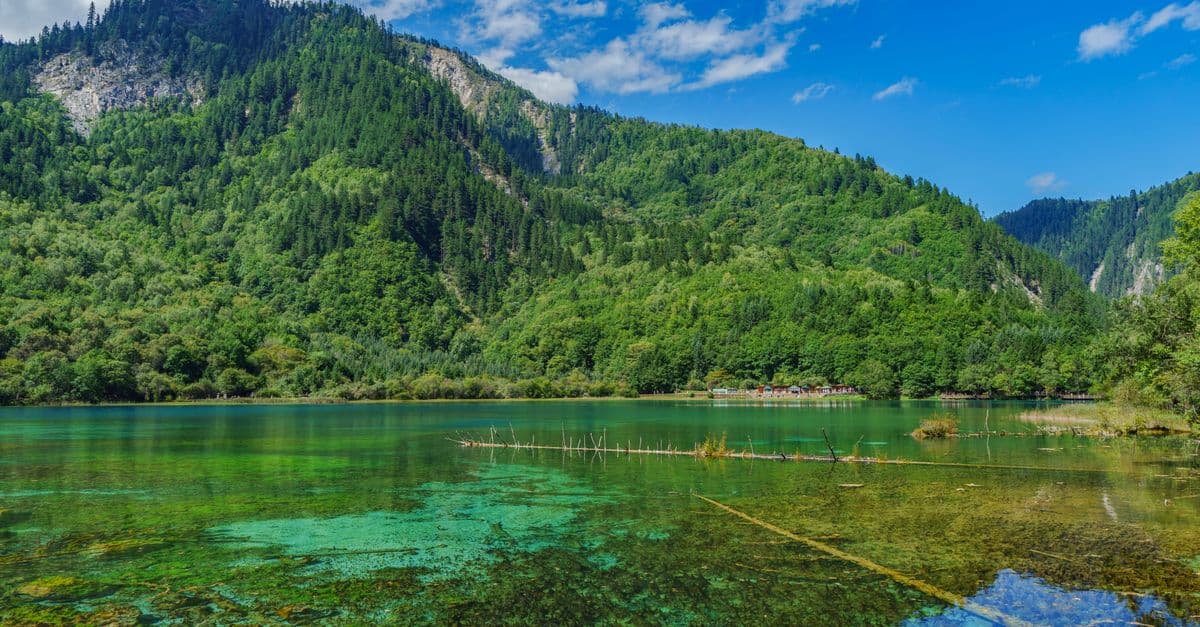
The Deepest Lakes in the World: Lake Baikal and the Crack in a Continent
Lake Baikal in Siberia plunges to 1,642 metres — deep enough to swallow the world's tallest building twice over with room to spare. It is not just the deepest lake on Earth; it holds about a fifth of all the planet's unfrozen fresh water and has existed for 25 million years, longer than any other lake. The deepest lakes share a common origin: they sit in places where the Earth's crust is literally being pulled apart.
Biggest Cities in the World by Population: City, Metro, and Urban Area
A clear ranking of the world's biggest cities by municipal population, urban area, and metro region, with the measurement traps that make lists disagree.
The Largest Countries in the World: Russia Spans Eleven Time Zones
Russia is so large that when the sun rises over its Pacific coast, much of the country is still in the previous day. At about 17 million square kilometres it covers more than an eighth of all the land on Earth — bigger than the surface of Pluto — and stretches across eleven time zones. The ranking of the world's biggest countries is a story of empires, frozen frontiers, and a map projection that quietly lies about who's really biggest.