Personalized Cancer Vaccines Explained: Neoantigens, mRNA and Clinical-Trial Reality
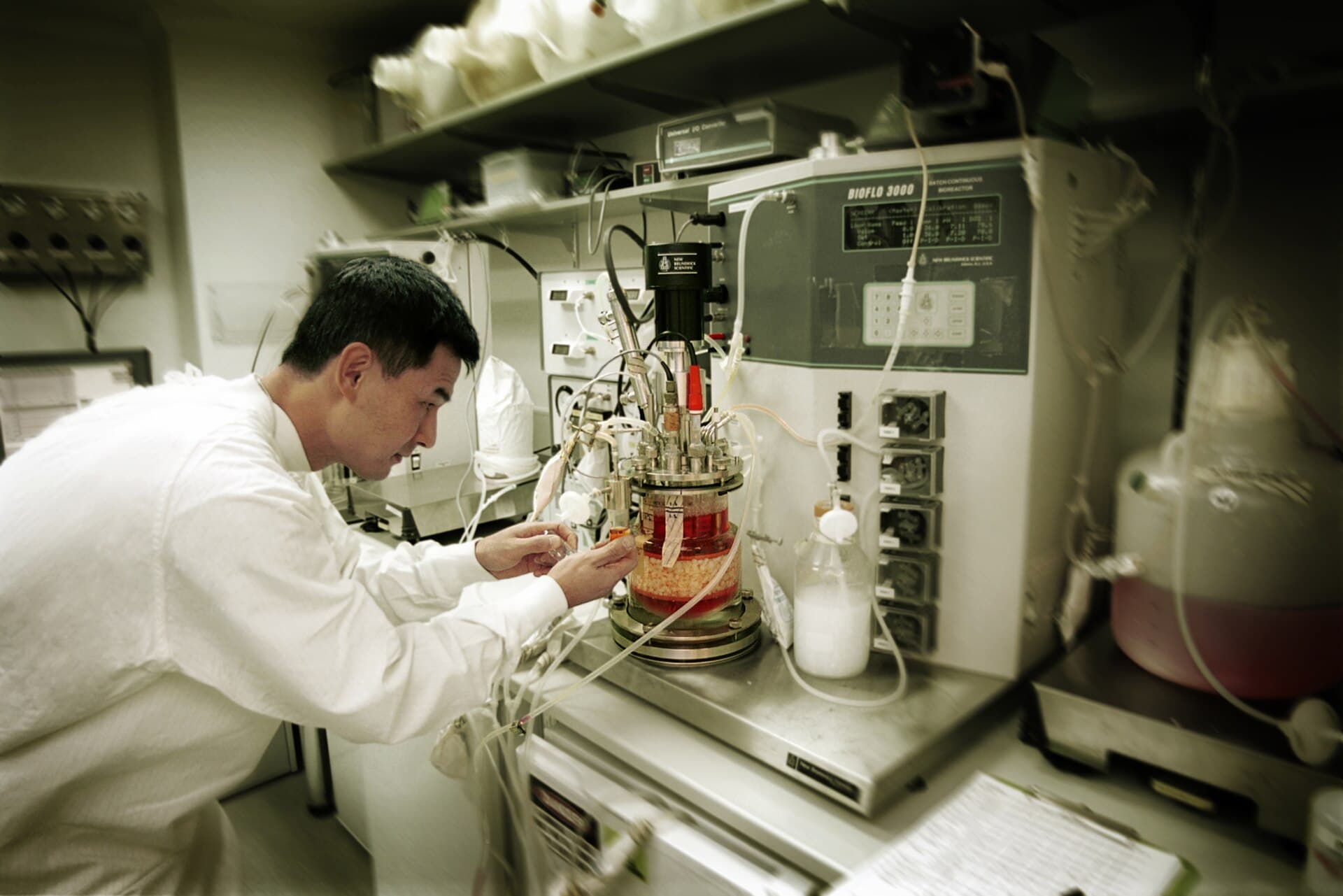
Photo: North Sullivan Photography, CSIRO (CC BY 3.0) / Wikimedia Commons / CC BY 3.0
Most vaccines prevent infections, but a growing class of experimental ones tries to treat cancer that already exists. Personalized cancer vaccines are built from the sequence of one patient's tumor, so that the immune system is pointed at mutations found in that tumor and not in healthy tissue. In August 2026 a phase 3 melanoma trial of one such vaccine reported a positive topline result. This article explains how the vaccines are designed, what the trial data show so far, and why a promising result in one cancer does not settle the question for others.
Direct answer: A personalized cancer vaccine is an experimental treatment designed from molecular information about a person's own tumor, usually to target neoantigens (new protein fragments created by tumor-specific mutations). The tumor and normal tissue are sequenced, software predicts which fragments are worth targeting, and a custom mRNA or peptide product is manufactured and given, often alongside a checkpoint inhibitor. Early trials show immune responses and some signals of benefit, but benefit depends on cancer type, tumor biology, trial design, and combination therapy. It is not a universal cure.
Medical information disclaimer: This article is biomedical education, not diagnosis or treatment advice. It cannot recommend a drug, vaccine, clinical trial, or personal cancer decision. People with cancer should discuss options with their qualified oncology team. For urgent symptoms or an emergency, contact local emergency services rather than relying on an article or an AI system.
What a personalized cancer vaccine is, and what it is not
The word "vaccine" carries baggage. A measles shot trains the immune system before an infection arrives. A cancer treatment vaccine does the opposite: it is given to someone who already has a tumor, and it tries to recruit immune cells against it. The National Cancer Institute (NCI) distinguishes treatment vaccines, used in people who already have cancer, from vaccines that prevent disease. For an example of the preventive kind, see our explainer on the HPV vaccine.
The NCI describes several types of cancer treatment vaccines: vaccines made from a patient's own tumor cells, vaccines made from shared tumor-associated antigens (still experimental, according to the NCI), vaccines made from a patient's own dendritic cells, and oncolytic virus therapy, which is sometimes described as a vaccine type (NCI, Cancer Treatment Vaccines). Two products are approved in the United States and listed by the NCI: sipuleucel-T, a dendritic cell vaccine for some men with advanced prostate cancer, and talimogene laherparepvec (T-VEC), an oncolytic virus injected into some melanomas that return after surgery and cannot be removed.
Neither of those is a neoantigen vaccine in the modern sense. What this article calls a personalized neoantigen vaccine is a newer concept that depends on affordable tumor sequencing and fast computation. The core idea is that every tumor has its own set of mutations, so the target list is written for one person.
Shared targets versus personal targets
A shared tumor-associated antigen is a protein found on many tumors of a type. It can be manufactured once and given to many patients, which simplifies production. The drawback is that the same protein can also appear at low levels on healthy cells, so the immune system may tolerate it or attack normal tissue.
A personal neoantigen is the opposite trade. It exists only because of a mutation in that patient's tumor, so it is a more specific target, but a new product has to be designed and made for each person. That is the reason these vaccines are discussed in terms of workflow and logistics as much as biology.
How tumors create neoantigens: the typo analogy
Cells copy their DNA every time they divide, and no copy is perfect. Normal cells fix most errors. Cancer cells accumulate them. Think of a long instruction manual that is photocopied thousands of times, with a few typos introduced at each pass and no proofreader. Some of those typos change a word in a way that matters. In cell terms, a mutation can alter the sequence of a protein, and when that protein is chopped into short fragments, the fragment containing the typo is new to the body.
Cells display samples of their internal proteins on their surface using molecules called human leukocyte antigens (HLA), which work like small display stands. T cells inspect these stands with their receptors, and a fragment that looks foreign can trigger an attack. For a closer look at that inspection step, see our explainer on how T-cell receptors read peptides presented by MHC. A neoantigen is such a fragment: new, tumor-specific, and potentially visible to T cells.
Not every mutation yields a useful neoantigen. For a typo to matter as a target, four things must be true.
- The mutated gene must actually be switched on in the tumor.
- The altered protein must be chopped into fragments by the cell's machinery.
- A fragment must fit the patient's particular HLA molecules to be displayed.
- A T cell must exist that can recognize that fragment strongly enough to respond.
Software can estimate the first three, and the fourth can only be checked in the laboratory or in the patient. That gap between prediction and proof is the central technical problem of the field. Melanoma was a natural starting point for early trials because it typically carries many mutations, which gives the software more candidates to choose from. Cancers with few mutations offer fewer options.
From biopsy to vial: the personalization workflow
Making one patient's vaccine takes several steps, and each can fail. The sequence below is typical of the published pancreatic cancer trial and similar programs.
| Step | What happens | Where it can go wrong |
|---|---|---|
| 1. Sampling | A tumor sample is taken at surgery, and normal tissue or blood is collected for comparison | Too little tumor, or a sample that misses other tumor regions |
| 2. Sequencing | Tumor and normal DNA (and often RNA) are sequenced to find tumor-only changes | Low-frequency variants missed, sequencing artifacts called as mutations |
| 3. Prediction | Software ranks mutations by likelihood of being expressed and displayed by the patient's HLA | Models are imperfect; HLA typing and expression estimates carry error |
| 4. Design | Up to about 20 targets are selected and encoded into mRNA or made as peptides | Too few good candidates, or targets that resemble normal proteins |
| 5. Manufacturing | A single-patient batch is produced and released after quality testing | Sequence errors, failed release tests, delays |
| 6. Dosing and monitoring | The vaccine is given on a schedule, and blood is checked for T-cell responses | Immune response may be absent, weak, or directed at a few targets only |
Our liquid-biopsy explainer discusses how circulating tumor DNA in blood can complement tissue samples, and our overview of single-cell RNA sequencing shows how researchers can read gene activity one cell at a time, which helps address tumor diversity.
Time is part of the treatment
In the phase 1 pancreatic cancer trial published in Nature in 2023, vaccines were produced within a benchmark of six weeks, and the first dose was targeted within nine weeks of surgery. The median time to the first dose was 9.4 weeks, with a range of 7.4 to 11.0 weeks (Rojas et al., Nature, 2023). That interval overlaps with the period when patients are recovering from surgery and, in that trial, preparing for chemotherapy. For one patient there were not enough neoantigens to manufacture a vaccine at all, which is a reminder that personalization can fail before the first dose.
How the vaccine trains T cells
Once injected, vaccine material has to reach antigen-presenting cells, the immune system's teachers. These cells take up the material, process it, and display the fragments to T cells along with the extra signals that tell the T cell to activate rather than ignore. Helper T cells and cytotoxic T cells (the ones that kill target cells) can both be recruited. For the general version of this process, see how vaccines work and how the immune system recognizes threats.
The analogy here is a wanted poster. The vaccine does not kill the tumor itself. It circulates pictures of the suspect, in this case the mutated fragments, so that the immune system's officers know whom to look for. Whether they find and apprehend the suspect depends on whether the officers can reach the scene and whether the suspect has hidden its face.
Immune response is not the same as clinical benefit
Trials usually report two different kinds of result. A response means the vaccine produced T cells that recognize the targets, measured in blood. A clinical outcome means something happened to the cancer: it did not recur, it shrank, or the patient lived longer. A vaccine can produce the first without the second. Early trials in particular emphasize safety, feasibility, and immune response, while only larger randomized trials can say whether patients do better than they would have without the vaccine.
mRNA, peptide, and other platforms
The delivery format determines how the targets are made and presented. The two most discussed are mRNA and synthetic peptides.
| Platform | How targets are delivered | Notes from published work |
|---|---|---|
| mRNA | Messenger RNA encodes the chosen neoantigens, and the patient's cells produce the proteins briefly | The pancreatic trial encoded up to 20 neoantigens per patient, delivered intravenously in lipid-based particles |
| Synthetic long peptides | Short protein fragments are made directly and combined with an adjuvant | Used in the 2017 melanoma study, which targeted up to 20 personal neoantigens |
| Dendritic cell vaccines | The patient's own immune cells are loaded with antigens outside the body | Sipuleucel-T is an approved example (NCI) |
| Oncolytic viruses | A virus is engineered to infect and break down tumor cells | T-VEC is an approved example (NCI) |
mRNA has attractive manufacturing properties, because the production process is largely the same for every sequence and only the code changes. Our explainers on mRNA vaccines in the COVID-19 era and the invention of mRNA vaccines describe the technology that made this possible. Peptides, by contrast, require each product to be synthesized and formulated individually. Each platform has its own chemistry, stability, and regulatory considerations, and none has been shown to be universally better.
Why vaccines are paired with checkpoint inhibitors
Tumors are not passive. Checkpoint proteins on T cells send an "off" signal when they bind partner proteins on other cells, including some tumor cells. Checkpoint inhibitors block that binding so the off signal is not sent, which lets T cells keep working. Drugs in this class target proteins such as PD-1 or its partner PD-L1, or CTLA-4 (NCI, Checkpoint Inhibitors).
A neoantigen vaccine and a checkpoint inhibitor therefore have complementary jobs: the vaccine aims to create or expand T cells that recognize the tumor, and the inhibitor aims to stop the tumor from switching them off. Our overview of immunotherapy and how doctors train the immune system covers the wider field.
Combination has a cost for interpretation. If a patient treated with both does well, it can be hard to tell which component helped. That is why the most informative trials compare the combination against the checkpoint inhibitor alone. Checkpoint inhibitors also carry their own risks. The NCI lists common side effects such as rash, diarrhea, and fatigue, and rarer ones from widespread inflammation that can affect organs including the skin, lungs, colon, liver, heart, and thyroid.
What the clinical trials have shown
The following table lists the landmark studies discussed below. Each answers a different question, and none answers all of them.
| Study | Cancer and setting | Size and design | Main finding | Main caveat |
|---|---|---|---|---|
| Ott et al., Nature, 2017 | Melanoma, personal peptide vaccine | 6 vaccinated patients, early-phase | 4 of 6 had no recurrence at 25 months | Tiny, uncontrolled |
| Sahin et al., Nature, 2017 | Melanoma, personal mRNA vaccine | First-in-human, small | All patients developed T-cell responses; 2 of 5 with metastatic disease had objective responses | Not designed to measure efficacy |
| Rojas et al., Nature, 2023 | Resected pancreatic cancer, mRNA vaccine plus atezolizumab and chemotherapy | Phase 1, 16 vaccinated patients | 8 of 16 had vaccine-induced T-cell responses | Non-randomized; single center |
| KEYNOTE-942, Lancet, 2024 | Resected melanoma, mRNA-4157 plus pembrolizumab | Phase 2b, 157 patients, randomized 2:1 | 18-month recurrence-free survival 79% versus 62% | Hazard ratio interval crossed 1 |
| INTerpath-001, topline August 2026 | Resected melanoma, intismeran autogene plus pembrolizumab | Phase 3, 1,137 patients, randomized, double-blind | Primary endpoint met per sponsors | Topline only; no hazard ratios released |
Melanoma: from six patients to a phase 3 trial
The two 2017 Nature papers were proof-of-principle. In the first, a vaccine targeting up to 20 personal neoantigens in melanoma was feasible, safe, and immunogenic. Of six vaccinated patients, four had no recurrence at 25 months, and two patients with recurrent disease received anti-PD-1 therapy and achieved complete tumor regression (Ott et al., 2017). In the second, personalized RNA vaccines produced T-cell responses against multiple targets in all patients. Two of five patients with metastatic disease had objective responses, and one of them later relapsed when tumor cells lost β2-microglobulin, a protein the cell needs to display fragments to T cells (Sahin et al., 2017). A third patient had a complete response when the vaccine was combined with PD-1 blockade.
The next major step was KEYNOTE-942, a randomized phase 2b study of the mRNA-4157 vaccine (now called intismeran autogene) plus pembrolizumab, a PD-1 inhibitor, in patients whose melanoma had been completely resected. It enrolled 157 patients, randomized 2:1 to 107 on the combination and 50 on pembrolizumab alone. Recurrence-free survival at 18 months was 79 percent with the combination and 62 percent with pembrolizumab alone, with a hazard ratio of 0.561 (95% confidence interval 0.309 to 1.017, P = .053). Grade 3 or higher treatment-related adverse events occurred in 25 percent of the combination group and 18 percent of the control group, and median follow-up was about two years (The ASCO Post, January 2024).
The confidence interval in that result includes 1, which means the study did not reach the conventional threshold for statistical significance. It was a phase 2b trial, which is designed to decide whether a larger trial is justified, and it did. The vaccine was given at 1 mg intramuscularly, up to nine doses, with pembrolizumab at 200 mg every three weeks for up to 18 doses.
Five-year follow-up of KEYNOTE-942, summarized by The ASCO Post in August 2026, reported a hazard ratio of 0.51 for recurrence-free survival (95% confidence interval 0.294 to 0.887), a 49 percent reduction in the risk of recurrence or death. For distant metastasis-free survival, the hazard ratio was 0.411 (0.200 to 0.843) (The ASCO Post, August 2026).
INTerpath-001: what the phase 3 announcement does and does not say
In August 2026, Merck and Moderna announced that the phase 3 INTerpath-001 trial met its primary endpoint, recurrence-free survival, and a key secondary endpoint, distant metastasis-free survival. The trial randomized 1,137 patients with completely resected melanoma 2:1 to intismeran autogene (1 mg every three weeks, up to nine doses) plus pembrolizumab or to placebo plus pembrolizumab. It is double-blind and placebo-controlled. The companies reported no new safety signals and said overall survival is still being evaluated (The ASCO Post, August 2026).
Several things are absent from the announcement. It gave no hazard ratios or confidence intervals, no numerical efficacy data beyond the statement that the result was statistically significant and clinically meaningful, and no specific safety rates. The companies said the data will be presented at an upcoming international meeting and shared with regulatory authorities. Until the full results are available, the announcement is best read as an encouraging sponsor report, not as a complete dataset. The program also includes trials in other cancers, among them non-small cell lung cancer, bladder cancer, and renal cell carcinoma, and a positive melanoma result does not predict those.
Pancreatic cancer: a harder target
Pancreatic ductal adenocarcinoma is difficult to treat and tends to carry fewer mutations than melanoma, so a neoantigen approach is a more demanding test. The phase 1 trial at Memorial Sloan Kettering enrolled 34 patients between December 2019 and August 2021. Twenty-eight had surgery, 19 received the immune checkpoint inhibitor atezolizumab, 16 received the vaccine (autogene cevumeran), and 15 received a chemotherapy regimen called modified FOLFIRINOX (Rojas et al., 2023).
The vaccine encoded up to 20 neoantigens per patient and was delivered intravenously in lipid-based particles. Eight of 16 patients (50 percent) were immune responders, with T-cell responses detected in blood. Vaccine-expanded T cells reached as high as 2.5 percent of all blood T cells up to two years after surgery.
The numbers behind those results illustrate how selective the process is. Of the 230 neoantigens administered across vaccine recipients, 25 induced responses, about 11 percent. The paper also gives a figure of 24 percent for the 106 vaccine-encoded neoantigens in responders, so the hit rate depends on which denominator is used. Either way, most of the neoantigens chosen by software did not produce a measurable T-cell response, which is consistent with the point that prediction is not proof.
At a median follow-up of 18 months, responders had not reached median recurrence-free survival, compared with 13.4 months for non-responders (P = 0.003). A landmark analysis, which compares groups starting from a fixed time point to reduce bias, found 11.0 months in non-responders against a median not reached in responders (P = 0.008). The authors described the findings as preliminary. The trial was small, not randomized, and conducted at a single center, and all enrolled patients were white. A randomized phase 2 trial, IMCODE003, is testing the vaccine with atezolizumab and chemotherapy against chemotherapy alone in resected pancreatic cancer (ClinicalTrials.gov NCT05968326).
How to read a trial claim about a cancer vaccine
A few questions separate strong evidence from weak.
- Is there a control group? A single-arm study cannot show whether patients would have done as well without the vaccine.
- What is the endpoint? Immune response, recurrence-free survival, and overall survival are different claims.
- Is the comparison fair? A vaccine plus pembrolizumab compared with pembrolizumab alone tests the vaccine's added value, while a comparison with an older standard does not.
- Who was enrolled? Stage, prior treatment, and tumor type limit how far results travel.
- Have the full data been peer reviewed? A press release is not a paper.
Why tumors escape
A tumor is not a fixed target. It contains many cell populations with different mutations, and treatment puts selective pressure on them. A vaccine aimed at one mutation can leave cells without that mutation untouched, and cells can lose the target or the machinery to display it.
The 2017 melanoma study offers a concrete case. One responding patient later relapsed when tumor cells lost β2-microglobulin, which is required for HLA class I molecules to reach the cell surface. Without it, the tumor cell can no longer display fragments to T cells. The tumor had, in effect, taken down all of its display stands. This is why researchers study vaccines with many targets and why repeated sampling after treatment matters.
Safety and uncertainty
Vaccine side effects depend on the platform, the adjuvant (an ingredient that boosts the immune response), dose, and combination partner. In the pancreatic trial, all 16 vaccine recipients had grade 1 or 2 adverse events and one patient (6 percent) had a grade 3 event, fever and hypertension. No grade 3 or higher events were attributed to atezolizumab. In KEYNOTE-942, grade 3 or higher treatment-related events occurred in 25 percent of the combination group and 18 percent of the control group.
The NCI lists flu-like symptoms (fever, chills, fatigue, headache, aches) and allergic reactions among the possible side effects of cancer treatment vaccines generally. A further concern specific to this approach is on-target, off-tumor effects: if a targeted fragment resembles a normal protein, immune cells could attack healthy tissue. Eligibility criteria and monitoring in trials are designed with that risk in mind.
Cost, time, and who gets access
A therapy that is manufactured one patient at a time depends on infrastructure. It needs tumor tissue of sufficient quality, sequencing and computing capacity, a manufacturing site able to release a sterile product on a deadline, and a clinical team that can coordinate all of it. Access therefore depends on where a person lives and which trials are open near them. Reporting also matters: the pancreatic trial's single-center design and all-white enrollment mean that its findings say little about whether the approach works equally across populations.
Equitable research reports who was enrolled and excluded, which tumor types were represented, and how often manufacturing succeeded across samples. Personalization does not remove population-level inequity, and a technology that works in a leading research center may be difficult to deliver broadly.
The role of sequencing and artificial intelligence
Software sits at the heart of neoantigen selection. Models estimate which mutations are expressed and which fragments an individual's HLA molecules will display, and they rank candidates for inclusion. Machine learning can improve those rankings, but models inherit the biases and gaps of the data they were trained on, and a high score is a hypothesis, not evidence of an immune response. The pancreatic trial's hit rate of about 11 percent shows why. Our AI in healthcare explainer discusses why clinical AI needs validation and oversight, and our article on machine learning for biomarker discovery shows how similar methods are used to find disease signals in noisy biological data. For how tumors are initially detected, see AI cancer detection with deep learning.
What "personalized" does not mean
It does not mean the vaccine matches every tumor cell, because tumors are heterogeneous and can lose targets. It does not mean it is automatically safer than standard therapy, because the combination partners carry their own risks. It does not mean it works quickly, because the manufacturing interval is measured in weeks. It does not mean a result in one cancer type applies to another, and it does not mean a patient can skip pathology, imaging, or other care.
Underlying all of this is the question of what causes tumors to carry so many different mutations to begin with. Our explainer on what causes cancer covers the origin of those genetic changes.
Limitations of the evidence
Personalized cancer vaccines are an active research field, and this article reflects public sources available as of October 2026. Evidence varies by cancer type, platform, target, combination, trial phase, sample size, and follow-up. Predicted neoantigens often fail to produce responses. Phase 1 and 2 trials are small, and the strongest evidence so far comes from one cancer type and one vaccine program. The phase 3 result was a topline announcement without the underlying numbers, and regulatory status can change quickly. This article is not medical advice, a cure claim, a treatment recommendation, or a clinical-trial selection guide.
Frequently asked questions
Q: What is a personalized cancer vaccine? A: It is an experimental immunotherapy designed from molecular information about an individual tumor, usually to target neoantigens. The tumor and normal tissue are sequenced, targets are predicted by software, and a custom mRNA or peptide product is made for that patient.
Q: What is a neoantigen? A: A neoantigen is a new protein fragment that arises from a tumor-specific mutation and is displayed on the surface of tumor cells. Because normal cells do not carry it, it is a potentially specific target for T cells.
Q: Are personalized cancer vaccines approved? A: The NCI lists two approved treatment products in the broader category, sipuleucel-T and T-VEC, but neither is a neoantigen vaccine of the kind described here. In August 2026 the sponsors of one mRNA neoantigen vaccine reported a positive phase 3 topline result in melanoma and said the data would be shared with regulators. Status depends on the product, indication, country, and date, so current regulator information should be checked.
Q: Why are cancer vaccines usually given with another drug? A: A vaccine can create or expand T cells that recognize the tumor, while a checkpoint inhibitor can block signals that switch those T cells off. The leading trials test the combination against the checkpoint inhibitor alone to measure what the vaccine adds.
Q: Does an immune response mean the vaccine is working? A: Not necessarily. A vaccine can produce T cells that recognize a target without improving recurrence-free or overall survival. Randomized trials with clinical endpoints are needed to show benefit.
Q: How long does it take to make a personalized vaccine? A: In the 2023 pancreatic cancer trial, manufacturing was benchmarked at six weeks and the median time to the first dose was 9.4 weeks after surgery. Times vary by platform, facility, and protocol, so this figure should not be assumed for other programs.
Q: Could someone seek a personalized vaccine after reading this article? A: This article cannot determine whether any treatment or trial is appropriate for an individual. Eligibility depends on cancer type, stage, prior treatment, and trial criteria, so the conversation belongs with a qualified oncology team.
The takeaway
The most useful way to understand personalized cancer vaccines is as an engineering pipeline wrapped around a biological bet. The bet is that mutations unique to a tumor can be turned into targets that T cells will recognize and act on. The pipeline has to find those mutations, predict which ones matter, build a custom product in weeks, and deliver it alongside drugs that keep the immune response switched on. At each step the evidence shows how much can go wrong: in the pancreatic study, roughly one neoantigen in nine produced a measurable response. And yet a randomized melanoma trial has now pointed in the same direction as the earlier small studies, which is why the August 2026 phase 3 announcement matters. The next evidence to watch is the full INTerpath-001 dataset, overall survival, and results in cancers with fewer mutations than melanoma.
Sources
- NCI, Cancer Treatment Vaccines
- NCI, Immune Checkpoint Inhibitors
- Rojas LA, et al. Personalized RNA neoantigen vaccines stimulate T cells in pancreatic cancer. Nature, 2023 (PubMed Central)
- Ott PA, et al. An immunogenic personal neoantigen vaccine for patients with melanoma. Nature, 2017
- Sahin U, et al. Personalized RNA mutanome vaccines mobilize poly-specific therapeutic immunity against cancer. Nature, 2017
- The ASCO Post, Adjuvant treatment of resected melanoma: mRNA-based personalized therapy plus immunotherapy (KEYNOTE-942), January 2024
- The ASCO Post, INTerpath-001 trial meets primary and key secondary endpoints, August 2026
- ClinicalTrials.gov, NCT05968326 (IMCODE003)
This article is educational biomedical information and is not medical advice.
Follow new articles
Add SciHub101 to your feed reader to see new science and technology stories.
About the Author
SciHub101 is an independent science and technology publication founded and edited by Buğra Sözeri, a software engineer and app developer based in Türkiye. AI tools assist with drafting and research. Source documentation in the existing archive is uneven, and articles are being reviewed and corrected. The Editorial Team byline identifies editorial responsibility; it does not certify specialist or independent human review. Where we compare products, anything built by our own team is labelled as such — see the editorial guidelines and About page for how corrections and disclosures work.
Related Articles
Single-Cell RNA Sequencing Explained: How Scientists Read Gene Activity One Cell at a Time
Single-cell RNA sequencing measures gene activity in individual cells instead of averaging a tissue. See how the workflow runs, what it finds, and where it misleads.
Organoids Explained: What Mini-Organs Can and Cannot Model
Organoids are 3D cell cultures that self-organize into organ-like structures. See how they are grown, what they have taught us, and why they are not tiny organs.
mRNA Vaccines: COVID-19 Breakthrough Explained
How modified mRNA and lipid nanoparticles enabled rapid COVID-19 vaccine development, building on 30 years of foundational research by Katalin Karikó and others.
History of Vaccines — From Jenner to mRNA
From variolation and Jenner's cowpox to Pasteur, polio, smallpox eradication, and mRNA — the full history of vaccines and modern frontiers.
Horizontal Gene Transfer: How Microbes Swap DNA
Horizontal gene transfer lets microbes pass genes sideways through transformation, conjugation, and transduction, and it blurs the tree of life.
How Apoptosis Works: Why Healthy Cells Choose to Die
Apoptosis is programmed cell death. Learn how caspases, mitochondria, and Bcl-2 proteins carry it out, and what goes wrong in cancer and autoimmunity.