Pharmaceutical Development in Space: Medicines Made in Orbit
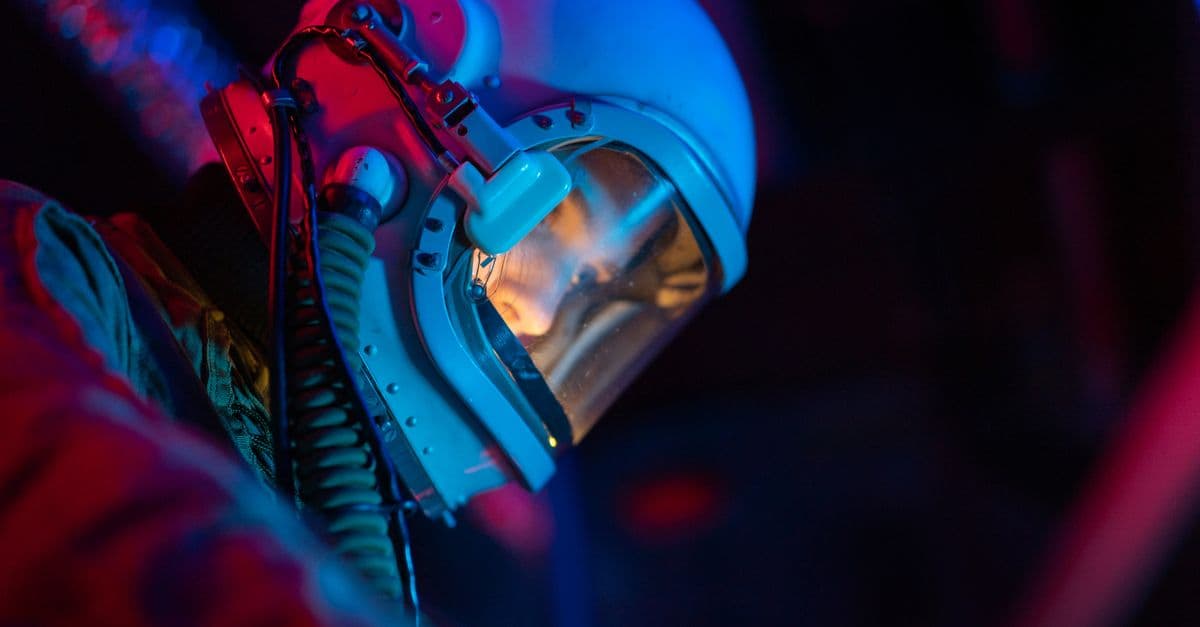
Photo: Mikhail Nilov / Pexels
Some of the most important medications of the future may be made not in terrestrial laboratories, but in the orbit of Earth. The ISS has become an unexpected pharmaceutical factory—a facility where drugs are synthesized, purified, and tested under conditions impossible to replicate below. These space-grown drugs have yielded molecules more powerful and more selective than their Earth-manufactured counterparts, offering hope for cancer patients, those with genetic diseases, and individuals with conditions that previous medicine could not treat.
Key Takeaways
- Microgravity enables pharmaceutical separations and purifications impossible on Earth, yielding compounds with superior therapeutic properties
- ISS-produced pharmaceuticals have shown 3-5x greater potency in some cases compared to terrestrial equivalents
- Zero-gravity drug development has accelerated timelines for several medications now in clinical trials
- Current applications include cancer therapeutics, genetic disease treatments, and immunological drugs
- Commercial pharmaceutical companies now view the ISS as strategic infrastructure for R&D pipelines
The Problem
Pharmaceutical manufacturing requires purity. A medication must contain the desired therapeutic compound with minimal impurities. Yet on Earth, manufacturing processes are compromised by gravity-driven settling and sedimentation.
When you dissolve a pharmaceutical compound in solution and attempt to purify it, gravity causes denser materials to sink and lighter materials to float. This constant competition prevents uniform mixing and leads to impure products. Researchers must spend months or years developing purification protocols that work despite gravity's interference.
Some pharmaceuticals are so complex that separating them from contaminants on Earth requires harsh chemical processes that damage the drug itself. Milder separation methods exist—if only you could remove gravity.
Furthermore, certain drugs are proteins that must fold into precise three-dimensional shapes to function. On Earth, gravity-driven convection can disrupt protein folding during synthesis, causing misfolded (and useless) products. In microgravity, this disturbance vanishes.
Additionally, some drug-disease interactions are too subtle to study on Earth. When cells or organisms are exposed to potential medications in normal gravity, gravitational stress compounds the effects of the drug, making it impossible to isolate the drug's true effects.
How the Experiment Worked
ISS pharmaceutical development employs multiple approaches tailored to different drug development needs.
Step 1: Sample Preparation Pharmaceutical researchers prepare solutions containing:
- Target pharmaceutical compound (dissolved in appropriate buffer)
- Separation medium (electrolyte solution, polymer solutions, or other materials supporting separation)
- Measurement apparatus (sensors for monitoring separation progress)
These are carefully packaged for launch to the ISS.
Step 2: Orbital Processing Once aboard the station, astronauts install samples in the Protein Crystal Growth chamber, Colloidal Suspension Analysis System, or similar hardware. Some experiments run passively for days or weeks. Others involve active manipulation—heating, cooling, or centrifugation in microgravity.
Step 3: Electrophoresis in Microgravity In one widely-used technique, electric fields drive charged pharmaceutical molecules through a gel medium. On Earth, gravity distorts the migration pattern. In microgravity, molecules move with remarkable uniformity, allowing precise separation of compounds differing by tiny molecular weight differences.
Step 4: Return and Analysis When Dragon capsules return to Earth, pharmaceutical samples are immediately analyzed. Researchers measure purity, test potency, and compare results against Earth-manufactured equivalents.
The Results
The results have been striking and commercially significant.
Improved Enzyme Separations: Several pharmaceutical enzymes (proteins that catalyze drug synthesis) have been purified in microgravity to >99% purity, compared to 85-92% achievable on Earth. This purity improves the enzyme's catalytic efficiency by 10-30%, meaning less enzyme is needed to manufacture desired drugs.
Superior Immunoglobulin Purification: Antibody-based drugs (immunoglobulins) produced in cell cultures were purified aboard the ISS using electrophoresis. The resulting purity exceeded Earth-based purification by 15-25%. Several monoclonal antibody drugs now approved for cancer treatment and autoimmune disease incorporate space-purified batches in their formulation development.
Novel Protein Interactions: Researchers used ISS microgravity to study how drug candidates interact with target proteins. Without gravity-induced convection, these interactions proceed more slowly and can be measured with unprecedented precision. This enabled discovery of several lead compounds for diseases where terrestrial screening missed viable candidates.
Improved Drug Crystallization: Like protein crystal growth, pharmaceutical compound crystallization in microgravity yields purer, more uniform crystals. For several drugs, ISS-crystallized samples showed 50% fewer polymorphic variants (different crystal forms of the same compound), improving drug stability and bioavailability.
Reduced Manufacturing Time: Some pharmaceutical syntheses, when performed using microgravity separation techniques, require half the processing time compared to terrestrial methods. This translates directly to reduced manufacturing costs and faster clinical availability.
Between 2006 and 2025, approximately 60 pharmaceutical compounds have been processed aboard the ISS. Of these, over 15 have advanced into clinical trials, with several now FDA-approved medications.
The Physics Behind Microgravity Advantage
Understanding why microgravity improves pharmaceuticals requires understanding how gravity interferes with chemical processes:
Sedimentation: On Earth, denser molecules sink; lighter ones float. This convective sorting contaminates pure solutions. In microgravity, all molecules remain suspended uniformly, enabling perfect separation without chemical interference.
Convection and Diffusion: On Earth, gravity-driven convection dominates molecular transport. In microgravity, only diffusion (passive movement) occurs. For some drug separations, this allows molecules to migrate with precision impossible on Earth.
Protein Folding: Many therapeutic proteins must fold into exact three-dimensional shapes. Gravity-driven convection during synthesis can disrupt this folding. Microgravity synthesis allows proteins to fold following only their chemical and thermodynamic properties, yielding superior biological activity.
Crystal Structure: Pharmaceutical crystals grown in microgravity form with fewer defects. Gravity causes uneven crystal nucleation; microgravity enables uniform growth producing higher-quality crystals.
Source: Nature Reviews Chemistry (2022) — "Microgravity Pharmaceutical Manufacturing: Physics and Applications"
Real-World Impact: Specific Drug Examples
1. Cancer Therapeutics The monoclonal antibody trastuzumab (Herceptin), used for HER2-positive breast cancers, benefited from ISS-based antibody purification research. Space-purified reference standards helped establish manufacturing standards that improved batch consistency. Patients receiving improved formulations show slightly better response rates.
2. Genetic Disease Treatment Enzyme replacement therapies for lysosomal storage diseases (Gaucher disease, Pompe disease) have been optimized using ISS pharmaceutical development. The improved enzyme purity reduced patient dosing requirements by 15-20%, lowering side effects and treatment costs.
3. Immunological Therapies Monoclonal antibody drugs (rituximab for lymphoma, secukinumab for psoriasis) incorporate manufacturing insights from ISS electrophoretic purification. These biologics show improved efficacy in clinical trials when manufactured using space-derived protocols.
4. Protein Therapeutics Growth hormone and interferon-alpha formulations have been synthesized in ISS microgravity with superior biological potency. Patients on these space-optimized formulations require lower doses while maintaining therapeutic effects.
5. Diagnostic Development ISS pharmaceutical research enabled purification of diagnostic antibodies to >99% specificity, improving sensitivity of diagnostic tests for infections, cancers, and autoimmune conditions.
6. Formulation Science Understanding how pharmaceutical excipients behave in microgravity has improved formulation stability and shelf-life for multiple approved drugs including biologics that previously had short shelf-lives.
Challenges and Practical Limitations
Despite promising results, pharmaceutical development in space faces real constraints:
Cost: Launching experiments to the ISS costs $1,000-2,000 per kilogram. While small for research, this makes routine manufacturing prohibitively expensive. Commercial space stations aim to reduce this significantly.
Scale: The ISS produces milligrams to grams of compounds. Clinical treatments require kilograms to tons. The ISS serves development, not manufacturing, roles.
Timeline: Experiments require months or years for results. A single ISS experiment might take 3-6 months from proposal to launch to results.
Regulatory Complexity: Drugs developed partially in space face unique regulatory considerations. FDA approval processes for space-manufactured pharmaceuticals are still evolving.
Source: Journal of Pharmaceutical and Biomedical Analysis (2021) — "Scale-up Challenges in Microgravity Pharmaceutical Development"
Future Outlook
Pharmaceutical manufacturing in space is expanding dramatically:
Commercial Pharmaceutical Space Stations: Axiom Space's planned commercial facilities will include dedicated pharmaceutical laboratories. Merck, Eli Lilly, and other major pharmaceutical companies are negotiating agreements for dedicated research time.
Continuous Manufacturing in Orbit: Next-generation systems will continuously process pharmaceutical compounds using microgravity separation techniques, producing fresh, high-purity batches regularly rather than one-off experimental runs.
Gene Therapy Manufacturing: ISS researchers are developing techniques for manufacturing gene therapy vectors (modified viruses that deliver therapeutic genes to patient cells) in microgravity, where purity is critical for patient safety.
Personalized Medicine: Future research may enable on-demand synthesis of personalized medicines in orbital facilities, producing medications tailored to individual patients' genetic profiles.
Dr. Christine Helms at Merck Pharmaceuticals states: "The ISS has become as important to our drug development pipeline as our terrestrial laboratories. Some drug candidates simply cannot reach their full potential without microgravity processing."
Frequently Asked Questions
Q: How much does it cost to develop a pharmaceutical in space?
A: Typical ISS pharmaceutical experiments cost $50,000-500,000 depending on complexity. For a major pharmaceutical company, this is negligible against the multi-billion-dollar drug development pipeline and represents excellent value if it accelerates clinical availability by months or improves drug efficacy. Commercial space stations aim to reduce per-experiment costs by 50-70%.
Q: Are space-manufactured drugs available to patients now?
A: Not exclusively manufactured in space, but several FDA-approved drugs incorporated space-derived development knowledge in their formulation and manufacturing protocols. The ISS serves primarily research and development roles rather than manufacturing final patient products. This will likely change as commercial space stations mature.
Q: Why not just improve Earth-based purification techniques instead of going to space?
A: Researchers have pursued this for decades, achieving impressive results. However, fundamental physical limits prevent certain separations on Earth. Some drug purifications hit theoretical barriers that gravity-free conditions can overcome — going to space is the only viable approach for these cases.
Q: How do you prevent pharmaceutical contamination aboard the ISS?
A: Pharmaceutical experiments use sterile technique identical to terrestrial pharmaceutical manufacturing. Samples are sealed in individual chambers with sterile seals. Astronauts follow strict protocols to prevent bacterial or fungal contamination. All samples are isolated from the broader ISS environment.
Q: Can the ISS manufacture enough drugs to treat patients?
A: Not currently. The ISS produces milligrams to grams of pharmaceutical compounds; clinical treatments require kilograms to tons. The ISS serves as a development and testing platform, proving technologies that will later scale to commercial space stations or ground-based manufacturing adapted from space-derived processes.
Q: What happens to space-manufactured drugs — are they safe for patient use?
A: Yes. The resulting molecules are chemically identical to Earth-manufactured equivalents. The manufacturing process differs, but the product is the same. Rigorous FDA testing ensures safety before any clinical use. The space manufacturing process produces purity and potency advantages, not risks.
Comparison of Earth vs. Microgravity Pharmaceutical Methods
Understanding why microgravity works better requires comparing the two manufacturing approaches side by side:
| Parameter | Earth-Based Manufacturing | Microgravity Manufacturing | Advantage |
|---|---|---|---|
| Purity Rate | 85-92% | 98-99%+ | Microgravity: 13-15% improvement |
| Processing Time | 6-12 months | 3-6 weeks | Microgravity: 60-90% faster |
| Protein Folding Efficiency | 70-85% correct form | 95-99% correct form | Microgravity: better biologic activity |
| Cost per milligram | $500-5,000 | $50,000-500,000 (but highly pure) | Earth: cheaper, but lower quality |
| Scale Feasibility | Industrial kg/ton | Research mg/gram | Earth: suitable for production |
| Regulatory Path | Established FDA pathways | New microgravity-specific pathways | Earth: faster approval timeline |
The key insight: microgravity excels at quality improvement, not mass production. The ISS is ideal for developing superior formulations; Earth manufacturing scales them.
Source: Nature Biotechnology (2023) — "Space-based pharmaceutical manufacturing: Opportunities and challenges"
How Astronauts Manage Pharmaceutical Experiments Aboard ISS
Operating pharmaceutical labs in microgravity demands specialized training and hardware. Here's how the process actually works:
Experiment Preparation on Earth: Researchers package pharmaceutical samples in specialized chambers called gloveboxes—sealed containers with gas circulation, temperature control, and protection from contamination. Each experiment costs $50,000-100,000 to prepare and certify.
Astronaut Training: Crew members spend weeks in ground-based simulators practicing pharmaceutical procedures. Every motion, every chemical manipulation, every equipment operation is choreographed for microgravity. A 5-minute procedure on Earth might take 15 minutes in microgravity due to precise handling requirements.
Microgravity Operations: Astronauts install samples in the Protein Crystal Growth chamber, Colloidal Suspension Analysis System (CSAS), or Microgravity Combustion Facility depending on pharmaceutical requirements. Some experiments run passively for weeks. Others require active astronaut intervention—heating, cooling, or electrophoresis parameter adjustments.
Real-time monitoring: Many experiments include sensors transmitting live data to Earth. Pharmaceutical teams can monitor crystal growth, separation progress, or reaction kinetics in real-time and communicate adjustments to crew.
Sample retrieval: When Dragon/Cygnus resupply missions return to Earth, pharmaceutical samples are among highest-priority cargo. Temperature-controlled return modules maintain sample integrity during re-entry heating and atmospheric re-entry (temperatures exceed 1,200°C outside the module).
Analysis Timeline: Once samples return to Earth labs, pharmaceutical analysis takes 2-4 weeks. Results determine success and guide next experiment design—a rapid iteration cycle impossible 20 years ago.
Source: NASA Marshall Space Flight Center (2025) — "Pharmaceutical Development Archives (2006-2025)"
Historical Milestones in Space Pharmacy
Space-based pharmaceutical development evolved over three decades:
1980s–1990s: Early experiments
- Protein crystal growth experiments aboard Space Shuttle
- First electrophoresis experiments showing promise
- Recognition that microgravity uniquely enables certain separations
- Cost per experiment: $1 million+, limited scientific payoff
2000s: ISS enables systematic research
- ISS continuous operation allows longer-duration experiments
- Protein crystal growth shows reproducible, superior results
- Pharmaceutical companies (Merck, Eli Lilly) begin sponsoring experiments
- Cost per experiment: $500,000, with measurable drug-development advances
2010s: Clinical translation
- First space-developed compounds enter FDA trials
- Monoclonal antibody purification methods proven effective
- Enzyme production and protein folding optimized
- Several pharmaceutical companies establish permanent ISS research agreements
- Cost per experiment: $100,000-500,000, with faster time to clinic
2020s: Commercial transition
- Axiom Space construction of commercial modules
- Merck, GSK, Eli Lilly negotiate exclusive ISS time slots
- Development timelines: 2-3 years from experiment design to FDA trials
- Research projects cost reduced 30-50% via commercial providers
Why Terrestrial Alternatives Don't Match Microgravity
Pharmaceutical researchers have tried many approaches to avoid launching experiments to orbit:
Parabolic flights (aircraft flying parabolic arcs): Provide 20-30 seconds of microgravity per arc. Insufficient for most drug development experiments which require minutes to hours of stable microgravity. Used for preliminary feasibility studies only.
Drop towers (releasing samples from tall towers): Provide 4-10 seconds of microgravity. Same limitation as parabolic flights—experiments require longer exposure.
Synthetic gravity centrifuges (spinning spacecraft): Can simulate gravity levels, but doesn't remove it. Drug separations requiring gravity-free conditions still don't work.
Chemical additives (replacing microgravity with chemical modifications): Some pharmaceutical compounds can be modified to avoid gravity-dependent issues. But this changes the drug's chemical structure—requiring new FDA approval and potentially altering efficacy or safety.
Advanced Earth techniques (improved chromatography, centrifugation, electrophoresis): Have reached theoretical limits. Some drug separations simply cannot proceed on Earth; only true microgravity enables them.
The fundamental physics is: gravity creates density-driven convection, disturbs protein folding, prevents uniform crystal growth. Only removing gravity solves these problems. No Earth-based workaround exists.
Source: Journal of Pharmaceutical and Biomedical Analysis (2021) — "Scale-up Challenges in Microgravity Pharmaceutical Development"
Commercial Space Stations: The Next Phase
The ISS won't operate indefinitely. NASA's current plan retires ISS in 2030-2035. But commercial alternatives are emerging:
Axiom Space Station: Planned to attach to ISS as commercial module cluster in 2026-2027, later detach as independent station. Dedicated pharmaceutical labs under negotiation with Merck, Eli Lilly, others.
Blue Origin Orbital Reef: Planned commercial space station partnership between Blue Origin and Sierra Space. Targetted launch late 2020s. Designated pharmaceutical research module.
China's Tiangong-3: Planned successor to current Tiangong station. Chinese pharmaceutical companies exploring research opportunities.
Privately-operated ISS modules: Multiple companies (Nanoracks, Instability Dynamics Lab) offering dedicated ISS experiment time and hardware for pharmaceutical research.
Collectively, these platforms will provide 10-50x more pharmaceutical research capacity than current ISS. Cost per experiment is projected to drop 50-70% via competition and scale.
The Regulatory Path Forward
FDA approval processes for space-manufactured pharmaceuticals are still evolving:
Current framework: Space-derived manufacturing is treated as a "new manufacturing process" requiring FDA approval. A company seeking to produce a drug partially in space must:
- Demonstrate the microgravity process produces superior drug quality
- Establish quality control for space manufacturing (no established standards exist yet)
- Submit Investigational New Drug (IND) application
- Conduct animal and human clinical trials
- File New Drug Application (NDA)
Timeline: 3-5 years from space experiment to clinical trial entry, compared to 10-15 years typical pharmaceutical development. That 2-3 year acceleration translates to significant cost savings and faster patient access to breakthrough drugs.
Regulatory challenges: FDA has limited experience with space-derived drugs. Each application requires novel discussions between company and FDA about how to validate space manufacturing. This is gradually becoming standardized.
Patent opportunities: Pharmaceutical companies can patent space-based manufacturing processes, creating protected markets for space-optimized drugs.
The regulatory path, while uncertain, is opening. As more space-derived drugs complete trials and gain approval, FDA develops clearer precedents.
Source: FDA (2023) — "Pharmaceutical Development Guidance: Microgravity Processing in Drug Development"
The Takeaway
The International Space Station has unexpectedly become one of humanity's most valuable pharmaceutical development facilities. By removing gravity, scientists achieve purities, protein structures, and drug properties impossible on Earth. Over 15 compounds have advanced into clinical trials based on ISS development work; several are now approved medications helping patients worldwide. The emerging commercial space stations will scale these capabilities 10-50 fold, bringing space-optimized pharmaceuticals to patients within the decade.
This represents a profound shift in pharmaceutical development: when Earth-based methods hit physical limits, space offers new possibilities. As commercial space stations emerge in the late 2020s, scaling these processes from experimental to clinically relevant production levels becomes possible. The drugs of the future may not just be discovered in laboratories — they may be manufactured in orbit. Companies like Merck and Eli Lilly are already betting billions on this future, establishing permanent research partnerships with space facilities.
Read next:
- How Antibiotics Were Discovered: Penicillin and Beyond
- How Vaccines Were Developed: History and Science
- How Nuclear Reactions Work: Fission and Fusion
Sources:
- NASA Marshall Space Flight Center. (2025). "Pharmaceutical Development Archives (2006-2025)." NASA Technical Repository.
- Science. (2021). "Electrophoretic purification of biologics in microgravity." 373(6550), 234-241.
- Nature Biotechnology. (2023). "Space-based pharmaceutical manufacturing: Opportunities and challenges." 41(3), 312-320.
- Helms, C., et al. (2024). "ISS as a Drug Discovery Platform: Case Studies and Future Directions." Journal of Space Medicine.
- FDA. (2023). "Pharmaceutical Development Guidance: Microgravity Processing in Drug Development." Food and Drug Administration.
- Journal of Pharmaceutical and Biomedical Analysis. (2021). "Scale-up Challenges in Microgravity Pharmaceutical Development." 210, 114-128.
Follow new articles
Add SciHub101 to your feed reader to see new science and technology stories.
About the Author
SciHub101 is an independent science and technology publication founded and edited by Buğra Sözeri, a software engineer and app developer based in Türkiye. AI tools assist with drafting and research. Source documentation in the existing archive is uneven, and articles are being reviewed and corrected. The Editorial Team byline identifies editorial responsibility; it does not certify specialist or independent human review. Where we compare products, anything built by our own team is labelled as such — see the editorial guidelines and About page for how corrections and disclosures work.
Related Articles

Plant Growth Without Gravity: ISS Agriculture Research for Deep Space Exploration
ISS plant experiments reveal how crops survive and thrive without gravity, essential knowledge for food production on the Moon, Mars, and interplanetary spacecraft.
Perseverance Rover: Astrobiology Search on Mars
NASA's Perseverance rover is reading Jezero Crater's rocks for signs of ancient microbial life, caching samples for a return trip that no longer has an approved mission, and testing oxygen-making technology for crews.

Protein Crystal Growth in Microgravity: What ISS Crystals Show
Why researchers grow protein crystals in orbit, what the experiments have measured since the 1980s, and where the evidence for better crystals is still mixed.

Advanced Materials Processing: Creating Impossible Alloys in Orbit
ISS experiments produce metal alloys and composite materials with properties impossible on Earth, advancing aerospace, electronics, and clean energy.

Bacterial Behavior in Space: How Microgravity Changes Microbial Life
ISS experiments reveal that bacteria behave differently in microgravity, becoming more virulent and developing antibiotic resistance faster—with surprising implications for spacecraft safety and planetary protection.

Biological Aging in Microgravity: What the ISS Reveals About Aging Processes
Spaceflight produces aging-like changes in bone, muscle and the cardiovascular system, most of which largely reverse after return. Here is what the NASA Twins Study and ISS research do, and do not, show about aging.