Perseverance Rover: Astrobiology Search on Mars
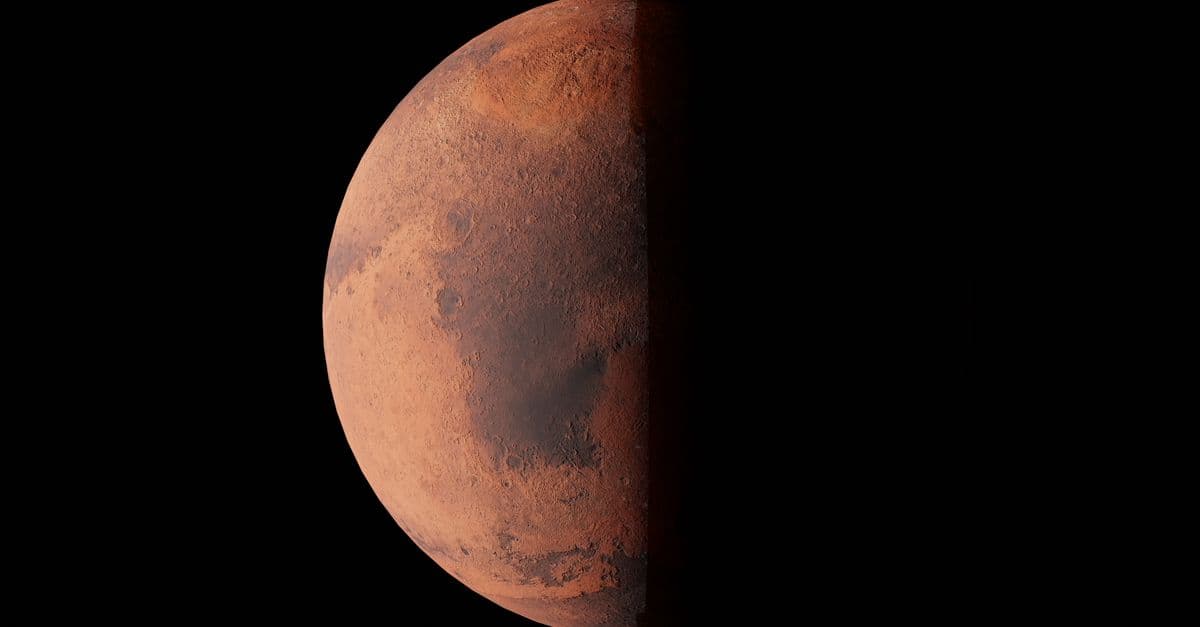
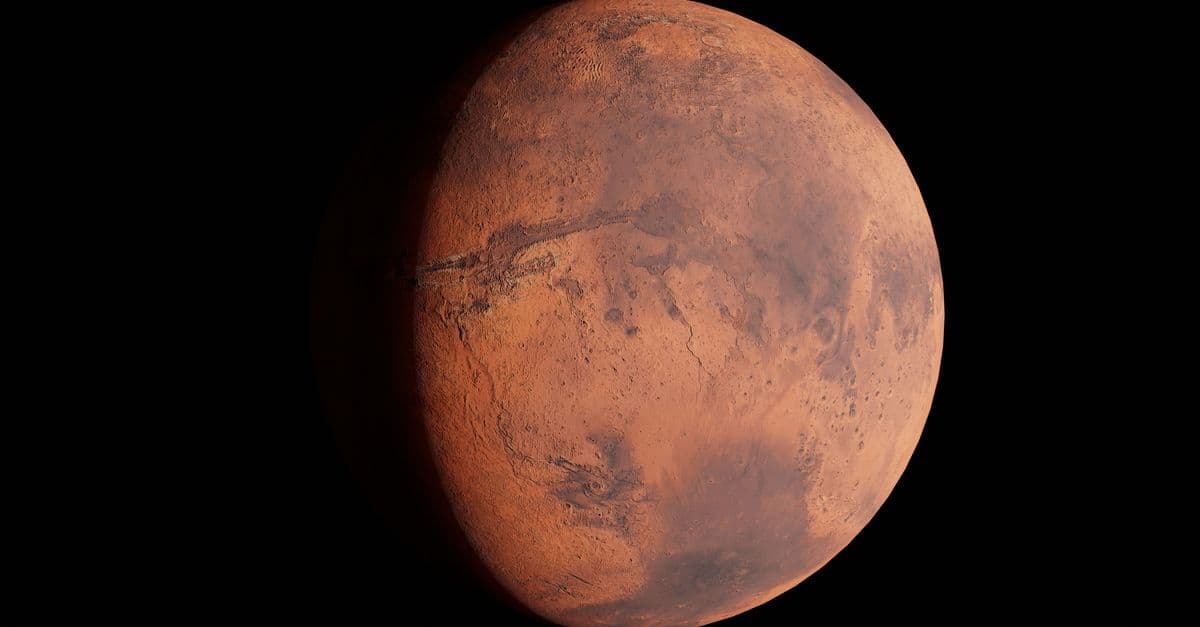
Photo: Zelch Csaba / Pexels
NASA's Perseverance rover landed in Jezero Crater on February 18, 2021, to answer one question that no earlier Mars mission was built to ask directly: did anything ever live here? Its drill has since filled sealed tubes with rock cores, one of which holds the most intriguing candidate biosignature the mission has reported. Another instrument, MOXIE, turned Martian carbon dioxide into breathable oxygen. This article walks through what the rover found, how strong each finding really is, and why the samples are still on Mars.
What Perseverance was sent to do
Perseverance is not a bigger Curiosity. Curiosity, which landed in 2012, was sent to learn whether Mars could ever have supported life. Perseverance goes one step further and looks for signs that life was actually there. NASA lists four science objectives for the mission: study the planet's habitability, seek signs of past microbial life, collect and cache samples, and prepare for future human missions (NASA Mars 2020 mission page).
The landing site was chosen for that goal. Jezero is a crater about 45 kilometers (28 miles) wide on the western edge of Isidis Planitia, just north of the Martian equator. Orbital images showed a fan-shaped deposit where a river once spilled into a lake. On Earth, river deltas bury organic material quickly in fine mud, which is why they are such good places to look for fossils. The mission team made a bet that Mars worked the same way.
A biosignature is any substance, pattern, or structure that provides evidence of past or present life. That can be a molecule that biology makes far more readily than chemistry alone, a rock texture shaped by microbial mats, or an isotope ratio that favors the lighter forms of an element. The word "potential" matters in NASA's language. A potential biosignature is a feature that fits life but has not been ruled out as the product of ordinary chemistry.
The instruments, in plain terms
Perseverance carries seven science instruments. Here are the ones that matter most for the life question, with the descriptions NASA gives them.
| Instrument | What it does | Why it matters for life |
|---|---|---|
| SuperCam | Fires a laser at rock from up to about 7 meters (23 feet) away and analyzes the glowing vapor | Identifies minerals and rock chemistry, and looks for organic compounds, without driving up to the target |
| PIXL | X-ray lithochemistry, mounted on the robotic arm | Maps which chemical elements sit where, at a scale finer than a grain of sand |
| SHERLOC (with the WATSON camera) | Uses Raman and luminescence spectroscopy on the arm | Finds organic chemicals and pairs them with the minerals they sit beside |
| MOXIE | Electrochemical oxygen production from carbon dioxide | A technology demonstration for future crews, not a life-detection tool |
| RIMFAX | Ground-penetrating radar | Shows how rock layers are arranged beneath the surface |
The rover also has the Mastcam-Z zoom cameras and the MEDA weather station. Power comes from a Multi-Mission Radioisotope Thermoelectric Generator, which turns heat from decaying plutonium-238 into about 110 watts at launch, declining a few percent per year, and charges two lithium-ion batteries for peak demand (NASA rover components). The rover itself has a mass of about 1,025 kilograms (2,260 pounds).
One correction to a common claim is worth making here. Perseverance does not carry the SAM chemistry lab. That instrument belongs to Curiosity, and so does the long-running work on Martian methane, which has its own explainer in Curiosity Rover: Methane Mystery on Mars. Perseverance's organic detections come from SHERLOC and SuperCam, which work by shining light or lasers at rock rather than by baking samples in an oven.
How a rover reads rock for signs of life
Think of the problem as a crime scene where the only witness has been gone for three billion years. Detectives cannot interview anyone. They can only look for fingerprints, then ask whether the fingerprints could have been left by something other than the suspect. A biosignature hunt on Mars is mostly the second half of that sentence.
Every candidate sign of life has an abiotic (non-living) twin. Organic molecules, for example, rain onto planets inside meteorites and form in water-rock reactions. Iron minerals can precipitate with or without microbes. A rover can narrow the possibilities, but it cannot take a measurement of an ancient cell. That is why the mission was designed around sample return, and why NASA's own language about its best find is cautious.
A second analogy helps with the sample strategy. A rover instrument is like a pocket magnifying glass, while a laboratory on Earth is like a university research building. The magnifying glass is excellent for deciding which rock to pick up. It is not what you would use to settle an argument. Perseverance is therefore a very capable collector with a modest on-board lab, and the arguments are meant to be settled later, with equipment too large to launch.
What would count as convincing
Scientists look for several independent lines of evidence that all point toward biology and are hard to explain otherwise. The ones usually discussed include:
- Isotope ratios. Living things often favor lighter isotopes (atoms of the same element with slightly different masses), so the carbon in biological material can have a different ratio of carbon-12 to carbon-13 than carbon from non-living sources.
- Chirality. Many organic molecules come in left-handed and right-handed mirror forms. Chemistry without life tends to make both in similar amounts, while life on Earth uses one hand almost exclusively.
- Texture and context. A structure that looks like a fossil needs a rock setting where fossils could form, with the structure's shape ruled out as a mineral growth pattern.
- Repeatability. A single odd rock is weaker evidence than the same pattern in several places, measured by several instruments.
None of these tests can be run to full precision by a rover. The 1976 Viking landers learned that lesson the hard way, when experiments designed to detect metabolism returned results that are still argued over; the story is told in The Mars Viking Life Detection Experiments.
The crater floor was volcanic, not a lakebed
Perseverance's first science campaign explored the floor of Jezero, and it produced a surprise. The team expected sediments from the old lake. Instead, the rover found two kinds of igneous rock, one that cooled underground from magma and one produced by surface volcanism (NASA/JPL).
The details come from a team led by Kenneth Farley, published in Science in 2022. The lowest unit, called Séítah, is a coarse, olivine-rich rock that formed at the base of a magma body. The unit above it, called Máaz, is interpreted as lava flows or the chemical counterpart of Séítah. Iron-magnesium carbonates along the grain boundaries show that the rocks reacted with carbon-dioxide-rich water, and sulfates and perchlorates in the voids probably came from brines that evaporated near the surface later (USGS summary of Farley et al.).
JPL reported that SuperCam analyzed 1,450 points during the rover's first 10 months, and that RIMFAX radar traced rock layers tilted up to 15 degrees, down to a depth of about 15 meters (50 feet). A rock formation of roughly 70,000 square kilometers (27,000 square miles) that is rich in olivine extends from the crater's inner edge.
Why volcanic rock is useful for an astrobiology mission
Igneous rock is poor at preserving fossils because magma is far too hot for anything delicate to survive. It is excellent at something else, which is keeping time. Crystals record when they formed, and laboratory instruments on Earth can read that age very precisely. Farley said at the time that the igneous rocks would reveal when the lake was present, because the lake came after the crater floor.
That matters for the life question in a quiet way. If a lake and a delta existed for a limited span, then the window in which life could have arisen and left traces in Jezero is bounded by two dates. Measuring them in a terrestrial lab would tell researchers how much time life, if it ever started, had to get going. Roger Wiens, a member of the science team, noted that the lake may have existed for a limited duration.
The delta: where the best evidence was expected
In April 2022 the rover reached the delta, the target that had been the main reason for choosing Jezero. Sedimentary rock like this preserves signs of ancient life far better than igneous rock does.
The first peer-reviewed results from post-landing data, by Nicolas Mangold and colleagues, appeared in Science in October 2021. Images of the scarp called Kodiak showed inclined and horizontal layering that matches what a river delta looks like on Earth. The delta is fan-shaped and formed where a river about 200 kilometers (120 miles) long fed a lake about 35 kilometers (21 miles) wide (ASU News).
The surprise was in the upper layers. Boulders up to 1.5 meters (5 feet) across sit high on the scarp walls, which means that later flash floods moved big rocks, some of them for tens of miles. The team estimated that the water doing the moving traveled at 4 to 20 miles per hour (6 to 30 kilometers per hour). Lake level also changed during the delta's history, rising and falling by tens of meters at heights at least 100 meters (330 feet) below the highest level, before the water disappeared.
The team pointed out two targets with different value. The finest-grained material at the bottom of the delta is the best candidate for organics and biosignatures. The boulders at the top could provide samples of old crustal rock from the surrounding region. Both were main sampling objectives.
How this connects to the broader water story
Jezero is one piece of a larger picture of a Mars that once had liquid water at the surface. The wider evidence from other rovers and orbiters is covered in Mars Water Evidence in Martian Rocks: Mars' Watery Past, and the chemistry of Martian dirt is in Martian Soil Analysis: Mars Geology from Rover Studies. A planet that could hold surface water for long periods is a different kind of candidate for life than one that never could, and the reason Mars lost most of its air is explained in Why Mars Lost Most of Its Atmosphere.
Organic molecules in Jezero
In July 2023, Nature published a study by Sunanda Sharma and colleagues on SHERLOC's measurements of the crater floor. The instrument detected signals consistent with aromatic organic molecules (carbon-based compounds built around ring structures) in the Máaz and Séítah formations. Organic signals appeared at all ten crater-floor targets that SHERLOC observed, and they were more concentrated in Máaz than in Séítah (Sci.News summary of Sharma et al.).
The word "organic" trips people up. In chemistry it means a compound built on carbon, usually bonded with hydrogen, and often oxygen or nitrogen. It does not mean "made by a living thing." The authors listed several possible origins: water-rock reactions, electrochemical reduction of carbon dioxide, and deposition from outside sources such as interplanetary dust and meteorites. They also wrote that a biotic origin has not been excluded.
What these detections do and do not show
Here is the honest summary of what the organics tell us:
- Complex carbon chemistry existed on early Mars and survived in the rock record in some form.
- The organics are linked to particular minerals, which suggests that water played a role in concentrating or preserving them.
- The authors estimate the organic-bearing period at roughly 2.3 to 2.6 billion years ago.
- None of this distinguishes biology from non-biology, because the detections show that the ingredients and the preservation exist, not that anything cooked with them.
A kitchen is a fair comparison. Finding flour, eggs, and butter in a pantry tells you that someone could have baked a cake. It says nothing about whether anyone did. Organic detections establish the pantry. The Cheyava Falls rock, discussed next, is closer to finding a pan with something in it.
Cheyava Falls and the Sapphire Canyon core
The most discussed result of the mission so far arrived in September 2025, when Nature published "Redox-driven mineral and organic associations in Jezero Crater, Mars," led by Joel Hurowitz of Stony Brook University (ScienceDaily). The rock at the center of the paper is Cheyava Falls, an arrowhead-shaped block about 1 meter by 0.6 meters (3.2 by 2 feet) that Perseverance found in July 2024 in the Bright Angel formation, a set of outcrops along Neretva Vallis, an ancient river valley. The core drilled from it is named Sapphire Canyon.
What the rock contains
The Bright Angel rocks are mostly clay and silt, fine-grained material that preserves microbial life well on Earth. They hold organic carbon, sulfur, oxidized iron, and phosphorus. Up close, PIXL and SHERLOC saw patterns that the team nicknamed "leopard spots," which are reaction fronts, places where a chemical reaction advanced through the rock and left a visible edge. The spots contain two minerals: vivianite, a hydrated iron phosphate, and greigite, an iron sulfide (NASA release).
On Earth, both minerals commonly form where microbes break down organic matter, and certain microbes can make greigite directly. The team's reading is that these minerals could be the leftovers of a redox reaction (a transfer of electrons) that microbes could have used as an energy source. This is the same basic trick that many Earth microbes use in mud and sediment today.
Why it is still only a "potential" biosignature
NASA's caveats are specific. The same minerals can form without life through sustained high temperatures, acidic conditions, or the binding of organic compounds. The Bright Angel rocks show no sign of high temperatures or acidic conditions. Whether the organic compounds could drive the reactions at low temperature, without any biology, is not known. Katie Stack Morgan, the project scientist, said abiotic explanations are less likely but cannot be ruled out.
There is a second oddity. These are some of the youngest sedimentary rocks the mission has studied, which the team did not expect.
| Reading of the evidence | What supports it | What weakens it |
|---|---|---|
| Biological | Vivianite and greigite are common by-products of microbial activity on Earth; organic carbon, sulfur, and phosphorus are all present | Both minerals can also form without life |
| Abiotic, high heat or acid | The minerals can form under these conditions | The Bright Angel rocks show no sign of high temperatures or acidic conditions |
| Abiotic, organic-driven | Organic compounds could in principle bind the minerals at low temperature | Whether this happens at low temperature is unknown |
| Needs more evidence | Matches NASA's wording of "potential biosignature" | Cannot be settled by rover instruments alone |
The table shows why scientists talk about a candidate rather than a discovery. No row is eliminated. The abiotic readings are considered less likely by the team, and their reasoning is an open scientific argument, not a closed one.
Sample caching: the tubes and what is in them
Curiosity analyzes a sample and then discards it. Perseverance does something different: it seals cores into tubes for later retrieval. The rover carries 43 tubes in total, 38 for samples and five "witness tubes" that are exposed to the same environment as the sampling process but receive no rock, so that any contamination carried from Earth can later be identified (NASA rock samples page).
A rotary percussive drill cuts a rock core about 1.3 centimeters (half an inch) wide. NASA's sample page, as read for this update, lists 30 of the 38 sample tubes as filled.
| Sample type | Count | Examples |
|---|---|---|
| Rock cores | 27 | Montdenier, Sapphire Canyon, Silver Mountain |
| Atmospheric | 1 | Roubion |
| Regolith (loose soil and dust) | 2 | Atmo Mountain, Crosswind Lake |
| Witness tubes sealed | 3 of 5 | Sealed on sols 160, 499, and 586 |
Nine of the filled tubes are in a sample depot on the surface, while 21 remain aboard the rover. The depot is a deliberate piece of risk management. If Perseverance fails, a future mission could collect the tubes from the depot without having to reach the rover.
Why bother with a sample at all
A rover's instruments are limited by mass, power, and what can survive launch. A university laboratory can use instruments the size of a room. Sample return allows several tests that Perseverance cannot do:
- Precise age dating of the igneous and sedimentary units, which would calibrate the timeline of Martian history across the solar system.
- Isotope measurements on carbon and sulfur, to see whether any carbon was processed by living things.
- Mirror-image (chiral) analysis of any organic molecules.
- Electron microscopy at a resolution fine enough to look for cell-sized structures.
The scientific community often compares this to the Apollo program. Apollo's rocks were studied for decades after the missions ended, using tools that did not exist in 1972. Mars samples would work the same way, with new laboratory techniques applied for decades.
Where the sample return stands
This is the part of the story that changed the most in the past two years. The Mars Sample Return plan involved several spacecraft: a lander to collect the tubes, a rocket to lift them to orbit, and an orbiter to carry them to Earth. The plan had been stuck without a settled design or schedule for a long time before Congress acted.
In January 2026, Congress passed a spending bill that, according to the Planetary Society, formally closed the Mars Sample Return program office and listed the program at "$0 – Canceled." The bill funded a $110 million line called Mars Future Missions, intended to develop common technologies for robotic and eventually crewed Mars missions, with sample return as one possible use (Planetary Society). The Planetary Society described the program as having been in limbo for over two years before that point.
What this means in practice: as of the sources read for this update, no approved mission exists to bring the Perseverance tubes to Earth. The tubes remain on Mars, and the rover keeps working. Whether a different architecture, such as a commercial or international mission, is eventually funded is an open question that the budget bill did not settle. Older timelines that put sample return in the early 2030s no longer describe an active plan.
MOXIE: making oxygen on another planet
MOXIE, the Mars Oxygen In-Situ Resource Utilization Experiment, tested whether a spacecraft could make oxygen from the Martian atmosphere, which is about 95 percent carbon dioxide (MIT News). The idea is straightforward to describe and hard to do in practice. The instrument takes in Martian air, compresses and filters it, and heats it. A hot, charged ceramic component then separates one oxygen atom from each carbon dioxide molecule. The oxygen ions combine to form O2, and the carbon monoxide is released back into the atmosphere. The easiest comparison is a fuel cell run backward: a fuel cell combines gases to make electricity, while MOXIE uses electricity to split a gas.
What MOXIE actually did
MOXIE's first run in 2021 produced about 5.4 grams of oxygen in an hour, enough for an astronaut's normal activity for roughly 10 minutes. The rate averaged 6 grams per hour after a two-hour warmup. After that, the team ran it under many conditions over a full Martian year.
| MOXIE figure | Value | Source |
|---|---|---|
| Total runs | 16 | NASA/JPL, September 2023 |
| Final run | August 7, 2023 (9.8 grams) | NASA/JPL |
| Lifetime oxygen | 122 grams | NASA/JPL |
| Peak rate | 12 grams per hour | NASA/JPL |
| Purity | 98 percent or better | NASA/JPL |
| Initial goal | 6 grams per hour | MIT News |
NASA said the peak rate was about twice the original goal and that MOXIE met all of its technical requirements (NASA/JPL). Across all 16 runs, that 122 grams is a tiny amount, which makes clear that MOXIE was a proof of concept, not a supply system.
Why oxygen matters more than it seems
The reason to make oxygen on Mars has less to do with breathing than with rockets. Getting four astronauts off the Martian surface would need about 7 metric tons (15,000 pounds) of rocket fuel and about 25 metric tons (55,000 pounds) of oxygen to burn it, according to the MOXIE team. A crew spending a year on the surface would use about one metric ton of oxygen to breathe. Carrying 25 tons of oxygen from Earth would be enormously expensive, so making it on site is attractive.
NASA's next step is not a "MOXIE 2.0" but a full-scale system with an oxygen generator plus a way to liquefy and store the oxygen. MIT's Michael Hecht, the principal investigator, said in the NASA release that the team has learned lessons for designing a more efficient version and that decisions are needed about which things have to be validated on Mars. A full plant would also need serious power, and that engineering problem is discussed in Mars Settlement Engineering.
What else the rover tests for human exploration
Perseverance doubles as an engineering test bed. Its aluminum wheels are narrower and larger in diameter than Curiosity's, with thicker metal for durability. Each is 52.5 centimeters (20.7 inches) across and has 48 grousers, the small ridges that grip the ground. Six wheels with their own motors drive the rover.
On October 11, 2026, according to NASA, the rover's odometer reached 45.22 kilometers (28.10 miles), passing the distance record of the Opportunity rover at 45.16 kilometers (28.06 miles). Perseverance covered that distance in under six years, against well over a decade for Opportunity. NASA's Mars 2020 page notes the record, and the engineering lessons are covered more broadly in Mars Rovers Explained: Perseverance and Curiosity.
The rover's isotope-powered electrical system also continues to work through dust and seasons, which solar-powered Mars rovers could not always do. That is a practical argument for small nuclear power sources on future bases, a point developed in the settlement engineering article linked above.
What people get wrong about Perseverance
"NASA found life on Mars." It did not. The Cheyava Falls result is described by NASA and the paper's authors as a potential biosignature, one that needs additional data or study before any conclusion is drawn. The word "potential" carries real meaning here.
"The organics prove life was there." They do not. Organic molecules arrive on meteorites and form in many non-biological reactions. The authors of the SHERLOC study state that a biotic origin has not been excluded, which is a long way from saying it was found.
"Perseverance has samples on board ready to launch home." Mostly not. Many tubes remain aboard, nine are in a surface depot, and no approved mission is currently planned to retrieve either set.
"MOXIE can supply a Mars base." It produced 122 grams in total. It showed that the process works in the Martian environment. A crew would need a plant that is orders of magnitude larger.
"The rover is looking for living microbes." It is not. Surface conditions on present-day Mars are harsh, and Perseverance targets rocks that preserve chemical records of ancient environments. For a broader view of what finding microbes would imply, see What If We Found Microbial Life on Mars? and the overview in Astrobiology: The Science of Life Beyond Earth.
Frequently asked questions
Q: Has Perseverance found evidence of life? A: No confirmed evidence. In September 2025, Nature published a study of a rock called Cheyava Falls whose Sapphire Canyon core contains vivianite and greigite arranged in "leopard spots." NASA calls it a potential biosignature, and the minerals can also form without life. Settling the question likely needs laboratory analysis on Earth.
Q: What is the difference between organic molecules and life? A: Organic molecules are compounds built on carbon, and many of them form without any living thing, for example inside meteorites or in water-rock reactions. Life uses organic molecules, but their presence alone does not show biology. Scientists look for patterns, such as a preference for one mirror-image form, that chemistry rarely produces.
Q: What did MOXIE accomplish? A: MOXIE ran 16 times and made 122 grams of oxygen in total. Its peak rate was 12 grams per hour at 98 percent purity or better, about twice NASA's goal. Its last run was on August 7, 2023. It showed the process works on Mars but was only a small demonstration.
Q: When will Perseverance's samples return to Earth? A: No date has been set. A January 2026 spending bill closed the Mars Sample Return program office and funded a $110 million Mars Future Missions line instead, so there is currently no approved mission to retrieve the tubes. A future program could change this.
Q: How many samples has Perseverance collected? A: NASA's sample page lists 30 of the rover's 38 sample tubes as filled, made up of 27 rock cores, one atmospheric sample, and two regolith samples. Three of five witness tubes are also sealed. The count changes as the rover keeps drilling.
Q: Why was Jezero Crater chosen? A: Jezero held a lake fed by a river, and the river built a delta. Fine-grained delta sediments preserve organic material well on Earth. Orbital images showed the delta clearly, and the rover has since confirmed the layered structure of the deposit.
Q: Could Perseverance find living organisms? A: Very unlikely. The rover's tools are designed to read chemical and mineral records in rock, not to culture microbes. The surface is cold, dry, and exposed to radiation, so any search for living organisms would likely need to look underground.
The takeaway
Perseverance has turned a vague hope into a concrete, testable puzzle. Its instruments showed that Jezero's floor was volcanic, that a river and lake built a delta, that organic carbon sits beside minerals formed by water, and that one rock in the Bright Angel formation carries a chemical pattern that life could explain but chemistry might too. The honest status is a candidate, not a verdict.
The slow part is now the politics rather than the science. The cores that could settle the question are sealed in tubes on Mars, and the program meant to fetch them was closed in a January 2026 spending bill. Until someone funds a way home, Perseverance's most important results will be debated from data collected by a rover, not measured in a laboratory. Meanwhile MOXIE's 122 grams have already helped, because they showed that a crew might one day make its own oxygen, and that is a quieter contribution to exploring Mars than any single rock.
Read next:
- Mars Water Evidence in Martian Rocks: Mars' Watery Past
- Martian Soil Analysis: Mars Geology from Rover Studies
- Mars Atmosphere: Understanding Thin Air
Sources:
- NASA, Mars 2020 Perseverance mission page
- NASA, Perseverance rover components
- NASA, Perseverance rock samples
- NASA, Mars rover discovered potential biosignature (September 2025)
- ScienceDaily, Hurowitz et al., Nature 645 (2025)
- Sci.News, Sharma et al., Nature 619 (2023)
- USGS, Farley et al., Science (2022)
- NASA/JPL, Perseverance makes new discoveries in Jezero Crater
- ASU News, Mangold et al., Science (2021)
- NASA/JPL, MOXIE completes Mars mission (2023)
- MIT News, MOXIE creates oxygen (2021)
- Planetary Society, FY2026 NASA budget
Follow new articles
Add SciHub101 to your feed reader to see new science and technology stories.
About the Author
SciHub101 is an independent science and technology publication founded and edited by Buğra Sözeri, a software engineer and app developer based in Türkiye. AI tools assist with drafting and research. Source documentation in the existing archive is uneven, and articles are being reviewed and corrected. The Editorial Team byline identifies editorial responsibility; it does not certify specialist or independent human review. Where we compare products, anything built by our own team is labelled as such — see the editorial guidelines and About page for how corrections and disclosures work.
Related Articles
Pharmaceutical Development in Space: Medicines Made in Orbit
ISS microgravity enables production of pharmaceutical compounds with superior properties, accelerating drug development for serious diseases.

Organ Development in Microgravity: Growing Tissues Beyond Earth
ISS bioprinters and bioreactors are growing heart, retina, and cartilage tissue in orbit. Here's the real science behind space-based tissue engineering.
Curiosity Rover: Methane Mystery on Mars
NASA's Curiosity rover detected methane spikes in Mars' atmosphere—evidence of possible microbial life or geological processes that challenge understanding of the Red Planet.
Radiation Measurement on Mars: Health Risks for Settlement
Curiosity's radiation detector has logged the Martian surface dose since August 2012. Here is what it measured, what that means for human health, and how much shielding settlers would need.
Martian Soil Analysis: Mars Geology from Rover Studies
Rover soil analysis shows Mars' surface is crushed basalt, oxidized iron, water-bearing minerals, and perchlorate salt. Here is what each finding means.

AI and Autonomous Spacecraft Navigation: How Mars Rovers Think for Themselves
Mars rovers like Perseverance use onboard AI to navigate treacherous terrain, select science targets, and survive a 20-minute communication delay from Earth.