Martian Soil Analysis: Mars Geology from Rover Studies
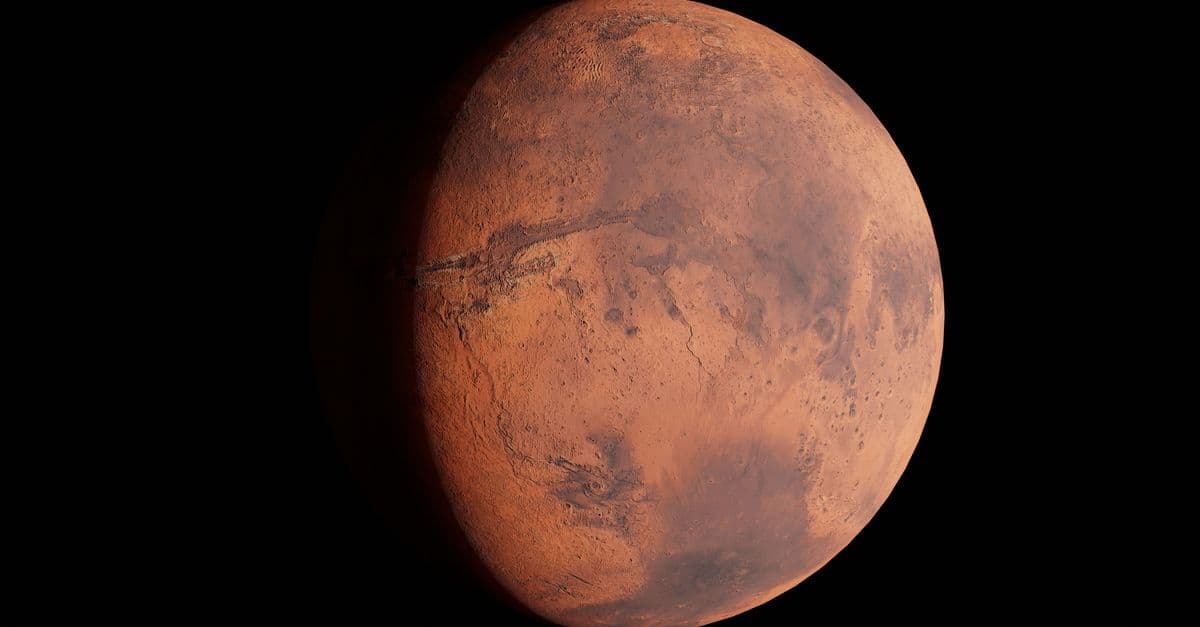
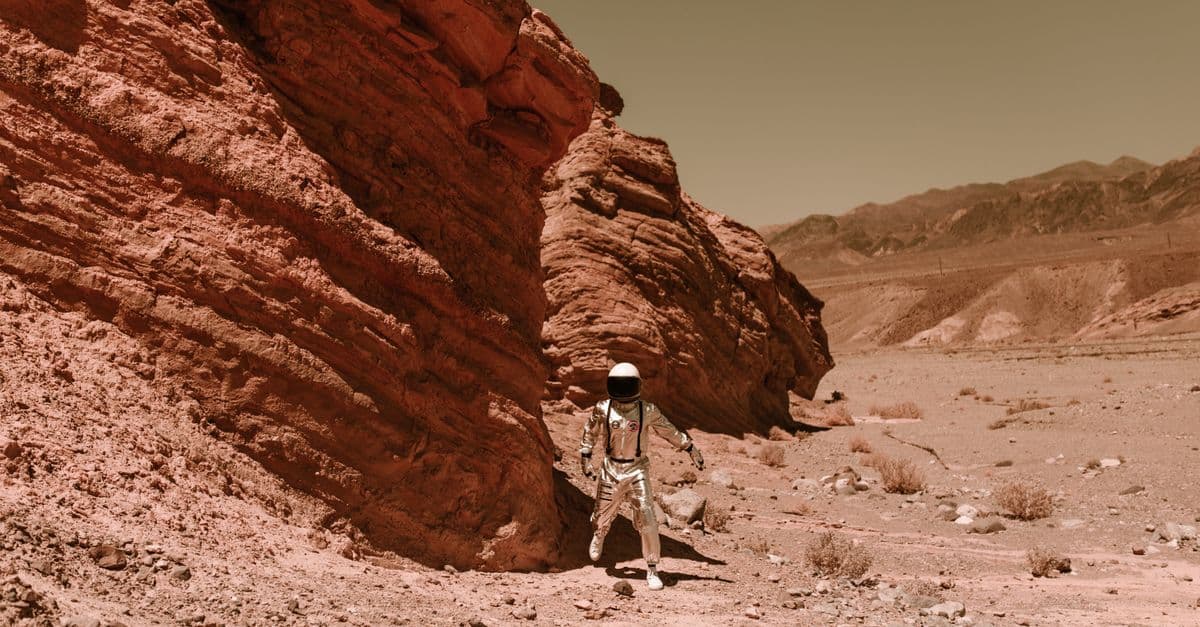
Photo: Zelch Csaba / Pexels
Martian soil is not soil in the way a gardener means it. It has no rotted leaves, no worms, and no living web of fungi. It is crushed volcanic rock, coated in rust, laced with salts, and holding a little water locked inside its minerals. Landers and rovers have scooped, heated, zapped, and X-rayed it for about 50 years, and the results explain why Mars is red, why its chemistry is harsh for life, and how its wet past gave way to a dry present. This article covers what the instruments measured and what each result does and does not prove.
What is Martian soil, and how is it different from dust?
Planetary scientists use the word regolith for the loose layer of broken rock that covers a planet's solid surface. Mission teams often say "soil" for the fine-grained part of that layer, even though no biology made it. On Mars, regolith forms mainly from impacts that shatter rock, from temperature swings that crack it, and from wind that grinds grains against one another over billions of years.
Dust is the finest part. A compilation of Martian regolith research defines Martian dust as particles finer than 30 micrometers across (about a third the width of a human hair), with typical airborne grains around 3 micrometers. Dust matters because wind lifts it, storms spread it around the globe, and it settles on spacecraft and solar panels. Because dust mixes planet-wide, it makes the fine fraction at different landing sites look chemically similar even though the bedrock beneath differs.
| Term | Meaning on Mars | Why it matters |
|---|---|---|
| Bedrock | Solid rock in place | Records the original geology and water history |
| Regolith | Loose broken rock and sand over bedrock | What landers dig and what future crews would handle |
| Soil | Fine-grained regolith, used informally by mission teams | Where perchlorate, bound water, and dust mix |
| Dust | Particles finer than about 30 micrometers | Moves globally in wind and storms, coats hardware |
How do rovers measure what soil is made of?
Rovers cannot bring soil home, so each one carries a small laboratory. Each instrument reads a different property, and scientists combine them the way a doctor combines a blood test, an X-ray, and a physical exam.
| Instrument | Technique | What it tells you |
|---|---|---|
| APXS (alpha particle X-ray spectrometer) | Bombards a sample with alpha particles and X-rays and measures the X-rays it emits | Which elements are present and in what proportion |
| ChemCam (on Curiosity) | Fires a laser to vaporize a spot and reads the light from the glowing plasma, a method called laser-induced breakdown spectroscopy | Elements in soil and rock from several meters away |
| CheMin (on Curiosity) | X-ray diffraction, which reads how a crystal bends an X-ray beam | Which minerals are present, because each crystal structure gives a unique pattern |
| SAM (Sample Analysis at Mars, on Curiosity) | Heats a sample and identifies the gases released with a mass spectrometer and a gas chromatograph | Water, carbon compounds, and salts that break down when heated |
| Wet chemistry (on Phoenix) | Dissolves soil in water and measures the solution | Soluble salts and acidity |
Elements and minerals are different things. An element is an atom type such as silicon or iron. A mineral is a specific crystal arrangement of elements, such as olivine or hematite. Two soils can have nearly the same elements but different minerals, and the minerals are what record the geologic story. If you want to know how a mass spectrometer tells one molecule from another, how mass spectrometry identifies molecules explains the principle.
What minerals are in Martian soil?
Curiosity's first X-ray diffraction analysis, carried out on the Rocknest sand drift in Gale Crater in late 2012, found feldspar, pyroxenes, and olivine, as compiled in the regolith reference above. Those three are the standard minerals of basalt, the dark volcanic rock that makes up Earth's ocean floors. Rocknest sand is therefore, in the main, finely ground basalt.
The presence of olivine tells a story in itself. Olivine is among the minerals that break down fastest when it meets liquid water, so a soil still rich in olivine has not spent much of its history soaking. That does not contradict the evidence for ancient lakes, because the sand at the surface was ground and blown around long after the wet era, with less contact with water than the buried mudstones.
Chemists also found that a notable share of the Rocknest soil is not crystalline at all. X-ray diffraction can only read ordered crystals, so noncrystalline material shows up as a broad hump in the data rather than sharp peaks. This amorphous fraction likely includes volcanic glass and weathering products, and it is a key hiding place for water and other volatile compounds.
Why is Mars red?
The rust-red color comes from oxidized iron. Basalt contains iron in a reduced form. When that iron reacts with oxygen-bearing compounds or water, it turns into ferric oxide minerals such as hematite, the same family as the rust on a bicycle left in the rain. A thin coating of fine ferric dust is enough to tint the whole planet.
Opportunity found hematite at Meridiani Planum in the form of small spherical concretions nicknamed blueberries, according to a later overview by Steve Squyres and colleagues. These formed in the rock after groundwater moved through it. Hematite at Meridiani is thus both a color source and a water clue, a theme covered in more detail in the water evidence article.
How much water is in the soil?
Mars looks bone dry, but the dirt is not. At Rocknest, SAM heated soil samples and measured water released at about 1.5 to 3 percent by weight, reported by Laurie Leshin and colleagues in Science in 2013. A kilogram of Martian dirt therefore yields roughly 15 to 30 grams of water if baked, although the water is chemically bound and would not drip out of a handful.
That water sits inside hydrated minerals and in the amorphous fraction, not as ice. Orbital neutron data from Mars Odyssey's High Energy Neutron Detector (Mitrofanov and colleagues) suggested that soil in some regions holds even more, up to about 5 percent by weight, which is the figure used in the regolith compilation.
Water ice proper was confirmed by Phoenix. NASA's mission page says Phoenix landed on May 25, 2008, in Green Valley on the arctic plains of Vastitas Borealis, at about 68 degrees north. By June 19 the team concluded that bright clumps in a trench were probably water ice, because the material vaporized four days after being exposed. On July 31, NASA announced that the lander's TEGA instrument had confirmed water in a sample.
Why did perchlorate matter so much?
On August 5, 2008, the Phoenix team reported perchlorate on the Martian surface, according to the same NASA page. Perchlorate is a chlorine-oxygen ion (ClO₄⁻) that forms salts with sodium, magnesium, and calcium. Phoenix's wet chemistry experiment dissolved soil in water and found, per NASA, alkaline soil with salts including perchlorate, sodium, magnesium, chloride, and potassium.
That alkaline result corrects a common claim that Mars soil is acidic. The acidic minerals found in some places, such as the jarosite and sulfates Opportunity found at Meridiani, record specific wet environments in the past, not the pH of the soil globally. At the Phoenix site, the soluble chemistry was alkaline.
The compilation above puts perchlorate in Martian regolith at around 0.5 percent. Later rovers have found it elsewhere. A paper in Science by Kenneth Farley and colleagues, summarized by the USGS, found sulfates and perchlorates filling voids in the floor rocks of Jezero Crater, probably deposited when near-surface brine evaporated. The widespread detection suggests perchlorate is a planet-wide feature.
What does perchlorate do?
Perchlorate has three consequences. First, it is a chemical hazard for people. On Earth it interferes with the thyroid gland's uptake of iodine, so any crew handling Martian dust would need to treat the material as a contaminant. Second, perchlorate salts can lower the freezing point of water, which means that brines could, in principle, stay liquid at temperatures where pure water would be solid ice. Third, perchlorate complicates the search for organic molecules, as described below.
Because of the thyroid risk, future settlement planning treats perchlorate removal as a design requirement for any soil-derived water or food system. The engineering is possible with known water treatment methods, but it is a cost that must be built into life support. The wider challenges for crews are explored in can humans live on Mars and in Mars settlement engineering.
Have rovers found organic molecules in Martian soil?
Yes, in small amounts, and the interpretation is hard. NASA's Curiosity mission page says the rover detected decane, undecane, and dodecane in a drilled rock sample called Cumberland, the largest organic molecules discovered on Mars to date. A February report in the journal Astrobiology argued that the non-biological sources considered could not fully explain the abundance of those molecules. That is a real result, and it stops well short of finding life.
Organic here is a chemistry term, meaning compounds built on carbon-hydrogen frameworks. Meteorites deliver such compounds, volcanic and water-rock reactions produce them, and living things make them in large quantity. So finding them does not distinguish between biology and geology.
Perchlorate adds a further complication. When SAM heats a sample, perchlorate can react with organic carbon and destroy part of it, which means the original organic content may be larger than the instrument sees. Researchers have reported chlorinated hydrocarbons in the heated gases that form during that reaction. Scientists have worked around this problem by using other sample preparation methods, but it is a reminder that the instrument alters what it measures.
What would count as evidence of life?
No single molecule would settle the question. Researchers look for patterns instead. Life on Earth tends to use only one mirror-image form of amino acids, while non-biological chemistry makes roughly equal mixes of both. Life also favors lighter carbon isotopes, which would leave a skew in the ratio of carbon-12 to carbon-13. Biology also produces molecules in recognizable families, such as fatty acids with an even-numbered carbon chain preference. Each of these tests requires instruments more precise than those that fit on a rover.
That is the main reason scientists want samples on Earth. NASA says Perseverance's samples await possible pickup by a future mission, and the timing remains uncertain. Meanwhile, the Perseverance astrobiology article covers what the rover is doing with its own onboard tools, and the Curiosity methane mystery covers one more unresolved carbon clue.
What does the soil say about Mars' past climate?
The soil records two things at once: the dust of today and the leftovers of older wet episodes. Sulfates and clays in bedrock tell the longer story. The global pattern described by Jean-Pierre Bibring and colleagues in Science in 2006 divides Mars' history into an early clay-forming era, a sulfate era in acidic conditions, and a later era of slow surface oxidation. The surface soil belongs to that last era: the rust-coloured, oxidized, mostly dry layer that coats the planet.
Gale Crater shows the same transition up close. NASA's JPL reported in 2022 that, as Curiosity climbed Mount Sharp, it detected less clay and more sulfate, with dunes forming over old lake sediments. The soil that Curiosity scoops from the crater floor sits above these layers and is a blend of material from many sources.
For the atmosphere side of the story, why Mars lost most of its atmosphere and Mars atmosphere composition show how the thinning air and cooling climate set the stage for an oxidized surface. And for a comparison with another airless world, lunar soil analysis shows how Moon dust differs in water history, oxidation, and salts.
How do scientists turn an instrument reading into a conclusion?
Take the water measurement as a worked example. SAM does not detect "water in soil." It heats a small portion of sand in a tiny oven, and a detector counts water molecules as they escape at each temperature. Water that leaves early, at low temperature, was probably stuck on grain surfaces. Water that leaves at several hundred degrees Celsius was held in the crystal structure of minerals or in the amorphous material. The temperature profile, not just the total, separates the two.
That is why mission scientists speak of "bound" water. The same logic applies to carbon. A burst of carbon dioxide at a particular temperature can point to carbonate minerals, while carbon compounds released at other temperatures may be organic. Each interpretation has to be cross-checked against what CheMin found in the same scoop, since a mineral's presence explains which gas should appear and when.
Why sampling bias matters
Rovers choose where to dig, and that choice shapes the story. A wind-blown sand drift such as Rocknest is a convenient, loose, well-mixed sample, but it tells scientists about the average of many sources and many ages. A drilled mudstone tells a much more specific story about one lake at one time. Neither is wrong, and each answers a different question.
The dust fraction presents the opposite problem: it is so thoroughly mixed by wind that it can hide local differences. Meridiani, Gale, Jezero, and the Phoenix site are separated by thousands of kilometers, yet their fine soils share broad chemical similarities. The bedrock, by contrast, differs enormously, which is why rovers drill and abrade rocks to see beneath the dusty skin.
Why do landers keep returning to the same questions?
Mars soil analysis started with the Viking landers in 1976, which tested for life and chemistry in scooped dirt with results that scientists argued about for decades. The Phoenix perchlorate discovery in 2008 prompted a review of the Viking data, since perchlorate could have destroyed organic molecules when the Viking instruments heated their samples. In that sense each new mission re-reads the old results in a new light.
Dust has been a practical problem as well as a scientific one. Fine grains settle on solar panels and instrument windows, and a global dust storm in 2018 cut off the sunlight that powered the Opportunity rover, which never resumed contact with Earth. Spacecraft that run on nuclear power sources, such as Curiosity and Perseverance, avoid that failure mode, which is one reason they can work through dust seasons.
The recurring pattern is that Mars soil gives partial answers that raise sharper questions. The water content raised the question of where the water sits. The perchlorate raised the question of what it did to older organic measurements. The organics raised the question of origin. Answering them takes more than one instrument, one site, or one decade.
Could settlers use Martian soil?
Soil is the most available raw material on Mars, so engineers study it closely. The old idea that Mars could supply its own oxygen needs a correction, however. NASA's MOXIE experiment on Perseverance made oxygen from the carbon dioxide in the air, not from soil. Over 16 runs ending in August 2023 it produced a total of 122 grams, and at its best it reached at least 98 percent purity at 12 grams per hour, according to NASA's report of September 6, 2023 as summarized in public records of the experiment.
Soil still has plausible uses, which are mostly research ideas rather than proven technology. Basaltic powder could be sintered, meaning heated until the grains fuse without fully melting, to make bricks. Piled soil could add mass to shield habitats from radiation, though the actual benefit depends on thickness and on radiation that Mars radiation measurement reviews. Water extracted by heating would need perchlorate treatment before anyone drinks it.
Growing crops directly in raw regolith is a harder proposition. Perchlorate, the lack of organic matter, and the absence of nitrogen in usable form all present obstacles, and any farm would need soil conditioning or hydroponics. These are active research questions, not solved problems.
Common misconceptions about Martian soil
Misconception: Martian soil is acidic everywhere. Phoenix found alkaline soil with soluble salts at the northern plains. Acidic signatures such as jarosite come from specific places that hosted acidic water long ago.
Misconception: the soil proves Mars once had life. Organic molecules have been detected, but non-biological processes can make them. The Astrobiology report on Cumberland argued only that the non-biological sources considered did not fully explain the abundance.
Misconception: Mars soil is toxic like a poison. It is chemically reactive and contains perchlorate, a thyroid hazard on Earth, but it is not a single acute poison. The practical concern is chronic exposure to fine dust, plus the need to treat any soil-derived water.
Misconception: all Mars soil looks the same. The fine dust fraction is well mixed, but bedrock and local sand differ from site to site. Meridiani, Gale, Jezero, and Phoenix's polar plain each give different mineral clues.
Frequently Asked Questions
Q: Could Mars soil support Earth crops? A: Not in its raw form. Perchlorate is a concern, and the soil lacks organic matter and usable nitrogen. Researchers have proposed washing out perchlorate and adding nutrients, or growing plants in hydroponic systems, but none of this has been tested at scale on Mars.
Q: What is Martian soil made of? A: Mostly crushed basalt, with feldspar, pyroxene, and olivine found by Curiosity at Rocknest, plus iron oxides, sulfates, salts, and a noncrystalline fraction. It also holds bound water, about 1.5 to 3 percent by weight in Curiosity's analysis, and perchlorate salts.
Q: Is Martian soil toxic to humans? A: It contains perchlorate, which interferes with iodine uptake in the thyroid on Earth, and the fine dust could be an inhalation hazard. Mission planners would handle both with filtration, airlocks, and water treatment. Scientists say this is a manageable engineering problem, not an unsolvable one.
Q: How does Mars soil compare to lunar soil? A: Both are broken-up volcanic rock, but they differ in history. Mars has a record of water in its clays, sulfates, and salts, and its surface is oxidized and contains perchlorate. The Moon has been dry and lacks those features.
Q: Why do scientists want samples on Earth if rovers already measure the soil? A: Earth laboratories have instruments far more sensitive and flexible than anything that fits on a rover. They can test isotopes, mirror-image chemistry, and tiny mineral grains, and they can repeat measurements as methods improve. NASA says Perseverance's samples await possible pickup by a future mission.
Q: Could living microbes survive in Martian soil today? A: The surface is cold, dry, oxidizing, and exposed to radiation, which makes it a hostile place for known life. Scientists think any survivors would more likely be underground, shielded from radiation, where water might be available. No rover has detected living organisms.
The takeaway
Martian soil is a mixed archive. The sand and dust at the top are mostly basalt ground fine, tinted by oxidized iron, and salted with perchlorate. Underneath them and in the bedrock are clays, sulfates, and carbonates that record real water, in lakes, groundwater, and brines. The soil itself tells the story of what Mars became, a cold and oxidized desert, while the rocks tell the story of what it once was.
The open question is organic chemistry. Traces of carbon compounds survive, and some are hard to explain by simple non-biological processes, but rovers cannot settle the issue. That judgment waits on laboratories on Earth, and on a sample return plan that has not yet been fully worked out.
Read next:
- Mars Water Evidence in Martian Rocks: Mars' Watery Past
- Perseverance Rover: Astrobiology Search on Mars
- Mars Radiation Measurement: Health Risks for Settlement
Sources:
- NASA, Phoenix mission overview (landing date, water ice, perchlorate, alkaline soil)
- NASA, Curiosity mission overview (drilled samples, Cumberland organics, SAM)
- USGS, Aqueously altered igneous rocks sampled on the floor of Jezero crater, Mars (Farley et al., Science, 2022)
- NASA JPL, Curiosity captures views of a changing Mars landscape, 2022
- NASA NSSDC, Opportunity evidence of water at Meridiani Planum, March 2, 2004
- ESA, Global mineralogical and aqueous Mars history derived from OMEGA/Mars Express data (Bibring et al., Science, 2006)
- Wikipedia, Martian regolith (compilation of dust size, perchlorate level, Rocknest water, and Mars Odyssey neutron data, with citations to Leshin et al., Science, 2013 and Mitrofanov et al.)
- Wikipedia, MOXIE (oxygen totals, citing NASA's September 6, 2023 report)
Follow new articles
Add SciHub101 to your feed reader to see new science and technology stories.
About the Author
SciHub101 is an independent science and technology publication founded and edited by Buğra Sözeri, a software engineer and app developer based in Türkiye. AI tools assist with drafting and research. Source documentation in the existing archive is uneven, and articles are being reviewed and corrected. The Editorial Team byline identifies editorial responsibility; it does not certify specialist or independent human review. Where we compare products, anything built by our own team is labelled as such — see the editorial guidelines and About page for how corrections and disclosures work.
Related Articles
Mendeleev's Periodic Table: Predicting Elements
How Dmitri Mendeleev organized elements and predicted undiscovered elements
Water Evidence in Martian Rocks: Mars' Watery Past
Orbiters and rovers have read Mars' wet history in clay minerals, sulfate salts, river deltas, and lake mudstones. Here is what each clue shows and where it stops.
Curiosity Rover: Methane Mystery on Mars
NASA's Curiosity rover detected methane spikes in Mars' atmosphere—evidence of possible microbial life or geological processes that challenge understanding of the Red Planet.
Radiation Measurement on Mars: Health Risks for Settlement
Curiosity's radiation detector has logged the Martian surface dose since August 2012. Here is what it measured, what that means for human health, and how much shielding settlers would need.
Perseverance Rover: Astrobiology Search on Mars
NASA's Perseverance rover is reading Jezero Crater's rocks for signs of ancient microbial life, caching samples for a return trip that no longer has an approved mission, and testing oxygen-making technology for crews.
Yutu-2 Rover Geological Findings: Exploring the Moon's Far Side
China's Yutu-2 rover explored the Moon's far side, discovering subsurface layers and geological features revealing the Moon's complex evolution.