Largest Stadiums in the World by Capacity
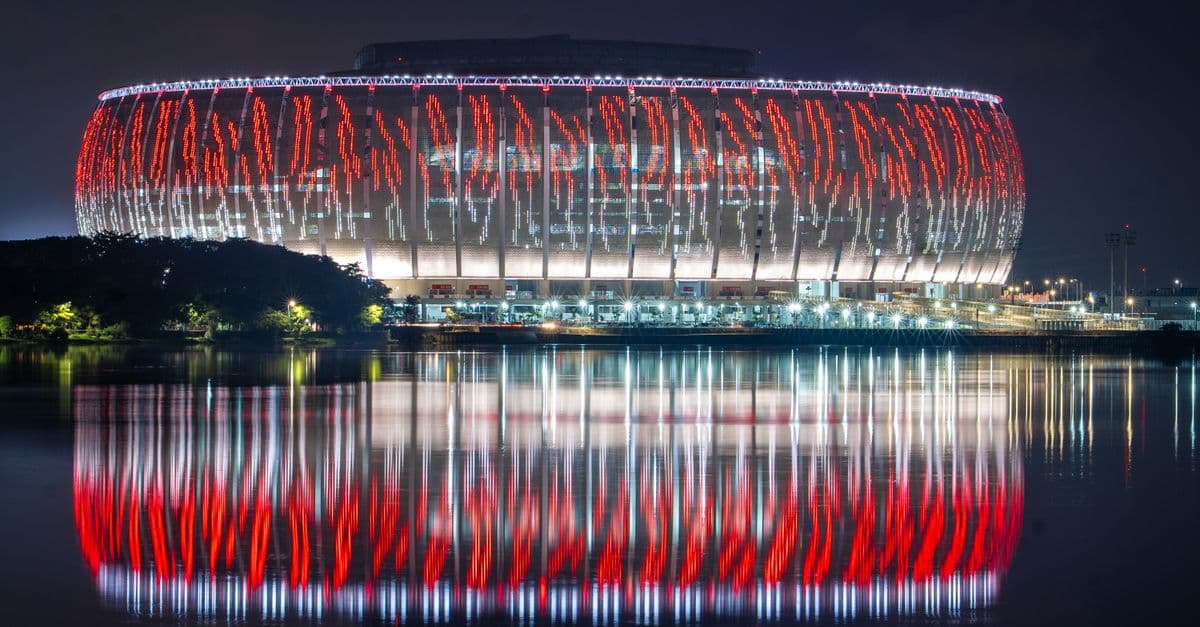
Photo: neilstha firman / Pexels
The largest stadium on Earth is a cricket ground. Narendra Modi Stadium in Ahmedabad, India, has an official capacity of 132,000, ahead of North Korea's Rungrado 1st of May Stadium at about 113,281 and a long run of American college football grounds that fill on only a handful of autumn Saturdays. Which one counts as biggest depends on how capacity is defined, what year the list was compiled, and whether a stadium is mid-renovation. This article ranks the giants and explains the counting rules behind the numbers.
What "biggest stadium" actually measures
Stadium capacity looks like a physical fact, but it is closer to a legal one. The operator, a local safety authority, or a sports federation sets an official figure based on the seats, any permanent standing areas, and the exit routes that inspectors will approve. Two bowls with identical seating can carry different official capacities if one jurisdiction allows standing terraces and the other does not.
That is why "largest stadium" returns different answers depending on the source. Wikipedia's list of stadiums by capacity, the most widely used cross-check, says it counts "standard, permanent total capacity, including both seating and any permanent standing areas." It leaves out temporary seating added for one event and it does not count record crowds. Other lists rank by seated capacity only, and still others rank by the biggest attendance ever recorded, which is a different animal altogether.
Think of capacity the way you think of the occupancy sign by a restaurant door. The number on the sign is not a measurement of the room. It is a judgment about how many people can get out safely if something goes wrong, and it changes when the exits, the code, or the country change.
The largest stadiums in the world, ranked
The table below follows the order and figures on Wikipedia's list of stadiums by capacity, checked in October 2026, with one correction: Camp Nou is removed from the top twelve and discussed separately, because its current capacity is far below the figure the list still carries.
Table 1. The 12 largest stadiums by official capacity, October 2026
| Rank | Stadium | Location | Capacity | Main use |
|---|---|---|---|---|
| 1 | Narendra Modi Stadium | Ahmedabad, India | 132,000 | Cricket |
| 2 | Rungrado 1st of May Stadium | Pyongyang, North Korea | 113,281 | Football, athletics, mass games |
| 3 | Michigan Stadium | Ann Arbor, Michigan, USA | 107,601 | American football |
| 4 | Beaver Stadium | College Township, Pennsylvania, USA | 106,304 (106,572 on older lists) | American football |
| 5 | Ohio Stadium | Columbus, Ohio, USA | 102,780 | American football |
| 6 | Kyle Field | College Station, Texas, USA | 102,733 | American football |
| 7 | Tiger Stadium | Baton Rouge, Louisiana, USA | 102,321 | American football |
| 8 | Neyland Stadium | Knoxville, Tennessee, USA | 101,915 | American football |
| 9 | Darrell K Royal-Texas Memorial Stadium | Austin, Texas, USA | 100,119 | American football |
| 10 | Bryant-Denny Stadium | Tuscaloosa, Alabama, USA | 100,077 | American football |
| 11 | Melbourne Cricket Ground | Melbourne, Australia | 100,024 | Cricket, Australian rules football |
| 12 | FNB Stadium | Johannesburg, South Africa | 94,736 | Football, rugby union |
Sources: Wikipedia, "List of stadiums by capacity"; Wikipedia pages for Beaver Stadium and the individual venues. Capacities change with renovations and recertification, so treat every figure as dated October 2026.
The next tier is just as revealing. Misr Stadium in Egypt's New Administrative Capital is listed at 93,940, Sanford Stadium in Athens, Georgia, at 93,033, and the Cotton Bowl in Dallas at 92,100. Wembley Stadium in London comes in at 90,000, the Rose Bowl in Pasadena at 89,702, Lusail Stadium in Qatar at 88,966, and Ben Hill Griffin Stadium in Gainesville, Florida, at 88,548.
Only four entries in the top twelve are not American football bowls: a cricket ground in India, a mass-performance stadium in North Korea, a cricket and Australian football ground in Melbourne, and a football and rugby venue in Johannesburg. The other eight are American, and the section on college football below explains the business model behind that pattern.
How Narendra Modi Stadium took the top spot
Narendra Modi Stadium sits on the site of the old Sardar Patel Gujarat Stadium, which was demolished starting in October 2015. The rebuilt ground was designed by the architecture firm Populous and built by Larsen and Toubro. It first opened to the public on February 24, 2020, for the "Namaste Trump" event, and it was formally inaugurated and renamed on February 24, 2021. The reported cost was about 800 crore rupees, roughly US$83 million (Wikipedia, Narendra Modi Stadium).
The ground covers 63 acres (25 hectares), and the playing oval measures 160 by 140 meters. The stands are mostly two-tier, with a three-tier main pavilion and 76 corporate boxes that each hold 25 people. The 2023 Cricket World Cup final, which Australia won by six wickets, drew a recorded crowd of 92,453 there, which tells you something useful: even the largest stadium on Earth does not always run at its official figure.
Older rankings, and many articles written before the rebuild, put Rungrado first, and that is the claim this article used to make as well. The current list reverses the order. Wikipedia's own page on Rungrado cites ESPN in calling it the second-largest stadium in the world by seating capacity, behind Narendra Modi Stadium.
Is the 132,000 figure reliable?
It is the official capacity given for the stadium, and the page that lists it has two citations. A recorded crowd near that size would settle the question, but none has been documented. Wikipedia's article on the stadium also carries two inconsistent attendance claims: a 111,989 crowd listed for a Coldplay concert and a 104,859 crowd for the 2022 Indian Premier League final described as the highest ever for the venue. Treat 132,000 as the operator's design capacity rather than as a number that has been seen on a turnstile count.
Rungrado 1st of May Stadium: the stadium built to perform
Rungrado 1st of May Stadium stands on Rungrado Island in Pyongyang. Construction ran from 1986 to 1989, and it opened on May 1, 1989, in time for the 13th World Festival of Youth and Students. The roof is a ring of 16 arches that resembles a magnolia blossom, and the site covers 20.7 hectares (51 acres) with more than 207,000 square meters (2.23 million square feet) of floor space across eight stories. The main pitch is 22,500 square meters (Wikipedia, Rungrado 1st of May Stadium).
Most giant stadiums exist so that a crowd can watch a few dozen athletes. Rungrado was also built so that the field itself could hold a performance of enormous scale. The Arirang mass games are huge, synchronized gymnastic and dance performances staged on the pitch and in the stands. A June to July 2002 performance used more than 100,000 participants, and in 2007 Guinness World Records recognized a display there with 100,090 participants as the largest gymnastics display ever staged.
Why the number for Rungrado varies so much
The stadium was originally credited with an official capacity of 150,000. After a remodel completed around 2014 and 2015, during which some bench seating was replaced with individual seats, outside observers estimated about 114,000. Wikipedia's list now gives 113,281. North Korea does not publish audited seat counts or safety inspections, so every outside figure is an estimate built from photographs, plans, and state media claims.
Attendance reports are no more consistent. Local authorities claimed 150,000 and 190,000 for the 1995 "Collision in Korea" wrestling event, and 150,000 spectators for a 2018 speech by South Korean president Moon Jae-in. Those numbers cannot all be right, and none of them is independently verifiable, which is why Rungrado's rank rests on a consensus estimate rather than a certified count.
Why American college stadiums fill the rest of the list
Eight of the twelve entries in Table 1 are American college football grounds. That is not because the United States loves football more than other places love their own sports. It follows from a financing model in which universities own their stadiums, schedule a small number of home games each autumn, and sell almost every seat at a premium to alumni, students, and local fans.
A European club that plays dozens of home matches across league, cup, and continental competitions can fill a 40,000-seat ground over and over. A college team that plays a handful of home games gets only a few paydays per year, so each game has to carry as many paying fans as the site can hold. Stadium size here is a revenue decision as much as an engineering one.
Many of these stadiums are also old, and they grew by accretion. Ohio Stadium opened on October 7, 1922, designed by Howard Dwight Smith as a horseshoe, with 66,210 seats and an original cost of about $1.34 million. Kyle Field at Texas A&M took its permanent concrete form in 1927 (the site has hosted games since 1905), Darrell K Royal-Texas Memorial Stadium in 1924, and Beaver Stadium in its current form on September 17, 1960. Each has been expanded in stages, often by adding decks on top of a bowl that was designed with footings strong enough to carry more weight later.
Penn State's current rebuild shows how seriously the schools take this. The Board of Trustees approved the Beaver Stadium renovation on May 21, 2024, with a total cost capped at $700 million, to be funded by the athletics department and finished before the 2027 season. The press box at the west end was demolished with controlled explosives on January 4, 2025. The stated aims are year-round use of the building and more revenue, not more seats: the capacity listed for 2025 is 106,304, slightly lower than the 106,572 figure used for the previous 14 years.
How Michigan Stadium grew from 72,000 to 107,601
Michigan Stadium is the cleanest case study in why a capacity figure is a moving target. It opened on October 1, 1927, with a 33-0 win over Ohio Wesleyan and was dedicated three weeks later, on October 22, in a 21-0 win over Ohio State. The original capacity was 72,000, and temporary bleachers later raised it to 82,000. Construction cost $950,000, which is about $13.8 million in 2024 dollars. The footings were designed to allow expansion beyond 100,000 seats (Wikipedia, Michigan Stadium).
Most of the seats sit below ground level, because the bowl was excavated rather than stacked. Imagine digging a quarry and then lining its walls with bleachers: the earth does the work that a steel superstructure would otherwise do, which is one reason a stadium this large looks modest from the street.
Table 2. Michigan Stadium's official capacity over time
| Period | Official capacity |
|---|---|
| 1927 | 72,000 |
| 1928 to 1948 | 85,752 |
| 1949 to 1955 | 97,239 |
| 1956 to 1972 | 101,001 |
| 1973 to 1991 | 101,701 |
| 1992 to 1997 | 102,501 |
| 1998 to 2007 | 107,501 |
| 2008 to 2009 | 106,201 |
| 2010 to 2015 | 109,901 |
| 2015 to present | 107,601 |
Source: Wikipedia, "Michigan Stadium," capacity history. The 2010 renovation cost $226 million.
Notice that the number went down twice, in 2008 and again in 2015, the second time by 2,300 seats. A stadium's official capacity is a policy decision that can move in either direction, and the fixed concrete does not decide it.
How a 100,000-seat bowl is engineered
Building for 100,000 people is not a larger version of building for 20,000. Three constraints dominate the design at that scale: sightlines, egress, and structural load.
Sightlines. Every seat needs a clear view of the field, so upper decks have to be steeper and farther from the action as capacity grows. Past a certain height, the upper deck becomes so remote that designers widen the footprint instead of building taller. That is why the biggest stadiums tend to be broad bowls, and why Michigan's dug-into-the-ground design works so well for a venue of its size.
Egress. Safety rules require a crowd to be able to leave in a defined time, so stairwells, ramps, and exit gates have to scale with capacity. Adding handrails, widening aisles, or reworking exits generally removes seats, which is one reason a stadium's official capacity so often drifts down after it opens.
Structural load. A full stadium carries its own weight plus tens of thousands of people who jump, stomp, and sway in time. Engineers have to design for the worst case, a crowd moving in rhythm. The London Millennium Bridge is the standard warning. It opened on June 10, 2000, with about 90,000 crossings on the first day and up to 2,000 people on the deck at once, and pedestrians unconsciously matched their steps to a sideways sway of up to about 70 millimeters, which fed the motion further. It was closed two days later. The fix was 37 viscous fluid dampers and 52 tuned mass dampers, installed for about £5 million, and the bridge reopened on February 22, 2002 (Wikipedia, Millennium Bridge). Stadium stands, which also carry crowds that move in rhythm, are governed by related physics. For the general engineering of long spans and moving loads, see how bridges are engineered to not fall down.
Roofs add a fourth problem. Wembley Stadium's arch rises about 133 to 134 meters (roughly 440 feet) with a 315-meter span, and its partly retractable roof covers about 40,000 square meters. The rebuilt stadium was handed to the Football Association on March 9, 2007, and opened with the FA Cup Final on May 19, 2007. The reported cost was about £790 million (Wikipedia gives both £789 million and £798 million). A structure of that kind is closer to a bridge than to a bowl, which fits with the broader category covered in the largest structures ever built.
Why safety disasters shrank some of the world's biggest crowds
The biggest crowds ever recorded in sports are almost all gone, and the reason is safety law. Standing terraces let operators pack in far more people per square meter than seats do, and when those terraces failed, the rules changed.
The Hillsborough disaster happened on April 15, 1989, at Hillsborough Stadium in Sheffield, England, when a crush in the central standing pens killed 95 people by the time the inquiry reported. A 96th person died in 1993, and a 97th death was recognized in 2021. Taylor's final report, published in January 1990, recommended that major stadiums become all-seater, and the Football League and Scottish Football League required clubs in their top two divisions to comply by August 1994 (Wikipedia, Taylor Report).
Brazil's Maracanã followed a related path. It opened on June 16, 1950, and the official attendance for the 1950 World Cup final between Uruguay and Brazil on July 16, 1950, is commonly given as 173,850, though other figures, including an official 199,854 and estimates near 210,000, also appear in the record. A railing collapse in 1992 killed three spectators, and the stadium was converted to all-seater in the late 1990s. Its capacity today is 73,139. It still hosted the 2014 World Cup final, which Germany won 1-0 after extra time in front of 74,738 people, and the opening and closing ceremonies of the 2016 Olympics (Wikipedia, Maracanã Stadium).
Crowds behave in predictable ways, and part of what safety engineers manage is how individuals read the movement of the people around them, a theme explored in why crowds change decisions.
The biggest crowd ever versus the official capacity
A stadium's record attendance and its official capacity are two different numbers, and the gap between them is one of the best ways to see how capacity rules have tightened.
Table 3. Official capacity today versus a historic record
| Stadium | Current capacity | Record or historic crowd | Year |
|---|---|---|---|
| Maracanã, Rio de Janeiro | 73,139 | 173,850 (official, 1950 World Cup final) | 1950 |
| Melbourne Cricket Ground | 100,024 | 121,696 (VFL Grand Final, before full seating) | 1970 |
| Camp Nou, Barcelona | 62,652 (March 2026, mid-rebuild) | 120,000 (European Cup quarter-final vs Juventus) | 1986 |
| Michigan Stadium | 107,601 | 115,109 (vs Notre Dame) | 2013 |
| Ohio Stadium | 102,780 | 110,045 (vs Michigan) | 2016 |
| FNB Stadium | 94,736 | 94,807 (Kaizer Chiefs vs Orlando Pirates) | 2015 |
| Wembley Stadium | 90,000 | 89,874 (football, FA Cup Final) | 2008 |
Sources: Wikipedia pages for each stadium. Record figures are reported attendances and are not always independently audited.
The older records tend to come from stadiums with standing room or from events where the seating plan was loose. The recent ones sit within a few percent of capacity, because modern ticketing counts every person. Wembley adds a useful twist: the same building has held 98,128 for a boxing match in September 2024 and 98,000 for an Adele concert in June 2017, because a field-level crowd stands on the pitch. A stadium has several capacities, depending on the event.
Camp Nou: a giant under construction
Camp Nou in Barcelona is the clearest example of how a list can run behind reality. It opened on September 24, 1957, with a capacity listed at 106,146. Barcelona's rebuild, known as Espai Barca, has reduced it sharply while work continues. The stadium reopened for competitive matches in November 2025 at reduced capacity, with a 4-0 win over Athletic Bilbao on November 22, 2025, in front of 45,157 fans.
As of March 10, 2026, the capacity was 62,652, with two of the three tiers of the north goal stand still closed. The club expects to return in January 2028 with about 95,000 seats and to reach 105,000 ahead of the 2028-29 season. Wikipedia's capacity list still carries the earlier 99,354 figure, which is why this article leaves Camp Nou out of Table 1 and why any list that includes it should be read with the date in mind (Wikipedia, Camp Nou).
If the rebuild finishes as planned, Camp Nou will return as the largest stadium in Spain and Europe, at 105,000. Until then, Wembley's 90,000 is the largest European figure on the list for a stadium that is not partly closed.
Big stadiums that rank lower than you might expect
Several of the world's most famous grounds sit just outside the top ten, and their stories explain what capacity leaves out.
Melbourne Cricket Ground. The Melbourne Cricket Club selected the site in 1853, the ground opened on September 23, 1853, and the first cricket match was played there on September 30, 1854. Its 100,024 capacity is made up of about 95,000 seats and 5,000 standing places, which means it counts a permanent standing area, exactly as the Wikipedia list's definition allows. The MCG hosted the opening and closing ceremonies and athletics at the 1956 Olympics, a story that fits with the history of which countries have won the most Olympic gold medals. The highest cricket attendance there is 94,199, for the Australia v England Test on December 26, 2025.
FNB Stadium. The Johannesburg venue opened on October 7, 1989, and was rebuilt between 2007 and 2009 for the 2010 World Cup, with construction finishing on October 21, 2009. Its calabash design, inspired by an African cooking pot, hosted both the opening match (South Africa 1-1 Mexico) and the final (Netherlands 0-1 Spain after extra time). During the tournament its capacity was limited to 84,490 because of seating reserved for press and VIPs, which is a good illustration of how the same bowl can have different operating capacities for different events. It also hosted Nelson Mandela's memorial service on December 10, 2013.
Wembley Stadium. Its general capacity is 90,000, yet its UEFA capacity is given as 86,000 to 87,000. The difference between 90,000 and 86,000 is not a mistake. It is two different definitions of capacity applied to the same seats.
Giant stadiums are campuses, not just bowls
A stadium of this size is rarely a single-purpose building, and the extra uses explain why the biggest ones get built. Narendra Modi Stadium includes a 55-room clubhouse, an Olympic-size swimming pool, four dressing rooms, 11 centre pitches, practice grounds, an indoor cricket academy, and courts for badminton, tennis, and squash. Parking holds about 3,000 cars and 10,000 two-wheelers. It is closer to a sports campus than to a single arena, a scale of planning that also shows up in the largest airports in the world.
Rungrado works as a campus too. Besides the mass games it has hosted six group-stage matches of the 2018 AFC U-23 Championship qualifying in July 2017, a mass performance for Xi Jinping in July 2019, a New Year's Eve concert on December 31, 2022, and it is a venue for the annual Pyongyang Marathon. In the same way, Penn State's renovation is explicitly aimed at year-round use, because a venue that is busy on only a few Saturdays leaves its most expensive asset idle.
Wembley shows how much one stadium's "capacity" depends on what is on the pitch. The records below all come from the same building.
Table 4. One stadium, several capacities: Wembley's record crowds by event
| Event type | Record attendance | Occasion |
|---|---|---|
| Boxing | 98,128 | Joshua vs. Dubois, September 2024 |
| Concert | 98,000 | Adele, June 2017 |
| Football | 89,874 | FA Cup Final, 2008 |
| Rugby union | 89,267 | Ireland vs. Romania, 2015 Rugby World Cup |
| NFL | 86,651 | Patriots vs. Jaguars, October 2024 |
| Rugby league | 85,217 | Warrington vs. Leeds, 2010 |
| Wrestling | 72,265 | AEW All In, August 2023 |
Source: Wikipedia, "Wembley Stadium." Records are reported attendances.
A concert or boxing crowd can fill the pitch itself, while football, rugby, and NFL games keep the field clear. None of these numbers is wrong. They are different answers to the question "how many people can this place hold for this event?", and a single published capacity has to pick one.
Common confusions in stadium-capacity claims
Treating a record crowd as a capacity. Michigan Stadium's 115,109 and Maracanã's 173,850 are one-time attendance numbers. They tell you how crowded a stadium once was, not how many people it may legally hold today.
Using an old list. A ranking made before Narendra Modi Stadium's rebuild will put Rungrado first. A ranking that includes Camp Nou at 99,354 is ignoring a rebuild that has cut it to 62,652. Always check the year of the list and whether any entries are under construction.
Comparing seated and standing capacity. The Wikipedia list counts permanent standing areas, so the MCG's roughly 5,000 standing places are in its total. A list that counts seated capacity only will give a slightly different order.
Assuming bigger means more prestigious. The stadiums that host the most-watched matches in the world are not always the biggest. Wembley's 90,000 and Lusail's 88,966 sit below every American ground in the top twelve. Prestige and capacity measure different things, much as height and floor area rank buildings differently in the tallest buildings in the world.
Trusting numbers that cannot be checked. Rungrado's capacity has been quoted from 100,000 to 150,000, because no outside inspector has audited it. Narendra Modi Stadium's 132,000 is an official figure, but it has not been matched by a recorded crowd that large. When a capacity number has no independent audit behind it, treat it as an estimate.
Frequently Asked Questions
Q: What is the largest stadium in the world by capacity? A: Narendra Modi Stadium in Ahmedabad, India, with an official capacity of 132,000, according to Wikipedia's list of stadiums by capacity. It is a cricket ground, rebuilt on the site of the old Sardar Patel Gujarat Stadium and inaugurated on February 24, 2021.
Q: Is Rungrado 1st of May Stadium still the largest stadium? A: No. Rungrado holds about 113,281 and ranks second on the current list. It was credited with 150,000 when built, and a remodel around 2014 and 2015 reduced the estimate to about 114,000. It opened on May 1, 1989, and still hosts the Arirang mass games.
Q: What is the largest stadium in the United States? A: Michigan Stadium in Ann Arbor, with an official capacity of 107,601. It opened in 1927 with 72,000 seats, and its record attendance is 115,109, set against Notre Dame on September 7, 2013. Beaver Stadium in Pennsylvania is next at about 106,304.
Q: Why are so many of the largest stadiums American college football venues? A: Universities own their stadiums and play only a few home games each autumn, so each game has to carry as many paying fans as possible. Many of the biggest bowls, such as Ohio Stadium (1922) and Kyle Field (permanent stadium 1927), were built in stages and expanded repeatedly. The model rewards size in a way that club football schedules do not.
Q: Why did Michigan Stadium's capacity go down in 2015? A: The official figure fell from 109,901 to 107,601, a drop of 2,300 seats, in 2015. Capacity at the stadium has moved in both directions since 1927, including a dip in 2008. The history shows that official capacity is a policy figure that changes with renovations and safety review rather than a fixed property of the concrete.
Q: Is Camp Nou still the largest stadium in Europe? A: Not right now. It is being rebuilt, and its capacity was 62,652 as of March 10, 2026. The club plans about 95,000 seats by January 2028 and 105,000 for the 2028-29 season, at which point it would again be the largest in Spain and Europe.
Q: Why did the largest crowds in history shrink? A: Safety law replaced standing terraces with seats. After the Hillsborough disaster on April 15, 1989, the Taylor Report recommended all-seater stadiums, and top English and Scottish clubs had to comply by August 1994. Maracanã's official record of 173,850 in 1950 compares with 73,139 today.
The takeaway
The title of largest stadium has a defensible answer today, Narendra Modi Stadium at 132,000, but almost every number beneath it depends on a definition and a date. Rungrado held the crown in many lists until the Ahmedabad rebuild, Camp Nou has dropped from the top tier while its seats are rebuilt, and Michigan Stadium has moved up and down by thousands of seats over a century. The more useful way to read a ranking of giant stadiums is to ask who certified the number, whether standing areas are counted, and when the list was last checked. The same bowl can hold 90,000 for football and 98,000 for a boxing night, which says everything about how flexible the word "capacity" really is.
Read next:
- The Largest Structures Ever Built
- The Fastest Man-Made Objects Ever Built
- Countries With the Most Data Centers
Sources
- Wikipedia, "List of stadiums by capacity" (capacity definition and rankings, checked October 2026)
- Wikipedia, "Narendra Modi Stadium" (capacity, rebuild dates, cost, attendance)
- Wikipedia, "Rungrado 1st of May Stadium" (construction, roof, capacity estimates, mass games)
- Wikipedia, "Michigan Stadium" (capacity history, record attendance)
- Wikipedia, "Beaver Stadium" and "Ohio Stadium" (capacity, renovation, opening dates)
- Wikipedia, "Camp Nou", "Maracanã Stadium", "Melbourne Cricket Ground", "FNB Stadium", and "Wembley Stadium"
- Wikipedia, "Taylor Report" and "Millennium Bridge, London" (safety history and structural dynamics)
Follow new articles
Add SciHub101 to your feed reader to see new science and technology stories.
About the Author
SciHub101 is an independent science and technology publication founded and edited by Buğra Sözeri, a software engineer and app developer based in Türkiye. AI tools assist with drafting and research. Source documentation in the existing archive is uneven, and articles are being reviewed and corrected. The Editorial Team byline identifies editorial responsibility; it does not certify specialist or independent human review. Where we compare products, anything built by our own team is labelled as such — see the editorial guidelines and About page for how corrections and disclosures work.
Related Articles

Most Visited Tourist Attractions in the World
The world's most visited places are not always the most famous monuments. This guide separates paid attractions, public spaces, parks, and pilgrimage sites.

Largest Solar Farms in the World
The largest solar farms rank by installed capacity, from China's Tengger park to the UAE's Al Dhafra site. Here is how capacity, land, and real output compare.

The Largest Structures Ever Built: Towers, Bridges, Dams, and Walls
The Burj Khalifa in Dubai stands 828 meters tall — for context, you could stack almost two Empire State Buildings on top of each other and still not reach its antenna. But height is only one dimension of 'largest.' The world's longest bridge stretches 164.8 km across China. The Great Wall of China, including all branches, runs over 21,000 km. The largest building by floor area is a Boeing factory in Washington State that covers 398,000 square meters under a single roof. What engineering limits the next record depends on which dimension you're measuring and why physics makes every additional meter harder than the last.



Largest Ships Ever Built: Tankers, Container Ships, and Floating Cities
The largest ship ever built was a 458-meter supertanker. Compare record-holders by length, tonnage, and cargo capacity, from supertankers to floating LNG plants.