The Big Bang Explained — Origin of the Universe
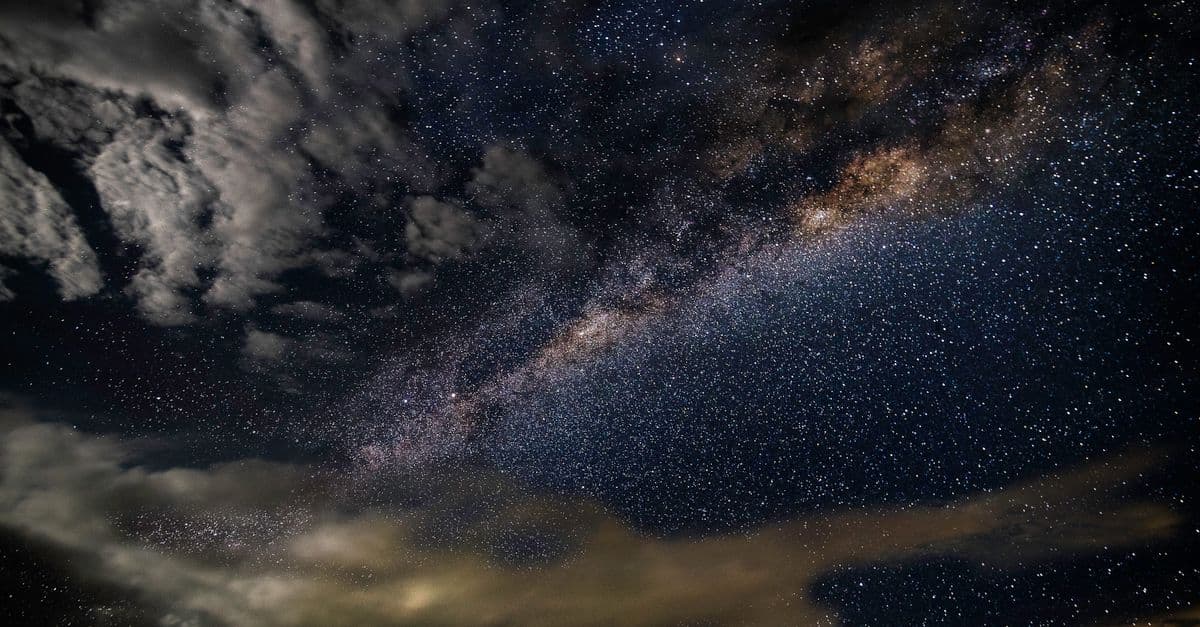
Photo: Arnie Chou / Pexels
The Big Bang theory is the prevailing scientific explanation for the origin of the universe. It says that roughly 13.8 billion years ago, the universe began in an extremely hot, dense state and has been expanding and cooling ever since. The theory is supported by an impressive convergence of independent lines of evidence — but it's also widely misunderstood.
What the Big Bang Is — and Isn't
A common misconception is that the Big Bang was an explosion of matter into empty space. It wasn't. The Big Bang is better described as the expansion of space itself.
There was no center, no "outside," no point in pre-existing space where it happened. Space and time themselves are part of the system that expanded. Every point in the observable universe today was once arbitrarily close to every other point.
Another myth: the Big Bang isn't a theory about how the universe came into being from "nothing." It is a theory about the evolution of the universe starting from a very hot, dense early state. What (if anything) caused that initial state is an open question.
Four Pillars of Evidence
1. Hubble's Law (1929) — The Universe Is Expanding
In 1929, Edwin Hubble observed that distant galaxies are receding from us, and the farther a galaxy is, the faster it recedes. The relationship is approximately linear:
v = H₀ × d
where H₀ is the Hubble constant (~67–73 km/s/Mpc, with active debate about the exact value — the "Hubble tension").
Run the expansion backward in time and everything converges to a single hot, dense state ~13.8 billion years ago.
2. The Cosmic Microwave Background (1964) — Afterglow of the Hot Early Universe
In 1964, Arno Penzias and Robert Wilson at Bell Labs accidentally discovered a faint microwave glow coming from every direction in the sky. They had detected the Cosmic Microwave Background (CMB) — the leftover thermal radiation predicted by Big Bang cosmology. They won the 1978 Nobel Prize.
The CMB has been mapped with extraordinary precision by:
- COBE (1989–1993) — confirmed the near-perfect blackbody spectrum (2.725 K)
- WMAP (2001–2010) — measured tiny temperature fluctuations
- Planck (2009–2013) — produced the most detailed map yet, pinning down cosmological parameters to ~1% precision
The CMB is the single strongest piece of evidence for the Big Bang.
3. Primordial Element Abundances — The Universe's First Cooking
Big Bang Nucleosynthesis (BBN) predicts that in the first ~20 minutes after the Big Bang, the universe was hot enough to fuse light nuclei. The theory predicts the universe should be roughly:
- 75% hydrogen by mass
- 25% helium-4
- Tiny traces of deuterium, helium-3, and lithium-7
Observations of pristine gas clouds and old stars match these predictions remarkably well. No competing theory explains the cosmic helium abundance.
4. Large-Scale Structure Formation
Tiny density fluctuations seen in the CMB grow over billions of years under gravity to form galaxies, clusters, and the cosmic web. Computer simulations starting from CMB initial conditions reproduce the observed distribution of galaxies. This is a powerful consistency check.
The Cosmic Timeline
| Epoch | Time after Big Bang | Temperature | What happened |
|---|---|---|---|
| Planck epoch | < 10⁻⁴³ s | > 10³² K | Physics unknown; quantum gravity regime |
| Inflation | ~10⁻³⁶ to 10⁻³² s | ~10²⁷ K | Universe expanded by factor of ~10²⁶ |
| Quark soup | up to 10⁻⁶ s | > 10¹² K | Quark-gluon plasma |
| Hadron / lepton era | up to ~1 s | ~10¹⁰ K | Protons, neutrons form |
| Nucleosynthesis | 1 s – 20 min | 10⁹ K | Light nuclei form (H, He, Li) |
| Photon era | 20 min – 380,000 yr | ~3,000 K at end | Plasma; light scatters constantly |
| Recombination | ~380,000 yr | 3,000 K | Atoms form; CMB released |
| Dark ages | 380,000 yr – ~100 Myr | falling | No stars yet |
| First stars | ~100–200 Myr | — | Reionization begins |
| First galaxies | ~200–500 Myr | — | JWST observes some of these |
| Solar System | 9.2 billion yr | — | Sun and Earth form |
| Today | 13.8 billion yr | 2.725 K | You read this |
Cosmic Inflation
In the early 1980s, Alan Guth proposed that the universe underwent a brief, exponential expansion called inflation in the first tiny fraction of a second. Inflation elegantly explains:
- Why the universe is so uniform (the horizon problem)
- Why space looks geometrically flat (the flatness problem)
- The origin of the tiny CMB fluctuations (quantum ripples stretched to cosmic scale)
Inflation remains the leading paradigm, though its specific mechanism is unproven.
What Came Before the Big Bang?
This is one of the most asked — and least answered — questions in cosmology. Several speculative ideas exist:
- Nothing meaningful. Time itself may have begun at the Big Bang, making "before" meaningless (Hawking's "no-boundary proposal").
- Eternal inflation / multiverse. Our universe may be one bubble in an eternally inflating "multiverse."
- Bouncing cosmology. The universe may have collapsed and rebounded from a previous phase.
- Cyclic models. Endless cycles of expansion and contraction (Penrose's Conformal Cyclic Cosmology, Steinhardt-Turok).
None of these are testable enough to be considered established science. They are active research programs.
The Fate of the Universe
The universe's long-term fate depends on dark energy, discovered in 1998 to be accelerating the expansion. Possibilities include:
- Heat death (most likely current view) — expansion continues forever; stars burn out; black holes evaporate; the universe ends in cold, sparse darkness over 10¹⁰⁰ years.
- Big Rip — if dark energy strengthens over time, eventually it tears galaxies, stars, and atoms apart.
- Big Crunch — if dark energy reverses, expansion halts and the universe collapses. Currently disfavored.
For more, see our articles on dark energy and dark matter.
Problems the Big Bang Theory Still Cannot Solve
Despite its empirical success, the Big Bang framework faces genuine open questions that drive active research.
The singularity problem. At t=0, all matter and energy are compressed to infinite density in zero volume. This produces infinities that mathematics cannot handle. General relativity breaks down; quantum mechanics is needed. But nobody knows how to combine quantum mechanics and gravity. The earliest moments of the universe (the Planck epoch) remain scientifically inaccessible with current physics.
The horizon problem (already mentioned, but deeper). The universe is remarkably uniform — the CMB is the same temperature in all directions to one part in 100,000. But light travel times mean distant regions of the universe could never have been in contact to equalize their temperature. Inflation solves this, but inflation itself requires assumptions about early-universe physics that remain unproven.
Dark matter and dark energy. Together, they comprise 95% of the universe. We observe their gravitational effects but have never directly detected either. Dark matter's particle identity remains unknown — leading candidates include WIMPs (weakly interacting massive particles) and axions, but experiments searching for decades have found nothing definitive. Dark energy might be vacuum energy (the "cosmological constant"), but its tiny value compared to theoretical predictions is baffling (the "cosmological constant problem" — a factor of 10¹²⁰ discrepancy between theory and observation).
Why is the universe flat? Measurements show the spatial curvature of the universe is zero to exquisite precision. Why? Inflation predicts flat geometry, but inflation itself is contingent on specific conditions. Why those conditions?
The arrow of time. The Big Bang theory is built on general relativity, which treats all times symmetrically — it makes no distinction between past and future. Yet we observe a strong "arrow of time": the past is fixed, the future is open; entropy increases, not decreases. Where does this asymmetry come from? Entropy was low at the Big Bang and is now high. Why?
These gaps do not falsify the Big Bang — the evidence for it is overwhelming. Rather, they define the frontier: the Big Bang tells us how the universe evolved from ~13.8 billion years ago onward. Explaining the initial conditions and the quantum nature of creation remains the deepest unsolved problem in physics.
Source: Riess, A.G. et al. (2022), "A Cosmic Tension," Nature Reviews Physics — a comprehensive review of the Hubble tension, dark energy, and open cosmological puzzles as of 2022.
Observational Tests Still Underway
Modern telescopes are testing the Big Bang at unprecedented scales and precision.
The JWST's view of the first galaxies. The James Webb Space Telescope has observed galaxies at redshifts greater than z=13, corresponding to only a few hundred million years after the Big Bang. Some of these galaxies are larger than expected for their age, challenging simulations of early galaxy formation. This has prompted theorists to reconsider star formation efficiency and the role of supermassive black holes in early galaxies. More data from JWST (ongoing) will clarify whether star formation was faster in the early universe than current models predict.
The Hubble tension. Independent methods of measuring H₀ (the Hubble constant, the expansion rate today) disagree at about 10% precision. Local methods using nearby galaxies give ~73 km/s/Mpc; the CMB-based calculation from Planck gives ~67 km/s/Mpc. This sounds small, but it is statistically significant — measurements from both methods are now precise enough that the disagreement cannot be explained by measurement error. The tension could point to new physics (extra early-universe radiation, evolving dark energy) or subtle systematics in the measurements. Resolving it is a major 2026–2028 priority.
Searching for primordial gravitational waves. Inflation predicts that the early universe's exponential expansion should have produced a background of primordial gravitational waves imprinted on the CMB. A quirk of CMB polarization called "tensor modes" would be a smoking gun. Current CMB data weakly constrain but have not detected tensor modes. Future experiments (CMB-S4, LiteBIRD, Simons Observatory) aim to reach the sensitivity needed. If detected, they would confirm inflation. If not, inflation would need revision.
Cosmic void evolution. Large voids in the cosmic web — regions with below-average galaxy density — are predicted to grow in size over cosmic time if dark energy dominates. Measuring how voids evolve would test the nature of dark energy. Current and future galaxy surveys (Dark Energy Survey, Vera Rubin's LSST, Euclid) are mapping voids with unprecedented precision.
What the Big Bang Does Explain
It is worth restating what the Big Bang successfully explains, to appreciate its scope: Later cosmic events, such as the formation of the Moon, are covered in how the Moon formed.
- Hubble's law — the linear relationship between distance and redshift of galaxies
- The cosmic microwave background — its spectrum, isotropy, and subtle fluctuations
- Big Bang nucleosynthesis — the abundance of light elements hydrogen, helium, and lithium
- The age of the universe — consistent across multiple independent methods
- Large-scale structure — the cosmic web of galaxies and voids
- The redshift of distant supernovae — evidence for accelerating expansion
No alternative theory explains all of these simultaneously.
The Takeaway
The Big Bang is not a theory of creation — it does not explain why the universe exists or what triggered its expansion. It is a theory of the universe's evolution from an extremely hot, dense state 13.8 billion years ago to its current state. The supporting evidence, from three independent directions (expansion, CMB, nucleosynthesis), is as robust as any framework in science. What remains unknown is what happened in the Planck epoch, what caused inflation, why dark energy and dark matter exist, and what "before the Big Bang" could possibly mean. These open questions define the cutting edge of cosmology and ensure that despite more than a century of progress, the universe is still revealing its secrets.
Source: Perlmutter, S. & Schmidt, B. (2011), "Measuring Cosmology with Supernovae," Handbook of Supernovae, Springer — Nobel Prize-winning review of dark energy discovery and cosmological measurements.
Source: Kamionkowski, M. (2024), "Tensions in Cosmology," Annual Review of Astronomy and Astrophysics — a recent assessment of the Hubble tension and dark energy puzzles.
Alternative Theories and Why They Failed
Before the Big Bang became the standard theory, several alternatives were proposed. Understanding why they failed illuminates what makes the Big Bang so compelling.
The Steady State Theory (1948–1970s): Fred Hoyle, Hermann Bondi, and Thomas Gold proposed that the universe has no beginning—it looks the same at all times and places. To maintain constant density despite expansion, new matter continuously emerges from the vacuum. The theory was elegant and avoided the singularity problem. However, three observations killed it:
- The CMB discovery (1964) — Steady state predicted no such radiation. Big Bang predicted it.
- Galaxy evolution — Distant (and therefore ancient) galaxies look different from nearby ones. Steady state predicted they'd look identical.
- Quasar abundance — Early observations showed quasars were more abundant in the early universe, contradicting steady state's uniformity assumption.
Static universe models: Before 1929, most physicists assumed the universe was static. Einstein added a "cosmological constant" (vacuum energy) to his equations to stop gravitational collapse. When Hubble discovered expansion, this model became obsolete. (Ironically, dark energy observations in 1998 revived the cosmological constant idea—though now as an expansion accelerator, not a balancer.)
Plasma cosmology: Hannes Alfvén proposed (1960s–1990s) that magnetic fields in plasma, not gravity, shaped the universe. The theory predicted no CMB and was unfalsifiable. It was abandoned as evidence accumulated for the Big Bang.
Cyclic and bouncing models: These persist as speculative alternatives. Penrose's Conformal Cyclic Cosmology proposes infinite cycles of expansion. Steinhardt and Turok's ekpyrotic model imagines colliding branes in extra dimensions causing the Big Bang. These remain mathematically interesting but lack strong observational support and require exotic physics beyond the standard model.
The pattern: the Big Bang survived because it made specific, testable predictions that held up. Its competitors either made no predictions or made wrong ones.
Quantum Mechanics and the Earliest Universe
Understanding the Big Bang's first moments requires combining quantum mechanics (which governs the tiny) with gravity (which governs the large). This is one of physics' deepest challenges.
The Planck scale: At times younger than ~10⁻⁴³ seconds after the Big Bang, the energy density is so high that quantum gravity effects dominate. At these scales, called the Planck epoch, spacetime itself likely becomes "quantized" or foamy—spacetime is no longer smooth but fluctuates wildly. Classical physics breaks down entirely.
Quantum field theory in curved spacetime: Hawking's 1974 insight was that quantum fields behave differently near black holes. The vacuum fluctuates; particle-antiparticle pairs briefly pop in and out of existence. Near a black hole's event horizon, these fluctuations can cause particles to escape as "Hawking radiation." Applied to the Big Bang, this raises profound questions: Did the universe emerge from quantum fluctuations in a prior quantum vacuum? Did inflation itself arise from quantum effects?
The no-boundary proposal: Stephen Hawking and James Hartle proposed that time itself is not linear but forms a closed surface, like the surface of a sphere. "Before the Big Bang" is not a meaningful concept—time has no boundary. This is a speculative idea but suggests that asking "what happened before the Big Bang?" is like asking "what's north of the North Pole?"
Quantum tunneling: Some models propose the universe literally quantum-tunneled into existence from "nothing"—or more precisely, from a quantum vacuum. Lawrence Krauss and others have argued this resolves the creation problem: the laws of physics suffice to explain the universe's emergence without invoking a creator. This remains deeply controversial in both physics and philosophy.
The reality: quantum gravity is not yet fully developed. String theory, loop quantum gravity, and other approaches offer glimpses, but we lack the definitive theory. The Big Bang's first moments remain inaccessible to current science.
Measuring Cosmic Parameters with Precision
Modern cosmology has become a precision science. Today's measurements determine the universe's composition, expansion rate, and age to unprecedented accuracy.
The Planck 2018 measurements (the latest comprehensive dataset from the ESA's Planck satellite):
- Age of universe: 13.787 ± 0.020 billion years
- Hubble constant (expansion rate): 67.4 ± 0.5 km/s/Mpc
- Dark matter: 26.8% of universe's energy density
- Dark energy: 68.3%
- Ordinary matter (atoms): 4.9%
- Flatness: spatial curvature = 0.000 ± 0.005 (exquisitely flat)
These measurements come from analyzing the CMB's temperature fluctuations at different scales. The CMB is so information-rich that it constrains many parameters simultaneously. Future experiments (CMB-S4, LiteBIRD) aim to reach even higher precision.
The Hubble tension: As mentioned, local measurements of H₀ using nearby supernovae and Cepheid variables give ~73 km/s/Mpc, disagreeing with the CMB prediction of ~67. This 6 km/s/Mpc difference represents a ~10% discrepancy—small in absolute terms but huge in statistical significance. Leading explanations:
- New particles or radiation in the early universe (changing the CMB prediction)
- Evolving dark energy (dark energy's strength changes over cosmic time)
- Undetected measurement systematics in either method
- Early dark energy (extra energy density at early times that disappears later)
The tension is genuinely puzzling and may point to new physics. Multiple missions (GAIA, JWST, future gravitational-lens telescopes) are working to resolve it by 2030.
Source: Abdalla, E., et al. (2022), "Cosmology Intertwined: A Review of the Particle Physics, Astrophysics, and Cosmology Associated with the Latest Planck Data," The Astrophysical Journal Supplement Series — comprehensive review of tension in cosmological measurements.
Big Bang Cosmology and Philosophy
The Big Bang's discovery had profound cultural impact beyond science. It suggested the universe had a beginning, resurrecting ancient philosophical arguments about creation.
Creation and theology: Some theologians interpreted the Big Bang as scientific validation of biblical creation narratives. Others worried it reduced God to an unnecessary hypothesis. Pope Pius XII initially promoted the Big Bang as consistent with Catholic theology; Pope John Paul II cautioned against overinterpreting it. Today, most theologians and philosophers accept that science describes the physical mechanism while theology (if pursued) addresses "why something rather than nothing."
Causality and meaning: If the Big Bang is the ultimate origin of time, causality becomes strange—what "caused" the Big Bang if causality operates within time? Some philosophers argue this means the universe is truly uncaused; others invoke quantum mechanics (where causality is probabilistic). These are no longer empirical questions but metaphysical ones.
The anthropic principle: If the universe's parameters (Hubble constant, dark energy, fundamental constants) were slightly different, galaxies, stars, and life would not form. Should we be surprised that we find ourselves in a universe fine-tuned for our existence? The weak anthropic principle says: we can only observe universes compatible with observers existing. The strong anthropic principle says: the universe must be compatible with life emerging. Some physicists invoke the multiverse: if infinite universes exist with varying parameters, we naturally find ourselves in one that permits observers. Others dismiss anthropic reasoning as non-scientific.
These philosophical questions don't undermine the Big Bang's empirical support but show that cosmology intersects with deep questions about existence and meaning.
The Takeaway
The Big Bang is not a theory of creation — it does not explain why the universe exists or what triggered its expansion. It is a theory of the universe's evolution from an extremely hot, dense state 13.8 billion years ago to its current state. The supporting evidence, from three independent directions (expansion, CMB, nucleosynthesis), is as robust as any framework in science. What remains unknown is what happened in the Planck epoch, what caused inflation, why dark energy and dark matter exist, what "before the Big Bang" could possibly mean, and how to resolve the Hubble tension. These open questions define the cutting edge of cosmology and ensure that despite more than a century of progress, the universe is still revealing its secrets. Future telescopes and missions will test these frontiers—potentially overturning the Big Bang framework if evidence demands it, though current evidence strongly supports it.
Frequently Asked Questions
Q: Was the Big Bang an explosion?
A: No. It was the expansion of space itself, happening everywhere at once. There was no center and no "outside" into which the universe exploded.
Q: How do we know the universe is 13.8 billion years old?
A: Multiple independent methods agree: the rate of cosmic expansion (Hubble constant), the detailed shape of the CMB power spectrum (Planck satellite), and the ages of the oldest stars and globular clusters.
Q: What is the CMB?
A: The Cosmic Microwave Background is leftover thermal radiation from when the universe cooled enough (~380,000 years after the Big Bang) for electrons and protons to combine into neutral atoms, releasing photons. It now fills the universe at ~2.725 K.
Q: What was there before the Big Bang?
A: We genuinely don't know. Some theories say "before" is meaningless because time itself began with the Big Bang. Others propose multiverses, cyclic universes, or bouncing models — all speculative.
Q: Is the Big Bang theory still being tested?
A: Yes, intensively. JWST is studying the first galaxies. The "Hubble tension" — disagreement between different measurements of the expansion rate — is an active puzzle. So is the nature of dark matter and dark energy.
Q: Could the Big Bang theory be overturned?
A: In principle, yes. If future observations definitively contradicted the Big Bang's predictions, scientists would seek alternatives. However, the converging evidence from expansion, the CMB, nucleosynthesis, and large-scale structure is formidable. Any replacement theory would need to explain all four simultaneously — a very high bar.
Read next:
Follow new articles
Add SciHub101 to your feed reader to see new science and technology stories.
About the Author
SciHub101 is an independent science and technology publication founded and edited by Buğra Sözeri, a software engineer and app developer based in Türkiye. AI tools assist with drafting and research. Source documentation in the existing archive is uneven, and articles are being reviewed and corrected. The Editorial Team byline identifies editorial responsibility; it does not certify specialist or independent human review. Where we compare products, anything built by our own team is labelled as such — see the editorial guidelines and About page for how corrections and disclosures work.
Related Articles
SpaceX and the New Space Race: 2026 Status
SpaceX in 2026: Starship's V3 flights, Falcon 9 reuse, Starlink growth, a reshaped Artemis plan, and how China and rival rockets compete in the new space race.
How the Moon Formed — Theia Impact Theory
The giant impact hypothesis explains how a Mars-sized body called Theia struck the proto-Earth and formed the Moon ~4.5 billion years ago.
How Big Is the Universe — and How Much of It Can We Actually See?
The observable universe is 93 billion light-years across. The full universe is bigger — possibly infinitely so. Here's what we can measure, what we can't, and why.
How Big Is the Universe? The Real Answer
The observable universe is 93 billion light-years across, but the real universe is far bigger — possibly infinite. Here's how we know.
The Cosmic Microwave Background Discovery: Hearing the Big Bang
In 1964, Penzias and Wilson found persistent noise in a Bell Labs antenna they could not explain. It turned out to be the afterglow of the Big Bang. Here is how they found it.
The Hubble Constant Tension: A Crisis in Cosmology
Two carefully checked ways of measuring how fast the universe expands disagree by roughly 8 to 10 percent, a gap near 5 sigma. Either a hidden error remains, or standard cosmology is incomplete.