What Is Tidal Locking? How Gravity Synchronizes Worlds
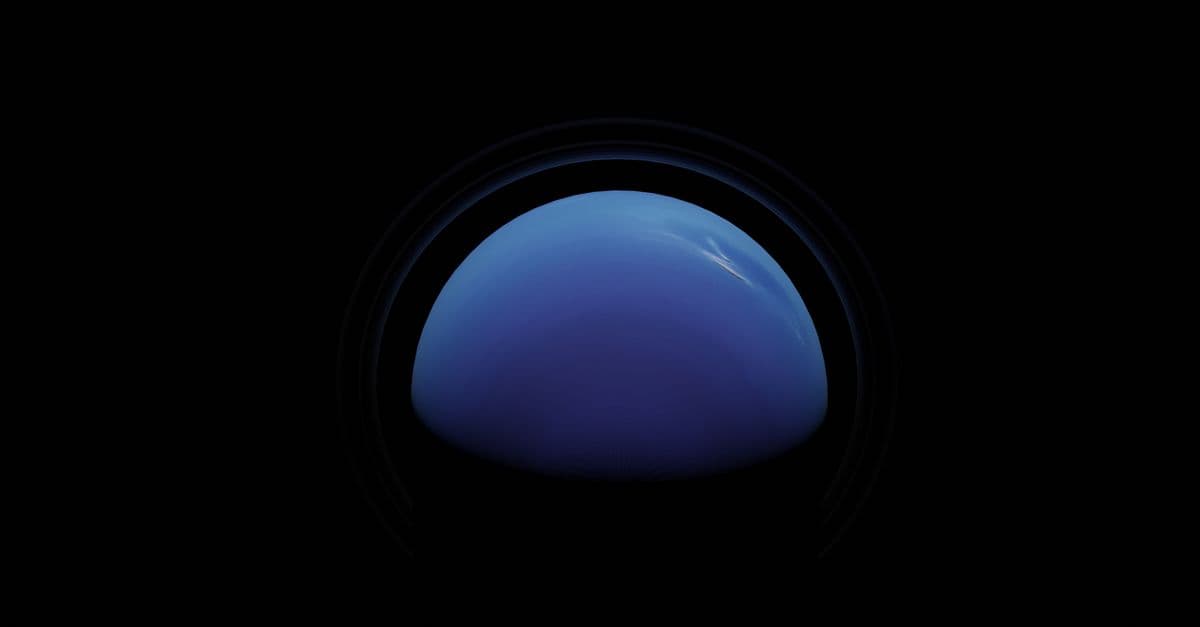
Photo: Zelch Csaba / Pexels
Tidal locking is what happens when gravity slows a body's spin until one rotation takes exactly as long as one orbit. From then on, the body keeps the same face turned toward whatever it circles. The Moon did this with Earth, which is why the same craters and dark plains have looked back at every human who ever glanced up. The process also heats moons, scrambles planetary climates, and may decide whether worlds around the most common stars can hold oceans.
Why the Moon never turns its back on us
The Moon rotates, but it rotates exactly once per orbit. NASA lists its sidereal rotation period as 655.720 hours and its sidereal orbit period as 27.3217 days, and 655.720 divided by 24 gives the same 27.3217 days. Because the two periods match, an observer on Earth always sees the same hemisphere.
Nobody saw the other hemisphere until the Soviet spacecraft Luna 3 took 29 photographs of it on October 7, 1959. Around 17 of them were transmitted to Earth. Much later, China's Chang'e 6 landed on the far side on June 1, 2024, in the southern mare of Apollo Basin inside the South Pole-Aitken basin, and returned 1,935.3 grams of samples to Earth on June 25, 2024.
The far side is often called the "dark side," which is a misnomer. NASA points out that it receives sunlight just like the near side. What is different is the rock: the near-side crust is about 40 kilometers thick, while the far-side crust reaches up to about 60 kilometers (NASA). The permanent orientation is what lets the two halves be compared at all. For how the Moon got there in the first place, see how the Moon formed in a giant impact.
How a tidal bulge turns into a brake
Gravity weakens with distance. The side of the Moon facing Earth feels a slightly stronger pull than its center, and the center feels a slightly stronger pull than the far side. That difference is a tidal force, and it stretches the Moon into a slightly elongated shape with one bulge pointing toward Earth and another pointing away.
Now suppose the Moon spins faster than it orbits, as it once did. The bulge would have to follow the Earth-Moon line as the body turns, but solid rock is not perfectly elastic. Internal friction makes the bulge lag a little behind, so it points not straight at Earth but slightly ahead of that line in the direction of rotation. Earth's gravity pulls on that offset bulge, and the pull has a component that works against the spin. It acts like a hand on a spinning wheel, a brake applied through gravity.
Two things follow from that torque:
- The spin slows until it matches the orbit. At that point the bulge sits on the line to the partner and no longer produces a steady braking torque.
- Angular momentum is conserved, so what the spin loses has to go somewhere. In the Earth-Moon system it flows into the Moon's orbit, which is why the Moon is slowly moving away.
NASA's fact sheet puts the Moon's recession at 3.8 centimeters per year, and lunar laser ranging over 1970 to 2015 measured the mean distance growing by 38.30 ± 0.08 millimeters per year (Wikipedia, "Tidal acceleration"). The same coupling works in reverse on Earth's own rotation, as the section on Earth below describes.
A second analogy: a satellite fitted with a dangling weight aligns itself vertically, because the stronger pull on the lower end holds it in place. A tidally locked world is the same idea with a planet-sized bulge as the weight and a large amount of friction to let it settle.
Why eccentric orbits complicate things
The picture above assumes a circular orbit. A real orbit is an ellipse, so the planet's distance, and with it the strength of the tide, changes through each orbit, and the body moves faster near its closest point. A locked body on an eccentric orbit never has the bulge sit exactly still, which is why locked moons on non-circular orbits keep flexing. That flexing is a heat source, and it plays a main role in the story of Io below.
How long does locking take?
The most cited estimate, from Gladman and colleagues (1996) building on Peale (1977), gives the time as roughly:
t_lock ≈ 6 × (a⁶ R μ / (m_s m_p²)) × 10¹⁰ years
where a is the orbital distance, R the radius of the locking body, μ its rigidity, m_s its mass, and m_p the mass of the body it orbits, all in SI units. It assumes a rocky body with μ of about 3 × 10¹⁰ newtons per square meter, a dissipation factor Q of 100, and an initial rotation period around 12 hours. The Wikipedia summary warns that the results can be off by orders of magnitude, because Q is poorly known for anything but the Moon.
Two things stand out. The distance is raised to the sixth power, so locking time depends brutally on how close the body is. And the mass of the thing being orbited enters squared in the denominator, so a heavier partner locks you faster.
Two worked examples
Plugging numbers into the formula as an order-of-magnitude tool, with the assumptions above:
- The Moon today. With a = 384,400 km, R = 1,737 km, m_s = 7.35 × 10²² kg, and Earth's mass of 5.97 × 10²⁴ kg, the formula gives roughly 4 million years. That is far shorter than the age of the Moon, consistent with the Moon being locked.
- Mercury. With a = 57.9 million km, R about 2,440 km, m_s = 3.30 × 10²³ kg, and the Sun's mass of 1.99 × 10³⁰ kg, the formula gives roughly 130 million years. Yet Mercury is not locked in the simple sense, which is the subject of the next section.
The scaling matters more than the absolute numbers. Take a planet and move it from 1 astronomical unit to 0.05 astronomical units from its star, with everything else equal, and the locking time falls by a factor of 20⁶, about 64 million. If the star is a tenth as massive as the Sun, the squared mass term lengthens the time by a factor of 100, so the net speedup is still of order a few hundred thousand. That is why planets in the habitable zones of dim red stars are expected to lock quickly.
Who is locked
| Body | Partner | State | Notes |
|---|---|---|---|
| Moon | Earth | Locked, 1:1 | Rotation and orbit both 27.3217 days |
| Io, Europa, Ganymede, Callisto | Jupiter | Locked | Galilean moons |
| Enceladus and most large Saturnian moons | Saturn | Locked | Enceladus keeps one face toward Saturn |
| Triton | Neptune | Locked, retrograde orbit | Orbit tilted about 157° to Neptune's equator |
| Pluto and Charon | Each other | Mutually locked | Both turn once in about 6.4 days |
| Eris and Dysnomia | Each other | Mutually locked | Szakáts and colleagues, 2023 |
| Mercury | Sun | 3:2 spin-orbit resonance | Three rotations per two orbits, not locked 1:1 |
| Hyperion | Saturn | Not locked | Chaotic rotation influenced by Titan |
| Nix, Hydra, Styx, Kerberos | Pluto-Charon | Not locked | Rotate chaotically (Showalter and Hamilton, 2015) |
Sources: Wikipedia, "Tidal locking"; NASA fact sheets; NASA, Charon.
The same summary notes that all nineteen known large, round moons in the solar system are tidally locked to their planets. So locking is the default outcome for large moons, but it is not universal, and the exceptions are instructive.
The Moon's hidden extras: why we see 59 percent
If the Moon were perfectly locked on a perfectly circular orbit, exactly half of it would be visible from Earth. In practice about 59 percent can be seen over time, because the lock is not rigid in appearance.
- Libration in longitude. The Moon's orbit has an eccentricity of 0.0549, so its orbital speed varies (faster at closest approach, slower at farthest), while its spin is steady. The mismatch makes the Moon appear to rock a little east and west.
- Libration in latitude. The Moon's equator is tilted 6.68 degrees to its orbit plane, so first one pole and then the other tips slightly toward us.
- Parallax. An observer on a rotating Earth looks from slightly different angles over a night.
Libration lets us see up to about 6 degrees further around the edge, and parallax adds about 1 degree (Wikipedia, "Tidal locking"). Those few degrees, accumulated around the whole rim, are what push the visible fraction to 59 percent. Anyone who has watched the lunar terminator creep across the surface knows that the lit portion changes with the phases while the face stays fixed. Why the Moon has phases explains why that is a separate effect.
Mercury: the planet that was locked in the wrong ratio
For decades astronomers believed Mercury was locked 1:1 to the Sun. The reasoning was reasonable: whenever Mercury was best placed for viewing from Earth, the same side seemed to face the Sun. Radar observations in 1965 showed otherwise. Mercury turns three times for every two orbits, a 3:2 spin-orbit resonance, and Giuseppe Colombo explained it the same year.
NASA's numbers make the ratio plain. Mercury's sidereal rotation period is 1,407.6 hours, or 58.65 days, and its orbital period is 87.969 days. Dividing 87.969 by 58.646 gives 1.500. The planet's orbital eccentricity is 0.2056, the highest of the eight planets, and its distance from the Sun swings from 46.0 million kilometers at perihelion to 69.8 million kilometers at aphelion.
Why 3:2 and not 1:1
The tidal torque is strongest when Mercury is closest to the Sun. On an eccentric orbit, that makes the system prefer to match the spin to the orbital speed at perihelion rather than to the average. A spin rate of 1.5 turns per orbit does that: near perihelion Mercury's rotation roughly keeps up with its fast orbital motion, so the same part of the planet faces the Sun there. Modeling by Noyelles and colleagues (2014) suggests Mercury was captured into this state within 10 to 20 million years of forming (Wikipedia, "Tidal locking").
A day longer than a year, almost
Because of the resonance, Mercury's solar day, the time from one sunrise to the next, is 4,222.6 hours, or about 176 days. That is exactly two Mercury years. Here is a strange consequence. Mercury turns at about 6.14 degrees per day, since 360 divided by 58.646 gives that rate. Its average orbital angular speed is 360 divided by 87.969, about 4.09 degrees per day, but near perihelion the planet moves 1.55 times faster than average for this eccentricity, about 6.35 degrees per day. At that moment the orbit outpaces the spin, so a person standing on Mercury would see the Sun pause, drift backward in the sky for a short time, and then resume its normal path. For more on the planet itself, see Mercury's iron core, polar ice, and odd orbit.
Io, Europa, and Enceladus: when locking powers volcanoes and oceans
Tidal locking by itself generates little heat once the bulge stops moving. The heating story starts when the orbit stays slightly eccentric, because then the tide keeps changing and the body is squeezed and relaxed again and again. That cyclic flexing dissipates energy as heat.
Io
Jupiter's moon Io is locked to Jupiter and is the most volcanically active world in the solar system, with over 400 active volcanoes according to the Wikipedia article on Io and "hundreds of volcanoes" in NASA's words. Its total heat flow is estimated at 0.6 to 1.6 × 10¹⁴ watts. The key ingredient is a resonance: Io is in a 2:1 mean-motion resonance with Europa and a 4:1 resonance with Ganymede, a 1:2:4 chain called the Laplace resonance. Their regular pulls keep Io's orbital eccentricity at 0.0041, which is small but nonzero, even though tidal damping alone would gradually circularize the orbit.
Peale, Cassen, and Reynolds published a prediction of strong tidal heating shortly before Voyager 1 flew past on March 5, 1979. Voyager 1 then found nine plumes, and the prediction looked prophetic. Plumes can reach hundreds of kilometers: Tvashtar's was about 330 kilometers high. Volcanic material keeps burying the surface, which is why Io has so few impact craters. A fuller account is in Io, Jupiter's volcanic moon and the science of tidal heating.
Europa
Europa is also locked, and its eccentricity is pumped by its resonance with Io. The heat from that flexing probably keeps a global ocean liquid. Estimates of the ice shell thickness differ: the preferred thick-ice models put the crust at roughly 10 to 30 kilometers, with an outer water layer around 100 kilometers thick in total. Radioactive decay in the rocky interior can supply only about a hundredth of the observed heating, so tides dominate. NASA's Europa Clipper launched on October 14, 2024, and will study the moon through about 45 flybys. The search for life on Europa and Enceladus looks at what it may find.
Enceladus
Saturn's moon Enceladus is in a 2:1 resonance with Dione that holds its eccentricity at about 0.0047. Cassini first saw a plume over the south pole in images from early 2005 and imaged individual jets that November. Later analysis found water vapor, nitrogen, carbon dioxide, and hydrocarbons such as methane, propane, acetylene, and formaldehyde, and hydrogen cyanide was reported in December 2023. The observed heat output, about 4.7 gigawatts, is hard to explain with tidal heating alone, so how the moon stays warm is still debated. The astrobiology case is laid out in Enceladus and its hydrothermal vents.
Pluto and Charon: two worlds locked to each other
Most locking is lopsided: a big planet locks a small moon, and the planet's own spin barely changes. In the Pluto-Charon system, the moon is large enough that both bodies have slowed to the same period. NASA gives Charon's diameter as about 1,214 kilometers, roughly half of Pluto's, and its orbital period as about 6.4 days. The two are about 19,640 kilometers apart. Each keeps the same face toward the other, which NASA calls mutual tidal locking.
From the hemisphere of Pluto that faces Charon, the moon hangs in one place in the sky and never rises or sets. From the opposite hemisphere, it is never visible at all.
Pluto and Charon are not the only such pair. Eris and its moon Dysnomia are mutually locked (Szakáts and colleagues, 2023), as are Salacia and Actaea (Collyer and colleagues, 2025). Pluto's four small moons, Styx, Nix, Kerberos, and Hydra, are another matter. They tumble chaotically, which shows that being small and close to a partner does not guarantee a lock if the system is gravitationally busy (Showalter and Hamilton, 2015). What New Horizons found at Pluto covers the system's other surprises.
Moons that spiral: Phobos and Triton
Tidal locking is a stable endpoint only if the orbit holds steady, and not every orbit does. The deciding factor is whether the moon orbits faster or slower than the planet rotates.
The Moon orbits slower than Earth spins (27.3 days against 1 day), so the tidal bulge the Moon raises on Earth is carried ahead of the Earth-Moon line by Earth's spin. Its gravity pulls the Moon forward, and the orbit expands. Mars's moon Phobos does the opposite. It orbits Mars three times a day, faster than Mars rotates, so the bulge it raises on Mars lags behind and acts as a drag. NASA says Phobos is approaching Mars at 1.8 meters per century, or 1.8 centimeters per year. At that rate it will either hit Mars in about 50 million years or break up into a ring. See Mars's moons Phobos and Deimos.
Neptune's Triton shows a variant. Triton is locked to Neptune but moves on a retrograde orbit, opposite to Neptune's spin and tilted about 157 degrees to Neptune's equator, which is why astronomers think it was captured from the Kuiper belt. For a retrograde orbit, tidal drag removes orbital energy, and the orbit shrinks. Earlier calculations put the time to reach Neptune's Roche limit, where tides would tear it apart, at roughly 3.6 billion years. A 2025 study estimated about 28 billion years instead, which implies a much more stable orbit (Wikipedia, "Triton"). The factor of almost eight between those results shows how uncertain tidal timescales remain. See Triton, Neptune's captured moon.
Earth's own slow-motion lock
Earth is slowly being tidally braked by the Moon, and the evidence is written in rock and in the historical record.
- Day length. Lunar laser ranging gives a tidal lengthening of Earth's day of about 2.4 milliseconds per century. Post-ice-age crustal rebound speeds the spin by roughly 0.6 milliseconds per century, and 2,700 years of historical records give a net lengthening of 1.72 ± 0.03 milliseconds per century (Wikipedia, "Tidal acceleration").
- Energy. Earth loses about 3.78 terawatts of rotational energy to this process, and about 3.64 terawatts of that is dissipated as heat.
- Ancient days. Tidal rhythmite layers suggest a day of about 21.9 hours, and about 400 solar days per year, around 620 million years ago. Shell layering from about 70 million years ago indicates around 372 days per year, with a day near 23.5 hours (Wikipedia, "Tidal acceleration").
Overall, the Moon and Sun together have lengthened Earth's day from about 6 hours to 24 hours over 4.5 billion years. Following this to its conclusion, Earth's day would eventually match the Moon's orbital period, which would be about 47 times the present day. That will not happen, though. The Sun will become a red giant and engulf both bodies first (Wikipedia, "Tidal locking"). For the broader influence of the Moon on tides and climate, see how the Moon affects Earth.
Tidal locking and the search for habitable worlds
The question that has made tidal locking fashionable is whether a planet with a permanent day side and a permanent night side can be habitable.
Red dwarfs make up about three-quarters of the Milky Way's fusing stars by some estimates. They are dim, so their habitable zones are tiny. A planet there orbits so close that tidal locking is almost unavoidable, as the scaling above shows. A locked planet in the habitable zone is therefore not an exotic edge case, and such worlds may be common. Observational bias adds to the effect: about 85 percent of detected exoplanets lie inside the zone where tides would be expected to lock them (Wikipedia, "Tidal locking").
Two test cases
Proxima Centauri b orbits at about 0.048 astronomical units with a period of about 11.2 days and a minimum mass of about 1.06 Earth masses. It is probably tidally locked, though if its orbit were eccentric enough, roughly above 0.06 to 0.1, it could settle into a 3:2 or 2:1 resonance instead, as Mercury did. The star is a flare star, and the planet receives roughly 10 to 60 times Earth's ultraviolet and X-ray flux, which could strip an atmosphere (Wikipedia, "Proxima Centauri b").
TRAPPIST-1 is a star about 40.66 light-years away with 0.0898 solar masses and an estimated age of 7.6 ± 2.2 billion years, older than the solar system. It has seven known planets:
| Planet | Orbital period (days) | Semi-major axis (AU) |
|---|---|---|
| b | 1.51 | 0.0115 |
| c | 2.42 | 0.0158 |
| d | 4.05 | 0.0223 |
| e | 6.10 | 0.0293 |
| f | 9.21 | 0.0385 |
| g | 12.35 | 0.0468 |
| h | 18.77 | 0.0619 |
Source: Wikipedia, "TRAPPIST-1."
Planets e, f, and g are the ones most often described as lying in the habitable zone, and all seven are likely tidally locked, though interactions among the planets may keep some from full synchronization.
What climate models say
The worry is simple: a permanent night side could act as a cold trap where the atmosphere freezes out. Models show it is not the whole story. A thick atmosphere or an ocean can carry heat to the night side, and life might survive near the terminator, the ring where day meets night (Wikipedia, "Red dwarf").
The result with the largest effect on the debate came from Yang, Cowan, and Abbot (2013). Their global climate models with detailed clouds found that strong convection at high stellar flux builds thick water clouds near the substellar point, the place directly under the star. Those clouds raise the planet's reflectivity and cool the surface, a stabilizing feedback. The authors found that tidally locked planets can stay habitable at roughly twice the stellar flux that earlier one-dimensional models allowed, which they estimated would about double the frequency of habitable planets around red dwarfs.
Atmosphere loss is a more severe problem, and observations are catching up with it. JWST results published through 2025 found the following (Wikipedia, "TRAPPIST-1"):
- TRAPPIST-1 b: a 2023 study ruled out a thick atmosphere, although some scenarios remained possible, and a 2025 study found no atmosphere or a very thin one.
- TRAPPIST-1 c: a 2023 study excluded Venus-like and carbon-dioxide-rich atmospheres without a temperature inversion. An airless planet is still allowed, and as of 2025 the question remains contested.
- TRAPPIST-1 d: if it has an atmosphere, the gas must have a high molecular weight and few infrared-active molecules.
- TRAPPIST-1 e: unclear. The data allow either a thin atmosphere with traces of methane or none at all.
That means the question is genuinely open for the planets in the habitable zone. Whether a world keeps its air under constant flaring may depend in part on its own magnetic field, a subject taken up in how planetary magnetic fields work. For the exoplanet side, see why red dwarf stars matter for life searches and the exoplanet atmosphere revolution, and for nearby targets, the nearest exoplanets that could host life.
What people get wrong about tidal locking
- "Locked means it does not rotate." A locked body rotates exactly once per orbit. The Moon turns on its axis every 27.3 days.
- "The far side is the dark side." It has days and nights like the near side. NASA says the term is misleading.
- "Mercury is locked to the Sun." It is not. Mercury is in a 3:2 resonance, and its sunrise-to-sunrise day lasts about 176 Earth days.
- "A locked planet is a ball of ice and fire." Early arguments were quick to conclude that, but climate models with clouds, thick atmospheres, or oceans give a much wider range of outcomes.
- "Locking is permanent." It is stable only if the orbit holds. Phobos is spiraling in, and Triton will eventually do the same, on a timescale that remains uncertain.
- "Every moon is locked." The nineteen large round moons are, but Saturn's Hyperion tumbles chaotically because of Titan's influence, and Pluto's four small moons rotate chaotically too.
Frequently asked questions
Q: Why do we always see the same side of the Moon? A: The Moon's rotation period (27.3217 days) equals its orbital period, a state called tidal locking. Earth's gravity raised a bulge on the Moon, and the torque on that bulge slowed the Moon's spin until the two periods matched. Librations let us see about 59 percent of the surface over time.
Q: Is Mercury tidally locked to the Sun? A: Not in the usual 1:1 sense. Mercury is in a 3:2 spin-orbit resonance: it rotates three times for every two orbits, with a rotation period of 58.65 days and an orbital period of 87.97 days. Radar observations showed this in 1965.
Q: How long does it take for a body to become tidally locked? A: It depends mostly on distance, because the time scales with the sixth power of the orbital distance, and on poorly known properties such as the body's dissipation. Estimates can be off by orders of magnitude. For the Moon at its current distance the standard formula gives a few million years.
Q: Does a tidally locked planet have day and night? A: Not in the Earth sense. One hemisphere faces its star permanently and the other faces away. If the orbit is eccentric or slightly tilted, small libration effects can move the substellar point a little, but there is no daily sunrise and sunset cycle.
Q: Will Earth ever become tidally locked to the Moon? A: Eventually Earth's day would grow to match the Moon's orbit, about 47 times the present day, but the Sun will become a red giant and engulf both bodies before that happens.
Q: Could a tidally locked exoplanet be habitable? A: Possibly. Climate models show that clouds, a thick atmosphere, or an ocean can move heat to the night side, and Yang and colleagues (2013) found that cloud feedback could allow habitability at about twice the stellar flux earlier models allowed. Whether such planets keep their atmospheres under strong stellar flares is still being tested with JWST.
The takeaway
Tidal locking is a story about friction and bookkeeping. A body's spin is a store of angular momentum, and when gravity raises a lagging bulge, that store drains into the orbit until the spin matches the orbital motion. That one rule explains why we only ever see one face of the Moon, why Pluto and Charon face each other, and why Mercury settled for 3:2 instead of 1:1.
The less obvious part is that the rule is also an engine. Locked moons on slightly eccentric orbits, kept that way by resonances, are kneaded by tides, and the result is Io's volcanoes and the likely oceans of Europa and Enceladus. For exoplanets, the same rule might make habitability the norm around red dwarfs or rule it out. What JWST is measuring now, atmosphere by atmosphere, will decide which.
Sources
- NASA Space Science Data Coordinated Archive, Moon fact sheet: nssdc.gsfc.nasa.gov/planetary/factsheet/moonfact.html
- NASA, Mercury fact sheet: nssdc.gsfc.nasa.gov/planetary/factsheet/mercuryfact.html
- NASA, Phobos: science.nasa.gov/mars/moons/phobos
- NASA, Charon: science.nasa.gov/dwarf-planets/pluto/moons/charon
- NASA, Moon facts: science.nasa.gov/moon/facts
- Yang, J., Cowan, N. B., and Abbot, D. S. (2013). "Stabilizing cloud feedback dramatically expands the habitable zone of tidally locked planets." The Astrophysical Journal Letters 771, L45. arXiv:1307.0515
- Wikipedia, "Tidal locking", "Tidal acceleration", "TRAPPIST-1", "Proxima Centauri b", "Io", "Europa", "Enceladus", "Triton", "Luna 3", "Chang'e 6", "Red dwarf", and "Spin-orbit resonance", used for dates and for the primary references each page cites.
Related Reading
Follow new articles
Add SciHub101 to your feed reader to see new science and technology stories.
About the Author
SciHub101 is an independent science and technology publication founded and edited by Buğra Sözeri, a software engineer and app developer based in Türkiye. AI tools assist with drafting and research. Source documentation in the existing archive is uneven, and articles are being reviewed and corrected. The Editorial Team byline identifies editorial responsibility; it does not certify specialist or independent human review. Where we compare products, anything built by our own team is labelled as such — see the editorial guidelines and About page for how corrections and disclosures work.
Related Articles
What Is the Solar Wind? How the Sun Shapes the Solar System
The solar wind is a continuous outflow of charged particles, mostly protons and electrons, from the Sun's hot corona. It moves at roughly 400 to 800 km/s, bends the interplanetary magnetic field into a spiral, inflates the heliosphere, pushes comet ion tails away from the Sun, drives auroras, and helps strip planetary atmospheres. Voyager 1 crossed the heliopause, where the wind gives way to interstellar space, in 2012.
What Are Brown Dwarfs? The Failed Stars Between Planets and Suns
Brown dwarfs sit between the heaviest planets and the lightest hydrogen-burning stars, at roughly 13 to 80 Jupiter masses. They fuse deuterium for a while, never sustain hydrogen fusion, and cool through spectral classes L, T, and Y. The coldest known, WISE 0855-0714, is near 225 to 260 K.
Mercury Explained: Iron Core, Polar Ice, Odd Orbit
Mercury has an oversized iron core, ice at its poles, and a day longer than its year. What MESSENGER found and what BepiColombo is due to do in November 2026.
Most Earth-Like Planets Discovered So Far
TRAPPIST-1e, Proxima b, LHS 1140 b, TOI-700 d and more: how the most Earth-like planets compare, and what each has and has not shown about air and water.