What Is the Solar Wind? How the Sun Shapes the Solar System
Photo: Mark Direen / Pexels
The Sun does more than shine. It also blows. Every second, its outer atmosphere releases a million or more tonnes of charged particles, mostly protons and electrons, that stream outward at hundreds of kilometers per second. This is the solar wind, and it fills a bubble called the heliosphere that extends far beyond Neptune. The wind bends comet tails, feeds the auroras, strips atmosphere from unshielded planets, and sets the boundary where the Sun's influence ends and interstellar space begins.
How scientists discovered the solar wind
The first clue came from comets. In 1951, the German astronomer Ludwig Biermann argued that comet tails always point away from the Sun, no matter which way the comet is moving, and that this requires a steady stream of particles flowing outward from the Sun. A comet moving away from the Sun still has its tail streaming out ahead of it, like a flag that flies downwind whichever way you walk.
In 1958, Eugene Parker supplied the theory. He showed that the Sun's corona is so hot that it cannot stay in static balance with the pressure of space around it. The gas must flow outward continuously and speed up until it is moving faster than sound in the plasma. Many astronomers found the idea hard to accept, since it implied that the space between planets was not empty but filled with a thin outflow.
Measurements settled the argument within a few years. The Soviet probe Luna 1 made the first direct observations of the solar wind in January 1959. In 1962, NASA's Mariner 2, on its way to Venus, measured the wind for months and found two distinct components, a slow stream and a fast one. When NASA launched its Parker Solar Probe in 2018, Parker was 91 years old and watched it lift off.
What the solar wind is made of
The solar wind is a plasma, the state of matter in which gas is hot enough that atoms are split into free electrons and positively charged ions. (Our article on what plasma is covers the basics.) It consists mainly of electrons and protons, plus alpha particles, which are helium nuclei, and traces of heavier ions. It also carries the Sun's magnetic field with it.
By everyday standards it is almost nothing. At Earth's distance, the wind has about 3 to 10 particles per cubic centimeter. A cubic centimeter of air at sea level holds roughly 25 quintillion molecules, so the solar wind is a few quintillion (billions of billions) of times thinner than the air in your room. It matters because it is fast, electrically charged, and magnetized, and because there is so much space for it to fill.
The Sun's mass loss through the wind is small compared with the Sun's size. The total comes to roughly (2 to 3) × 10⁻¹⁴ solar masses per year, which works out to about 1.3 to 1.9 million tonnes per second. If that rate had held constant for the Sun's 4.6-billion-year life, the Sun would have lost around a ten-thousandth of its mass. Turning mass into sunlight costs the Sun a few times more: dividing its luminosity by the speed of light squared gives about 4 million tonnes per second, by our arithmetic. That process is described in our explainer on how the Sun works.
Why the corona is hotter than the surface
The wind is launched from the corona, the Sun's outer atmosphere, which is visible during a total solar eclipse as a pale halo. The corona holds a puzzle that has lasted for decades. The visible surface, the photosphere, is about 5,800 kelvin. The corona above it is well over a million kelvin. Imagine standing a few meters from a campfire and finding the air there hotter than the flames. That is the coronal heating problem.
The heat in the corona is what drives the wind. Hot gas has high pressure, and that pressure overcomes the Sun's gravity and pushes the gas outward. Parker's calculation showed that gas this hot cannot stay put.
Three main ideas compete to explain the heating, and the true answer may involve all of them.
- Wave heating. Alfvén waves are ripples that travel along magnetic field lines, like waves along a plucked string. Turbulent motion at the surface can launch them upward, and they may deposit their energy in the corona.
- Nanoflares. Parker himself proposed in 1988 that countless tiny magnetic reconnection events, each too small to see individually, together heat the corona.
- Larger-scale reconnection. Jets and small bright points seen in X-ray and ultraviolet images could contribute, too.
NASA's Parker Solar Probe was built partly to test these ideas by flying into the region where the heating and acceleration happen.
Where does the wind stop being "the Sun"?
Close to the Sun, the magnetic field is strong enough to control the plasma, and the plasma co-rotates with the Sun. Farther out, the wind is moving too fast for the magnetic field to hold it. The boundary between those regimes is the Alfvén surface. Before 2021, estimates placed it somewhere between 10 and 20 solar radii. On April 28, 2021, Parker Solar Probe crossed it at about 18.8 solar radii, which NASA announced on December 14, 2021 as the first time a spacecraft had flown through the corona.
Fast wind, slow wind, and the structure between them
The wind is not uniform. NOAA's Space Weather Prediction Center describes two basic states.
| Property | Slow wind | Fast wind |
|---|---|---|
| Typical speed | about 400 km/s | 500 to 800 km/s |
| Main source | Equatorial belt, near the current sheet | Coronal holes, especially the large polar ones |
| Temperature | about 100,000 K | about 800,000 K |
| Effect at Earth | Calm conditions | Can drive geomagnetic storms |
| Where it dominates | Near the solar equator | High latitudes |
Speeds and temperatures follow the NOAA Space Weather Prediction Center and a general solar-wind reference. Densities are higher in slow wind than in fast wind.
Coronal holes are regions where the Sun's magnetic field lines open out into space instead of looping back to the surface. Plasma can stream out freely along them, and they show up as dark patches in extreme-ultraviolet and X-ray images. The poles of the Sun are filled with fast wind from large, persistent coronal holes, while the equatorial belt mostly sees slow wind.
What is a co-rotating interaction region?
When a fast stream leaves a coronal hole behind a slow stream, it catches up. The collision compresses plasma and magnetic field into a spiral-shaped region that rotates with the Sun, called a co-rotating interaction region (CIR). NOAA notes that these regions have very high density and strong magnetic fields. Because the Sun rotates about every 27 days as seen from Earth, a long-lived coronal hole can send a CIR past Earth on a recurring schedule, producing geomagnetic disturbances that repeat monthly.
The heliospheric current sheet
The Sun's magnetic field points out of one hemisphere and into the other. Between them, where the polarity flips, is a thin sheet of electric current stretching out through the solar system. Because the Sun's magnetic axis is tilted relative to its rotation axis, the sheet is warped and ripples as it rotates, a shape often compared to a ballerina's skirt. Earth passes above and below it as it orbits, crossing between magnetic regions of opposite sign.
The Parker spiral
The Sun rotates while the wind flows straight outward. Together, they produce a spiral pattern, like water from a rotating lawn sprinkler. Each parcel of wind moves radially, but the magnetic field line anchored to its source on the rotating Sun gets twisted into an Archimedean spiral. Parker worked out this shape as part of his solar-wind theory, which is why it is called the Parker spiral.
You can estimate the spiral's angle with simple arithmetic. The Sun's rotation at the equator takes roughly 25 days, an angular speed of about 2.9 × 10⁻⁶ radians per second. At Earth's distance of 1.5 × 10⁸ km, a point co-rotating with the Sun would be moving at about 430 km/s sideways. Compare that with a slow-wind speed of 400 km/s outward, and the field line makes an angle whose tangent is about 1.07, or roughly 47 degrees from the radial direction. That matches the roughly 45 degrees measured near Earth. At Jupiter's distance of about 5.2 AU, the same method gives about 80 degrees, and farther out the field wraps almost around the Sun.
The direction of the interplanetary magnetic field matters for space weather. When the field near Earth points southward, opposite to Earth's own field at its dayside, the two can link up through magnetic reconnection. That opens a path for solar wind energy to enter the magnetosphere. This is why a strong southward field can drive intense storms and why a strong northward field often does little. Our article on space weather and solar storms explains how forecasters use it.
The heliosphere: a bubble in interstellar space
The solar wind blows a huge bubble in the surrounding interstellar gas. This bubble is the heliosphere. Its boundaries were mapped, for the first time, by two spacecraft that were never designed for the job.
The termination shock
The wind travels faster than the speed at which waves move through the plasma until it presses against the gas outside. At that point it slows abruptly, much as a fast river slows when it hits a pool. This sudden transition is the termination shock. Voyager 1 crossed it on December 16, 2004, at about 90 astronomical units (AU) from the Sun, where 1 AU is the Earth-Sun distance. Voyager 2 crossed it on August 30, 2007, roughly a billion kilometers closer in.
The heliosheath
Beyond the shock lies the heliosheath, a region of slower, hotter, turbulent plasma. Voyager 1 entered it in December 2004 and spent almost eight years inside before reaching the outer edge.
The heliopause
The heliopause is the outer boundary, where the pressure of the solar wind balances the pressure of the interstellar medium. Voyager 1 crossed it on August 25, 2012, at about 120 AU, becoming the first spacecraft to enter interstellar space. Voyager 2 crossed on November 5, 2018, at a distance slightly more than 18 billion km from the Sun, according to NASA/JPL. The key signal came from Voyager 2's Plasma Science Experiment, which saw a steep drop in solar wind speed on that day and no solar wind flow afterward. Our article on the Voyager probes in interstellar space tells that story in more detail.
A common mistake is to treat the heliopause as the edge of the solar system. It is the edge of the Sun's wind. The Sun's gravity still controls objects far beyond it, including the comets of the Oort cloud, which we discuss in our guide to the Oort Cloud and Kuiper Belt.
Is there a bow shock?
A boat moving through water creates a bow wave. Whether the heliosphere has an equivalent, a bow shock in the interstellar gas ahead of it, has been debated. Measurements from NASA's Interstellar Boundary Explorer (IBEX) published in 2012 indicated that the heliosphere moves through the local interstellar medium too slowly to push a shock wave in front of it, which suggests a gentler "bow wave" instead. The conclusion rests on a handful of measurements and is not completely settled.
What does the heliosphere look like?
IBEX, launched on October 19, 2008, does not take pictures of the boundary with light. It collects energetic neutral atoms (ENAs), particles that travel in straight lines from beyond Pluto's orbit and take anywhere from a month to 11 years to reach it. NASA reports that its first all-sky map was "bisected by a bright, winding ribbon of unknown origin." One proposed explanation links the ribbon to the direction of the interstellar magnetic field draped over the heliosphere. The overall shape of the bubble, whether round, comet-like, or something stranger, remains an active research question.
What the solar wind does to planets
Earth: the magnetosphere and aurora
Earth's magnetic field holds off the wind, creating a cavity called the magnetosphere. On the day side, the field is compressed to a distance of about 10 Earth radii from the planet. On the night side, it is stretched into a long magnetotail. Energy and particles leak in through reconnection, and some become trapped in the radiation belts, described in our article on the Van Allen belts.
Auroras occur when energetic electrons, guided by field lines, slam into the upper atmosphere at around 100 to 300 km altitude and excite the gas. Oxygen atoms emit the common green light at 557.7 nanometers and a deeper red at 630.0 nanometers at higher altitudes. Nitrogen produces blue and violet. How the lights form, and where to see them, is covered in aurora: how the northern lights form.
The most extreme recent case came in May 2024. A series of coronal mass ejections (CMEs), huge clouds of plasma thrown off the Sun, reached Earth from May 10 to 13. NOAA rated it a G5 storm, the top of its scale, with a maximum Kp index of 9. It was the strongest geomagnetic storm in roughly two decades, since the Halloween storms of 2003, and auroras were seen as far south as the Florida Keys.
Mars: a planet without a global shield
Mars has no global magnetic field today, so the solar wind interacts directly with the upper atmosphere. Ultraviolet light ionizes atoms there, and the solar wind sweeps the resulting ions away, along with other escape processes. NASA's MAVEN spacecraft, launched on November 18, 2013 and in orbit around Mars since September 21, 2014, was the first mission devoted to studying the Martian upper atmosphere. According to NASA, its observations helped identify the factors that increase atmospheric escape: ultraviolet light, the solar wind, and solar storms.
MAVEN's mission is now over. Contact was lost on December 6, 2025, and NASA declared the mission finished on June 3, 2026 after more than 11 years in orbit. The young Sun is thought to have been much more active than it is today, so the loss in the distant past is expected to have been faster. Our article on why Mars lost most of its atmosphere walks through the evidence. The comparison with Earth is not simply "magnetic field good, no field bad," since a field also has trade-offs, and Venus, which lacks one as well, holds a thick atmosphere. The full picture needs more than one factor.
Jupiter and the giant magnetospheres
Jupiter's magnetosphere is the largest planetary magnetic structure in the solar system. Its moon Io spews volcanic gas into it, which forms a doughnut of plasma around the planet. That interaction is one of the drivers of Jupiter's powerful auroras. For a broader look, see our article on how planetary magnetic fields work.
Comets: windsocks of the solar system
A comet near the Sun develops two tails. NASA notes that sunlight pressure and the solar wind push material from the coma, the cloud around the nucleus, away from the Sun. The dust tail is pushed mainly by light and tends to curve. The ion tail is gas that has been ionized and picked up by the solar wind's magnetic field, so it points almost directly away from the Sun. When the wind changes, the tail can flicker or even detach. Biermann's 1951 reasoning rests on this alignment, and we cover the mechanics in why comet tails point away from the Sun.
The Moon: a catcher's mitt
The Moon has no atmosphere or global magnetic field, so the wind strikes its surface directly, embedding atoms in the top layer of dust. That makes lunar soil a long record of the wind. Apollo astronauts also deployed foil sheets to catch particles directly. See solar wind experiments on the Moon for what those collections found.
Parker Solar Probe and Solar Orbiter
Parker Solar Probe
NASA launched Parker Solar Probe on August 12, 2018. It plans 24 orbits over seven years, using repeated Venus flybys to tighten its path. At closest approach, NASA says, it passes within about 6.2 million kilometers (3.9 million miles) of the Sun, moving at roughly 700,000 km/h (430,000 mph). It is protected by a heat shield, and its instruments sit in its shadow.
Among the first results was the discovery of switchbacks, abrupt S-shaped kinks in the magnetic field in which the field line briefly folds back on itself. They appear to be common in the young wind near the Sun and may be tied to how the wind is accelerated. Parker Solar Probe has also found the near-Sun wind full of Alfvén waves, consistent with the wave-heating idea. The probe's findings are summarized in our article on Parker Solar Probe.
Solar Orbiter
The European Space Agency's Solar Orbiter, launched in February 2020 with NASA participation, takes a different approach. Its closest approach is about 42 million km, much farther than Parker's, but it carries ten instruments that combine in situ measurements with remote imaging. ESA released its first images in July 2020 and began routine science in November 2021. The spacecraft has returned the first close-up images of the Sun's polar regions, including the first views of the south pole. Over the mission, its orbit tilts to about 33 degrees above the solar equator, so it can look at high latitudes where fast wind originates. Early images also showed small brightenings dubbed campfires, which may be tiny flares.
The solar cycle and a changing wind
Solar activity follows an approximately 11-year cycle, driven by a magnetic cycle that takes about 22 years to return to the same polarity. Near solar minimum, the poles host large coronal holes that produce fast wind at high latitudes, while the equator is dominated by slow wind and a fairly flat current sheet. Near maximum, the Sun's magnetic field is tangled, sunspots and active regions multiply, and CMEs are frequent.
Cycle 25 began in 2019. In 2019, a NOAA, NASA, and ISES panel predicted that it would peak with a sunspot number of 115 in July 2025, within a range of 105 to 125 and with the maximum expected between November 2024 and March 2026. Our article on Solar Maximum 2025 looks at how actual activity compared with the forecast, and the Carrington Event article describes what a storm at the extreme end of the scale could do today.
Common misconceptions about the solar wind
"You could feel it." No. The wind is thinner than the best vacuum people can produce in most labs, and the Earth's magnetic field and atmosphere keep it off the ground. You do not feel a wind on Earth's surface. The effects show up in technology, radio, and auroras.
"Solar wind and solar flares are the same thing." They are different. The wind blows continuously. Flares are sudden bursts of radiation, and CMEs are huge ejections of plasma. Flares and CMEs often occur together, and CMEs can inject plasma into the wind.
"Solar sails ride the solar wind." Mostly they do not. The push on a solar sail comes from the pressure of sunlight, not from the solar wind's particles. The wind's force on a sail is far weaker. Our article on why solar sails move without fuel explains the distinction.
"The Voyagers have left the solar system." They have left the heliosphere. They are still within the Sun's gravitational reach and will remain so for tens of thousands of years.
"Earth's magnetic field is the only reason Earth keeps its air." It helps, but it is not the whole story, and the comparison with Mars involves more than the presence or absence of a global field.
The wind will change over the Sun's lifetime, too. As described in our article on what happens when the Sun dies, the late stages of the Sun's life will include much more intense mass loss than anything we see today.
The takeaway
The solar wind turns the Sun's atmosphere into a planet-sized influence that extends to roughly 120 AU. Its basic mechanism, a corona so hot that it cannot stay bound, was worked out from a pen-and-paper argument in 1958 and confirmed within four years. Yet the central question, what heats the corona, is still not fully answered, and Parker Solar Probe is flying through the region where the answer should sit. The wind's reach is both measured and mysterious: Voyager 1 and Voyager 2 crossed the heliopause at slightly different distances, IBEX sees a ribbon nobody predicted, and the Sun's own cycle reshapes everything every 11 years. A modest outflow, a few particles per cubic centimeter, is enough to carve out a bubble larger than the orbit of any planet.
Frequently asked questions
Q: What is the solar wind made of? A: It is a plasma of mostly electrons and protons, with some alpha particles (helium nuclei) and traces of heavier ions, carrying the Sun's magnetic field. At Earth's distance, it has only about 3 to 10 particles per cubic centimeter.
Q: How fast is the solar wind? A: Slow wind moves at about 400 km/s, and fast wind from coronal holes at 500 to 800 km/s, according to NOAA's Space Weather Prediction Center. At Earth's distance, measured speeds generally fall between about 250 and 750 km/s.
Q: How much mass does the Sun lose through the solar wind? A: About 1.3 to 1.9 million tonnes per second, or roughly (2 to 3) × 10⁻¹⁴ solar masses per year. Over the Sun's lifetime at a constant rate, that would be on the order of one ten-thousandth of its mass.
Q: Why is the Sun's corona hotter than its surface? A: Nobody has settled it. The corona is above a million kelvin, while the surface is about 5,800 kelvin. Leading explanations are heating by Alfvén waves, countless nanoflares, and smaller-scale magnetic reconnection. Parker Solar Probe was designed to help decide among them.
Q: Where does the solar wind end? A: At the heliopause, where the wind's pressure balances that of the interstellar medium. Voyager 1 crossed it on August 25, 2012, at about 120 AU, and Voyager 2 crossed on November 5, 2018. The Sun's gravity extends far beyond that boundary.
Q: Does the solar wind cause the northern lights? A: Indirectly. The wind and its magnetic field interact with Earth's magnetosphere, and the energy released accelerates electrons down field lines into the upper atmosphere, where they excite oxygen and nitrogen. The aurora is strongest during storms driven by CMEs or fast wind streams.
Q: Did the solar wind strip Mars of its atmosphere? A: It was a major factor, together with ultraviolet radiation and solar storms, according to NASA's MAVEN mission. The young Sun was more active, so escape was likely faster in the past. Mars's lack of a global magnetic field exposes its upper atmosphere, though the full accounting has more than one factor.
Sources
- NOAA Space Weather Prediction Center: solar wind
- NASA: Parker Solar Probe
- NASA: Voyager 1
- NASA: Voyager 2
- NASA/JPL: Voyager 2 enters interstellar space
- NASA: IBEX mission
- NASA: MAVEN mission
- NASA: comet facts
- ESA: Solar Orbiter
- NOAA SWPC: solar cycle progression
- Wikipedia: Solar wind (history, mass-loss rate, Alfvén surface crossing)
- Wikipedia: May 2024 solar storms
Related Reading
Follow new articles
Add SciHub101 to your feed reader to see new science and technology stories.
About the Author
SciHub101 is an independent science and technology publication founded and edited by Buğra Sözeri, a software engineer and app developer based in Türkiye. AI tools assist with drafting and research. Source documentation in the existing archive is uneven, and articles are being reviewed and corrected. The Editorial Team byline identifies editorial responsibility; it does not certify specialist or independent human review. Where we compare products, anything built by our own team is labelled as such — see the editorial guidelines and About page for how corrections and disclosures work.
Related Articles
How Do Telescopes Work? From Galileo to the 39-Meter ELT
A telescope gathers more light than the eye and resolves finer detail. Galileo's 1609 refractor showed him moons around Jupiter. ESO's 39.3-meter Extremely Large Telescope collects nearly a million times more light than Galileo's lens, once adaptive optics cancels the blur of Earth's atmosphere.
What Is Tidal Locking? How Gravity Synchronizes Worlds
Tidal locking happens when a body's rotation period equals its orbital period, so one face always points at its partner. The Moon is locked to Earth, Mercury is caught in a 3:2 resonance instead, and many planets around red dwarf stars are probably locked to their stars.
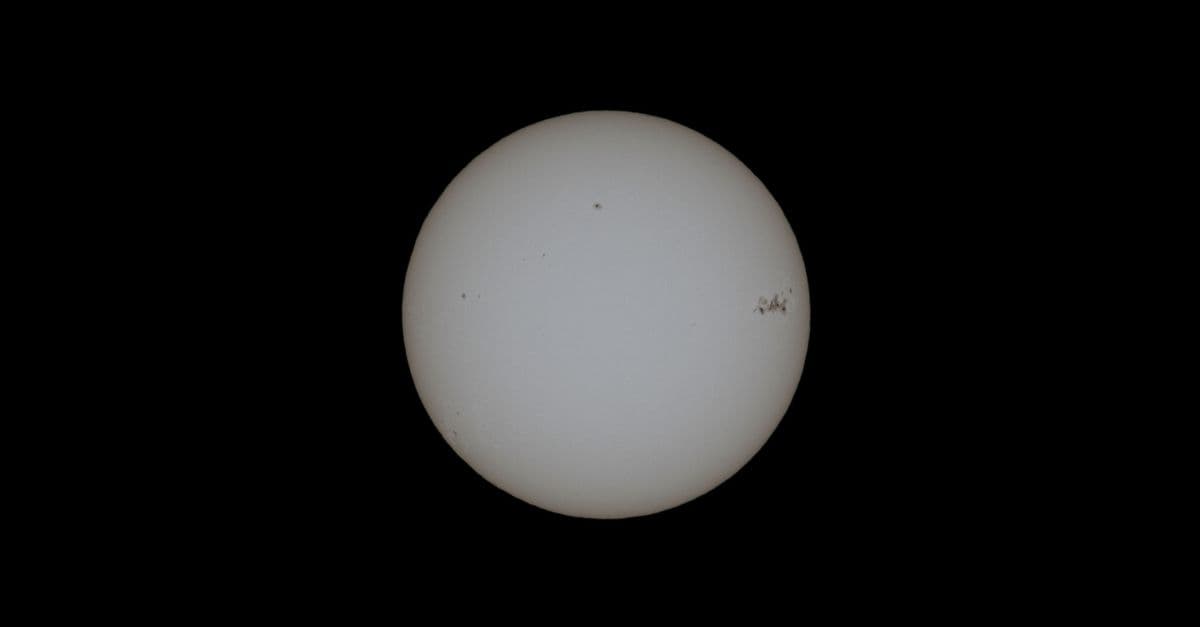
Parker Solar Probe — Touching the Sun
NASA's Parker Solar Probe is the first spacecraft to fly inside the Sun's corona — here's what it has found and why it matters.
What Is the Heliosphere? The Sun's Protective Bubble in Space
The heliosphere is a vast bubble of solar wind plasma around the Sun, reaching roughly 120 AU toward the direction we are moving. It deflects a large share of low-energy galactic cosmic rays. Voyager 1 crossed its outer boundary, the heliopause, in 2012 and Voyager 2 followed in 2018.
Aurora Explained — How the Northern Lights Form
How auroras form: solar wind, Earth's magnetic field, atmospheric collisions, why they're green or red, and where and when to see them.

The Fastest Man-Made Objects Ever Built: From Apollo to Parker
At 11:53 UTC on December 24, 2024, the Parker Solar Probe reached 692,000 km/h — fast enough to travel from Earth to the Moon in 33 minutes. That is the fastest any object built by humans has ever moved. But speed records in spaceflight tell a deeper story about orbital mechanics, gravity assists, and the hard physics that governs how fast anything can actually go. This article traces the full hierarchy of speed, from the first satellites to the probe that briefly outran the solar wind itself.