How Do Telescopes Work? From Galileo to the 39-Meter ELT
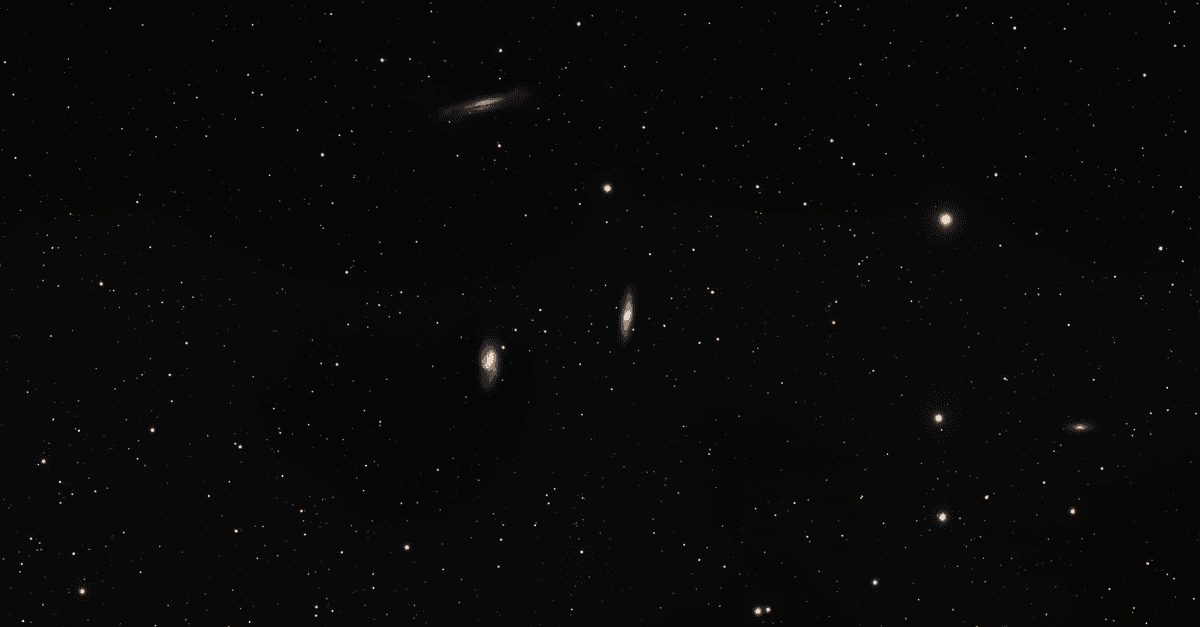
Photo: Del Woodcock / Pexels
A telescope does two jobs. It gathers far more light than a human pupil can, and it sorts that light into a sharper picture than the unaided eye resolves. Galileo's instruments of 1609 and 1610 did both well enough to show him moons circling Jupiter. The Extremely Large Telescope (ELT), which the European Southern Observatory (ESO) is building on a Chilean mountaintop, has a 39.3-meter mirror and is scheduled to reach first light in March 2029. This article follows the physics that connects them: aperture, diffraction, mirrors, and the long fight against turbulent air.
The numbers at a glance
Before the mechanisms, a map of the instruments this article keeps returning to. Apertures are the diameter of the light-collecting lens or mirror. The status column reflects the sources listed at the end of the article, as of October 21, 2026.
| Instrument | Aperture | Type | Location | Status |
|---|---|---|---|---|
| Galileo's objective lens | 38 mm (lens as catalogued) | Refractor | Italy, 1609-1610 | Lens preserved at the Museo Galileo |
| Yerkes refractor | 1.02 m (40 inches) | Refractor | Yerkes Observatory | Dedicated October 21, 1897 |
| Hubble Space Telescope | 2.4 m | Reflector | Low Earth orbit | Operating for more than 36 years |
| Keck I and II | 10 m each | Segmented reflectors | Mauna Kea, 4,145 m | Operating |
| Very Large Telescope (VLT) | 4 x 8.2 m, plus four 1.8 m auxiliaries | Reflectors, combinable | Cerro Paranal, 2,635 m | Operating |
| Giant Magellan Telescope (GMT) | About 25.4 m (seven 8.4 m mirrors) | Segmented reflector | Las Campanas, 2,516 m | Under construction, first light "early 2030s" (provisional) |
| Thirty Meter Telescope (TMT) | 30 m (492 segments) | Segmented reflector | Site unresolved | NSF dropped support in June 2025 |
| Extremely Large Telescope (ELT) | 39.3 m (798 segments) | Segmented reflector | Cerro Armazones, 3,046 m | Telescope first light planned March 2029 |
What a telescope actually does
Think of starlight as rain falling on a field. A single drop tells you nothing, but a wide bucket collects enough water to measure. A telescope is a bucket for photons (particles of light). The wider the opening, the more photons it catches per second, and faint objects become visible that would otherwise sit below the threshold of detection.
The collecting power scales with area, not diameter. A dark-adapted human pupil is about 7 millimeters across, so its area is roughly 38 square millimeters. The ELT's effective collecting area is about 978 square meters, which is around 25 million times larger. That ratio is why a modern telescope with a sensitive detector can record a galaxy that no person could ever see directly, however long they stared.
Resolution: the diffraction limit
The second job is resolution, the ability to tell two nearby points apart. Light behaves as a wave, and a wave passing through a circular opening spreads out slightly. That spreading sets a floor on how small a detail the telescope can separate, called the diffraction limit. For a circular aperture, the smallest resolvable angle is about 1.22 times the wavelength of light divided by the aperture diameter.
Wavelength sits in the numerator and diameter in the denominator, so bigger mirrors and shorter wavelengths both sharpen the picture. The angles involved are tiny, so astronomers quote them in arcseconds (1/3,600 of a degree) and milliarcseconds (mas, one thousandth of an arcsecond). The table applies the formula to green light at 500 nanometers.
| Aperture | Diameter | Diffraction limit at 500 nm |
|---|---|---|
| Dark-adapted human pupil | 7 mm | about 18 arcseconds |
| Galileo's objective lens | 38 mm | about 3.3 arcseconds |
| Hubble Space Telescope | 2.4 m | about 52 mas |
| Keck telescope | 10 m | about 12.6 mas |
| ELT | 39.3 m | about 3.2 mas |
Two caveats keep this table honest. The eye never reaches its diffraction limit, because the spacing of receptors in the retina limits normal vision to roughly one arcminute (60 arcseconds). And on the ground, as later sections show, the atmosphere prevents large telescopes from reaching their limits without special equipment.
Magnification is the least important number
Consumer telescopes are often sold by magnification, but magnification is just the ratio of the telescope's focal length to the eyepiece's focal length. A 1,000-millimeter telescope with a 25-millimeter eyepiece magnifies 40 times. Magnification enlarges the image the aperture has already formed. It cannot add detail the aperture failed to resolve, in the same way that enlarging a blurry photograph gives you a bigger blurry photograph. Aperture decides what exists in the image; magnification only decides how large you see it.
Refractors: bending light with glass
The first telescopes were refractors, which use lenses. A convex objective lens bends parallel rays from a distant source toward a focal point. A second lens, the eyepiece, magnifies the image formed there. Galileo built his in 1609 after hearing of a Dutch invention, and improved it quickly. His first instrument magnified about three times, and his improved versions reached about thirty times. The Museo Galileo in Florence catalogues the surviving objective lens, which Galileo gave to Grand Duke Cosimo II, at 38 millimeters across.
That modest tube changed astronomy. In 1610 Galileo observed what he called the Medicean Planets and announced them in Sidereus Nuncius, published in Venice that year. Four points of light that changed position night after night, always near Jupiter, were hard to reconcile with the idea that everything in the sky circled the Earth. You can read more about the man behind the instrument in Galileo Galilei: The Finger in the Museum and the Man Who Talked Back to Rome.
The color problem
Lenses have a flaw that mirrors do not. Glass bends different colors by different amounts, a property called dispersion, which is the same effect Newton's prism used to split white light into a spectrum. In a telescope objective, blue light focuses at a slightly different distance than red light, so bright stars wear colored fringes. This defect is chromatic aberration.
Opticians fought it with compound lenses. An achromatic doublet pairs two kinds of glass whose color errors partly cancel; apochromatic designs use more elements to cancel further. The fix works but multiplies the cost and difficulty of every extra piece of flawless glass.
Why refractors hit a ceiling
Size is the harder limit. A lens must be free of flaws through its whole thickness, and it can only be held at its rim. A large lens sags under its own weight, which distorts the image. The practical ceiling for refractors is about one meter, and the world's best-known example sits right at it: the Yerkes 40-inch refractor, with a lens by Alvan Clark and Sons, dedicated on October 21, 1897. It is described as the largest refractor ever successfully used for astronomical observation. Every large research telescope since has used mirrors.
Reflectors: bending light with curved metal and glass
A reflecting telescope uses a curved mirror to focus light. The advantages explain why mirrors won:
- No chromatic aberration. A reflection bounces every color at the same angle.
- Only one surface has to be perfect. A lens has to be flawless throughout its volume; a mirror needs one precisely polished face.
- Support from behind. A mirror can be held by the whole side opposite its reflecting surface, which makes diameters above 10 meters practical.
- A wider spectrum. Glass absorbs some infrared and ultraviolet wavelengths, while a coated mirror reflects them.
The history is a sequence of engineering fixes. Galileo and his contemporaries discussed mirror telescopes early, but the first working design usually credited as practical was Isaac Newton's reflector in 1668, which used a small metal primary and a flat diagonal mirror to send the image out the side of the tube. Newton's wider story is told in Isaac Newton: The Solitary Genius Who Stuck a Needle in His Own Eye. James Gregory had published a design with a parabolic mirror in 1663, and Laurent Cassegrain's 1672 design folded the light path with a convex secondary mirror so that a long focal length fit inside a short tube.
Early mirrors were made of speculum metal, a bronze-like alloy that reflected only about two-thirds of the light and tarnished quickly. The 1.8-meter "Leviathan of Parsonstown," the largest telescope of the 19th century, used one. By the 1850s, Léon Foucault's silvered-glass mirrors were cheaper, brighter, and easier to renew. Nearly every professional telescope since has used a glass or glass-ceramic blank with a thin reflective coating. If you want the simple physics of the coating itself, How Mirrors Work covers reflection from first principles.
Optical layouts and what each one fixes
A single curved mirror is not enough for good images over a wide field. Designers add a second mirror, or a corrector, to remove specific errors. The common layouts are:
| Layout | How it works | Typical use |
|---|---|---|
| Newtonian | Concave primary plus a flat diagonal sending light out the side | Amateur telescopes |
| Gregorian | Concave primary plus a concave secondary beyond the focus | Some large research designs |
| Cassegrain | Concave primary plus a convex secondary reflecting light back through a hole in the primary | Compact research telescopes |
| Ritchey-Chretien | A Cassegrain variant with two hyperbolic mirrors, developed in the early 1910s, free of coma and spherical aberration | Almost every professional reflector, including Hubble |
| Schmidt | A spherical mirror plus a thin corrector plate at the front | Wide-field survey cameras |
Coma is the error that smears off-axis stars into comet-shaped smudges. The Ritchey-Chretien layout removes it and also controls spherical aberration, which is why nearly every professional telescope adopted it.
Mosaic mirrors: how to build a 10-meter mirror
A single piece of glass much larger than about 8 meters is hard to cast, polish, transport, and support. Segmented mirrors solve this the way a tiled floor covers a large room: many small, identical pieces arranged into one surface.
The twin Keck telescopes on Mauna Kea (altitude 4,145 meters) pioneered the idea at scale. Each primary mirror consists of 36 hexagonal segments, each 1.8 meters across and 7.5 centimeters thick. Keck I saw first light on November 24, 1990 with only nine segments in place, and Keck II followed in 1996. The segments have to behave as one surface, so sensors and actuators adjust every segment relative to its neighbors to within about four nanometers, twice per second. That is far smaller than a single wavelength of visible light, maintained across the whole 10-meter surface. This is active optics: slow, continuous shape control that fights gravity and temperature changes as the telescope tilts.
Think of a choir singing a single note. Each singer (segment) follows the others and adjusts a hair sharper or flatter until the whole group sounds like one voice. The ELT scales that idea to 798 hexagonal segments, each about 1.45 meters across and 50 millimeters thick, forming a single 39.3-meter mirror.
The atmosphere problem: why a big mirror is not enough
If a bigger mirror always gave sharper images, the story would end there. On the ground it does not. The atmosphere is a stack of moving air layers at different temperatures, and each layer bends light by a slightly different amount. A wavefront that arrived from a star as a perfectly flat sheet is crumpled by the time it reaches the telescope.
Astronomers measure the result as seeing, the angular width of a star's blurred image. A seeing disk of 1.0 arcsecond is considered good for an average astronomical site, and the best high-altitude sites reach about 0.4 arcseconds. Compare that with the diffraction limit of a 10-meter mirror at 500 nanometers: 12.6 milliarcseconds. Typical seeing is nearly 80 times larger than what the mirror could deliver in perfect air.
The relevant scale is the Fried parameter, written r₀. It is the width of the patch of atmosphere over which the wavefront stays roughly flat. At visible wavelengths, r₀ is about 10 to 20 centimeters at good observatories. When a telescope's diameter is smaller than r₀, diffraction sets the resolution. When it is larger, the atmosphere sets the resolution, and the image looks like one taken through a telescope only r₀ across. Without correction, a 10-meter telescope resolves no better than a 15-centimeter backyard instrument. It still collects vastly more light, but the picture is not sharper. This is also why stars twinkle to the naked eye; the full explanation is in Why Do Stars Twinkle?.
An analogy helps. Try to read a newspaper at the bottom of a swimming pool while someone churns the surface. A larger magnifying glass does not fix the problem, because the water, not the glass, is scrambling the picture. The only real fixes are to move above the water or to measure the churning and undo it.
Adaptive optics: undoing the blur in real time
Astronomers have used both fixes. Going above the atmosphere means a space telescope, covered below. Undoing the churn is adaptive optics (AO). The idea was proposed by Horace Babcock in 1953, developed largely by the US military during the Cold War to track Soviet satellites, and became practical for astronomy in the 1990s as computers got fast enough.
The AO loop
An adaptive optics system closes a feedback loop thousands of times per second:
- Measure. A wavefront sensor, most commonly a Shack-Hartmann sensor built from a grid of tiny lenses, looks at a bright reference source. Each lenslet forms a spot, and how far each spot shifts from its expected position reveals the local tilt of the wavefront.
- Compute. A computer turns those spot shifts into a map of the distortion.
- Correct. A deformable mirror changes shape to apply the opposite distortion. The mirror at Keck is about six inches wide and can change shape up to 2,000 times per second.
- Repeat. Because the atmosphere changes over a few milliseconds, the loop runs continuously.
The result is large. Keck describes its AO system as making images about ten times sharper. An 8- to 10-meter telescope with AO can reach 30 to 60 milliarcseconds in the infrared, compared with about one arcsecond uncorrected. Notice that AO works best at infrared wavelengths. Turbulence theory says r₀ grows with wavelength (roughly as the 6/5 power), so the atmosphere is far gentler at 2 micrometers than at 500 nanometers, and fewer actuators are needed to flatten it.
Laser guide stars: making a star where you need one
The loop needs a bright reference near the target. Natural stars bright enough for this are rare, and the corrected area is small, because the correction degrades as you move away from the reference. Keck puts the share of targets that have a usable natural guide star at about 1 percent.
The fix is to build an artificial star. A laser tuned to 589 nanometers excites sodium atoms in a thin layer of the upper atmosphere about 90 kilometers up, making them glow. The glow looks like a point source to the telescope and serves as the reference. Laser guide stars raise sky coverage for AO from about 1 percent to 70 to 80 percent of targets, according to Keck. The price is complexity: the laser must be aimed precisely, and the guide star sits in the atmosphere rather than at infinity, so it samples a slightly different column of air than starlight does.
Two terms describe how well the correction works. The Strehl ratio is the fraction of a star's light that lands in the sharp diffraction-limited core rather than the blurry halo; a perfect telescope scores 1.0. Multi-conjugate adaptive optics (MCAO) uses several guide stars and several deformable mirrors, each tuned to a different altitude of turbulence, to widen the corrected field of view.
Above the atmosphere: space telescopes
The second fix for the atmosphere is to leave it. A space telescope faces no turbulence and no air absorption, and it can see wavelengths that never reach the ground. The cost is that every part must be launched, aimed by remote control, and repaired, if at all, by visiting astronauts.
Hubble and the mirror that was too flat
Hubble was deployed from the Space Shuttle Discovery in 1990. Within months, scientists found the problem: the outer edge of the 2.4-meter primary mirror was about 2 microns too flat, a deviation of roughly one-fortieth the width of a human hair. The error scattered light into a fuzzy halo around every star and blurred images that should have been razor sharp.
The mirror could not be swapped in orbit, so engineers corrected it the way an optometrist corrects eyesight: with glasses. On Servicing Mission 1, flown by the crew of STS-61 in December 1993, astronauts installed COSTAR (the Corrective Optics Space Telescope Axial Replacement), a package of five pairs of small mirrors placed in front of three instruments to cancel the flaw. They also replaced the main camera with Wide Field and Planetary Camera 2 (WFPC2), whose built-in optics carried their own correction. Hubble has now operated for more than 36 years, and its legacy of images runs from nearby planets to distant galaxies.
Webb and Roman
The James Webb Space Telescope launched on December 25, 2021 and operates about 1.5 million kilometers from Earth at the second Sun-Earth Lagrange point (L2). Its five-layer sunshield keeps the optics cold, which matters because Webb observes in the infrared, where warm objects glow. The findings so far are covered in What James Webb Telescope Has Actually Found, and the reason infrared needs such cold optics is explained in How Space Telescopes See in Infrared. The orbit it uses is the subject of How Lagrange Points Hold Space Telescopes.
NASA's Nancy Grace Roman Space Telescope launched on a SpaceX Falcon Heavy from Kennedy Space Center on August 30, 2026 and is heading for L2. NASA says its field of view will be at least 100 times larger than Hubble's, and it carries a Wide Field Instrument and a Coronagraph Instrument, which blocks starlight to see planets and planet-forming disks directly. Where Hubble and Webb are zoom lenses that study individual objects, Roman is designed as a wide-angle survey camera.
What space still cannot do
A space mirror is limited by the size of a rocket fairing and the cost of launch. Hubble's 2.4-meter mirror has an area of about 4 square meters, roughly 250 times smaller than the ELT's. For large collecting area at modest cost, the ground wins. For ultraviolet light, which the atmosphere absorbs, and for stable, extremely precise measurements, space wins. The two approaches complement each other, which is why astronomers use both.
The great ground observatories
Ground-based telescopes with AO now rival space telescopes in sharpness at near-infrared wavelengths while collecting more light. Three facilities show how far the approach has come.
Keck Observatory
The two Keck telescopes each combine 36 segments into a 10-meter mirror (details above). Their sodium laser guide stars and AO system sharpen images across the near-infrared. Keck also hosted the Keck Interferometer, which linked the two telescopes across an 85-meter baseline until it was discontinued for lack of funding in 2012.
The Very Large Telescope and its interferometer
ESO's VLT on Cerro Paranal in Chile (2,635 meters) consists of four 8.2-meter Unit Telescopes, named Antu, Kueyen, Melipal, and Yepun, and four movable 1.8-meter Auxiliary Telescopes. First light for the four main telescopes came on May 25, 1998, March 1, 1999, January 26, 2000, and September 4, 2000. Its instruments include the wide-field spectrograph MUSE, the exoplanet spectrograph ESPRESSO, and the broad-band spectrograph X-shooter.
The VLT can also work as an interferometer. When light from two telescopes is combined, the pair acts like one telescope whose resolution is set by the separation between them rather than the mirror diameter. The VLT Interferometer (VLTI) offers baselines up to 130 meters between Unit Telescopes and up to 140 meters between a Unit Telescope and an Auxiliary Telescope. At a wavelength of 2.2 micrometers, a 130-meter baseline can in principle separate details of a few milliarcseconds. Interferometry sacrifices light-gathering efficiency and field of view for that resolution, so it suits bright, compact targets.
The instrument GRAVITY combines the light from all four 8-meter telescopes. In results published on April 16, 2020, the GRAVITY team reported that the star S2, which orbits the supermassive black hole at the center of the Milky Way about once every 16 years, shows the relativistic Schwarzschild precession that Einstein's general relativity predicts. At closest approach S2 passes within less than 20 billion kilometers of the black hole, roughly 120 times the Earth-Sun distance, and the team used more than 330 measurements. The black hole itself is the subject of Sagittarius A*. The 2020 Nobel Prize in Physics recognized two research groups whose Keck and VLT observations of the galactic center established that a supermassive compact object sits there.
The next generation: ELT, GMT, and TMT
Three projects aim for apertures of 25 to 39 meters. They share a design principle, segmented mirrors with built-in adaptive optics, but their circumstances differ sharply.
| Project | Primary mirror | Collecting area | Site | Status as of October 2026 |
|---|---|---|---|---|
| ELT (ESO) | 39.3 m, 798 segments | 978 m² | Cerro Armazones, Chile, 3,046 m | Telescope first light March 2029; scientific first light December 2030 |
| TMT | 30 m, 492 segments | 655 m² | Mauna Kea or La Palma, unresolved | NSF dropped support in June 2025; consortium says it continues |
| GMT | About 25.4 m, seven 8.4 m mirrors | 368 m² | Las Campanas, Chile, 2,516 m | Under construction; first light "early 2030s," provisional |
The ELT sits 23 kilometers from the VLT's Paranal site, and construction began on May 26, 2017. Its schedule has slipped more than once. In an announcement on March 14, 2025, ESO said delays during construction pushed telescope first light to March 2029 and scientific first light to December 2030, citing late contracts, harsh weather at the site, technologies taking longer to develop, and equipment failures during manufacturing. The first phase was costed at about 1 billion euros in 2014, and a 2017 estimate including first-generation instruments was about 1.15 billion euros.
Five mirrors, one job
The ELT's optical design uses five mirrors, and the last two are the adaptive optics. Sizes below are rounded because published values differ slightly between sources.
| Mirror | Size | Role |
|---|---|---|
| M1 | 39.3 m, 798 hexagonal segments of about 1.45 m | Collects the light |
| M2 | Roughly 4 m, the largest secondary ever used on an optical telescope | Reflects light toward M3 |
| M3 | Roughly 4 m, concave | Sends light onward |
| M4 | 2.4 m, about 2 mm thick, up to about 5,000 actuators | Adaptive mirror, reshaped up to 1,000 times per second |
| M5 | 2.7 m by 2.2 m | Tip-tilt mirror that stabilizes the image |
Putting the deformable mirror inside the telescope means every instrument gets corrected light without carrying its own AO hardware. The first instruments are MICADO (an imaging camera, fed by the MORFEO adaptive optics module), HARMONI (an integral field spectrograph), and METIS (a mid-infrared imager and spectrograph). A second-generation instrument, ANDES, is a high-resolution spectrograph.
In numbers, the ELT collects roughly 250 times as much light as Hubble and has a diffraction limit about 15 times finer. Its collecting area of 978 square meters also exceeds that of the Keck telescopes (76 square meters each) by a factor of about 13. Combined with adaptive optics, that should allow imaging and spectroscopy of faint objects at a level no existing telescope matches. For the science these instruments target, such as measuring the chemistry of exoplanet atmospheres, see How Do We Detect Exoplanet Atmospheres and What Are Exoplanets and Could Any of Them Host Life?.
Reading a telescope's output
A telescope forms an image, but the data astronomers want often come from splitting that light. Spectroscopy spreads the light into its component wavelengths, revealing a source's composition, temperature, and motion. Cameras use electronic detectors rather than film, and long exposures accumulate light that no single glance could register. That is why astronomical pictures show far more than an observer at the eyepiece would, and why many are assembled from images taken through different filters and displayed in false color.
Not every telescope observes visible light either. Radio dishes, X-ray satellites, and neutrino detectors all use the same core logic: collect more signal, resolve finer structure. How Do Radio Telescopes Work? shows how the diffraction formula forces radio dishes to be enormous or to be linked into arrays, and The First Image of a Black Hole is the extreme example, a planet-sized virtual telescope made from radio dishes spread across the globe. For a ranking of today's biggest instruments, see The Largest Telescopes on Earth.
Common confusions
Does more magnification mean a better telescope?
No. Aperture determines how much light and detail a telescope can deliver. Magnification only sets how large the result appears. Past a certain point, higher power just spreads the same light thinner and shows a bigger, fainter, blurrier image.
Is a space telescope always better than a ground telescope?
Not for every task. Space telescopes avoid the atmosphere and can observe ultraviolet and some infrared bands that never reach the ground, but their mirrors are small compared with ground giants. A 39-meter ELT with AO will collect about 250 times more light than Hubble at wavelengths where the atmosphere is transparent.
Are the colors in space photographs real?
Often they are chosen, not seen. Detectors record brightness, and astronomers assign colors to filters or to wavelengths the eye cannot see so the structure becomes visible. The data are real, but the colors are a presentation choice, which is why good captions say how an image was made.
Does a telescope show the sky as it is now?
It shows the sky as it was. Light from the Moon is about 1.3 seconds old, and light from distant galaxies has traveled for billions of years. A bigger telescope reaches farther back in time because it can detect sources whose light has been stretched and dimmed on a long journey.
Frequently asked questions
Q: How does a telescope make faraway objects look bigger? A: A telescope does not simply enlarge. Its objective lens or mirror collects light and forms a small, bright image at the focal point, and an eyepiece or camera magnifies that image. The useful detail comes from the aperture, which sets how much light is collected and how fine a structure the telescope can resolve.
Q: What is the difference between a refractor and a reflector? A: A refractor focuses light with lenses, and a reflector focuses it with curved mirrors. Mirrors avoid chromatic aberration, can be supported from behind, and scale to much larger sizes. The largest refractor ever used for research, at Yerkes, has a 1.02-meter lens; the ELT's mirror is 39.3 meters across.
Q: Why do ground telescopes need adaptive optics? A: Turbulence in Earth's atmosphere scrambles the wavefront of incoming light, so large telescopes produce blurry images without correction. A seeing disk of about 1 arcsecond is typical, while a 10-meter mirror could resolve about 12.6 milliarcseconds in visible light. Adaptive optics measures the distortion and flattens it with a deformable mirror many times per second.
Q: Why was Hubble's mirror flawed, and how was it fixed? A: Hubble's primary mirror was ground about 2 microns too flat at its outer edge, which scattered light into a halo. The flaw was found in 1990. In December 1993, astronauts on Servicing Mission 1 installed COSTAR, a set of corrective mirrors, and replaced the main camera with WFPC2, which had built-in correction.
Q: When will the Extremely Large Telescope start observing? A: ESO announced on March 14, 2025 that telescope first light is expected in March 2029, with scientific first light in December 2030. The schedule had slipped because of late contracts, harsh weather, slow technology development, and manufacturing problems. Dates for large telescopes tend to move, so check ESO for the current plan.
Q: How is the ELT different from the Thirty Meter Telescope and the Giant Magellan Telescope? A: The ELT is larger, with a 39.3-meter mirror, and is under construction in Chile. The GMT is about 25.4 meters, also in Chile, with first light provisionally in the early 2030s. The TMT would be 30 meters, but the US National Science Foundation dropped support in June 2025 and its site is unresolved.
The takeaway
Every telescope in this story answers the same two questions: how much light can it catch, and how finely can it sort that light? Size answers both, which is why telescopes grew from Galileo's 38-millimeter lens to Keck's 10 meters to the ELT's 39.3. The atmosphere complicates the picture, and the history of the last 40 years is largely the history of beating it, first by launching mirrors above the air and then by measuring the air's distortion and canceling it thousands of times per second. The ELT is the largest bet yet on the second approach, a mirror built so that the correction is part of the telescope itself, not an add-on. Whether it opens on schedule matters less than the pattern: telescopes get better when someone finds a way to turn an obstacle into a measurement.
Sources
- ESO announcement ann25001: ELT schedule update (March 14, 2025)
- ESO: Very Large Telescope
- ESO press release eso2006: GRAVITY and the precession of S2
- Keck Observatory: telescopes and instrumentation
- Museo Galileo: Galileo's objective lens
- ESA/Hubble: Servicing Mission 1
- NASA: Nancy Grace Roman Space Telescope
- NASA: James Webb Space Telescope
- Wikipedia: Extremely Large Telescope
- Wikipedia: Giant Magellan Telescope
- Wikipedia: Thirty Meter Telescope
- Wikipedia: W. M. Keck Observatory
- Wikipedia: Yerkes Observatory
- Wikipedia: Reflecting telescope
- Wikipedia: Astronomical seeing
- Wikipedia: Adaptive optics
Follow new articles
Add SciHub101 to your feed reader to see new science and technology stories.
About the Author
SciHub101 is an independent science and technology publication founded and edited by Buğra Sözeri, a software engineer and app developer based in Türkiye. AI tools assist with drafting and research. Source documentation in the existing archive is uneven, and articles are being reviewed and corrected. The Editorial Team byline identifies editorial responsibility; it does not certify specialist or independent human review. Where we compare products, anything built by our own team is labelled as such — see the editorial guidelines and About page for how corrections and disclosures work.
Related Articles
What Are Active Galactic Nuclei? Quasars, Blazars, Seyferts
Active galactic nuclei are galaxy cores lit up by supermassive black holes pulling in gas. Quasars, Seyfert galaxies, radio galaxies, and blazars are largely one machine seen from different angles and at different power.
What Is the Solar Wind? How the Sun Shapes the Solar System
The solar wind is a continuous outflow of charged particles, mostly protons and electrons, from the Sun's hot corona. It moves at roughly 400 to 800 km/s, bends the interplanetary magnetic field into a spiral, inflates the heliosphere, pushes comet ion tails away from the Sun, drives auroras, and helps strip planetary atmospheres. Voyager 1 crossed the heliopause, where the wind gives way to interstellar space, in 2012.
How Many Galaxies Are in the Universe?
Astronomers' galaxy counts have swung from 100 billion to 2 trillion and back to hundreds of billions. Here's why the number keeps changing, and what it actually means.
What Is Exoplanet Direct Imaging? Seeing Planets Around Other Stars
Directly imaging an exoplanet — seeing the planet itself rather than inferring it from its effect on the star — is the hardest challenge in observational astronomy. A planet is 10⁹ times fainter than its star at visible wavelengths, squeezed within 1 arcsecond of it. Yet direct imaging has been achieved for dozens of young gas giants. The HR 8799 system, with four imaged planets, was the first multi-planet system directly resolved. The ELT's next-generation coronagraphs aim to directly image Earth-like planets.