What If Jupiter Became a Star?
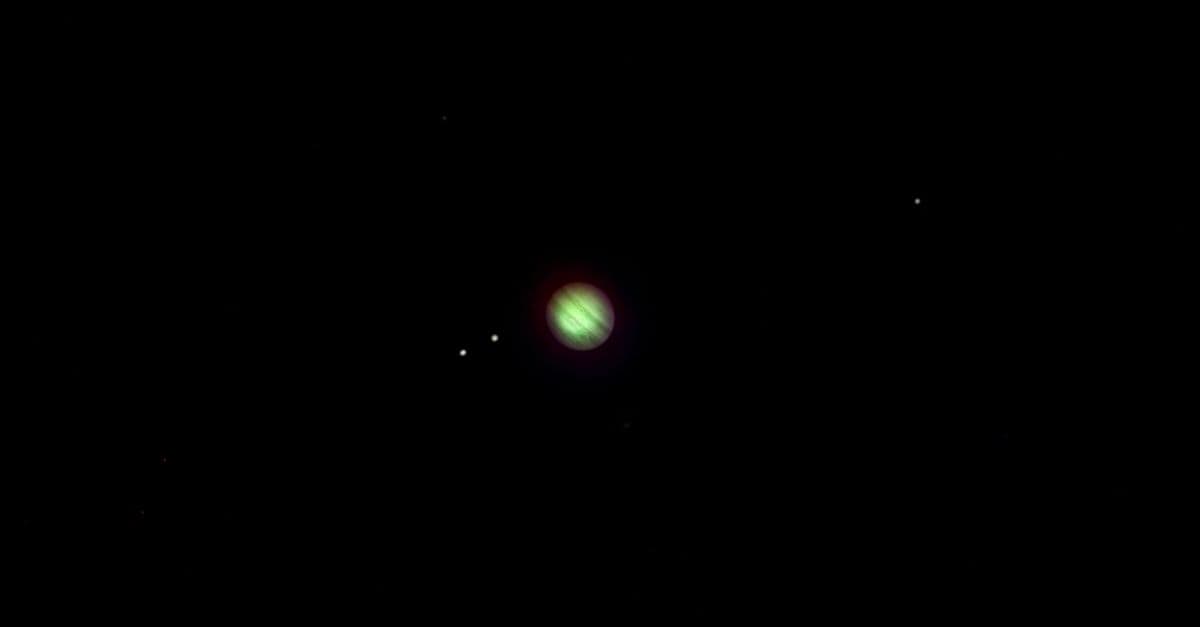
Photo: Raoni Aldrich Dorim / Pexels
Jupiter gets called a "failed star" so often that the label sounds like an established fact. It is not quite right. Jupiter has the right raw material for a star — mostly hydrogen and helium, the same recipe as the Sun — but it falls dramatically short on the one ingredient that actually matters: mass. To cross the threshold into stardom, Jupiter would need to gain roughly 80 times its current mass. This is a thought experiment, not a prediction. Nothing in the solar system is about to pile that much hydrogen onto Jupiter, but working through what would happen if it did is one of the clearest ways to understand why stars ignite and planets don't.
Thought experiment. This article explores a hypothetical scenario for educational and speculative purposes. The events described are not predictions and should not be interpreted as warnings, advocacy, or instructions.
Key takeaways
- Jupiter would need about 80 Jupiter masses (roughly 0.075–0.08 solar masses) to cross the hydrogen-fusion threshold and ignite as a red dwarf, according to stellar-structure models dating to Kumar's 1963 work and refined since (arXiv, Individual Dynamical Masses of Ultracool Dwarfs).
- A red dwarf that small would be about 0.01–0.02% as luminous as the Sun and would add an imperceptible amount of warmth to Earth.
- Jupiter's own moons, especially Europa, would face a radically different story: sitting close to a newly lit star would deliver far more energy than they get today.
- The night sky would gain a second, much dimmer "sun" — visible, red-tinted, but nowhere near bright enough to end the day-night cycle.
- Real ultracool dwarf stars barely bigger than this hypothetical Jupiter-star already exist and already host planets. TRAPPIST-1, host to seven rocky worlds, is one of them (NASA Science, 10 Things About TRAPPIST-1).
Why Jupiter isn't a star, and never will be on its own
Stars work by brute force. Enough mass creates enough gravitational pressure to squeeze a core to roughly ten million kelvin, the temperature at which protons move fast enough to occasionally overcome their mutual electric repulsion and fuse. That fusion releases energy, which pushes back against gravity, and the whole structure settles into a stable, self-sustaining furnace. This is the same basic principle as pressing two sticks together hard enough that friction ignites them, except the "sticks" are protons and the force required is almost inconceivably large.
Jupiter never gets there because it doesn't have enough gravity to compress its core past that line. Current stellar models put the hydrogen-fusion threshold at about 0.075 to 0.08 solar masses, equivalent to roughly 80 times Jupiter's mass (arXiv 1703.05775). Jupiter's actual mass is about 1.898 × 10²⁷ kilograms, or roughly one one-thousandth of the Sun's mass (NASA Jupiter Fact Sheet). It is a gas giant that has spent 4.5 billion years slowly radiating away the heat left over from its own formation, not a star that ran out of fuel.
Between "planet" and "star" sits a strange middle category worth understanding, because it maps out exactly where Jupiter would have to travel:
| Object class | Mass range (Jupiter masses) | What happens inside | Real-world example |
|---|---|---|---|
| Gas giant | 1 (Jupiter) | Gravitational contraction only, no fusion | Jupiter, Saturn |
| Brown dwarf | 13–80 | Briefly fuses deuterium, never sustains hydrogen fusion | WISE J0720-0846B (arXiv 1908.06994) |
| Red dwarf (smallest true stars) | 80–600 | Sustained hydrogen fusion via the proton-proton chain | Proxima Centauri, TRAPPIST-1 |
Table 1. Mass thresholds separating gas giants, brown dwarfs, and the smallest true stars.
How much mass, and what kind of star, are we talking about
Suppose, purely as a thought experiment, that 80 Jupiter masses of hydrogen and helium somehow accreted onto Jupiter over a short period. The added weight compresses the core, temperature climbs past the ten-million-kelvin fusion threshold, and Jupiter ignites as the smallest possible class of true star: a late-type M dwarf.
The resulting object would look something like this:
| Property | Hypothetical Jupiter-star | Compared to the Sun |
|---|---|---|
| Mass | ~0.075–0.08 M☉ | ~1/13 of solar mass |
| Radius | ~0.1–0.15 R☉ | Slightly larger than Jupiter itself, due to a different internal equation of state |
| Surface temperature | ~2,500–2,550 K | About 43% of the Sun's 5,778 K |
| Luminosity | ~0.0001–0.002 L☉ | 0.01%–0.2% of the Sun's output |
| Fusion lifetime | Trillions of years | Roughly 100 to 1,000 times the Sun's ~12-billion-year lifespan |
Table 2. Estimated properties of Jupiter if it reached the hydrogen-fusion threshold, benchmarked against real ultracool dwarfs.
This is not a hypothetical class of object. The nearest star to the Sun, Proxima Centauri, is a close analog: it has a mass of about 0.122 solar masses (roughly 129 Jupiter masses), a radius about 0.154 times the Sun's, a surface temperature near 3,042 K, and a luminosity of just 0.0017 times the Sun's (NASA Science, Proxima Centauri). A Jupiter that scraped past the minimum fusion threshold would be even smaller and dimmer than Proxima, sitting closer to the absolute bottom of the stellar mass range. TRAPPIST-1, another well-studied ultracool dwarf, has a mass of about 0.09 solar masses and a temperature of roughly 2,550 K (NASA Science, TRAPPIST-1) — almost exactly what our hypothetical Jupiter-star would look like.
Because these tiny stars fuse hydrogen so slowly and are fully convective (meaning the entire star, not just the core, cycles hydrogen through the fusion zone over time), they burn for an extraordinarily long time. Estimates for the smallest red dwarfs put their main-sequence lifetimes above 10 trillion years, versus about 12 billion years for the Sun (nineplanets.org, Red Dwarf Star). A Jupiter-star, in other words, would likely outlive every other star currently visible in the night sky, by a margin of roughly a thousand to one.
How does hydrogen fusion actually start in a collapsing gas cloud?
Gravity compresses a cloud of hydrogen and helium until the core reaches around ten million kelvin. At that temperature, protons collide with enough energy to fuse via quantum tunneling despite their electrical repulsion, releasing energy that halts further collapse and turns the object into a stable, long-lived star.
Is Jupiter actually a failed star?
Not quite. "Failed star" implies Jupiter tried and came up short, but Jupiter formed the same way as the other gas giants: gradual accretion of gas and dust around a rocky-icy core in the early solar system, not stellar collapse. It never had a fusion-scale mass to begin with.
Earth would barely feel the difference
Here is the part that surprises most people: even if Jupiter somehow ignited, Earth would not notice.
The Sun delivers about 1,361 watts per square meter (W/m²) to the top of Earth's atmosphere, a figure known as the solar constant (NASA/NSSDC and general solar-constant references). A red dwarf at the extreme low-luminosity end, radiating around 0.0001 to 0.002 times the Sun's output, sitting at Jupiter's average distance of roughly 5.2 astronomical units (AU) from Earth (and never closer than about 4.2 AU at opposition), would deliver a flux many orders of magnitude smaller than that. Even using the more generous end of the luminosity estimate, the added flux at Earth works out to a small fraction of a single percent of what the Sun already provides.
Run that through the Stefan-Boltzmann relationship that governs planetary equilibrium temperature, and the results is a temperature increase measured in thousandths of a degree Celsius, not a number climate scientists could distinguish from natural year-to-year variability. Think of it like adding one lit match to a stadium already flooded with stadium lights: the match is real and it is burning, but nobody in the stands notices a change in the light level.
Q: Would a Jupiter-star warm up Earth's climate? A: No. Even at the higher end of plausible luminosity for a minimum-mass red dwarf, the added energy reaching Earth from Jupiter's distance would raise Earth's temperature by only a few thousandths of a degree Celsius, an amount too small to separate from ordinary climate noise.
The Jovian moons would face a completely different story
While Earth shrugs off a newly ignited Jupiter, Jupiter's own moon system would be transformed, because distance is everything in radiative heating and Jupiter's moons orbit far closer to Jupiter than Earth does to the Sun.
Europa currently orbits at about 671,000 kilometers from Jupiter's center. At that distance from a freshly ignited red dwarf even as dim as 0.0001 solar luminosities, the flux Europa receives would be comparable to or exceed the solar constant Earth receives from the Sun today. That is a staggering change for a moon whose surface currently sits around 110 kelvin, cold enough to keep its water frozen into an icy shell tens of kilometers thick over a suspected subsurface ocean (NASA Jupiter Moons overview). A sudden jump to Earth-like or greater flux levels would drive rapid melting at the surface, releasing water vapor into space in a fast, one-directional process rather than a stable ocean-atmosphere system, since none of the Galilean moons have enough gravity to hold onto a thick atmosphere for long.
Io, already the most volcanically active body in the solar system due to tidal flexing from Jupiter's gravity, would gain an additional layer of radiative heating on top of its existing tidal furnace.
Ganymede, the largest moon in the solar system and larger than the planet Mercury, sits farther out and would see a smaller, though still significant, jump in surface temperature.
Callisto, the outermost of the four Galilean moons at roughly 1.88 million kilometers from Jupiter, is far enough that the added warmth would be gentler, potentially nudging its icy surface toward temperatures where liquid water could persist briefly, if it also somehow acquired enough atmosphere to hold heat, which it currently lacks entirely (Universe Today, Callisto).
Would Jupiter's moons become habitable if Jupiter became a star?
Possibly warmer and wetter in the short term, but not stably habitable. The moons currently have thin or absent atmospheres, so any water exposed to a newly intense radiation environment would tend to boil off or sublimate into space rather than settle into a stable liquid-water climate the way Earth's atmosphere allows.
A second, dim sun in the sky
Jupiter today shines by reflected sunlight, peaking around apparent magnitude −2.9 at opposition, bright but well short of Venus. A newly ignited Jupiter-star would shine by its own fusion-powered light instead, and the jump in brightness would be enormous in relative terms even though the star itself is objectively faint.
Converting a luminosity increase of roughly a billionfold (going from reflected sunlight to self-luminous fusion output) into apparent magnitude terms puts the new Jupiter-star at somewhere in the range of magnitude −20 to −25 as seen from Earth, depending on exactly where in the plausible mass-luminosity range it landed. For comparison, the full Moon sits at about magnitude −12.7. A Jupiter-star at the bright end of that estimate could be visible in daylight and would cast faint shadows at night, appearing as a small, steady, reddish point rather than a disk, since even at its dimmest a self-luminous star vastly outshines a reflective planet.
It would not replace the Sun, would not meaningfully extend daylight hours, and would not disrupt the day-night cycle. It would simply be a new, permanent, ruddy landmark in the sky, roughly following Jupiter's familiar 12-year orbital path through the zodiac.
Orbital mechanics would get complicated fast
Adding 80 Jupiter masses to the solar system is not a free action. Mass has gravitational consequences everywhere in the system, and the change here is large enough to matter.
Today, the Sun outweighs Jupiter by a ratio of about 1,047 to 1. Boost Jupiter to 0.075–0.08 solar masses and that ratio collapses to roughly 12 or 13 to 1. That is enough to noticeably shift the solar system's barycenter, the balance point both bodies actually orbit. Currently, the Sun's motion around the solar system barycenter (driven mostly by Jupiter) has an amplitude of a bit more than one solar radius. With a Jupiter thirteen times closer in mass ratio to the Sun, that wobble would grow into a much larger, faster loop, on the order of a large fraction of an astronomical unit.
The inner planets, including Earth, would feel gravitational perturbations far beyond what today's Jupiter causes. Earth's orbital eccentricity, already nudged by Jupiter's gravity in small, well-studied cycles, would likely oscillate more dramatically over Jupiter's roughly 12-year orbital period, though a full collapse of Earth's orbit is not the expected outcome for this specific scenario since Jupiter's orbital distance and eccentricity would not change instantaneously, only its mass. The asteroid belt, which already owes much of its structure to orbital resonances with Jupiter, would see those resonances intensify, potentially clearing out entire families of asteroids or flinging them onto new trajectories. Saturn, Uranus, and Neptune, all of which currently experience gentle tugs from Jupiter over long timescales, would face substantially stronger and less predictable perturbations, plausibly destabilizing some of the more delicate resonance relationships that currently keep the outer solar system orderly.
None of this happens instantly. Orbital dynamics unfold over thousands to millions of years, so "Jupiter becomes a star" would kick off a slow reshuffling of the solar system's architecture rather than an overnight catastrophe.
What people get wrong about this scenario
The most common misconception is picturing Jupiter-as-star as a second Sun, roughly comparable in brightness and warmth. It would not be. The luminosity gap between even a bright red dwarf and the Sun is enormous, several orders of magnitude, because luminosity scales steeply with stellar mass (roughly with mass to a high power for stars near the Sun's mass, though the relationship is shallower and more complex for the lowest-mass stars). A Jupiter-star sits at the extreme low end of that scale, which is why its warming effect on Earth is negligible.
A second misconception is that any planet with the right elemental composition can become a star with enough external nudging, as though pouring in matter is simply a matter of finding enough matter to pour. In reality, the mass threshold is a hard physical boundary set by the temperature and pressure needed for sustained fusion, not a fuzzy target. Below it, you get a brown dwarf, an object that can briefly fuse deuterium (a heavier isotope of hydrogen) during formation but never sustains the main hydrogen-fusion reaction that defines a true star (arXiv, Brown Dwarfs: From Mythical to Ubiquitous).
A third misconception worth clearing up: people sometimes assume this scenario is entirely science-fictional and has no real-world analog. It does. Ultracool dwarf stars almost exactly matching our hypothetical Jupiter-star's mass, temperature, and luminosity exist and have been studied in detail, including systems with their own planets. TRAPPIST-1, at about 0.09 solar masses and 2,550 K, hosts seven Earth-sized rocky planets, several within its habitable zone (NASA Science, TRAPPIST-1; Nature, Seven temperate terrestrial planets around TRAPPIST-1). The physics that would apply to a hypothetical Jupiter-star already governs a real, observed planetary system 40.66 light-years away.
Q: How does Jupiter's hypothetical luminosity compare to real red dwarf stars like Proxima Centauri or TRAPPIST-1? A: A minimum-mass Jupiter-star would sit below both. Proxima Centauri, at 0.122 solar masses, produces about 0.0017 solar luminosities; TRAPPIST-1, at 0.09 solar masses, is similarly faint. A Jupiter that just barely crossed the fusion threshold at 0.075–0.08 solar masses would likely be dimmer than either, near the observed floor for stellar luminosity.
Q: What's the difference between a brown dwarf and a red dwarf? A: Mass and fusion behavior. Brown dwarfs, roughly 13 to 80 Jupiter masses, can briefly fuse deuterium during their youth but never reach the temperature needed for sustained hydrogen fusion. Red dwarfs, above about 80 Jupiter masses, cross that threshold and become true, long-lived, hydrogen-fusing stars.
Q: Could Jupiter naturally accumulate enough mass to become a star? A: No credible natural pathway exists in the current solar system. There is no reservoir of roughly 80 Jupiter masses of loose hydrogen nearby for Jupiter to accrete, and the process of stellar ignition happens during the initial collapse of a gas cloud, not by a formed planet slowly gaining mass over billions of years afterward.
Q: Would other planets in the solar system be destroyed if Jupiter became a star? A: Not directly and not immediately. The immediate danger is gravitational disruption, not heat or radiation. A sudden thirteen-fold jump in Jupiter's mass relative to the Sun would perturb the orbits of the inner planets and the asteroid belt over long timescales, but it would not incinerate or annihilate them outright.
Q: How long would a Jupiter-star burn before running out of hydrogen? A: Potentially for trillions of years. The smallest red dwarfs fuse hydrogen so slowly and so completely, thanks to fully convective interiors that cycle their entire hydrogen supply through the fusion core, that estimated lifespans exceed 10 trillion years, roughly a thousand times longer than the Sun's approximately 12-billion-year total lifespan.
Q: Would we be able to see Jupiter-star during the daytime? A: Plausibly, yes, at the higher end of the brightness estimates. A newly self-luminous Jupiter could reach an apparent magnitude in the range of a bright planet or dim Moon phase, which would likely make it visible against a blue daytime sky under good conditions, similar to how Venus is sometimes visible in daylight.
Q: Does Jupiter emit any energy of its own today, before becoming a star? A: Yes, a small amount. Jupiter radiates roughly 1.6 to 1.7 times more energy than it receives from the Sun, leftover heat from its gravitational contraction during formation billions of years ago. This is real but minuscule compared to the fusion-powered output a true star produces, which is precisely why Jupiter is a planet and not a star today.
Q: What would happen to Jupiter's rings if it became a star? A: The faint, dusty ring system would almost certainly be disrupted or destroyed. Radiation pressure and the intense heating from a newly ignited star at close range would likely vaporize or blow away the fine dust particles that make up Jupiter's rings, which are far less substantial than Saturn's ice-rich rings to begin with.
The takeaway
Jupiter becoming a star is a useful thought experiment precisely because it fails in an instructive way. Jupiter has the right elemental recipe for a star but is roughly two orders of magnitude too light, and mass, not composition, is the gatekeeper for nuclear fusion. Even in the hypothetical case where it crossed that threshold, the resulting object would be so dim that Earth would scarcely register the change, while Jupiter's own moons, sitting far closer, would be transformed. The real lesson is about scale: the Sun's dominance over life on Earth comes not from its mass alone but from the sustained, enormous energy output that only a star with true fusion conditions, sitting at a star's actual mass, can produce.
Read next:
Follow new articles
Add SciHub101 to your feed reader to see new science and technology stories.
About the Author
SciHub101 is an independent science and technology publication founded and edited by Buğra Sözeri, a software engineer and app developer based in Türkiye. AI tools assist with drafting and research. Source documentation in the existing archive is uneven, and articles are being reviewed and corrected. The Editorial Team byline identifies editorial responsibility; it does not certify specialist or independent human review. Where we compare products, anything built by our own team is labelled as such — see the editorial guidelines and About page for how corrections and disclosures work.
Related Articles
What If the Sun Became a Black Hole?
If the Sun were swapped for a black hole of the same mass, Earth's orbit would not change at all. The danger is the lost sunlight, which would turn the surface into a frozen, lightless world.
What If Antarctica Completely Melted?
Antarctica holds about 26.5 million cubic kilometres of ice — enough to raise global sea levels by roughly 58 metres if it all melted. Coastlines would be redrawn, hundreds of cities flooded, and global climate fundamentally restructured.
What If the Sun Disappeared for One Week?
Eight minutes after the Sun vanishes, Earth goes dark. What happens to life, physics, and civilization in the days that follow?
What If a Rogue Planet Entered Our Solar System?
There may be more rogue planets — wandering worlds without stars — than there are stars in the galaxy. If one drifted into our solar system, even a brief passage could destabilize planetary orbits and reshape Earth's climate for millennia.
What If Our Solar System Had Two Suns?
Most stars in the galaxy are in binary systems. If our solar system had two suns, Earth's orbit might be stable — or chaotic. The climate would be stranger, the sky alien, and the evolution of life might have gone very differently.
What If the Moon Disappeared Tomorrow?
If the Moon vanished overnight, Earth's tides, axial tilt, and life itself would change forever. Here's the science of what happens next.