Dust Storm Impact Research: Mars Global Storms and Settlement Challenges
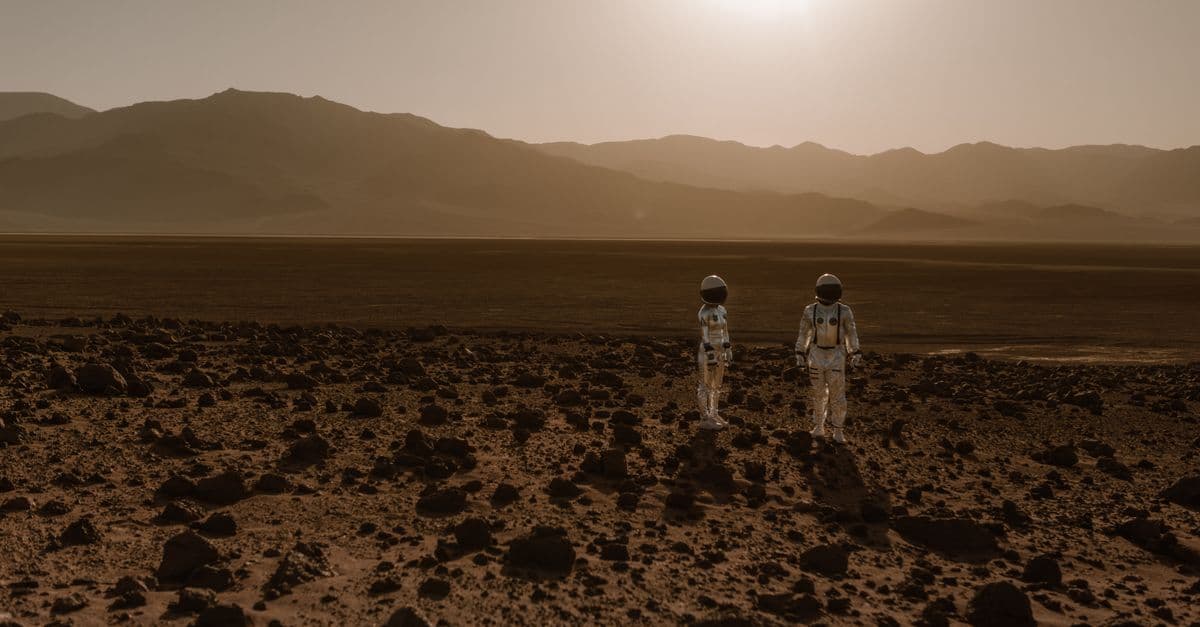
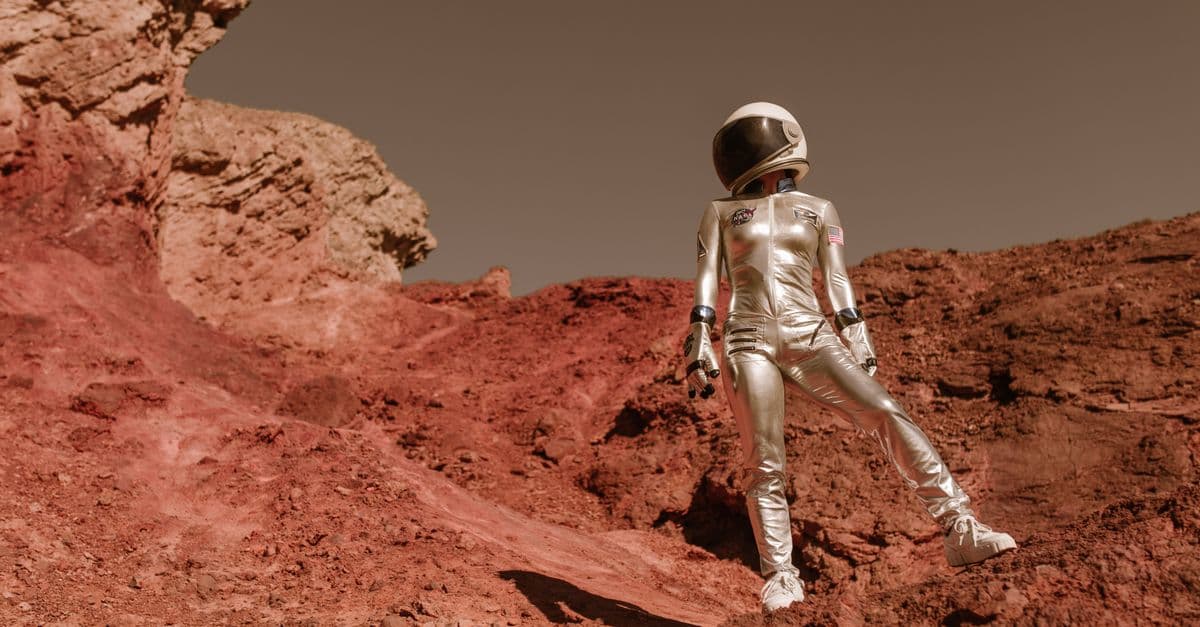
Photo: RDNE Stock project / Pexels
In late May 2018, a patch of dust covering about 140,000 square kilometers lit up over Acidalia Planitia on Mars. Within about two weeks the storm had grown to encircle the planet, and on June 10 the solar-powered Opportunity rover sent its last message as the dust darkened its site. Curiosity, running on a plutonium-fueled generator, kept working through the same haze. Mars dust storms are not a threat because of wind force. They are a threat because they take away sunlight. This article covers how the storms form, what the 2018 event showed, and what it means for the machines and people who will follow.
What counts as a "global" dust storm on Mars
Dust is always in motion on Mars, and most storms stay small. Local storms last a few days and cover a region. Regional storms grow larger and last longer. A planet-encircling dust event, which NASA also calls a global storm, is one whose dust reaches around the planet. NASA's Mars scientists have been clear that these are the exception: before the 2018 event, the last storm of that scale was in 2007.
Counting how many have occurred is harder than it sounds. Historical lists compiled from telescope observations since the mid-20th century disagree depending on how "global" is defined, and the instruments that watch the planet continuously have been in orbit for only a couple of decades. The safe statement is that planet-encircling storms are relatively few and do not arrive on a fixed schedule. Claims of several per decade do not match the observational record.
Optical depth, or why scientists talk about "tau"
Scientists measure how murky Mars's air is with a number called optical depth, written with the Greek letter tau. It describes how much of the direct sunbeam survives the trip to the ground. If tau is 1, about 37 percent of direct sunlight gets through. The fraction is e raised to the power of negative tau, which means it falls off exponentially as tau rises.
| Optical depth (tau) | Fraction of direct sunlight that reaches the ground |
|---|---|
| 0.5 | about 61% |
| 1 | about 37% |
| 3 | about 5% |
| 8 | about 0.03% |
| 11 | about 0.002% |
These are calculated values for the direct beam only. Dust also scatters light, so a rover's panels still collect some diffuse sky light even when the Sun is effectively invisible. That is why a rover under a heavy storm slowly starves instead of going dark instantly.
Now for the real storm. NASA reported that tau at Gale Crater, where Curiosity works, rose above 8, the highest the Curiosity mission had recorded. Over Opportunity's location the last measurement was near 11, which made accurate readings impossible. NASA also said the haze was six to eight times thicker than normal for that time of year. Reading those numbers together suggests that normal tau at Gale in that season is somewhere near 1, though that is an inference from the published figures, not a number NASA stated.
Why Mars gets dusty: wind, fine grains, and thin air
A dust storm needs a source of loose, fine dust and a way to lift it. Mars has plenty of the first. NASA describes the dust particles raised in storms as about the size of grains of talcum powder. Particles that small can stay aloft for a long time once they are lifted. Getting them airborne in the first place is the harder part, because air this thin has little force to spare.
Why wind force is not the hazard
It is easy to imagine a Martian storm as a howling wall of wind. The air tells a different story. Wind pushes with a dynamic pressure of one-half times the air density times the wind speed squared. Take a stiff 30 meters per second wind, which is about 108 kilometers per hour (67 miles per hour). In the thin carbon dioxide atmosphere of Mars, at NASA's listed surface density of about 0.016 kilograms per cubic meter, that gives roughly 7 pascals. The same wind in Earth air at about 1.2 kilograms per cubic meter pushes with roughly 540 pascals, about 75 times harder. These are calculated values, but the logic is simple: thin air cannot shove much even when it moves fast.
That is why the science-fiction image of a Mars storm toppling a habitat is misleading, and it is the reason the central concern for engineers is light and power, not structural wind loads.
Dust devils and surface winds
The strongest winds ever measured directly on Mars came from dust devils, which are small whirling vortices. NASA's InSight lander detected a passing vortex on February 1, 2019 (sol 65) that produced a 9-pascal pressure drop, the largest ever recorded by a Mars surface mission and about 13 percent of the ambient pressure. Its weather sensors recorded a peak of 20 meters per second in that event, and the fastest wind InSight ever measured directly was 28 meters per second (63 miles per hour). Typical winds at the lander were about 2 to 10 meters per second.
A 2025 study led by Valentin Bickel of the University of Bern, published in Science Advances, took a different approach. The team trained a neural network on about 50 expert-labeled examples, ran it on roughly 50,000 orbital images from ESA's Mars Express and the ExoMars Trace Gas Orbiter, and found 1,039 dust devils. By tracking how far each moved between color layers or stereo pairs, the team estimated surface winds of up to 44 meters per second. That is faster than the previous 32 meters per second record set by the Perseverance rover, and the authors found that Martian surface winds are generally faster than current atmospheric models predict. Those are inferred speeds, not direct measurements, but they suggest the lifting side of the equation is less well understood than it appears.
Season and orbit: why storms cluster in southern spring and summer
Mars's orbit is more elliptical than Earth's. NASA's fact sheet gives an orbital eccentricity of 0.0935, a closest approach to the Sun (perihelion) of 206.65 million kilometers, and a farthest distance (aphelion) of 249.26 million kilometers. Sunlight intensity falls with the square of distance, so the ratio of the two distances squared gives the difference in sunlight: about 1.45. Mars receives roughly 45 percent more sunlight at perihelion than at aphelion (a calculated figure, not one NASA quotes directly).
NASA reports that dust storms are common during southern hemisphere spring and summer, when Mars is closest to the Sun. The extra heating in the southern hemisphere drives stronger temperature contrasts and stronger winds. In addition, frozen carbon dioxide evaporating from the winter polar cap thickens the atmosphere and increases surface pressure, a change that NASA says helps keep dust suspended.
That is a case where orbital mechanics matters. Planets move faster near the Sun and slower far from it, which is why the southern summer is relatively short and intense and the northern summer long and mild. The rule is spelled out in Kepler's three laws, and the role of axial tilt in creating seasons, shared between Earth and Mars, is explained in why we have seasons.
The feedback loop, and what nobody can yet explain
Once dust is in the air, it absorbs sunlight and warms the surrounding atmosphere. Warmer air rises and strengthens circulation, which can lift more dust. This positive feedback is the likely engine behind storms that grow far beyond their starting point. It is also the reason forecasting them is hard: small storms and large storms may begin the same way.
Scott Guzewich, an atmospheric scientist at NASA Goddard, was asked in June 2018 why some storms grow massive while others stay small. His answer was blunt: "We don't have any good idea." The underlying question of why a particular storm tips into a global one remains open.
Anatomy of the 2018 storm
The 2018 storm is the best-documented planet-encircling event yet, and it did not follow the textbook pattern in at least one way. A study led by Agustín Sánchez-Lavega, published in Geophysical Research Letters, concluded that it was the first confirmed global dust storm to start in the northern hemisphere.
| Date | Event | Source |
|---|---|---|
| May 30 to 31, 2018 | Dust patch of about 140,000 km² imaged over Acidalia Planitia near 31.7°N | Sánchez-Lavega et al. |
| June 1 to 8, 2018 | Storm moves south along the Acidalia corridor at about 5 m/s and spreads east and west at 5 to 40 m/s | Sánchez-Lavega et al. |
| June 8, 2018 | Dust reaches 55°S; northward spread stops at 46°N | Sánchez-Lavega et al. |
| June 10, 2018 | Opportunity sends its last downlink | Planetary Society |
| June 20, 2018 | NASA describes the event as planet-encircling | NASA |
| February 12 to 13, 2019 | Final recovery commands; Opportunity mission declared complete | Planetary Society |
The authors based this on ground-based visible-light images. NASA put it in scale terms: Guzewich said that if the same storm occurred on Earth, it would cover North America and Russia combined. Dust clouds in such storms can reach about 60 kilometers (40 miles) in altitude.
Opportunity: a solar rover under a dark sky
Opportunity landed in January 2004 for a 90-day mission and kept going for nearly 15 years. When the 2018 storm hit, it was in Perseverance Valley on the western rim of Endeavour Crater. Its last message arrived on June 10, 2018, as the storm darkened the site, after which it most likely shut down into hibernation.
Opportunity's long life owed a lot to the weather. Spring and summer winds regularly cleared dust from its solar arrays. In 2018 there was no such help: the storm blocked the light itself. Without enough sunlight, the rover could not keep its batteries charged or its internal heaters running, and the cold becomes a hazard on its own.
The long silence
Controllers sent more than 835 commands after the storm, with no answer. The final commands went out around 8 p.m. Pacific time on February 12, 2019, and NASA declared the mission complete the next day.
Steve Squyres, the mission's principal investigator, said, "Everything comes to an end and this is coming to an end." Jennifer Herman, the power team lead, said, "Oppy held out more than 50 times longer than her life expectancy."
The failure is worth stating precisely. Opportunity did not break in the storm. It starved, then likely froze, in a cycle that unfolds slowly. The loss of a mission this successful by a single environmental event is a sharp lesson for anything powered only by the Sun.
Curiosity: why the same storm did not stop it
Curiosity does not use solar panels. Its power comes from a multi-mission radioisotope thermoelectric generator, which turns the heat from the radioactive decay of plutonium-238 into electricity using thermocouples. Published summaries put its thermal output at about 2 kilowatts and its electrical output at roughly 110 watts at launch, declining slowly as the plutonium decays. A generator like this has no moving parts to wear out, and NASA notes that its excess heat can warm spacecraft in cold environments, a second job that matters a great deal on Mars.
Because of that, NASA expected Curiosity to be largely unaffected by the 2018 storm. Its main risk was to its cameras, which needed longer exposures in low light. JPL judged the risk to its instruments as small. The storm showed up in Curiosity's own images: a series of Mastcam photos taken over about two weeks, including a self-portrait on sol 2082 (June 15, 2018), documents the haze thickening over Gale Crater.
The same comparison explains the plan for Perseverance and the rovers that came after, which also use radioisotope power. The trade-off is cost and handling, not capability. For the full list of rovers and how they are powered, see our comparison of Perseverance and Curiosity.
| Machine | Power source | 2018 storm outcome |
|---|---|---|
| Opportunity | Solar panels | Last contact June 10, 2018; mission declared complete February 13, 2019 |
| Curiosity | Plutonium-238 generator | Kept operating; tau above 8 at Gale |
| InSight (landed November 26, 2018) | Solar panels | Landed after the storm; later limited by dust buildup |
Dust without a storm: InSight's slow fade
Storms are not the only way dust hurts solar hardware. InSight, which landed in Elysium Planitia on November 26, 2018, made this clear. By 2021, JPL reported that its power output had fallen about 30 percent since landing, due to dust buildup and increasing distance from the Sun. The panels were producing about 2,700 watt-hours per sol against roughly 1,500 needed for daily operations.
In May 2022, engineers stowed InSight's robotic arm and shut off all instruments except the seismometer to save power. In early October 2022 a large dust storm cut sunlight again, and the seismometer was shut down to wait it out. InSight last contacted Earth on December 15, 2022, and NASA announced the end of the mission on December 21. Bruce Banerdt, the mission's principal investigator, said the lander "has actually earned a rest."
Wind as a cleaner
There is a counterweight. Wind gusts and dust devils sometimes clean panels. JPL reported that Spirit and Opportunity saw dust-clearing events that boosted power by up to 10 percent. InSight's strongest vortex produced small power bumps of about 0.7 percent on one panel and 2.7 percent on the other, which suggested a little dust was lifted. For a lander that sits still, the cleaning is a lottery. For a rover that can tilt toward the Sun, it is a bonus.
How scientists watch a storm grow
No single instrument sees a global storm whole, so the picture is stitched together. An orbiter's wide-angle camera gives the daily global view: NASA credited the MARCI camera on the Mars Reconnaissance Orbiter team, through its deputy principal investigator Bruce Cantor, with the formal call that the 2018 event had become planet-encircling. Amateur and professional astronomers on Earth supplied another strand, since the Sánchez-Lavega study of the storm's first days relied on ground-based visible-light images taken from Earth.
On the surface, Curiosity measured how murky the air was over Gale Crater, which is where the tau value above 8 comes from. Each source answers a different question. Orbiters show where the dust is and how fast it spreads, Earth-based images fill gaps in time, and a lander or rover shows what the ground actually experiences. For anyone planning hardware, the ground view is the one that matters, because it tells you how much light is left.
A worked example: how much storage does a storm demand?
Here is a purely illustrative calculation, not a design from any agency. Suppose a small outpost needs 100 kilowatts of continuous power for life support, heating, and equipment, and that its solar arrays produce close to nothing for two weeks under a thick storm. NASA's fact sheet gives a solar day on Mars of about 24.66 hours. Fourteen sols at 100 kilowatts is 14 times 24.66 hours times 100 kilowatts, which comes to about 34,500 kilowatt-hours, or 34.5 megawatt-hours.
For comparison, InSight's panels produced about 2,700 watt-hours per sol in the JPL report cited above, which is 2.7 kilowatt-hours. The outpost in the example would need storage equal to roughly 12,800 sols of InSight's output. The exact numbers do not matter. The scale does: batteries alone are an expensive way to ride out a month of darkness, which is why designers keep returning to nuclear options.
What dust means for people and bases
Hardware, abrasion, and the Moon as a warning
Martian dust is fine enough to find its way into joints, seals, and filters. The Moon provides a related, if not identical, lesson. Apollo-era experience showed how powdery regolith clings to suits and wears at equipment, a story told in why moon dust is dangerous. The compositions are not the same, and the effects of Martian dust on human health are not fully established, so engineers treat it as a hazard to design around, not a settled quantity.
What can be said is that dust adhesion and wear are well-documented issues in planetary exploration generally, and that how Martian dust behaves around habitat hardware, including how it charges and clings, is a design problem still being studied.
Storms and the power problem
A base that depends on sunlight would face weeks of weak light during a global storm. The practical responses are a short list: carry a nuclear power source that does not care about the Sun, size batteries or other storage to ride out a long dim spell, and build a way to clean or tilt solar arrays. Each has costs, and NASA's own radioisotope power program notes that the next-generation RTG, still in development, is estimated to produce 252 watts of electricity at the start of a mission, roughly twice what the current model delivers. Whether a human outpost would use radioisotope units, fission reactors, or large solar farms with storage is an open design question, covered in our engineering overview of Mars settlement.
Shelter and location
Proposals for underground or partially buried habitats usually cite radiation shielding and temperature stability as the main benefits, and reduced dust exposure as a possible side benefit. Radiation is its own challenge, covered in our article on measuring radiation on Mars. The Mars of the near future, as described in the broader picture of the red planet, is a place where power, dust, cold, and radiation all need solutions at once.
Forecasting storms: what is known and what is not
Seasonal timing is predictable. The southern spring and summer are when large storms are likely, and orbiters watch for dust lifting continuously. NASA's 2018 reporting shows how quickly the picture can change: a storm first seen on May 30 was described as planet-encircling by June 20.
Whether a specific storm will grow to global scale is not predictable with current knowledge. Guzewich's "we don't have any good idea" remains a fair summary. The 2025 finding that Martian surface winds appear faster than models predict is a reminder that the models themselves are incomplete. Improving them is one reason scientists keep multiple weather stations running on Mars, including those described in our article on Mars temperature and pressure.
Common confusion
"A Mars storm could blow away a habitat." The calculation above shows why this is wrong. The thin air carries about 75 times less pushing force than Earth air at the same speed.
"Dust storms happen all the time." Small storms do. Planet-encircling ones are rare, and the last before 2018 was in 2007.
"The atmosphere is too thin for dust to matter." The opposite is true. The thin air cannot push hard, but it also lets dust affect the temperature structure of the whole atmosphere and block sunlight on the ground.
"Opportunity was destroyed by the storm." It most likely ran out of power and went into hibernation. There is no evidence of physical damage; the rover simply stopped responding.
Frequently Asked Questions
Q: How common are planet-encircling dust storms on Mars? A: They are rare, and the count depends on how "global" is defined. NASA reported that the last one before 2018 occurred in 2007.
Q: How did the 2018 storm start? A: A study in Geophysical Research Letters found it began over Acidalia Planitia on May 30 to 31, 2018, making it the first confirmed global storm to start in the northern hemisphere. By June 8 the dust had reached 55°S.
Q: Why did Opportunity die but Curiosity survive? A: Opportunity relied on solar panels, and the storm cut sunlight so sharply that its power and heat failed. Curiosity runs on a plutonium-238 generator that works day and night, so the storm mostly affected its cameras.
Q: Could Mars wind damage a settlement? A: Unlikely. Thin air at about 0.016 kilograms per cubic meter pushes roughly 75 times less than Earth air at the same speed. Dust, power loss, and wear are the larger concerns.
Q: Can scientists predict dust storms? A: Seasonal timing, yes: southern spring and summer, near perihelion. Whether a given storm will grow to global scale, no. NASA's Scott Guzewich said in 2018 that scientists did not have a good idea why some storms grow while others stay small.
Q: What ended the InSight mission? A: Dust accumulating on its solar panels reduced power over time, and a large storm in October 2022 cut sunlight again. InSight last contacted Earth on December 15, 2022, and NASA announced the end of the mission on December 21.
The takeaway
A Mars dust storm is a lighting problem disguised as a weather problem. The wind is too weak to threaten a structure, but the dust it lifts can shut off sunlight for weeks across a whole planet, and that is what ended Opportunity's 15 years of work. Curiosity's survival through the same event showed that an energy source independent of the Sun changes the outcome. The unanswered question, which Guzewich put plainly in 2018, is why some storms grow global and others do not. Until that is understood, any future Mars base has to be built with the assumption that the Sun will sometimes go away.
Read next:
- Atmospheric Composition Studies on Mars: Understanding Thin Air
- Temperature and Pressure Monitoring on Mars
- Ingenuity Helicopter: First Aircraft on Mars
- Why Mars Lost Most of Its Atmosphere
Sources:
- NASA, "Martian Dust Storm Grows Global; Curiosity Captures Photos of Thickening Haze," June 20, 2018: nasa.gov
- A. Sánchez-Lavega, T. del Río-Gaztelurrutia, J. Hernández-Bernal, M. Delcroix, "The onset and growth of the 2018 Martian Global Dust Storm," Geophysical Research Letters (arXiv preprint): arxiv.org/abs/1906.00963
- The Planetary Society, "NASA Declares Opportunity and MER Mission Complete": planetary.org
- NASA Mars Fact Sheet (density, eccentricity, perihelion and aphelion): nssdc.gsfc.nasa.gov
- JPL, "For InSight, Dust Cleanings Will Yield New Science": jpl.nasa.gov
- Astronomy magazine, "NASA pulls plug on Mars InSight lander, ending 4-year mission": astronomy.com
- Eos, "Martian Dust Devils Reveal Dynamic Surface Winds" (Bickel et al., Science Advances): eos.org
- NASA, Radioisotope Power Systems: science.nasa.gov
Follow new articles
Add SciHub101 to your feed reader to see new science and technology stories.
About the Author
SciHub101 is an independent science and technology publication founded and edited by Buğra Sözeri, a software engineer and app developer based in Türkiye. AI tools assist with drafting and research. Source documentation in the existing archive is uneven, and articles are being reviewed and corrected. The Editorial Team byline identifies editorial responsibility; it does not certify specialist or independent human review. Where we compare products, anything built by our own team is labelled as such — see the editorial guidelines and About page for how corrections and disclosures work.
Related Articles
Radiation Measurement on Mars: Health Risks for Settlement
Curiosity's radiation detector has logged the Martian surface dose since August 2012. Here is what it measured, what that means for human health, and how much shielding settlers would need.
Atmospheric Composition Studies on Mars: Understanding Thin Air
Mars' atmosphere is about 95% carbon dioxide at roughly 0.6% of Earth's surface pressure. Rover and orbiter measurements show what is in it, how it cycles with the seasons, and what its trace gases and isotopes say about the air Mars lost.
Curiosity Rover: Methane Mystery on Mars
NASA's Curiosity rover detected methane spikes in Mars' atmosphere—evidence of possible microbial life or geological processes that challenge understanding of the Red Planet.
Temperature and Pressure Monitoring on Mars: Seasonal Changes and Habitability
Mars air is roughly 160 times thinner than Earth's, and its temperature swings by more than 50 degrees in a day. Here is what rovers measure and why it matters.
Water Evidence in Martian Rocks: Mars' Watery Past
Orbiters and rovers have read Mars' wet history in clay minerals, sulfate salts, river deltas, and lake mudstones. Here is what each clue shows and where it stops.
Martian Soil Analysis: Mars Geology from Rover Studies
Rover soil analysis shows Mars' surface is crushed basalt, oxidized iron, water-bearing minerals, and perchlorate salt. Here is what each finding means.