Temperature and Pressure Monitoring on Mars: Seasonal Changes and Habitability
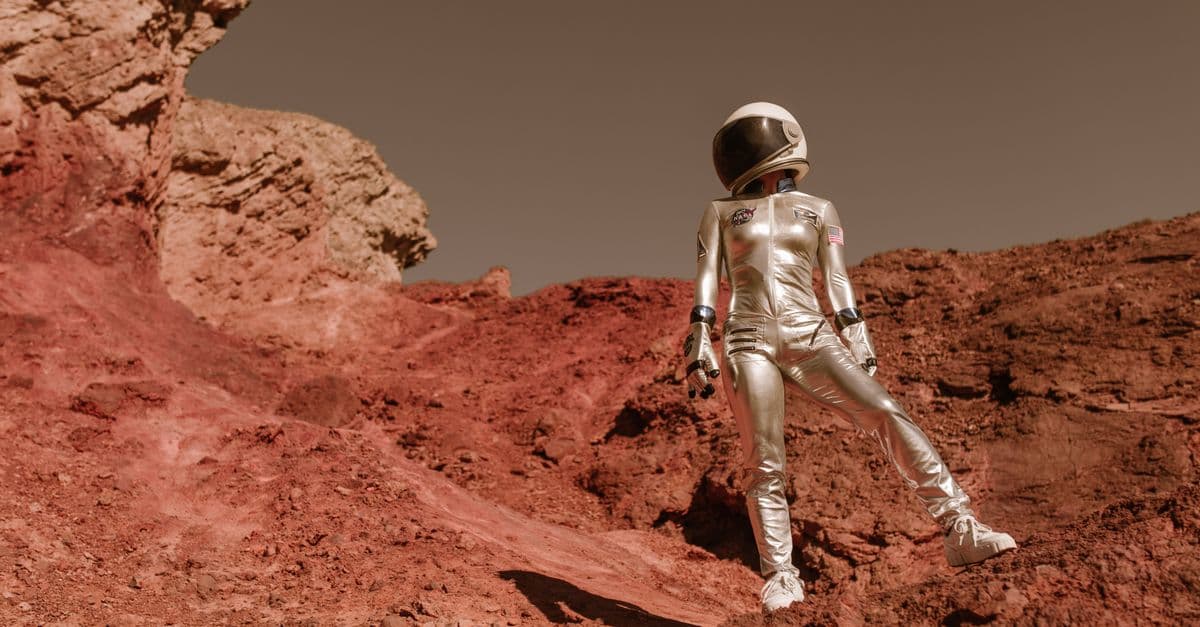
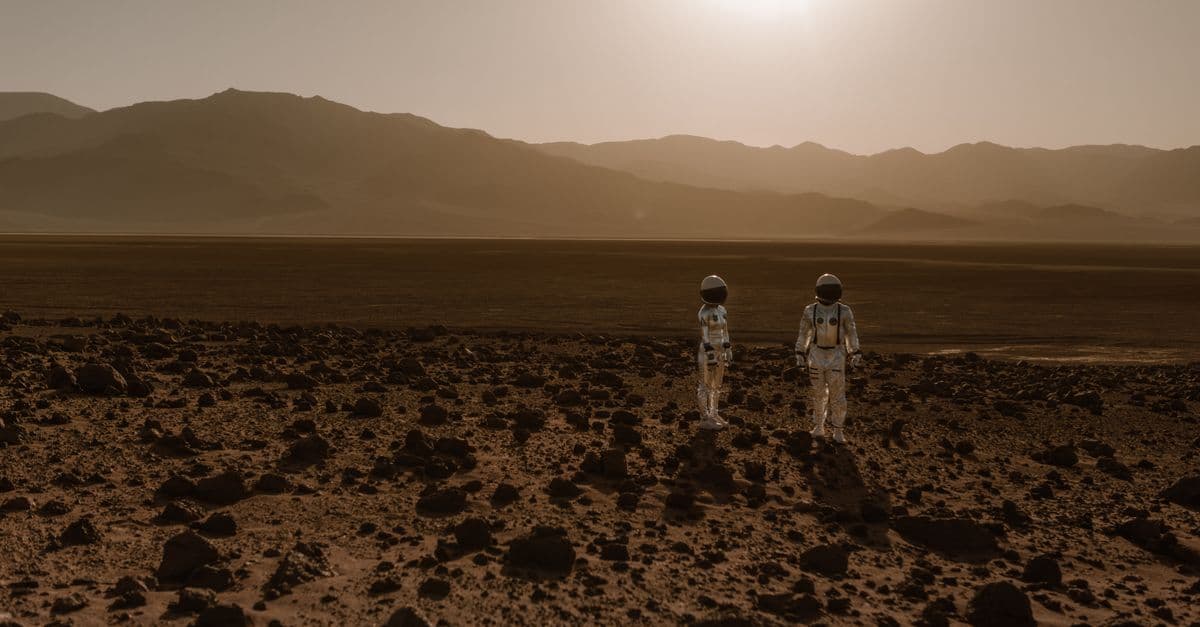
Photo: RDNE Stock project / Pexels
On Mars, the average surface pressure is about 636 pascals, or 0.63 percent of the 101,325 pascals at sea level on Earth. A summer afternoon can climb well above freezing, and the same spot can fall below -80°C by the next dawn. Those two numbers, pressure and temperature, decide whether liquid water can persist, how thick a spacesuit has to be, and how much power a base must spend on heat. This article explains what rovers have measured, why the readings swing the way they do, and what the weather stations on Mars have taught scientists.
Mars by the numbers
Before the explanation, here are the reference values. They come from NASA's Mars fact sheets and from published rover results, and each carries a source.
| Quantity | Value | Source |
|---|---|---|
| Mean surface pressure | 636 Pa (6.36 mb) | NASA Mars fact sheet |
| Seasonal pressure range | 400 to 870 Pa (4.0 to 8.7 mb) | NASA Mars fact sheet |
| Surface air density | about 0.016 kg/m³ | NASA Mars fact sheet |
| Overall temperature range | about -153°C to 20°C (-225°F to 70°F) | NASA Mars facts page |
| Viking 1 site air temperature | minimum 184 K (-89°C), mean about 214 K (-59°C), maximum 242 K (-31°C) | NASA Mars fact sheet |
| Pressure at Jezero Crater, first reading | 718 Pa (predicted range 705 to 735 Pa) | NASA, Perseverance MEDA report |
| Atmosphere by volume | 95.1% CO2, 2.59% N2, 1.94% Ar, 0.16% O2, 0.06% CO | NASA Mars fact sheet |
| Surface gravity | 3.73 m/s² | NASA Mars fact sheet |
| Year length | 686.98 Earth days (about 669.6 sols) | NASA Mars fact sheet and facts page |
| Mean distance from the Sun | 228 million km (1.5 AU) | NASA Mars facts page |
One caution is needed. Figures as low as -195°C circulate online for the polar extreme. NASA's published range for the planet bottoms out at about -153°C, and that is the figure used here.
Why Mars is so cold
Two things drive the chill, and thin air is only one of them. The first is distance. At a mean distance of 1.5 astronomical units, Mars receives sunlight at an intensity of about 1 divided by 1.5 squared, or roughly 43 to 44 percent of what Earth gets. NASA's fact sheet lists the mean solar irradiance at Mars as 586.2 watts per square meter, against 1,361 for Earth, which is about 43 percent. That agrees with the distance calculation and shows that even a perfect greenhouse blanket would start from a handicap.
The second is the blanket itself. Earth's air holds heat. Mars's air barely does. The atmosphere is 95 percent carbon dioxide, which is a greenhouse gas, but there is so little of it that its effect is small. An analogy helps: Earth wraps itself in a thick down quilt, Mars in a sheet of tissue paper. Both are made of insulating material. Only one has enough of it to matter.
The comparison can be made quantitative. The mass of air above each square meter of ground equals the surface pressure divided by gravity. For Mars that is 636 pascals divided by 3.73 meters per second squared, about 170 kilograms per square meter. For Earth it is 101,325 divided by 9.81, about 10,300 kilograms per square meter. Earth has roughly 60 times more air above every patch of ground. These are calculated values from the numbers in the table above, and they show how much less thermal inertia the Martian atmosphere has.
What the thin atmosphere does and does not do
A thin atmosphere does not make Mars cold in the way many people assume. It makes Mars extreme. Because there is so little air to store heat, the ground heats and cools almost on its own terms. When the Sun is up the surface warms quickly. When it sets, there is no thick atmospheric reservoir to release warmth, and the temperature drops fast.
Our article on what is in the Martian atmosphere covers the gases in detail, and why Mars lost most of its atmosphere covers how it came to be this thin.
A day on Mars: the temperature swing
Curiosity landed in Gale Crater in 2012 and has been recording weather ever since. JPL's summary of its first two Martian years reports that the air temperature near the rover usually plummets by more than 55°C (100 Fahrenheit degrees) between the afternoon high and the overnight low. An Astronomy magazine report on REMS results from Curiosity's second Martian year described air temperatures as warm as 15.9°C on a summer afternoon.
Perseverance landed in Jezero Crater on February 18, 2021, and its weather station first powered on about a day later, on February 19. NASA reported a surface temperature just below -20°C when the system powered on, falling to -25.6°C within 30 minutes. On sols 43 and 44, a high of -22°C and a low of -83°C was recorded. The Viking 1 lander of the 1970s saw a similar diurnal range, with air temperatures between -89°C and -31°C at its site.
Why the swing is so large
Imagine two pans of water, one a thin film and one a deep pot, heated on the same stove and then switched off. The film heats faster and cools faster. Mars's atmosphere is the film. Earth's is the pot.
The ground matters too. Rover weather stations measure ground temperature and air temperature separately because the two can behave differently: the surface is in direct contact with sunlight and with the cold night sky, while the air above it responds more slowly.
For comparison with Earth, the lowest temperature directly recorded on Earth is -89.2°C, measured at Vostok Station in Antarctica on July 21, 1983. The Viking 1 minimum of -89°C is a similar value, although it was a routine nighttime low at that site instead of a record.
The seasonal cycle
Mars has seasons for the same reason Earth does: its axis is tilted. NASA notes that Mars's tilt is similar to Earth's. The reasons seasons arise from tilt are explained in why we have seasons, and they apply to Mars as well. A Martian year lasts 686.98 Earth days, nearly two Earth years, so each season runs roughly twice as long as its terrestrial counterpart.
Mars adds a second influence that Earth mostly lacks: an elliptical orbit. NASA lists an orbital eccentricity of 0.0935, a closest approach of 206.65 million kilometers, and a farthest distance of 249.26 million kilometers. JPL notes that this elongated orbit makes southern-hemisphere fall and winter longer and colder than they would be on a circular orbit. By the same logic, southern summer is shorter and warmer, because Mars is moving fast and is close to the Sun.
Seasons at the equator
Gale Crater sits in the southern hemisphere near the equator, so it feels the seasonal shift through the changing Sun angle and the pressure cycle instead of through polar darkness. JPL's data chart shows the temperatures averaged over one-twelfth of a Martian year, with individual days varying around those averages. Gale Crater is colder than Los Angeles through the whole year, and its daily highs and lows vary much more.
Seasonal change also stirs the dust. NASA reports that dust storms are common in southern spring and summer, when Mars is closest to the Sun. The relationship between orbit, season, and dust is detailed in our article on Mars dust storms.
The pressure cycle: a planet that inhales and exhales
The atmosphere of Mars does not stay put. Each year a large fraction of it moves between the air and the polar caps. Carbon dioxide freezes onto the winter cap as dry ice and returns to the air when the cap warms.
NASA Goddard's summary of the Mars Orbiter Laser Altimeter results states that up to about one-third of Mars's thin carbon dioxide atmosphere freezes out at the polar caps in winter. The laser altimeter on Mars Global Surveyor measured maximum winter deposits of about 1.5 to 2 meters of dry-ice "snow" near both poles, according to a team led by David Smith of NASA Goddard in the journal Science on December 7, 2001. The team could detect height changes of about 10 centimeters.
Two dips in pressure
JPL's description of Curiosity's first two Martian years says that the largest pressure dips occur during the long southern-hemisphere winters, when carbon dioxide freezes into the south polar cap. A smaller dip comes in southern summer, as carbon dioxide is captured by the smaller north polar cap. Pressure also varies within each sol.
The NASA fact sheet's seasonal range of 4.0 to 8.7 millibars (400 to 870 pascals) represents the range of recorded values across sites and seasons. Mars's pressure is not a single number. It depends on where you are, what time of year it is, and the elevation.
One long record anchors the picture. JPL notes that Viking Lander 1 measured atmospheric pressure for 2,436 sols, about 3.6 Mars years, longer than any other Mars lander. That multiyear data set is how scientists first pinned down the seasonal swing.
A comment on an often-repeated number: the Astronomy magazine report on Curiosity's REMS data describes seasonal pressure swings of about 25 percent. The range in NASA's fact sheet is wider. The two describe different things, one a single site's cycle and the other the spread across sites and seasons, so when a single number matters, check which one it is.
Why elevation matters
Pressure on any planet falls with altitude. NASA gives a scale height of 11 kilometers for Mars, which means the pressure drops by a factor of about 2.7 for every 11 kilometers of climb. Low-lying places therefore have higher pressure than the 636 pascal mean, which is defined at the mean radius of the planet, and high ground has less. Perseverance's first reading in Jezero, 718 pascals, was within the 705 to 735 pascal range that engineers had predicted.
The water connection
The triple point of water, the unique pressure and temperature at which ice, liquid, and vapor can coexist, is at about 612 pascals. Mars's average surface pressure of 636 pascals is only slightly above that value, which is one reason liquid water on Mars is so marginal. At lower pressures, ice does not melt; it turns directly to vapor, a process described in our explainer on phase changes. Even where pressure permits liquid, the temperature usually does not.
Humidity: dry air that still feels "wet" at night
Mars is extremely dry in absolute terms. JPL's Curiosity summary says that even at the highest points in Gale Crater's summers, water vapor is far below one percent of typical Earth levels. Yet the same summary reports that nighttime relative humidity in winter can exceed 60 percent, while daytime relative humidity is near zero.
That looks contradictory until you remember what relative humidity measures. It is the amount of water vapor in the air compared with the most the air can hold at that temperature. Cold air can hold very little water, so a trace of vapor can still approach saturation after dark. Think of a tiny cup that overflows with a few drops: the cup is small, not the amount of water large.
The practical meaning is limited. There is not enough water vapor to form rain, and the atmosphere is not a significant source of water for a base. It does, however, matter for chemistry at the surface and for how rovers interpret signals such as the methane Curiosity detected.
How the measurements are made
REMS on Curiosity
Curiosity carries the Rover Environmental Monitoring Station, or REMS. NASA describes it as a weather station that measures atmospheric pressure, temperature, humidity, wind, and ultraviolet radiation. Two bolt-like booms on the mast measure wind, ground temperature, and humidity. The UV sensor sits on the rover deck about 1.5 meters above the ground. The pressure sensor is inside the rover body and connects to the outside air through a dust-protected tube.
REMS is built to survive from -130°C to +70°C. It records at least five minutes of data at one reading per second each hour of every sol, which adds up to a baseline of about two hours per sol, and it can run for up to three hours per sol.
MEDA on Perseverance
Perseverance carries the Mars Environmental Dynamics Analyzer, MEDA, which weighs about 5.5 kilograms (12 pounds). NASA describes it as monitoring six atmospheric conditions, namely wind, pressure, humidity, air temperature, ground temperature, and radiation, plus dust levels. The principal investigator is José Antonio Rodríguez-Manfredi of the Centro de Astrobiología in Madrid. NASA's first report said MEDA's wind sensors recorded gusts of about 10 meters per second early in the mission.
Having two stations in two different craters, roughly 3,700 kilometers (2,300 miles) apart, lets scientists separate local effects from planet-wide trends. For the rover's broader science goals, see our article on Perseverance and the search for ancient life.
The lander legacy
Viking in the 1970s provided the first long weather records from the surface. Later landers and rovers added data from other latitudes and seasons. The seasonal pressure cycle seen first by Viking has since been confirmed repeatedly, which is why scientists trust it.
What the numbers mean for people and machines
Pressure: why a suit is not optional
At 636 pascals, the atmosphere is about 0.6 percent of Earth's sea-level pressure. No human can breathe it, and the pressure is low enough that unprotected body fluids would be at risk. A person on the surface needs a pressurized suit or habitat. The challenges of living there are weighed in our overview of whether humans can live on Mars.
Temperature: the heating problem
A habitat holding a comfortable 20°C would face an outside air temperature that, at the Viking 1 site, averaged about -59°C, a difference of roughly 79 degrees. On a cold night at -89°C the difference would be about 109 degrees. Heat loss grows with that gap, so insulation and an energy source for heating are central design needs. How large a share of a base's power budget heating would take depends on the design, and published estimates vary, so no single figure is given here.
Machines face the same problem. Rovers use heaters, insulation, and, in the case of Curiosity and Perseverance, waste heat from a plutonium-powered generator. For the general engineering of cold survival in space, see how spacecraft survive extreme temperature swings.
The seasonal pressure cycle and dust
Pressure shifts affect more than comfort. The seasonal movement of carbon dioxide influences winds, and NASA says the thickening of the atmosphere from evaporating polar frost helps keep dust suspended. That ties directly to the dust storm season described above.
Radiation as the companion problem
A thin atmosphere offers little protection from cosmic radiation as well. Curiosity's Radiation Assessment Detector, which sits on the rover deck, measures energetic particles at the surface. The findings are covered in our article on radiation measurement on Mars. Taken together, pressure, temperature, dust, and radiation make up the environmental checklist described in our engineering overview of Mars settlement and in the broader Mars explainer.
The first Mars helicopter faced these conditions at a smaller scale. Ingenuity had to fly in air about 1.3 percent as dense as Earth's, and it spent much of its energy on keeping its electronics warm through winter nights that NASA has said can plunge to about -90°C.
Earth and Mars side by side
A single table makes the contrast clearer than any paragraph. Every row either comes from NASA's fact sheets or is calculated from them, as noted.
| Quantity | Earth | Mars | Mars as a share of Earth |
|---|---|---|---|
| Surface pressure | 101,325 Pa | about 636 Pa | about 0.63% |
| Air above each square meter (pressure divided by gravity) | about 10,300 kg | about 170 kg | about 1.7% (calculated) |
| Surface gravity | 9.81 m/s² | 3.73 m/s² | about 38% |
| Sunlight at mean distance | 1 AU | 1.5 AU | about 43% (NASA irradiance figures) |
| Length of one solar day | about 24 hours | 24.66 hours | about 103% |
| Length of one year | 365 days | 687 days | about 188% |
Notice what the table says about gravity. Mars's gravity is 38 percent of Earth's, but its air is only 0.63 percent as pressurized. A planet with weak gravity can still hold a thick atmosphere, as Saturn's moon Titan shows, so the thinness of Mars's air is a matter of history and loss, not of the planet's size alone. That history of atmospheric loss is the subject of its own article, linked above.
Reading a Mars weather report: units and jargon
Mars data come in units that look strange at first. A short glossary removes most of the confusion.
- Pascal (Pa) and millibar (mb): both measure pressure. One millibar equals 100 pascals, so NASA's 6.36 mb is the same as 636 Pa. Weather agencies on Earth often use hectopascals, which are identical to millibars.
- Kelvin (K): a temperature scale that starts at absolute zero. To convert to Celsius, subtract 273.15. NASA's Viking 1 minimum of 184 K is therefore about -89°C.
- Sol: a Martian solar day, about 24.66 hours. Rover mission teams count days in sols, and many published results are indexed by sol number from landing.
- Martian year: about 687 Earth days, or roughly 669.6 sols. Curiosity's data are often grouped by Martian year so that the same season in different years can be compared.
- Seasonal cycle: the pattern of change that repeats each Martian year. When scientists say a value is seasonal, they mean it returns on a schedule set by orbit and tilt.
A second point of caution is about "average" temperatures. The NASA fact sheet lists a mean of about 214 K at the Viking 1 site, but that figure belongs to one place at one latitude and elevation. Planet-wide averages differ, and the extremes lie well outside any mean.
What is still not known
Several questions remain open. Multi-year records from Viking, Curiosity, InSight, and Perseverance show a repeating annual cycle, but a few Martian years is a short window for judging long-term climate trends, so the data cannot yet say whether the cycle is changing slowly. The size and permanence of the carbon dioxide reservoirs, including the amount locked in ice caps and in the ground, remain research topics. And the processes that connect dust storms to the pressure cycle are being refined with each new storm season, as discussed in the dust storm article linked earlier.
What people get wrong about Mars weather
"Mars is colder than Antarctica." Not always. A summer afternoon near the equator can reach above freezing, while Antarctic winter air can fall to -89.2°C. The difference is that Mars cools off dramatically every night.
"The coldest place on Mars is -195°C." NASA's range goes down to about -153°C. The -195°C figure is not supported by NASA's published data.
"Pressure is one-sixteenth of Earth's." Mars's mean pressure is about 0.63 percent of Earth's, or roughly 1 part in 160.
"The atmosphere is basically a vacuum." It is thin but not empty. Wind, clouds, frost, and dust storms all occur, and the pressure cycles measurably with the seasons.
"Closer to the Sun means warmer." Mars is closest to the Sun, at perihelion, during southern spring and summer, which does help warm the southern hemisphere. But the thin air means that warmth is not retained. Orbit changes the average heating; atmosphere decides how long it stays.
Frequently Asked Questions
Q: What is the temperature on Mars? A: NASA gives an overall range of about -153°C to 20°C (-225°F to 70°F). At the Viking 1 site, air temperatures ran from -89°C to -31°C. Curiosity often sees air temperature fall by more than 55°C between afternoon and night.
Q: What is the air pressure on Mars? A: The mean surface pressure is about 636 pascals, which is 0.63 percent of Earth's sea-level pressure. It varies seasonally from about 400 to 870 pascals, and it depends on elevation and site.
Q: Why does Mars's air pressure change with the seasons? A: Carbon dioxide freezes onto the polar caps in winter and returns to the air in warm seasons. Up to about one-third of the atmosphere freezes out in winter, according to NASA Goddard's analysis of laser altimeter data.
Q: Can liquid water exist on Mars's surface? A: Only marginally. Mars's average pressure is slightly above water's triple point of about 612 pascals, but the temperature is usually far below freezing, and in the lowest pressures ice vaporizes without melting.
Q: Is the air on Mars humid? A: In absolute terms it is extremely dry, with water vapor far below one percent of typical Earth levels. In cold winter nights relative humidity can exceed 60 percent because cold air can hold so little vapor.
Q: How do rovers measure the weather on Mars? A: Curiosity carries REMS, which records pressure, temperature, humidity, wind, and ultraviolet radiation. Perseverance carries MEDA, which monitors six atmospheric conditions plus dust. REMS records on a fixed hourly schedule each sol.
The takeaway
Mars's thin air, not its distance from the Sun, is what makes its weather extreme. With about 60 times less air above every square meter than Earth, the ground heats and cools almost unchecked, so the temperature can drop more than 55°C between afternoon and night and the entire atmosphere can shift by a third as carbon dioxide cycles through the polar caps. Rovers have turned those facts into multiyear weather records, and the records are why engineers know what a suit, a heater, or a rotor has to survive. A single number for Mars's temperature or pressure is always an oversimplification, because both change with place, hour, and season.
Read next:
- Dust Storm Impact Research: Mars Global Storms and Settlement Challenges
- Atmospheric Composition Studies on Mars: Understanding Thin Air
- Radiation Measurement on Mars: Health Risks for Settlement
Sources:
- NASA Mars Fact Sheet (pressure, density, temperature, orbit, composition): nssdc.gsfc.nasa.gov
- NASA, "Mars Facts" (temperature range, year length, mean distance): science.nasa.gov/mars/facts
- JPL/NASA Photojournal, "Seasonal Cycles in Curiosity's First Two Martian Years": science.nasa.gov
- NASA, "NASA's First Weather Report from Jezero Crater on Mars," April 6, 2021: nasa.gov
- NASA, Curiosity science instruments (REMS, RAD, DAN): science.nasa.gov
- NASA Goddard, "Seasonal CO2 Snow on Mars" (MOLA results; D. E. Smith et al., Science, December 7, 2001): science.gsfc.nasa.gov
- Astronomy magazine, report on REMS results from Curiosity's second Martian year: astronomy.com
- NASA, "Martian Dust Storm Grows Global; Curiosity Captures Photos of Thickening Haze," June 20, 2018: nasa.gov
Follow new articles
Add SciHub101 to your feed reader to see new science and technology stories.
About the Author
SciHub101 is an independent science and technology publication founded and edited by Buğra Sözeri, a software engineer and app developer based in Türkiye. AI tools assist with drafting and research. Source documentation in the existing archive is uneven, and articles are being reviewed and corrected. The Editorial Team byline identifies editorial responsibility; it does not certify specialist or independent human review. Where we compare products, anything built by our own team is labelled as such — see the editorial guidelines and About page for how corrections and disclosures work.
Related Articles
Water Evidence in Martian Rocks: Mars' Watery Past
Orbiters and rovers have read Mars' wet history in clay minerals, sulfate salts, river deltas, and lake mudstones. Here is what each clue shows and where it stops.

Radiation Measurement on Mars: Health Risks for Settlement
Curiosity's radiation detector has logged the Martian surface dose since August 2012. Here is what it measured, what that means for human health, and how much shielding settlers would need.
Curiosity Rover: Methane Mystery on Mars
NASA's Curiosity rover detected methane spikes in Mars' atmosphere—evidence of possible microbial life or geological processes that challenge understanding of the Red Planet.
Atmospheric Composition Studies on Mars: Understanding Thin Air
Mars' atmosphere is about 95% carbon dioxide at roughly 0.6% of Earth's surface pressure. Rover and orbiter measurements show what is in it, how it cycles with the seasons, and what its trace gases and isotopes say about the air Mars lost.
Dust Storm Impact Research: Mars Global Storms and Settlement Challenges
Mars dust storms can wrap the whole planet, as the 2018 storm did. Here is how they start, what they did to Opportunity and Curiosity, and what they mean for future bases.
Martian Soil Analysis: Mars Geology from Rover Studies
Rover soil analysis shows Mars' surface is crushed basalt, oxidized iron, water-bearing minerals, and perchlorate salt. Here is what each finding means.