What Is the Circumgalactic Medium? The Invisible Halo Around Every Galaxy
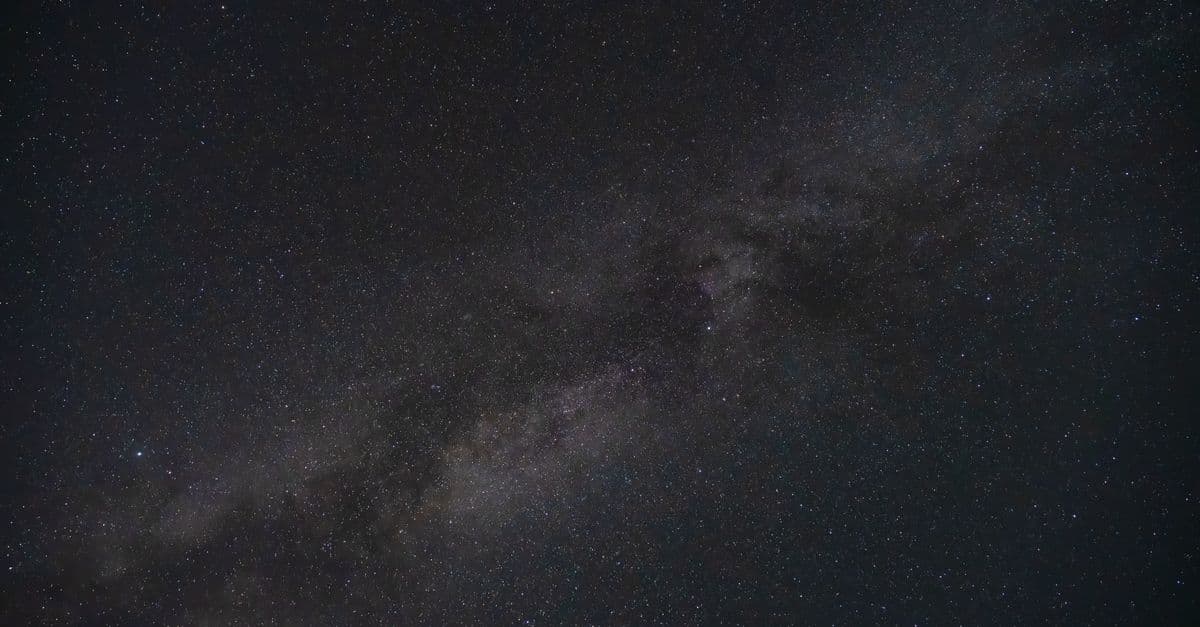
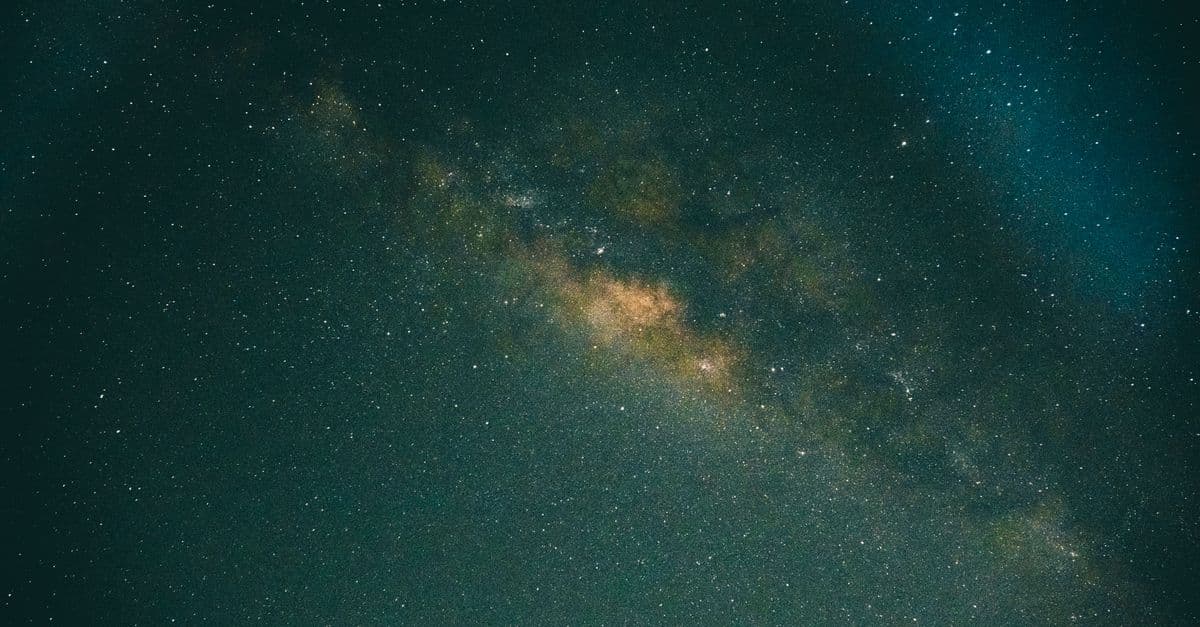
Photo: foad shariyati / Pexels
A photograph of a galaxy shows its stars and glowing gas, and it is easy to take that as the whole object. It is not. Surrounding the visible disk is the circumgalactic medium (CGM), a tenuous halo of gas that extends hundreds of thousands of light-years outward and is almost too faint to see directly. Astronomers mostly study it by the shadows it casts on light from distant quasars. The CGM matters because every atom that enters or leaves a galaxy has to cross it, so it sets how much fuel a galaxy has for making stars.
Defining the circumgalactic medium
The CGM is the gas that lies beyond a galaxy's disk and interstellar medium but inside its virial radius, the boundary of the galaxy's dark matter halo. That is the definition used by Jason Tumlinson, Molly Peeples, and Jessica Werk in their 2017 Annual Review of Astronomy and Astrophysics article on the subject (Tumlinson, Peeples, and Werk 2017). It sits between two better-known regions: the interstellar medium (ISM), the dense gas between stars inside the galaxy, and the intergalactic medium (IGM), the thin gas that fills the space between galaxies. For background on the first, see What Is the Interstellar Medium.
Think of a city and its suburbs. The ISM is the downtown core, packed and busy. The IGM is open countryside. The CGM is the sprawl in between, where supplies arrive, waste is dumped, and some of what leaves town eventually comes back. Nothing about the boundaries is sharp, which is why astronomers define the outer edge by the dark matter halo rather than by any visible feature.
How big is that? For a galaxy like the Milky Way, whose halo has a mass of about 10¹² solar masses, the virial radius is a few hundred kiloparsecs. One kiloparsec is about 3,260 light-years, so 150 kiloparsecs, a distance that comes up often in CGM work, is roughly 490,000 light-years. Observations of the Andromeda Galaxy indicate a CGM spanning about 1.3 to 2 million light-years, with a more turbulent inner shell about half a million light-years across and a hotter, smoother outer shell (Wikipedia: Warm-hot intergalactic medium).
A multiphase gas
The CGM is not a single gas at a single temperature. Observations and simulations describe a multiphase medium with complex dynamics and a range of ionization states (Tumlinson, Peeples, and Werk 2017). The two broad components that simulations most often highlight are a cool phase near 10⁴ kelvin, thought to take the form of clouds, and a hot phase near 10⁶ kelvin that surrounds them (Wikipedia: Warm-hot intergalactic medium).
| Phase | Approximate temperature | How it is usually seen | What it tells us |
|---|---|---|---|
| Cool | about 10⁴ K | Ultraviolet absorption by hydrogen and low-ionization metals | Clouds that may be falling in or being blown out |
| Warm | a few 10⁵ K | Absorption by five-times-ionized oxygen (O VI) | Gas being heated by shocks or cooling from hotter gas |
| Hot | about 10⁶ K and above | Faint X-ray emission and absorption | Gas near the halo's virial temperature |
The temperature of the hot phase tracks the depth of the gravitational well. A bigger halo heats infalling gas more, so the hot phase of a massive elliptical galaxy is hotter than that of a spiral. The origin of the hot gas also differs by galaxy type. In ellipticals, simulations suggest it comes mainly from Type Ia supernova and aging-star ejecta, while in disk galaxies it comes mainly from Type II supernova material carried out by outflows (Wikipedia: Warm-hot intergalactic medium).
How astronomers see something this faint
Imagine trying to detect a thin fog around a distant lamp. The fog scatters almost no light of its own, but a car's headlights shining through it would show the haze clearly. Astronomers use the same trick. A distant quasar (a galactic nucleus powered by a feeding black hole, covered in What Are Quasars) acts as the headlight, and the CGM of a foreground galaxy is the fog.
Quasar absorption spectroscopy
When quasar light passes through a gas cloud, atoms in the cloud absorb specific wavelengths and leave dark lines in the spectrum. Each element and ionization state absorbs at its own wavelengths, so the pattern of lines reveals what the gas is made of, how much of it lies along the line of sight (the column density), its temperature range, and how fast it is moving. The principles are explained in What Is Spectroscopy.
The spacing between the foreground galaxy and the quasar sightline, measured in kiloparsecs on the sky, is called the impact parameter. Collecting many galaxy-quasar pairs at different impact parameters lets astronomers map how the gas changes with distance from the galaxy. The method has a built-in limitation: each quasar probes a single narrow line, so the halo of any one galaxy is sampled at one point, and the picture comes from statistics across many galaxies.
The ultraviolet lines that matter most for nearby galaxies are absorbed by Earth's atmosphere, so they have to be observed from space. The Cosmic Origins Spectrograph (COS), installed on the Hubble Space Telescope in 2009, made it practical to measure them at scale.
X-rays for the hottest gas
Gas at about a million kelvin and above emits and absorbs X-rays, but the emission is extremely faint. A direct detection around any single galaxy is difficult, so astronomers stack images of many similar galaxies to build up the signal. A 2026 study stacked X-ray images and spectra of nearby galaxies similar to the Milky Way from the SRG/eROSITA all-sky survey and reported significant diffuse emission out to at least about 50 kiloparsecs, with a radial profile and total gas amount consistent with predictions from the IllustrisTNG simulation (He and Li, arXiv 2601.16499). A related modeling study found that within about 40 kiloparsecs of the galaxy center, hot CGM gas and X-ray point sources each contribute 40 to 50 percent of the stacked emission (arXiv 2504.03840). That detail illustrates why this work is hard: the signal has to be separated from compact X-ray sources in the galaxy itself.
| Method | What it detects | Strength | Main limit |
|---|---|---|---|
| Quasar UV absorption | Cool and warm gas, metals | Very sensitive to low column densities | One sightline per galaxy; needs a bright background quasar |
| X-ray emission (stacked) | Hot gas | Probes the hottest, most massive phase | Faint; needs thousands of galaxies stacked |
| X-ray absorption | Hot gas along a sightline | Sensitive to low densities | Needs very high spectral resolution |
| Fast radio burst dispersion | Total ionized gas along a path | Counts all ionized baryons, whatever the temperature | Needs many bursts with known host galaxies |
The COS-Halos survey: the first large census
The landmark survey of the CGM is COS-Halos, which used Hubble's Cosmic Origins Spectrograph to observe quasars behind a sample of galaxies at redshift of about 0.2 (a look-back time of a few billion years). Two results from the project shaped the field.
Oxygen-rich halos around star-forming galaxies
In a 2011 paper in Science, Tumlinson and colleagues surveyed the outskirts of 42 galaxies. They found large halos of ionized oxygen, about 150 kiloparsecs across, around star-forming galaxies, and much less of it around galaxies with little or no star formation (Tumlinson et al. 2011). The authors concluded that the ionized CGM holds a substantial mass of heavy elements and gas, possibly exceeding the gas reserves in the galaxies themselves.
The contrast between star-forming and passive galaxies carries a message. Oxygen is made in massive stars and spread by supernovae, so a star-forming galaxy is expected to eject a lot of it. A galaxy that has stopped forming stars either lost that gas, or the gas changed state to something these lines cannot detect. The authors read the pattern as evidence that the halo gas is removed or transformed when star formation shuts down.
How much cool gas is out there?
A follow-up analysis by Werk and colleagues used 44 gaseous halos within 160 kiloparsecs of galaxies of about one L* (a standard luminosity for a Milky Way-like galaxy) at redshift near 0.2. It found that the cool gas, at about 10⁴ kelvin, has a mass of more than 6.5 × 10¹⁰ solar masses within the virial radius, a lower limit (Werk et al. 2014). For comparison, the stellar mass of a Milky Way-sized galaxy is a few times 10¹⁰ solar masses, so the cool CGM alone is comparable to or larger than the stars.
Two other findings from that paper stand out.
- The cool gas is almost entirely ionized. More than 99 percent of the hydrogen is in the ionized state, mainly kept that way by the ultraviolet background from all the quasars and galaxies in the universe.
- A pressure puzzle. The derived densities are much lower than predicted by standard two-phase models, in which cool clouds sit in pressure balance with a hot corona. Something about that simple picture is wrong or incomplete.
Including a warm-hot phase traced by O VI, the CGM holds at least half of the baryons thought to be missing from 10¹² solar mass halos, according to the same abstract.
| Result | Number | Source |
|---|---|---|
| Galaxies in the 2011 survey | 42 | Tumlinson et al. 2011 |
| Extent of oxygen halos | about 150 kpc | Tumlinson et al. 2011 |
| Halos in the 2014 analysis | 44, within 160 kpc | Werk et al. 2014 |
| Cool CGM mass (lower limit) | more than 6.5 × 10¹⁰ solar masses | Werk et al. 2014 |
| Ionized fraction of cool gas | over 99% | Werk et al. 2014 |
Where the metals went
Astronomers can calculate how many heavy elements (which astronomers call metals) a galaxy has made over its lifetime, based on how many stars have formed and how much each stellar generation yields. Then they add up what they can find inside the galaxy. The two numbers do not match.
A budget analysis by Peeples and colleagues in 2014 found that a surprisingly constant 20 to 25 percent of the metals produced remain in a galaxy's stars, interstellar gas, and interstellar dust, with little dependence on galaxy stellar mass. The study covered galaxies with present-day stellar masses from 10^9.3 to 10^11.6 solar masses. For galaxies of about 10¹⁰ solar masses, the authors estimated that around 40 percent of the metals produced could be accounted for out to 150 kiloparsecs (Peeples et al. 2014, via arXiv listing). The rest has not been found, and some of it has presumably been driven beyond the CGM into the IGM.
The origin of the missing metals makes physical sense. Stars forge heavy elements (What Is Nucleosynthesis), and supernovae and winds from young stars eject them. The depth of a galaxy's gravity well then decides how much stays: a dwarf galaxy loses most of what it makes, and a massive one retains more.
Most of the heavy elements a galaxy makes are not inside it. Peeples and colleagues found that only 20 to 25 percent of the metals produced remain in stars, gas, and dust. (Source: Peeples et al. 2014.)
The baryon cycle: how gas moves through the halo
The CGM is the site of what astronomers call the baryon cycle, the continuous exchange of gas among the IGM, the CGM, and the galaxy. It has four main parts.
- Inflow. Fresh gas arrives from the cosmic web, the network of filaments that connects galaxies (The Cosmic Web). Simulations show inflows arranged roughly along the galaxy's major axis, in the plane of the disk, and extending to 100 kiloparsecs or more (Wikipedia: Warm-hot intergalactic medium).
- Star formation. Gas that reaches the disk cools, collapses, and forms stars.
- Outflow. Supernovae and, in some galaxies, active galactic nuclei push enriched gas out. Simulated outflows run along the minor axis in a roughly biconical pattern. For the physics of how a stellar population does this, see What Is Stellar Feedback and What Are Active Galactic Nuclei.
- Recycling or escape. Some of the ejected gas stalls in the halo and falls back, a process astronomers call recycling. Gas that moves fast enough escapes to the IGM.
The balance among the four parts determines a galaxy's star formation history and chemical makeup. A galaxy with strong inflow and weak outflow builds stars quickly and keeps its metals. A galaxy with strong feedback may eject much of its gas, and the CGM acts as the buffer between the two extremes. Recycling affects the metallicity of the ISM, tying the halo to the well-known relation between galaxy mass and metal content (Wikipedia: Warm-hot intergalactic medium). A fuller account of how all this shapes galaxies over time is in What Is Galaxy Evolution.
Why this matters for quenching
Galaxies fall into two broad classes: blue star-forming ones and red ones that have almost stopped. The COS-Halos contrast in oxygen between the two classes suggests the CGM plays a role in the switch. If the halo stops supplying fresh gas, or if feedback heats it so it cannot cool, the star formation fuel supply ends. The details are an active area of research. What is firmly known from observation is the pattern of oxygen around the two types, and that the CGM is where simulations place the controlling physics.
The missing baryon problem
The universe's mix of ordinary matter (baryons) is known from the cosmic microwave background and from the abundance of light elements made in the Big Bang. When astronomers add up all the baryons they can see in stars and galaxies today, they find a shortfall. That shortfall is the missing baryon problem.
The CGM holds part of the answer, and the warm-hot intergalactic medium (WHIM) holds more. The WHIM is a web of sparse plasma at about 10⁵ to 10⁷ kelvin that is believed to hold 40 to 50 percent of the baryons at the present epoch, with expected densities of 1 to 10 particles per cubic meter (Wikipedia: Warm-hot intergalactic medium). Several detections point the same way.
- In May 2010, the Chandra X-ray Observatory detected a giant WHIM reservoir along the Sculptor Wall, about 400 million light-years away.
- In 2018, observations of highly ionized oxygen outside galaxies appeared to confirm simulated mass distributions of the WHIM (Nicastro et al., Nature).
- In 2020, dispersion measurements of fast radio bursts appeared to confirm that the missing baryonic mass lies in the WHIM (Macquart et al., Nature).
The fast radio burst method is conceptually different from the others. A radio pulse is stretched in time as it passes through ionized gas, and the amount of stretching counts the electrons along the path regardless of temperature. That makes it a census tool, not a tracer of one phase.
The dividing line between the CGM and the WHIM is partly a matter of convention. Gas inside the virial radius is called CGM, and gas beyond it, in filaments and voids, is called IGM or WHIM. Physically, there is a continuous transition.
The Magellanic Stream: a CGM laboratory in our backyard
The best-studied example of CGM physics near home is the Magellanic Stream, a long ribbon of gas trailing the Large and Small Magellanic Clouds, the two dwarf galaxies that orbit the Milky Way.
Anomalous high-velocity gas was first noted in 1965. In 1972, Wannier and Wrixon identified it as a neutral hydrogen feature, and in 1974 Mathewson and colleagues linked it to the Magellanic Clouds. The stream extends over more than 100 degrees of sky, and a 2010 study found it to be longer than earlier thought (Wikipedia: Magellanic Stream).
What the stream is made of
Neutral hydrogen only tells part of the story. A 2014 survey used 69 Hubble/COS sightlines and found ultraviolet absorption at Magellanic velocities along about 81 percent of them. It put the total gas mass of the Magellanic System at about 2.0 × 10⁹ solar masses, with ionized gas contributing more than twice as much mass as the atomic gas (Fox et al. 2014). The stream is therefore mostly ionized gas, invisible in the 21-centimeter radio line that first revealed it.
How it formed
Early models treated the stream as a tidal feature, but they predicted a leading counterpart that observations did not show. Newer models add ram-pressure stripping, drag from the Milky Way's halo, and gas dynamics. Tidal forces mainly affect the Small Magellanic Cloud, while ram pressure mainly affects the Large Magellanic Cloud. A 2010 study suggested the stream formed when the two Clouds passed close to each other about 2.5 billion years ago (Wikipedia: Magellanic Stream).
The Leading Arm, a set of high-velocity clouds ahead of the Clouds in their orbit, was confirmed by Putman and colleagues in 1998 as connected to them in position and velocity. A 2018 study found its gas resembles the Small Magellanic Cloud's composition more than the Large's. In 2019, a young star cluster called Price-Whelan 1, with low metallicity, was found to belong to the Leading Arm, and its distance suggests the arm is about 90,000 light-years from the Milky Way, about half the earlier estimate.
The stream shows the CGM at work in three ways: a satellite galaxy loses gas to the larger galaxy's halo, the halo interacts with the gas, and the stripped material is on a path to feed the Milky Way. For a wider look at how our galaxy has grown by absorbing smaller ones, see Galactic Cannibalism.
Our own galaxy's halo
The same physics applies to the Milky Way, whose halo is harder to study because we sit inside it. The Milky Way's hot gas is detected through X-ray absorption and emission, but separating the halo's contribution from nearby gas along the same sightline is difficult. Large structures near the center, such as the lobes described in The Fermi Bubbles, show that the galaxy's center can inflate bubbles of energetic gas into its surroundings. The layout of the galaxy itself is covered in What Is the Milky Way.
Studying other galaxies from outside gives a cleaner view than studying our own from inside. That is why the COS-Halos sample, and stacked eROSITA studies of Milky Way-mass galaxies, are central to the field even though the CGM of our own galaxy is a few hundred kiloparsecs away in every direction.
What the CGM is not
A few misunderstandings come up often.
"It is a smooth, uniform atmosphere." It is not. The data point to clumpy, multiphase gas, with cool clouds embedded in a hotter medium and a pressure balance that does not match simple models. The density profile of the cool gas falls with distance roughly as the radius to the power of −0.8 in the Werk analysis, but individual sightlines vary widely.
"It is the same as dark matter." The CGM is ordinary matter. Its extent is defined by the dark matter halo, but the gas is baryonic, made of hydrogen, helium, and traces of heavier elements. For the dark matter side, see Dark Matter and Dark Energy Explained.
"The missing baryon problem is solved." The CGM and WHIM have accounted for a large part of the shortfall, and fast-radio-burst measurements support the picture. The error bars remain wide, though, and measurements of the CGM mass depend on assumptions about ionization and metallicity that are hard to test.
"Quasar spectra give a full map of the halo." Each sightline is a single thread through the halo. The structure of any individual galaxy's CGM is inferred from statistics across many galaxies, plus simulations.
What comes next
The CGM is faint enough that progress depends on new instruments, and the next large step is in X-ray spectroscopy. ESA's NewAthena observatory is planned to launch in 2039 on an Ariane 6.4 rocket to a halo orbit around the Sun-Earth L1 point, with the mission to be proposed for adoption in 2027 (ESA NewAthena factsheet). Its X-ray Integral Field Unit is meant to resolve emission and absorption lines from hot gas that today's instruments can only detect in stacks. A 2025 overview paper describes a redesigned version of that instrument, with a smaller field of view (4 arcminutes instead of 5) and an energy-resolution requirement of 4 eV (arXiv 2502.10866). Plans for any mission this far out can shift, and the dates above reflect the status published in the sources linked here.
On the observation side, the existing approach keeps improving. Larger samples of galaxy-quasar pairs, deeper eROSITA stacks, and more localized fast radio bursts will each tighten the budget of baryons and metals. On the theory side, simulations such as IllustrisTNG already reproduce the broad profile of the hot halo, and the puzzle of the cool gas pressure is a test case for better physical models. Meanwhile, the connection to the larger picture is the distribution of mass throughout the universe, a topic that also relates to how astronomers weigh galaxies.
Frequently asked questions
Q: What is the circumgalactic medium in simple terms? A: It is the gas surrounding a galaxy, outside the stellar disk and its interstellar medium but inside the galaxy's dark matter halo. It extends for hundreds of thousands of light-years, is made of hydrogen, helium, and heavier elements, and is the zone where gas flows into and out of the galaxy.
Q: How do astronomers detect the circumgalactic medium? A: The main method is quasar absorption spectroscopy: a background quasar's light passes through the halo, and atoms in the gas absorb specific wavelengths. Hot gas can also be seen in stacked X-ray images, and fast radio bursts can measure the total ionized gas along their path.
Q: How much gas does the circumgalactic medium hold? A: For galaxies like the Milky Way, the COS-Halos analysis put the cool gas alone at more than 6.5 × 10¹⁰ solar masses, a lower limit that is comparable to or larger than the stellar mass. With a warm-hot phase included, the CGM holds at least half of the baryons missing from such halos.
Q: Why is the circumgalactic medium important for galaxy evolution? A: Every flow of gas into or out of a galaxy passes through it. It supplies fuel for star formation, catches and recycles supernova outflows, and stores a large share of the heavy elements a galaxy produces. Changes in the halo are thought to be connected to whether a galaxy keeps forming stars.
Q: What are the missing metals in galaxies? A: Only 20 to 25 percent of the metals a galaxy has produced remain in its stars, interstellar gas, and dust, according to a 2014 budget analysis. About 40 percent could be accounted for out to 150 kiloparsecs for galaxies near 10¹⁰ solar masses. The rest has likely been pushed farther out.
Q: What is the Magellanic Stream? A: It is a long ribbon of gas stripped from the Large and Small Magellanic Clouds as they orbit the Milky Way. A 2014 Hubble survey estimated the total gas mass of the Magellanic System at about 2 × 10⁹ solar masses, with ionized gas contributing more than twice as much mass as atomic gas. It is the closest example of CGM interactions.
Q: What is the difference between the circumgalactic medium and the intergalactic medium? A: The CGM is the gas inside a galaxy's virial radius, bound to its dark matter halo. The intergalactic medium is the gas beyond, in filaments and voids between galaxies. The boundary is a convention, since the gas changes smoothly across it.
The takeaway
A galaxy is better described as a dense core inside a much larger gas system than as an island of stars. The visible disk holds only a fraction of the baryons and a minority of the metals that the galaxy has made. The rest sits in a halo that is hard to see, and the halo is where the decisions about star formation are made: how much fuel arrives, how much leaves, and how much returns.
The measurements so far, from Hubble's absorption surveys to eROSITA's stacked X-ray images, have turned a conceptual halo into a census with numbers attached, and the numbers raise as many questions as they answer, especially the unexplained pressure of the cool gas and the unfound metals. The next advances will come from instruments that can read the hot gas directly, and the puzzle they address is a basic one: where a galaxy keeps most of what it has made.
Sources:
- Tumlinson, J., Peeples, M. S., and Werk, J. K. (2017), "The Circumgalactic Medium," Annual Review of Astronomy and Astrophysics 55, 389-432. arXiv:1709.09180
- Tumlinson, J., et al. (2011), "The Large, Oxygen-Rich Halos of Star-Forming Galaxies Are a Major Reservoir of Galactic Metals," Science 334, 948-952. arXiv:1111.3980
- Werk, J. K., et al. (2014), "The COS-Halos Survey: Physical Conditions and Baryonic Mass in the Low-Redshift Circumgalactic Medium." arXiv:1403.0947
- Peeples, M. S., et al. (2014), "A Budget and Accounting of Metals at z~0: Results from the COS-Halos Survey." arXiv:1310.2253
- Fox, A. J., et al. (2014), "The COS/UVES Absorption Survey of the Magellanic Stream. III: Ionization, Total Mass, and Inflow Rate onto the Milky Way." arXiv:1404.5514
- Warm-hot intergalactic medium, Wikipedia (includes the CGM summary)
- Magellanic Stream, Wikipedia
- NewAthena factsheet, ESA
Read next:
Follow new articles
Add SciHub101 to your feed reader to see new science and technology stories.
About the Author
SciHub101 is an independent science and technology publication founded and edited by Buğra Sözeri, a software engineer and app developer based in Türkiye. AI tools assist with drafting and research. Source documentation in the existing archive is uneven, and articles are being reviewed and corrected. The Editorial Team byline identifies editorial responsibility; it does not certify specialist or independent human review. Where we compare products, anything built by our own team is labelled as such — see the editorial guidelines and About page for how corrections and disclosures work.
Related Articles

What Is Interstellar Dust and Why Does It Matter?
Interstellar dust grains, typically far thinner than a human hair, dim starlight, build molecular hydrogen, shield star-forming clouds, carry the isotopic signatures of dead stars, and supply the solids from which planets grow.

What Is Stellar Feedback? How Stars Reshape the Galaxies They're Born In
Stars do not sit quietly inside galaxies. Their radiation, winds, and supernovae heat, push, and enrich the gas around them. This stellar feedback is why star formation is slow, why dwarf galaxies are faint, and where much of a galaxy's heavy elements end up.
Biggest Black Holes Ever Found
The most massive black holes challenge galaxy formation models. This article explains ultramassive black holes, how mass is measured, and why records change.
What Is Galaxy Evolution? How Galaxies Change Over Cosmic Time
Galaxies are not static objects. They grow, merge, transform, and eventually fall quiet. Over 13.8 billion years the universe has gone from small, chaotic protogalaxies to the spirals and giant ellipticals we see today, and tracing that transformation is one of astronomy's deepest challenges.
What Is Reionization? The Cosmic Dawn and the First Stars
After the Big Bang's fireball faded, the universe entered a dark age lasting hundreds of millions of years — no stars, no galaxies, just a sea of neutral hydrogen. Then the first stars ignited, and their ultraviolet radiation gradually reionized the cosmos in one of the most dramatic phase transitions in cosmic history.