The History of Space Exploration: From Sputnik to Artemis
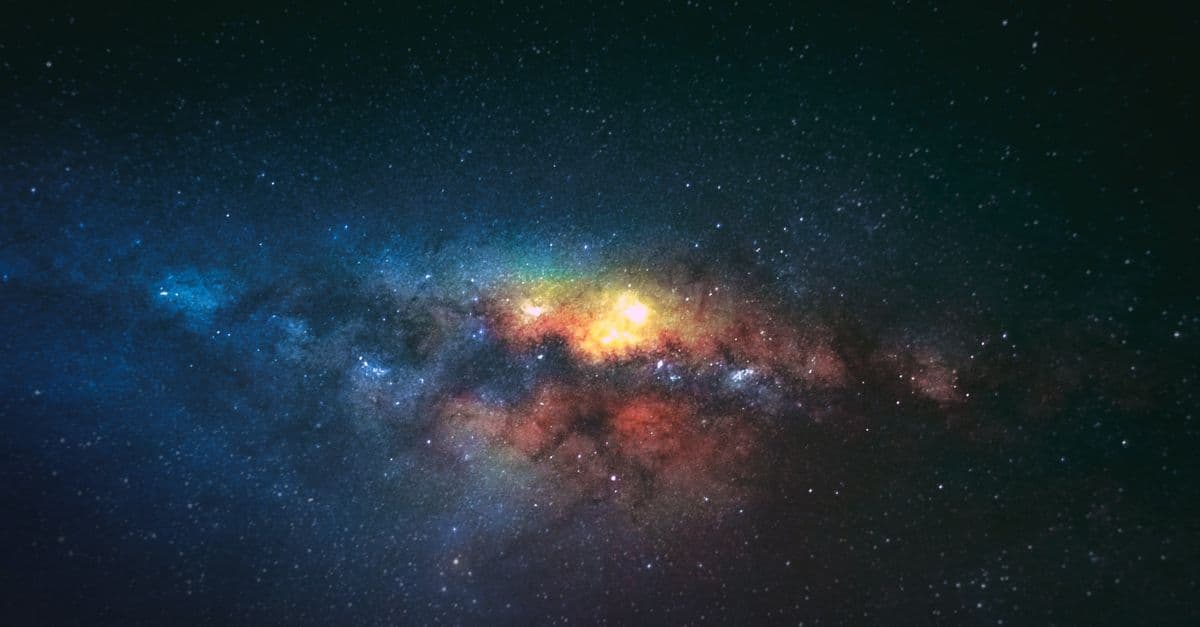
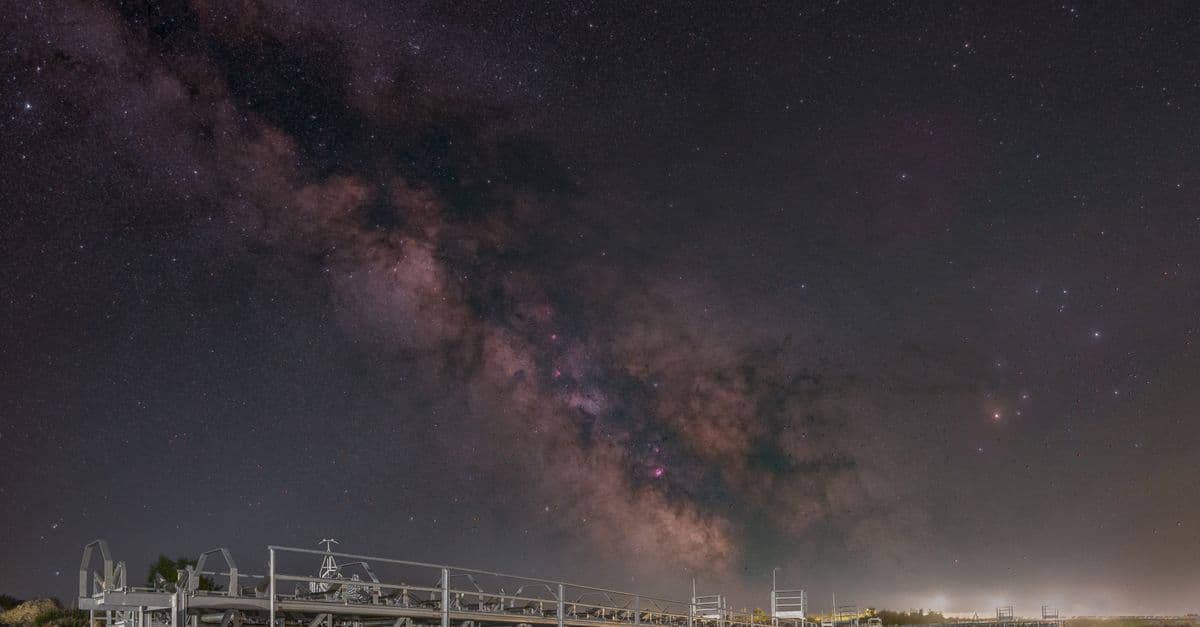
Photo: Rafael Cerqueira / Pexels
At 22:28 Moscow time on October 4, 1957, a modified R-7 missile lifted off from the Baikonur Cosmodrome in Kazakhstan. The payload, Sputnik 1, was a polished sphere 58 cm across that weighed 83.6 kg, carried four whip antennas, and broadcast a one-watt radio beep. It orbited Earth every 96.2 minutes on an ellipse that ranged from 215 km to 939 km in altitude. Amateur radio operators around the world could pick up the signal, and that was the point: the Space Age had a sound.
In the 69 years since, people have walked on the Moon, robots have visited every planet, a laboratory has been continuously crewed in orbit since 2000, and in April 2026 four astronauts flew around the Moon again for the first time since 1972. This article follows that history in order, with the dates and numbers that anchor each stage.
The Space Race era (1957 to 1969)
The first decade was a contest between the United States and the Soviet Union, and it moved fast. The two superpowers raced to attach "first" to every step from orbit to the Moon.
The Soviet lead
Sputnik 1 transmitted until its batteries ran out on October 26, 1957, and it burned up in the atmosphere on January 4, 1958. A month after launch, on November 3, 1957, Sputnik 2 carried Laika, a stray dog from Moscow, making her the first animal to orbit Earth. The capsule was not designed to return, and Laika died in orbit.
On April 12, 1961, Yuri Gagarin became the first human in space aboard Vostok 1, completing one orbit in roughly 108 minutes. He ejected at about 7 km altitude and parachuted down separately from his capsule, a detail the Soviet Union did not acknowledge until 1971, because the rules for aviation records at the time required the pilot to land with the craft.
The Soviets kept adding firsts:
- June 16, 1963: Valentina Tereshkova flew Vostok 6 for 48 orbits and became the first woman in space. The next woman would not fly until 1982.
- March 18, 1965: Alexei Leonov left Voskhod 2 for the first spacewalk, about 12 minutes long. His suit ballooned in the vacuum until he could not fit back through the airlock, and he had to bleed air from it to get back inside.
- February 3, 1966: Luna 9 made the first soft landing on the Moon and sent back photographs. The images showed a solid surface, which settled a worry that a deep layer of dust would swallow any lander.
The American response
The United States answered with Mercury, Gemini, and then Apollo. Alan Shepard flew the first American suborbital flight on May 5, 1961, and John Glenn became the first American to orbit Earth on February 20, 1962, completing three orbits in Friendship 7. On June 3, 1965, Ed White performed the first American spacewalk during Gemini 4, spending about 23 minutes outside.
Then came the setback. On January 27, 1967, a fire broke out in the Apollo 1 command module during a launch rehearsal at Cape Kennedy and killed Gus Grissom, Ed White, and Roger Chaffee. Crewed Apollo flights were suspended for about 20 months, and the first successful crewed mission, Apollo 7, flew in October 1968. The delay forced a redesign of the cabin, including its hatch and its materials.
Less than two years after the fire, Apollo 8 (December 21 to 27, 1968) carried Frank Borman, Jim Lovell, and Bill Anders around the Moon ten times, the first humans to leave Earth orbit. On Christmas Eve, Anders photographed Earth rising over the lunar horizon, an image that became known as "Earthrise."
Key firsts of the era
| Date | Mission | First achieved |
|---|---|---|
| October 4, 1957 | Sputnik 1 (USSR) | First artificial satellite |
| November 3, 1957 | Sputnik 2 (USSR) | First animal in orbit (Laika) |
| April 12, 1961 | Vostok 1 (USSR) | First human in space and in orbit |
| February 20, 1962 | Friendship 7 (USA) | First American in orbit |
| June 16, 1963 | Vostok 6 (USSR) | First woman in space |
| March 18, 1965 | Voskhod 2 (USSR) | First spacewalk |
| February 3, 1966 | Luna 9 (USSR) | First soft landing on the Moon |
| December 1968 | Apollo 8 (USA) | First humans to orbit the Moon |
| July 20, 1969 | Apollo 11 (USA) | First humans on the Moon |
Apollo: six landings, twelve people
Apollo 11 landed the Eagle lunar module in the Sea of Tranquility at 20:17 UTC on July 20, 1969. Neil Armstrong stepped onto the surface about six hours later, and an estimated 600 million people, roughly a fifth of the world's population, watched on television. Armstrong and Buzz Aldrin spent 2 hours, 31 minutes, and 40 seconds outside, deployed a seismometer and a laser reflector, and brought back 21.55 kg of lunar material. Michael Collins stayed in orbit in the command module. For a fuller account of the mission itself, see Apollo 11: first steps on the Moon.
Five more landings followed, and each one stayed longer and went farther than the last:
| Mission | Date | Site | Notable result |
|---|---|---|---|
| Apollo 12 | November 1969 | Ocean of Storms | Landed near the Surveyor 3 probe |
| Apollo 14 | February 1971 | Fra Mauro highlands | Alan Shepard hit golf balls on the surface |
| Apollo 15 | July 1971 | Hadley Rille | First use of the lunar rover; the "Genesis Rock," an anorthosite more than 4 billion years old |
| Apollo 16 | April 1972 | Descartes highlands | First landing in the lunar highlands |
| Apollo 17 | December 1972 | Taurus-Littrow valley | Geologist Harrison Schmitt and Eugene Cernan, the last people on the Moon so far |
Apollo 13, in April 1970, never landed. An oxygen tank failure crippled the service module on the way to the Moon, and the crew used the lunar module as a lifeboat, swung around the Moon, and returned safely. It is the mission that most often gets cited as the program's finest hour of improvisation.
Across six landings, 12 astronauts walked on the Moon. NASA's curators report that the missions returned about 382 kg (842 lb) of lunar material in roughly 2,200 separate samples, and scientists are still studying them. The reflectors left on the surface are still used to bounce lasers off the Moon and measure its distance. The science is covered in the Apollo program's science legacy and the final mission in Apollo 17: the last Moon landing.
Twelve people have walked on the Moon, all between July 1969 and December 1972. As of this writing, no one has been back to the surface since.
First looks at the planets (1962 to 1975)
While crews practiced orbit, uncrewed probes opened up the solar system, and the early results kept overturning expectations.
Venus. Mariner 2 made the first successful planetary flyby on December 14, 1962, and found a hot planet. The Soviet Venera series went further and landed. Venera 7 made the first soft landing on another planet in 1970, and Venera 9 returned the first photographs from the surface in 1975. Venera 13, which landed on March 1, 1982, was built to survive about 32 minutes but kept working for at least 127 minutes, at roughly 457 °C and a pressure of about 9 megapascals, around 89 times Earth's sea-level pressure.
Mars. Mariner 4 flew past Mars in July 1965 and returned 22 close-up images that showed a cratered, Moon-like surface, which dampened hopes of a lush Mars. Viking 1 and 2 landed in July and September 1976 and ran life-detection experiments whose results are still argued over; the story is in the Mars Viking life detection experiments.
Mercury. Mariner 10 flew past Mercury three times in 1974 and 1975 and was the only spacecraft to visit before MESSENGER arrived in orbit in 2011.
The outer planets. Pioneer 10 became the first spacecraft to cross the asteroid belt and reach Jupiter (December 1973), and Pioneer 11 reached Saturn in 1979. Those two prepared the way for the Voyagers.
The Voyagers and the Grand Tour
Voyager 2 launched on August 20, 1977, and Voyager 1 on September 5, 1977. They took advantage of a planetary alignment that comes around about once every 176 years, which let gravity assists carry a spacecraft from planet to planet. Voyager 2 flew past Jupiter on July 9, 1979, Saturn on August 25, 1981, Uranus on January 24, 1986, and Neptune on August 25, 1989. It remains the only spacecraft to visit Uranus and Neptune. The route is the subject of the Voyager Grand Tour explained.
The flybys found:
- Jupiter: Active volcanoes on Io, discovered in images from Voyager 1, and a faint ring.
- Saturn: Intricate ring structure and small moons that sculpt the rings, and a hydrocarbon haze over Titan.
- Uranus: Ten new moons and an axial tilt near 98 degrees.
- Neptune: The Great Dark Spot, a storm that later vanished, and nitrogen geysers on Triton.
Voyager 1 crossed the heliopause on August 25, 2012, and Voyager 2 crossed on November 5, 2018, both entering interstellar space; the boundary is explained in what the heliosphere is. NASA's Voyager 1 page says the spacecraft is due to reach a distance of one light-day from Earth on November 18, 2026, which works out to roughly 173 AU. Engineers turned off another instrument on April 17, 2026 to conserve power. More on the mission is in Voyager 1 and 2: the most distant human spacecraft.
Shuttles and stations
After Apollo, the focus shifted to staying in orbit. Salyut 1, launched in 1971, was the first space station. NASA's Skylab flew in 1973, and in July 1975 an Apollo and a Soyuz docked in orbit, the first joint American-Soviet mission. The Soviet Mir station operated from 1986 to 2001.
NASA's Space Shuttle flew its first mission on April 12, 1981 and its last on July 21, 2011, completing 135 missions. It deployed the Hubble Space Telescope in 1990 and hauled most of the International Space Station into orbit, but it came with two disasters: Challenger broke apart on January 28, 1986, and Columbia on February 1, 2003, each killing seven astronauts.
The International Space Station
The International Space Station is the largest structure ever assembled in space. According to NASA, it is 109 m (356 ft) end to end, with a solar array span of 73 m (239 ft), a mass of 419,725 kg, and a pressurized volume of 1,005 cubic meters. Five space agencies from 15 countries operate it, and it has been continuously occupied since November 2000. For how people live and work there, see the ISS explained.
Its research has included the year-long mission of Scott Kelly, who spent about 340 days aboard from 2015 to 2016 while his identical twin Mark stayed on Earth, in a comparison known as the Twin Study. NASA plans to retire the station around 2030 and shift to commercial stations.
Crew access changed in 2020, when SpaceX's Crew Dragon flew astronauts to the station from US soil for the first time since the Shuttle retired. Boeing's Starliner made its first crewed test flight in June 2024.
Robotic exploration of Mars
Mars has had the most robotic visitors of any planet, and the progression shows how far the technology has come.
| Mission | Dates | Why it mattered |
|---|---|---|
| Viking 1 and 2 | Landed 1976 | First lasting Mars landers; life-detection experiments gave ambiguous results |
| Pathfinder and Sojourner | 1997 | First wheeled rover on Mars; the 65 cm Sojourner operated for 83 sols |
| Mars Odyssey | Launched April 7, 2001 | Long-lived orbiter that holds the record for longest continuous operation at a planet other than Earth |
| Mars Express (ESA) | Arrived 2003 | Found subsurface ice; its radar reported a possible buried lake, which remains debated |
| Spirit and Opportunity | Landed January 2004 | Opportunity lasted 5,111 sols (about 14 years) against a 90-sol plan; found evidence of ancient water |
| Curiosity | Landed 2012 | Showed Gale Crater once had conditions able to support microbial life |
| InSight | 2018 to 2022 | Recorded marsquakes and measured the core radius at about 1,830 km |
| Perseverance and Ingenuity | Landed February 2021 | Sample caching; first powered flight on another planet |
| Tianwen-1 and Zhurong | 2021 | China's first Mars mission, landing a rover in Utopia Planitia |
Opportunity is the standout. It was designed for 90 sols, and NASA lost contact with it on June 10, 2018 during a global dust storm, declaring the mission over on February 13, 2019. By then it had driven 45.16 km. The rover family is described in Mars rovers from Sojourner to Perseverance.
Ingenuity, a 1.8 kg helicopter that rode to Mars on Perseverance, made its first flight on April 19, 2021 and completed 72 flights before rotor damage during the landing of flight 72 on January 18, 2024 ended the mission. The story is told in Ingenuity: the first aircraft on Mars. Perseverance continues to cache rock cores, but the plan to retrieve them has been in doubt: the White House's fiscal 2026 budget request proposed canceling Mars Sample Return, and the cached samples remain on Mars. Check current NASA announcements for the program's status, because it has changed several times.
Outer planets, comets, and asteroids
Missions beyond Mars show a pattern: orbit a target for years, then drop a probe or return a sample.
Galileo (launched 1989) orbited Jupiter from 1995 to 2003, found evidence for subsurface oceans on Europa, Ganymede, and Callisto, and dropped an atmospheric probe into Jupiter.
Cassini-Huygens reached Saturn in 2004 and orbited for 13 years. ESA's Huygens probe landed on Titan on January 14, 2005, the most distant landing yet achieved, and Cassini found geysers on Enceladus and chemistry in their plumes. It ended on September 15, 2017 by deliberately plunging into Saturn's atmosphere so it would not contaminate the moons; see the Cassini Grand Finale.
Comets and asteroids have become destinations for sample returns, and several landmarks show the pace:
| Mission | Agency | Year | Result |
|---|---|---|---|
| NEAR Shoemaker | NASA | 2001 | First landing on an asteroid (433 Eros) |
| Hayabusa | JAXA | 2010 | First asteroid sample return (Itokawa) |
| Deep Impact | NASA | 2005 | Struck comet Tempel 1 with a 370 kg copper impactor |
| Rosetta and Philae | ESA | 2014 | Orbited comet 67P and landed on it; Philae bounced before settling |
| Dawn | NASA | 2011 to 2018 | First spacecraft to orbit two bodies beyond Earth, Vesta and Ceres |
| Hayabusa2 | JAXA | 2020 | Returned about 5 g from asteroid Ryugu |
| OSIRIS-REx | NASA | 2023 | Returned 121.6 g from asteroid Bennu |
OSIRIS-REx collected its sample in October 2020 and delivered it to Utah on September 24, 2023, the largest asteroid sample ever returned. The spacecraft was renamed OSIRIS-APEX and is headed for asteroid Apophis, which passes close to Earth in 2029. Hayabusa2 continued past Ryugu, with a flyby of asteroid Torifune in July 2026 and a rendezvous planned with the tiny asteroid 1998 KY26 in 2031. How samples reveal early solar system chemistry is covered in how asteroid samples reveal solar system history.
Then there is NASA's DART mission, which crashed into the moonlet Dimorphos on September 26, 2022. It shortened the moonlet's orbit around its parent asteroid by 33 minutes, according to published measurements, the first demonstration that a kinetic impact can alter an asteroid's path. The broader field is described in how planetary defence works.
Mercury is due for attention again. The joint ESA and JAXA mission BepiColombo, launched in 2018, is now scheduled to enter orbit around Mercury on November 21, 2026 after thruster problems delayed its arrival.
The telescope that changed the question
Not every milestone involved a visit. The Hubble Space Telescope, launched from a Space Shuttle in 1990, and the James Webb Space Telescope, launched on December 25, 2021, extended exploration to galaxies and exoplanet atmospheres. Webb's findings are summarized in the James Webb article listed under Related Reading below.
The new space age (2010s to now)
Since the 2010s, the center of gravity has shifted from governments alone to a mix of agencies and companies, and from single missions to reusable hardware.
Commercial launch. SpaceX landed a Falcon 9 first stage for the first time in December 2015 and has reflown boosters repeatedly since. Its Starship, a fully reusable system under development, flew its first integrated test in April 2023, and in October 2024 engineers caught a returning booster with the launch tower's arms. Why launch has been so expensive and how reuse changes it are covered in why rocket launches cost so much and SpaceX and the new space race.
More nations on the Moon. In January 2019, China's Chang'e 4 made the first soft landing on the Moon's far side. Chang'e 6 returned the first samples from the far side on June 25, 2024: close to 2 kg of material. India's Chandrayaan-3 landed near the lunar south pole on August 23, 2023, at about 69 degrees south, making India the fourth country to land on the Moon.
Artemis. NASA's Artemis program aims to return crews to the Moon, with a focus on the south pole, where water ice sits in permanently shadowed craters. Artemis I flew uncrewed in November 2022. Artemis II launched on April 1, 2026 and splashed down on April 10 (Pacific time) with Reid Wiseman, Victor Glover, Christina Koch, and Jeremy Hansen. Over a mission of roughly nine days, Orion passed about 6,545 km above the far side and reached 406,771 km from Earth, beating Apollo 13's record of 400,171 km, according to the mission summary. Koch became the first woman and Hansen the first Canadian to fly around the Moon. The crew also had to deal with problems including a frozen toilet vent line and a small helium leak in the service module.
Where the plan stands
Plans have shifted a lot in 2026. On February 27, 2026, NASA changed Artemis III from a landing to a crewed test in low Earth orbit in which Orion will dock with prototype landers from Blue Origin and SpaceX, with a launch targeted for 2027. The first crewed landing is now planned for Artemis IV in early 2028, according to the Artemis III summary. On March 24, 2026, NASA announced it was pausing the Lunar Gateway station in its current form to focus on surface infrastructure. The Artemis background is in the Artemis program explained.
Mars is further off. NASA and SpaceX have both discussed crewed Mars missions, but no such mission has a firm date, and the obstacles are measured, not hypothetical. See Starship explained for the vehicle that is most often tied to those plans.
What drove each leap
Looking back, each phase had a different engine, and the contrast helps explain why the pace has varied so much.
| Era | Main driver | Typical output |
|---|---|---|
| 1957 to 1969 | Cold War prestige and missile technology | Rapid sequence of "firsts," crewed flights, the Moon landing |
| 1970s | Science and diplomacy after Apollo | Planetary probes (Viking, Voyager), stations, the Shuttle program |
| 1980s to 2000s | Reusable and international programs | Shuttle, Hubble, Mir, the ISS |
| 2010s to now | Commercial competition and new national programs | Reusable rockets, commercial crew, sample returns, Chinese and Indian lunar missions |
One thread runs through all four rows: the rocket. The same type of engineering that put Sputnik in orbit also produced the Saturn V, the Shuttle, and today's reusable boosters, and its roots go back to pioneers such as Konstantin Tsiolkovsky and Robert Goddard. The long arc of that technology is told in the rocket.
What people get wrong about space history
"Sputnik was a satellite that did something useful." It did one thing, which was to broadcast a signal. Its value was proof of capability, and the political shock that followed.
"We landed on the Moon 12 times." There were six landings with 12 astronauts on the surface, two at a time.
"Voyager left the solar system." The Voyagers left the heliosphere, the Sun's solar-wind bubble. The solar system's outer reaches, such as the Oort Cloud, lie much farther out.
"The Space Race ended with Apollo 11." Apollo continued for three more years and five more landings, and Soviet and American programs continued in other directions for decades.
"Space exploration is all government." Most launches now use commercial vehicles, but governments still fund the exploration missions, and the two sectors are tightly interlinked.
Frequently asked questions
Q: What was the first artificial satellite? A: Sputnik 1, launched by the Soviet Union on October 4, 1957. It weighed 83.6 kg, was 58 cm across, and orbited every 96.2 minutes until its batteries died on October 26, 1957.
Q: Who was the first person in space? A: Yuri Gagarin, aboard Vostok 1 on April 12, 1961. His flight lasted about 108 minutes and he completed one orbit of Earth.
Q: How many people have walked on the Moon? A: Twelve, across six Apollo landings between July 1969 and December 1972. The missions brought back about 382 kg of lunar material.
Q: Has any spacecraft left the solar system? A: No spacecraft has left the solar system in the full sense. Voyager 1 and Voyager 2 have left the heliosphere and entered interstellar space, but the Oort Cloud lies much farther out.
Q: When did Artemis II fly? A: Artemis II launched on April 1, 2026 and splashed down on April 10 (Pacific time). Four astronauts flew around the Moon, and the mission set a distance record of 406,771 km from Earth.
Q: When will humans next land on the Moon? A: NASA plans the first crewed landing of the Artemis program for Artemis IV in early 2028. Artemis III has been changed to a low Earth orbit test, and schedules in this field frequently slip.
Q: How long has the ISS been occupied? A: Continuously since November 2000. Five space agencies from 15 countries operate the station.
The takeaway
Space exploration looks like a straight line of achievements, but the record shows something more uneven: a sprint driven by rivalry that put people on the Moon in 12 years, a long middle period of stations and robots, and a recent surge from new players, both commercial and national. The measured facts keep humbling the narrative. Opportunity worked for more than 55 times its 90-sol design life, Venera 13 outlived its plan about fourfold, and the Voyagers are still returning data from beyond the Sun's bubble more than four decades after launch.
What changed most is not the destinations but the economics and the number of participants. When only two governments could reach orbit, a mission was a statement. When many can, the question becomes which missions produce knowledge that is worth the cost, and the next decade of lunar landings, sample returns, and Mars planning will be judged on that.
Sources
- NASA, Space station facts and figures
- NASA, Voyager 1 and Voyager 2 mission pages
- NASA Lunar Sample Curation, Apollo samples
- Wikipedia, Sputnik 1, Vostok 1, Apollo 11, Apollo 1, Venera 13, Opportunity, Ingenuity, Chandrayaan-3, Hayabusa2, and 2001 Mars Odyssey
Related Reading
Follow new articles
Add SciHub101 to your feed reader to see new science and technology stories.
About the Author
SciHub101 is an independent science and technology publication founded and edited by Buğra Sözeri, a software engineer and app developer based in Türkiye. AI tools assist with drafting and research. Source documentation in the existing archive is uneven, and articles are being reviewed and corrected. The Editorial Team byline identifies editorial responsibility; it does not certify specialist or independent human review. Where we compare products, anything built by our own team is labelled as such — see the editorial guidelines and About page for how corrections and disclosures work.
Related Articles
What Are Brown Dwarfs? The Failed Stars Between Planets and Suns
Brown dwarfs sit between the heaviest planets and the lightest hydrogen-burning stars, at roughly 13 to 80 Jupiter masses. They fuse deuterium for a while, never sustain hydrogen fusion, and cool through spectral classes L, T, and Y. The coldest known, WISE 0855-0714, is near 225 to 260 K.
What Is Exoplanet Direct Imaging? Seeing Planets Around Other Stars
Directly imaging an exoplanet — seeing the planet itself rather than inferring it from its effect on the star — is the hardest challenge in observational astronomy. A planet is 10⁹ times fainter than its star at visible wavelengths, squeezed within 1 arcsecond of it. Yet direct imaging has been achieved for dozens of young gas giants. The HR 8799 system, with four imaged planets, was the first multi-planet system directly resolved. The ELT's next-generation coronagraphs aim to directly image Earth-like planets.
SpaceX and the New Space Race: 2026 Status
SpaceX in 2026: Starship's V3 flights, Falcon 9 reuse, Starlink growth, a reshaped Artemis plan, and how China and rival rockets compete in the new space race.
SpaceX Starship Explained — Rocket Built for Mars
SpaceX Starship is the largest rocket ever built — 121m tall, fully reusable, designed for Mars. How Raptor engines, orbital refueling, and Flight 13 work.
The Voyager Probes: Humanity's Messengers in Interstellar Space
Launched in 1977, Voyager 1 and 2 are now in interstellar space — and still phoning home after nearly five decades.
The Fastest Man-Made Objects Ever Built: From Apollo to Parker
At 11:53 UTC on December 24, 2024, the Parker Solar Probe reached 692,000 km/h — fast enough to travel from Earth to the Moon in 33 minutes. That is the fastest any object built by humans has ever moved. But speed records in spaceflight tell a deeper story about orbital mechanics, gravity assists, and the hard physics that governs how fast anything can actually go. This article traces the full hierarchy of speed, from the first satellites to the probe that briefly outran the solar wind itself.